
GROWTH AND DEVELOPMENT Seven Life Stages GROWTH AND








- Slides: 34
GROWTH AND DEVELOPMENT Seven Life Stages
GROWTH AND DEVELOPMENT • Infancy—birth to one year PHYSICAL • most rapid changes in physical growth • Development occur during the first year of life. By the end of the first year of life , weight has usually tripled to 18 -24 lbs • Reflexes allow the infant to respond to the environment
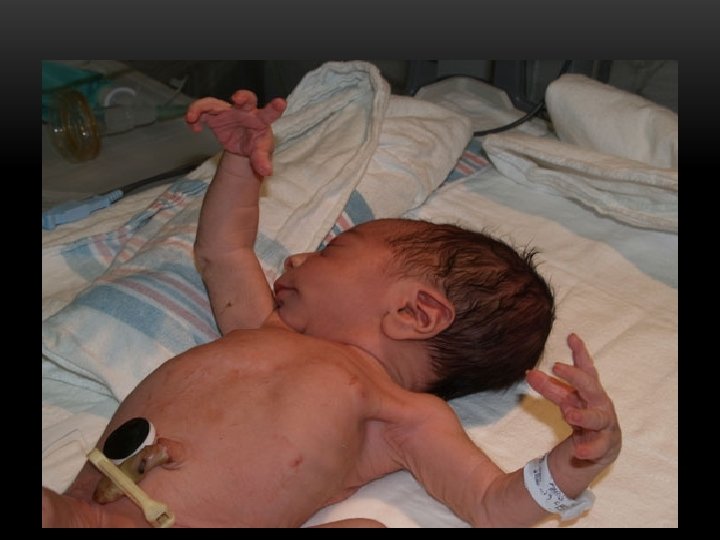
REFLEXES • Moro or startle-reflex to loud noise or • Sudden movement. • Rooting reflex: which is commonly called the sucking reflex. • Grasp reflex
ROOTING REFLEX
MENTAL DEVELOPMENT • Mental Development: Newborns respond to discomforts such as pain, cold or hunger by crying • By age 6 months, infants understand some words and make basic sounds • By 12 months some understand use single words in their vocabularies
SOCIAL DEVELOPMENT • Begins around 4 months of age, infants recognize their care takers • By 12 months of age their affection for others is evident Emotional Development • By 8 months they cry when separated from caretaker
EARLY CHILDHOOD 1 TO 6 YEARS • PHYSICAL • Age 6 averages 45 lbs • Skeletal and muscle development helps the child assume a more adult appearance. • Muscle coordination allows child to run , climb and move freely. • Between 2 and 4 years of age most children learn bladder and bowel control.
EARLY CHILDHOOD 1 TO 6 YEARS MENTAL DEVELOPMENT • Vocabulary increases greatly. • Make decisions on experience, not just trail & error SOCIAL DEVELOPMENT • In early years children have strong attachment to their parents or to the individuals who provides their care and they fear any separation. • Playing alongside other children is more common than playing with other children
EARLY CHILDHOOD 1 -6 YEARS EMOTIONAL DEVELOPMENT • Ages 1 -2 develop self-awareness and recognize the effect they have on other people. • Children feel impatience and frustrations as they try to do things beyond their abilities. • Anger often is in the form of temper tantrums. • By age 4 -6 children begin to gain more control over their emotions. • Age 6 most show less anxiety when faced with new experiences.
LATE CHILDHOOD 6 TO 12 YEARS • Also known as pre-adolescence PHYSICAL DEVELOPMENT • Physical Development: Weight gain averages 5 -7 lbs a year and height usually increases 2 -3 inches per year. • Muscle coordination is well developed and children can engage in physical activities that require complex motor sensory coordination. • During this age, most of the primary teeth are lost
MENTAL DEVELOPMENT • Rapid learning takes place, child learns to read and solve problems SOCIAL DEVELOPMENT • Child prefers to socialize in groups of same gender. Still close to family members EMOTIONAL DEVELOPMENT • The child continues to achieve a greater independence and a more distinct personality. • At age 6, children are often frightened and uncertain as they begin school. Gradually fears are replaced by the ability to cope.
ADOLESCENCE – AGES 12 TO 20 OFTEN A TRAUMATIC LIFE STAGE PHYSICAL DEVELOPMENT • Physical changes occur more dramatically in the early period. A sudden growth spurt can cause rapid increases in height and weight. • Development of secondary sex characteristics, puberty occurs MENTAL DEVELOPMENT • Mental development involves an increase in knowledge and a sharpening of skills. . • Learn to make decisions and to accept responsibility for their action. • Sometimes in conflict as they treated as adults & children
SOCIAL DEVELOPMENT • Usually spend less time with family and more time with friends & peer groups • Need reassurance and support from peers. • Problems often development if social needs are in conflict- anorexia, suicide, chemical abuse, mental health issues
EMOTIONAL DEVELOPMENT • Often stormy and in conflict. Trying to establish independence • They worry about their appearance, they are often uncertain and feel inadequate and insecure. • Towards end of period, they gain control of their feelings and become more mature emotionally.
EARLY ADULTHOOD – AGES 20 TO 40 FREQUENTLY THE MOST PRODUCTIVE LIFE STAGE. PHYSICAL • Physical development is basically complete, muscles are well developed and strong, and motor coordination is at its peak. MENTAL • Many young adults pursue additional education • Make career choices, select marital partner, starts family
EMOTIONAL • usually involves preserving the stability established during previous stages • Take responsibility for actions & learn to accept criticism SOCIAL • Frequently involves moving away from the peer group, and instead associate with others who have similar ambitions and interests , regardless of age.
MIDDLE ADULTHOOD – AGES 40 TO 65 FREQUENTLY CALLED MIDDLE AGE PHYSICAL • Changes begin to take place, hair starts to gray, skin wrinkle, muscle tone decreases, eye sight and hearing decline, females experience menopause, males experience declining hormone levels MENTAL • Mental ability can actually increase. Have aquired an understanding of life and can be very analytical • Learned to make many decisions and handle stress
EMOTIONAL • Loss of job, fear of aging, loss of youth and vitality, illness, marital problems, or problems with children or aging parent • Middle age can be a period of contentment and satisfaction or it can be a time of crisis • Family relationships may see a decline as children begin lives of their own and parents die. Divorce rates are high in this age group
LATE ADULTHOOD 65 + • Terms associated with this age group include elderly, senior citizen, golden age, and retired citizen. • People are living longer especially in this age group. PHYSICAL • All physical systems are on the decline • All body systems are affected. Hair thins, skin wrinkles, cartilage becomes thin, major organs lose function
MENTAL • Mental abilities vary among individuals. Many elderly remain mentally active, and are willing to learn new things • Alzheimer’s Disease can lead to irreversible memory loss EMOTIONAL • Emotional stability varies among individuals in this age group. They cope the way they have most of their lives • Often have to deal with the loss of a spouse and close friends
SOCIAL • Possible isolation because of retirement • Many find more social activities because of time, others isolate themselves • Find social security with family, grandchildren
All individuals show physical changes of aging in their sixties and seventies. A. ) True B. ) False
What factors could produce stress in middle adulthood? A. ) Loss of job B. ) Fear of aging C. ) Marital problems D. ) All of the above
At what age does a child use past experiences to make decisions? A. ) Age 6 B. ) Age 3 C. ) Age 10 D. ) Age 4
The development of sexual organs and secondary sexual characteristics is called puberty A. ) True B. ) False
At what age does a child learn bowel & bladder control A. ) 2 -4 B. ) 5 -6 C. ) 6 -7
Question At what age does a child display frequent temper tantrums? A. ) 1 -2 B. ) 5 -6 C. ) 8 -9 D. ) 10 -12
What infant reflex is a response to a loud noise or sudden movement? A. ) Moro B. ) Grasp C. ) Rooting or sucking
At what age can an infant understand some words and basic sounds? A. ) 6 months B. ) 12 months C. ) 2 months D. ) 1 month
What infant reflex action is a response to a slight touch on the cheek? A. ) Moro B. ) rooting or sucking C. ) grasp
Children prefer friends of their own sex, and prefer group activities A. ) Infancy B. ) Early Childhood C. ) Late Childhood D. ) Adolescence