
GROWTH AND DEVELOPMENT Definition Development and maturation are








- Slides: 99
GROWTH AND DEVELOPMENT
Definition: Development and maturation are used synonymously to refer to the innumerable stages and processes through which human form, function and behaviour pass from conception to maturity.
Growth refers to in the physical sphere to the increase in size and number of units, and in the psychological sphere to the acquisition of information , skills and emotional interests
Spurts: The developmental curves for most of the external dimensions of the body is accelerated by spurts, representing periods of accelerated growth interspersed between relatively long periods if slow growth. For example the curve for total body height shows 3 spurts, One during the first year of life , another between 4 -6 years and a third during adolescence.
REGRESSION: Although the trend of psychologic maturation is generally (forward) a return to behaviour characteristic of an earlier period i. e. regressive behaviour. Young children frequently exhibit regressive behaviour after the birth of a sibling. They want to be treated like babied , to be fed by bottle, diapered, fondled, and so on. Regressive behaviour is rule during early adolescence, The teenager behaving like a grown up one day and like a child the next.
If regressive behaviour persists and become prominent , This may indicate emotional dissatisfaction of the child.
Neuroplasticity Development of the Nervous System
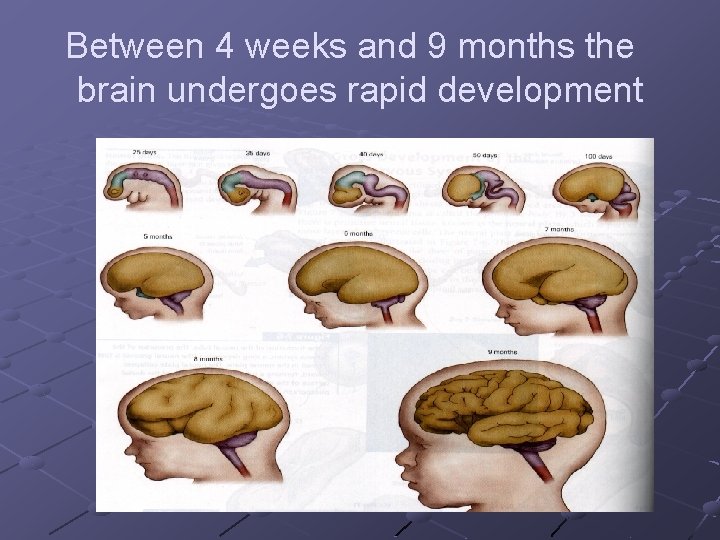
Between 4 weeks and 9 months the brain undergoes rapid development
Development of the Brain Stages of neuroanatomical development a. Zygote stage: Begins upon fertilization of the ovum i. 2 sets of 22 chromosomes, and one set of sex chromosomes. Total of 23 pairs of chromosomes (XX= female, XY= male)
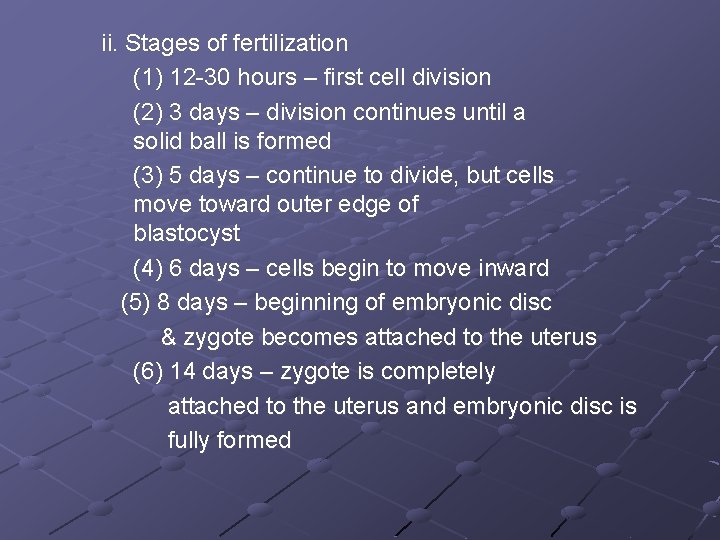
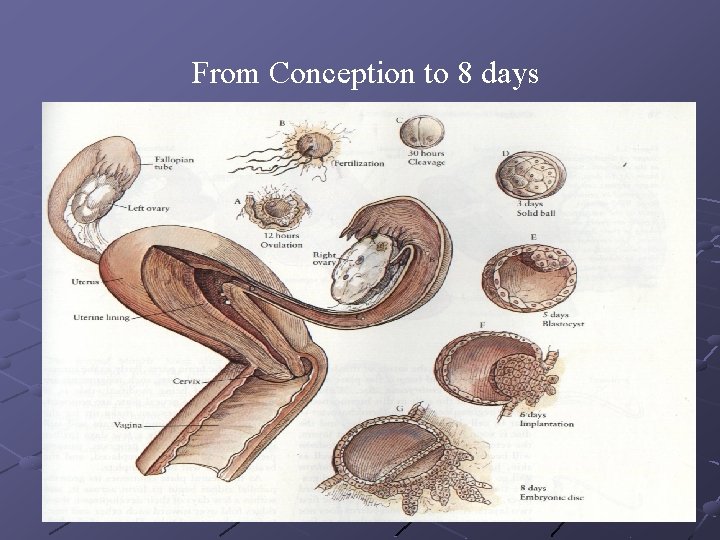
ii. Stages of fertilization (1) 12 -30 hours – first cell division (2) 3 days – division continues until a solid ball is formed (3) 5 days – continue to divide, but cells move toward outer edge of blastocyst (4) 6 days – cells begin to move inward (5) 8 days – beginning of embryonic disc & zygote becomes attached to the uterus (6) 14 days – zygote is completely attached to the uterus and embryonic disc is fully formed
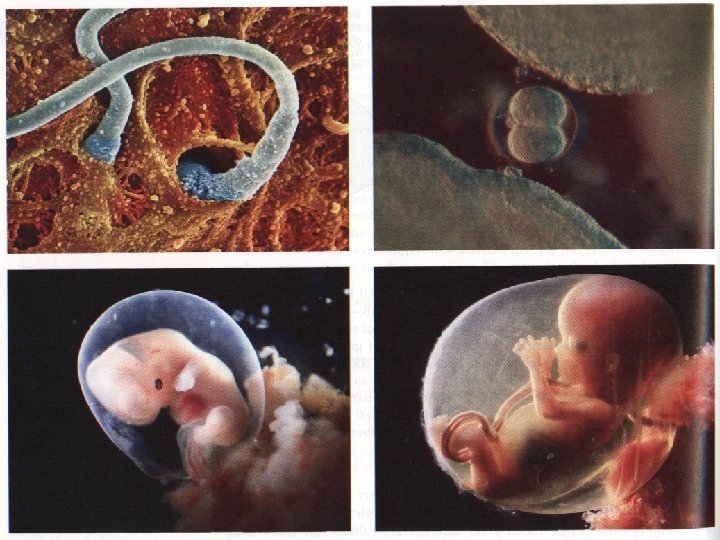
From Conception to 8 days
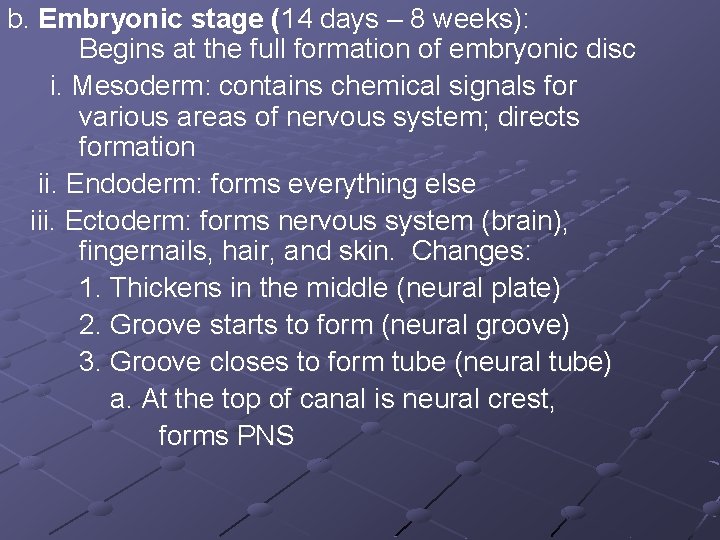
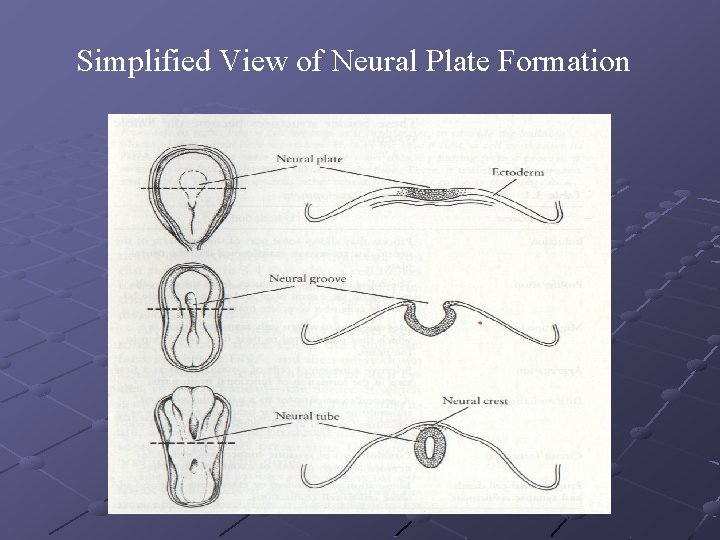
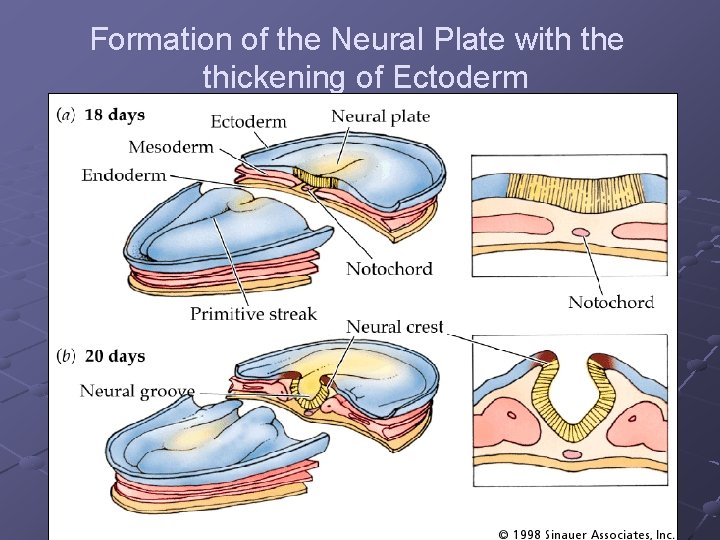
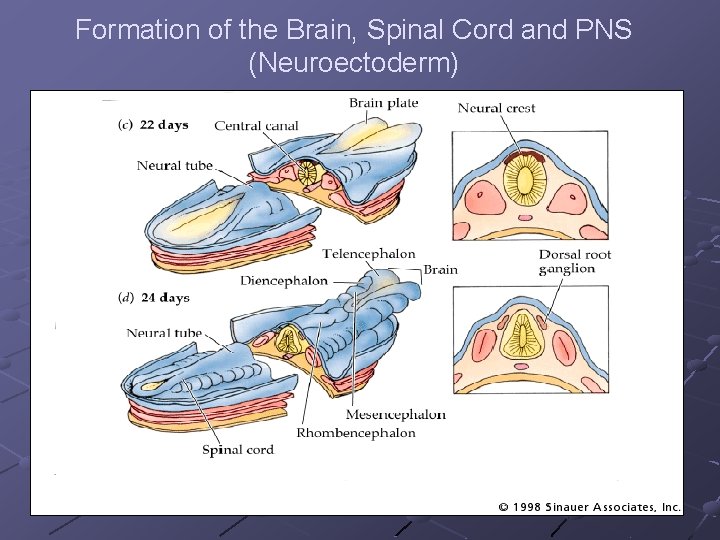
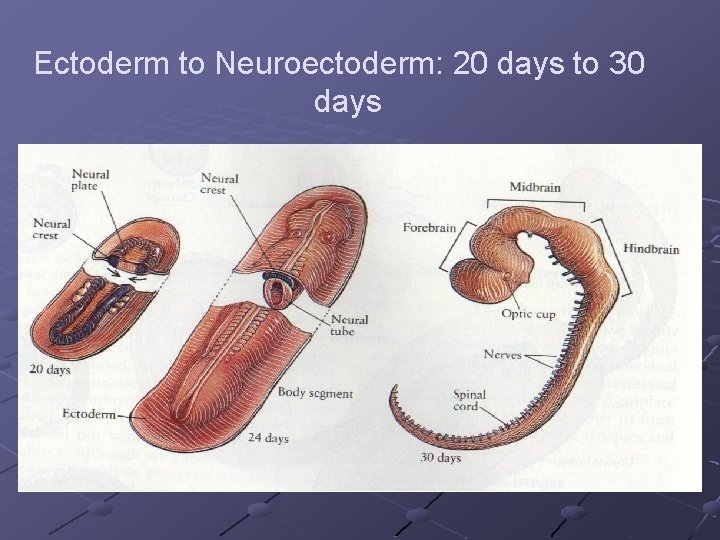
b. Embryonic stage (14 days – 8 weeks): Begins at the full formation of embryonic disc i. Mesoderm: contains chemical signals for various areas of nervous system; directs formation ii. Endoderm: forms everything else iii. Ectoderm: forms nervous system (brain), fingernails, hair, and skin. Changes: 1. Thickens in the middle (neural plate) 2. Groove starts to form (neural groove) 3. Groove closes to form tube (neural tube) a. At the top of canal is neural crest, forms PNS
Simplified View of Neural Plate Formation
Formation of the Neural Plate with the thickening of Ectoderm
Formation of the Brain, Spinal Cord and PNS (Neuroectoderm)
iv. Neuroectoderm forms when foundation for the three main structures has been developed: 1. 3 swellings a. Hindbrain b. Midbrain c. Forebrain 2. Closed Neural Tube becomes spinal cord central canal and ventricles of the brain v. Spina bifida – Neural Tube Defect (NTD) spinal cord doesn’t close, often linked to mental retardation **NTDs can be discovered in utero **
vi. Amount of mesoderm in relation to ectoderm determines the nervous system region 1. Amount of signal/tissue coming from mesoderm determines spinal cord/brain Determination: A process that ensures that a population of cells will give rise to specific systems in developing organism Regional specificity: Once signal is in place we lose the plasticity of the blastocysts. Irreversible signal set by a genetic code after formation of neuroectoderm.
Ectoderm to Neuroectoderm: 20 days to 30 days
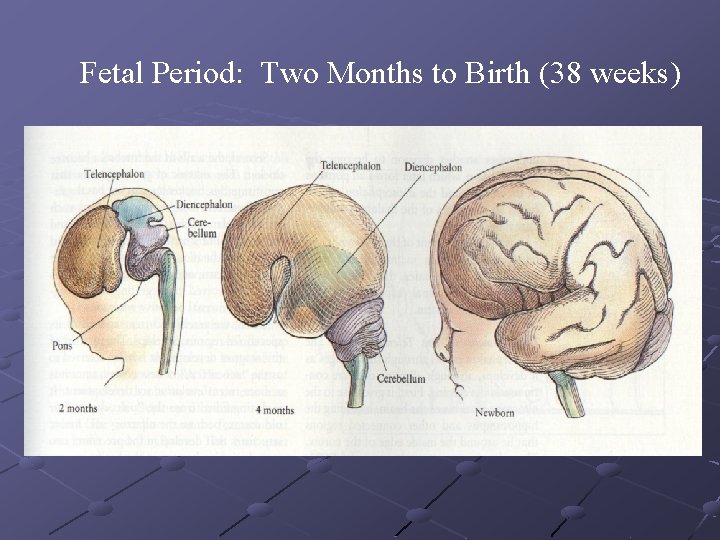
Fetal Period: Two Months to Birth (38 weeks)
Fetal Period Foundation for the entire CNS is set 6 stages of CNS development complete the prenatal process
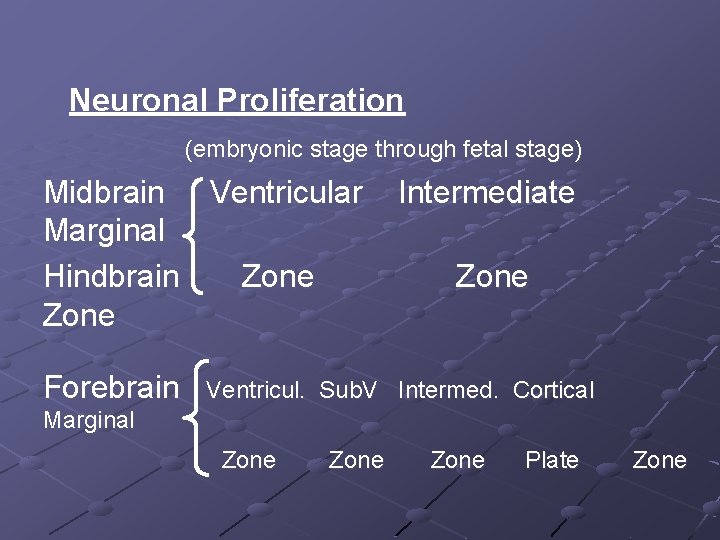
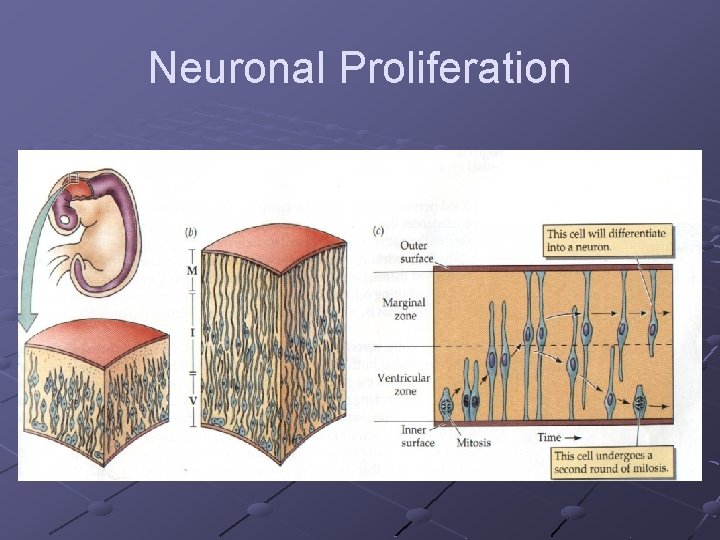
Neuronal Proliferation (embryonic stage through fetal stage) Midbrain Ventricular Marginal Hindbrain Zone Forebrain Intermediate Zone Ventricul. Sub. V Intermed. Cortical Marginal Zone Plate Zone
Neuronal Proliferation
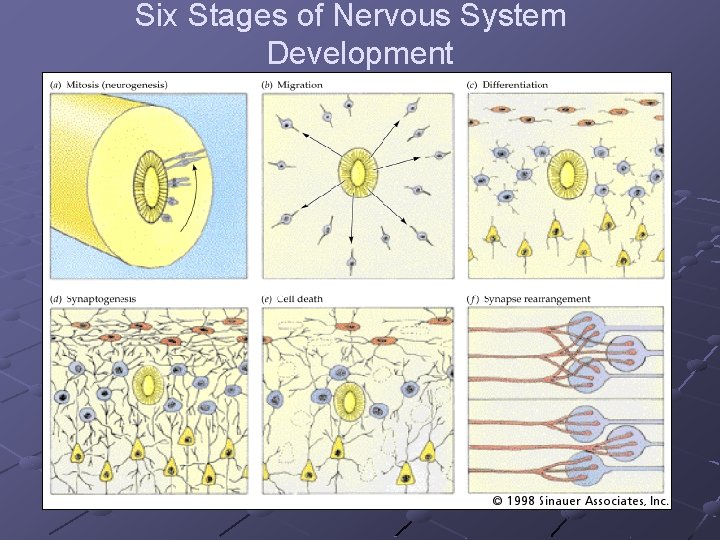
Six Stages of Nervous System Development
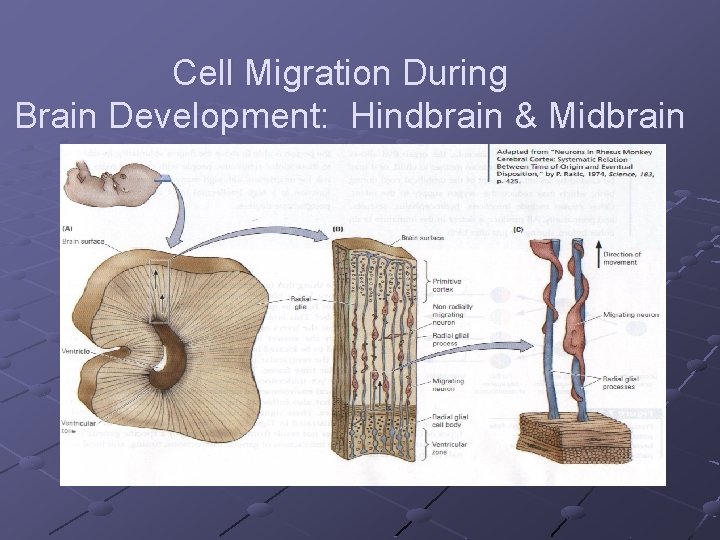
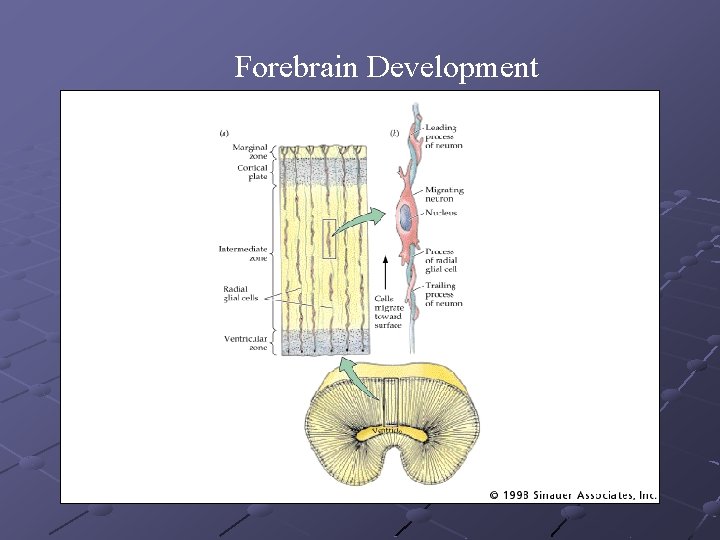
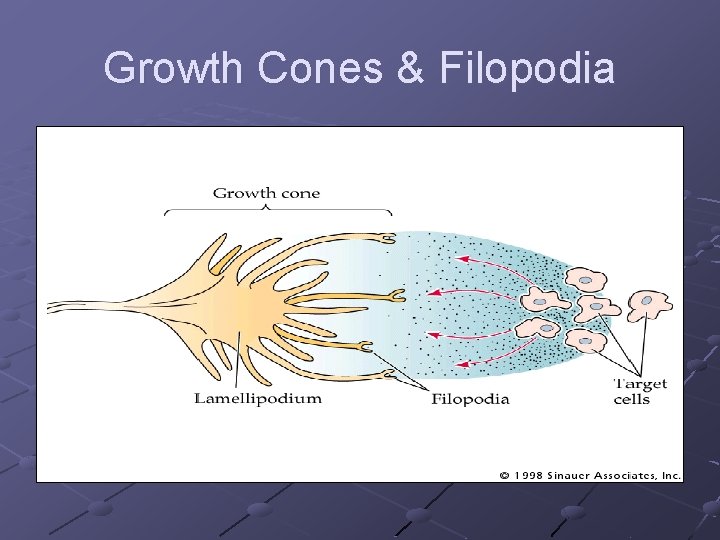
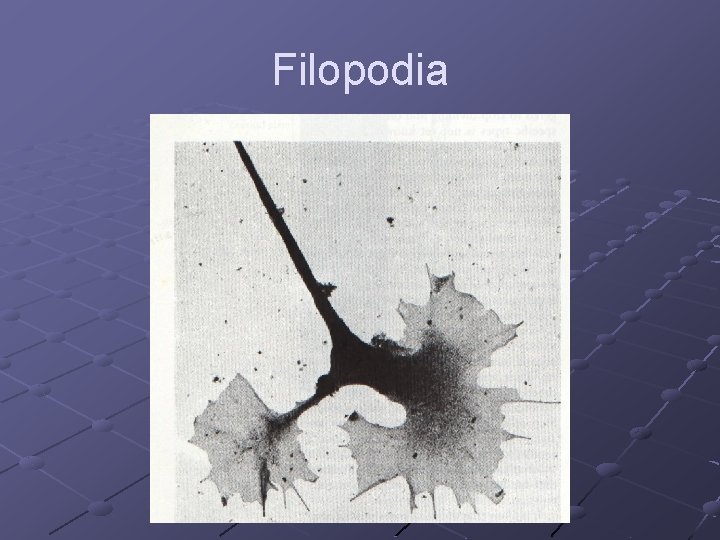
1. Mitosis (cell division) or Neurogenesis in the ventricular zone, One cell division can lead to a daughter cell, will divide again forming an immature neuron 2. Migration: cells move from VZ to their destination; this migration is aided by glial cells, abnormal migration found in a number of disorders. Filopodia assist in finding location after leaving radial glial cells. Abnormalities in migration are present in people with learning disabilities, schizophrenia and autism (more on this in a little while)
Cell Migration During Brain Development: Hindbrain & Midbrain
Forebrain Development
Growth Cones & Filopodia
Filopodia
3. Differentiation: The Process which gives rise to specific neurons and glial cells 4. Synaptogenesis: Neuronal maturation 1. Elongation of axons (w/growth cones) 2. Establish terminals 3. Elongation of dendrites 4. Expression of NT( neurotransmetters) Neurotrophic factors – stimulate cell growth, i. e. nerve growth, factor helps neuron to mature.
5. Normal cell death (more on this later) - Apotosis – active cell death during development - Necrosis – passive cell death due to injury 6. Synaptic rearrangement: dependent on apotosis and experience!!!!
Theories as to why/how this happens 1. Chemoaffinity hypothesis – Post synaptic cell is releasing a chemical 2. Blueprint hypothesis – Cell adhesion molecule present, guides neuron to destination 3. Topographic gradient hypothesis – Axons are growing based on position of cell body, spatial growth **All three appear correct, happens differently in different areas**
Postnatal Development of the Central Nervous System
Post-natal brain development 1. At birth the brain weighs 25% of the full adult brain 2. By the age of 6 it increases to 95% i. Increase is due to myelination a. At birth the brain is myelinated through the thalamus b. Myelination is in part based on experience (the premature baby will have substantially more myelin that of the full term baby)
ii. Proliferation of glial cells iii. Last wave of neurogenesis iv. Maturation of neurons v. Increase in synaptic connectivity
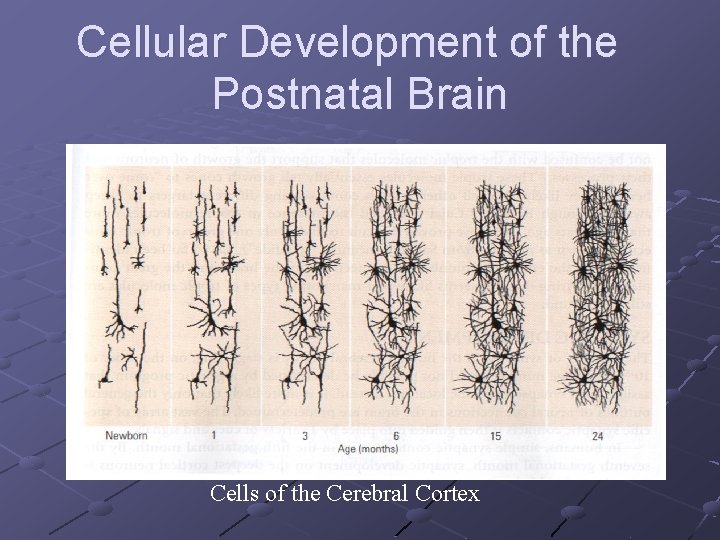
Cellular Development of the Postnatal Brain Cells of the Cerebral Cortex
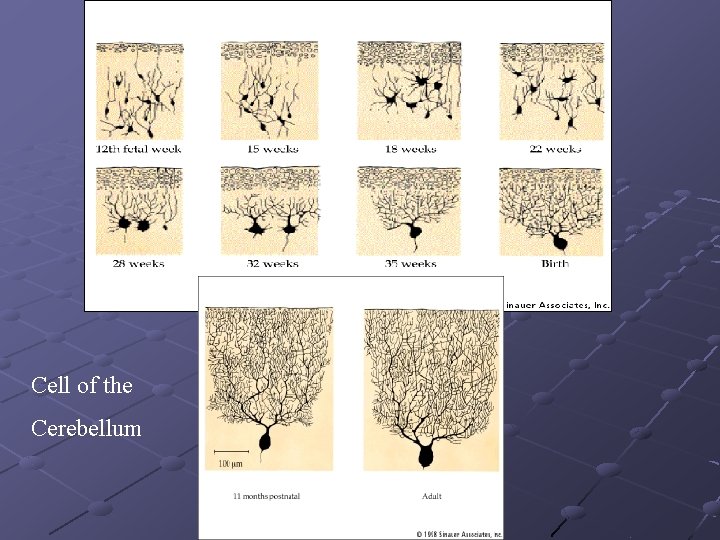
Cell of the Cerebellum
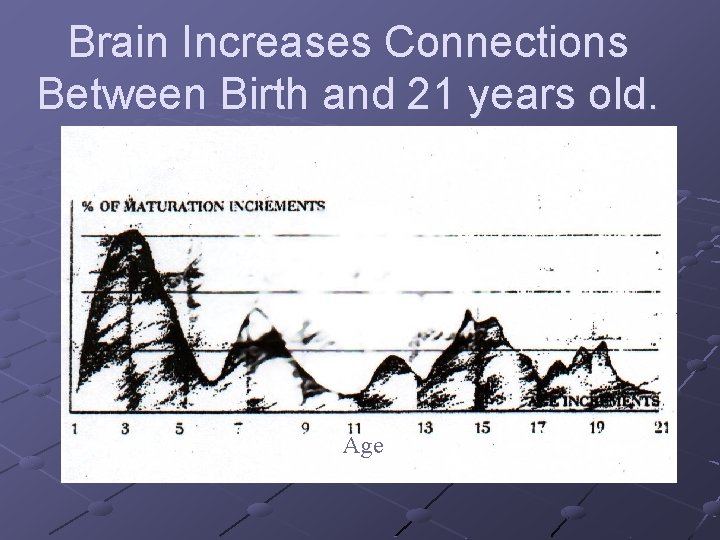
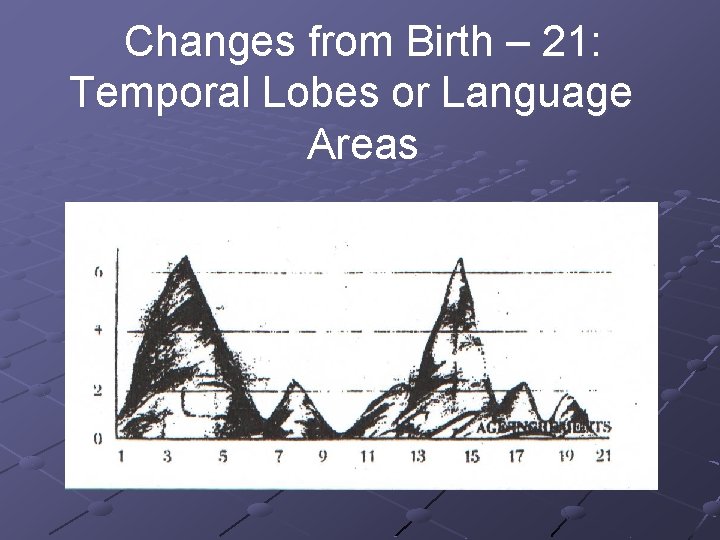
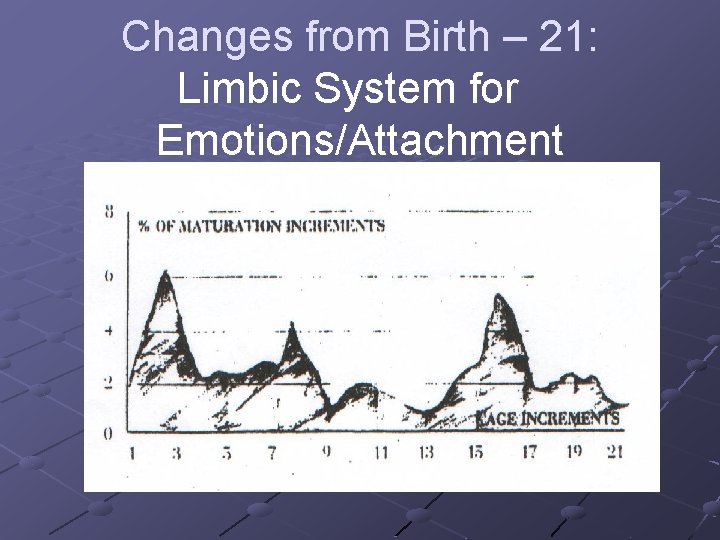
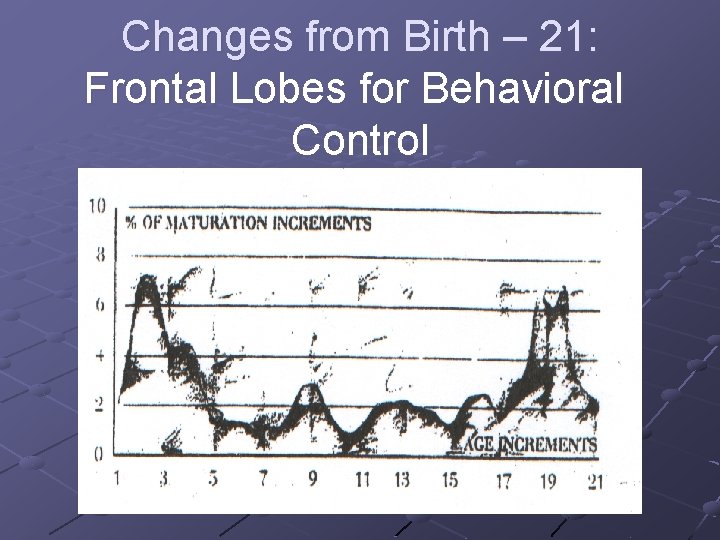
Brain Development Occurs in Waves through Age 21 Temporal Parietal Limbic Frontal
Brain Increases Connections Between Birth and 21 years old. Age
Changes from Birth – 21: Temporal Lobes or Language Areas Age
Changes from Birth – 21: Limbic System for Emotions/Attachment Age
Changes from Birth – 21: Frontal Lobes for Behavioral Control Age
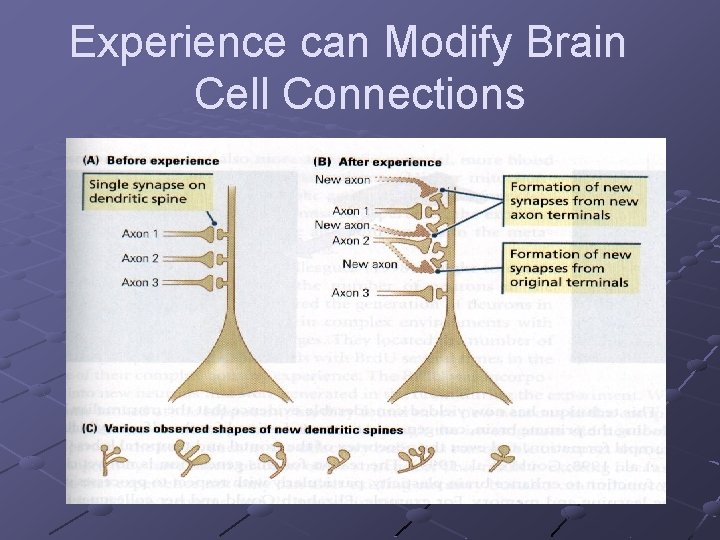
VII. How experience affects development 1. Neural activity regulates gene expression that directs synthesis of cell adhesion molecules 2. Neuronal activity regulates the release of neurotrophins (NGF) that are released from the dendrites; after synaptic connectivity 3. Stimulates foundation NT and this promotes subsequent development
Experience can Modify Brain Cell Connections
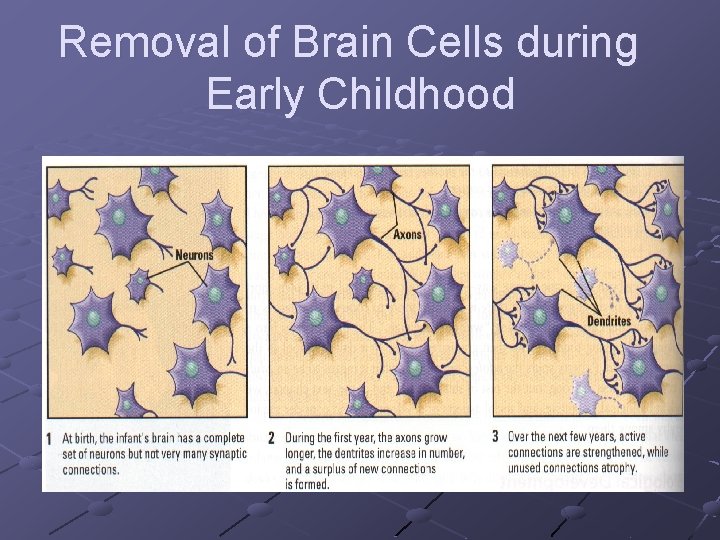
Active Cell Death – 40% occurs during the first 2 years of life, and it occurs on a different scale in adolescence (hormone related, final sculpting 1. Essential because many cells are unconnected and useless 2. Dysfunction in apoptosis is seen in post- mortem brains of children with (particularly autism problems in cerebellum, midbrain, &hippocampus); insufficient hooking up of neurons
Removal of Brain Cells during Early Childhood
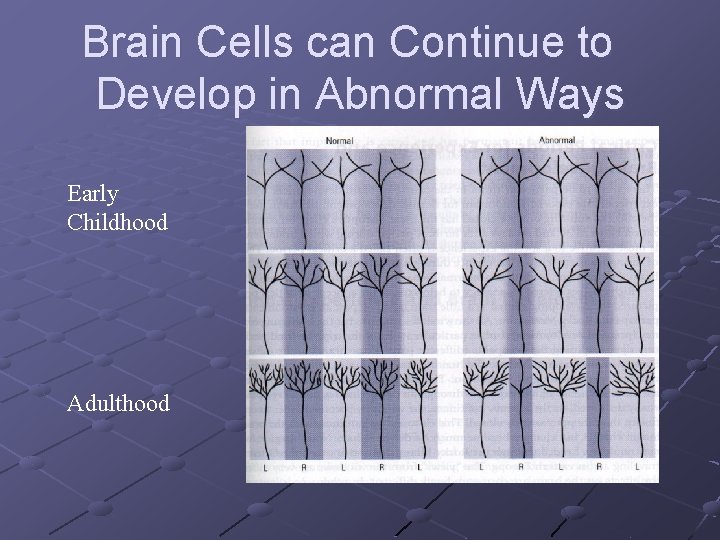
Brain Cells can Continue to Develop in Abnormal Ways Early Childhood Adulthood
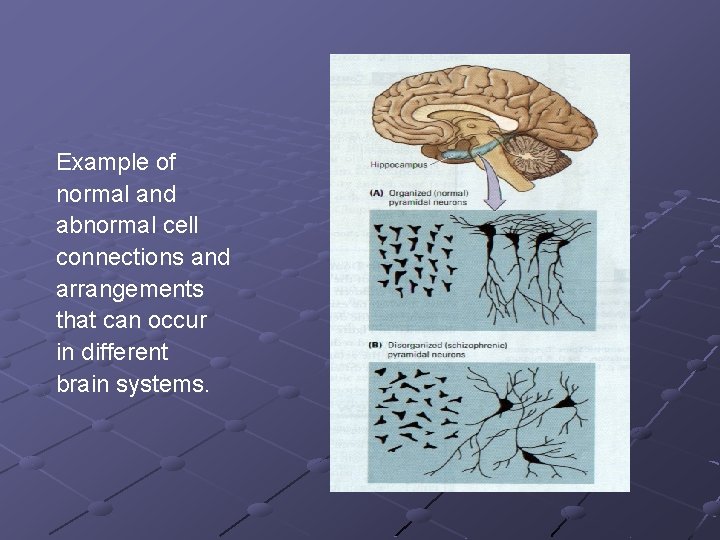
Example of normal and abnormal cell connections and arrangements that can occur in different brain systems.
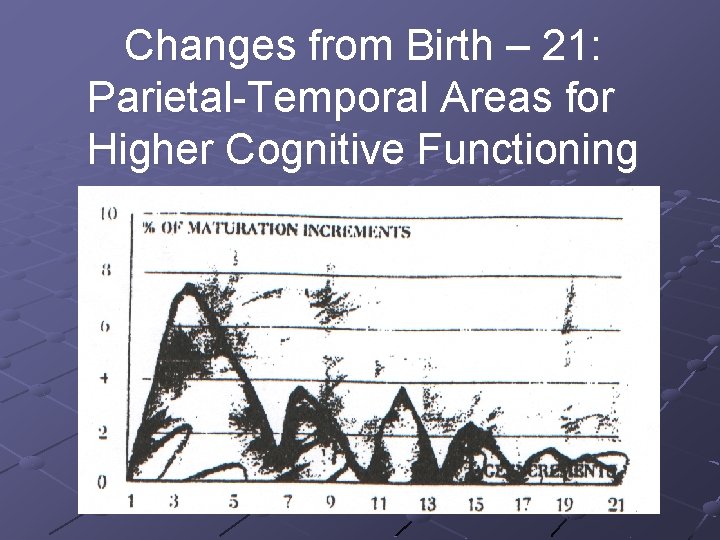
Changes from Birth – 21: Parietal-Temporal Areas for Higher Cognitive Functioning Age
THE FETUS AND NEWBORN
Responsiveness of the fetus: A number of stimuli induce fatal response as indicated by changes in heart rate and activity. Fatal Movements may be divided into 3 groups: *Slow squirming movements. *Sharp, kicking movements. *Small rhythmic movements.
SENSORY STATUS OF THE NEW BORN
Vision: The new born is visually sensitive to light from the moment of birth. Responses on the duration and intensity of the stimuli. The responses consist of lid movements, circulatory and respiratory changes, the ocular-neck reflex (i. e. bending backward of the head to a flash of light). and the Moro and startle reactions. There is some indication of fixation (At first, characteristically monocular, one fixed and the other wandering at random. Then fixation is binocular convergence in the second month & Pupillary reflex is sluggish at first), pursuit movements and nystagmus.
Hearing: The newborn can hear , but there is little evidence that he can discriminate between differences in pitch the responses vary according to the duration and intensity of the stimuli and are similar to responses to visual stimuli.
Smell: The Newborn can discriminate between pleasant and unpleasant smells. as indicated by sucking , and licking movements, in response to the one and by avoiding the other.
Taste: The Newborn can discriminate between taste qualities. Salt solutions tent to inhibit the suckling response, whereas sugar solutions elicit and maintain it.
Thermal sensation: The skin of the Newborn is sensitive to temperature changes. Warmth may cause movement toward the stimulus whereas, cold may lead to withdrawal movement.
Contact and pressure: The skin of the Newborn is sensitive to tactile and pressure stimuli. It can be detected as early as the eighth or ninth week of parental life. At first at the oronasal region , By the time of birth skin sensitivity is widely distributed.
Pain: The Newborn respond to painful stimuli with mild withdrawal movements, facial expressions of discomfort, and crying.
Kinesthetic Sense: the kinesthetic is well developed in the newborn. Numerous responses to change in position are observed. Lifting of the head when the tonic neck reflex, nystagmus. . . . etc.
Internal sensations: Most of the activity of the new born is accounted for by internal sensations particularly those arising in the gastrointestinal tract. Sensation is probably associated with hunger micturation and defecation.
Motor Responses of the Newborn
Grasp reflex: The Grasp reflex refers to closure of the hand when light pressure is applied to the palm. The reflex disappears at 16 to 24 weeks, a similar reflex may be elicited by applying light pressure to the sole of the foot.
Creeping Responses: When the infant is placed on his abdomen and contact or resistance is applied to the soles of the feet, forward movements of the feet are made. followed by alternate movement of the arms which tent to raise the body. These Responses disappear by about 4 months.
Stepping Movements: When the newborn is supported in the erect position with the soles of the feet resting on a surface, stepping movement, are made. These responses disappears at 4 to 5 months.
Moro Reflex: The Moro reflex can be readily elicited by striking the bed or by lifting the head and allowing it to drop back sharply. The initial part of the response consists in extension and abduction of the upper extremities, extension of the spine and retraction of the head, the forearms are supinated and the fingers and toes tend to fan out. The reflex is strongest during the first 8 weeks of life.
Startle Response: The startle response evoked by a sudden stimulus e. g. sudden noise includes, blinking, closing of the eyes, a thrusting forward of the head and neck, forward movement of the trunk, pronation of the lower limbs.
Tonic Neck Reflex (t-n-r): In tonic neck reflex position, the infant when lying on his back, holds the head rotated to one side, the arm and leg extended on the side toward which the head is turned, the other arm and leg being flexed.
Emotional Status of Newborn: The newborn is capable of responding emotionally to a number of stimuli. The responses are at first only roughly differentiated into positive and negative. Spitz propses that the newborn show only one kind of emotional response, displeasure which alternates with quiescence.
Negative or unpleasurable responses in the newborn are elicited by sudden, loud noise, by abrrupt change in position or by application of cold. Quiescence is induced by petting, rocking, cooing, warmth and allowing the child to suck.
DEVELOPMENT OF MOTOR ABILITIES
Definition: Motor abilities can be described briefly as the various kinds of bodily movement that are made possible through the coordination of nerve and muscle activity.
Introduction: To explore motor development we should examine reflexes and rhythmic movement, then turn over the attention to gross and fine motor skills.
General Pattern of Motor Development
1 - General - specific trend: It has been found that trend of development in motor abilities is from general coordinated movements to more specific kinds of motor behaviour (massspecific trend).
2 - Cephalocudal trend: The sequential pattern of growth from head downward is accepted as a general principle. By the cephalocaudal trend is meant that there is a more or less orderly progress in motor ability from head to foot and form a smoothly functioning whole.
3 -Proximodistal trend: Co-ordinated trunk movements also precede those of the body extremities. This sequence is referred to as the proximodistal trend.
4 -Simple complex trend: Each motor milestone - learn to walk, to sit - is not solitary event but each one demand presence of many individual skills, each component of skill must 1 st mastered and then assembling them to form a smoothly functioning whole.
Characteristic Principles of Development of Motor Abilities
1. The speed of voluntary movements improves at fairly uniform rate during childhood. 2. Accuracy of voluntary movements shows rapid improvement during the pre-school and elementary school periods.
3. Steadiness in motor behaviour continues to improve throughout the childhood years. 4. Progress in physical strength is variable due to the effect of environmental influences. 5. Except in early years there appears to be little correlation between the intellectual abilities and certain types of motor performance. 6. Rapid improvement in complex motor skills is generally characteristic of adolescent years.
Motor abilities can be divided into 2 major categories: I. Gross movements: That necessitates the movement of all or much of the body e. g. walking, running jumping , throwing and swimming.
II. Finer motor skills: That require the co-ordination of muscles e. g. grasping, drawing, sewing and using tools. smaller writing,
DEVELOPMENT OF SPEECH
Normal Language Functioning: Normal language functioning depends on a sensory and motor component and on a complex system of coordinating centers in the brain. The sensory process consists in comprehending the spoken and written words; the motor process refers to the ability to express words in speech and writing.
The integration of speech takes place at five levels: 1 - Neuromuscular level : includes peripheral muscles of speech in the larynx, lips and tongue together with the neurons in the medulla oblongata. Lesions here lead to paralysis of speech mechanism, with varying degrees of aphonia.
2. Corticobulbar neurons : Lesions her (mainly in the cerebral peduncles) gives rise to dysartheria. 3. Cerebellum (a coordinating center): Lesions here give rise to scanning, explosive and monotonous speech.
4. Cerebrum : Lesions causes agnosia (failure of symbolic understanding) and aphasia (failure to use speech and to understand the spoken word) 5. Also, located in the cerebrum is the mechanism which is disturbed in stuttering : It appears to be closely connected with emotional expression and with dominance in one cerebral hemisphere.
Maturation of Speech : 1. The earliest vocalization of the child is the birth cry. 2. The babbling stage, in which the child uses his speech mechanism in vocal play, appears by about the 3 rd month
3. In order for development of speech to proceed, the child must be able to hear the speech about him. Must have an adequate motor mechanism for the production of sounds he hears.
4. An infant responds to emotional attitudes and understands emotional tone of what is said long before he recognizes the meaning of words gradually emotional speech is changed to true speech, as the child learns to recognize the meanings of individual words, thoughts and associations of the word which correspond with the given object or situation or need.
5. The age of appearance of true speech by which is meant the ability to use words with meaning varies widely. 6. Speech is rarely observed as early as the 9 th month. 7. By one year about 74% of children have begun articulate speech.
8. At 18 months only about 26% of vocal responses are comprehensible. 9. By 2 years children may be expected to have a vocabulary ranging form 20 -300 words or more. 10. The vocabulary of the ordinary high school graduates is about 14, 000 words. 11. The average at which words used with recognizable meaning is 14 months for girls and 15 months for boys.
Factors influencing acquisition of speech
1. Socioeconomic status: Children from better environments being consistantly more advanced than poor children. 2. Intelligence: Gifted children start to talk on the average 4 months before than average children.
3. Sex: Girls are somewhat accelerated than boys in articulation development. 4. Twins: Tend to be retarded in language ability. 5. Bilingualism: Retarded vocabulary in each language. 6. Sensory and motor impairments: Retards speech acceleration
SENSORY AND PERCEPTUAL DEVELOPMENT
Approaches to Perceptual Development : 1. The empirical approach: It holds that sensory experience is building block of all perception and ultimately all knowledge. 2. The cognitive approach : It holds that understanding influences the sensory and perceptual processing
3. Gibson’s differentiation theory: The environment is rich in varied and complex potential stimulus information capable of giving rise to diverse meaningful, complex perceptions which are not perceived piece by piece (as the empirical and cognitive theorists believe). In stead complex stimuli are extracted from the flow of perceptual information. So perception reflects children’s growing ability to identify the features that distinguish complex patterns