
Growth and development By Prof Nabil A Hasan

Growth and development By Prof. Nabil A Hasan

GROWTH & DEVELOPMENT Definition: Growth : Increase in size or mass of tissues. Due to: • increase in size of cells • increase in ground substance Development: Maturation of function • Acquisition of skills • Due to myelination of neurons
Stages of Growth 1 - Predominant growth stage: It is a period of early embryonic life, in which there is maximal growth with minimal differentiation. 2 - Balance stage: It the stage between 2 nd month of fetal life & maturity. 3 - Predominant function stage: It is the stage of full maturity 4 - Insufficient growth stage: It is deterioration of function due to insufficient growth
FACTORS AFFECTING G & D: Genetic parental phenotype & familial patterns Race Sex Genetic disorders -chromosomal -gene defects Environmental Intrauterine factors -Maternal nutrition -anemia -PET, HT -Tobacco -alcohol -drugs - infections Postnatal -nutrition -Infections -trauma -emotional factors -cultural practices -Hormonal influences -Growth hormone -insulin -thyroid -sex hormones
ASSESSMENT OF PHYSICAL GROWTH: Growth Parameters: Weight: child weighed nude on lever/electronic scale • Spring balance less accurate Length: For <2 yrs • Child supine on rigid table/infantometer • Legs straightened • Feet at right angles • Foot board brought upto child's heels Height: • Child stands upright against wall/stadiometer • Heels, buttocks, back in contact with vertical surface • Head held in Frankfurt's plane - line joining floor of external auditory meatus to floor of orbit is horizontal • Head piece firmly over vertex Crown Rump length: Length from vertex to ischial tuberosity Sitting Height:
ASSESSMENT OF PHYSICAL GROWTH: Growth Parameters: • Head Circumference: Maximum circumference from occipital protuberance to forehead • Chest Circumference: Measured at level of nipples midway between inspiration & expiration in recumbent position. • Body Proportions: • US: LS ratio 1. 7: 1 at birth • 1. 3 at 3 yrs • 1: 1 at 6 -7 yrs • Mid Arm Circumference: • Relatively constant between 1 -5 yrs age independent • Normal 1605 – 17. 5 cm • <12. 5 cm – malnourished Z scores = standard deviations from median reference
Height: • • • 50 cm at birth 60 cm at 3 mths 75 cm at 1 yr 100 cm at 4 yrs gain 5 cm/yr till 10 yrs
Head Circumference: • Birth - 35 cm • 3 mths - 40 cm • 12 mths - 45 cm • 24 mths - 48 cm • 12 yrs - 52 cm Chest Circumference: • 3 cm less than head circumference at birth, equal at 1 yr • After that, exceeds head circumference
ERUPTION OF TEETH: Primary Teeth • Lower central incisors 5 -8 mths • Upper central incisors – a month later • Lateral incisors – within next 3 months • 1 st Molars – 12 -15 mths • Canine - 18 -21 mths • 2 nd Molars – 21 – 24 mths Permanent teeth: • 1 st molar – 6 yrs • Central & lateral incisors – 6 -8 yrs • Canines & premolars – 9 -12 yrs • 2 nd molar - 12 yrs • 3 rd molar – 18 yrs or later
BONE AGE: • An indicator of physiological development • Distinct from chronological age • More advanced in girls - by 1 yr in early childhood; 2 yrs in mid childhood • Assessed by number, shape & size of ossification centers and density size & shape of ends of bones • • • Which bones to Xray? Newborn – Xray of foot & knee Infant 3 -9 mths – shoulder 1 -13 yrs – wrist & hands 12 -14 yrs – elbow & hip
BEHAVIORAL DEVELOPMENT: • As age advances, child acquires better coordination of motor activity and reacts to environment willfully • Development is a continuous process and different levels of development (milestones) are achieved at an anticipated age (+/- few months) • Early primitive reflexes are lost • 4 areas of development: – – Gross motor Fine motor (adaptive) Social Language
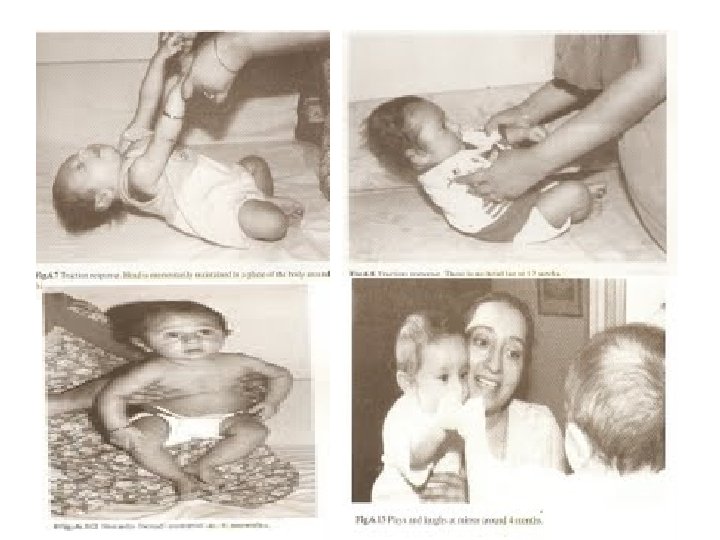
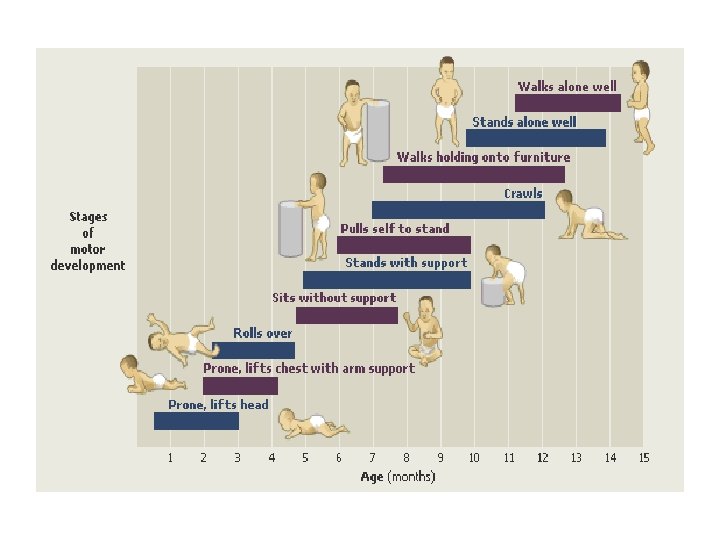
GROSS MOTOR : Involves control of child over his body. Tested in : Ventral Suspension: Baby held in prone position and lifted off the bed. Newborn – head flops down • 4 -12 wks – brings head to plane of body and then above plane of body Supine : • Child placed supine and gently pulled up by the arms • Newborn – head lag • By 16 -20 wks – head in plane of body or ahead with back straight Prone: • Newborn – can turn head to 1 side • 1 mth – lifts chin momentarily • 3 mths – lifts head and upper chest • 6 mths –liftd head & chest • 5 -8 mths – rolls over, first back to side and front • 8 mths – crawls
Sitting: • 5 mths – sits with support • 8 mths – sits steadily with back straight, without support • 10 mths – pulls from supine to sitting position Standing: • 4 mths-Bears weight on legs • 9 mths – early stepping movements, pulls to standing with help of furniture • 10 mths – cruising • 13 – 15 mths – walks unsupported • 15 mths – walks sideways/backwards Climbing stairs – • 2 yrs – climbs stairs – 2 feet per step • 3 yrs – climbs up stairs – one foot per step • 4 yrs – climbs down one foot per step
Key Gross motor milestones: • 3 mths – neck holding • 5 mths – sitting with support • 8 mths – sitting without support • 9 mths –standing with support • 10 months – cruising • 12 mths – standing without support • 14 mths – walking without support • 18 mths – running • 24 mths – walking upstairs
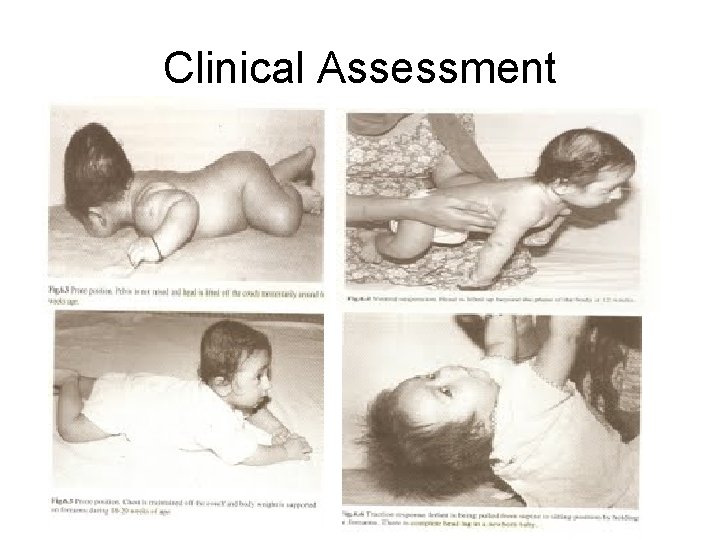
Clinical Assessment
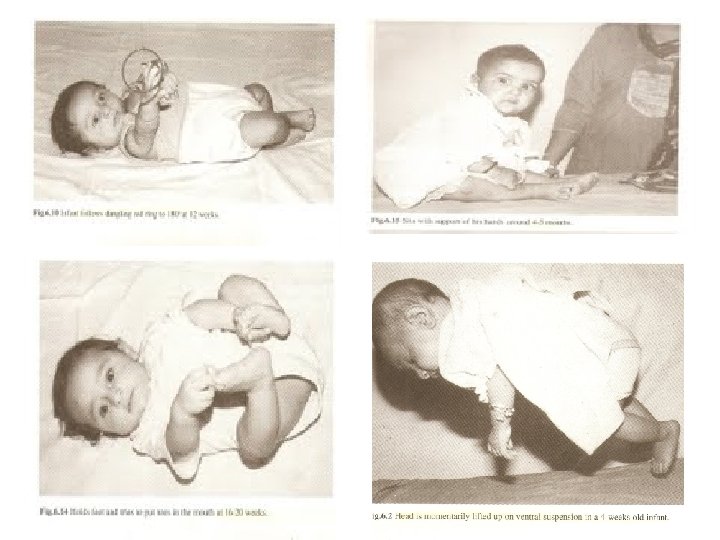
• FINE MOTOR OR ADAPTIVE MILESTONES: Includes eye coordination, hand mouth coordination and manipulation with hands • Tested with red ring, pen torch, red cubes (2. 5 cm), pellet, cup with handle, spoon, book with thick pages, red pencil/crayon, paper, wooden blocks, doll, mirror • Eye coordination: • 4 wks – regards torch/red ring kept at 20 cm in front • 6 wks – follows object from side to side –unsteadily • 2 -3 mths – follows with steady movements of eyes • Binocular vision by 3 -6 mths
Hand eye coordination: • 4 mths – tries to grasp red ring dangling in front but may overshoot • 5 mths – reaches out & grasps object with ulnar side • 6 mths – radial grasp, transfers objects from hand to hand • 10 mths – pincer grasp Hand-mouth coordination: 1 yr – tries to feed with spoon but may spill • 15 mths – feeds with spoon • 18 mths – feeds self from cup Hand skills: Book: • 13 mths – turn 2 -3 pages at a time • 24 mths – turns 1 page at a time Scribbling: • 12 -24 mths – scribbles • 2 yrs – copies vertical line • 2 ½ yrs –copies horizontal line • 3 yrs – circle • 4 yrs – cross, rectangle • 5 yrs – copies cross, triangle
PERSONAL & SOCIAL DEVELOPMENT: • 1 mth - regards face of mother/caretaker • 2 mth - social smile • 3 mths - recognises mother/caretaker • 6 mths - enjoys mirror • 7 -8 mths - separation anxiety • 9 mths - waves bye-bye
LANGUAGE DEVELOPMENT: • 1 mth - turns head towards sound • 3 -5 mths - vowel sounds, gurgles • 6 mths - monosyllables • 9 mths - bisyllables • 10 mths - understands spoken speech • 12 mths - speaks 2 words with meaning • 18 mths - 20 words • 24 mths - joins 2 -3 words in a short sentence • 3 yrs - 250 words BOWEL & BLADDER CONTROL: • Early months - gastrocolic reflex defecates asfter each feed • 7 mths - no relation to feeds • Toilet trainable by 18 mths - 2 yrs
Human chromosomes and karyotyping
Karyotype • Definition: Karyotyping is a laboratory procedure to examine the cell chromosomes • The procedure: – obtaining blood sample. – Centrifugation for separation of WBCs. – Culturing in a nutritive medium to enhance cell division. – Using of Colchicin drug to arrest cell division.
Cont. Karyotype – Adding hypotonic solution for cell swelling and rupture. – Staining by Giemsa stain. – Microscopic examination of chromosomes. – Samples of human cells for karyotyping could be obtained also from bone marrow and mucus membranes
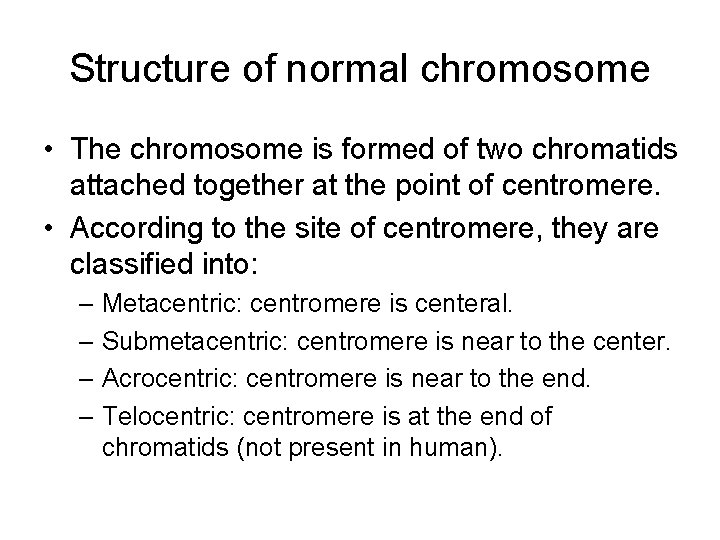
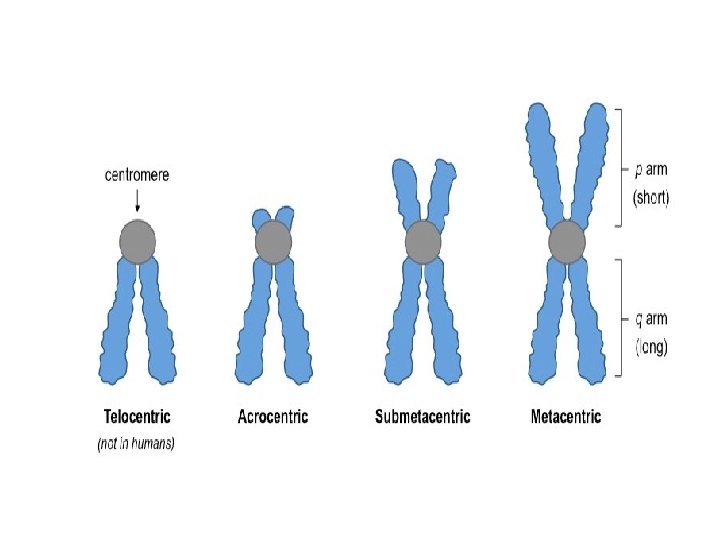
Structure of normal chromosome • The chromosome is formed of two chromatids attached together at the point of centromere. • According to the site of centromere, they are classified into: – Metacentric: centromere is centeral. – Submetacentric: centromere is near to the center. – Acrocentric: centromere is near to the end. – Telocentric: centromere is at the end of chromatids (not present in human).
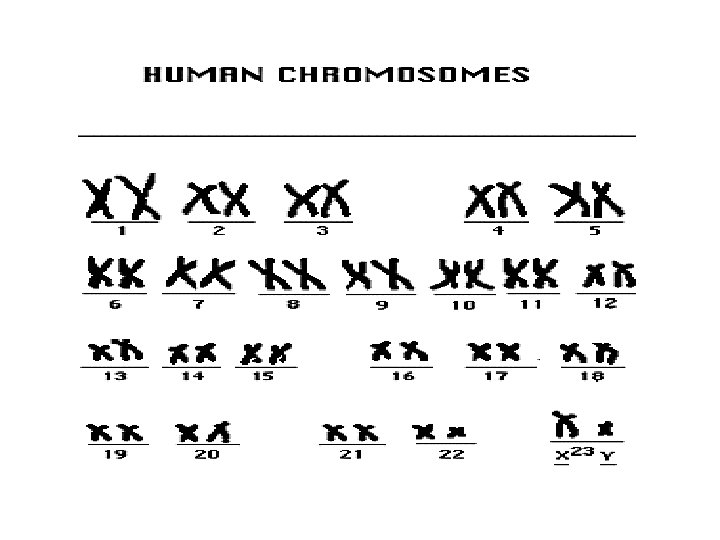
Number of human chromosomes (Euploidy) • In somatic cell: is diploid number (23 pairs): 22 pairs of somatic chromosomes and one pair of sex chromosomes. • In gamete cell: is haploid number (23): 22 somatic chromosomes and one sex chromosome (either Y or X).
Groups of human chromosomes • According to their size and site of centromere they are 7 groups: – Group A: 1 st, 2 nd, 3 rd pairs. – Group B: 4 th, 5 th pairs. – Group C: 6 th : 12 th pairs, and X- chromsome. – Group D: 13 th, 14 th, 15 th pairs. – Group E: 16 th, 17 th, 18 th pairs. – Group F: 19 th, 20 th pairs. – Group G: 21 st, 22 nd pairs and Y- chromosome.
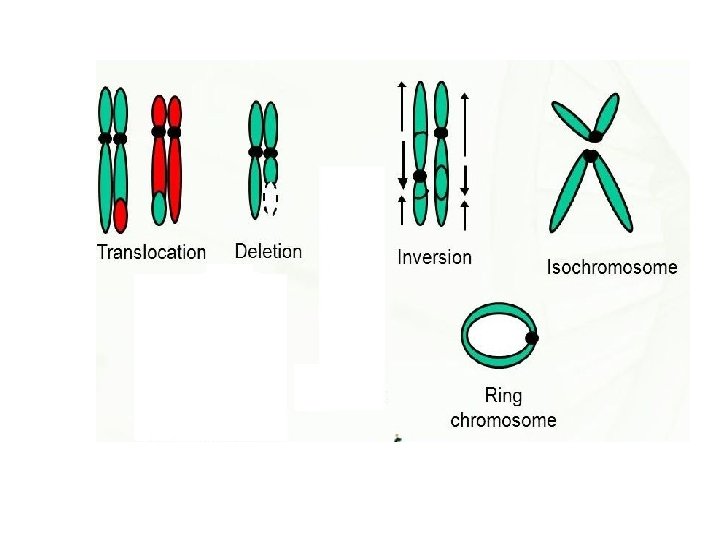
Anomalies of chromosomes: 1. structural anomalies: • Deletion: loss of piece of chromatid. • Translocation: adding extr apiece of chromatid. • Inversion: reciprocal reattachment of piece of chromatid. • Ring chromosome: fusion of its tip in ring like sructure. • Isochromosome: transverse separation of centromere.
Anomalies of chromosomes: 2. numerical anomalies A) In somatic chromosomes 1. Duplication of chromsomal number (triploidy, tetra ploidy, polyploidy). 2. Extra chromsome, (trisomy). 3. Reduction of one copy of chromsome, (monosomy).
Nondisjunction • Failed separation of two chromatids during Anaphase of cell division. • One of daughter cells will have 3 copies and the other cell will have only one copy. • Clinical example: (Trisomy 21 or Down syndrome).
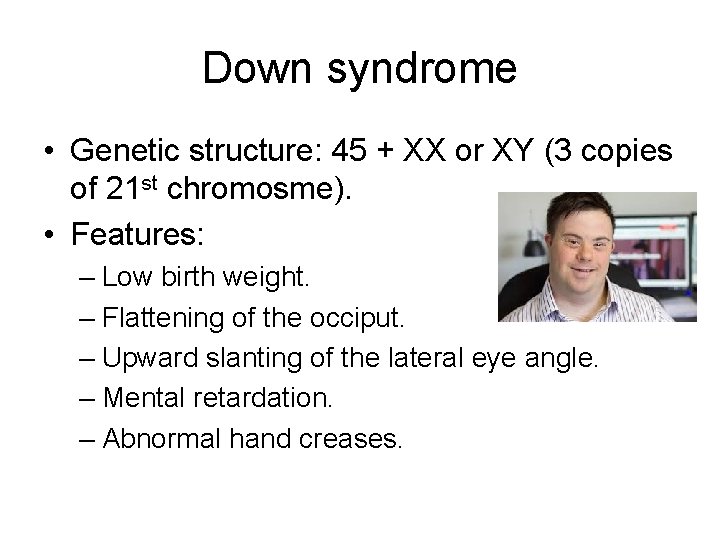
Down syndrome • Genetic structure: 45 + XX or XY (3 copies of 21 st chromosme). • Features: – Low birth weight. – Flattening of the occiput. – Upward slanting of the lateral eye angle. – Mental retardation. – Abnormal hand creases.
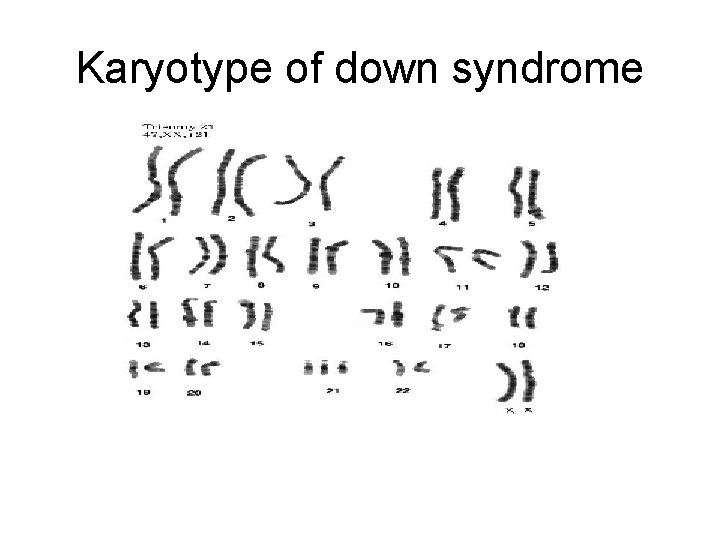
Karyotype of down syndrome
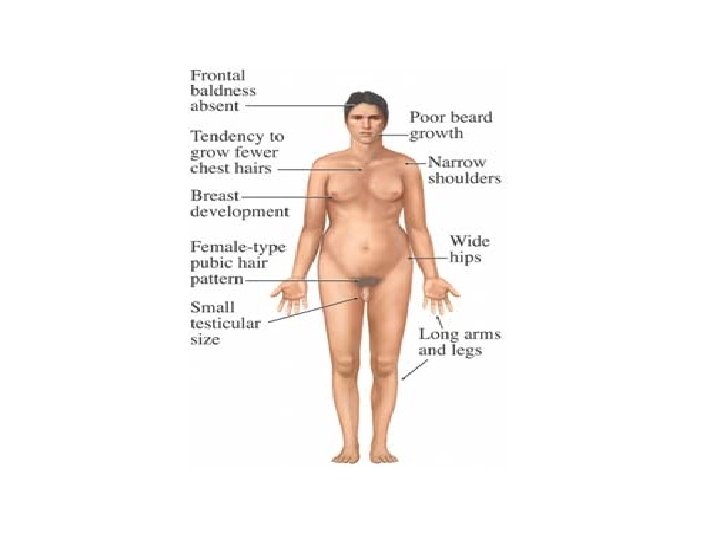
B) In sex chromosomes: Klinefelter syndrome • Genetic structure: 44 + XXY • Features: – Female hips – Narrow shoulders – Infantile genitalia. – Gynecomastia.
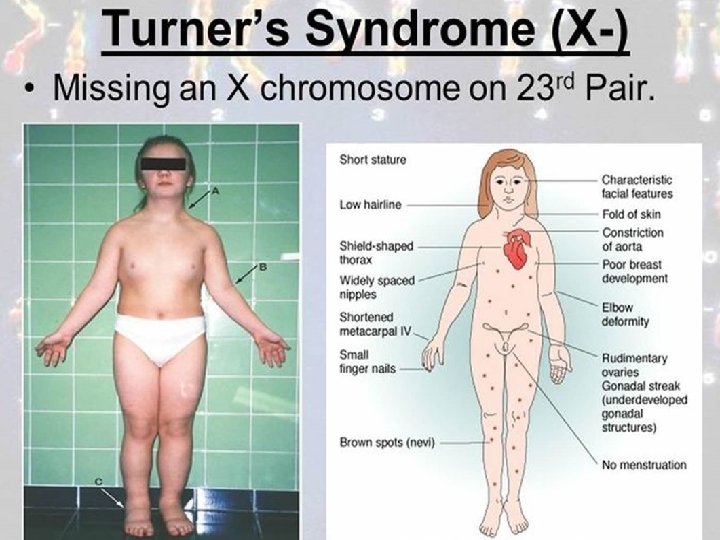
Turner syndrome • Genetic structure: 44 + XO • Features: – Short stature female. – mentally retarded. – Short webbed neck. – Infantile genitalia.
Indications of chromosomal analysis • • • Infertility and hypogonadism. Repeated abortion and peri-natal mortality. Cancer. History of genetic disorders. Abnormal genital organs. Abnormal chromatin body.

- Slides: 42