
Growing Student Learning for Life http www edu
- Slides: 55
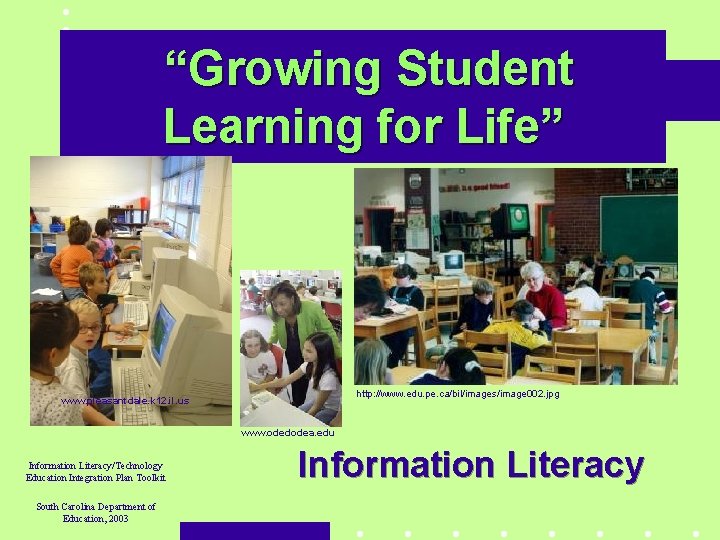
“Growing Student Learning for Life” http: //www. edu. pe. ca/bil/images/image 002. jpg www. pleasantdale. k 12. il. us www. odedodea. edu Information Literacy/Technology Education Integration Plan Toolkit South Carolina Department of Education, 2003 Information Literacy
Realizing Student Achievement Technology and Information Literacy What needs to happen for kids to be able to live as successful adults?
HEY! It’s Not a Secret! Kids need to become adults who can Think Question Make decisions Find and use information for based on needs Work with others in groups and collaborations
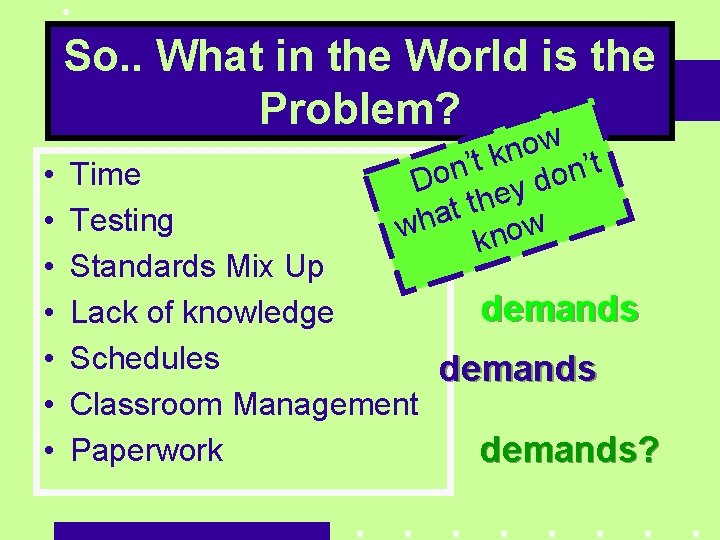
So. . What in the World is the Problem? • • w o n k t ’ ’t n n o o D d y e h t t wha know Time Testing Standards Mix Up demands Lack of knowledge Schedules demands Classroom Management Paperwork demands?
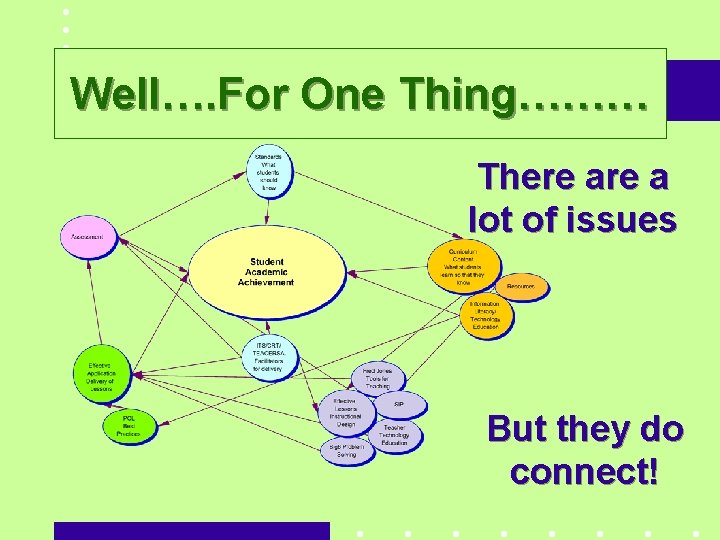
Well…. For One Thing……… There a lot of issues But they do connect!
Statewide Initiative Students will have a greater opportunity to be prepared for today and tomorrow when they become self-directed, lifelong learners who are informed citizens, responsible workers, and successful students.
Statewide Initiative. . To see information literacy and technology education become an essential integrated component in each district’s instructional initiatives. . to see students involved. . to see all educators “get it”. . to see technology used appropriately and. . effectively
Three Primary Curricular Compelling Research Goals • Achievement in content area learning • Higher-order thinking and problem solving development • Workplace preparation
Significant Increase in Student Learning Teacher’s Report • Research skills • Ability to apply learning to real world situations • Organizational skills • Interest in the content • Significant improvement in SAT scores • (Cradler & Cradler, 1999)
New BASICS Compelling Research • Use of technology to communicate • Working in groups • Solving problems when answers are not self-evident • Understanding how systems work • Collecting, analyzing, and organizing data Olson (1998) School to Work Programs
This takes a village Let’s See What You Think Now? Get out your pencils
QUESTIONS to CONSIDER What is Information Literacy? What is technology? What exactly do students need to know? How do you “teach” research? How will it impact on student learning?
QUESTIONS to ASK Why is a problem solving model important? Why integrate? What does that involve? How do you integrate with existing lessons?
What is information literacy? Information literacy is ü ability to access, evaluate and use information from multiple formats -- books, newspapers, videos, CD-ROMs, or the Web. Information literacy means üapplication of problem-solving skills in situations students face in all their subject areas. üset of competencies, skills that will grow with students, even when current operating systems, search engines or platforms are obsolete.
Philosophy/Guiding Principles- Plan • guided by instructional objectives and beliefs about student learning • Interweaving of – instructional design, – student learning, – effective teaching, – best practices
Technology is………………. . Technology Education focuses on incremental skills in using and applying technology tools for relevant, meaningful, instructional activities Information Literacy’s focus is on content, communication, information searching, analysis and evaluation
What is a technology enhanced, student-centered classroom? ØConnections to an exciting new world of hot and lively current information ØStudents make meaning and develop insight while the teacher shows them how to navigate and reason through the labyrinth of new sources ØFront of the room disappears as computers support investigations, explorations and excursions
What is a technology enhanced, student-centered classroom? ØMajor focus of classroom activity is QUESTIONING ØEffective searching, prospecting, gathering and interpretation techniques required ØTools and information used to explore solutions to contemporary issues ØQuestioning and information literacy become fundamental ØWires and cables transformed into powerful channels for learning
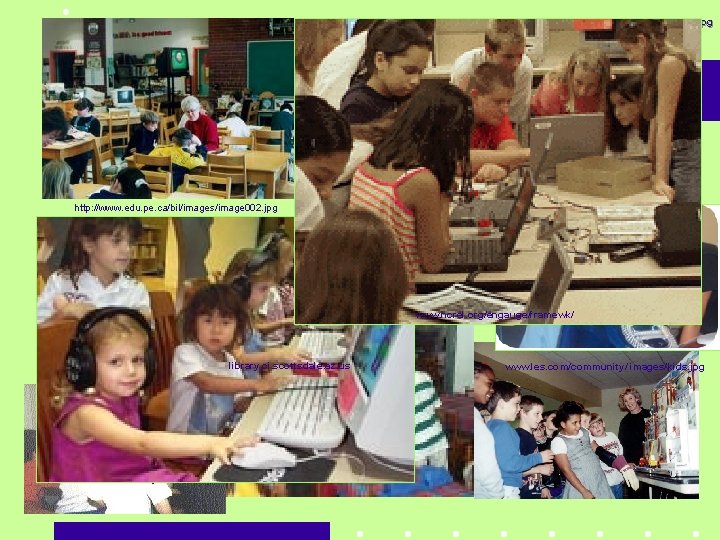
http: //www. nutrisci. . wisc. edu/grad_ns/g_ns_images/g_courses. jpg http: //www. edu. pe. ca/bil/images/image 002. jpg www. limsat. org xmmlaunch. esa. int/images/ kids-nov 24 -3. jpg www. acnatsci. org/research/ pcer/fisheries. html www. interactive-lafayette. com library. ci. scottsdale. az. us www. ncrel. org/engauge/framewk/ www. les. com/community/ images/kids. jpg
The Standards Movement Addresses What Students Should Know from Content The use of technology as a tool for discovering and applying content knowledge in authentic contexts for: • solving problems, has not been addressed • making decisions, in the content standards • exchanging information and • communicating
Information Literacy Guide to Integration • Best Practices in Teaching and Learning • Best Practices in Increasing Student Achievement through Effective Media Center Programs • Instructional Design Research Based • “Tweaking Lessons” for RIGOR • Teacher Technology Competencies
Information Literacy/Technology Education K 12 Integration Plan Statewide Initiative Integrates information literacy and technology education into problem solving and inquiry lessons and activities based on the CURRICULUM Standards and ISTE and AASL Standards
Purpose of Integration – Components of “teaching” research and problem solving? ¶ Good research and problem solving activities just don’t happen – time planning, access ¶ Developmentally and progressing through complexity - scaffolding ¶ Questioning piece is the most important part – makes or breaks ¶ Use a problem solving model ¶ Need common, consistent model ¶ What does it look like? Modeled and taught – not just assigned ¶ Key person – the principal and how he/she views the value
Why? • Children exposed to interdisciplinary units of study use technology as a tool to become literate, cooperative, problem-solving, selfmotivated learners. • Linking technology with core instructional objectives is what makes good, effective use of technology. That's the message we need to communicate. It's a process - not a number.
Why? • Technology-rich environments can support initiatives focused on improving learning outcomes. • Teachers are the first to recognize increases in students' self-esteem and confidence, enhanced content area understanding, and more informed and empathic responses to world events as a result of using technology.
Leading the way to Information Literacy and Technology Education The three most important schoolto-life critical skills Research Problem Solving Communication
This is what we have for South Carolina Major Components 1. Performance Matrix Statewide 2. Curriculum Overlay Initiative 3. Process Model (Big 6) 4. Sample Modified Lesson 5. Content integration vs. Laundry List of Skills
catalyst Let’s take a good look and see how this can be the catalyst that changes the way in which instruction is delivered so that student achievement happens !!
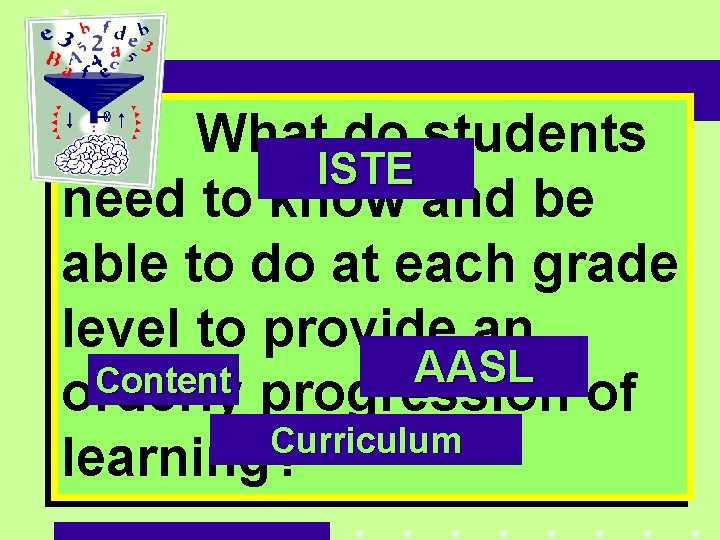
What do students ISTE need to know and be able to do at each grade level to provide an AASL Content orderly progression of Curriculum learning?
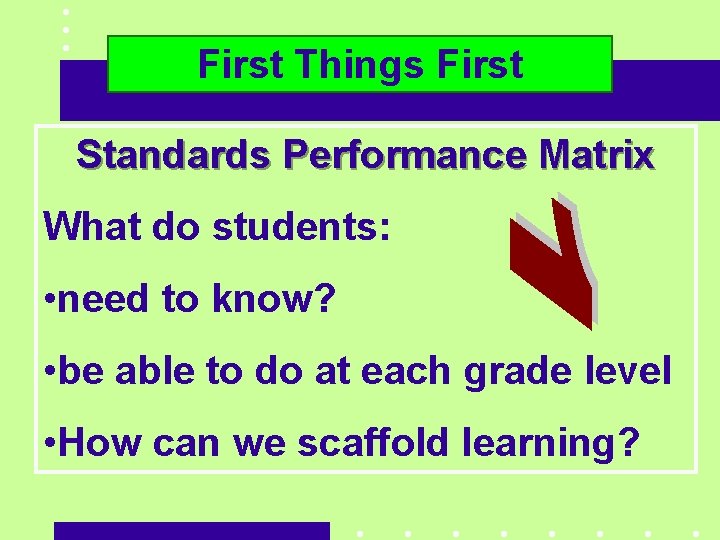
First Things First Standards Performance Matrix What do students: • need to know? • be able to do at each grade level • How can we scaffold learning?
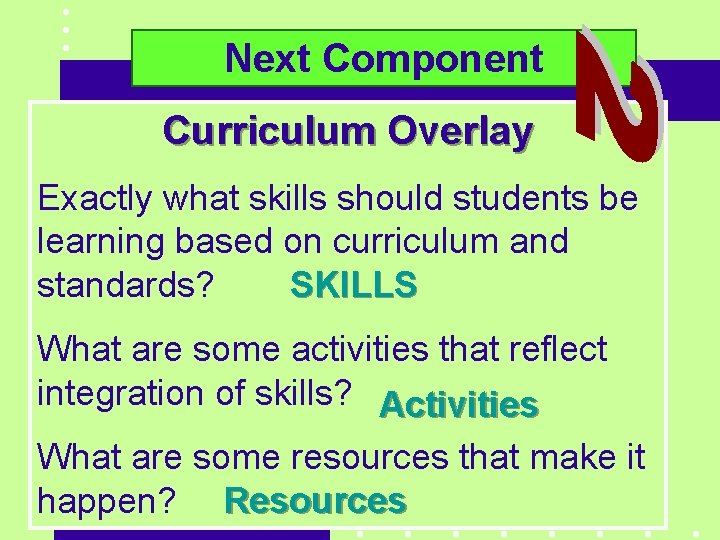
Next Component Curriculum Overlay Exactly what skills should students be learning based on curriculum and SKILLS standards? What are some activities that reflect integration of skills? Activities What are some resources that make it happen? Resources
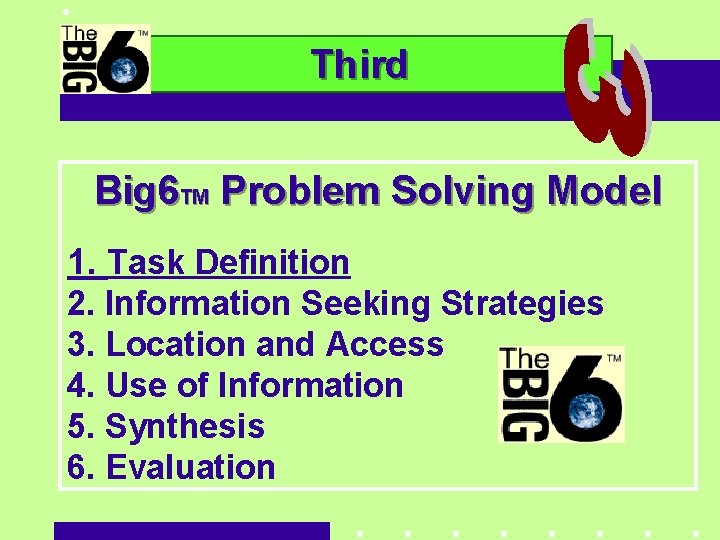
Third Big 6 TM Problem Solving Model 1. Task Definition 2. Information Seeking Strategies 3. Location and Access 4. Use of Information 5. Synthesis 6. Evaluation
Assignments and Assessment • What exactly is the assignment? • How will student accomplishments be assessed? • What are the expectations for student learning? RUBRICS
What do students need to know? • Learn, practice, and use information skills and strategies • Within the instructional program • Within the subject areas • For authentic learning
What do students need to know? • Learn the information process – A process is a step by step set of procedures designed to solve a problem. • Develop effective strategies –A strategy is a plan of action for searching to find the information you want and NEED.
What are Information Skills? Making decisions Analyzing Locating Accessing Using Synthesizing Evaluating Cooperating Presenting Discussing Trouble Shooting Problem solving Designing Creating Reading Comparing Contrasting
Recognize What Is Really Important in Student Research Know what is fluff and puff bells and whistles paste and waste surfing and saving
Understand that this is not intuitive It doesn’t just happen!
FOR Effective Lessons • What do kids need to learn? When? • What EXACTLY do I want them to accomplish? What are we studying now? • What will our focus be? • How much do they know now? • At what level should I begin?
Effective Research How will I know that students have learned t what I set out to teach n e m s and what I wanted them s e s s to experience? A
Curriculum Integration Reference Activities Learning process Learning strategies Learning content
Good Assignments • Students have a choice • Students have ownership • Students can relate
Good Assignments • Clear purpose • and expectations • (rubrics) • (checklists)
Good Assignments Go beyond • the written word. . . • drawings, photos, music, • oral presentations • interviews • desktop publishing
Educators • • • Allow Yourself to lose Control Over time The final product The correct answers Knowing all the answers Being more knowledgeable than the kids
What do media specialists need to do? • Totally familiarize yourself to talk the talk and walk the walk • Know information literacy and READ journals • Don’t try it on your own • Develop a plan • Plug it, squeeze it, and don’t let it dry out!
Learning is a complex process……. through which learners constantly change their internally constructed understandings of how their worlds function. New information either transforms their current beliefs —or doesn't. The learning environment is a function of many complex factors, including curriculum, instructional methodology, student motivation, and student developmental readiness. Trying to capture this complexity on paper-and-pencil assessments severely limits knowledge and expression. Martin G. Brooks and Jacqueline Grennon Brooks. The Constructivist Classroom. November, 1999
QUESTIONS to Review What is Information Literacy? What is technology? How do you “teach” research? What exactly do students need to know? How will it impact on student learning?
QUESTIONS to Review Why is a problem solving model important? Why integrate? What does that involve? How do you integrate with existing lessons?
Resources American Association of School Librarians. Information power: Building Partnerships for Learning. Chicago: American Library Association, 1998. Smink, Anna, “Information Literacy: A Plan and a Practice. ” Knowledge Quest 28 March/April 2000: 40 -42. O’Sullivan, Michael, Scott, Thomas. “Teaching Internet Information Literacy. ” Multimedia Schools: March/April 2000: 41 -44. South Carolina Department of Education, South Carolina’s K-12 Curriculum Standards. Barckay, Donald A, Editor. Teaching Electronic Information Literacy: A How-To-Do-It Manua. Neal-Schuman Publishers, 1995. Berger, Pam. Internet for Active Learners; Curriculum-Based Strategies for K-12. American Library Association, 1998. Chirinian, Alain. Internet Activities for Science: Prirmary. Teacher Created Materials, 1999. Donham, Jean: Enhancing Teaching and Learning: A Leadership Guide for School Media Specialists. Neal. Schuman Publishers, 1998. Donato, Diane. Integrating Technology into the Science Curriculum: Primary. Teacher Created materials, Inc. , 1998. Eisenburg, Michael and Berkowitz, Robert. Information Problem Solving: The Big Six Skills Approach in Library and Information Skills Instruction. Ablex, 1990.
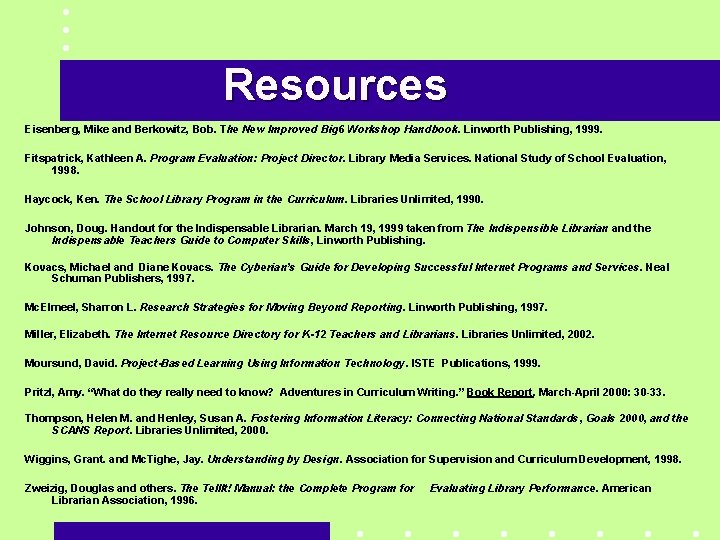
Resources Eisenberg, Mike and Berkowitz, Bob. The New Improved Big 6 Workshop Handbook. Linworth Publishing, 1999. Fitspatrick, Kathleen A. Program Evaluation: Project Director. Library Media Services. National Study of School Evaluation, 1998. Haycock, Ken. The School Library Program in the Curriculum. Libraries Unlimited, 1990. Johnson, Doug. Handout for the Indispensable Librarian. March 19, 1999 taken from The Indispensible Librarian and the Indispensable Teachers Guide to Computer Skills, Linworth Publishing. Kovacs, Michael and Diane Kovacs. The Cyberian’s Guide for Developing Successful Internet Programs and Services. Neal Schuman Publishers, 1997. Mc. Elmeel, Sharron L. Research Strategies for Moving Beyond Reporting. Linworth Publishing, 1997. Miller, Elizabeth. The Internet Resource Directory for K-12 Teachers and Librarians. Libraries Unlimited, 2002. Moursund, David. Project-Based Learning Using Information Technology. ISTE Publications, 1999. Pritzl, Amy. “What do they really need to know? Adventures in Curriculum Writing. ” Book Report. March-April 2000: 30 -33. Thompson, Helen M. and Henley, Susan A. Fostering Information Literacy: Connecting National Standards, Goals 2000, and the SCANS Report. Libraries Unlimited, 2000. Wiggins, Grant. and Mc. Tighe, Jay. Understanding by Design. Association for Supervision and Curriculum Development, 1998. Zweizig, Douglas and others. The Tell. It! Manual: the Complete Program for Librarian Association, 1996. Evaluating Library Performance. American
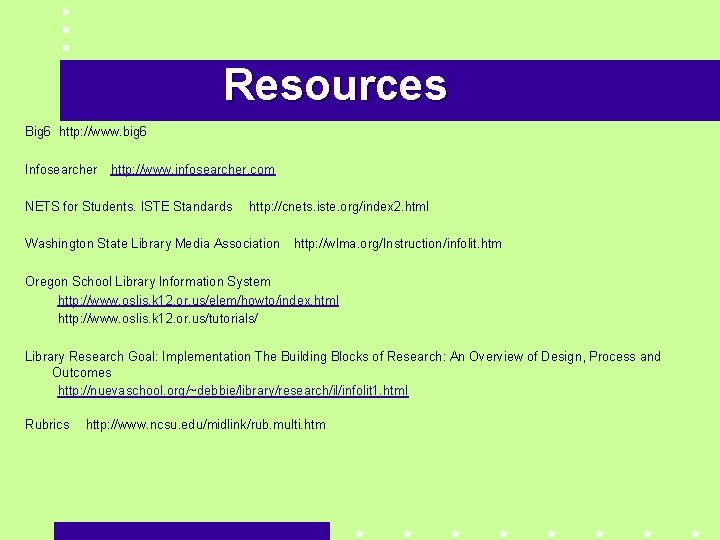
Resources Big 6 http: //www. big 6 Infosearcher http: //www. infosearcher. com NETS for Students. ISTE Standards http: //cnets. iste. org/index 2. html Washington State Library Media Association http: //wlma. org/Instruction/infolit. htm Oregon School Library Information System http: //www. oslis. k 12. or. us/elem/howto/index. html http: //www. oslis. k 12. or. us/tutorials/ Library Research Goal: Implementation The Building Blocks of Research: An Overview of Design, Process and Outcomes http: //nuevaschool. org/~debbie/library/research/il/infolit 1. html Rubrics http: //www. ncsu. edu/midlink/rub. multi. htm
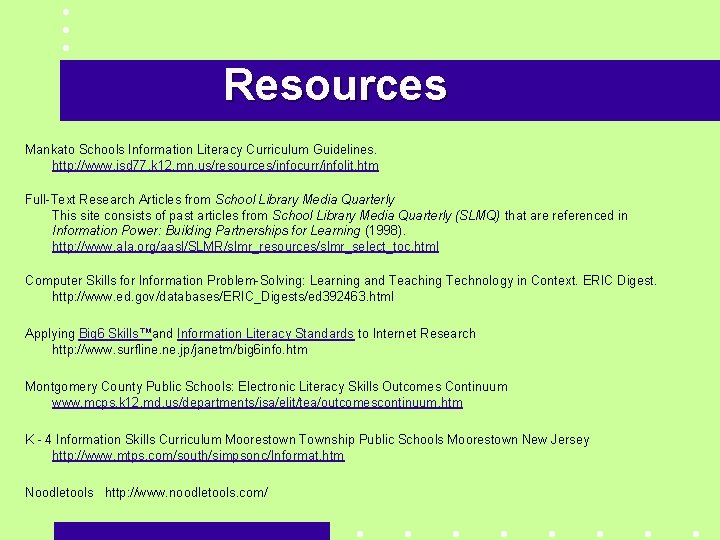
Resources Mankato Schools Information Literacy Curriculum Guidelines. http: //www. isd 77. k 12. mn. us/resources/infocurr/infolit. htm Full-Text Research Articles from School Library Media Quarterly This site consists of past articles from School Library Media Quarterly (SLMQ) that are referenced in Information Power: Building Partnerships for Learning (1998). http: //www. ala. org/aasl/SLMR/slmr_resources/slmr_select_toc. html Computer Skills for Information Problem-Solving: Learning and Teaching Technology in Context. ERIC Digest. http: //www. ed. gov/databases/ERIC_Digests/ed 392463. html Applying Big 6 Skills™and Information Literacy Standards to Internet Research http: //www. surfline. jp/janetm/big 6 info. htm Montgomery County Public Schools: Electronic Literacy Skills Outcomes Continuum www. mcps. k 12. md. us/departments/isa/elit/tea/outcomescontinuum. htm K - 4 Information Skills Curriculum Moorestown Township Public Schools Moorestown New Jersey http: //www. mtps. com/south/simpsonc/Informat. htm Noodletools http: //www. noodletools. com/