
Growing plants for the Cook County Forest Preserve

- Slides: 21
Growing plants for the Cook County Forest Preserve
Why forest preserves matter • Offer a home for rare animals and plants • Reduce climate change • Protect water quality and reduce flooding • Give people a chance to recreate and connect with nature
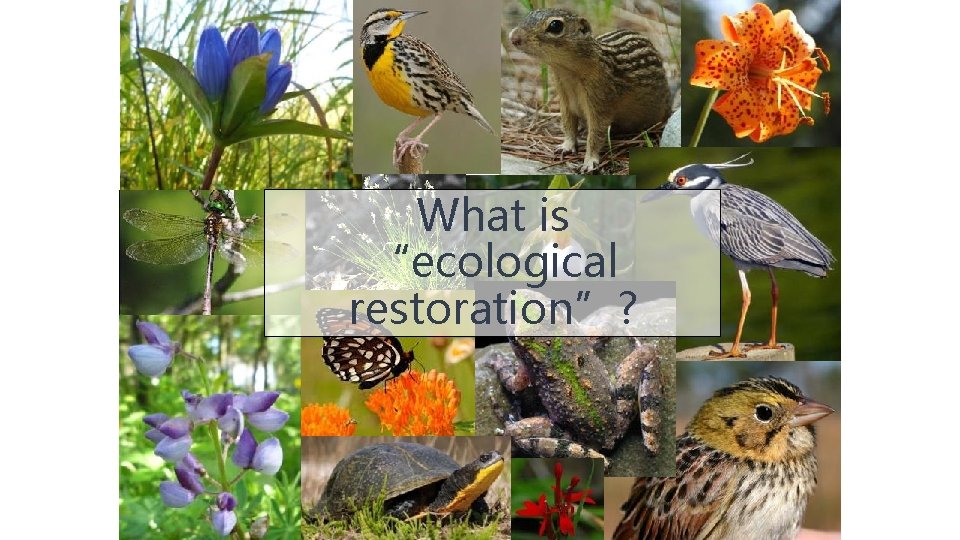
What is “ecological restoration”?
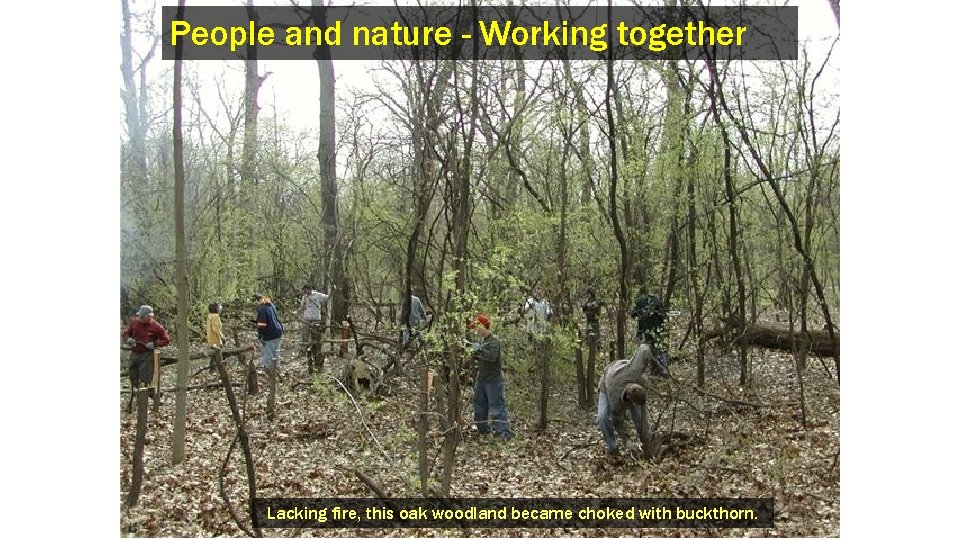
People and nature - Working together This Lacking fire, this oak woodland became choked with buckthorn.
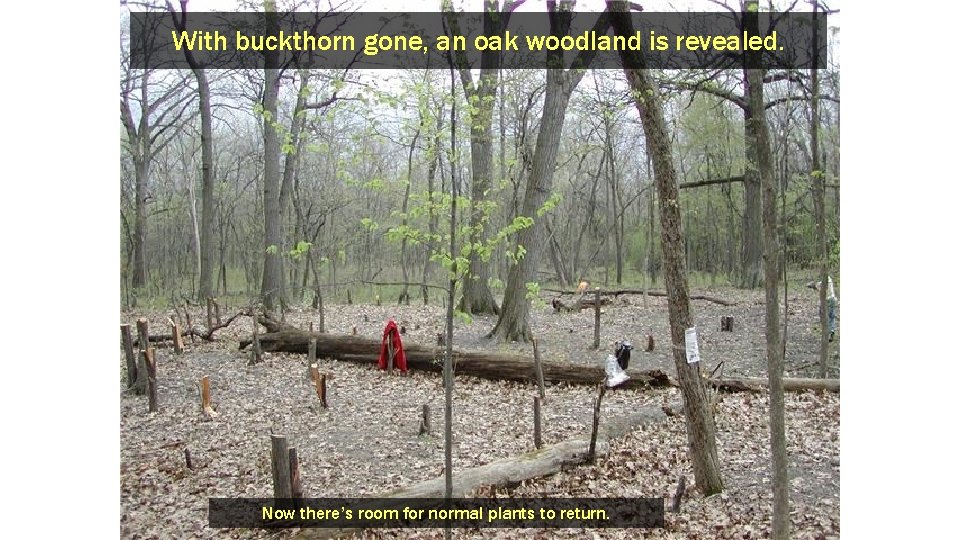
With buckthorn gone, an oak woodland is revealed. Now there’s room for normal plants to return.
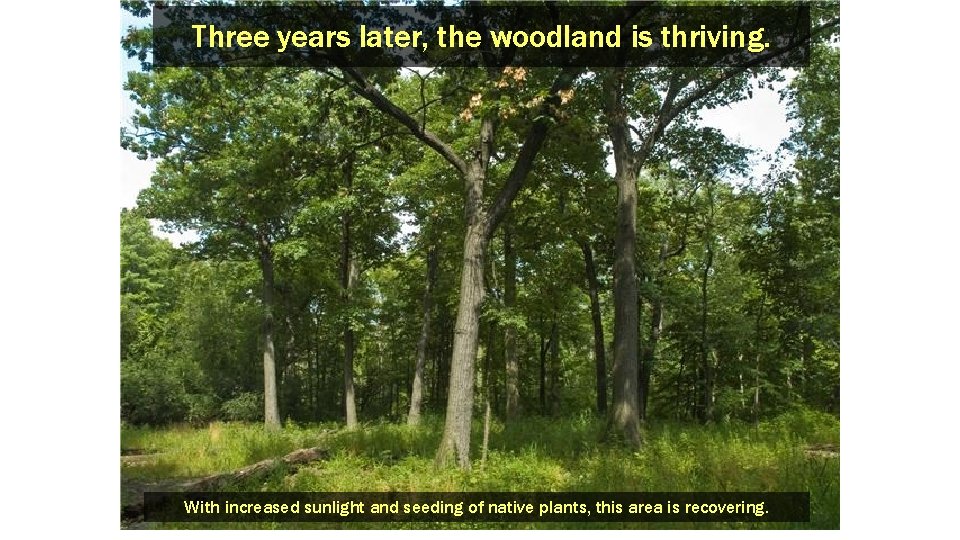
Three years later, the woodland is thriving. With increased sunlight and seeding of native plants, this area is recovering.
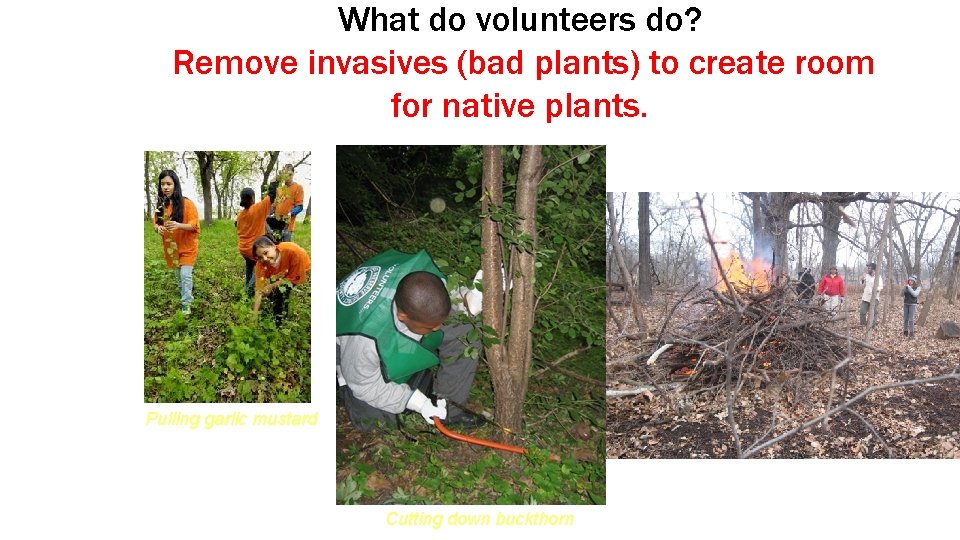
What do volunteers do? Remove invasives (bad plants) to create room for native plants. Pulling garlic mustard Cutting down buckthorn
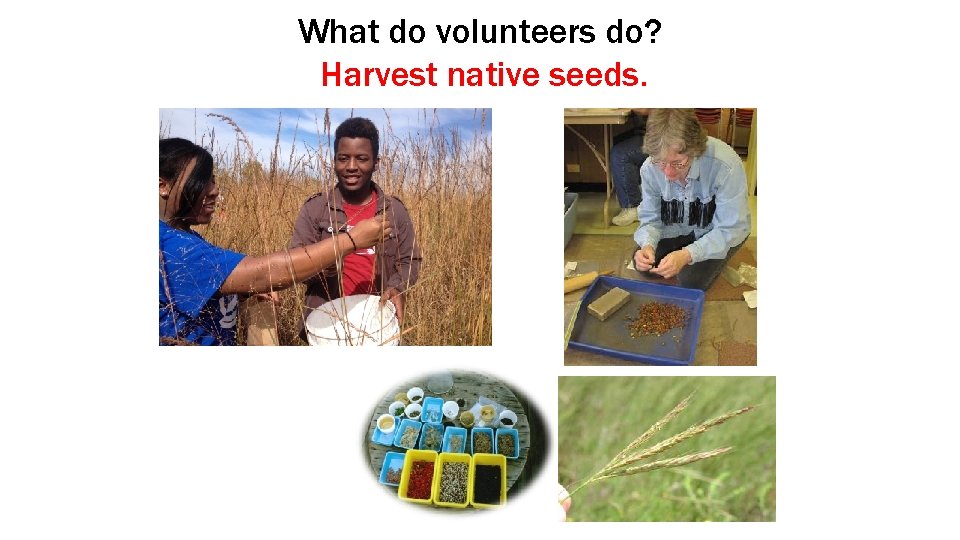
What do volunteers do? Harvest native seeds.
Seeds harvested by volunteers for you to grow: • Wafer ash • Prairie milkweed* • Butterfly milkweed • Rose milkweed • Wild rye • Rattlesnake master • Burr marigold • Mountain mint • Blazing star • Switch grass • Yellow coneflower • Prairie sunflower* • Wild cucumber* * Rare
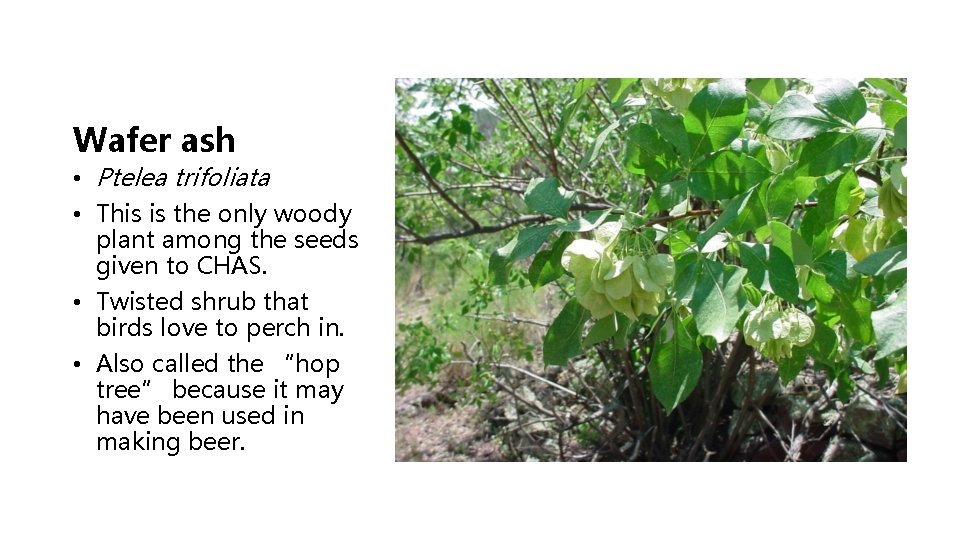
Wafer ash • Ptelea trifoliata • This is the only woody plant among the seeds given to CHAS. • Twisted shrub that birds love to perch in. • Also called the “hop tree” because it may have been used in making beer.
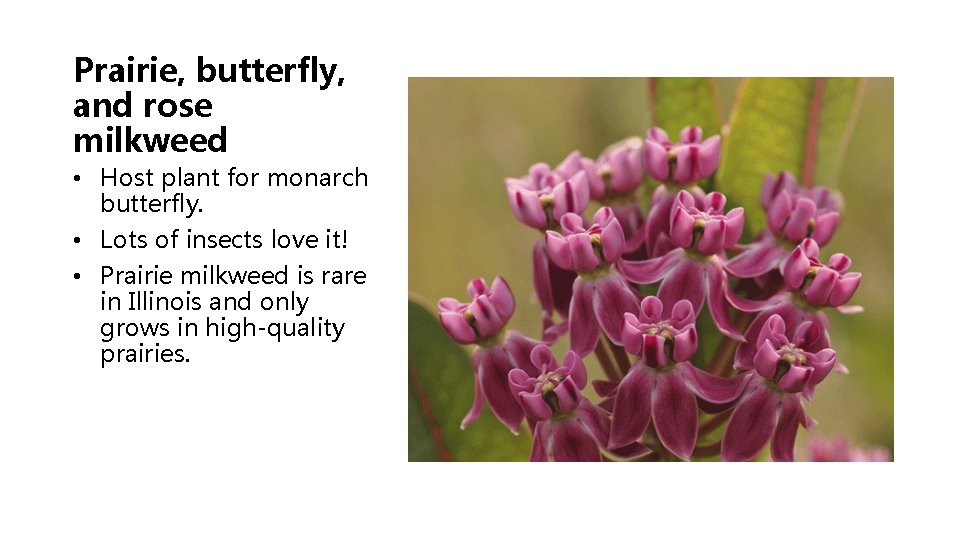
Prairie, butterfly, and rose milkweed • Host plant for monarch butterfly. • Lots of insects love it! • Prairie milkweed is rare in Illinois and only grows in high-quality prairies.
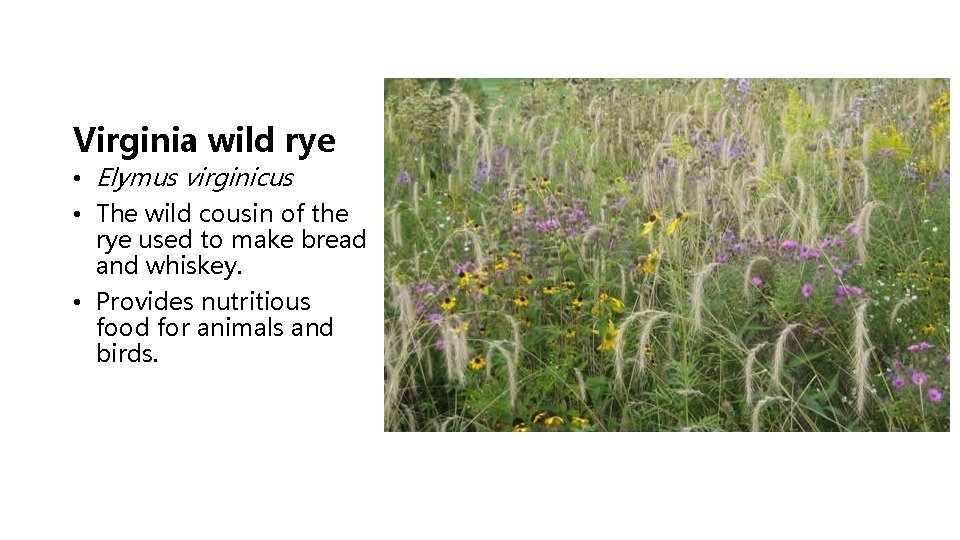
Virginia wild rye • Elymus virginicus • The wild cousin of the rye used to make bread and whiskey. • Provides nutritious food for animals and birds.
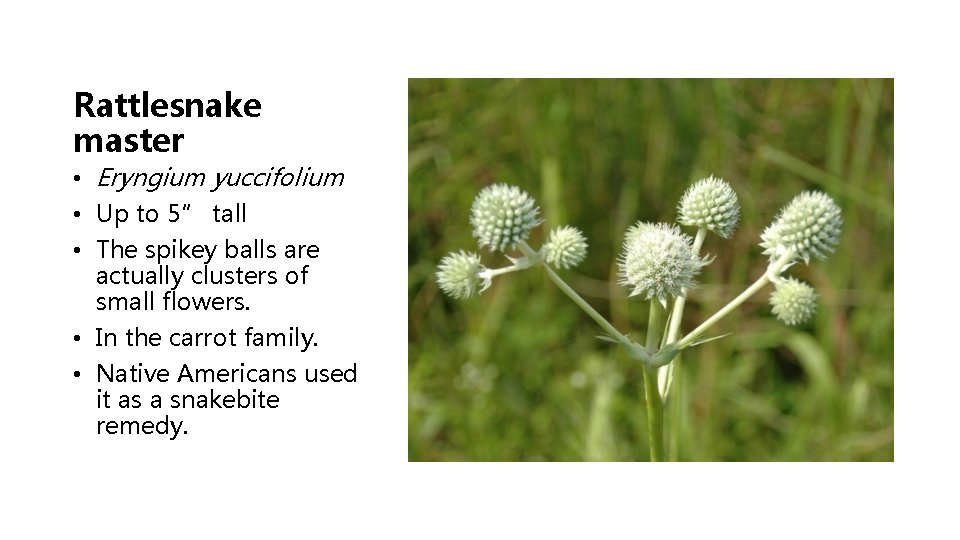
Rattlesnake master • Eryngium yuccifolium • Up to 5” tall • The spikey balls are actually clusters of small flowers. • In the carrot family. • Native Americans used it as a snakebite remedy.
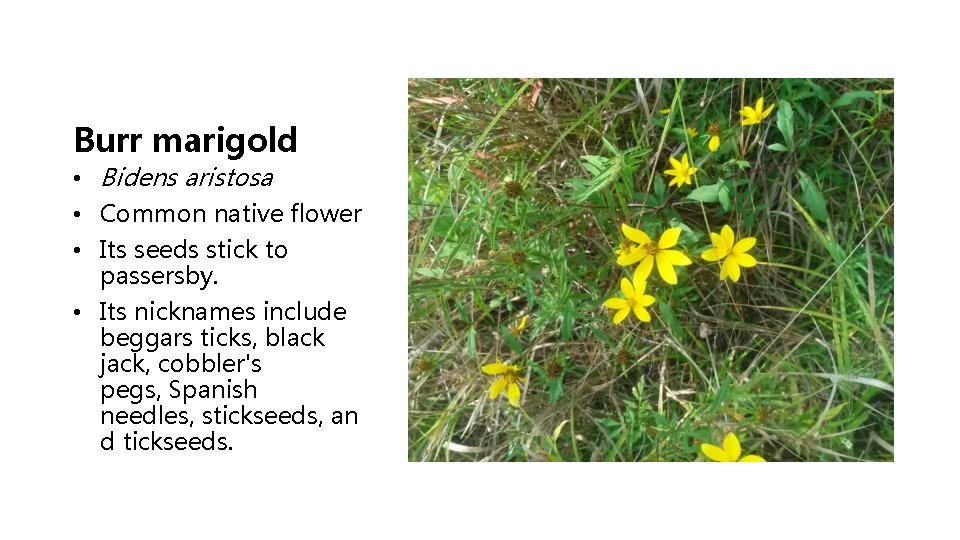
Burr marigold • Bidens aristosa • Common native flower • Its seeds stick to passersby. • Its nicknames include beggars ticks, black jack, cobbler's pegs, Spanish needles, stickseeds, an d tickseeds.
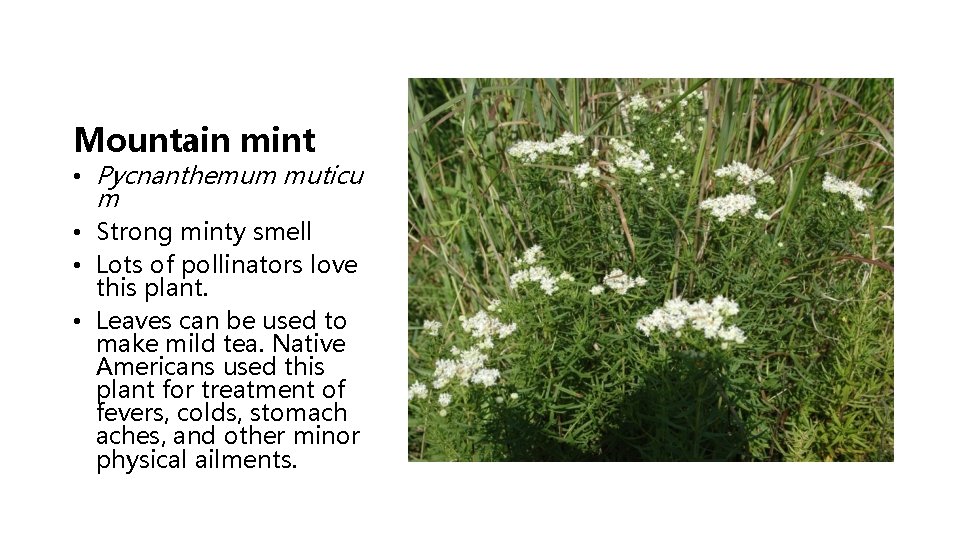
Mountain mint • Pycnanthemum muticu m • Strong minty smell • Lots of pollinators love this plant. • Leaves can be used to make mild tea. Native Americans used this plant for treatment of fevers, colds, stomach aches, and other minor physical ailments.
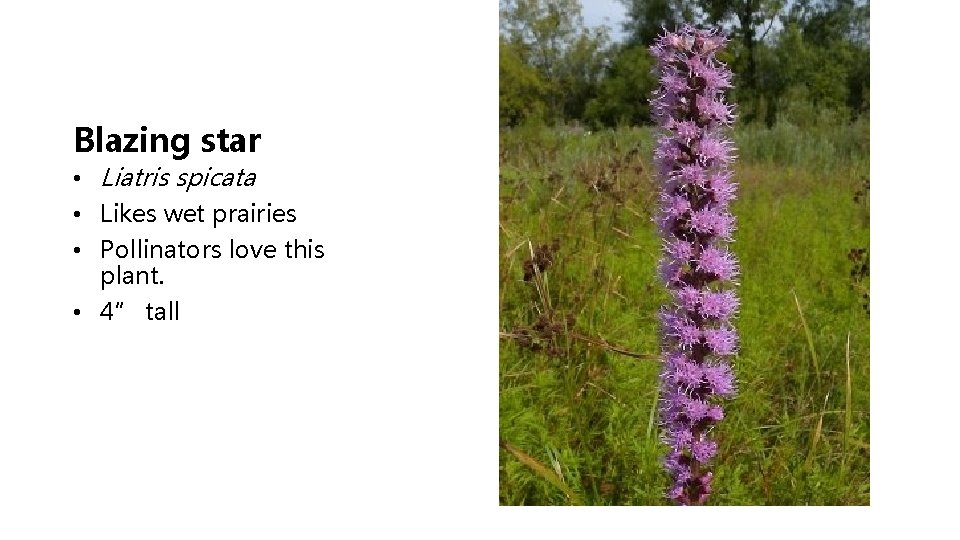
Blazing star • Liatris spicata • Likes wet prairies • Pollinators love this plant. • 4” tall
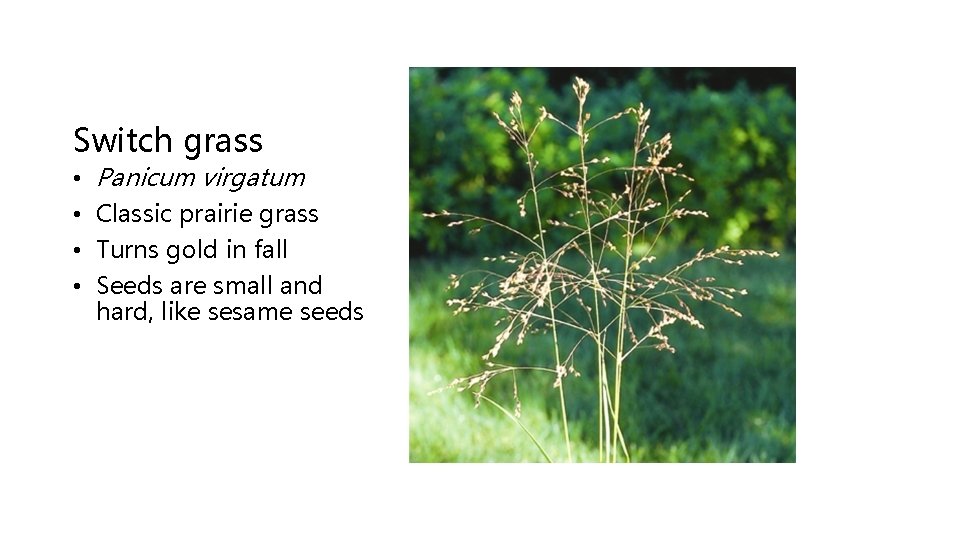
Switch grass • • Panicum virgatum Classic prairie grass Turns gold in fall Seeds are small and hard, like sesame seeds
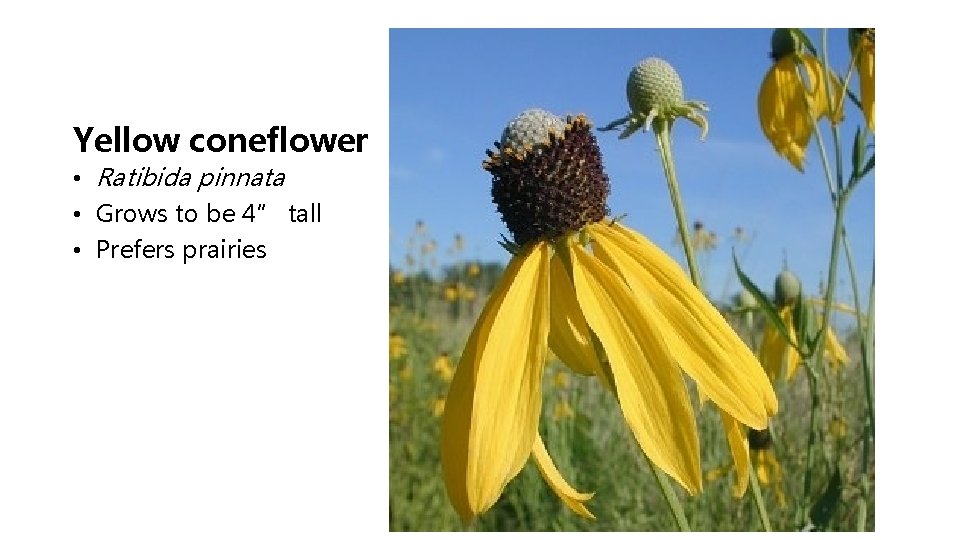
Yellow coneflower • Ratibida pinnata • Grows to be 4” tall • Prefers prairies
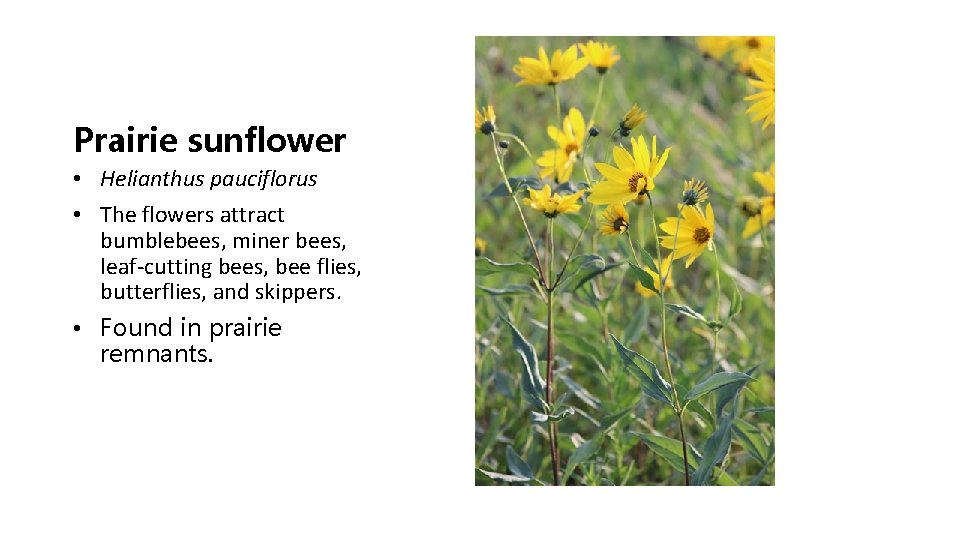
Prairie sunflower • Helianthus pauciflorus • The flowers attract bumblebees, miner bees, leaf-cutting bees, bee flies, butterflies, and skippers. • Found in prairie remnants.
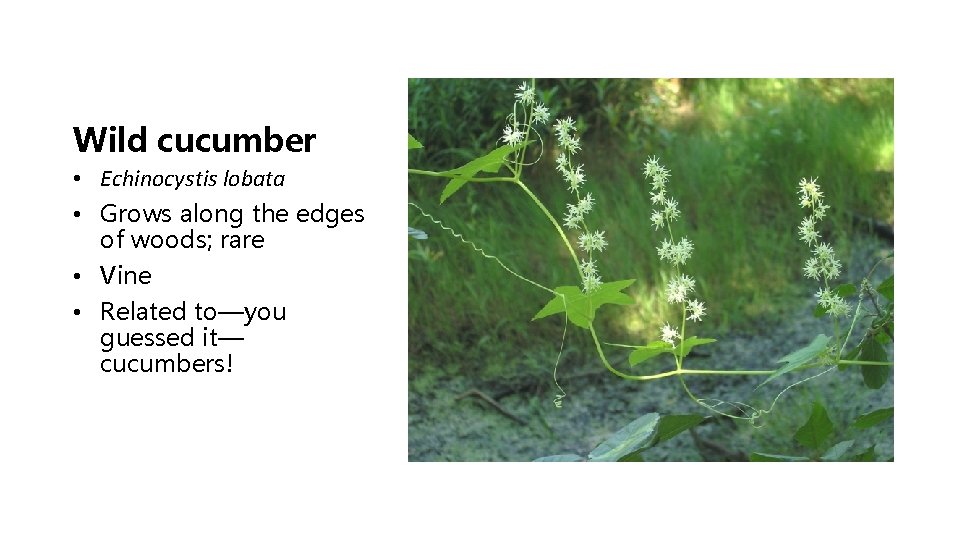
Wild cucumber • Echinocystis lobata • Grows along the edges of woods; rare • Vine • Related to—you guessed it— cucumbers!
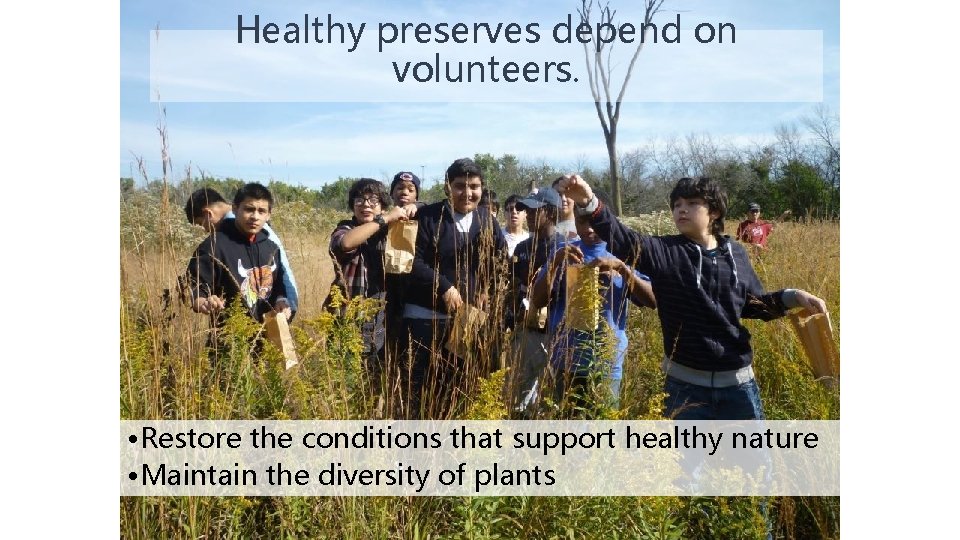
Healthy preserves depend on volunteers. • Restore the conditions that support healthy nature • Maintain the diversity of plants