
Growing a new generation of computer scientists Judy


- Slides: 23
Growing a new generation of computer scientists Judy Robertson Professor of Digital Learning
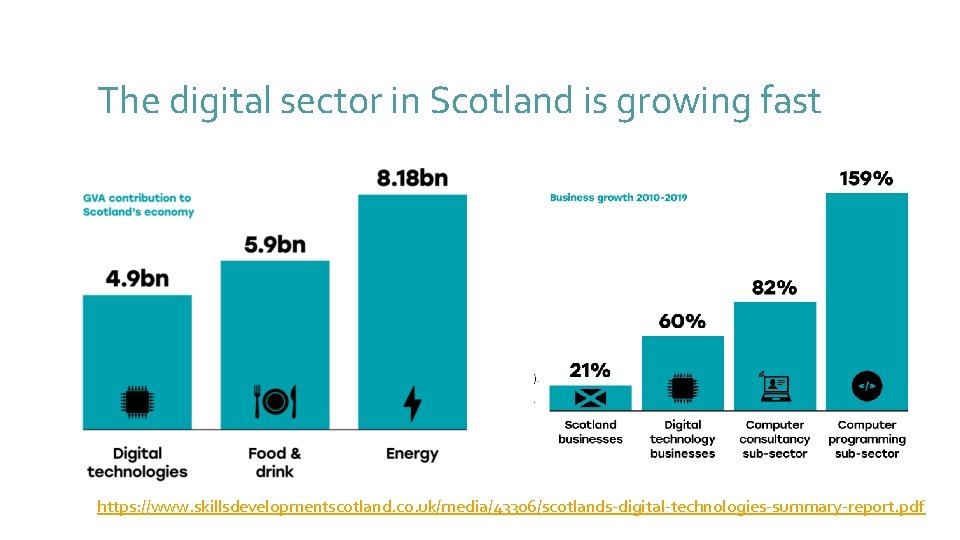
The digital sector in Scotland is growing fast https: //www. skillsdevelopmentscotland. co. uk/media/43306/scotlands-digital-technologies-summary-report. pdf
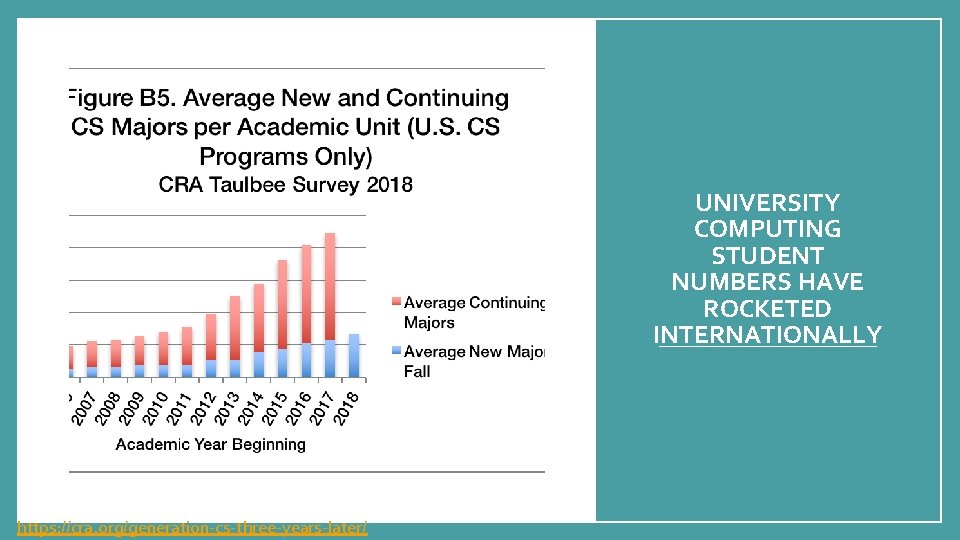
UNIVERSITY COMPUTING STUDENT NUMBERS HAVE ROCKETED INTERNATIONALLY https: //cra. org/generation-cs-three-years-later/
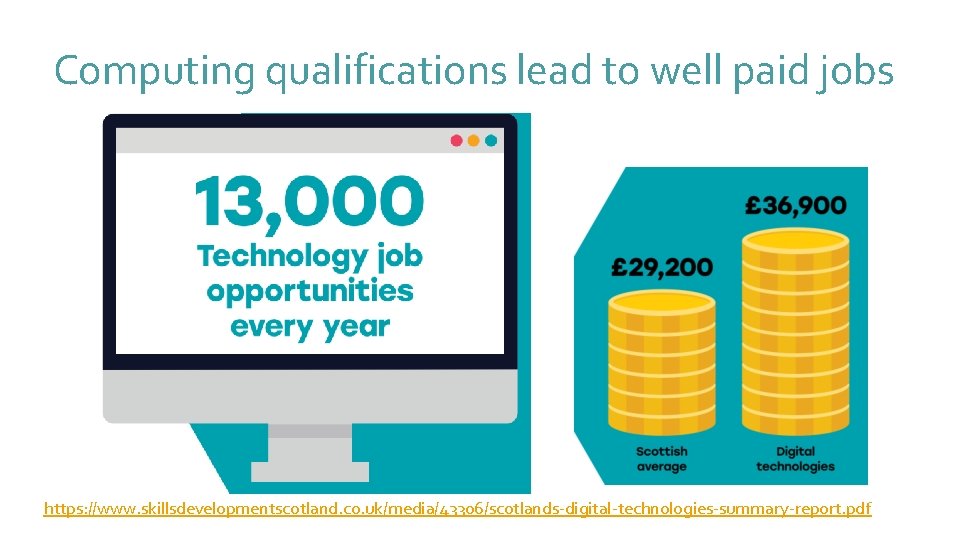
Computing qualifications lead to well paid jobs https: //www. skillsdevelopmentscotland. co. uk/media/43306/scotlands-digital-technologies-summary-report. pdf
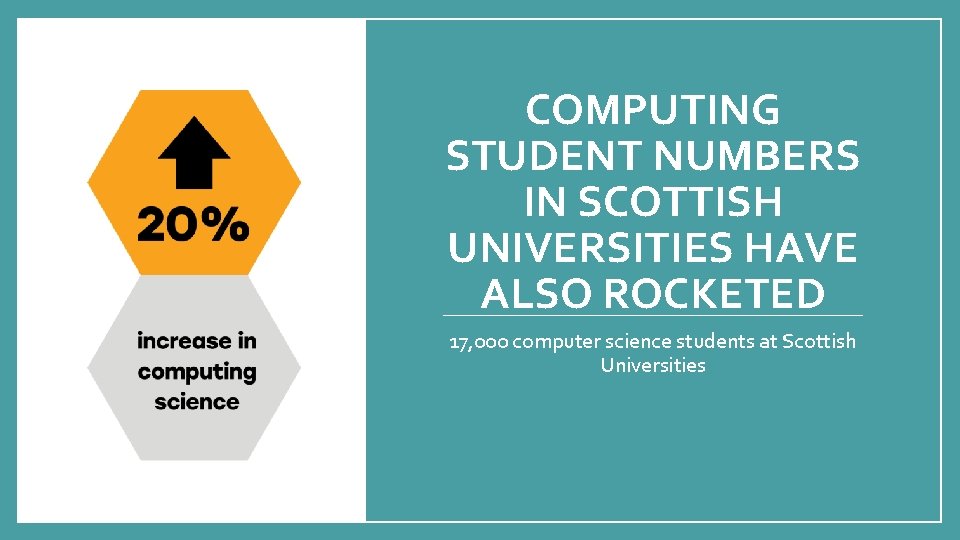
COMPUTING STUDENT NUMBERS IN SCOTTISH UNIVERSITIES HAVE ALSO ROCKETED 17, 000 computer science students at Scottish Universities
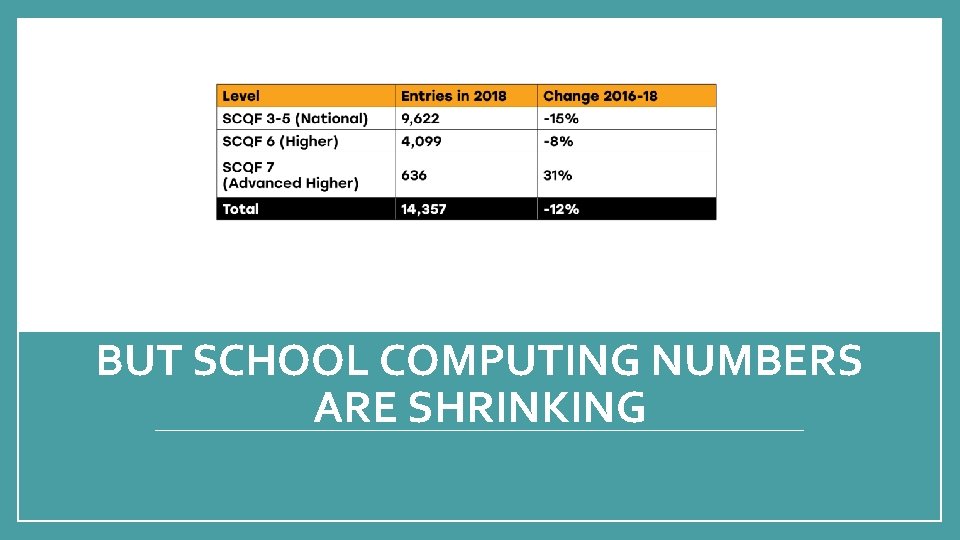
BUT SCHOOL COMPUTING NUMBERS ARE SHRINKING
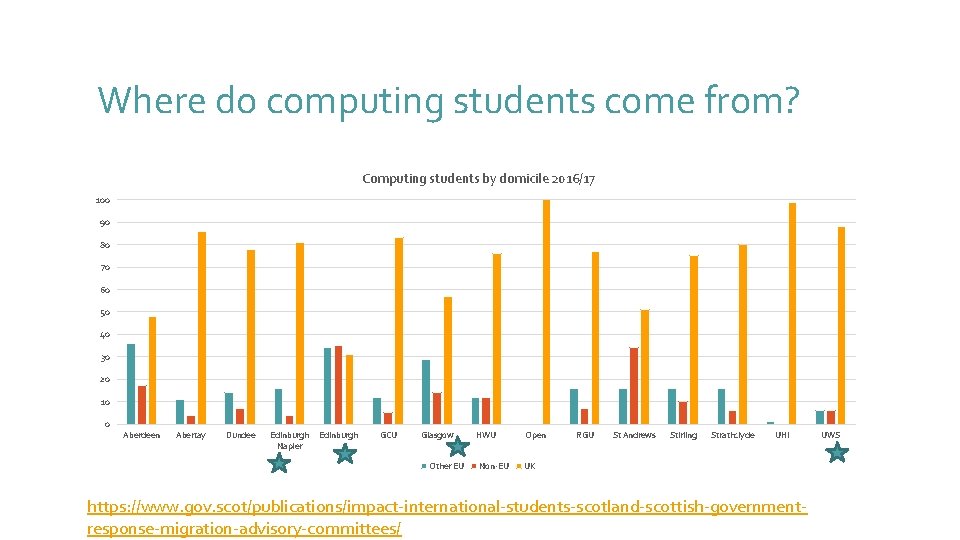
Where do computing students come from? Computing students by domicile 2016/17 100 90 80 70 60 50 40 30 20 10 0 Aberdeen Abertay Dundee Edinburgh Napier Edinburgh GCU Glasgow Other EU HWU Non-EU Open RGU St Andrews Stirling Strathclyde UHI UK https: //www. gov. scot/publications/impact-international-students-scotland-scottish-governmentresponse-migration-advisory-committees/ UWS
WHY DOESN’T THE EARLY LEAKY PIPELINE AFFECT UNIVERSITY NUMBERS? Because universities usually don’t require computing qualifications for entrance to HE computing courses
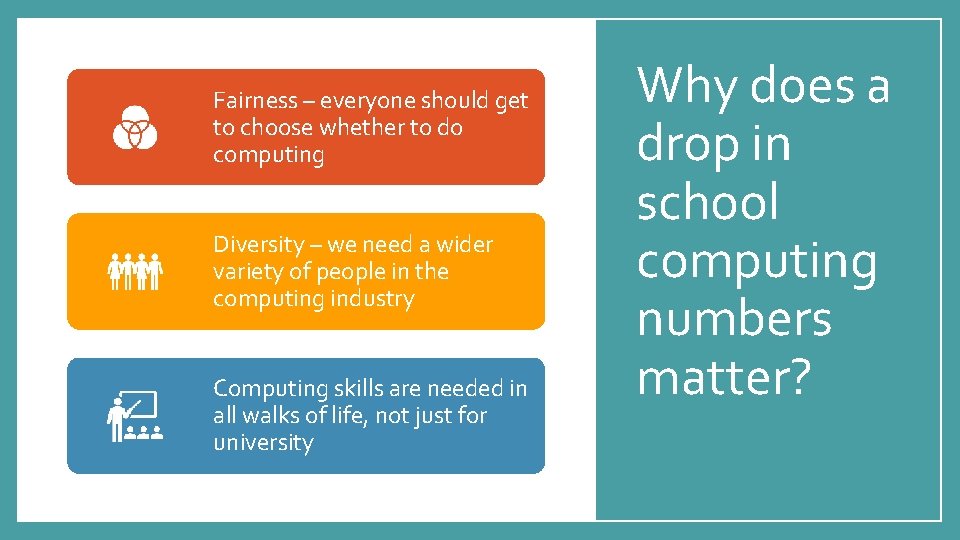
Fairness – everyone should get to choose whether to do computing Diversity – we need a wider variety of people in the computing industry Computing skills are needed in all walks of life, not just for university Why does a drop in school computing numbers matter?
WHAT RESEARCH TELLS US ABOUT GENDER IN COMPUTER SCIENCE
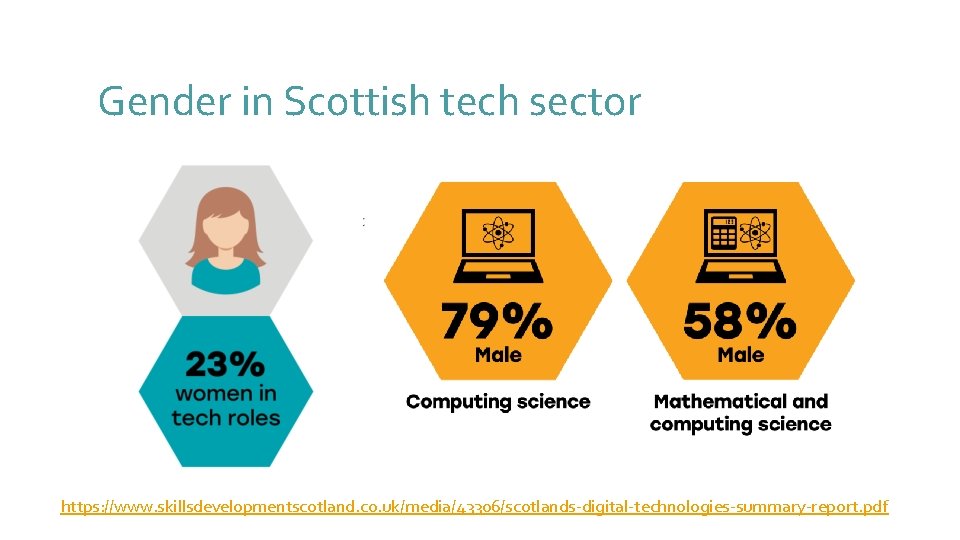
Gender in Scottish tech sector https: //www. skillsdevelopmentscotland. co. uk/media/43306/scotlands-digital-technologies-summary-report. pdf
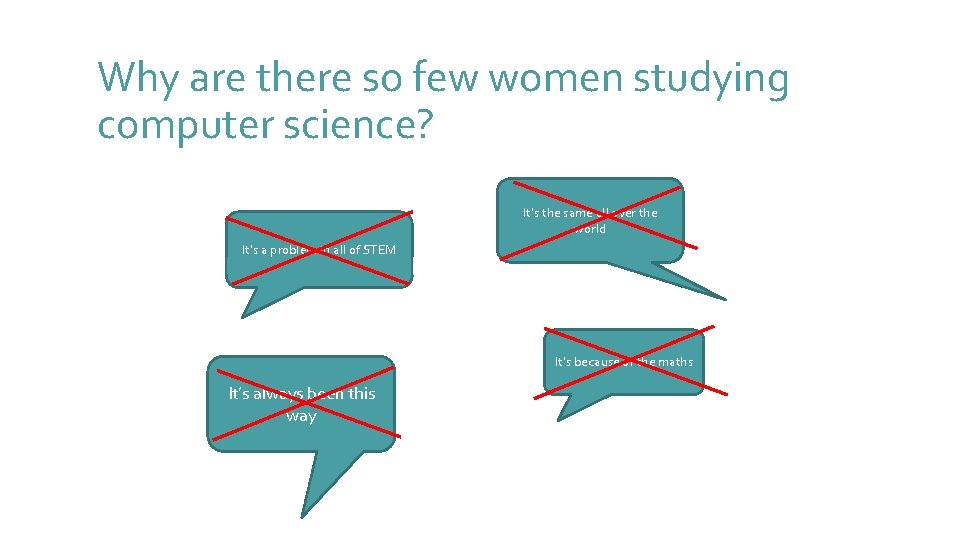
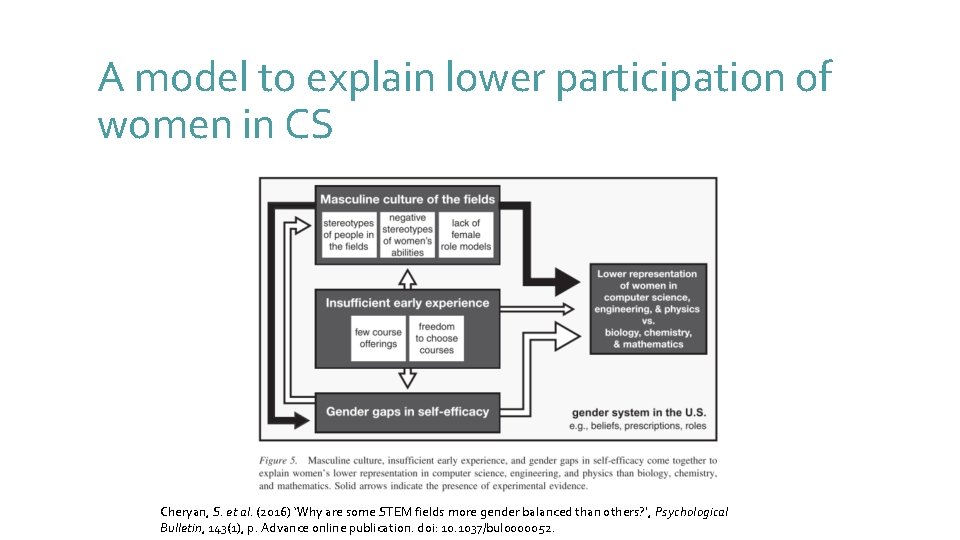
Why are there so few women studying computer science? It’s the same all over the world It’s a problem in all of STEM It’s because of the maths It’s always been this way
A model to explain lower participation of women in CS Cheryan, S. et al. (2016) ‘Why are some STEM fields more gender balanced than others? ’, Psychological Bulletin, 143(1), p. Advance online publication. doi: 10. 1037/bul 0000052.
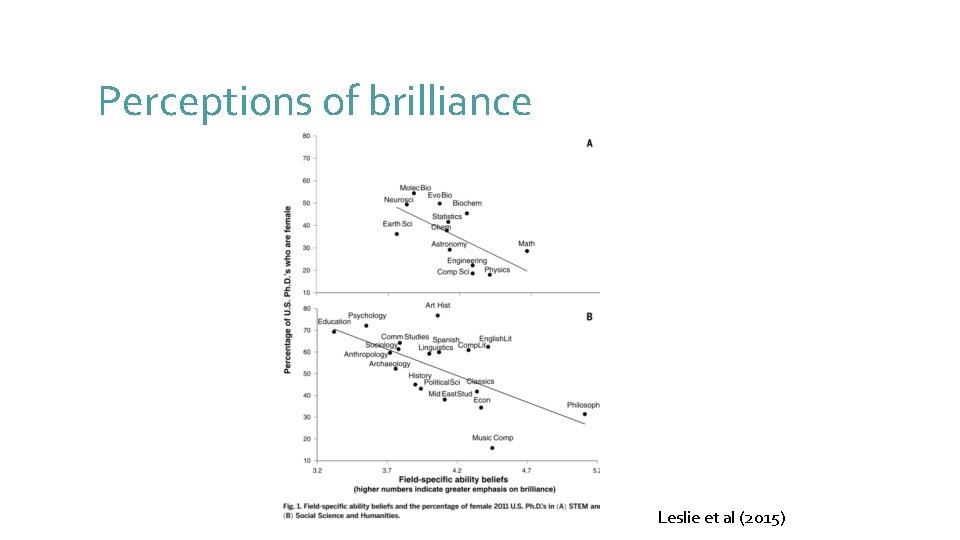
Perceptions of brilliance Leslie et al (2015)
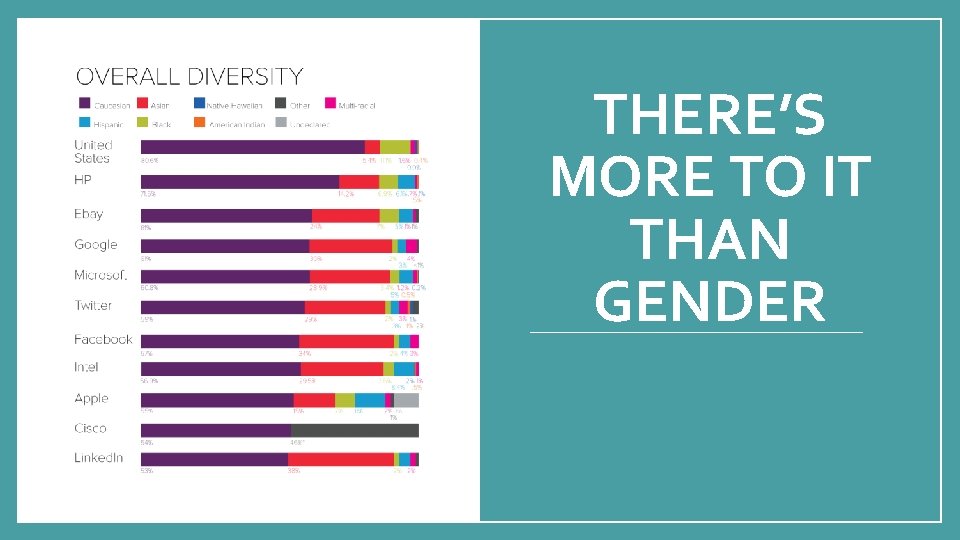
THERE’S MORE TO IT THAN GENDER
HOW CAN WE MAKE OUR CLASSROOMS MORE INCLUSIVE?
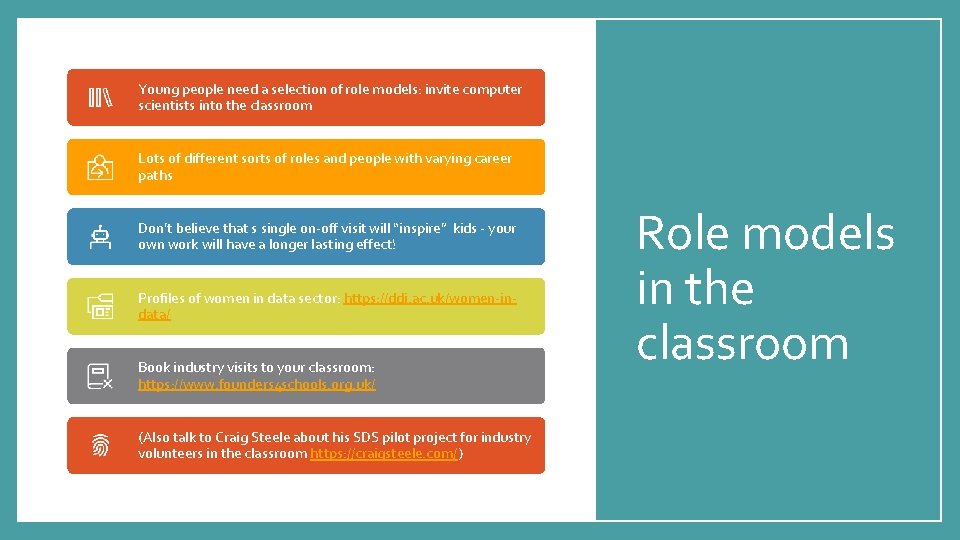
Young people need a selection of role models: invite computer scientists into the classroom Lots of different sorts of roles and people with varying career paths Don’t believe that s single on-off visit will “inspire” kids - your own work will have a longer lasting effect! Profiles of women in data sector: https: //ddi. ac. uk/women-indata/ Book industry visits to your classroom: https: //www. founders 4 schools. org. uk/ (Also talk to Craig Steele about his SDS pilot project for industry volunteers in the classroom https: //craigsteele. com/) Role models in the classroom
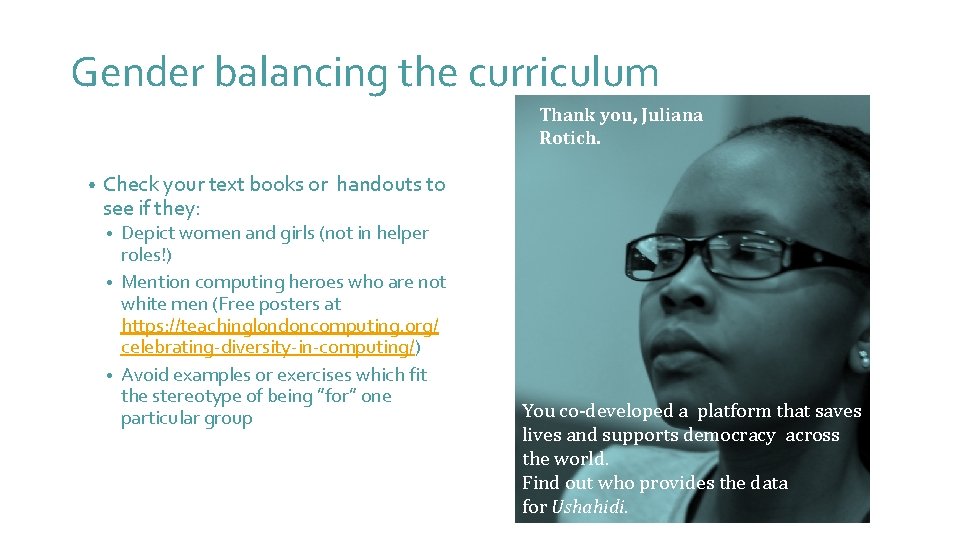
Thank you, Juliana Rotich. Gender balancing the curriculum Thank you, Juliana Rotich. • Check your text books or handouts to see if they: Depict women and girls (not in helper roles!) • Mention computing heroes who are not white men (Free posters at https: //teachinglondoncomputing. org/ celebrating-diversity-in-computing/) • Avoid examples or exercises which fit the stereotype of being ”for” one particular group • You co-developed a platform that saves lives and supports democracy across the world. Find out who provides the data for Ushahidi.
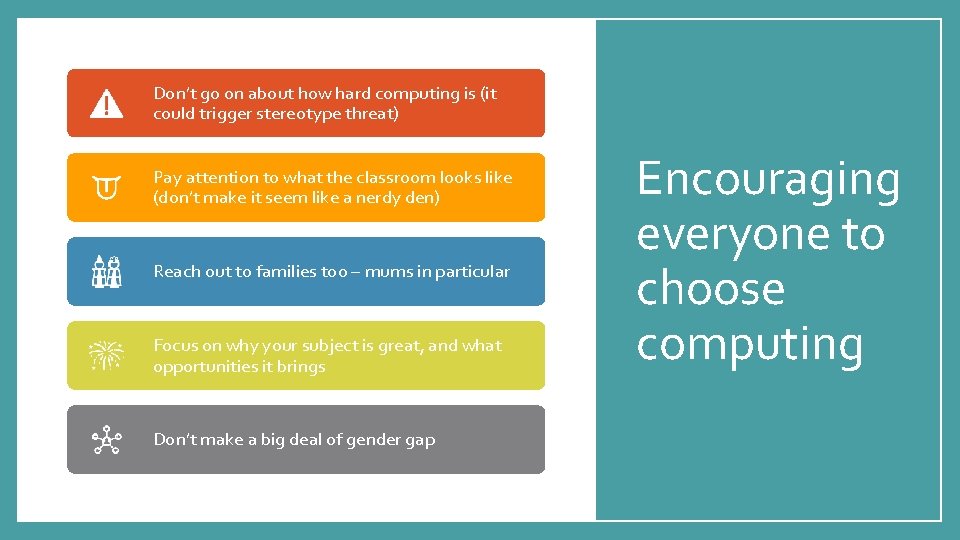
Don’t go on about how hard computing is (it could trigger stereotype threat) Pay attention to what the classroom looks like (don’t make it seem like a nerdy den) Reach out to families too – mums in particular Focus on why your subject is great, and what opportunities it brings Don’t make a big deal of gender gap Encouraging everyone to choose computing
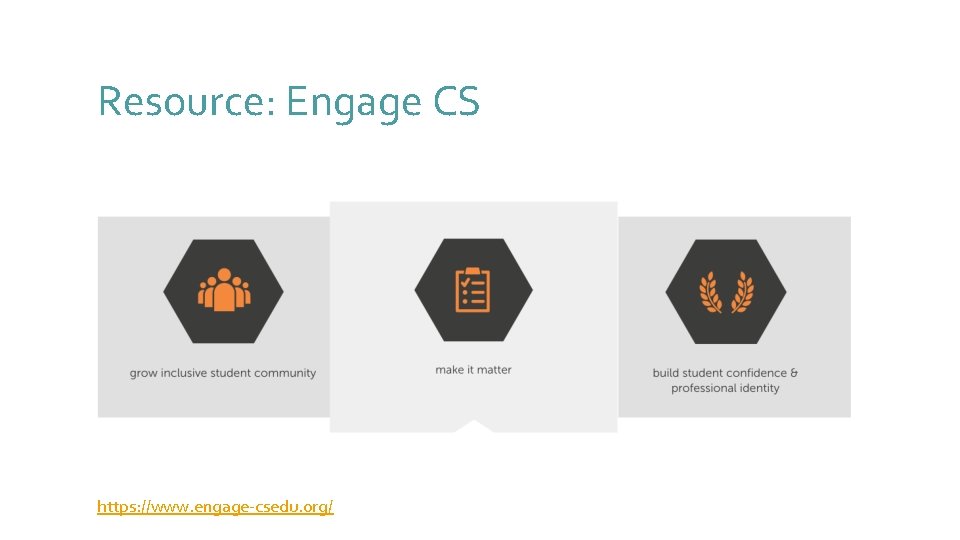
Resource: Engage CS https: //www. engage-csedu. org/
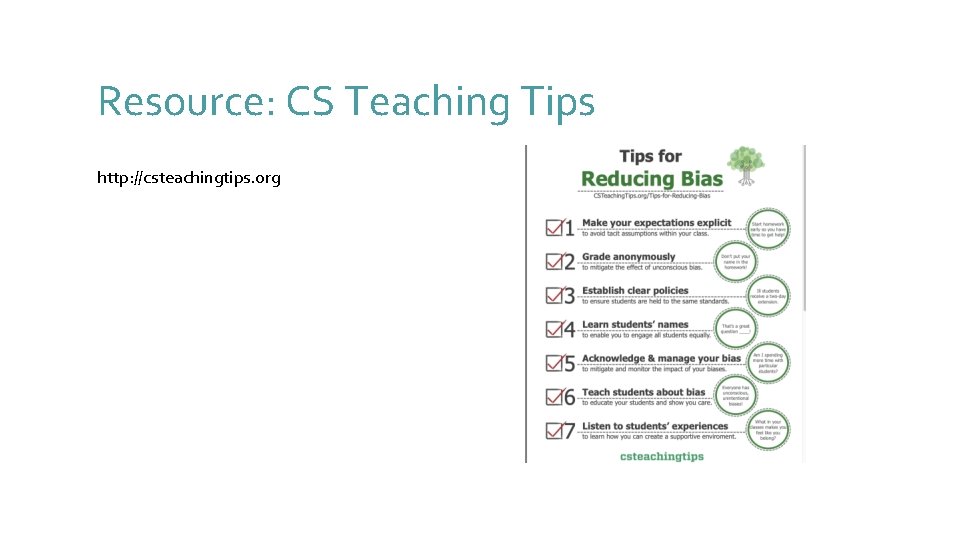
Resource: CS Teaching Tips http: //csteachingtips. org
There is growing demand for more people with computing skills in Scotland, and the rest of the world While university student numbers have grown, school computing numbers have not Conclusions This is a problem because it reduces equity and diversity in computing When we teach in an inclusive way, we all help to grow the next generation of computer scientists
Judy. Robertson@ed. ac. uk