
Groupthink What is groupthink Groupthink occurs when a







- Slides: 21
Groupthink
What is groupthink? Groupthink occurs when a group makes faulty decisions because group pressure lead to a deterioration of “mental efficiency, reality testing, and moral judgment” (Irving Janis, 1972
Symptoms of Groupthink • Illusion of invulnerability • Belief in inherent morality • Direct pressure on dissenters • Self-censorship • Illusion of unanimity
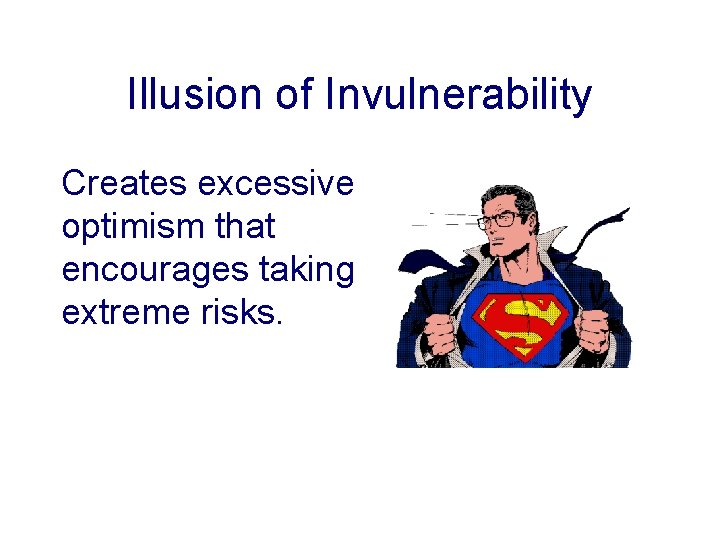
Illusion of Invulnerability Creates excessive optimism that encourages taking extreme risks.
Belief in Inherent Morality Members believe in the rightness of their cause and therefore ignore the ethical or moral consequences of their decisions.
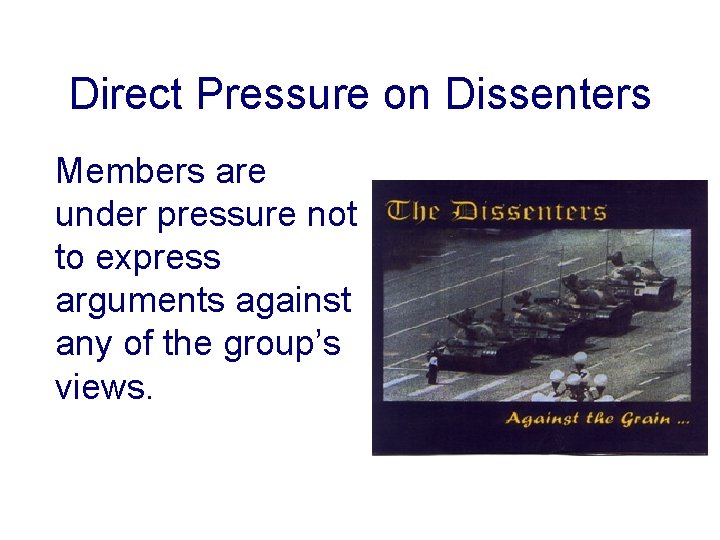
Direct Pressure on Dissenters Members are under pressure not to express arguments against any of the group’s views.
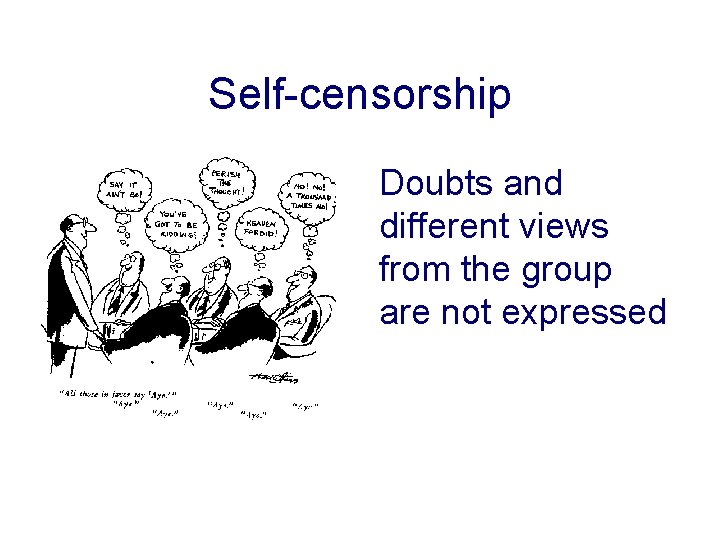
Self-censorship Doubts and different views from the group are not expressed
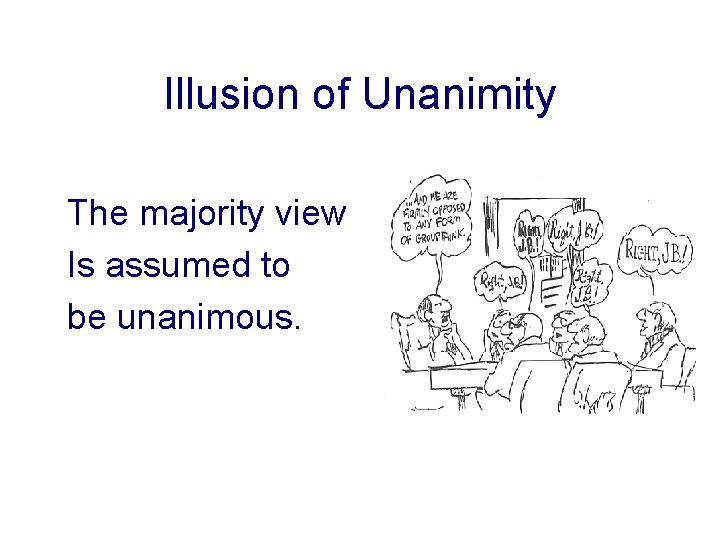
Illusion of Unanimity The majority view Is assumed to be unanimous.
Remedies for Groupthink • The leader should assign the role of critical evaluator to each member • The leader should avoid stating preferences and expectations at the outset • Each member of the group should routinely discuss the groups' deliberations with a trusted associate and report back to the group on the associate's reactions
More Remedies for Groupthink • One or more experts should be invited to each meeting and encouraged to challenge views of the members. • At least one member should be given the role of devil's advocate (to question assumptions and plans) • The leader should make sure that a sizeable block of time is set aside to survey warning signals.
Why should we care about groupthink?
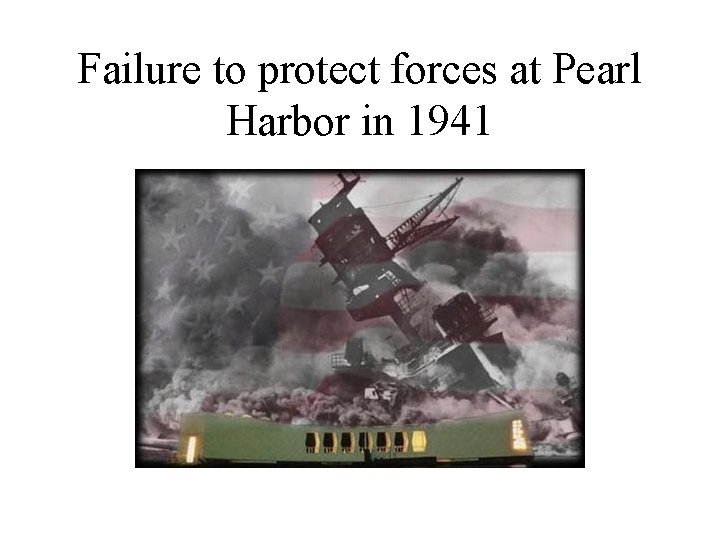
Failure to protect forces at Pearl Harbor in 1941
Decision to Use Atomic Bombs in 1945
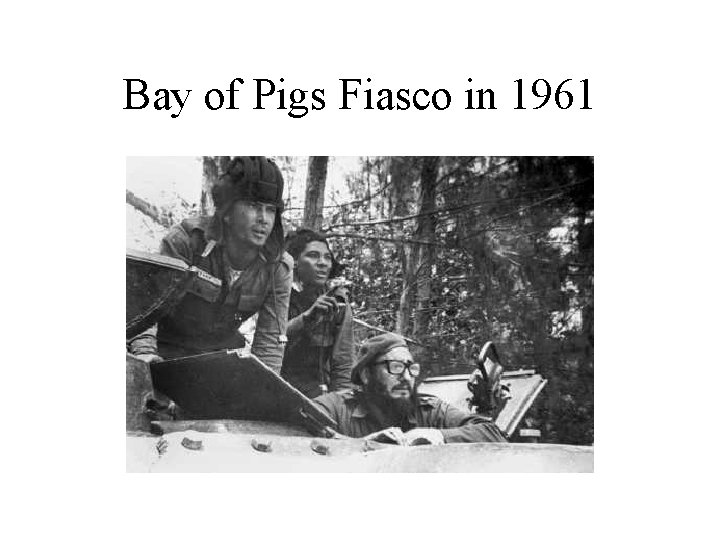
Bay of Pigs Fiasco in 1961
US Escalation of the Vietnam War
Failed Rescue Attempt of Hostages at US Embassy in Iran
US Invasion of Iraq: Groupthink?
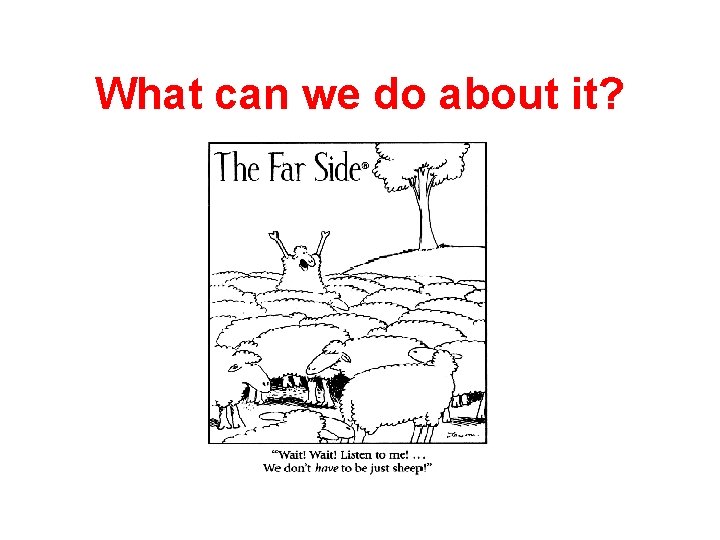
What can we do about it?
Think About Underlying Assumptions and Implications
Challenge Others to Think