
Groups Teams Cody Crickenberger Overview The Top Management
Groups & Teams Cody Crickenberger
Overview ▪ The Top Management Team ▪ Research & Development Teams ▪ Command Groups ▪ Task Forces ▪ Self-Managed Work Teams

The Top Management Team A group composed of the CEO, the president, and the heads of the most important departments. The top management team is responsible for developing strategies that result in organization’s competitive advantage; most have between five and seven members. Diversified in expertise, skills, knowledge, and experience, thus many top management teams are also cross-functional teams ranging from the head departments of finance, marketing, production, and engineering. Diversity establishing effective decision making and guard against groupthink- Faulty group decision making that results when group members strive for agreement at the expense of an accurate assessment of the situation.
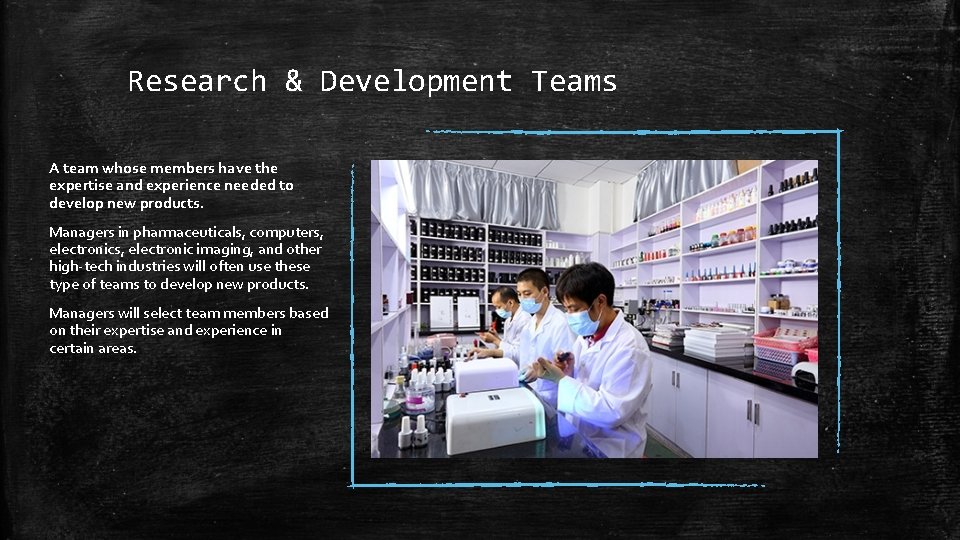
Research & Development Teams A team whose members have the expertise and experience needed to develop new products. Managers in pharmaceuticals, computers, electronic imaging, and other high-tech industries will often use these type of teams to develop new products. Managers will select team members based on their expertise and experience in certain areas.

Command Groups A group composed of subordinate who report to the same supervisor; also called a department or unit. When top managers design an organization’s structure and establish reporting relationships and a chain command, they are essential creating command groups.
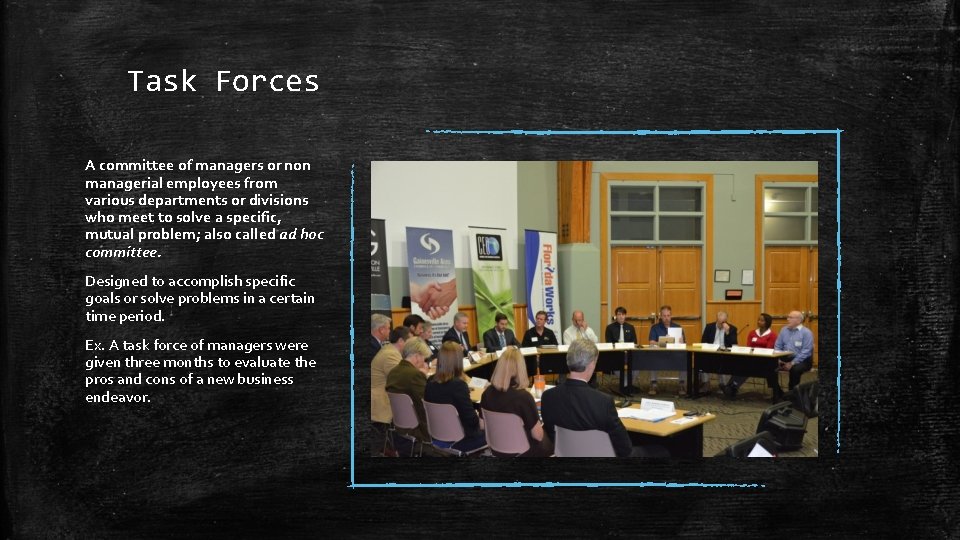
Task Forces A committee of managers or non managerial employees from various departments or divisions who meet to solve a specific, mutual problem; also called ad hoc committee. Designed to accomplish specific goals or solve problems in a certain time period. Ex. A task force of managers were given three months to evaluate the pros and cons of a new business endeavor.
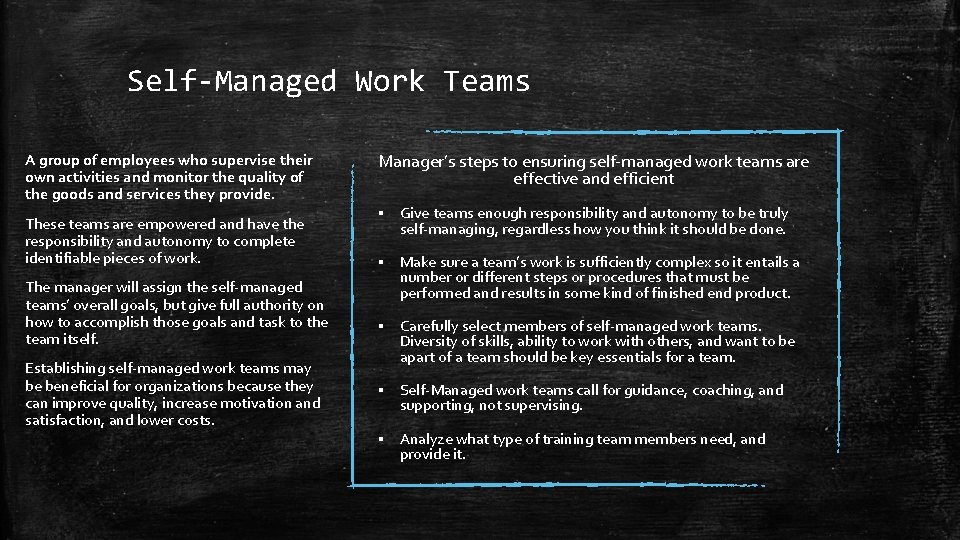
Self-Managed Work Teams A group of employees who supervise their own activities and monitor the quality of the goods and services they provide. These teams are empowered and have the responsibility and autonomy to complete identifiable pieces of work. The manager will assign the self-managed teams’ overall goals, but give full authority on how to accomplish those goals and task to the team itself. Establishing self-managed work teams may be beneficial for organizations because they can improve quality, increase motivation and satisfaction, and lower costs. Manager’s steps to ensuring self-managed work teams are effective and efficient ▪ Give teams enough responsibility and autonomy to be truly self-managing, regardless how you think it should be done. ▪ Make sure a team’s work is sufficiently complex so it entails a number or different steps or procedures that must be performed and results in some kind of finished end product. ▪ Carefully select members of self-managed work teams. Diversity of skills, ability to work with others, and want to be apart of a team should be key essentials for a team. ▪ Self-Managed work teams call for guidance, coaching, and supporting, not supervising. ▪ Analyze what type of training team members need, and provide it.

Thank You. Now go check out the TED video on the home page!
- Slides: 8