
Groups Organizations Part 1 Social Structure Social Structure













- Slides: 41
Groups & Organizations
Part 1: Social Structure
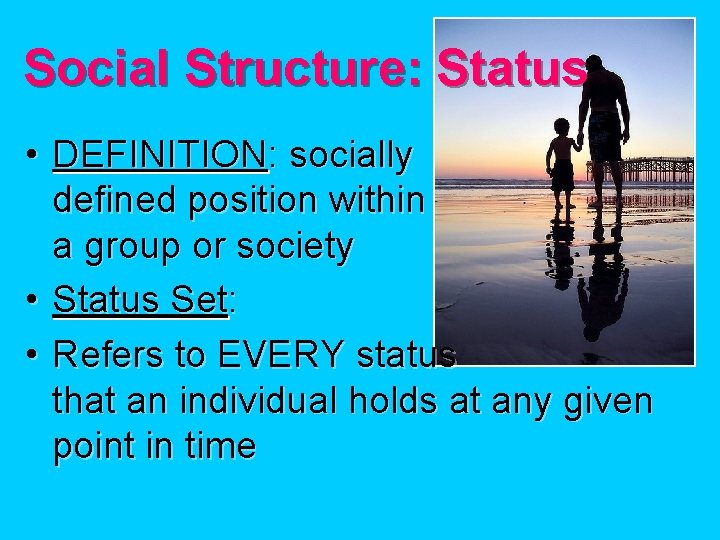
Social Structure: Status • DEFINITION: socially defined position within a group or society • Status Set: • Refers to EVERY status that an individual holds at any given point in time
Ascribed v. Achieved Status • Ascribed Status: • A status assigned according to standards that are beyond a person’s control • Achieved Status: • A status acquired by an individual on the basis of some special skill, knowledge or ability
Ascribed v. Achieved Status?
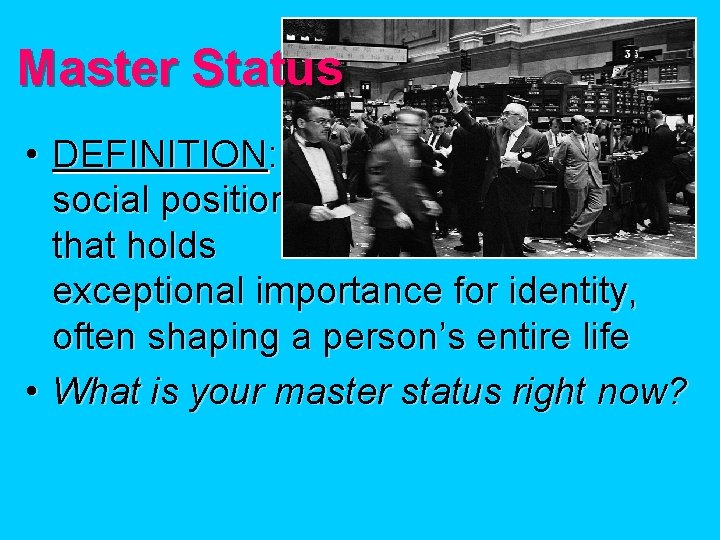
Master Status • DEFINITION: a social position that holds exceptional importance for identity, often shaping a person’s entire life • What is your master status right now?
Social Structure: Role • DEFINITION: the behavior expected of someone occupying a particular status • The dynamic expression of status • Role Conflict: • The incompatibility among roles corresponding to two or more statuses
Part 2: Social Groups
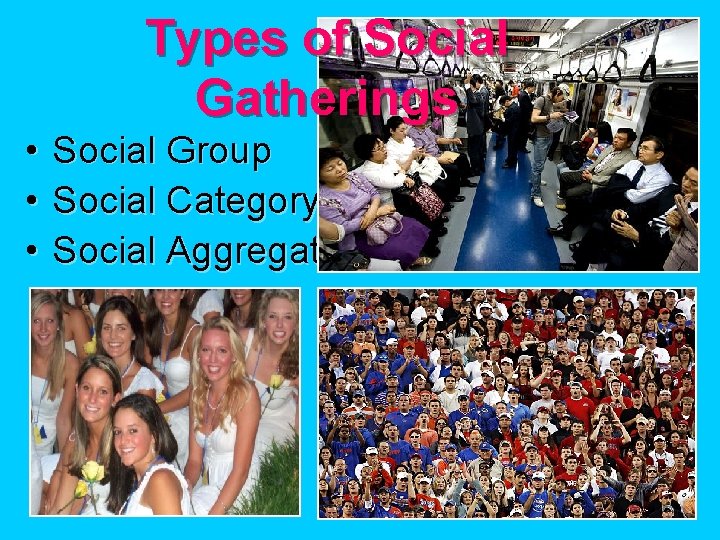
Types of Social Gatherings • • • Social Group Social Category Social Aggregate
Types of Social Gatherings • Social Group: collection of people who interact, share similar characteristics and have a sense of unity • Social Category: collection of people who do not interact, but who share similar characteristics • Social Aggregate: at any given time, a collection of people who are together but who interact very little
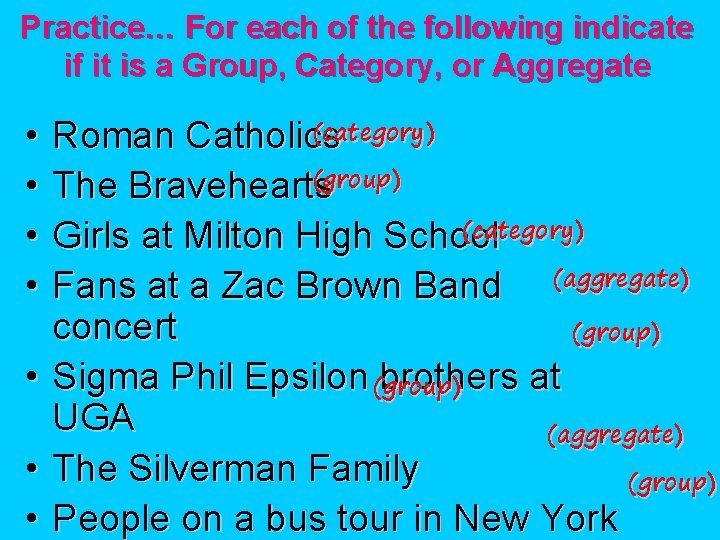
Practice… For each of the following indicate if it is a Group, Category, or Aggregate • • (category) Roman Catholics (group) The Bravehearts (category) Girls at Milton High School Fans at a Zac Brown Band (aggregate) concert (group) Sigma Phil Epsilon (group) brothers at UGA (aggregate) The Silverman Family (group) People on a bus tour in New York
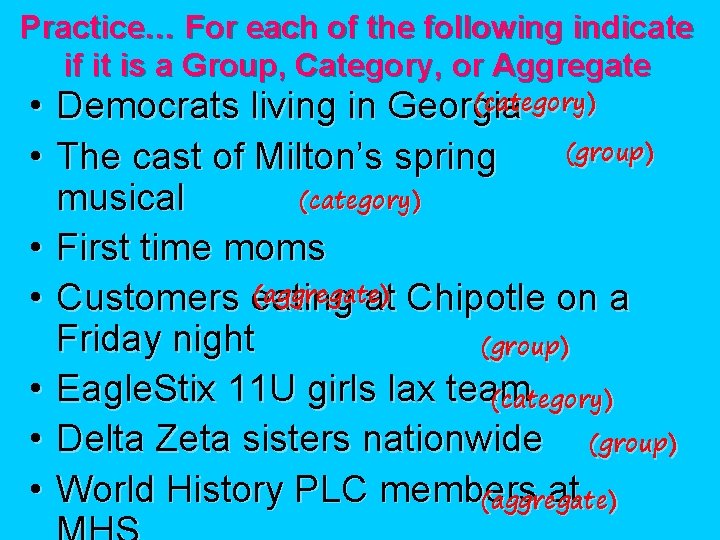
Practice… For each of the following indicate if it is a Group, Category, or Aggregate (category) • Democrats living in Georgia (group) • The cast of Milton’s spring (category) musical • First time moms (aggregate) • Customers eating at Chipotle on a Friday night (group) • Eagle. Stix 11 U girls lax team (category) • Delta Zeta sisters nationwide (group) • World History PLC members at (aggregate)
Primary & Secondary Groups • Primary Group: • Small social group whose members share personal & enduring relationships • Secondary Group: • Large & impersonal social group whose members pursue a specific interest or activity
Social Networks • Social Network: • The web of relationships that is formed by the sum total of a person’s interactions with other people • Includes direct & indirect relationships
Six Degrees of Separation? • Experiment by Stanley Milgram in 1967 • Study has been questioned, but theory is interesting…randomly select 2 people in different parts of country and see how many connections would it take to link them • 2011 Facebook study – average
Part 3: Group Dynamics
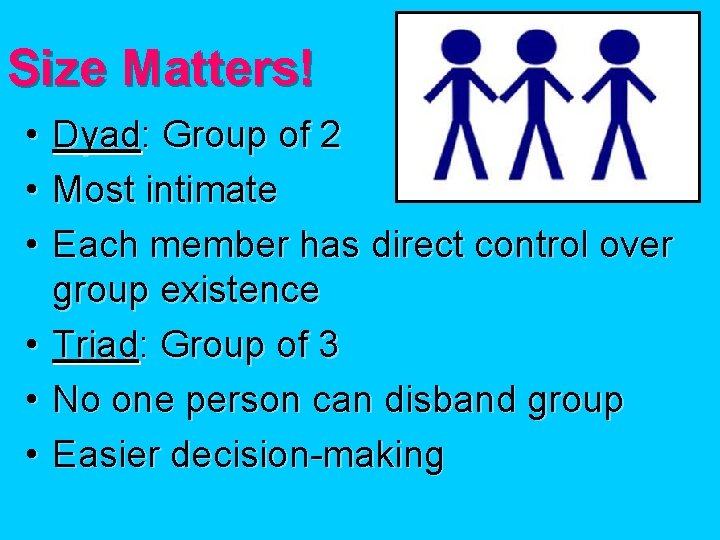
Size Matters! • • • Dyad: Group of 2 Most intimate Each member has direct control over group existence Triad: Group of 3 No one person can disband group Easier decision-making
Size Matters! • What is happens to groups as they get larger?
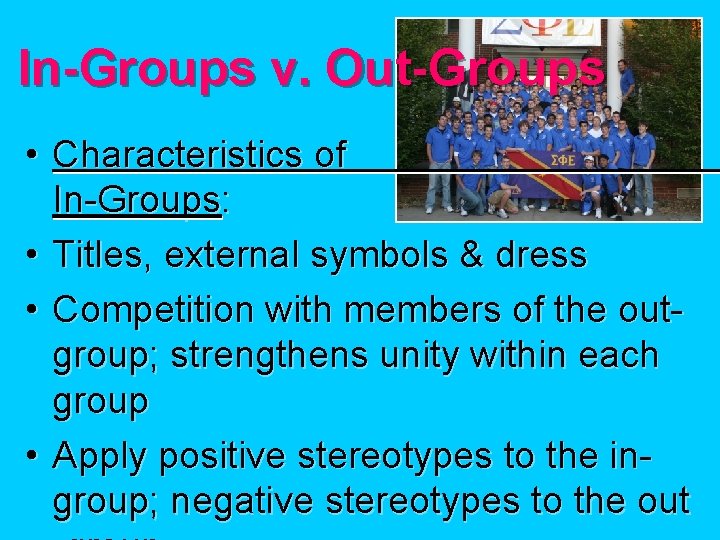
In-Groups v. Out-Groups • Characteristics of In-Groups: • Titles, external symbols & dress • Competition with members of the outgroup; strengthens unity within each group • Apply positive stereotypes to the ingroup; negative stereotypes to the out
Conformity within Groups • Conformity: • a change in beliefs or actions that results in adherence to group norms • How susceptible are individuals to group pressure?
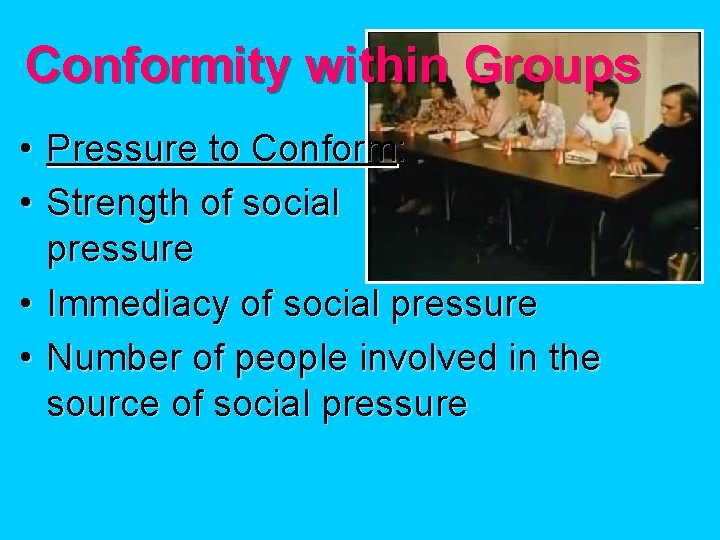
Conformity within Groups • Pressure to Conform: • Strength of social pressure • Immediacy of social pressure • Number of people involved in the source of social pressure
Conformity within Groups • Asch Experiment: http: //www. youtube. com/watch? v=T YIh 4 Mkcf. JA • WYFFT Elevator Clip: • http: //abcnews. go. com/What. Would. Y ou. Do/video/fall-elevator-19922451
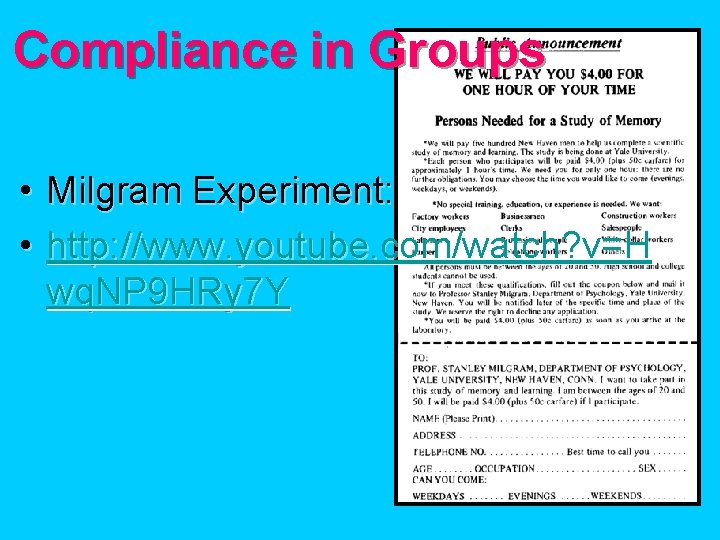
Compliance in Groups • Compliance: a change in behavior prompted by a direct request rather than social norms; obedience • 6 Primary Factors: • Friendship, commitment, scarcity, reciprocity, social validation, authority…
Compliance in Groups • Milgram Experiment: • http: //www. youtube. com/watch? v=H wq. NP 9 HRy 7 Y
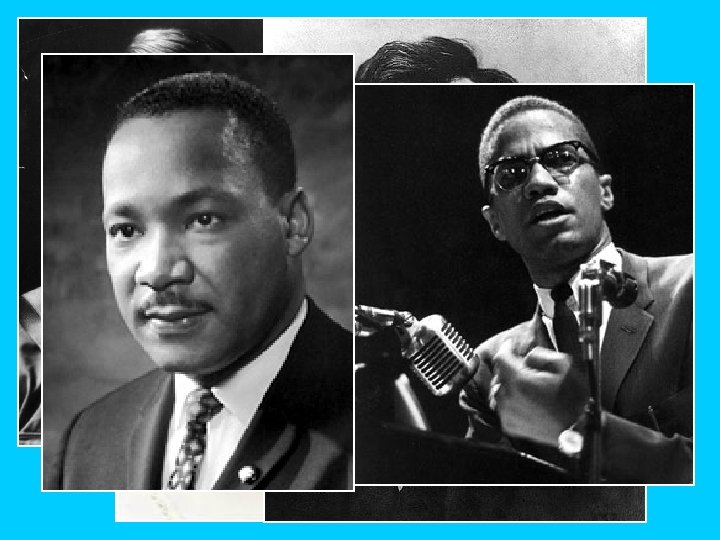
Group Leadership • • • Expressive Leaders: Affiliation motivated Cooperative style of management Instrumental Leaders: Achievement motivated Directive style of management
Part 4: Performance in Groups
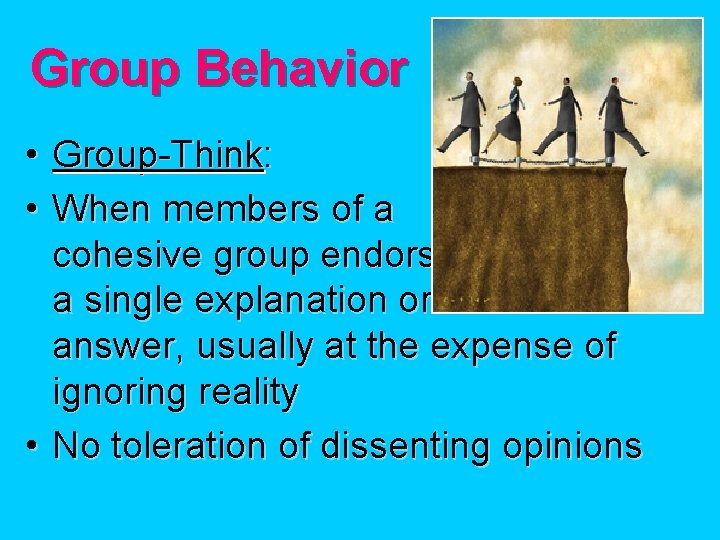
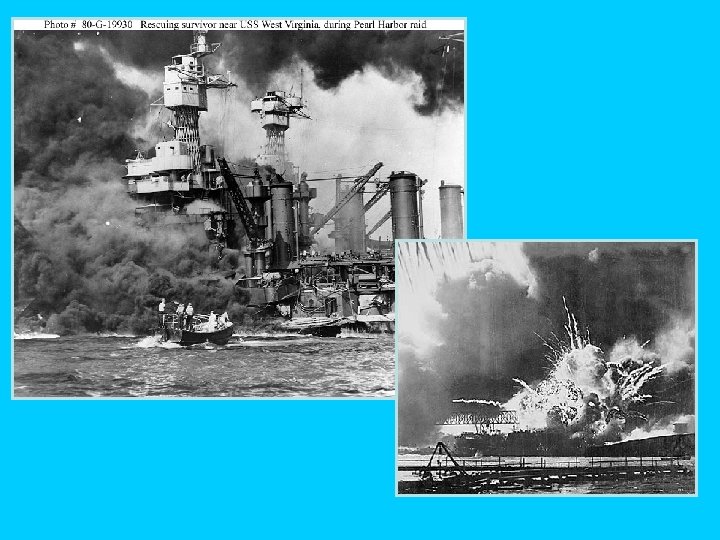
Group Behavior • Group-Think: • When members of a cohesive group endorse a single explanation or answer, usually at the expense of ignoring reality • No toleration of dissenting opinions
Group Behavior • • Group-Think happens when there is: A strong, persuasive group leader A high level of group cohesion Intense pressure from the outside to make a good decision
http: //www. youtube. com/watch? v= q. Ypb. St. Myz_I
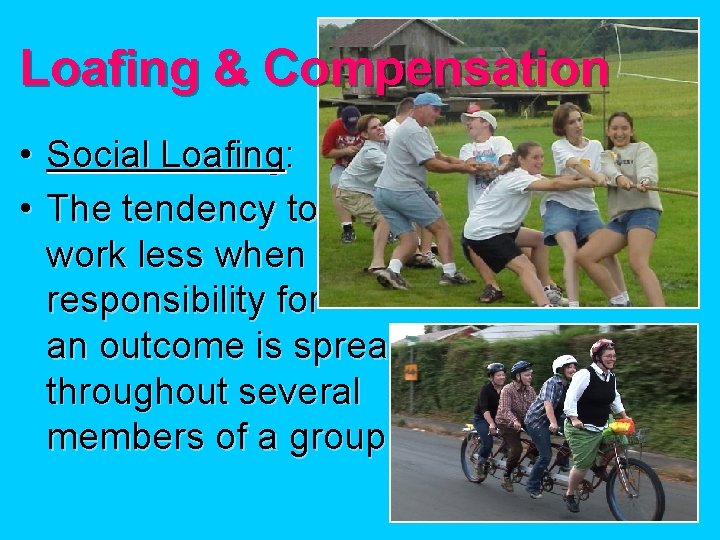
Loafing & Compensation • Social Loafing: • The tendency to work less when responsibility for an outcome is spread throughout several members of a group
Loafing & Compensation • Social Compensation: • The tendency to work harder when one is part of a group, rather than when he or she is alone
Pro-social Behavior • • • DEFINITION: acting to benefit others More likely to help if: Have a high need for approval Personal and social responsibility Sense of empathy
Pro-social Behavior • • • More likely to be helped by others if: Perceived as a potential leader Not responsible for predicament Member of helper’s group Bystander Effect: The more people present, the less likely each individual is to help someone in distress
Part 5: Formal Organizations
Formal Organizations • Utilitarian Organizations: • An organization that provides material benefits in exchange for labor
Formal Organizations • Normative Organizations: • An organization that pursues what they believe to be a morally worthwhile goal
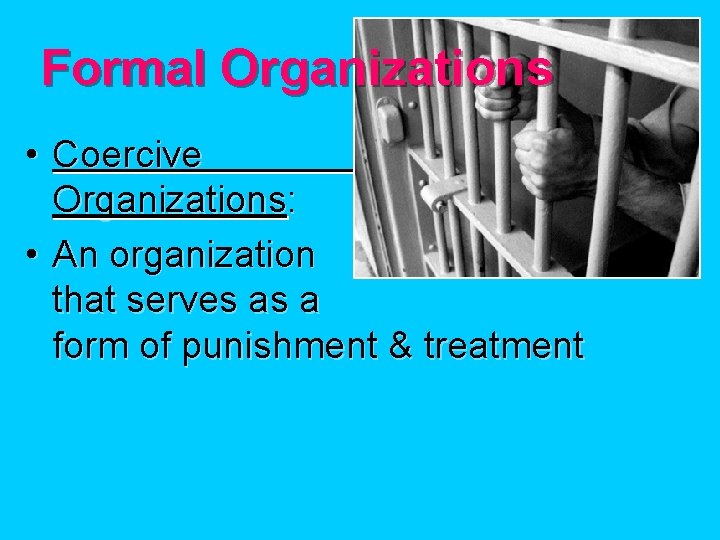
Formal Organizations • Coercive Organizations: • An organization that serves as a form of punishment & treatment