
Groups and Organizations What are Social Groups Two




- Slides: 21
Groups and Organizations
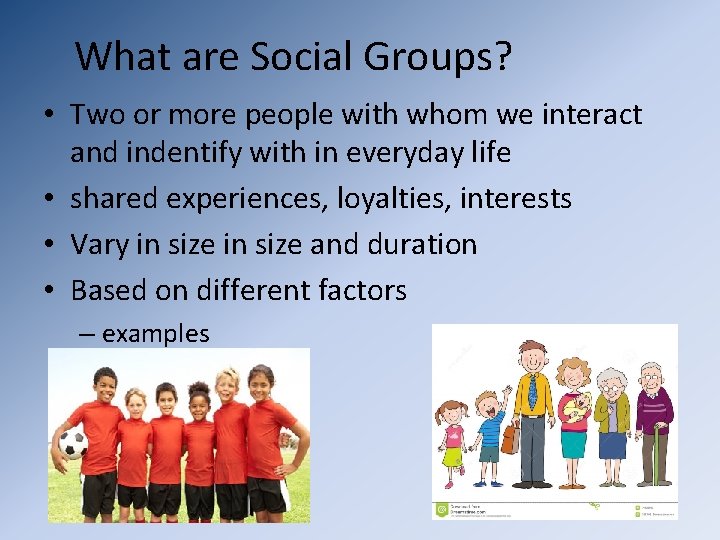
What are Social Groups? • Two or more people with whom we interact and indentify with in everyday life • shared experiences, loyalties, interests • Vary in size and duration • Based on different factors – examples
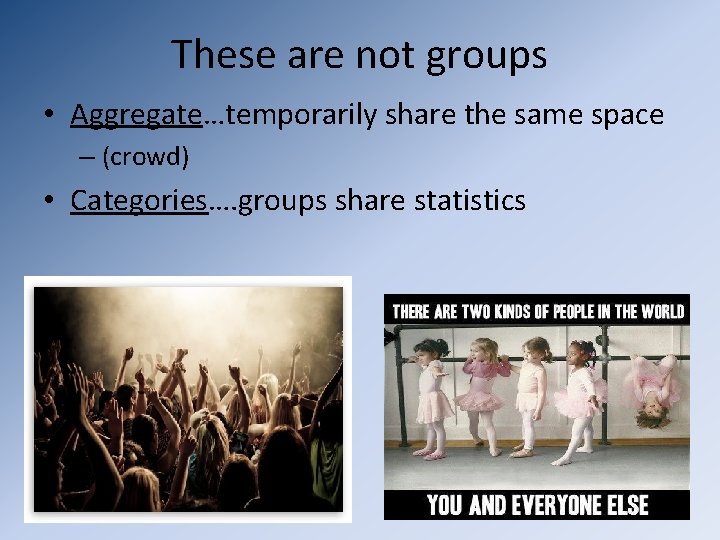
These are not groups • Aggregate…temporarily share the same space – (crowd) • Categories…. groups share statistics
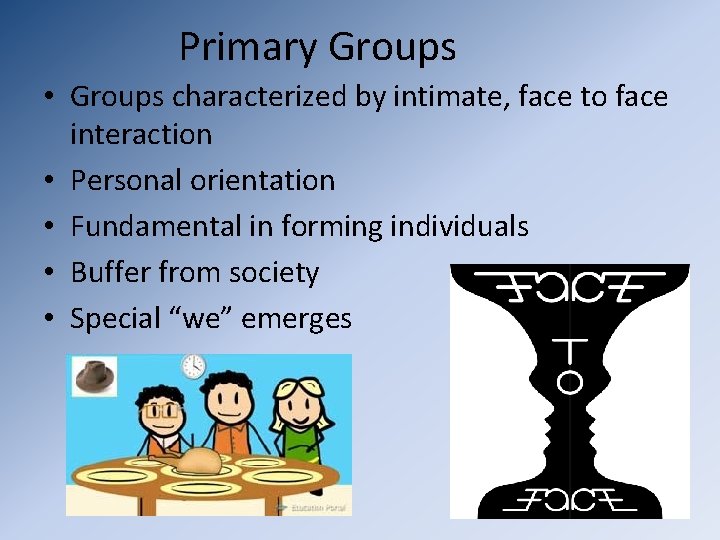
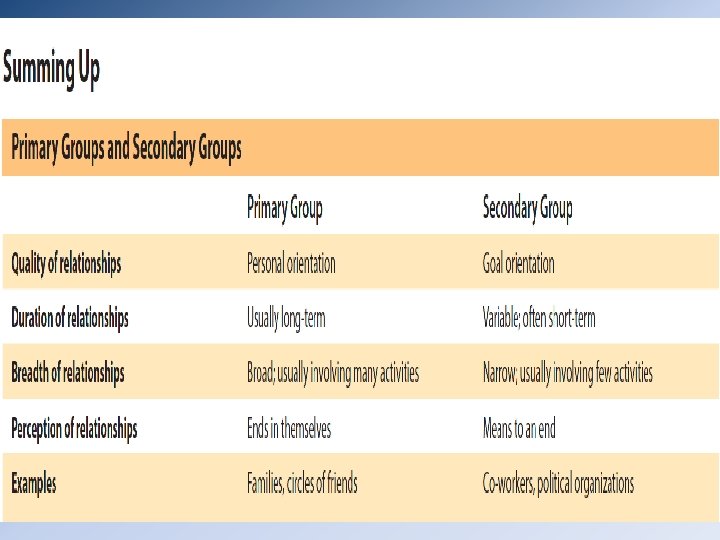
Primary Groups • Groups characterized by intimate, face to face interaction • Personal orientation • Fundamental in forming individuals • Buffer from society • Special “we” emerges
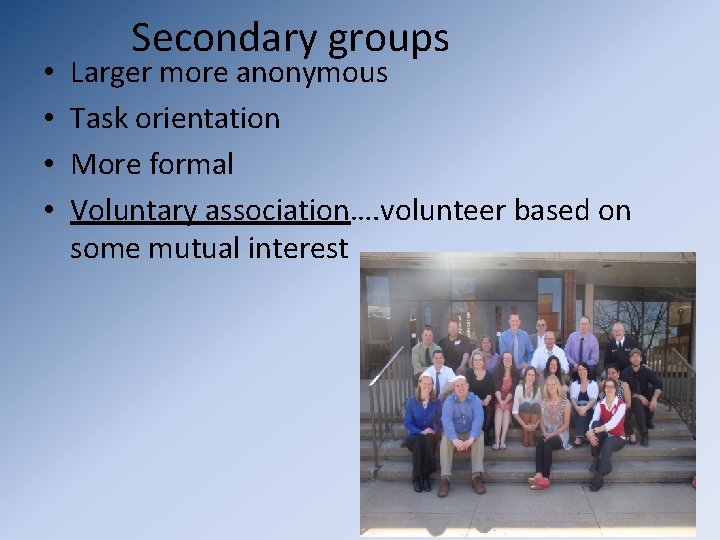
• • Secondary groups Larger more anonymous Task orientation More formal Voluntary association…. volunteer based on some mutual interest
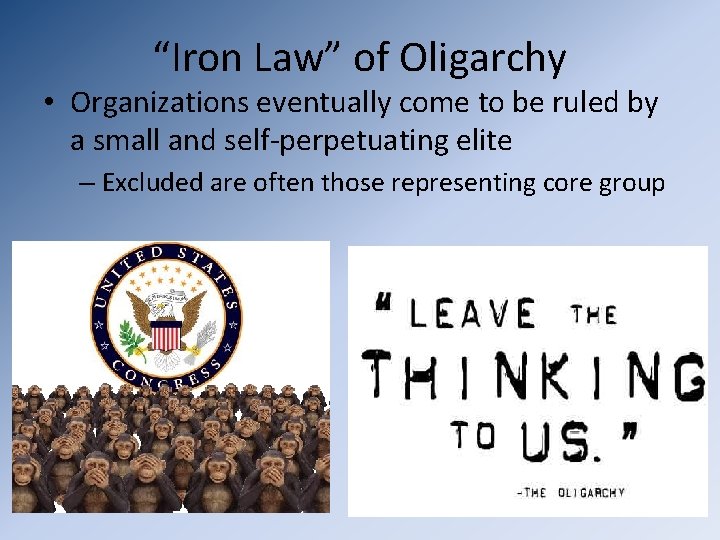
“Iron Law” of Oligarchy • Organizations eventually come to be ruled by a small and self-perpetuating elite – Excluded are often those representing core group
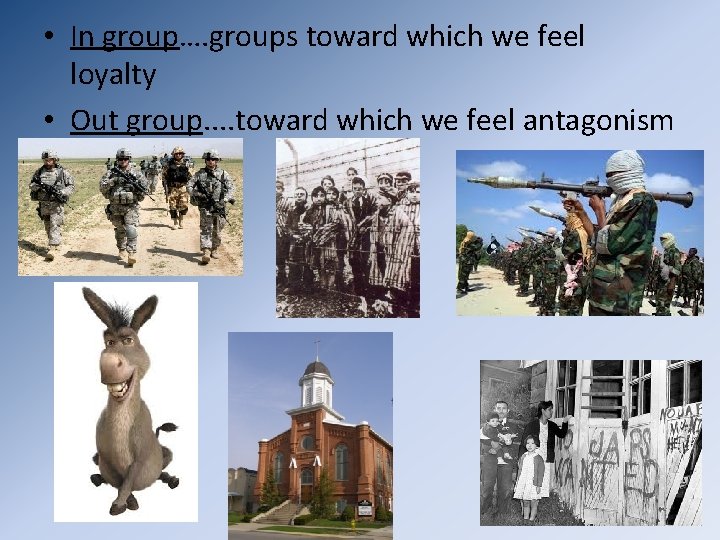
• In group…. groups toward which we feel loyalty • Out group. . toward which we feel antagonism
Reference Groups • Groups we use to evaluate ourselves • Exert tremendous influence over behavior and beliefs
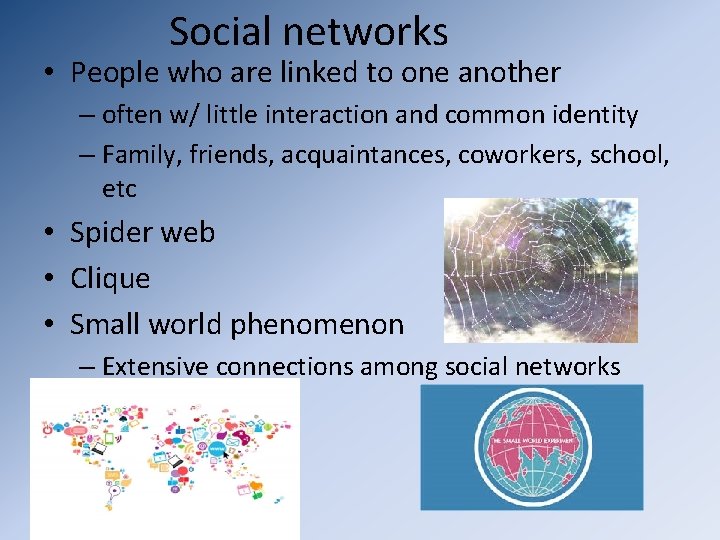
Social networks • People who are linked to one another – often w/ little interaction and common identity – Family, friends, acquaintances, coworkers, school, etc • Spider web • Clique • Small world phenomenon – Extensive connections among social networks
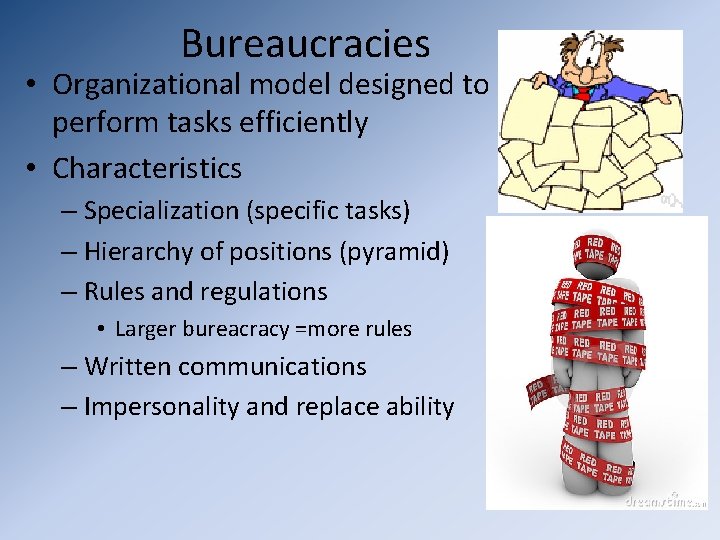
Bureaucracies • Organizational model designed to perform tasks efficiently • Characteristics – Specialization (specific tasks) – Hierarchy of positions (pyramid) – Rules and regulations • Larger bureacracy =more rules – Written communications – Impersonality and replace ability
• Bureaucracies are the most goal oriented group – Bottom line or task completion is primary goal • Goal displacement – an organization continues to exist after goal is met • Bureaucratic dysfunction – Red tape… (inefficiency) rigid rules that can defy logic – Bureaucratic incompetence (Peter Principle) – Bureaucratic alienation • Workers feel cut off from their labor (objects)
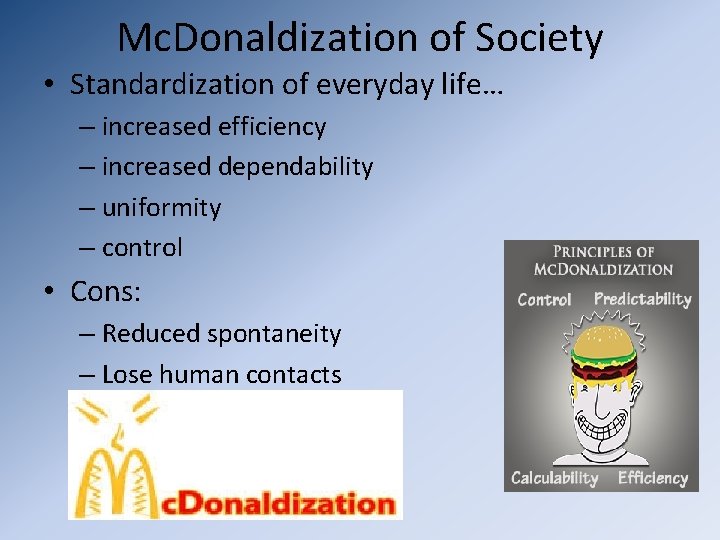
Mc. Donaldization of Society • Standardization of everyday life… – increased efficiency – increased dependability – uniformity – control • Cons: – Reduced spontaneity – Lose human contacts
Group dynamics • How groups influence us and how we influence the group (interaction) • Small group = each can interact with other members – Can be primary or secondary
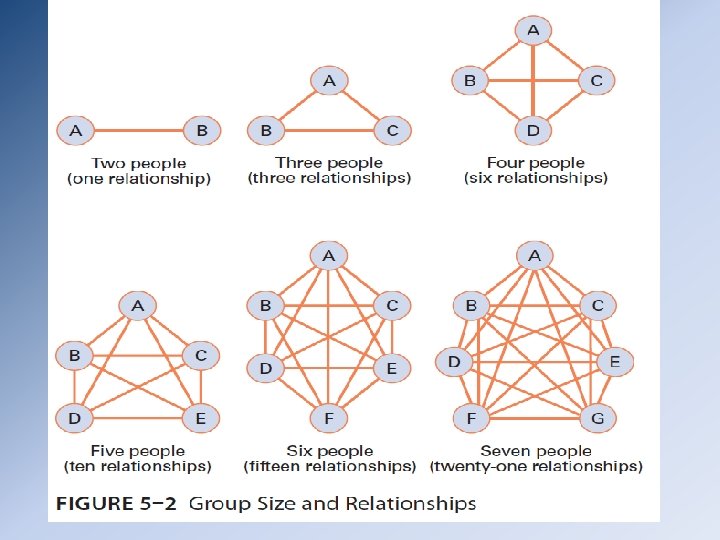
Effects of group size on stability, intimacy, and attitude • Dyad… two members – Most intimate of groups – Unable to continue if one member loses interest • Triad…three members • Unstable… produce coalitions • As group becomes larger stability increases but intimacy decreases – Diffusion of responsibility…. willingness to help drops as group increases
Leaders and leadership styles • Leaders…people who influence the behaviors, opinions, or attitudes of others • Instrumental leaders (task oriented leader) • Expressive leaders (socioemotional leader) • Roles contradict one another
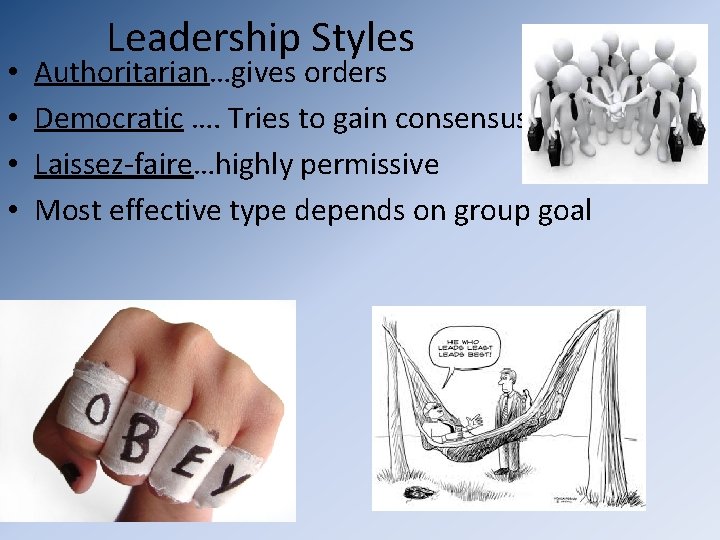
• • Leadership Styles Authoritarian…gives orders Democratic …. Tries to gain consensus Laissez-faire…highly permissive Most effective type depends on group goal
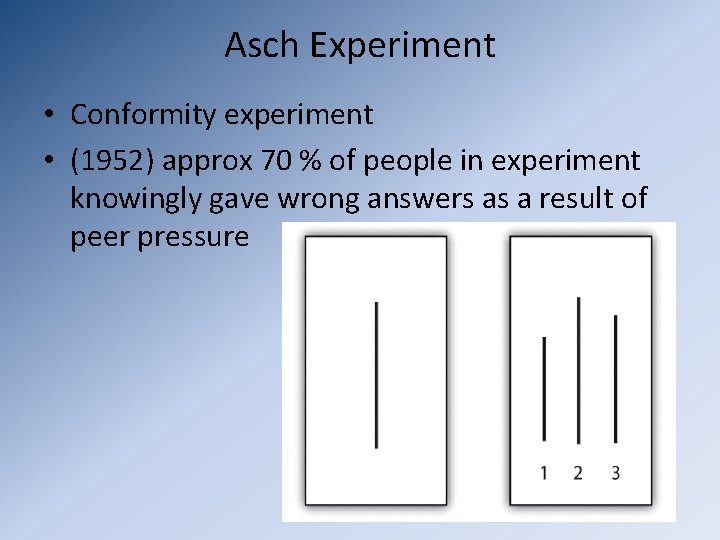
Asch Experiment • Conformity experiment • (1952) approx 70 % of people in experiment knowingly gave wrong answers as a result of peer pressure
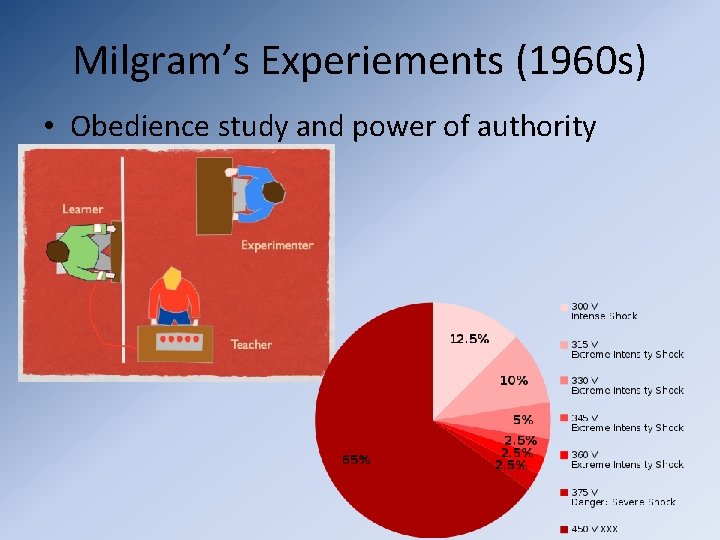
Milgram’s Experiements (1960 s) • Obedience study and power of authority
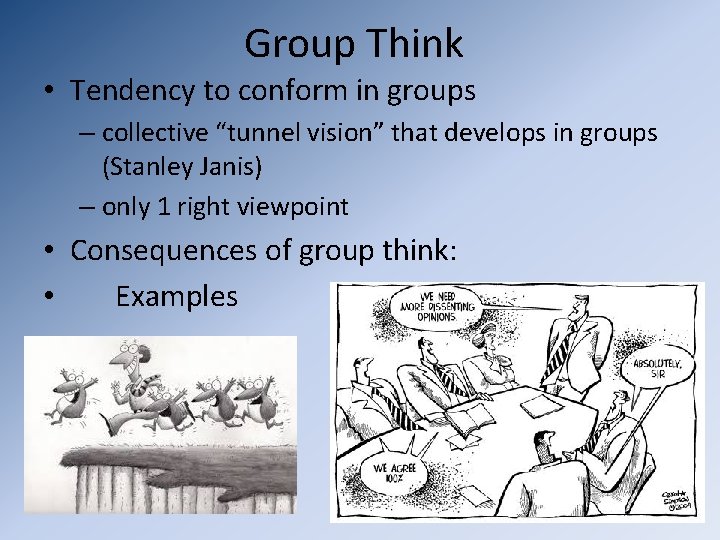
Group Think • Tendency to conform in groups – collective “tunnel vision” that develops in groups (Stanley Janis) – only 1 right viewpoint • Consequences of group think: • Examples