
Group Structure Processes Key Concepts Define a Group
- Slides: 39
Group Structure & Processes
Key Concepts � Define a Group � Hungers � Define Group Process � Group Diagrams � Types of Groups � Stages of Group Process � Imagoes � Leadership
Exercise Looking back at your timeline: � Identify who and what influenced you about groups as a very young person � What do you notice about how you are in a group setting – from your earliest experience of your family setting � How do you believe this has/will/might impact on you coming into this group
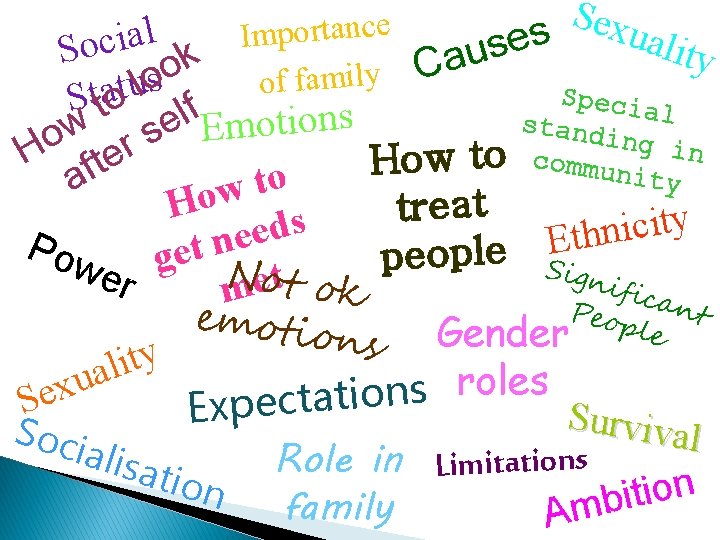
S e e c n x a t r o p l u m s I a i a e c l s o i S t u y k a C o y l i m a f o f s o l u Speci Sttaot lf a l s n s o i t t andin w r se Emo o g in H fte o w t communit o H o y a t How s reat t y t i c d i n e h t E Pow get ne e l Si p o e p gnif N er t o e t o ican m k Peo t emotio p le Gender n s y t i l a u roles x s n e o S xpectati E S urvival Soci alisa s n io t Role in a it im L tion n o i t i b family m A
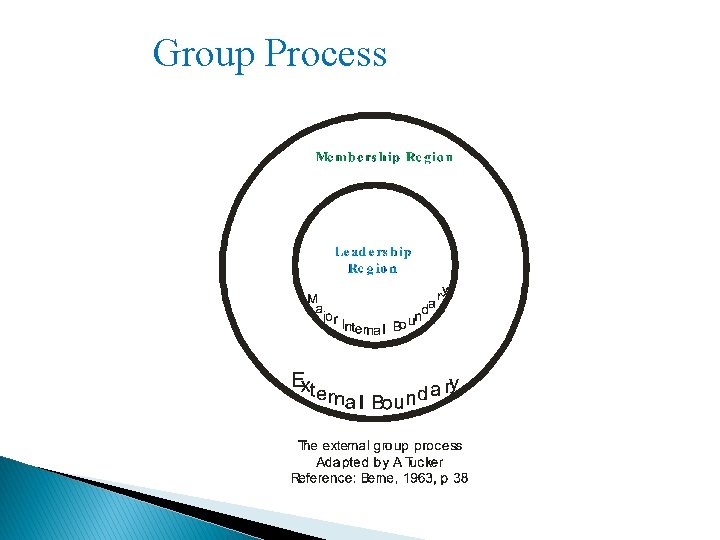
Definition A Group maybe defined as: any social aggregation that has an external Boundary and at least one internal boundary “People learn the practical aspects of group dynamics when they are very, very young …”
Leadership Hunger � The desire for someone to structure the work of the group Structure Hunger � The need of an individual to have his time structured
Groups � Two classes of people – ◦ Leadership ◦ Membership
Group work � Group work classified according to Results ◦ Group activity – stating the purpose of the group ◦ Group process – What changes or is concerned with changing the structure of the group itself The two aspects can be mutually exclusive
Exercise � Thinking � What about this group: is the short term purpose of this group? � What is the long term purpose of each individual? � What might the impact of any differences or similarities have on the purpose of the group – now and in the future?
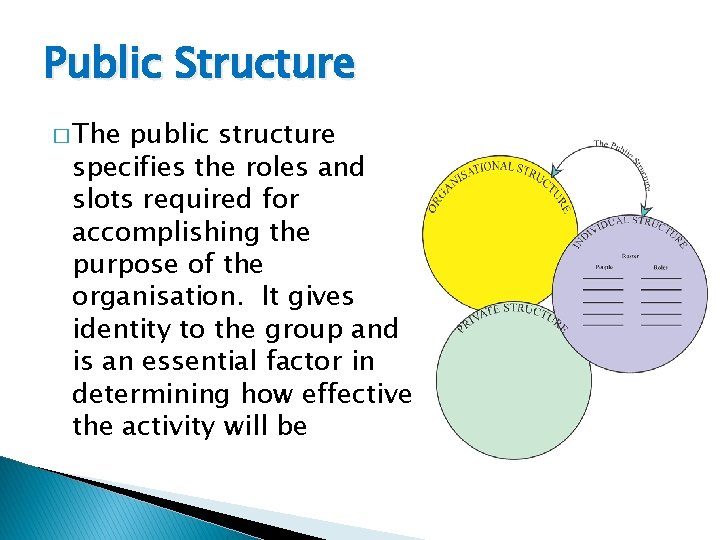
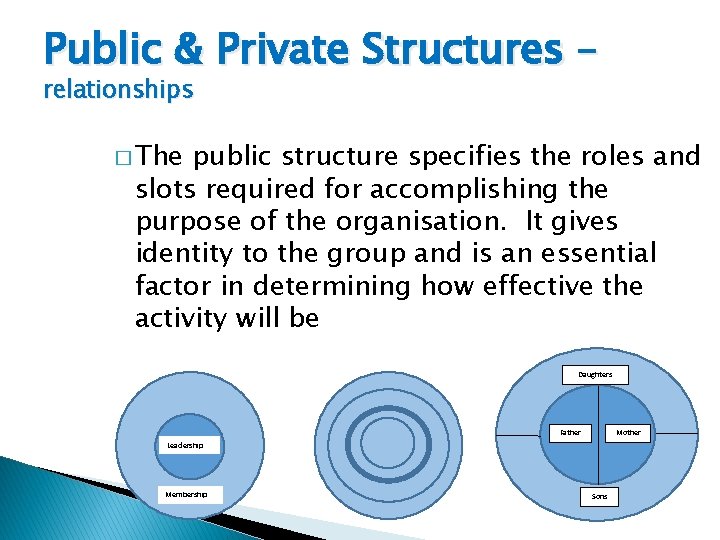
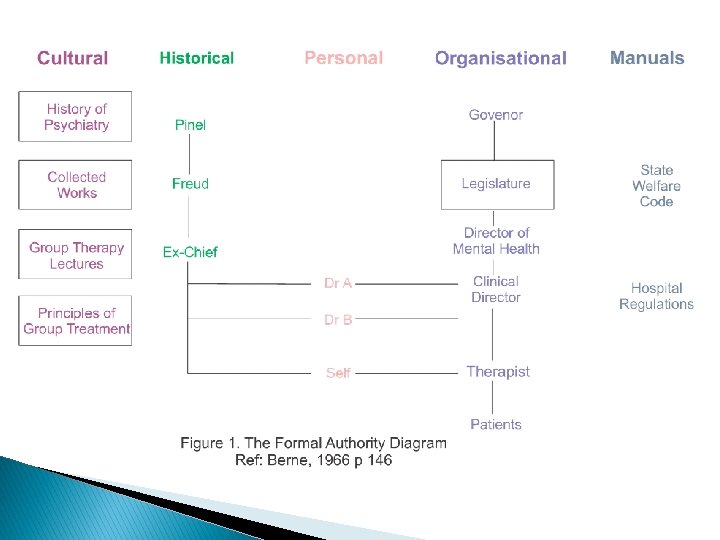
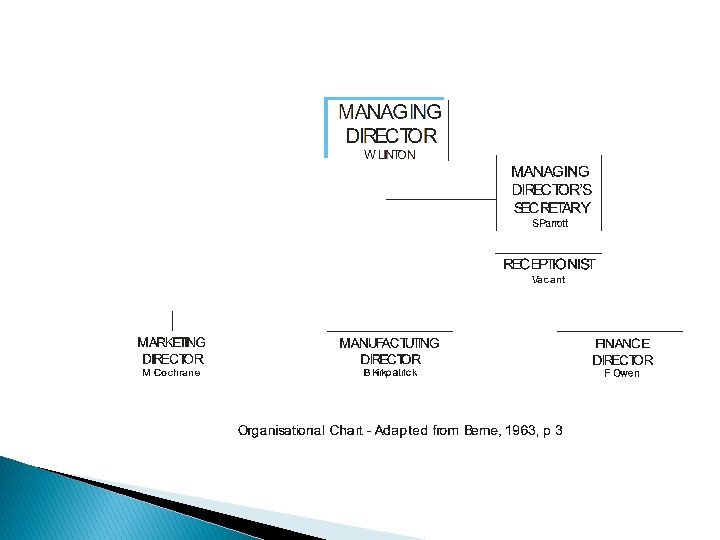
Public Structure � The public structure specifies the roles and slots required for accomplishing the purpose of the organisation. It gives identity to the group and is an essential factor in determining how effective the activity will be
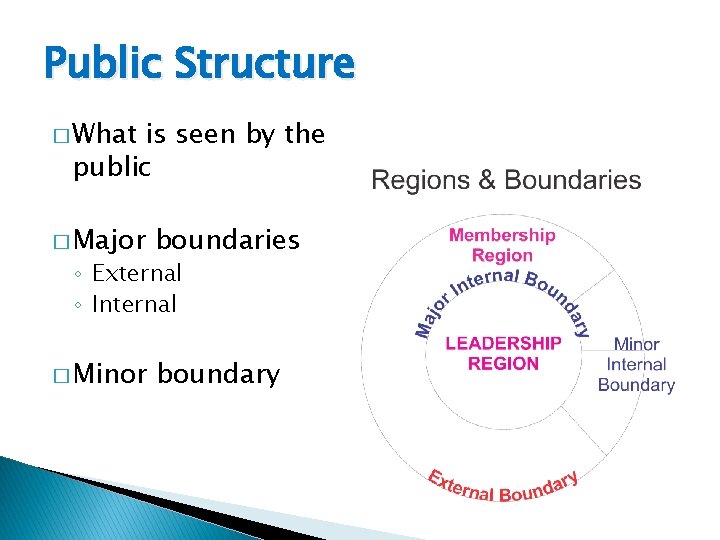
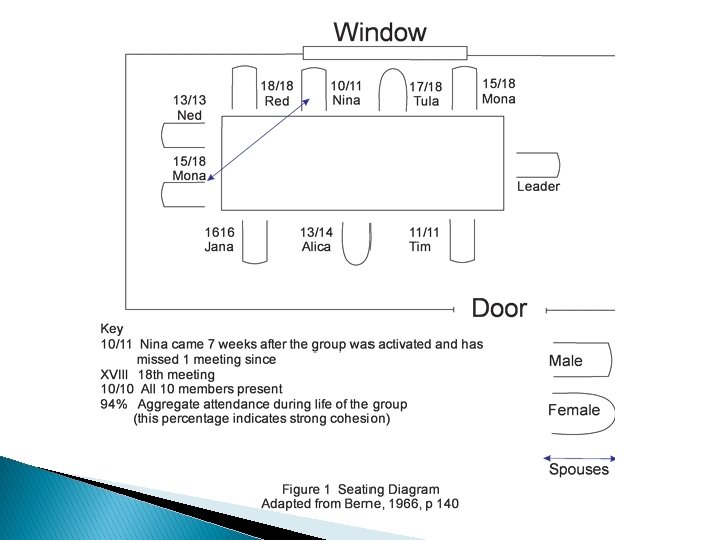
Public Structure � What is seen by the public � Major boundaries � Minor boundary ◦ External ◦ Internal
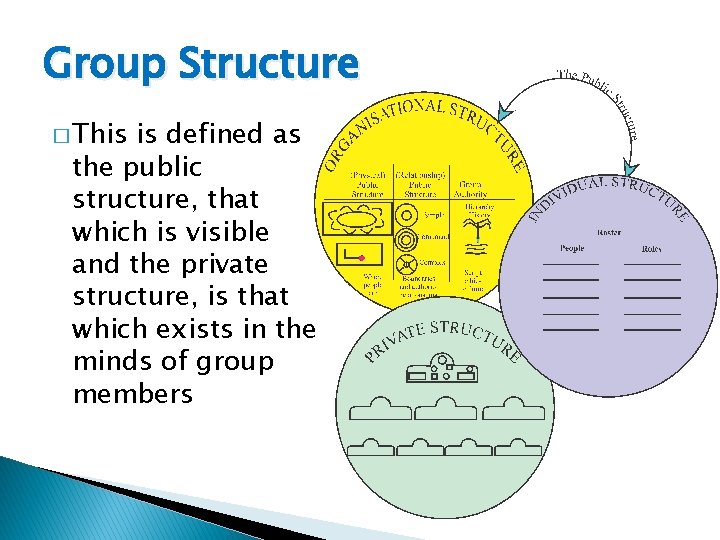
Group Structure � This is defined as the public structure, that which is visible and the private structure, is that which exists in the minds of group members
Public & Private Structures – relationships � The public structure specifies the roles and slots required for accomplishing the purpose of the organisation. It gives identity to the group and is an essential factor in determining how effective the activity will be Daughters Father Mother Leadership Membership Sons
Group Process
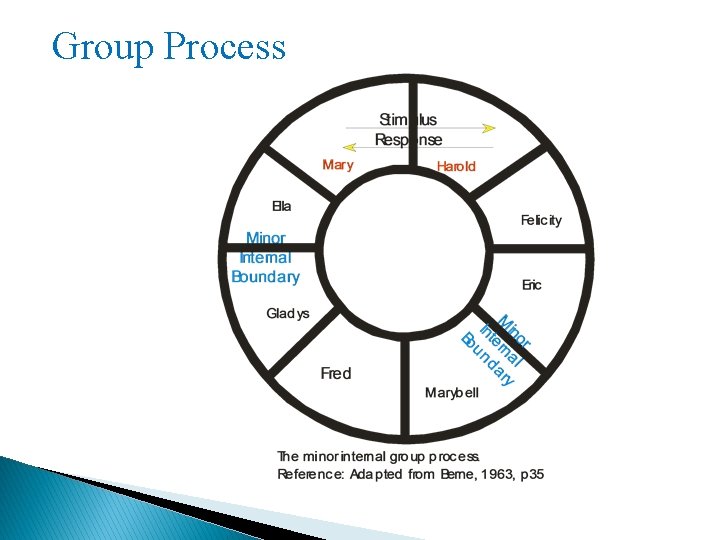
� Challenges to leadership- part of the major group process � Challenges or agitation between group process – part of the minor group process
Group Process
Group Process
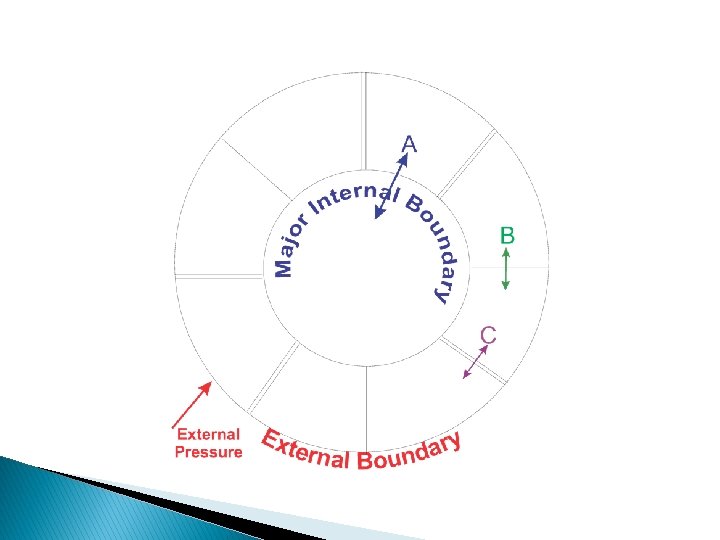
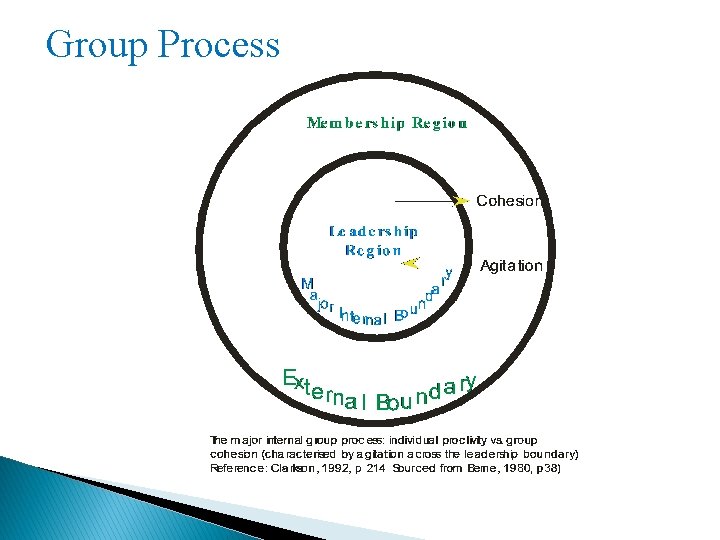
Group Process � The conflicts of forces resulting from attempts to disrupt, disorganise or modify the structure of a group. � The external group process results from conflicts between external pressure and the group cohesion and takes place at the external boundary. � The major internal group process results from conflicts between individual proclivities and the group cohesion as represented by the leadership and takes place at the major internal boundary. � The minor group process results between individual proclivities and takes place at the minor internal boundary
Cohesion � The operative force derived from the need of the members to maintain the orderly existence of a group.
Exercise Choose a group you have worked with or are currently working with: Identify the internal boundaries, both major and minor. Which ones are strong, weak, broken, wavering – draw them on your diagram to show what is happening. Identify the following forces: � � � Pressure Agitation (defined as the collective strength of active individual proclivities) Cohesion (defined as an operative force derived from the need of the members to maintain the orderly existence of a group Consider the nature and the relative strength of the forces and using coloured pens, draw these into your diagram.
Private Structure � The private structure describes what is going on in each and every individual’s mind about their relationship to other members of the group as well as the various activities and processes. unit of private structure is the Imago that each member has of their own understanding of the structure of the group. � The imago depicts the relations between other members and in particular the leader. � As group members learn more about the group so this structure changes.
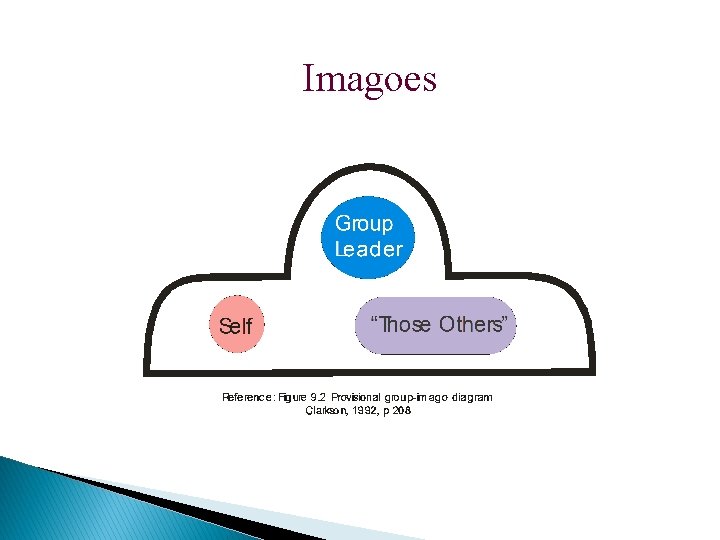
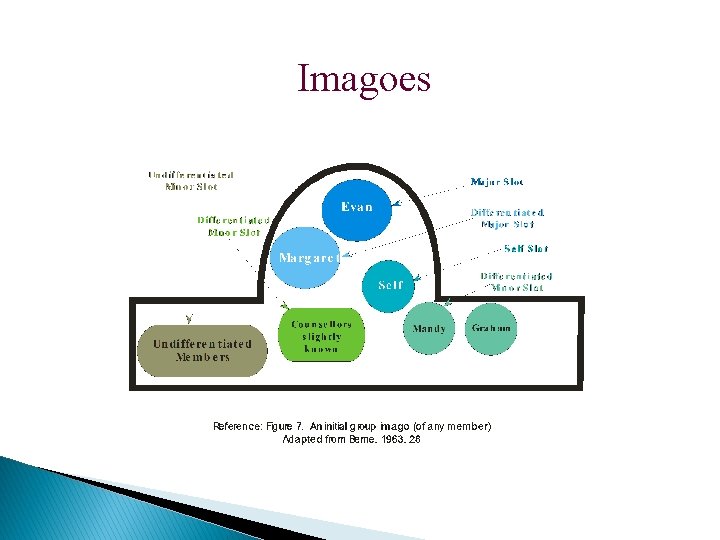
Private Structure Berne defined a group imago as: � A mental picture of what a group is or should be like � The image of the group held by each group member � Something that varies between group members and will change over time � Slot for the leader, self (to start with), differentiated slots for those we know and undifferentiated slots for those we don't � Moves through a process
Imagoes
Imagoes
Group Imago Any mental picture conscious, preconscious or unconscious, of what a group is or should be like. In the course of the group process a group imago may go through the following phases: Provisional: before entering the group or before the group is activated, based on fantasies and previous experiences with groups. Adapted: Superficially modified in accordance with the member’s estimate of the confronting reality. Operative: Further modified in accordance with the member’s perception of how he fits into the leader’s imago. Secondarily adjusted The final phase, in which the member relinquishes some of his own proclivities in favour of the group cohesion.
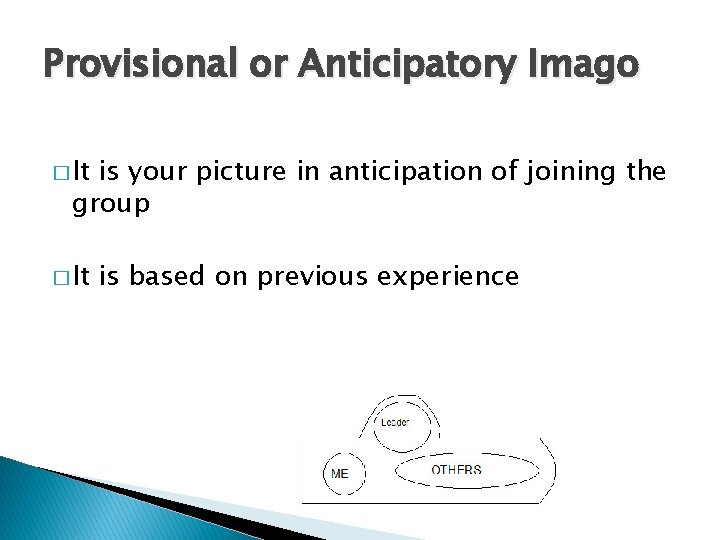
Provisional or Anticipatory Imago � It is your picture in anticipation of joining the group � It is based on previous experience
Exercise – Anticipatory or Provisional Let’s start with coming into this group Ø Your relationships with previous leaders Ø (including parents or significant elders as you were growing up) Ø What were your imaginings about how the interaction might be like – previous Ø Your relationships with other groups? Ø (including your family of origin as you were growing up – siblings, extended family etc) Ø What were your imaginings about how you would ‘fit’ or ‘belong’ in this group? Ø What were your worries, anxieties? Ø What were your excitements? Ø What else were you expecting?
Exercise – Anticipatory or Provisional Ø Draw your anticipatory imago Ø What is your relationship with the leader? Ø What is your relationship with your colleagues? Ø How does your imago compare to your colleagues?
Exercise: Tactile Imagoes (manual Pg 34) Ø Taking Hampson’s idea of using various objects such as shells and small wooden fragments, as well as making sure that the stones were a mix of sizes and included both polished and rough stones have fun and develop your Provisional or Anticipatory Imago Ø Use any item you wish – within reason! Go ahead and have some fun and be creative.
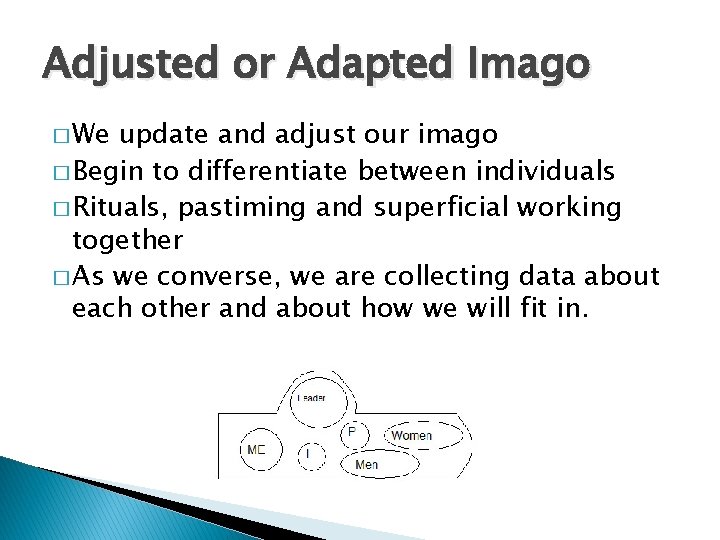
Adjusted or Adapted Imago � We update and adjust our imago � Begin to differentiate between individuals � Rituals, pastiming and superficial working together � As we converse, we are collecting data about each other and about how we will fit in.
Adapted Imago Pastiming, � If we have no small talk to offer, the other group members will become uncomfortable around us. � Without realising why, they will react negatively because they cannot acquire the data they need to flesh out a proper slot for us in their imago. � If we fail generally to respond, it will seem as if we do not belong in the group.
Exercise – Adjusted or Adapted Imago Differentiating in this group Ø What are you aware of as you have worked through the various exercises so far? Ø How are your fears or anxieties? Ø What has happened to your excitement? Ø What has happened with your expectations?
Exercise – Adjusted or Adapted Imago Ø Draw your new imago (to date) Ø What is your relationship with the leader? Ø What is your relationship with your colleagues? Ø How does your imago compare to your colleagues?
Exercise: Tactile Imagoes (manual Pg 34) Ø Taking Hampson’s idea of using various objects such as shells and small wooden fragments, as well as making sure that the stones were a mix of sizes and included both polished and rough stones have fun and develop your Adjusted or Adapted Imago Ø Use any item you wish – within reason! Go ahead and have some fun and be creative.
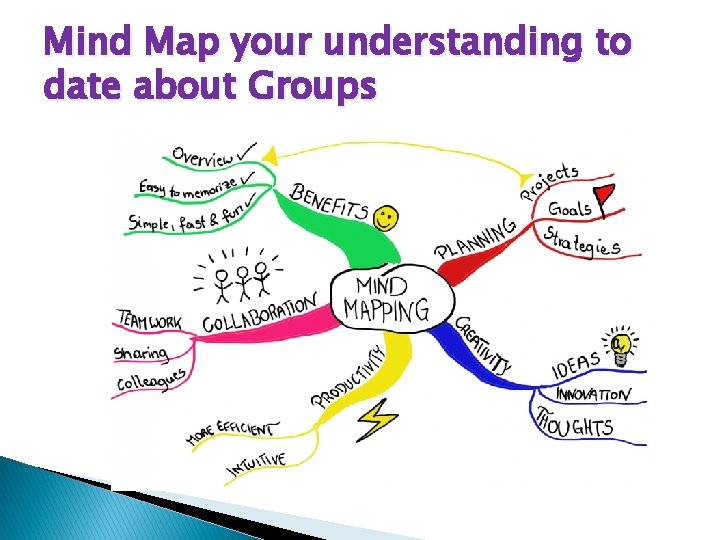
Mind Map your understanding to date about Groups