
Group Members Nida Inam 1629 Momna Sarwar 1647
Group Members Nida Inam (1629) Momna Sarwar (1647) Neelam Gulzar (1651) Qurat –Tul-Ain (1625)
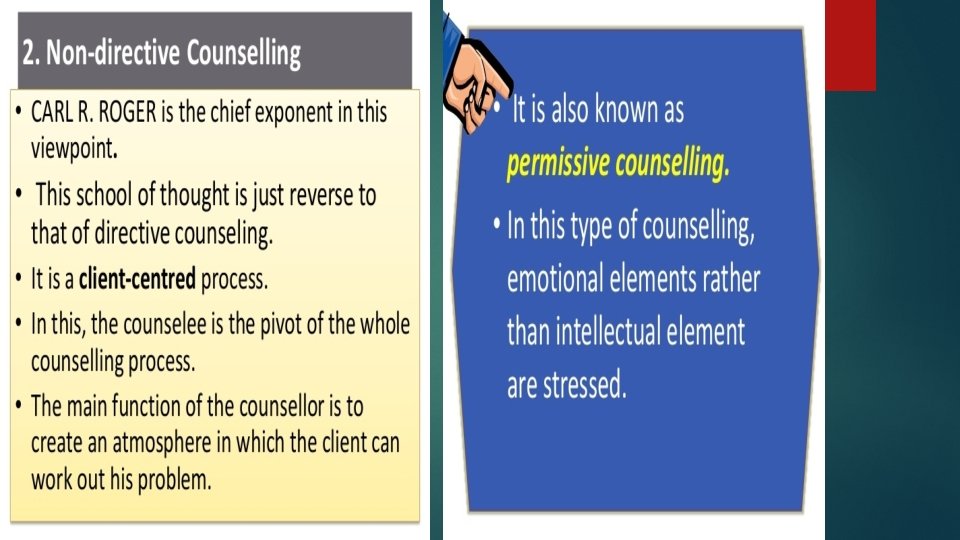
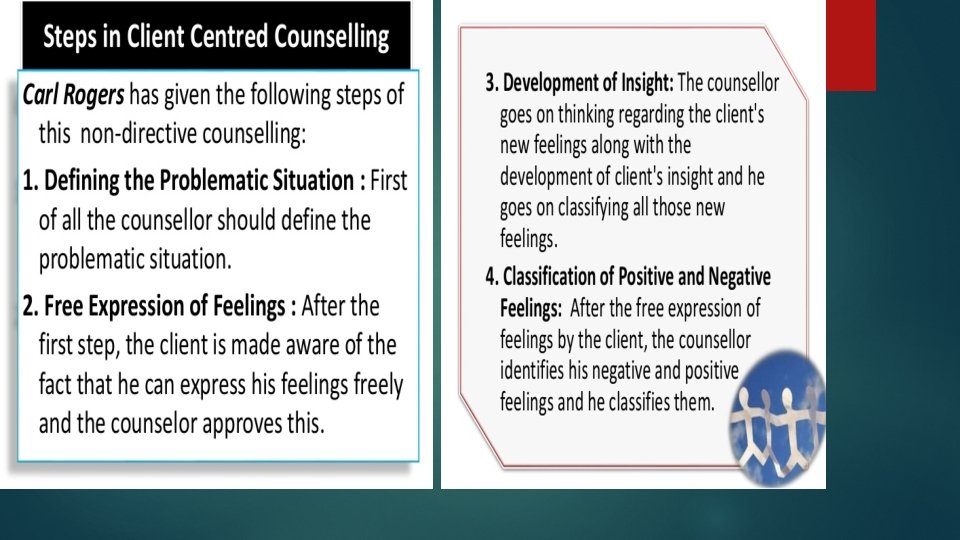
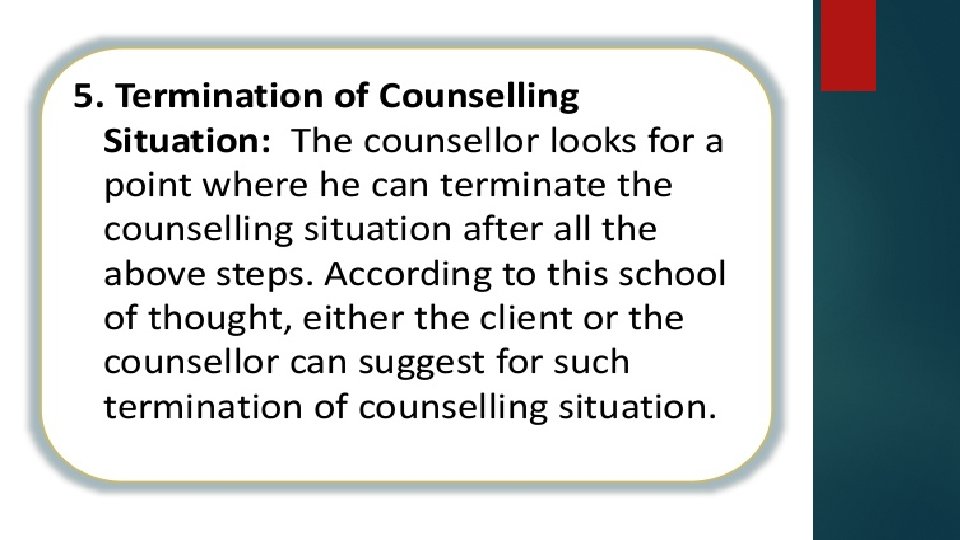
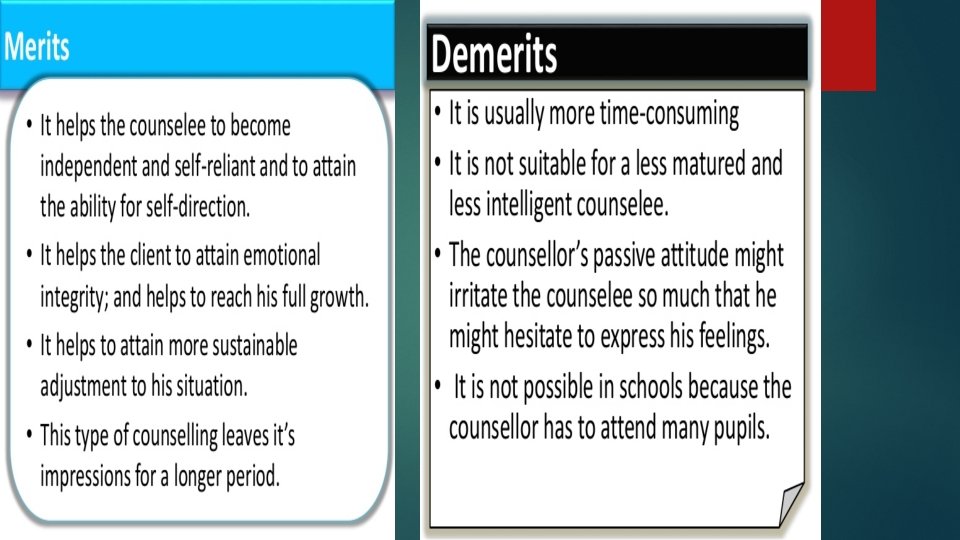
Table Of Contents v Definition of Counselling v Types of Counselling § Directive Counselling , Steps , Merits, Demerits § Non-Directive Counselling Steps Merits, Demerits § Electic Counselling, Characteristics of Electic Counselling v Area Of Counselling Emotional Abuse, § § Obsessive compulsive disorders, § Relationship Issues § Stress § Terminal Illness § Work related issues § § Anger Management, Anxiety, Depression § Bereavement Counselling § Low self-esteem

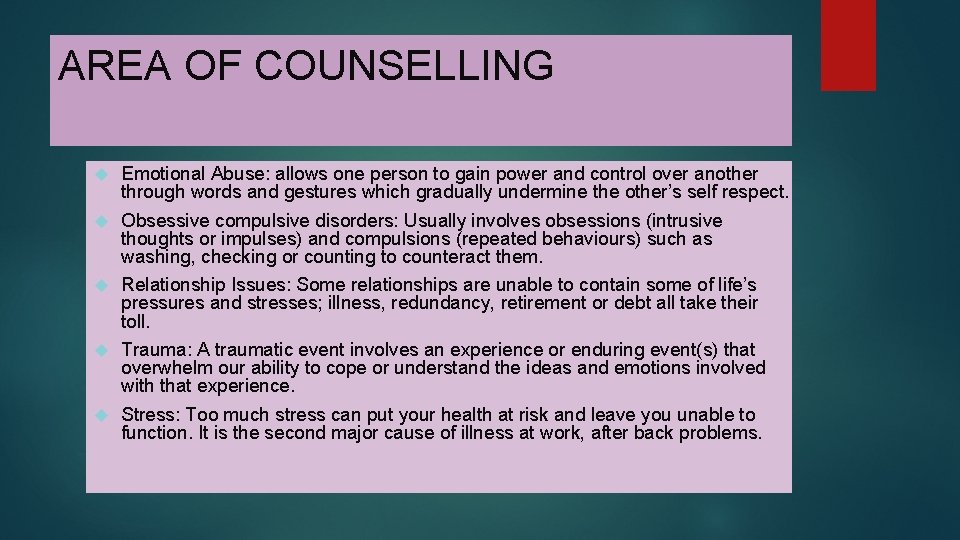
AREA OF COUNSELLING Emotional Abuse: allows one person to gain power and control over another through words and gestures which gradually undermine the other’s self respect. Obsessive compulsive disorders: Usually involves obsessions (intrusive thoughts or impulses) and compulsions (repeated behaviours) such as washing, checking or counting to counteract them. Relationship Issues: Some relationships are unable to contain some of life’s pressures and stresses; illness, redundancy, retirement or debt all take their toll. Trauma: A traumatic event involves an experience or enduring event(s) that overwhelm our ability to cope or understand the ideas and emotions involved with that experience. Stress: Too much stress can put your health at risk and leave you unable to function. It is the second major cause of illness at work, after back problems.
Terminal Illness: Counselling can be a valuable resource for everyone close to the individual, and for the individual themselves. Work related issues: Counselling can help unravel patterns of relating to people, and show us how to examine our own issues, helping towards a more fulfilling career. Anger Management: Understanding what the trigger points are and reexamining our thoughts around them can be among the first steps to managing anger. Anxiety: Anxiety is a problem which feeds on itself and is often covered up and dealt with in isolation. Anxiety can take many forms including phobias, social anxiety, panic attacks, and insomnia.
- Slides: 18