
Group in Organizational Behavior Definitions What is a
Group in Organizational Behavior
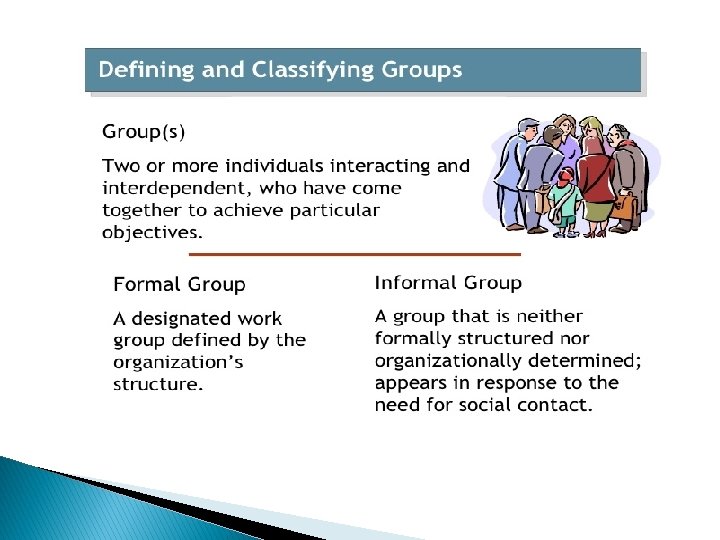
Definitions: What is a Group? What is a group? A group is a collection of two or more people are interacting with each other and are interdependent, in the sense that to fulfill their needs and goals, they must rely on each other.
Nature of group � Interacting members � Be interdependent -members rely on one another � Interact for a length of time � Be a particular size (at the very least three members) � Have hopes of achieving one or more goals
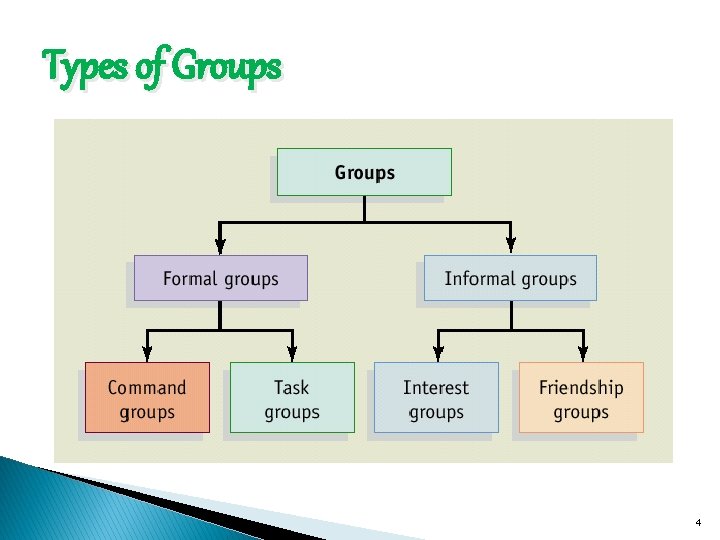
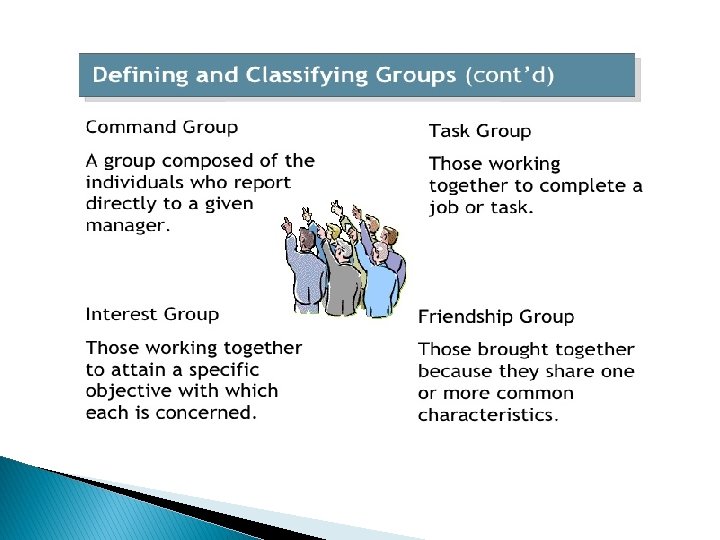
Types of Groups 4
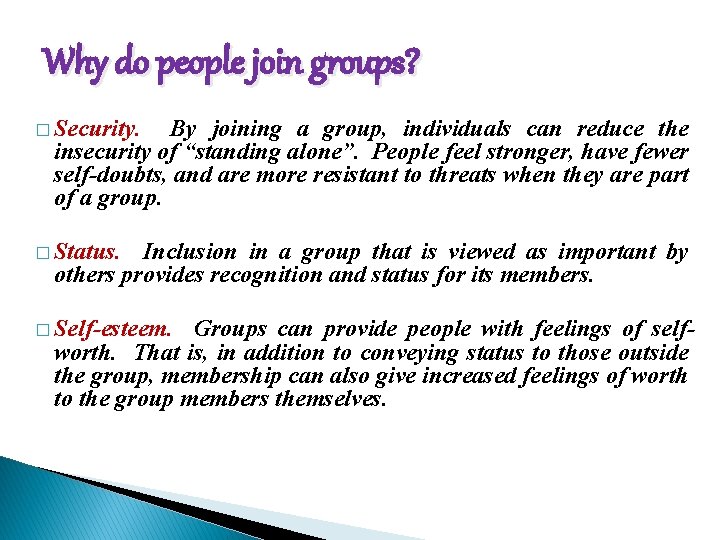
Why do people join groups? � Security. By joining a group, individuals can reduce the insecurity of “standing alone”. People feel stronger, have fewer self-doubts, and are more resistant to threats when they are part of a group. � Status. Inclusion in a group that is viewed as important by others provides recognition and status for its members. � Self-esteem. Groups can provide people with feelings of selfworth. That is, in addition to conveying status to those outside the group, membership can also give increased feelings of worth to the group members themselves.

Why do people join groups? � Affiliation. Groups can fulfill social needs. People enjoy the regular interaction that comes with group membership. For many people, these on-the-job interactions are their primary source for fulfilling their needs for affiliation. � Power. What cannot be achieved individually often becomes possible through group action. There is power in numbers. � Goal Achievement. There are times when it takes more than one person to accomplish a particular task – there is a need to pool talents, knowledge, or power in order to complete a job. In such instances, management will reply on the use of a formal group.
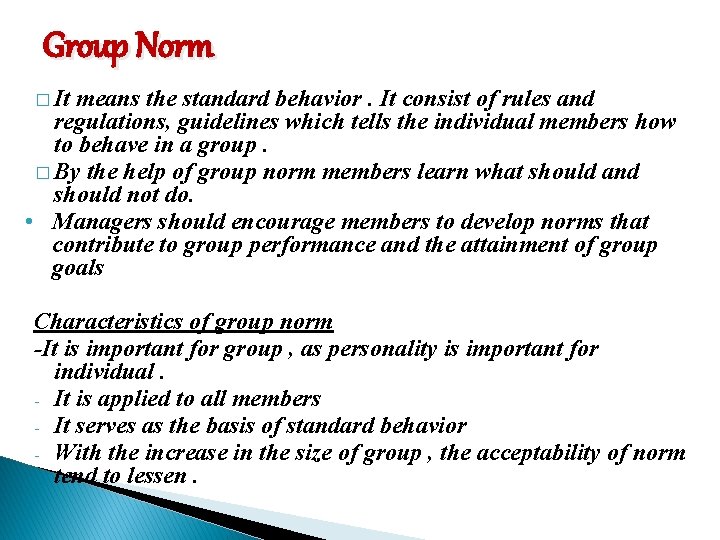
Group Norm � It means the standard behavior. It consist of rules and regulations, guidelines which tells the individual members how to behave in a group. � By the help of group norm members learn what should and should not do. • Managers should encourage members to develop norms that contribute to group performance and the attainment of group goals Characteristics of group norm -It is important for group , as personality is important for individual. - It is applied to all members - It serves as the basis of standard behavior - With the increase in the size of group , the acceptability of norm tend to lessen.
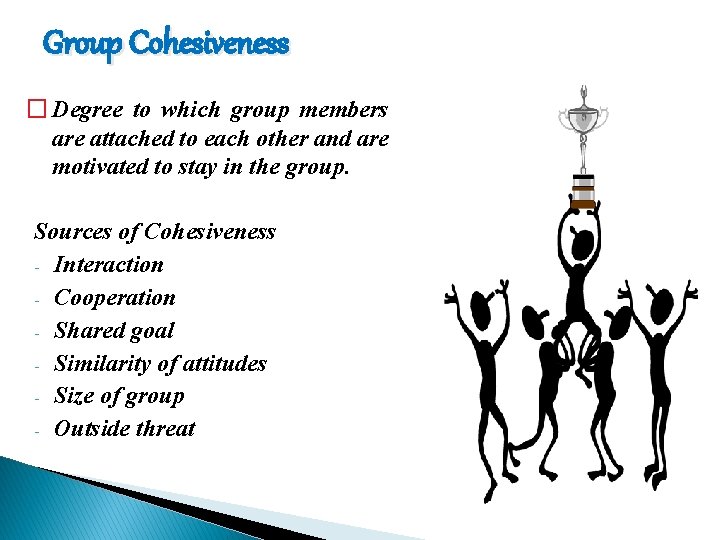
Group Cohesiveness � Degree to which group members are attached to each other and are motivated to stay in the group. Sources of Cohesiveness - Interaction - Cooperation - Shared goal - Similarity of attitudes - Size of group - Outside threat
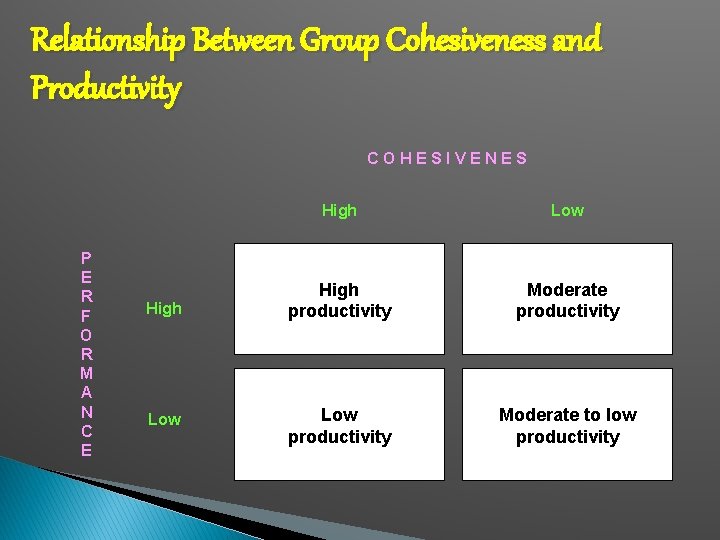
Relationship Between Group Cohesiveness and Productivity COHESIVENES P E R F O R M A N C E High Low High productivity Moderate productivity Low productivity Moderate to low productivity
Suggestions on how to encourage group cohesiveness: 1. 2. 3. 4. Make the group smaller. Encourage agreement with group goals. Increase the time members spend together. Increase the status of the group and the perceived difficulty of attaining membership in the group. 5. Stimulate competition with other groups. 6. Give rewards to the group rather than to individual members. 7. Physically isolate the group.
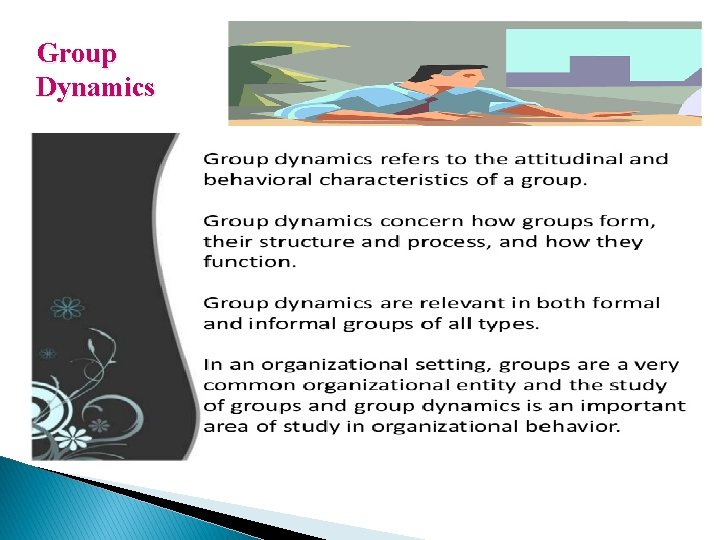
Group Dynamics
Group Decisions: Are Two (or More) Heads Better than One?
Group Decisions: Are Two Heads Better Than One? One of the main functions of groups is to solve problems and make decisions. Is it true that two (or more) heads is better than one in this respect? Most of us assume that the answer is yes. But research suggests that it is Not always true that two heads are better than one. Groups sometimes perform better than individuals but sometimes perform worse. It depends on a number of factors.
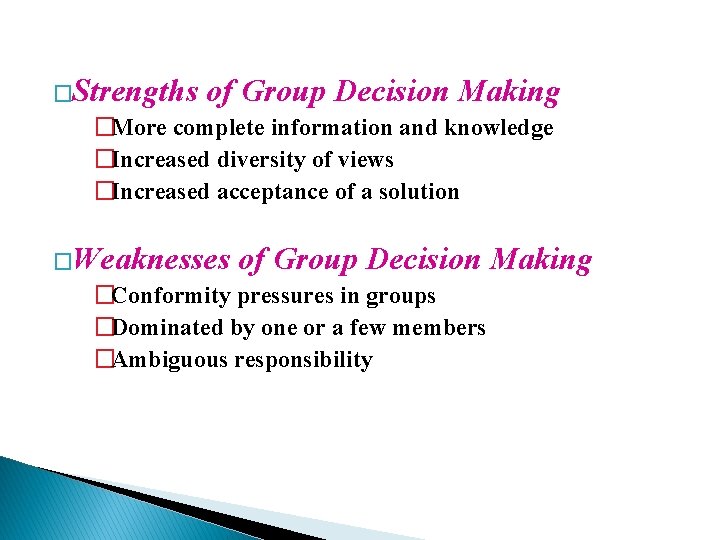
�Strengths of Group Decision Making �More complete information and knowledge �Increased diversity of views �Increased acceptance of a solution �Weaknesses of Group Decision Making �Conformity pressures in groups �Dominated by one or a few members �Ambiguous responsibility

Stages of Group Formation/Development
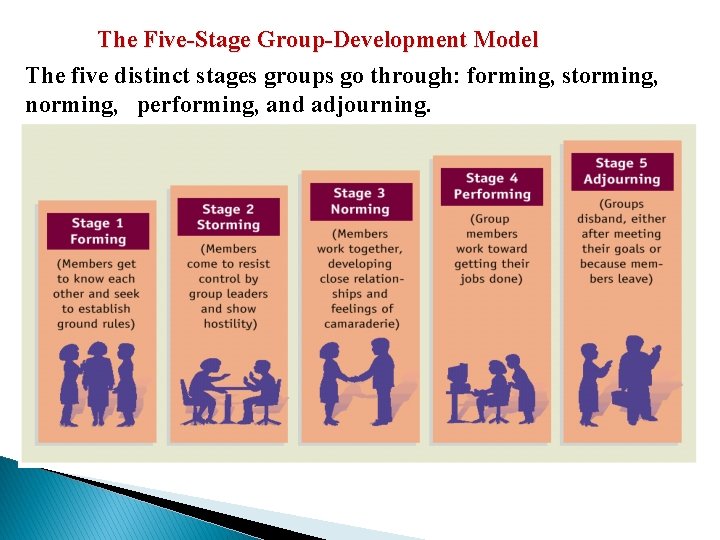
The Five-Stage Group-Development Model The five distinct stages groups go through: forming, storming, norming, performing, and adjourning.
Stages of Group Development � Forming ◦ Group members get to know each other and reach common goals. � Storming ◦ Group members disagree on direction and leadership. Managers need to be sure the conflict stays focused. � Norming ◦ Close ties and consensus begin to develop between group members. � Performing ◦ The group begins to do its real work. � Adjourning ◦ Only for task forces that are temporary. ◦ Note that these steps take time! 15 19
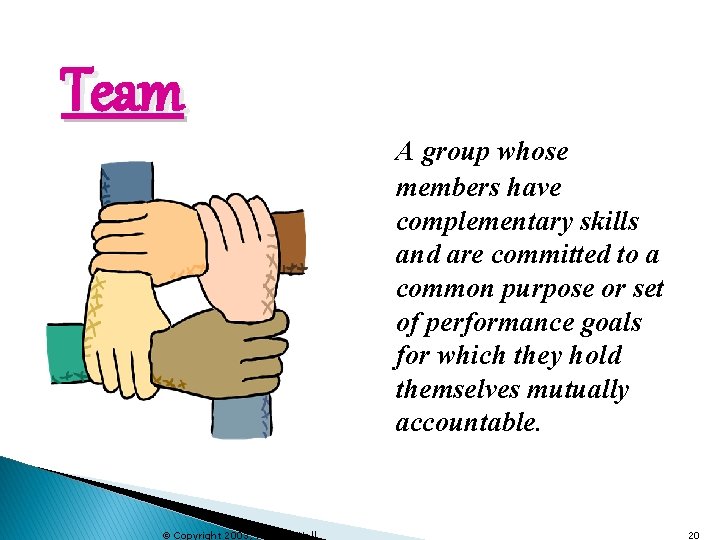
Team © Copyright 2003, Prentice Hall A group whose members have complementary skills and are committed to a common purpose or set of performance goals for which they hold themselves mutually accountable. 20
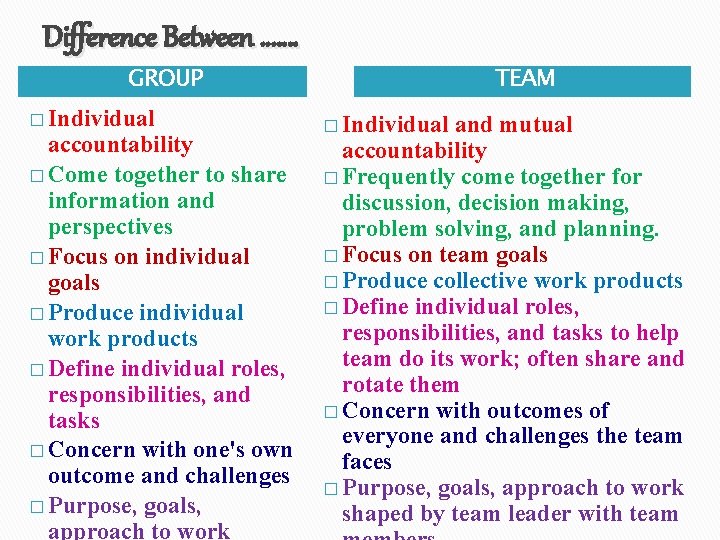
Difference Between ……. GROUP � Individual accountability � Come together to share information and perspectives � Focus on individual goals � Produce individual work products � Define individual roles, responsibilities, and tasks � Concern with one's own outcome and challenges � Purpose, goals, approach to work TEAM � Individual and mutual accountability � Frequently come together for discussion, decision making, problem solving, and planning. � Focus on team goals � Produce collective work products � Define individual roles, responsibilities, and tasks to help team do its work; often share and rotate them � Concern with outcomes of everyone and challenges the team faces � Purpose, goals, approach to work shaped by team leader with team
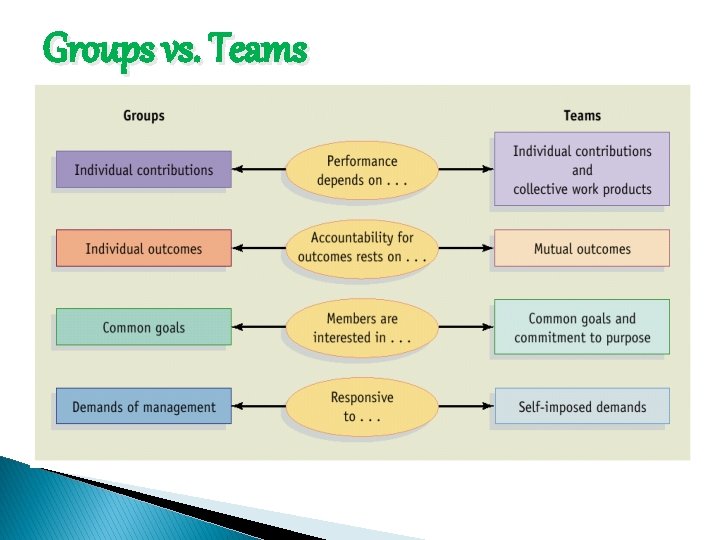
Groups vs. Teams

u o y k n a Th
- Slides: 23