
Group Dynamics Understanding how groups work and communicate
- Slides: 15
Group Dynamics Understanding how groups work and communicate
Silent Line Ups ► Divide the class into two even groups. ► Line yourselves up in a straight line. ► Now … WITHOUT TALKING put yourselves in order of height. ► Line up again but this time in order of birthday (month and date)… again NO TALKING!!
Silent Line-Ups Follow Up 1. 2. 3. 4. 5. 6. What was easy about these tasks? What was difficult? Was there a leader in each group? How did this person become the leader? Why did you choose to listen to this person? What does this activity teach you about working in groups?
Why are groups important? ►Groups give people a chance to learn from one another, interact, and use social skills. ►Research shows that most people, especially students, prefer to learn in a group setting.
Why are groups important? (cont. ) ► The way a group interacts is based on several factors: § how well the members know each other § the gender make-up of the members § the age of the members § the sense of purpose the group has
Forming Groups ►When groups first begin, members will test the boundaries – what can and can’t they do. ►How others respond to this behavior will determine the group’s effectiveness.
Forming Groups (cont. ) ► Group members will also try to either become the leader of the group while others may choose not to participate. ► There are two separate issues involved in group work: § the task the group needs to accomplish § the process of getting the work done.
Forming Groups (cont. ) ►Often, little attention is paid to the process which makes it difficult to get the task done. ►Just because a group of people are working on a common task doesn’t mean they’re functioning as a group.
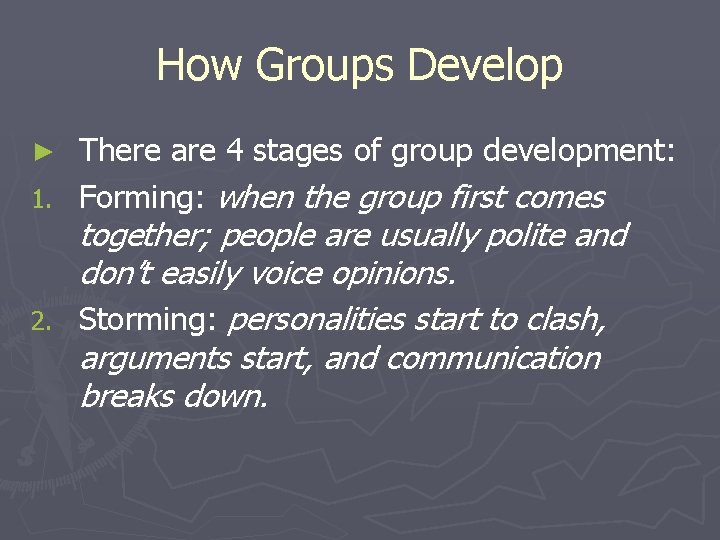
How Groups Develop There are 4 stages of group development: 1. Forming: when the group first comes ► 2. together; people are usually polite and don’t easily voice opinions. Storming: personalities start to clash, arguments start, and communication breaks down.
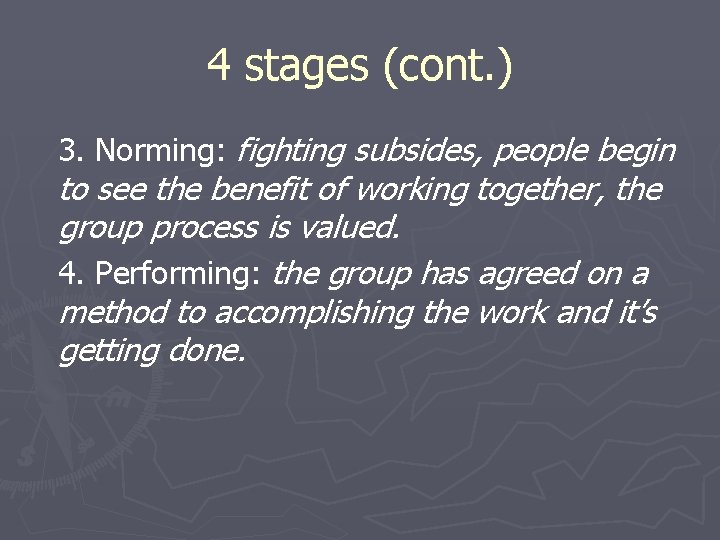
4 stages (cont. ) 3. Norming: fighting subsides, people begin to see the benefit of working together, the group process is valued. 4. Performing: the group has agreed on a method to accomplishing the work and it’s getting done.
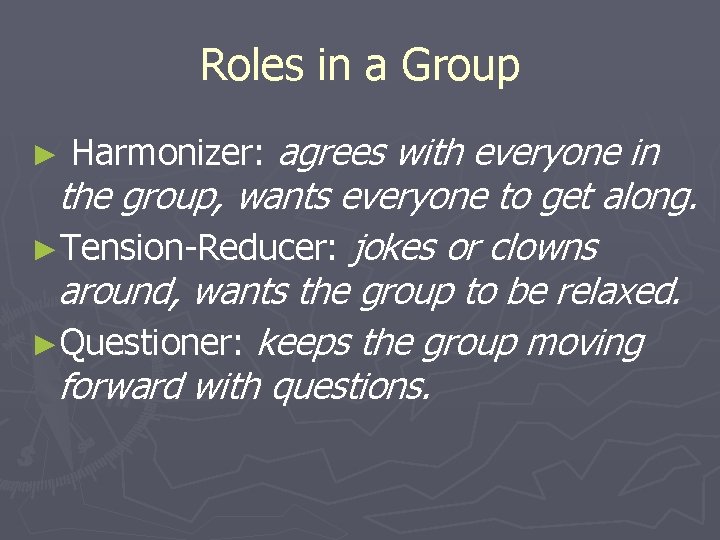
Roles in a Group ► Harmonizer: agrees with everyone in the group, wants everyone to get along. ►Tension-Reducer: jokes or clowns around, wants the group to be relaxed. ►Questioner: keeps the group moving forward with questions.
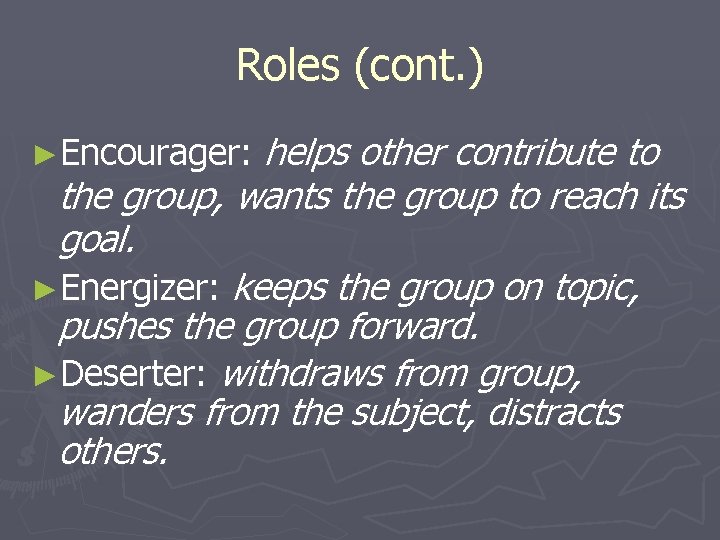
Roles (cont. ) helps other contribute to the group, wants the group to reach its goal. ►Energizer: keeps the group on topic, pushes the group forward. ►Deserter: withdraws from group, wanders from the subject, distracts others. ►Encourager:
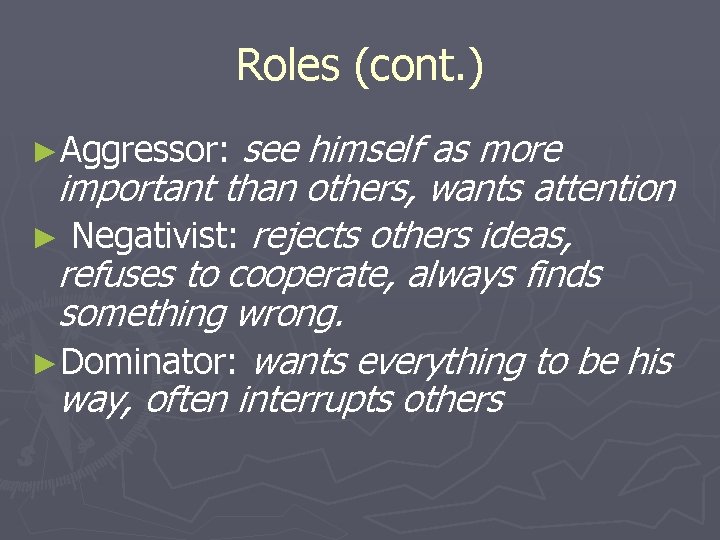
Roles (cont. ) see himself as more important than others, wants attention ► Negativist: rejects others ideas, refuses to cooperate, always finds something wrong. ►Dominator: wants everything to be his way, often interrupts others ►Aggressor:
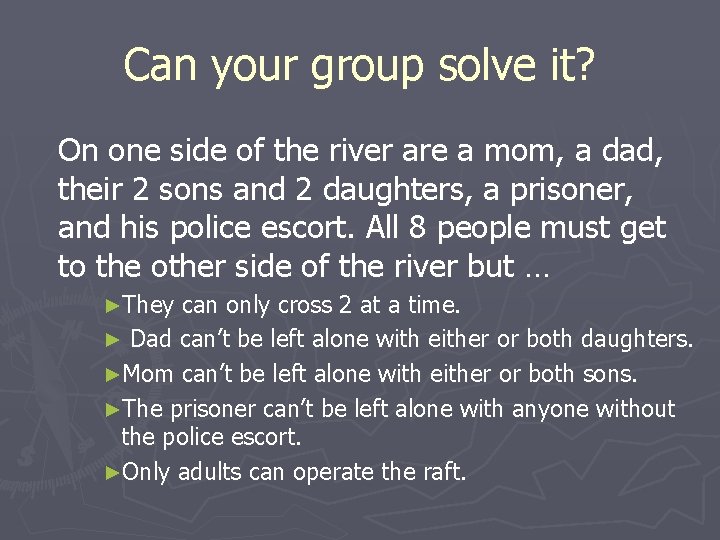
Can your group solve it? On one side of the river are a mom, a dad, their 2 sons and 2 daughters, a prisoner, and his police escort. All 8 people must get to the other side of the river but … ►They can only cross 2 at a time. ► Dad can’t be left alone with either or both daughters. ►Mom can’t be left alone with either or both sons. ►The prisoner can’t be left alone with anyone without the police escort. ►Only adults can operate the raft.
River Crossing Follow-Up 1. 2. 3. 4. 5. How well did your group work together? Who was your group leader? How did you make decisions about what to do? Look back at your notes on Roles in a Group … what roles were represented in your group? What might have made your group function better?