
Group Communication Notes Professional CommunicationsLopez Groups Small number
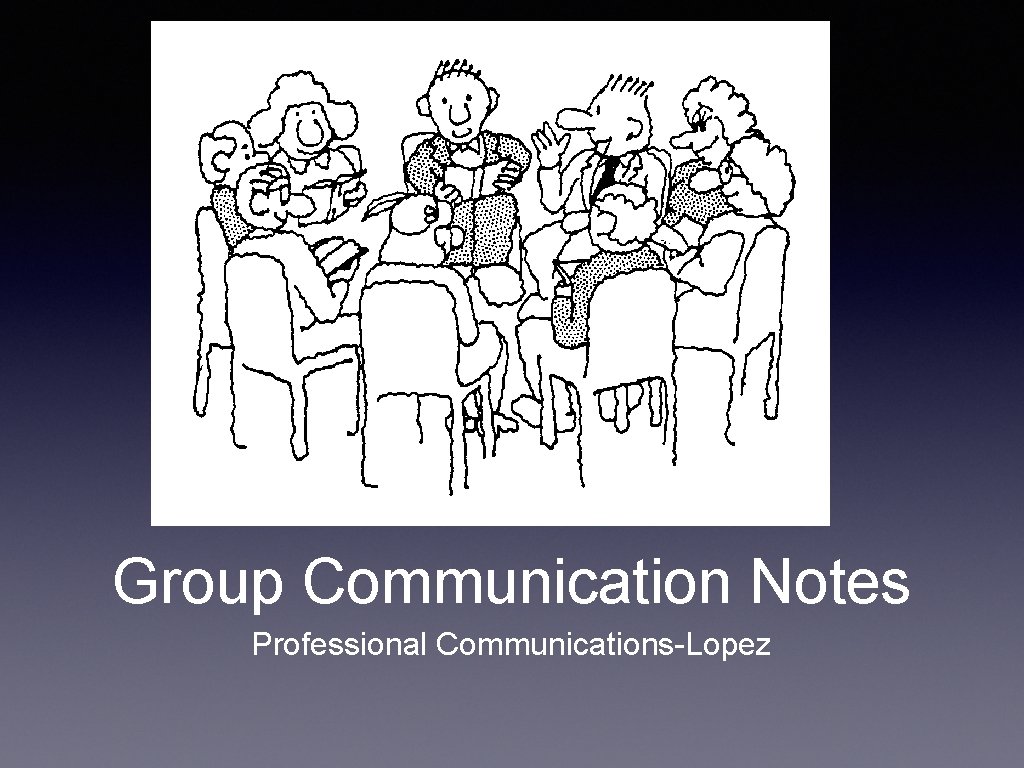
Group Communication Notes Professional Communications-Lopez
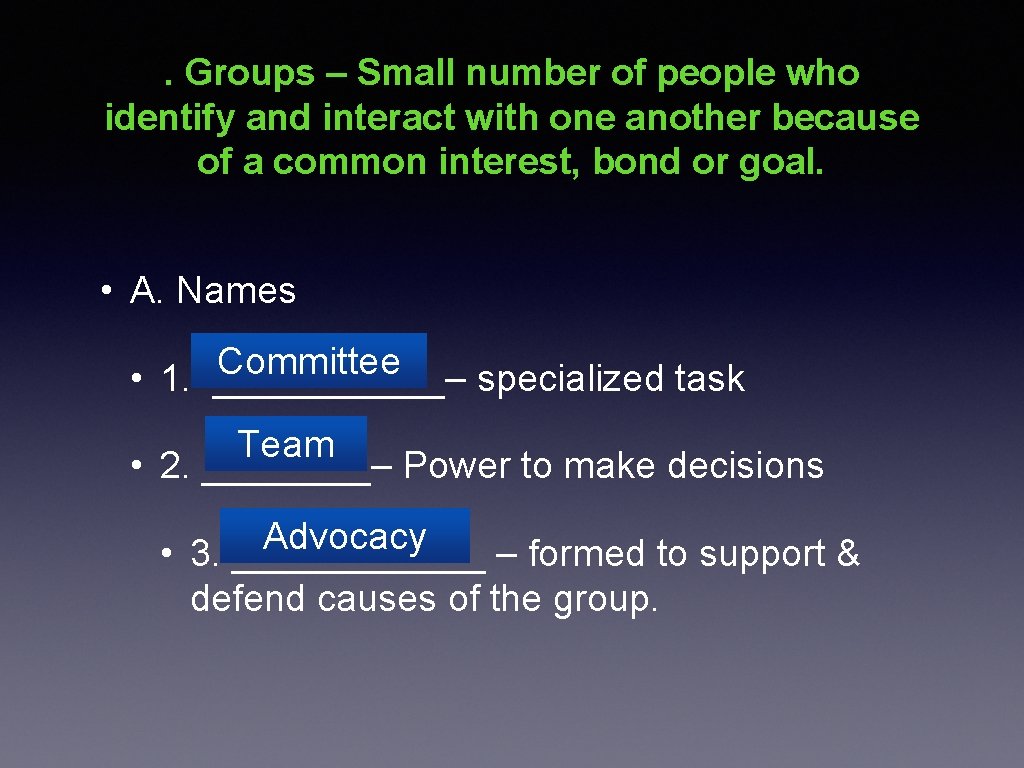
. Groups – Small number of people who identify and interact with one another because of a common interest, bond or goal. • A. Names Committee • 1. ______– specialized task Team • 2. ____– Power to make decisions Advocacy • 3. ______ – formed to support & defend causes of the group.

• . Characteristics of groups • 1. Limited size – 4 -6 people • 2. Shared goal • 3. Face to face meetings • 4. Meetings over time
• . Importance of groups • 1. Benefit to larger group or organization • 2. Benefit to individual

• D. Kinds of groups • 1. Task groups – purpose is to accomplish a specific job or task • a. Information-gathering • b. Policy-making • c. Action group • 2. Social groups – join for personal reasons • a. Informal – membership encouraged, but not required • b. Formal – Members are chosen to participate
• Functions of groups • 1. Planning – envision results, consider the people involved, the occasion & task • 2. Problem-solving – Difference between the way something is and the way it should be. • a. Define the problem • b. Analyze the problem • c. Establish the criteria for the best solution • d. List all possible solutions • e. Choose the best solution • f. Implement the solution
• Interacting in groups • Group Roles • 1. Initiator – gets group started toward achieving group goal • 2. Facilitator – Helps group follow through on tasks; holds group together
• 3. Agitator – brings negative energy to group, nonproductive, works against group goals • a. nonparticipant • b. distracter • c. clown • d. complainer • e. critic • f. absentee
• Interactive – everyone should participate • 2. Focused – One topic at a time • 3. Organized • 4. Cooperative • 5. Effective – may need to do research beforehand
• . Participating in groups • . Effective Verbal strategies • 1. Ask clear questions • 2. State your ideas, opinions, and position • 3. Use courtesy and tact • 4. Provide constructive criticism
• . Effective non-verbal strategies • 1. Dress & grooming – appropriate for kind of group; don’t offend others • 2. Time – be on time or inform others if you won’t be there. • 3. Space & distance – don’t crowd; respect others personal space • 4. Eye contact – is important; make sure you can see all members • 5. Volume & tone – speak loud enough; be careful of tone • 6. Gestures & movement – Helpful to add emphasis to your messages
• . Use effective listening skills • 1. Critical listening • 2. Deliberative listening • 3. Empathic listening
- Slides: 13