
Group Cohesiveness Effective Team Management Group Cohesiveness n




- Slides: 12
Group Cohesiveness Effective Team Management
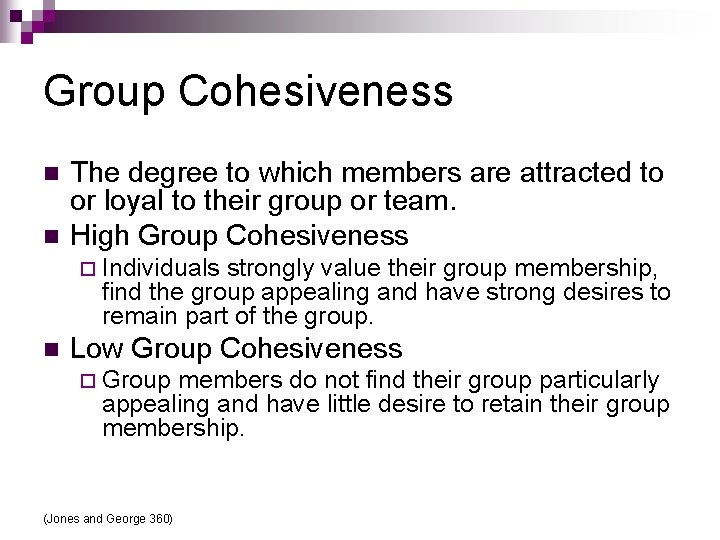
Group Cohesiveness n n The degree to which members are attracted to or loyal to their group or team. High Group Cohesiveness ¨ Individuals strongly value their group membership, find the group appealing and have strong desires to remain part of the group. n Low Group Cohesiveness ¨ Group members do not find their group particularly appealing and have little desire to retain their group membership. (Jones and George 360)
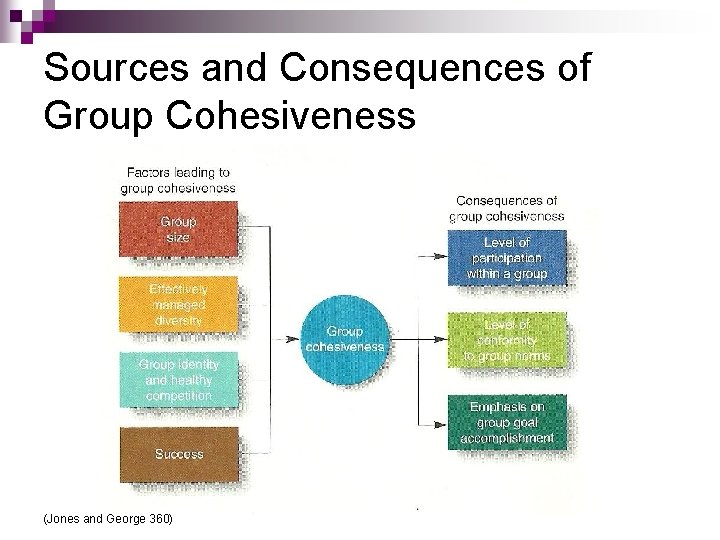
Sources and Consequences of Group Cohesiveness (Jones and George 360)
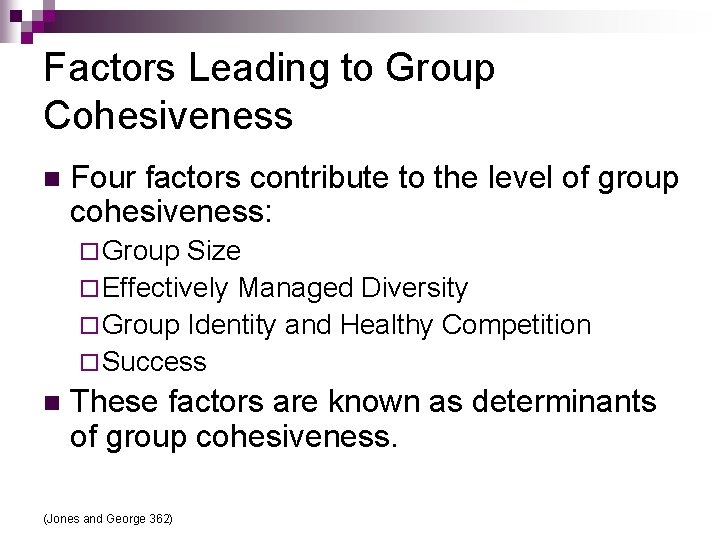
Factors Leading to Group Cohesiveness n Four factors contribute to the level of group cohesiveness: ¨ Group Size ¨ Effectively Managed Diversity ¨ Group Identity and Healthy Competition ¨ Success n These factors are known as determinants of group cohesiveness. (Jones and George 362)
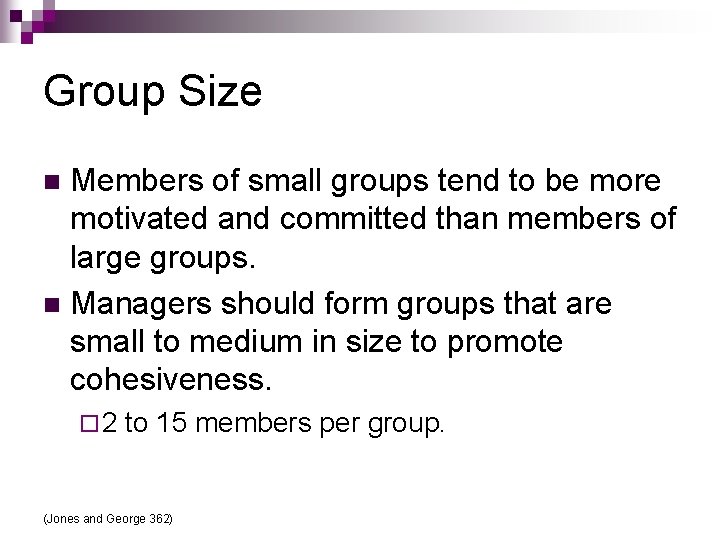
Group Size Members of small groups tend to be more motivated and committed than members of large groups. n Managers should form groups that are small to medium in size to promote cohesiveness. n ¨ 2 to 15 members per group. (Jones and George 362)
Effectively Managed Diversity n n n People tend to like and get along with others who are similar to themselves. Maintaining diversity in groups can help an organization gain a competitive advantage. Managers need to make sure the diversity in knowledge, experience and expertise necessary for group goal accomplishment is represented in groups and that the groups are effectively managed so that groups will be cohesive. (Jones and George 362)
Group Identity and Healthy Competition n n Managers can encourage groups to develop their own identities or personalities and engage in healthy competition to increase group cohesiveness. Managers can decrease cohesiveness by promoting organizational identity and making the organization as a whole the focus of the groups efforts. (Jones and George 362 -363)
Success As groups become more successful, they become increasingly attractive to their members and their cohesiveness tends to increase. n Managers can increase cohesiveness by making sure a group can achieve some noticeable and visible successes. n (Jones and George 363)
Consequences of Group Cohesiveness n Three major consequences of group cohesiveness: ¨ Level of participation within the group ¨ Level of conformity to group norms ¨ Emphasis on group goal accomplishment (Jones and George 360)
Level of Participation Within a Group n n As group cohesiveness increases, the extent of group members participation within the group increases. Participation contributes to group effectiveness because group member are actively involved in the group, ensure that the group tasks get accomplished, readily share information with each other and have frequent and open communication. (Jones and George 360)
Level of Conformity to Group Norms Low cohesiveness can result in too much deviance and undermine the ability of a group to control its members behaviors. n Increasing levels of group cohesiveness result in increasing levels of conformity to group norms. n (Jones and George 361)
Emphasis on Group Goal Accomplishment n n n As group cohesiveness increases, the emphasis placed on group goal accomplishment also increases within a group. A moderate level of cohesiveness motivates group members to accomplish both group and organizational goals. High levels of cohesiveness can cause group members to be so focused on group goal accomplishment that they may strive to achieve group goals no matter what. (Jones and George 361 -362)