
Group C Dickson Chan Brett Johnson Kaman Lau
Group C Dickson Chan / Brett Johnson / Kaman Lau / Bertha Luk / Josefa Wivou Antarctic Support Aircraft Evaluation & Design Ap Project Tuesday, 24 October 2006 Lecturers: Mr. John Page Mr. Zoran Vulovic
Antarctic Support Aim: Investigate the possibility of providing specialist air support to activities in the Antarctic…. . . - Support the Tourist Trade and Scientific Exploration - Provide Search and Rescue & Medivac Capability - Select aircraft capable of operating in the extreme environment
Presentation Outline − Antarctica – In Brief − Market Research − Mission Requirements − Regulatory Requirements − Aircraft Analysis − Planned Aircraft Operations − Financial Projection − Questions
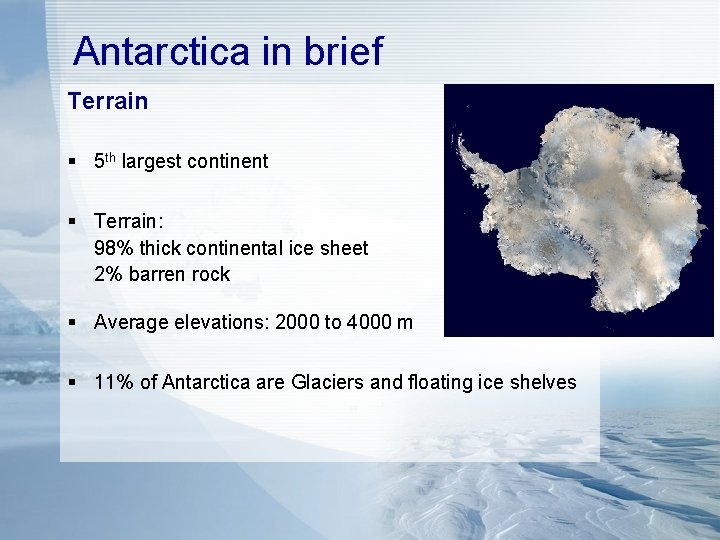
Antarctica in brief Terrain § 5 th largest continent § Terrain: 98% thick continental ice sheet 2% barren rock § Average elevations: 2000 to 4000 m § 11% of Antarctica are Glaciers and floating ice shelves
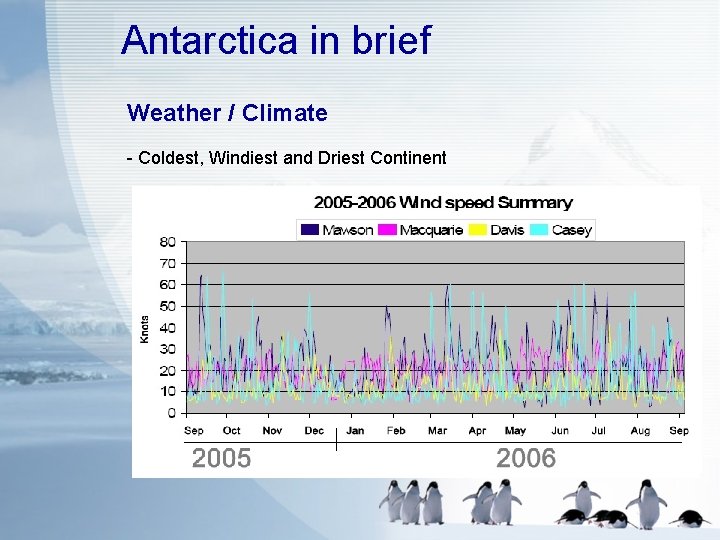
Antarctica in brief Weather / Climate - Coldest, Windiest and Driest Continent
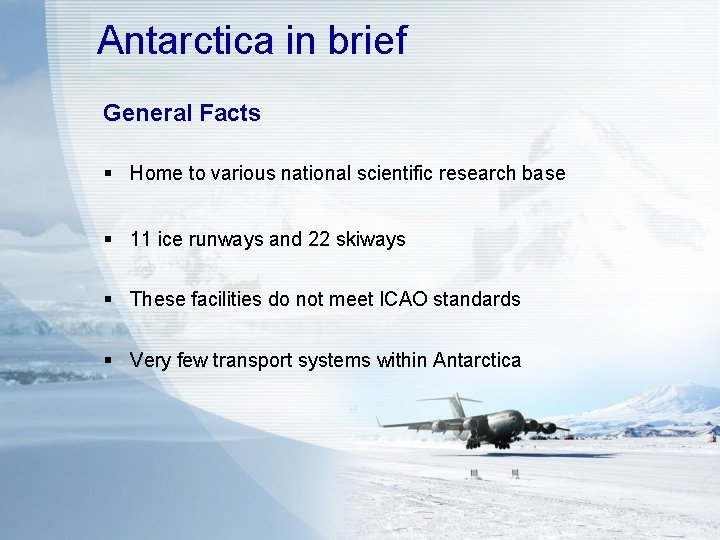
Antarctica in brief General Facts § Home to various national scientific research base § 11 ice runways and 22 skiways § These facilities do not meet ICAO standards § Very few transport systems within Antarctica
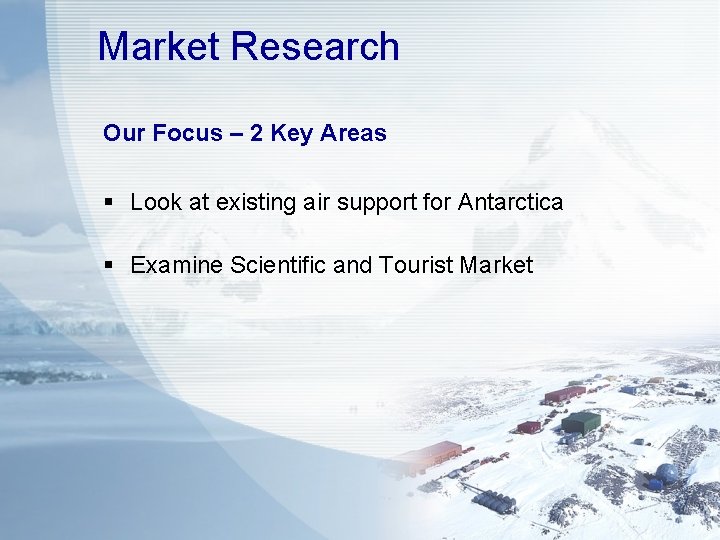
Market Research Our Focus – 2 Key Areas § Look at existing air support for Antarctica § Examine Scientific and Tourist Market
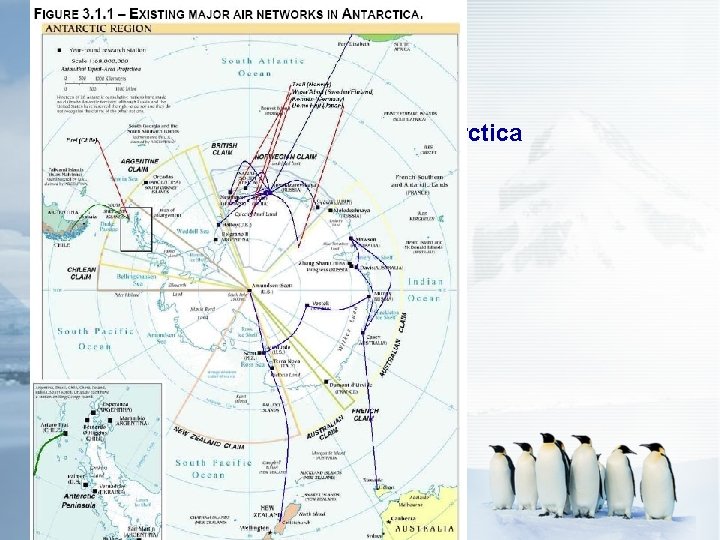
Market Research Existing Air Operations to Antarctica

Market Research Scientific Market § Examined Australia, Japan, New Zealand & USA science bases § Opportunities to serve Australia’s Research Activities (Australian Antarctic Division - AAD) § Identified AAD needs: high speed service from Antarctica to Australia
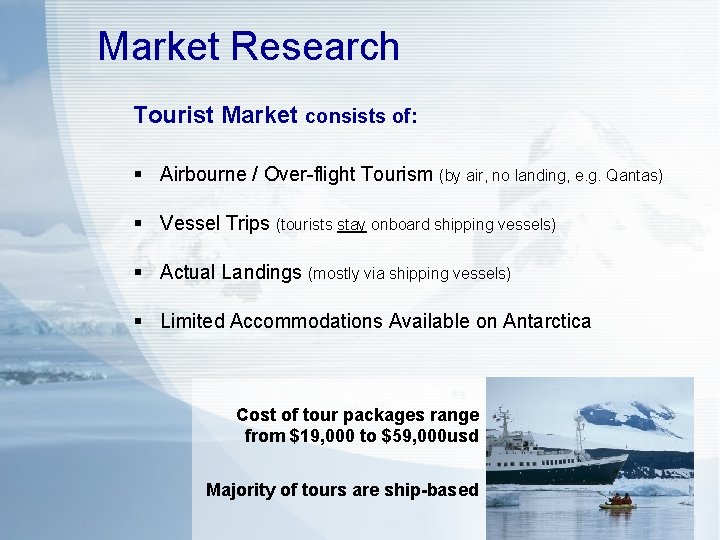
Market Research Tourist Market consists of: § Airbourne / Over-flight Tourism (by air, no landing, e. g. Qantas) § Vessel Trips (tourists stay onboard shipping vessels) § Actual Landings (mostly via shipping vessels) § Limited Accommodations Available on Antarctica Cost of tour packages range from $19, 000 to $59, 000 usd Majority of tours are ship-based
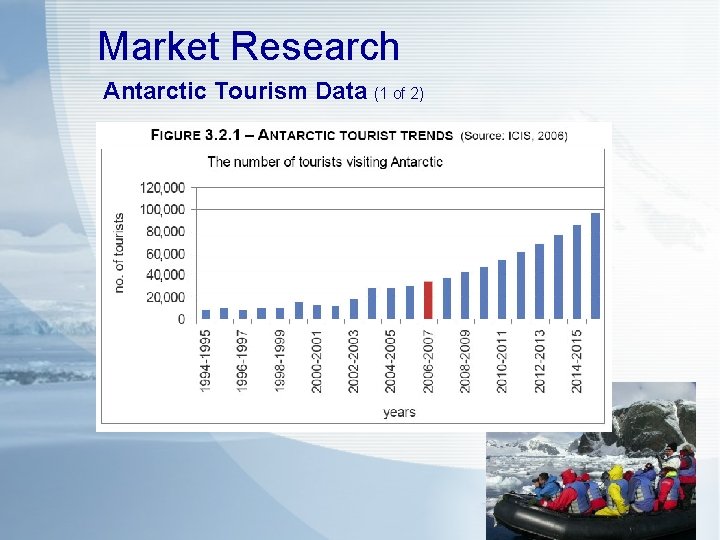
Market Research Antarctic Tourism Data (1 of 2)
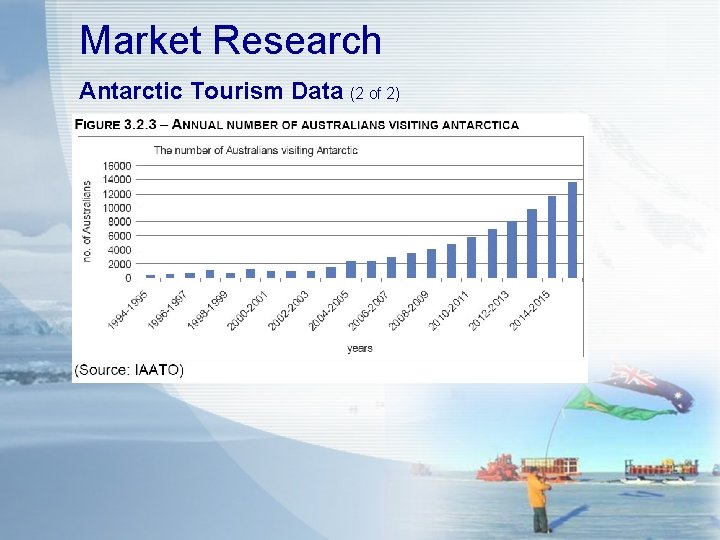
Market Research Antarctic Tourism Data (2 of 2)
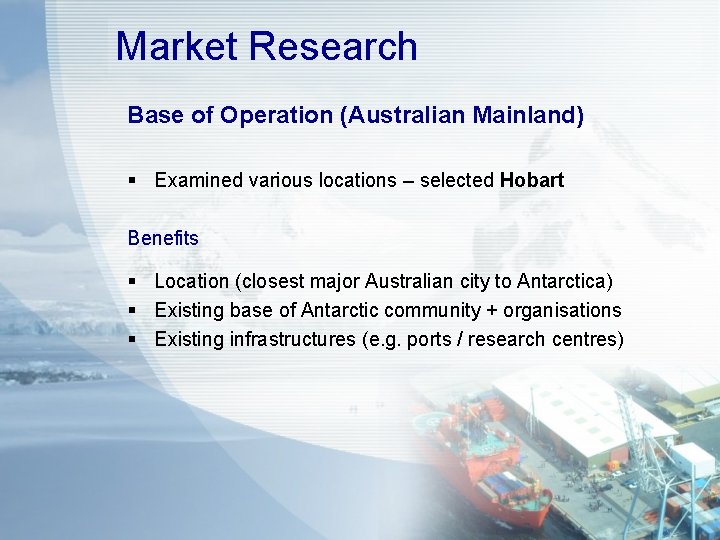
Market Research Base of Operation (Australian Mainland) § Examined various locations – selected Hobart Benefits § Location (closest major Australian city to Antarctica) § Existing base of Antarctic community + organisations § Existing infrastructures (e. g. ports / research centres)
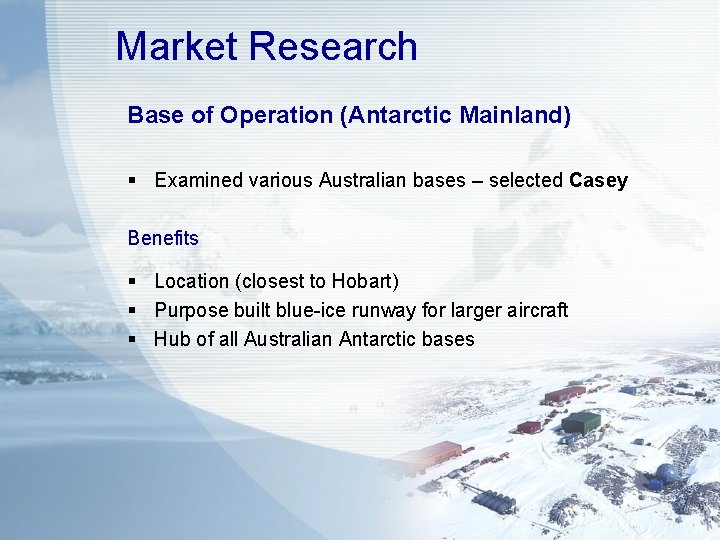
Market Research Base of Operation (Antarctic Mainland) § Examined various Australian bases – selected Casey Benefits § Location (closest to Hobart) § Purpose built blue-ice runway for larger aircraft § Hub of all Australian Antarctic bases
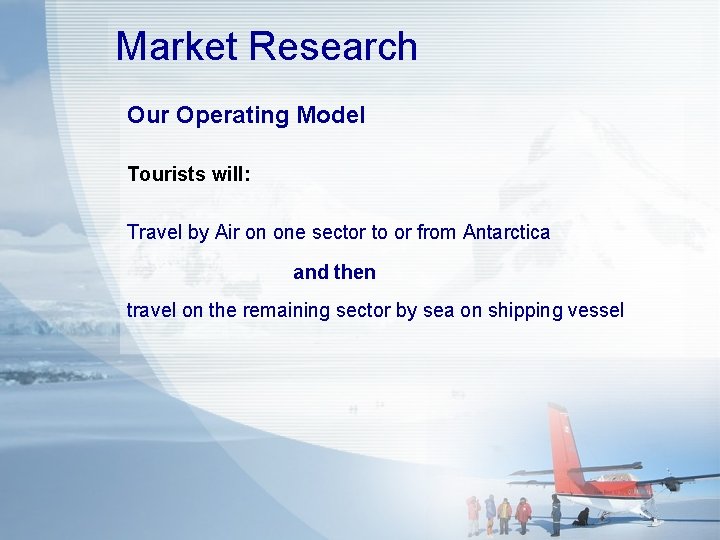
Market Research Our Operating Model Tourists will: Travel by Air on one sector to or from Antarctica and then travel on the remaining sector by sea on shipping vessel
Regulatory Requirements § Air Operator Certificate (e. g. aerial work to and from Australian Antarctic Territory) § Environmental Restrictions § Crew Provisions (3 flight crew required) § ETOPS
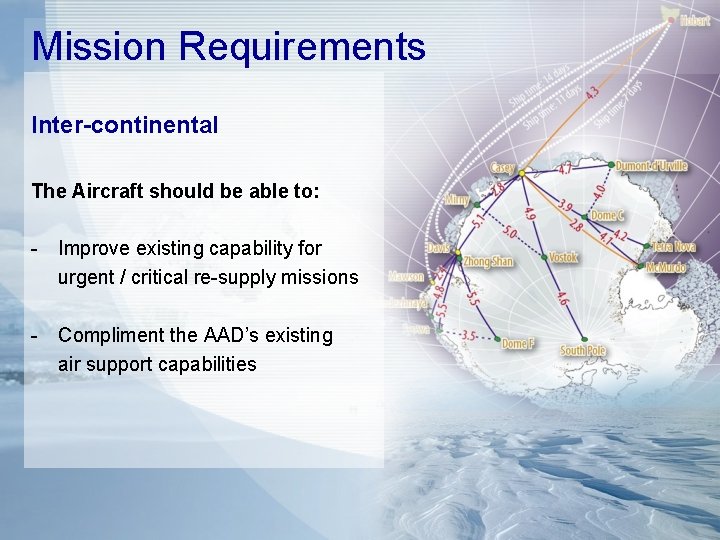
Mission Requirements Inter-continental The Aircraft should be able to: - Improve existing capability for urgent / critical re-supply missions - Compliment the AAD’s existing air support capabilities
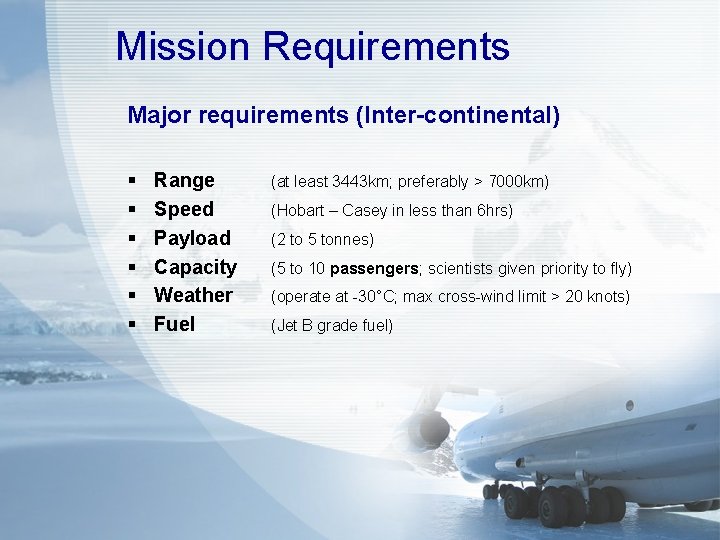
Mission Requirements Major requirements (Inter-continental) § § § Range Speed Payload Capacity Weather Fuel (at least 3443 km; preferably > 7000 km) (Hobart – Casey in less than 6 hrs) (2 to 5 tonnes) (5 to 10 passengers; scientists given priority to fly) (operate at -30°C; max cross-wind limit > 20 knots) (Jet B grade fuel)
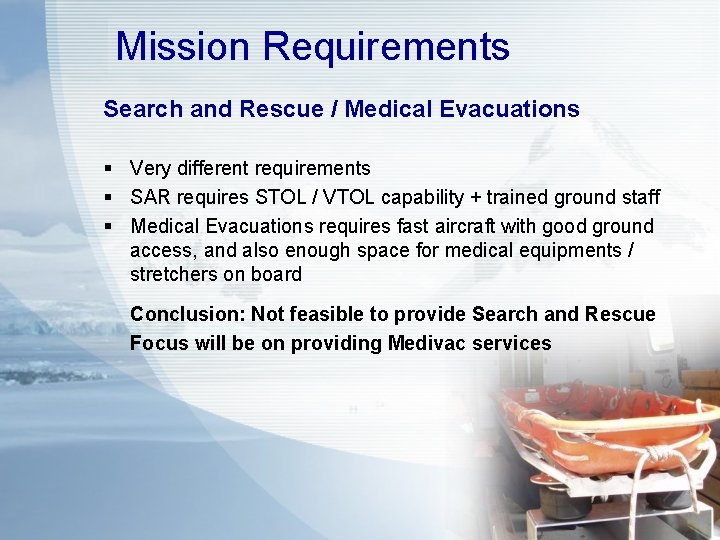
Mission Requirements Search and Rescue / Medical Evacuations § Very different requirements § SAR requires STOL / VTOL capability + trained ground staff § Medical Evacuations requires fast aircraft with good ground access, and also enough space for medical equipments / stretchers on board Conclusion: Not feasible to provide Search and Rescue Focus will be on providing Medivac services
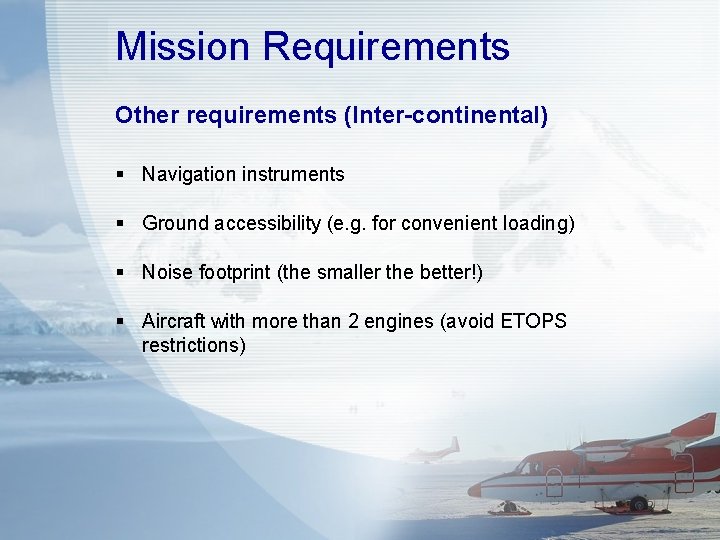
Mission Requirements Other requirements (Inter-continental) § Navigation instruments § Ground accessibility (e. g. for convenient loading) § Noise footprint (the smaller the better!) § Aircraft with more than 2 engines (avoid ETOPS restrictions)
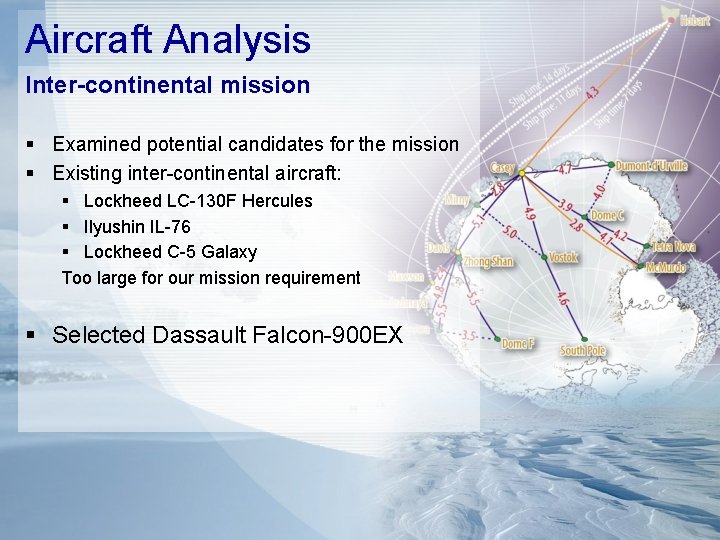
Aircraft Analysis Inter-continental mission § Examined potential candidates for the mission § Existing inter-continental aircraft: § Lockheed LC-130 F Hercules § Ilyushin IL-76 § Lockheed C-5 Galaxy Too large for our mission requirement § Selected Dassault Falcon-900 EX
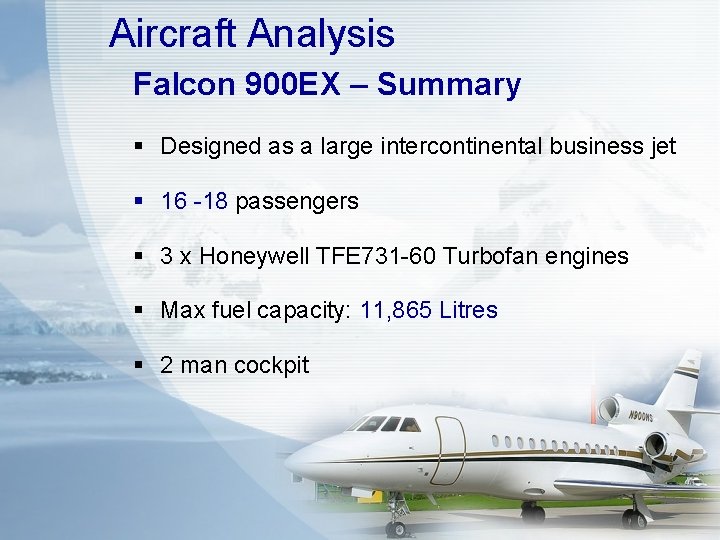
Aircraft Analysis Falcon 900 EX – Summary § Designed as a large intercontinental business jet § 16 -18 passengers § 3 x Honeywell TFE 731 -60 Turbofan engines § Max fuel capacity: 11, 865 Litres § 2 man cockpit
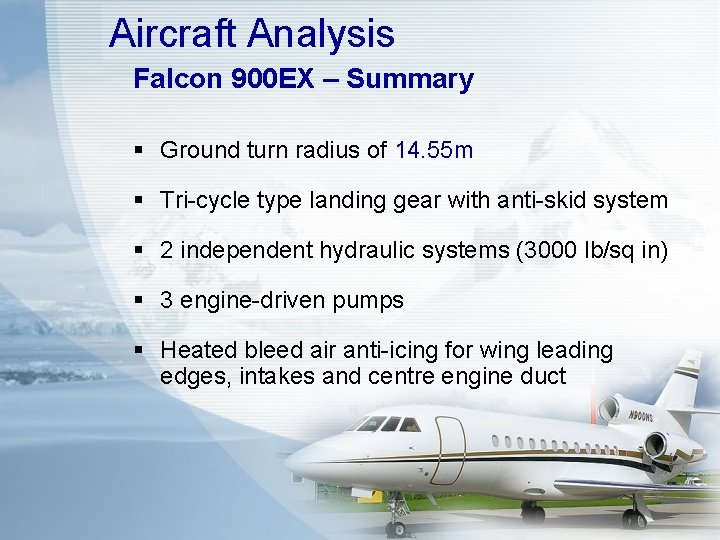
Aircraft Analysis Falcon 900 EX – Summary § Ground turn radius of 14. 55 m § Tri-cycle type landing gear with anti-skid system § 2 independent hydraulic systems (3000 lb/sq in) § 3 engine-driven pumps § Heated bleed air anti-icing for wing leading edges, intakes and centre engine duct
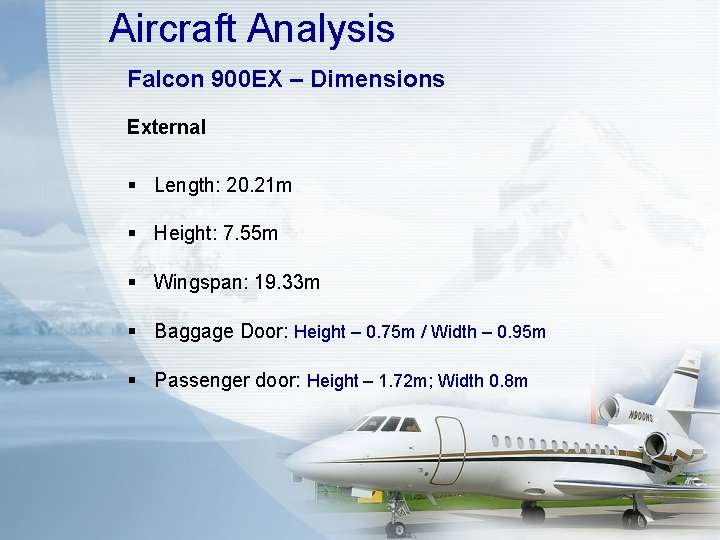
Aircraft Analysis Falcon 900 EX – Dimensions External § Length: 20. 21 m § Height: 7. 55 m § Wingspan: 19. 33 m § Baggage Door: Height – 0. 75 m / Width – 0. 95 m § Passenger door: Height – 1. 72 m; Width 0. 8 m
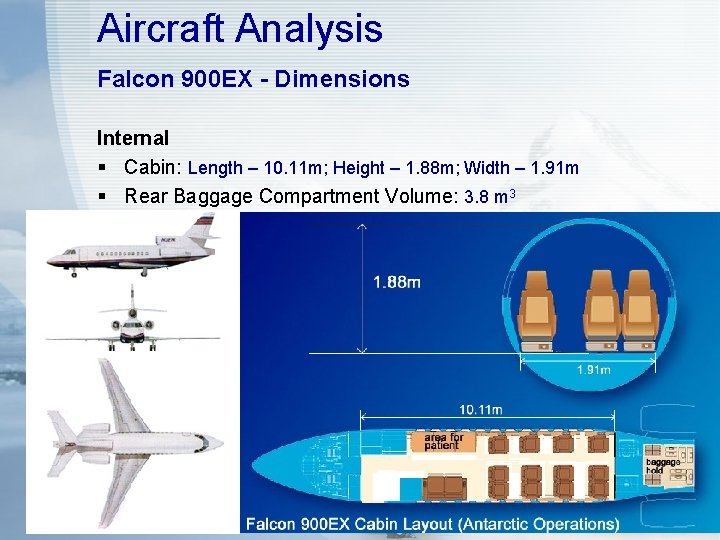
Aircraft Analysis Falcon 900 EX - Dimensions Internal § Cabin: Length – 10. 11 m; Height – 1. 88 m; Width – 1. 91 m § Rear Baggage Compartment Volume: 3. 8 m 3
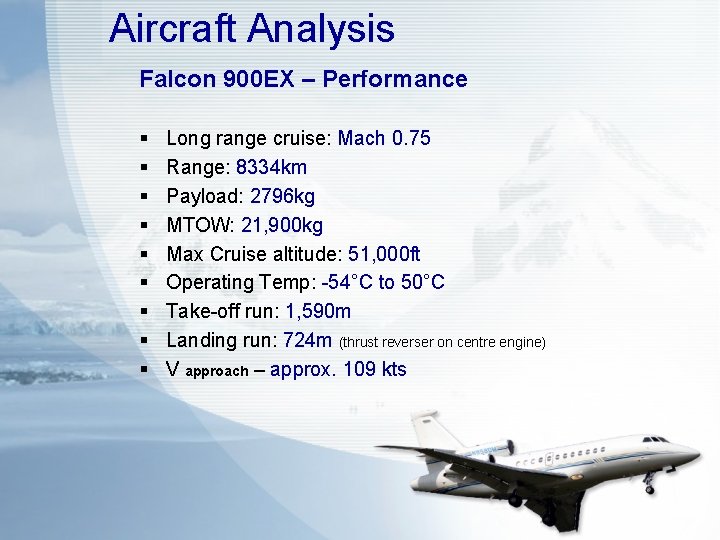
Aircraft Analysis Falcon 900 EX – Performance § § § § § Long range cruise: Mach 0. 75 Range: 8334 km Payload: 2796 kg MTOW: 21, 900 kg Max Cruise altitude: 51, 000 ft Operating Temp: -54°C to 50°C Take-off run: 1, 590 m Landing run: 724 m (thrust reverser on centre engine) V approach – approx. 109 kts
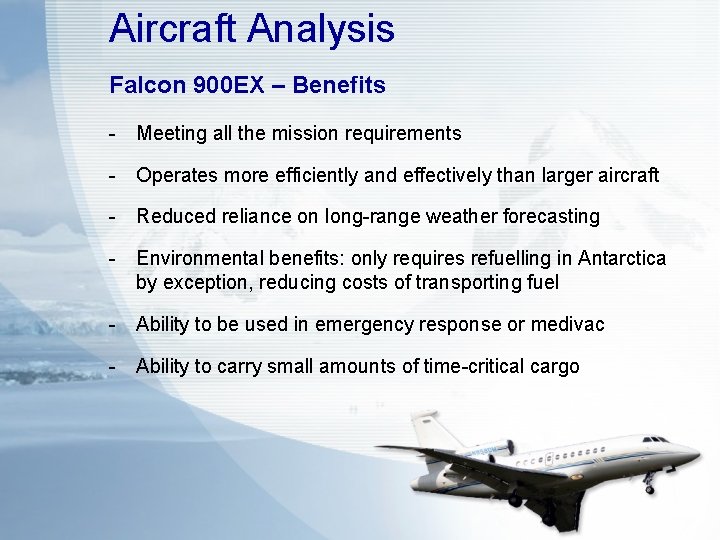
Aircraft Analysis Falcon 900 EX – Benefits - Meeting all the mission requirements - Operates more efficiently and effectively than larger aircraft - Reduced reliance on long-range weather forecasting - Environmental benefits: only requires refuelling in Antarctica by exception, reducing costs of transporting fuel - Ability to be used in emergency response or medivac - Ability to carry small amounts of time-critical cargo
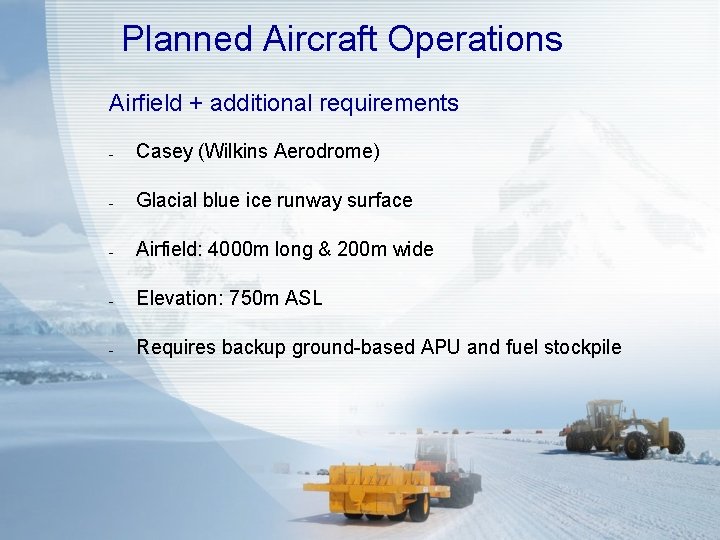
Planned Aircraft Operations Airfield + additional requirements − Casey (Wilkins Aerodrome) − Glacial blue ice runway surface − Airfield: 4000 m long & 200 m wide − Elevation: 750 m ASL − Requires backup ground-based APU and fuel stockpile
Planned Aircraft Operations Flight Schedule − Return flights take 1 day − Depart Hobart at 1700, Arrive Casey by 2300 (day light) − Depart Casey at 0100, Arrive Hobart by 0500 43 return flights (Summer 2007 -2008) for tourists / scientists 6 return flights (Winter 2008) for scientists
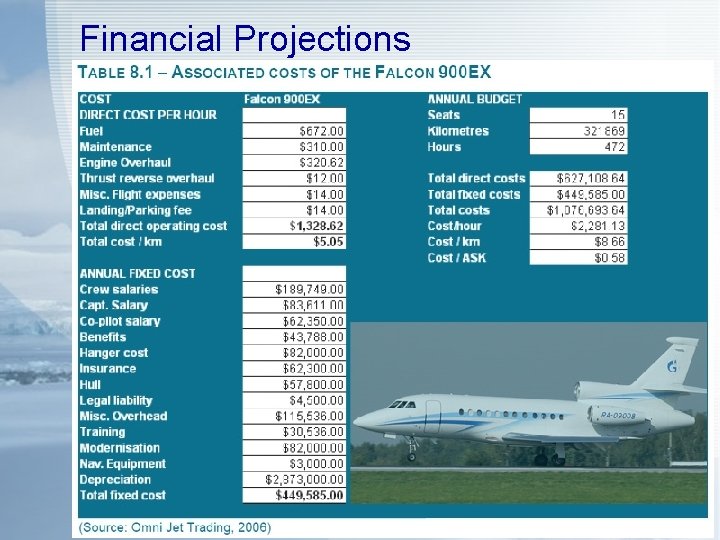
Financial Projections
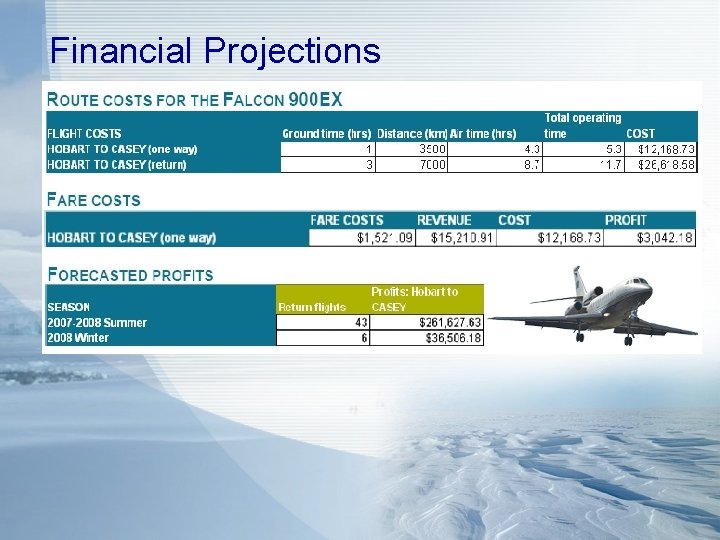
Financial Projections
Conclusion & Questions − Antarctic Air-link: Hobart - Casey − Most suitable aircraft: Falcon 900 EX − Enhance existing air-transport capability − Expect Growth in Scientific and Tourist Markets − Profitable Operations − ………… Questions?
- Slides: 32