
Group Behavior Spotlight on Sociology Ethnocentrism and Cultural
Group Behavior

Spotlight on Sociology Ethnocentrism and Cultural Relativism
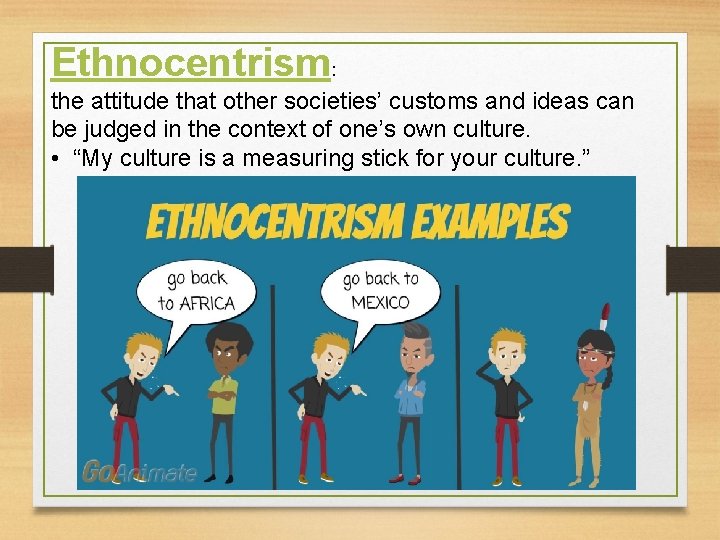
Ethnocentrism: the attitude that other societies’ customs and ideas can be judged in the context of one’s own culture. • “My culture is a measuring stick for your culture. ”

Ethnocentrism Pros and Cons • Builds loyalty and self • Can prevent -esteem (patriotism). • Maintains traditions and values. • Makes people more willing to sacrifice (for example, in war time). change for the better (Great Wall of China). • Hatred and violence (Nazi Germany)
Cultural Relativism: The attitude that a society’s customs and ideas should be viewed within the context of that society’s problems and opportunities. • “No society has the right to push their values onto another. ” But… When does ethnocentrism override cultural rela
Social Influence • Conformity • Compliance • Obedience
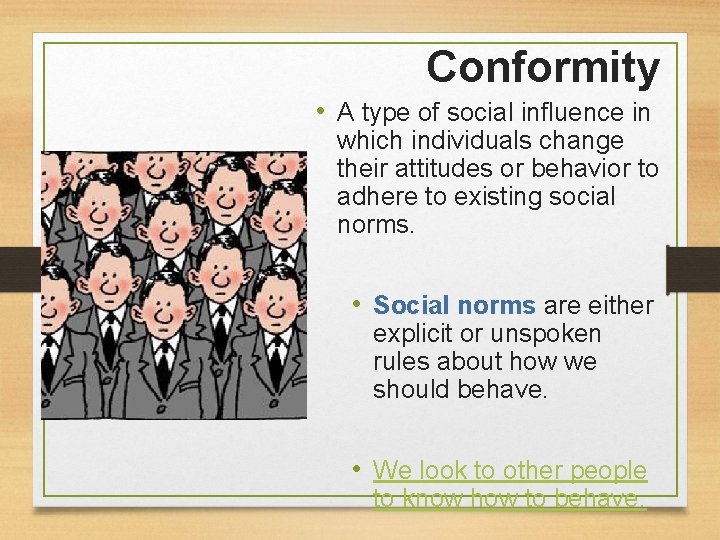
Conformity • A type of social influence in which individuals change their attitudes or behavior to adhere to existing social norms. • Social norms are either explicit or unspoken rules about how we should behave. • We look to other people to know how to behave.
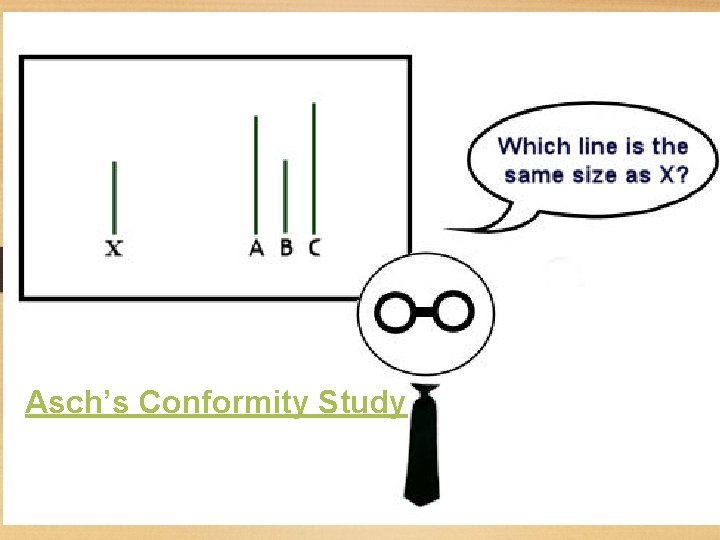
Asch’s Conformity Study
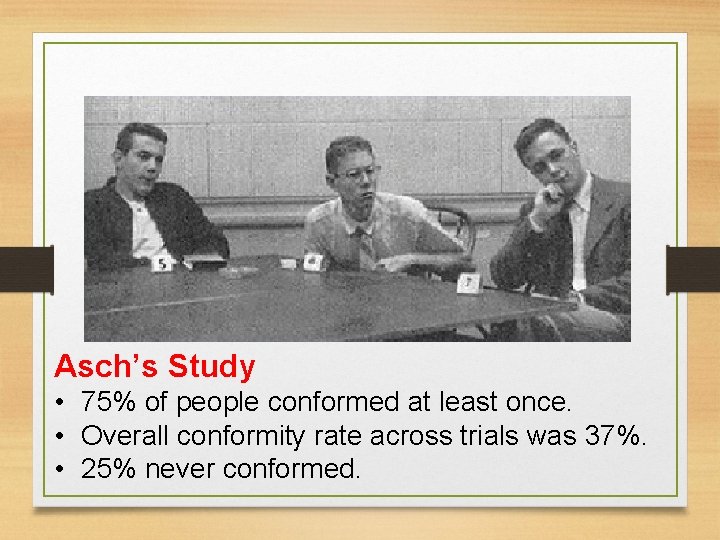
Asch’s Study • 75% of people conformed at least once. • Overall conformity rate across trials was 37%. • 25% never conformed.
Public Conformity vs. Private Acceptance Public conformity: doing what others do or say, even though you don’t necessarily agree with it. Private acceptance: coming to feel or think as others do.
Why Do We Conform? We want to be liked by others, and we also have a strong desire to be right about things. Normative Social Influence—conforming in order to meet others’ approval or gain acceptance; you want to “fit in. ” (Asch’s study) Informational Social Influence—you conform because you want to be right about something and think others know more than you do.
Factors Influencing Conformity • Being female • Being an adolescent • Being insecure or in an ambiguous situation • Group cohesiveness • Size of group: conformity increases up to 3 members and then levels off • Presence of a single deviant (nonconformist)
• When someone agrees to do. Complianc something that another person requests. e • We often use ingratiation to get someone to comply • Ingratiation—causing another to like you by being as physically attractive as possible, being friendly, flattering the other person, and agreeing with the other. • Can backfire if you’re too obvious
• When obeying orders harms others. Destructive Obedience • People think that obeying orders absolves them of responsibility. • Milgram’s Obedience Study o 67% shocked to XXX level (supposedly lethal shock level.
Bottom Line about Conformity and Obedience It is hard not to conform/obey, But, it only takes one person to sway majority influence.


Group behavior (dynamics) 1. Complete the Edward and Mark dilemmas and hand them to Mrs. M 2. Take a slip of paper and answer the following question, “If you could be totally invisible for 24 hours and were completely assured that you would not be detected, what would you do? ” • Do NOT put your name on your paper. • Fold the paper and put it in the white basket. You have 12 minutes to complete these two activities.
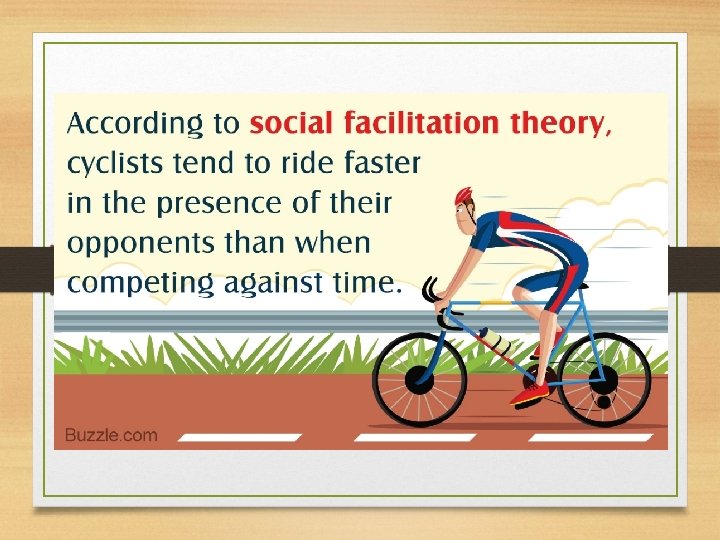
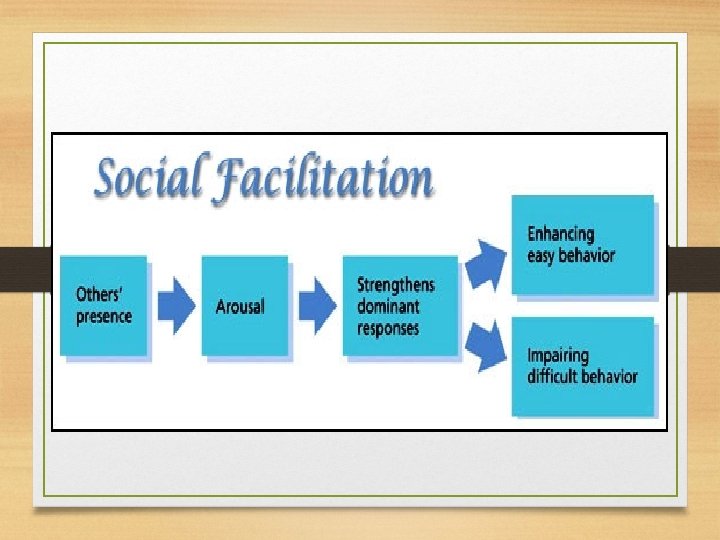
Social Facilitation • Improved performance on simple or welllearned tasks. • BUT, we perform worse on tasks that are difficult for us. • This is due to AROUSAL caused by other’s presence. This arousal strengthens your dominant response.
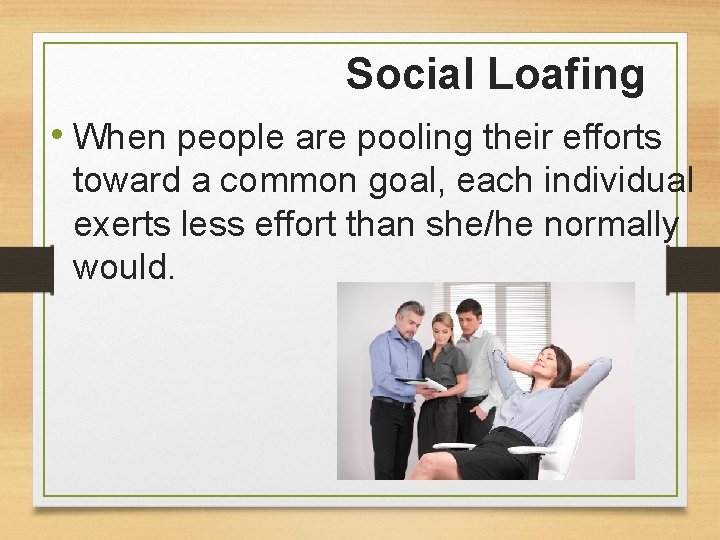
Social Loafing • When people are pooling their efforts toward a common goal, each individual exerts less effort than she/he normally would.
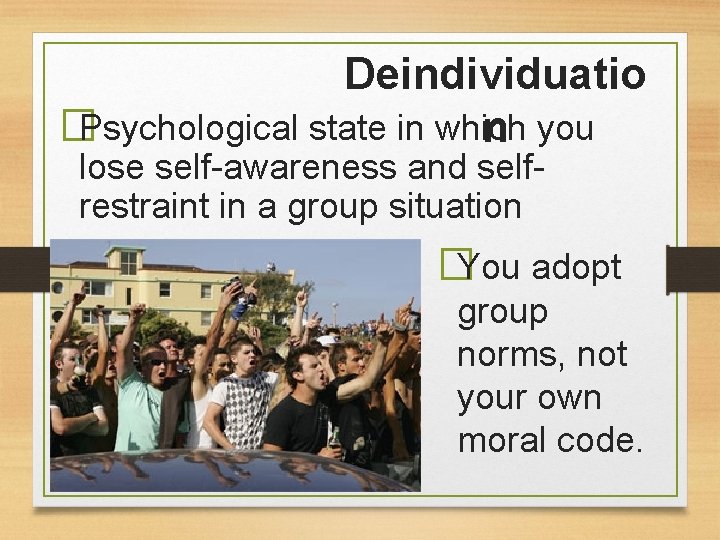
Deindividuatio �Psychological state in which n you lose self-awareness and selfrestraint in a group situation �You adopt group norms, not your own moral code.
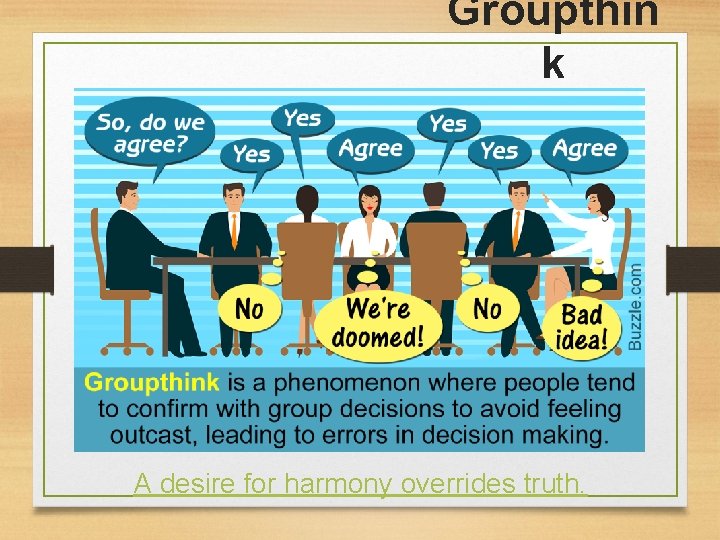
Groupthin k A desire for harmony overrides truth.
Avoid Group Think �Ask leaders to hold their opinions. �Assign a devil’s advocate. �Do not criticize other’s opinions. �Examine alternatives.
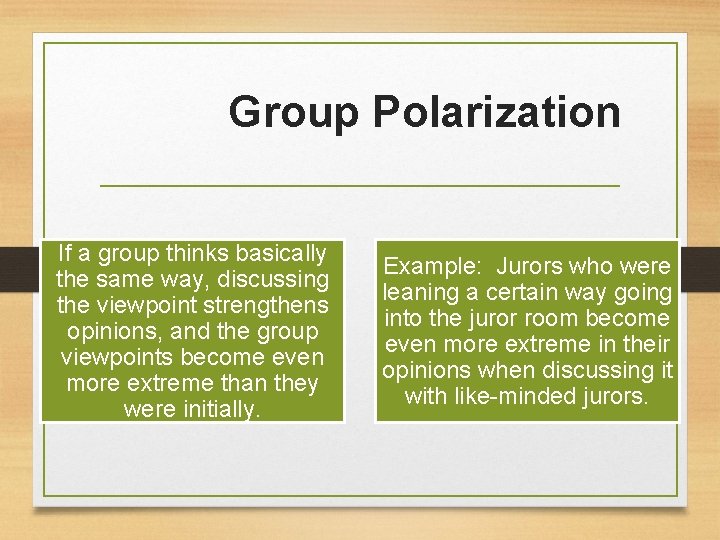
Group Polarization If a group thinks basically the same way, discussing the viewpoint strengthens opinions, and the group viewpoints become even more extreme than they were initially. Example: Jurors who were leaning a certain way going into the juror room become even more extreme in their opinions when discussing it with like-minded jurors.
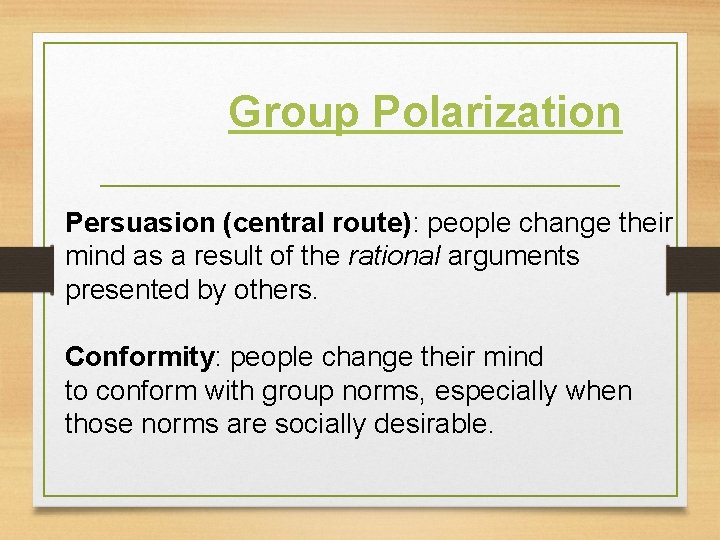
Group Polarization Persuasion (central route): people change their mind as a result of the rational arguments presented by others. Conformity: people change their mind to conform with group norms, especially when those norms are socially desirable.
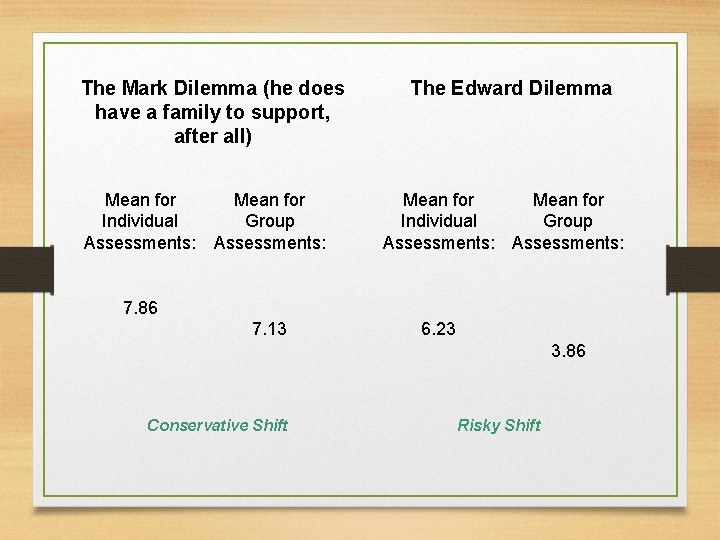
The Mark Dilemma (he does have a family to support, after all) Mean for Individual Group Assessments: The Edward Dilemma Mean for Individual Group Assessments: 7. 86 7. 13 6. 23 3. 86 Conservative Shift Risky Shift
- Slides: 27