
GROUP AND INDIVIDUAL LEARNING BDS 2 EMBRYOLOGY COMMONWEALTH
GROUP AND INDIVIDUAL LEARNING: BDS 2 EMBRYOLOGY
COMMONWEALTH OF AUSTRALIA Copyright Regulations 1969 WARNING This material has been reproduced and communicated to you by or on behalf of The University of Adelaide under Part VB of the Copyright Act 1968 (the Act). The material in this communication may be subject to copyright under the Act. Any further reproduction or communication of this material by you may be the subject of copyright protection under the Act. The AUDSS assumes no responsibility or liability for any information, materials or other content provided by any of our student lecturers. All content is viewed and used by you at your own risk and we do not warrant the accuracy or reliability of any of the lecture material. The views expressed are those of the individual contributors and not necessarily those of the AUDSS of Adelaide School of Dentistry. Do not remove this notice.
EMBRYOLOGY • Basic Terminology • Embryonic Stage • Stage 1: Fertilisation • Stage 2: Morphogenesis • Foetal Stage • Cephalogenesis • Developmental disturbances • Questions/Answers are infused into the slides
TERMINOLOGY • Growth = process by which a single fertilised ovum is transformed into a mature organism of complex functions and morphology • Development = complexity of structure and function • Purpose? • Basic functions of cellular changes • Induction • Competence • Differentiation • Proliferation • Morphogenesis • Maturation
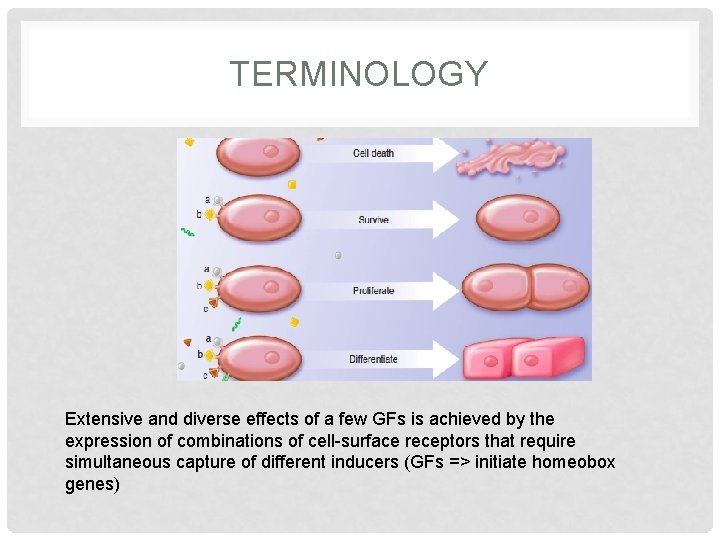
TERMINOLOGY Extensive and diverse effects of a few GFs is achieved by the expression of combinations of cell-surface receptors that require simultaneous capture of different inducers (GFs => initiate homeobox genes)
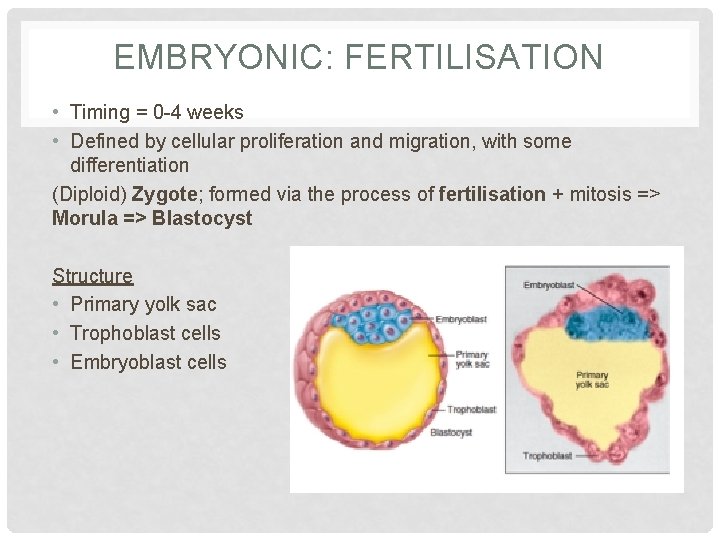
EMBRYONIC: FERTILISATION • Timing = 0 -4 weeks • Defined by cellular proliferation and migration, with some differentiation (Diploid) Zygote; formed via the process of fertilisation + mitosis => Morula => Blastocyst Structure • Primary yolk sac • Trophoblast cells • Embryoblast cells
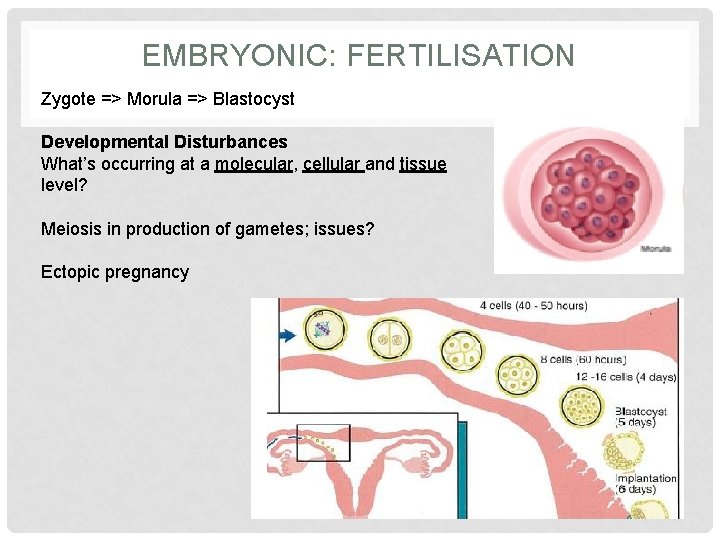
EMBRYONIC: FERTILISATION Zygote => Morula => Blastocyst Developmental Disturbances What’s occurring at a molecular, cellular and tissue level? Meiosis in production of gametes; issues? Ectopic pregnancy
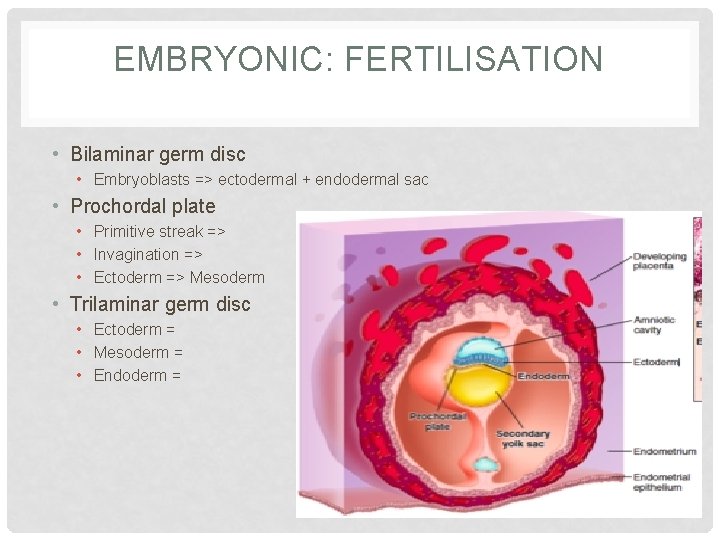
EMBRYONIC: FERTILISATION • Bilaminar germ disc • Embryoblasts => ectodermal + endodermal sac • Prochordal plate • Primitive streak => • Invagination => • Ectoderm => Mesoderm • Trilaminar germ disc • Ectoderm = • Mesoderm = • Endoderm =
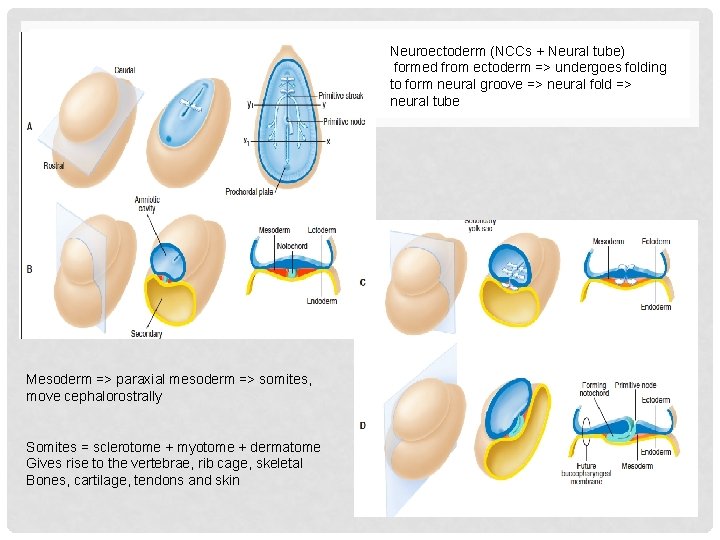
Neuroectoderm (NCCs + Neural tube) formed from ectoderm => undergoes folding to form neural groove => neural fold => neural tube Mesoderm => paraxial mesoderm => somites, move cephalorostrally Somites = sclerotome + myotome + dermatome Gives rise to the vertebrae, rib cage, skeletal Bones, cartilage, tendons and skin
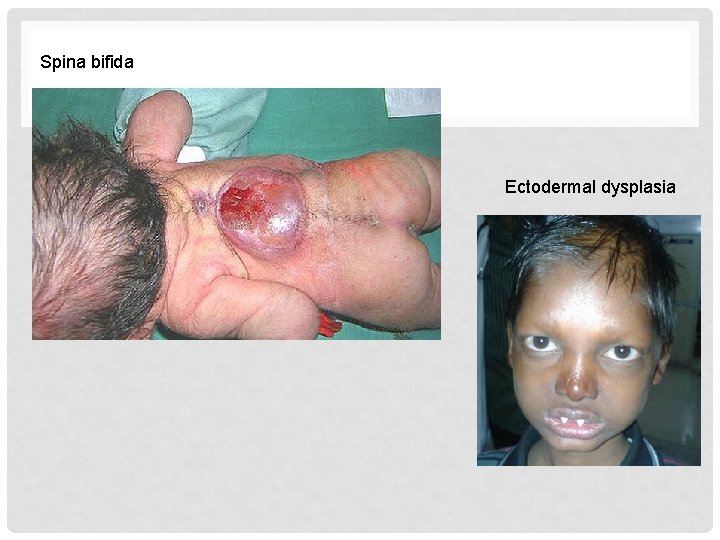
Spina bifida Ectodermal dysplasia
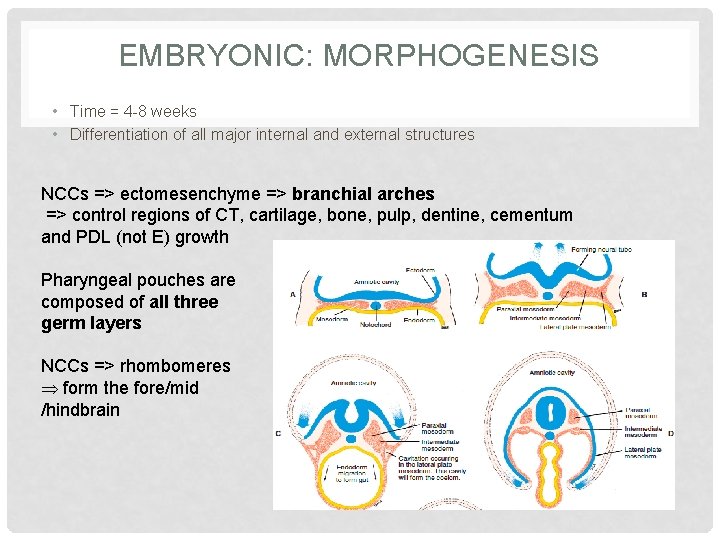
EMBRYONIC: MORPHOGENESIS • Time = 4 -8 weeks • Differentiation of all major internal and external structures NCCs => ectomesenchyme => branchial arches => control regions of CT, cartilage, bone, pulp, dentine, cementum and PDL (not E) growth Pharyngeal pouches are composed of all three germ layers NCCs => rhombomeres form the fore/mid /hindbrain
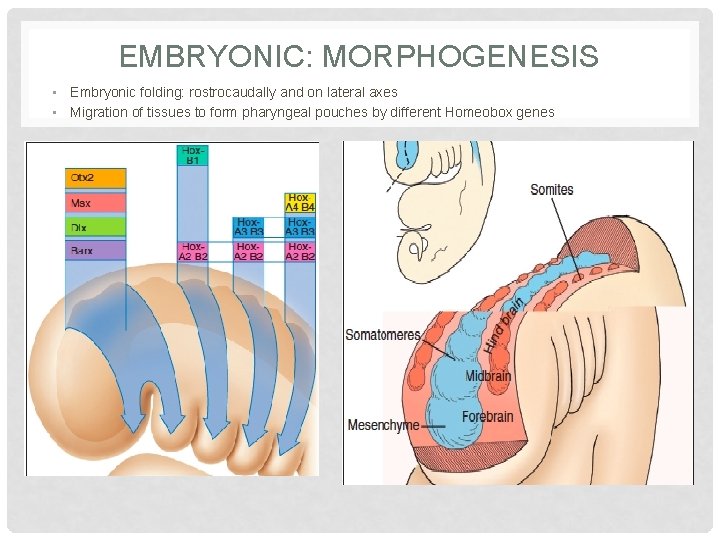
EMBRYONIC: MORPHOGENESIS • Embryonic folding: rostrocaudally and on lateral axes • Migration of tissues to form pharyngeal pouches by different Homeobox genes
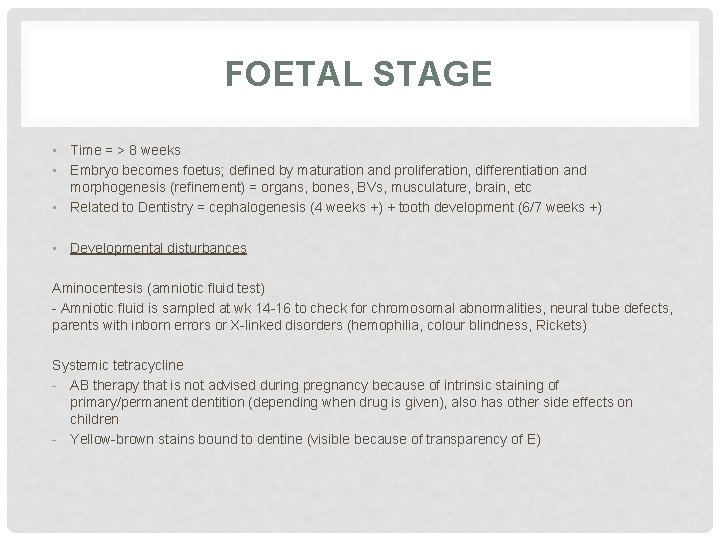
FOETAL STAGE • Time = > 8 weeks • Embryo becomes foetus; defined by maturation and proliferation, differentiation and morphogenesis (refinement) = organs, bones, BVs, musculature, brain, etc • Related to Dentistry = cephalogenesis (4 weeks +) + tooth development (6/7 weeks +) • Developmental disturbances Aminocentesis (amniotic fluid test) - Amniotic fluid is sampled at wk 14 -16 to check for chromosomal abnormalities, neural tube defects, parents with inborn errors or X-linked disorders (hemophilia, colour blindness, Rickets) Systemic tetracycline - AB therapy that is not advised during pregnancy because of intrinsic staining of primary/permanent dentition (depending when drug is given), also has other side effects on children - Yellow-brown stains bound to dentine (visible because of transparency of E)
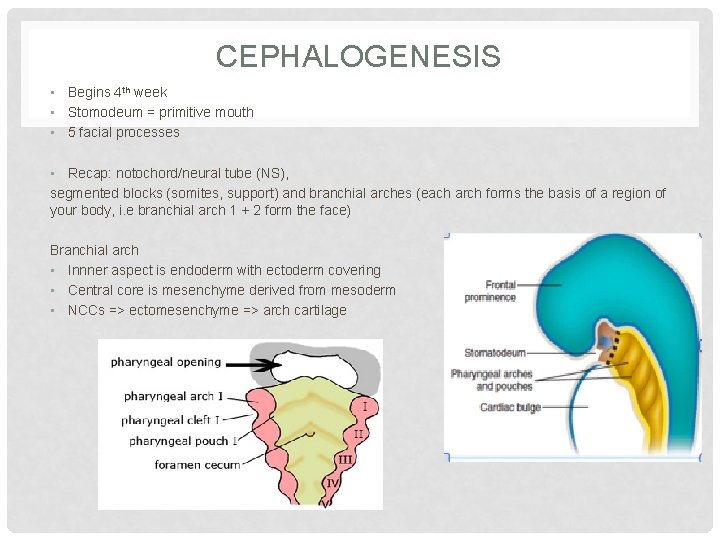
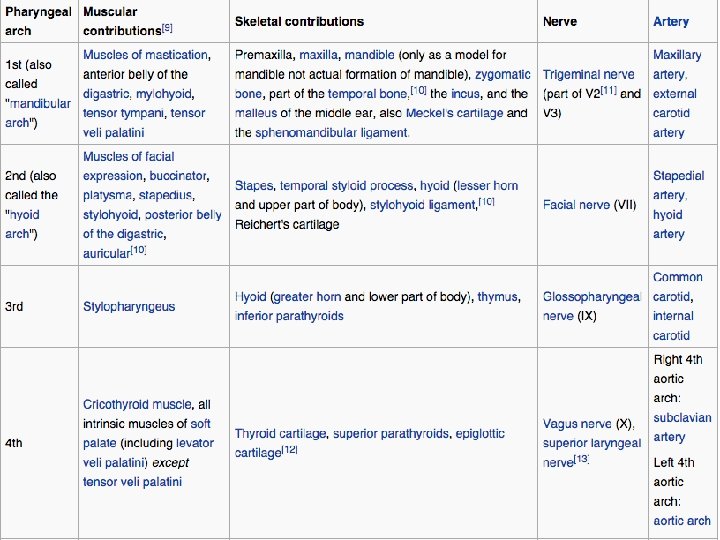
CEPHALOGENESIS • Begins 4 th week • Stomodeum = primitive mouth • 5 facial processes • Recap: notochord/neural tube (NS), segmented blocks (somites, support) and branchial arches (each arch forms the basis of a region of your body, i. e branchial arch 1 + 2 form the face) Branchial arch • Innner aspect is endoderm with ectoderm covering • Central core is mesenchyme derived from mesoderm • NCCs => ectomesenchyme => arch cartilage
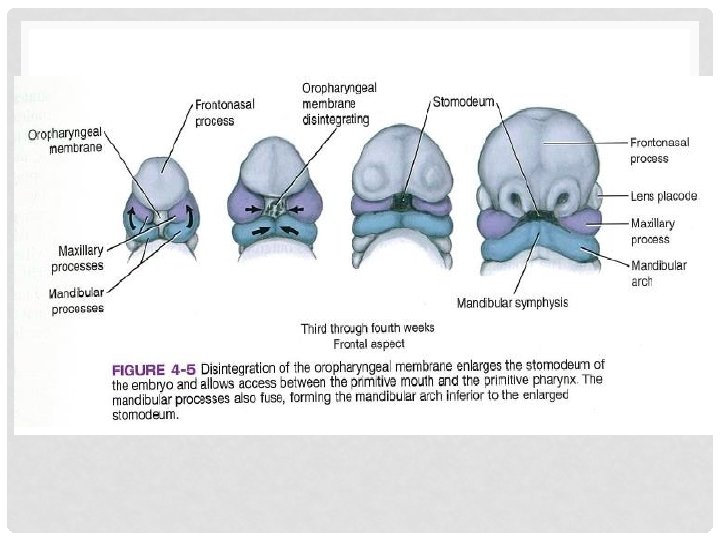
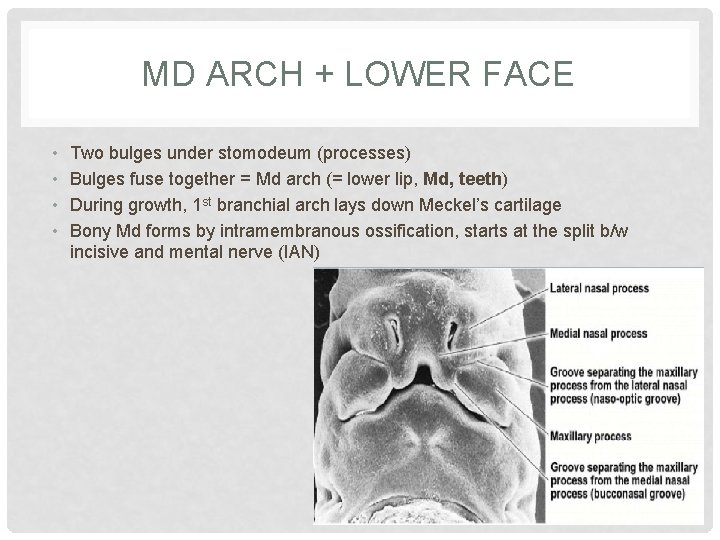
MD ARCH + LOWER FACE • • Two bulges under stomodeum (processes) Bulges fuse together = Md arch (= lower lip, Md, teeth) During growth, 1 st branchial arch lays down Meckel’s cartilage Bony Md forms by intramembranous ossification, starts at the split b/w incisive and mental nerve (IAN)
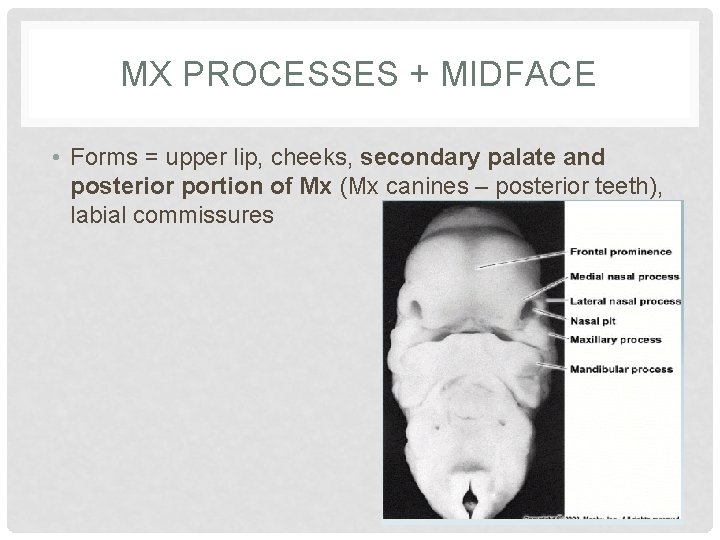
MX PROCESSES + MIDFACE • Forms = upper lip, cheeks, secondary palate and posterior portion of Mx (Mx canines – posterior teeth), labial commissures
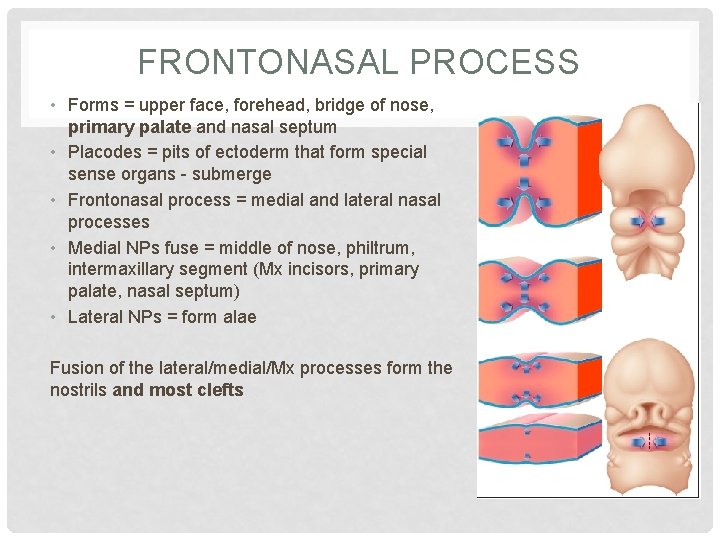
FRONTONASAL PROCESS • Forms = upper face, forehead, bridge of nose, primary palate and nasal septum • Placodes = pits of ectoderm that form special sense organs - submerge • Frontonasal process = medial and lateral nasal processes • Medial NPs fuse = middle of nose, philtrum, intermaxillary segment (Mx incisors, primary palate, nasal septum) • Lateral NPs = form alae Fusion of the lateral/medial/Mx processes form the nostrils and most clefts
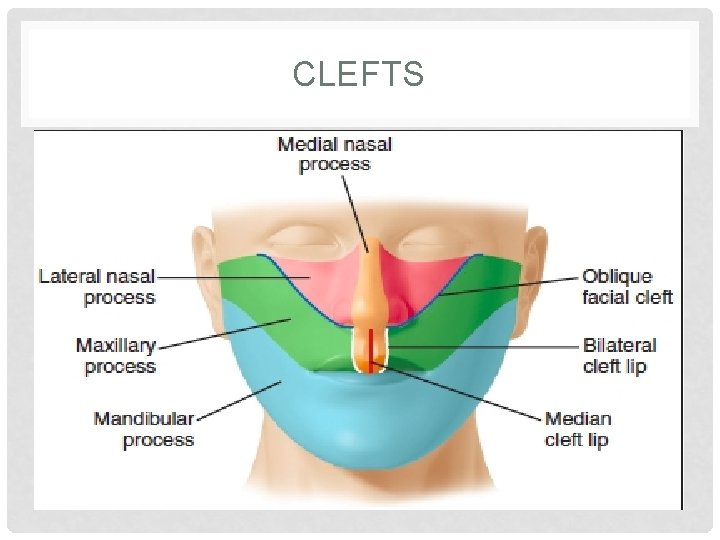
CLEFTS
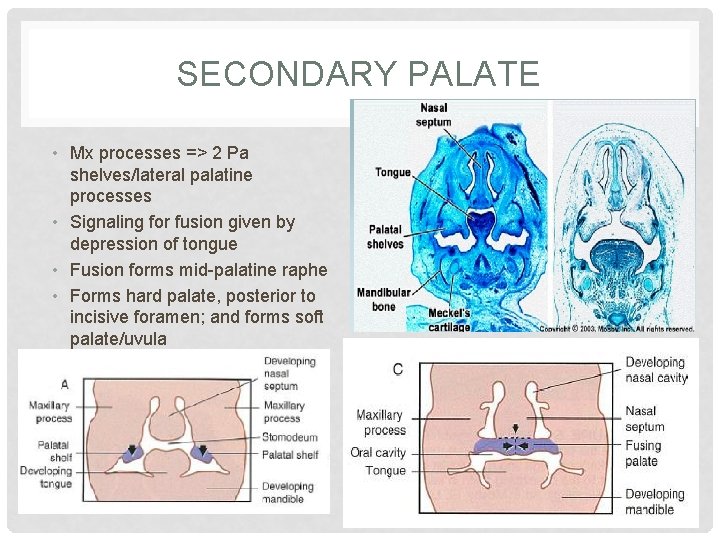
SECONDARY PALATE • Mx processes => 2 Pa shelves/lateral palatine processes • Signaling for fusion given by depression of tongue • Fusion forms mid-palatine raphe • Forms hard palate, posterior to incisive foramen; and forms soft palate/uvula
REFERENCES • Nanci A, 2012. Ten Cate’s Oral Histology, 8 th Edn, Missouri • Mosby Elsevier • Sadler, Thomas W. y 2009. Langman's Medical Embryology. Lippincott Williams & Wilkins • Netter, Frank H & Cochard, Larry R, 2002. Netter's Atlas of human embryology. Teterboro
- Slides: 22