
Group 7 Content To describe the nature of
Group 7 Content: To describe the nature of the compounds formed when chlorine, bromine and iodine react with metals and non-metals. To describe trends in physical and chemical properties in group 7 To interpret displacement reactions in terms of reactivity. Process: individual work Practical work Benefits: recognising trends Following instructions carefully
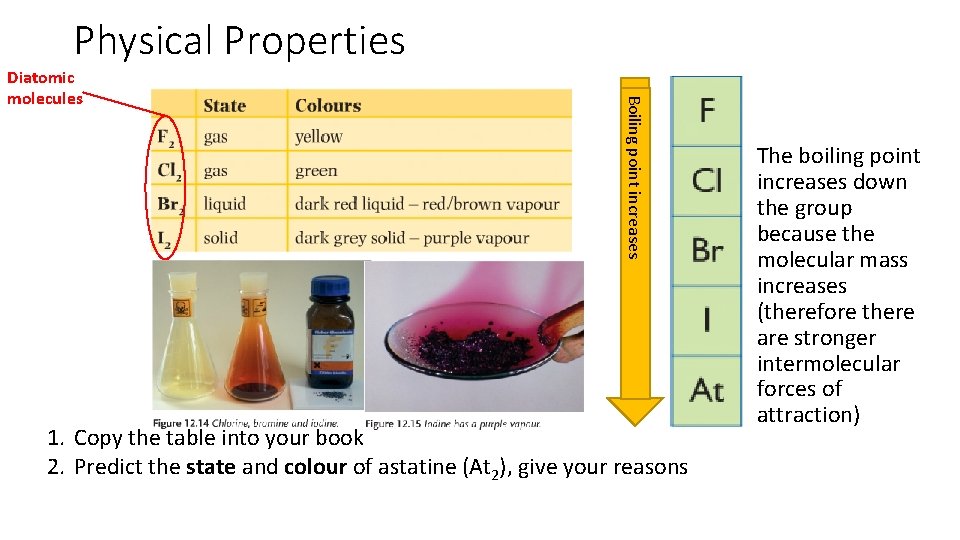
Physical Properties point increases Boiling point? Diatomic molecules 1. Copy the table into your book 2. Predict the state and colour of astatine (At 2), give your reasons The boiling point increases down the group because the molecular mass increases (therefore there are stronger intermolecular forces of attraction)
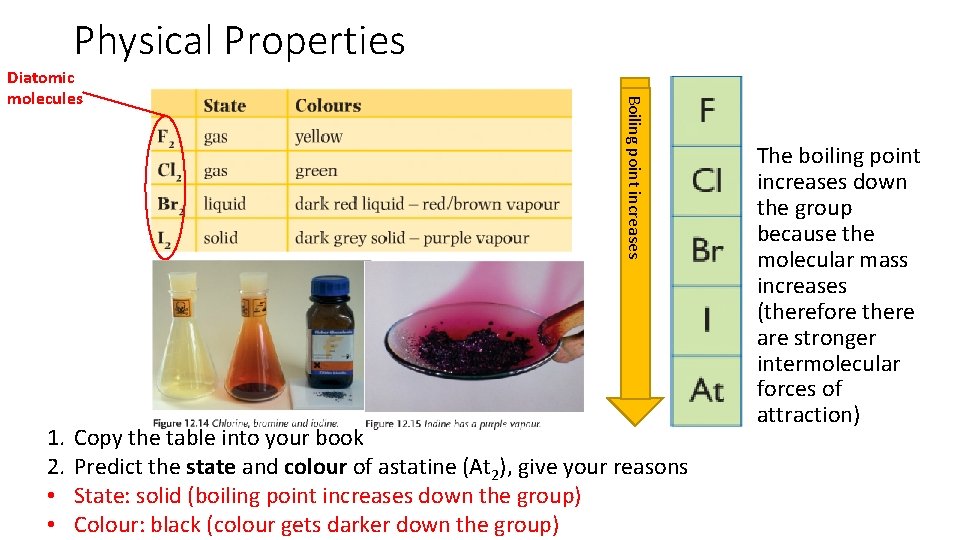
Physical Properties 1. 2. • • point increases Boiling point? Diatomic molecules Copy the table into your book Predict the state and colour of astatine (At 2), give your reasons State: solid (boiling point increases down the group) Colour: black (colour gets darker down the group) The boiling point increases down the group because the molecular mass increases (therefore there are stronger intermolecular forces of attraction)
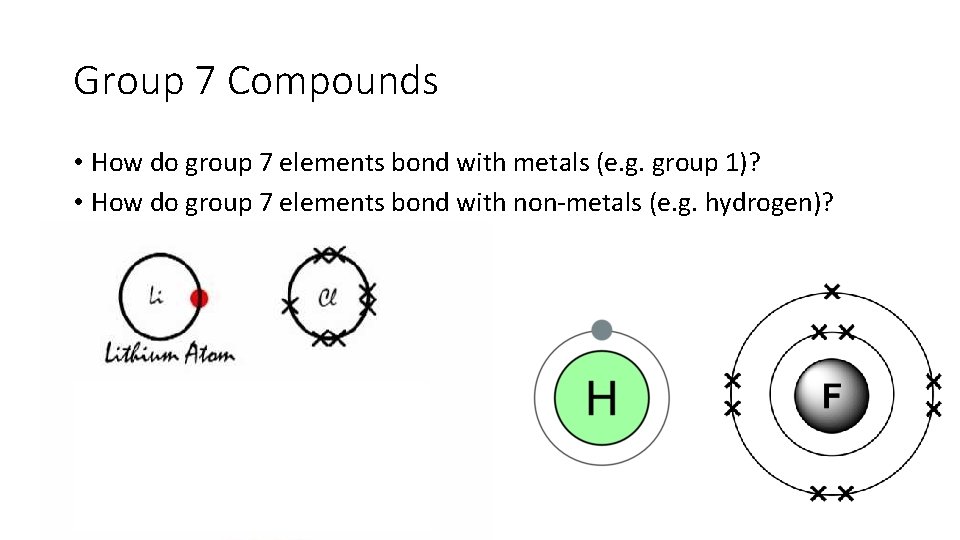
Group 7 Compounds • How do group 7 elements bond with metals (e. g. group 1)? • How do group 7 elements bond with non-metals (e. g. hydrogen)?
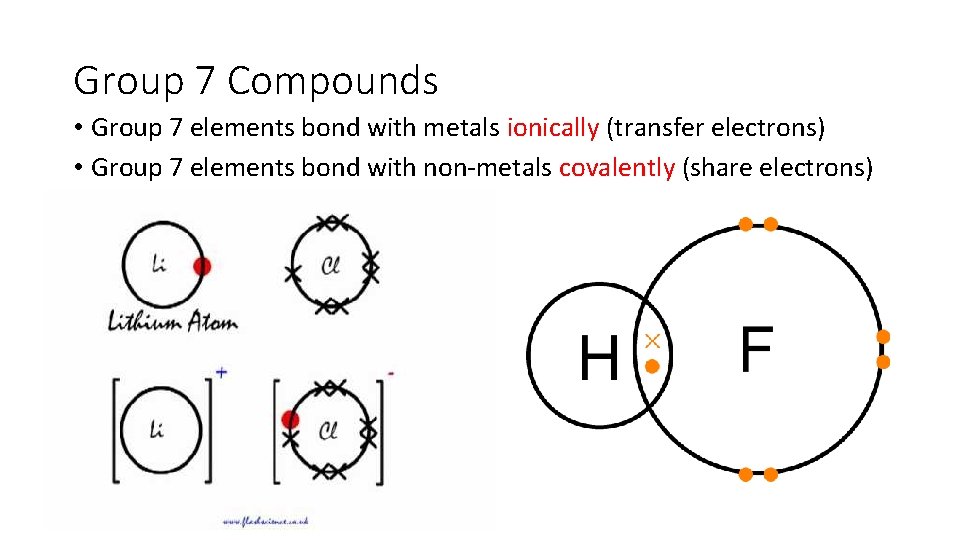
Group 7 Compounds • Group 7 elements bond with metals ionically (transfer electrons) • Group 7 elements bond with non-metals covalently (share electrons)
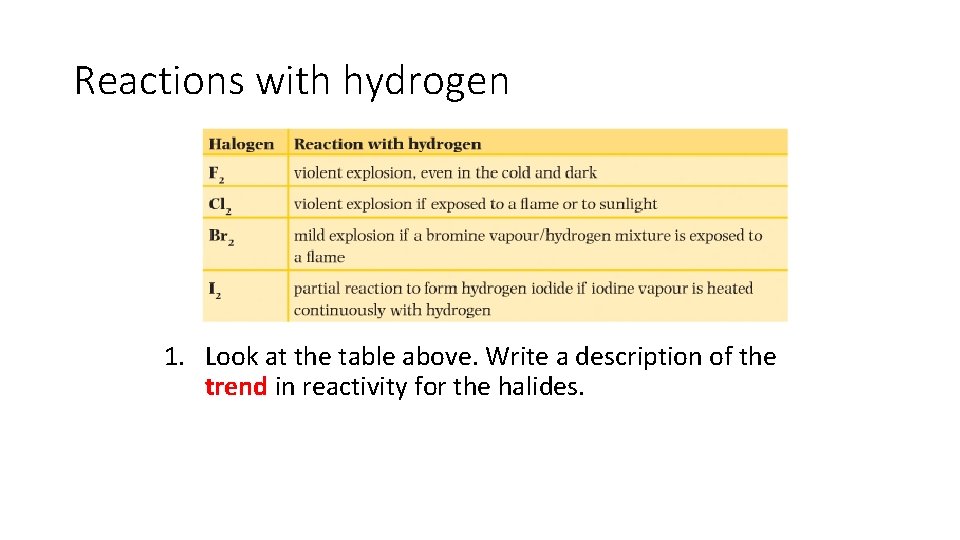
Reactions with hydrogen 1. Look at the table above. Write a description of the trend in reactivity for the halides.
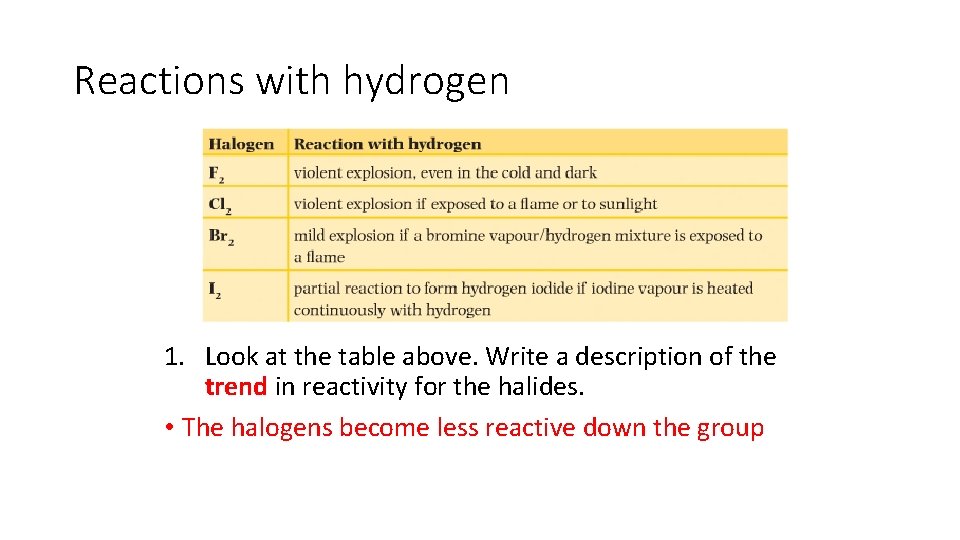
Reactions with hydrogen 1. Look at the table above. Write a description of the trend in reactivity for the halides. • The halogens become less reactive down the group
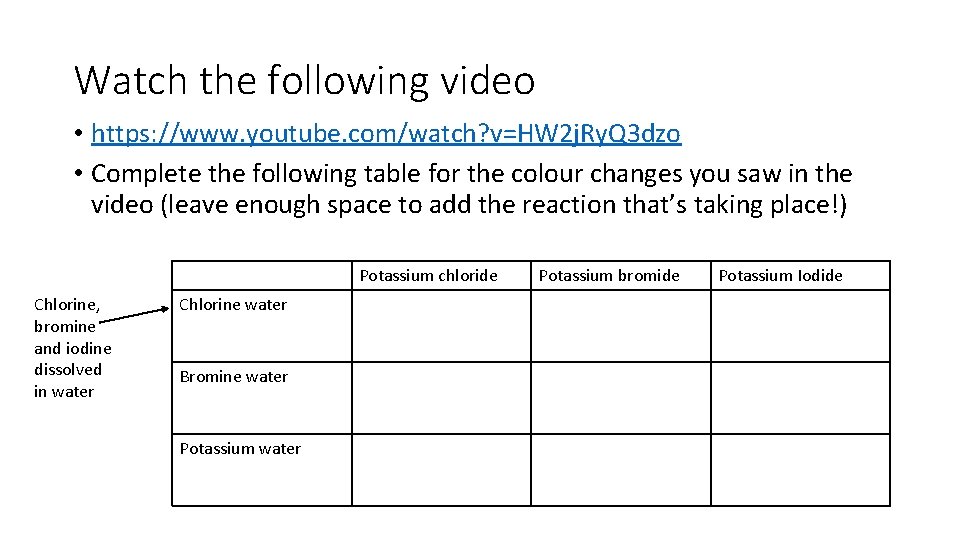
Watch the following video • https: //www. youtube. com/watch? v=HW 2 j. Ry. Q 3 dzo • Complete the following table for the colour changes you saw in the video (leave enough space to add the reaction that’s taking place!) Potassium chloride Chlorine, bromine and iodine dissolved in water Chlorine water Bromine water Potassium bromide Potassium Iodide
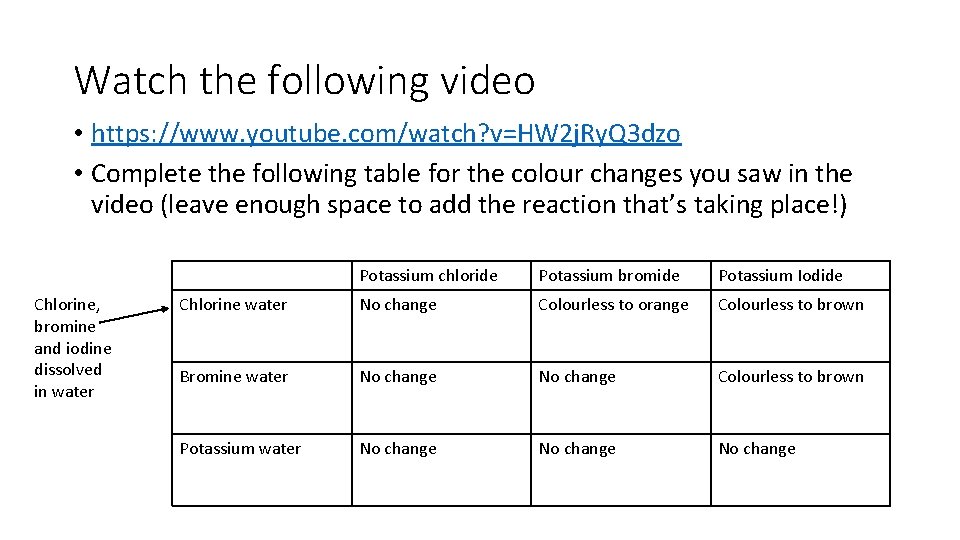
Watch the following video • https: //www. youtube. com/watch? v=HW 2 j. Ry. Q 3 dzo • Complete the following table for the colour changes you saw in the video (leave enough space to add the reaction that’s taking place!) Chlorine, bromine and iodine dissolved in water Potassium chloride Potassium bromide Potassium Iodide Chlorine water No change Colourless to orange Colourless to brown Bromine water No change Colourless to brown Potassium water No change
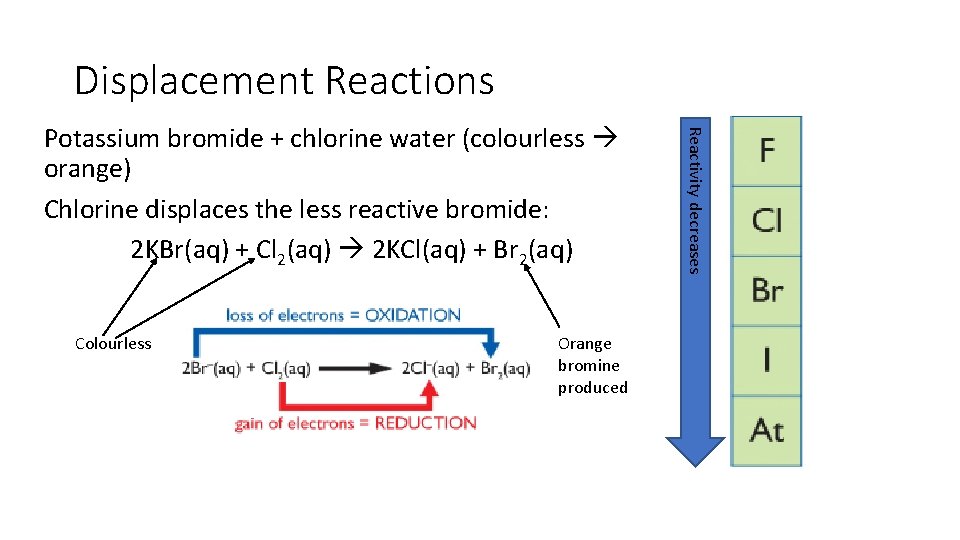
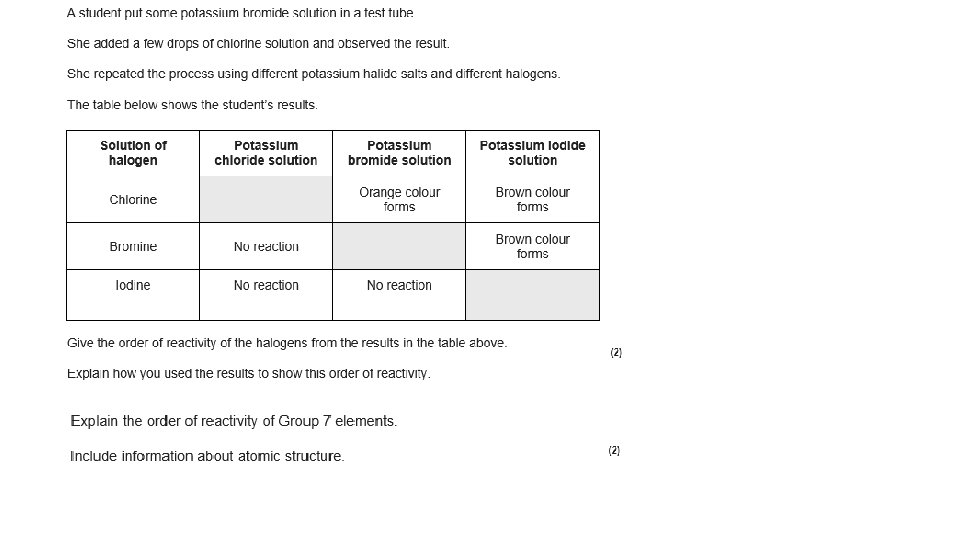
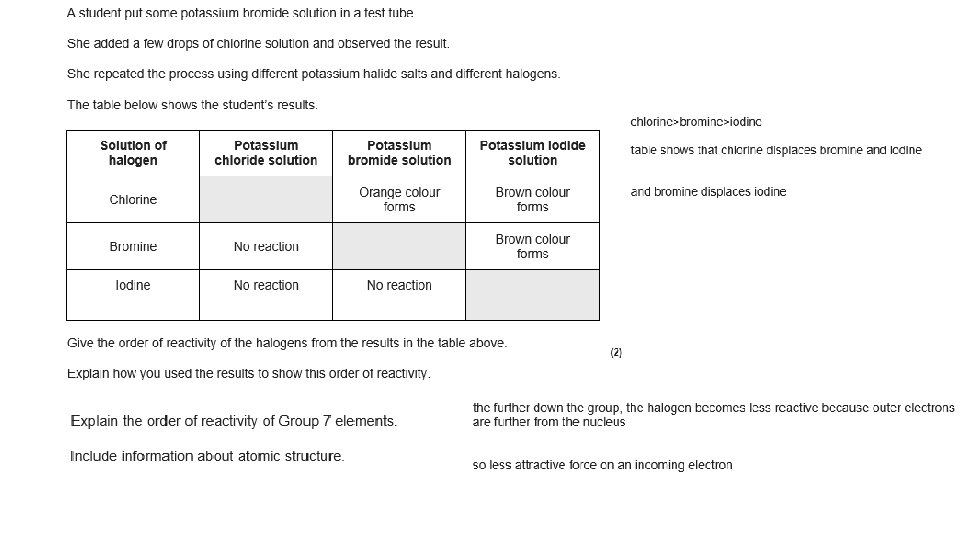
Displacement Reactions Colourless Orange bromine produced Reactivity decreases Potassium bromide + chlorine water (colourless orange) Chlorine displaces the less reactive bromide: 2 KBr(aq) + Cl 2(aq) 2 KCl(aq) + Br 2(aq)
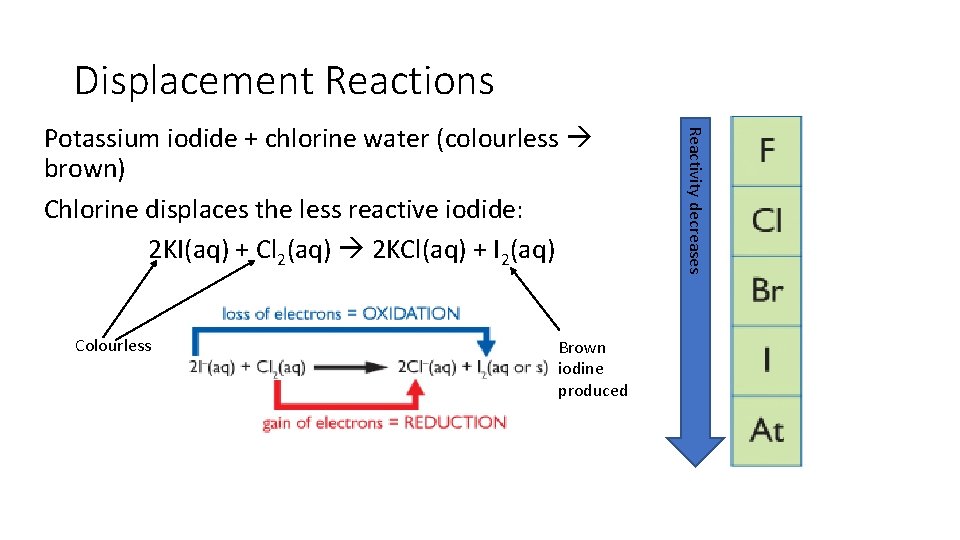
Displacement Reactions Colourless Brown iodine produced Reactivity decreases Potassium iodide + chlorine water (colourless brown) Chlorine displaces the less reactive iodide: 2 KI(aq) + Cl 2(aq) 2 KCl(aq) + I 2(aq)
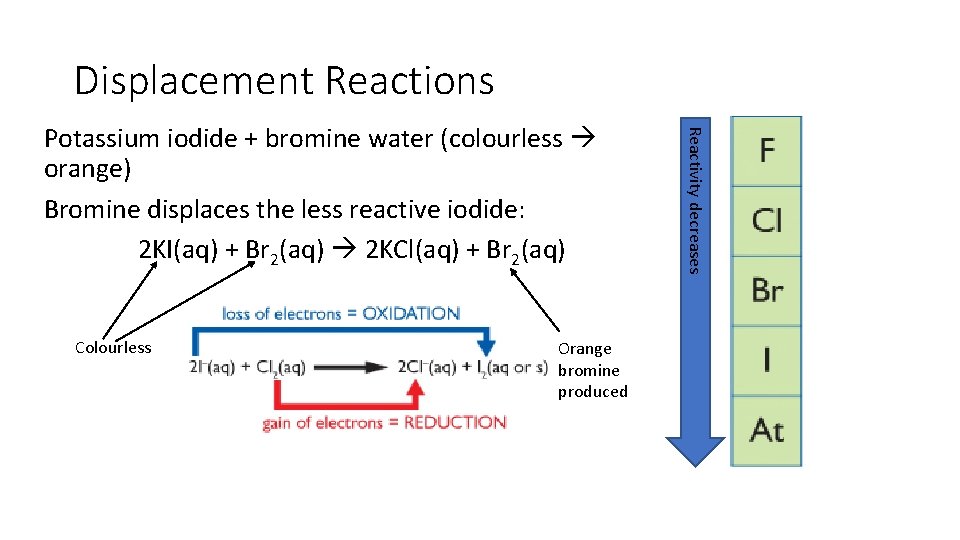
Displacement Reactions Colourless Orange bromine produced Reactivity decreases Potassium iodide + bromine water (colourless orange) Bromine displaces the less reactive iodide: 2 KI(aq) + Br 2(aq) 2 KCl(aq) + Br 2(aq)
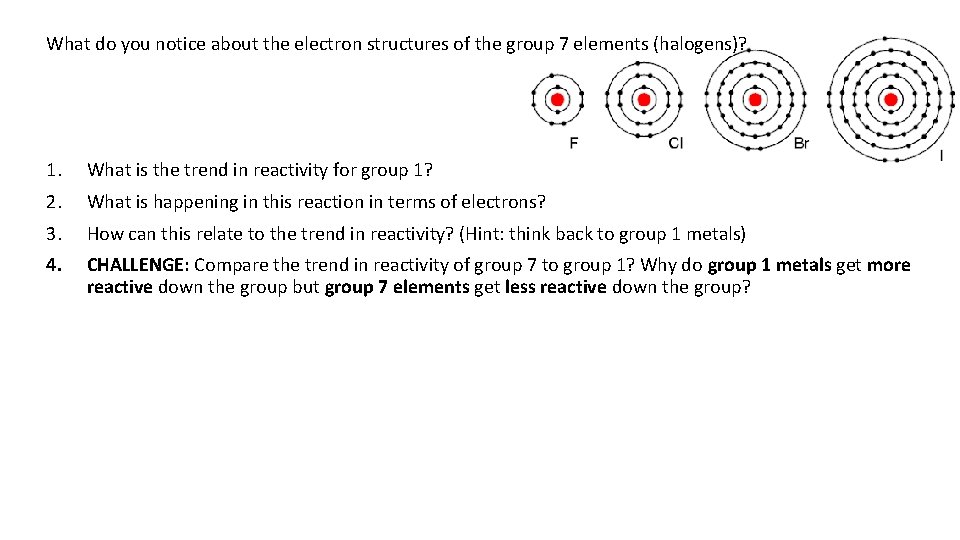
What do you notice about the electron structures of the group 7 elements (halogens)? 1. What is the trend in reactivity for group 1? 2. What is happening in this reaction in terms of electrons? 3. How can this relate to the trend in reactivity? (Hint: think back to group 1 metals) 4. CHALLENGE: Compare the trend in reactivity of group 7 to group 1? Why do group 1 metals get more reactive down the group but group 7 elements get less reactive down the group?
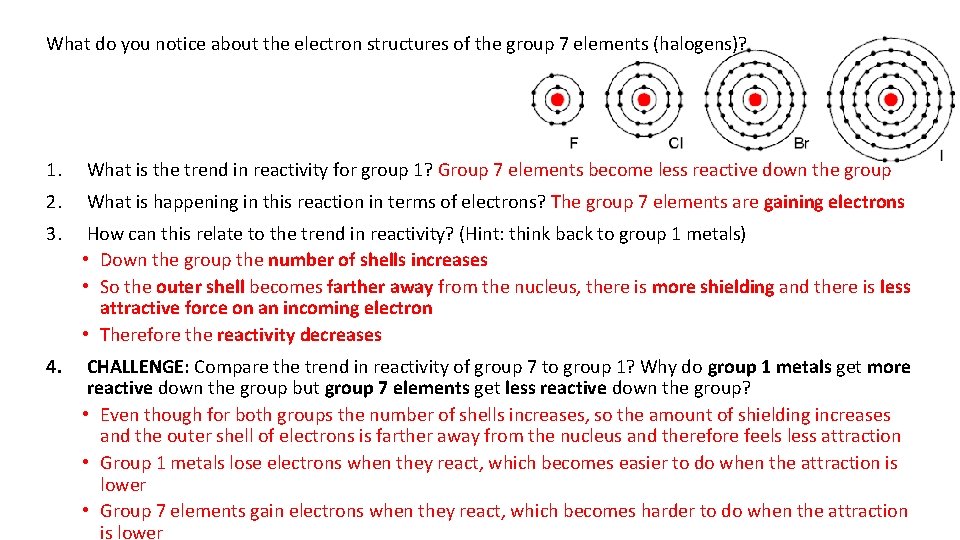
What do you notice about the electron structures of the group 7 elements (halogens)? 1. What is the trend in reactivity for group 1? Group 7 elements become less reactive down the group 2. What is happening in this reaction in terms of electrons? The group 7 elements are gaining electrons 3. How can this relate to the trend in reactivity? (Hint: think back to group 1 metals) • Down the group the number of shells increases • So the outer shell becomes farther away from the nucleus, there is more shielding and there is less attractive force on an incoming electron • Therefore the reactivity decreases 4. CHALLENGE: Compare the trend in reactivity of group 7 to group 1? Why do group 1 metals get more reactive down the group but group 7 elements get less reactive down the group? • Even though for both groups the number of shells increases, so the amount of shielding increases and the outer shell of electrons is farther away from the nucleus and therefore feels less attraction • Group 1 metals lose electrons when they react, which becomes easier to do when the attraction is lower • Group 7 elements gain electrons when they react, which becomes harder to do when the attraction is lower
- Slides: 16