
Group 4 KEURKEG AUTOMATIC CRAFT BREWING SYSTEM Jason
Group 4 KEUR-KEG AUTOMATIC CRAFT BREWING SYSTEM Jason Carlisle EE Laura Hoshino EE Kyle Rits CPE Kevin Ruzich EE
Motivation • Brewing beer takes time and some people lose interest in the hobby • Allows user to complete other tasks while beer is brewing which saves time • Adds consistency to recipes due to lack of human error • Easy user preparation before the start of the brew cycle • Easy operation and maintenance on the system
Brewing Process • Preparation of equipment and sanitize • Steeping and sparging (30 – 60 mins) • Boiling the mash, malt, and hops (60 – 90 mins constantly stirring) • Fermenting the wort (2 – 8+ weeks) • Each different recipe has different temperatures, times, and amount
Goals and Objectives • Supports multiple different recipes which brews different types of beer • Make easy to sanitize components and flush the system after use • Make system user Friendly and easy to operate • Have the final output product yield 5 gallons • Use a Standard Wall Outlet which keeps power under 2000 watts • Attempt to keep the cost to a minimum to make easily affordable
Requirements • Easy to remove kettles for cleaning and bottling • Flush cycle after use • Sanitation cycle before and after brew cycle • Microcontroller used for reading temperatures, fluid levels, fluid flow, and to send signals to output components • Interface to enter times, temperatures, and quantity to support multiple recipes • Temperatures and notifications are displayed for the user
Specifications • Stainless steel kettles • Must fit in a 5 Ft 3 space • Heating elements no bigger than 1650 watts • Enough hops dispensing tubes to support 4 different times • MCU should stay powered for 4 hours in the event of a power outage • Powered by a standard 120 VAC Wall Outlet • Power consumption under 2000 watts
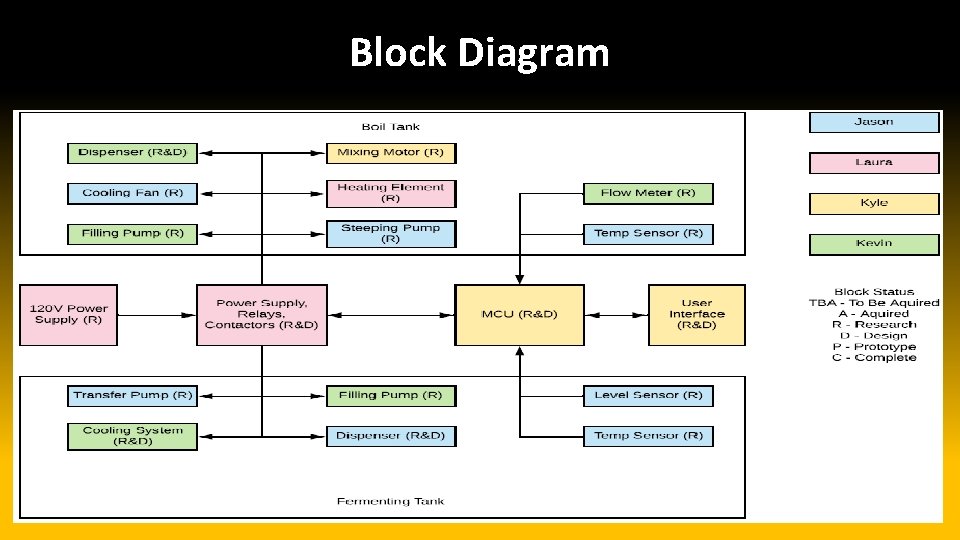
Block Diagram

PROJECT DESIGN APPROACH • One kettle design • Two kettle design • Separate individual systems • Different hops and malt dispensing designs • Heating elements • Fermenting refrigeration
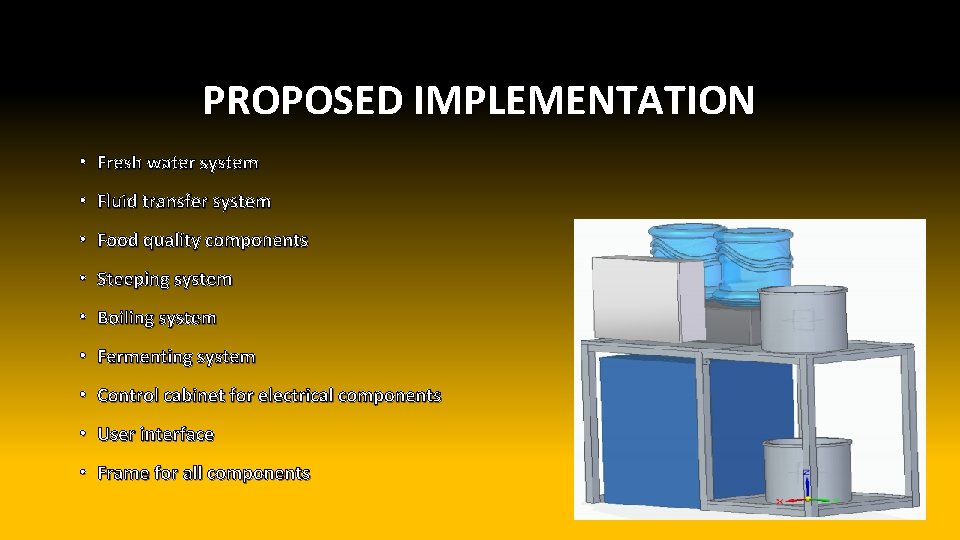
PROPOSED IMPLEMENTATION • Fresh water system • Fluid transfer system • Food quality components • Steeping system • Boiling system • Fermenting system • Control cabinet for electrical components • User interface • Frame for all components

PROJECT COMPONENTS
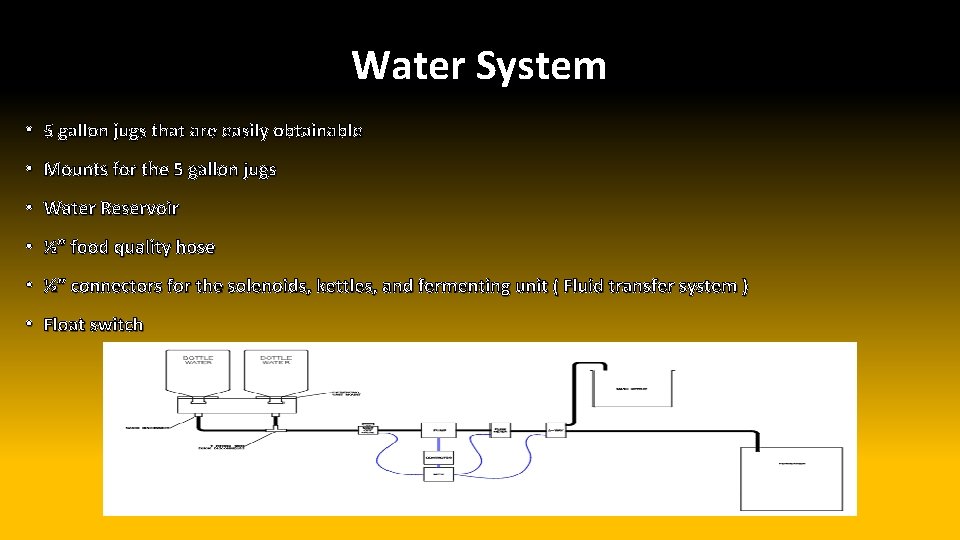
Water System • 5 gallon jugs that are easily obtainable • Mounts for the 5 gallon jugs • Water Reservoir • ½” food quality hose • ½” connectors for the solenoids, kettles, and fermenting unit ( Fluid transfer system ) • Float switch

Fluid Transfer System • 120 VAC pump for circulation, water input, and transfer • 12 VDC ½” solenoids to direct flow • ½” food quality hose • ½” connectors for the solenoids, kettles, and fermenting unit • ½” T-fittings for multiple outputs
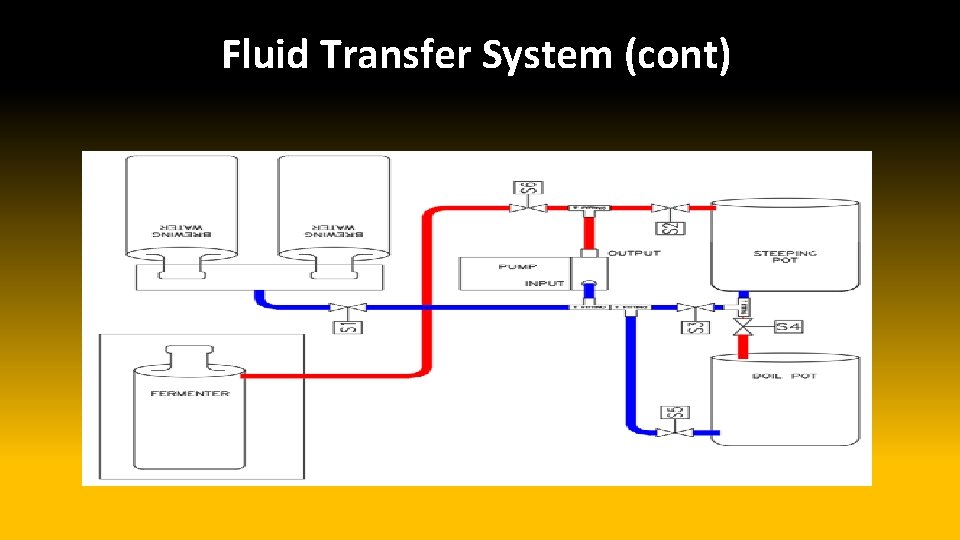
Fluid Transfer System (cont)
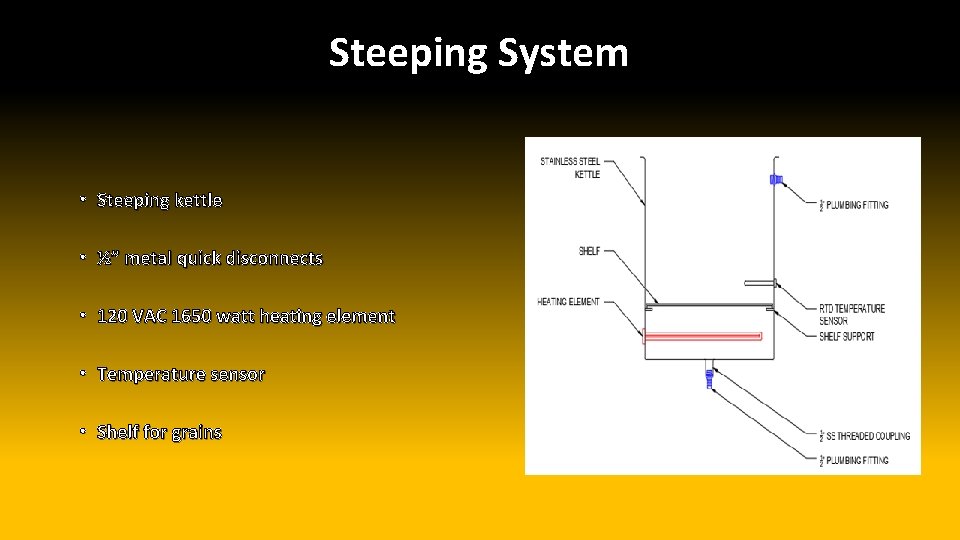
Steeping System • Steeping kettle • ½” metal quick disconnects • 120 VAC 1650 watt heating element • Temperature sensor • Shelf for grains

Boiling System The boiling system consists of : • Boiling kettle • Mixing unit • Hops dispensing unit • Malt dispensing unit • Chilling unit
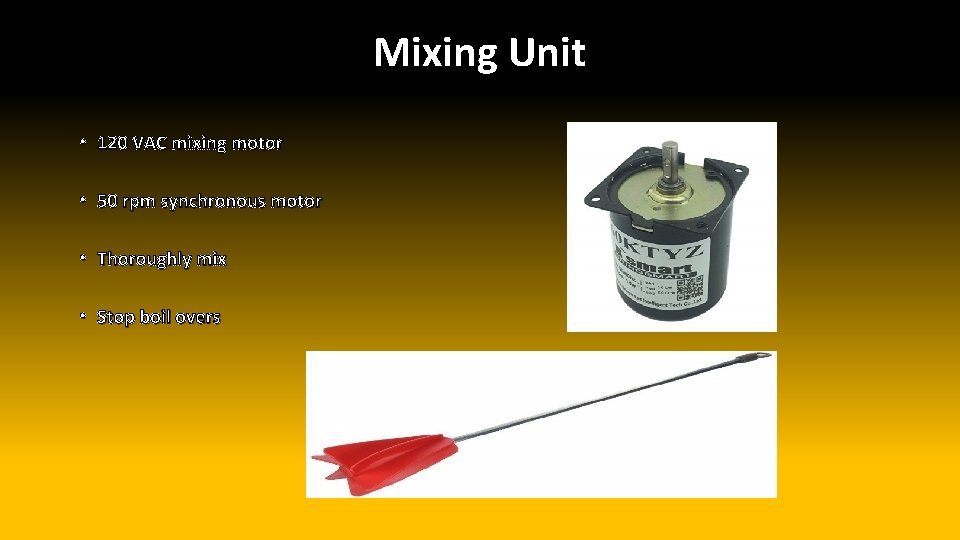
Mixing Unit • 120 VAC mixing motor • 50 rpm synchronous motor • Thoroughly mix • Stop boil overs
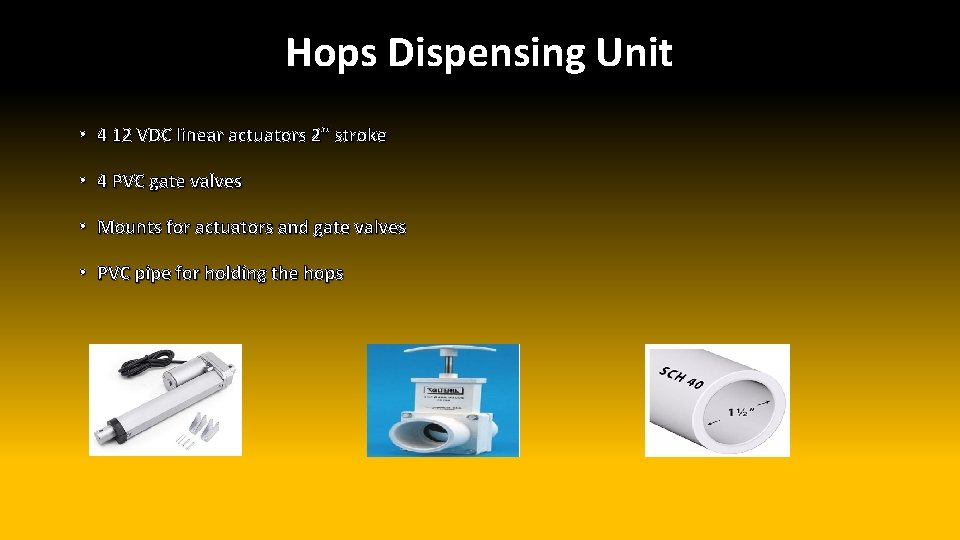
Hops Dispensing Unit • 4 12 VDC linear actuators 2” stroke • 4 PVC gate valves • Mounts for actuators and gate valves • PVC pipe for holding the hops
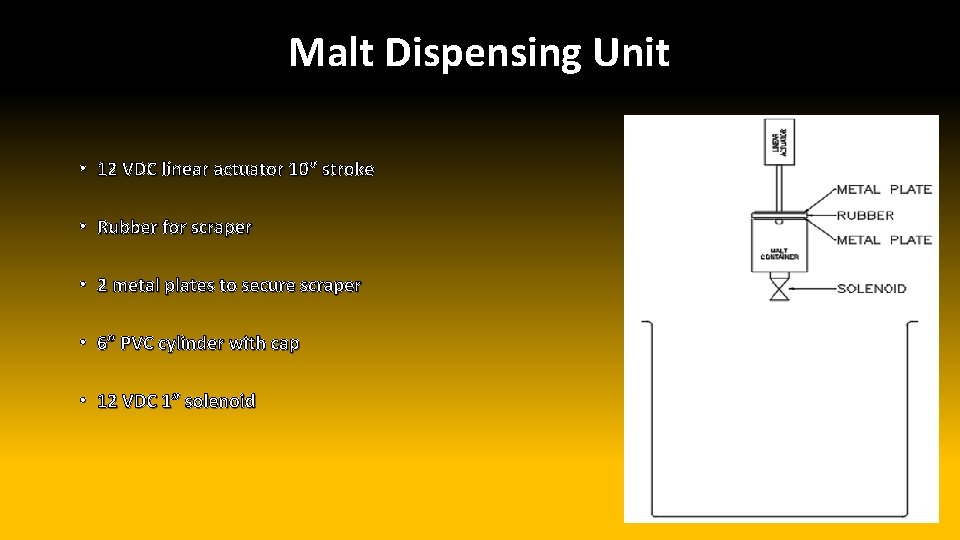
Malt Dispensing Unit • 12 VDC linear actuator 10” stroke • Rubber for scraper • 2 metal plates to secure scraper • 6” PVC cylinder with cap • 12 VDC 1” solenoid
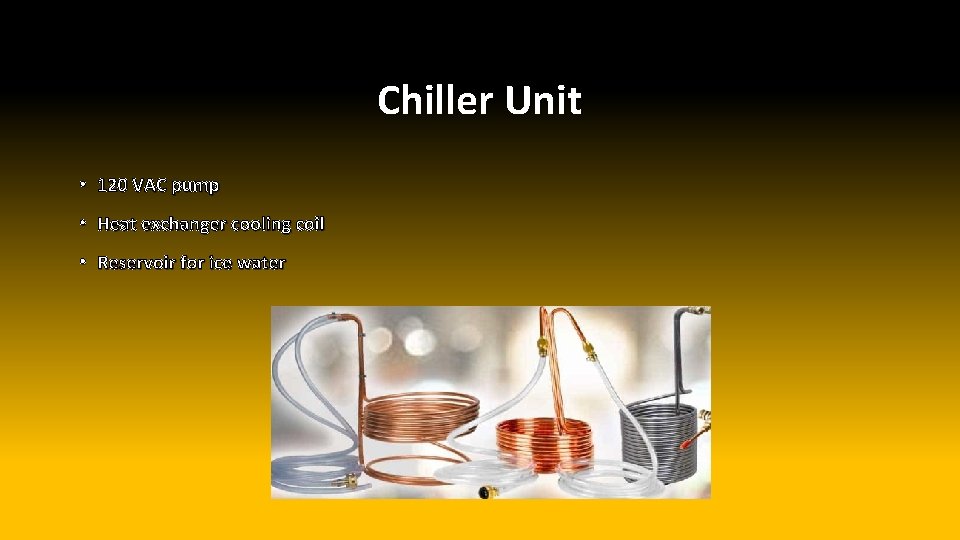
Chiller Unit • 120 VAC pump • Heat exchanger cooling coil • Reservoir for ice water
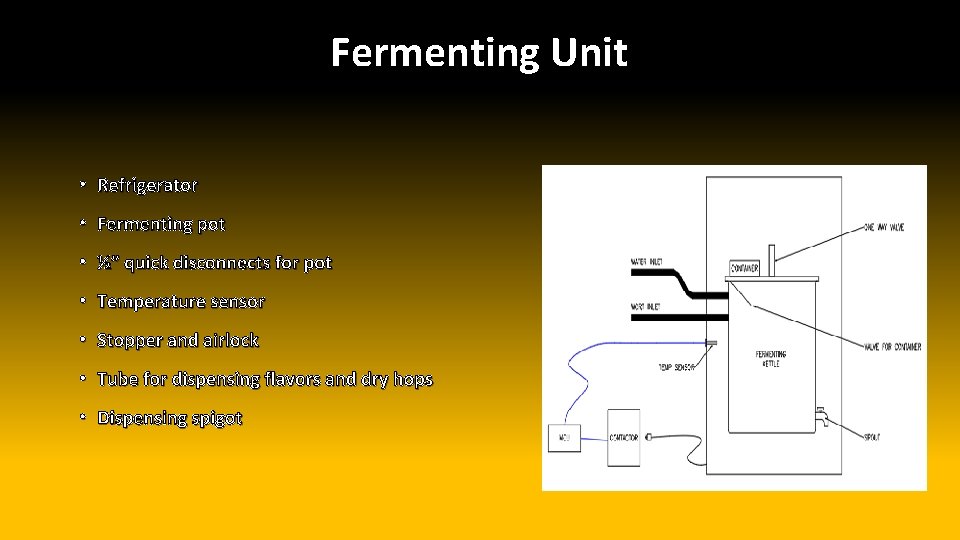
Fermenting Unit • Refrigerator • Fermenting pot • ½” quick disconnects for pot • Temperature sensor • Stopper and airlock • Tube for dispensing flavors and dry hops • Dispensing spigot
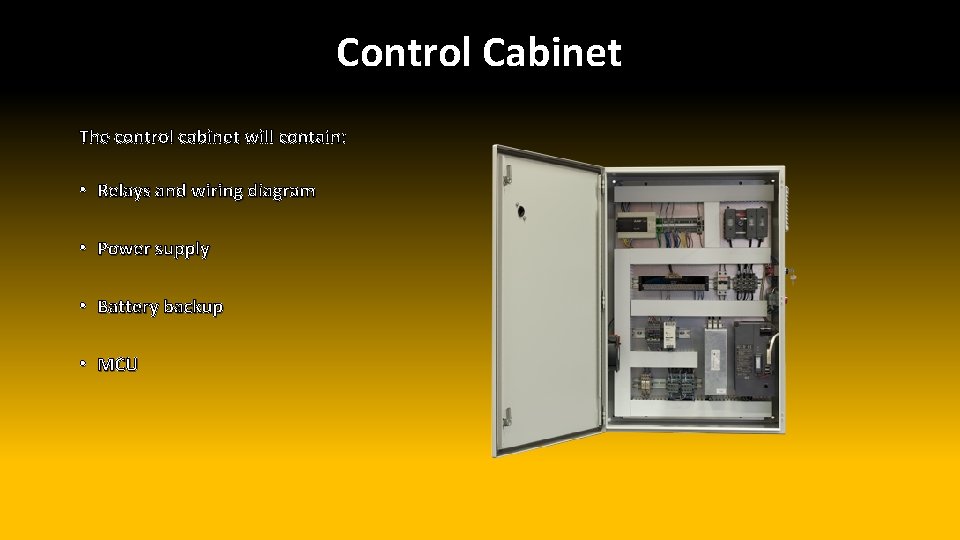
Control Cabinet The control cabinet will contain: • Relays and wiring diagram • Power supply • Battery backup • MCU
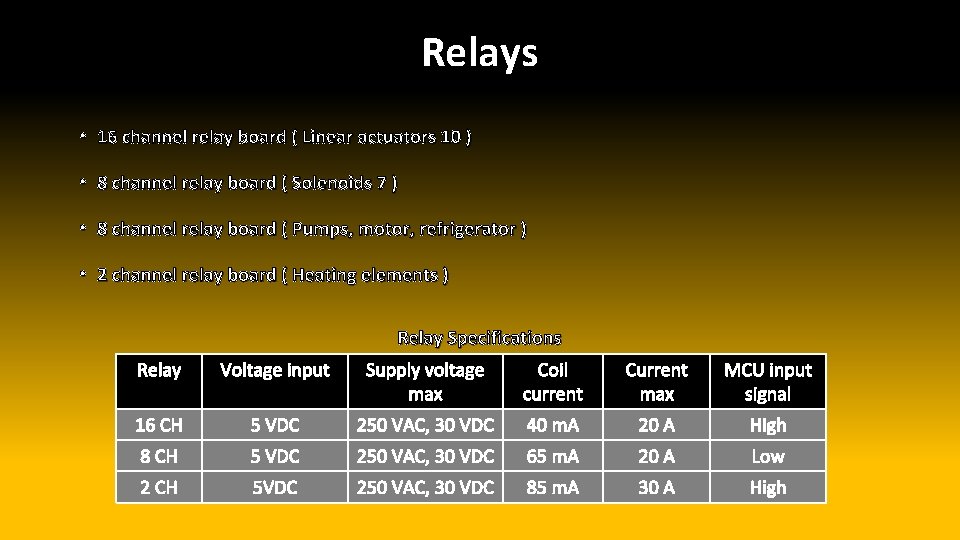
Relays • 16 channel relay board ( Linear actuators 10 ) • 8 channel relay board ( Solenoids 7 ) • 8 channel relay board ( Pumps, motor, refrigerator ) • 2 channel relay board ( Heating elements ) Relay Specifications Relay Voltage input Supply voltage max Coil current Current max MCU input signal 16 CH 5 VDC 250 VAC, 30 VDC 40 m. A 20 A High 8 CH 5 VDC 250 VAC, 30 VDC 65 m. A 20 A Low 2 CH 5 VDC 250 VAC, 30 VDC 85 m. A 30 A High
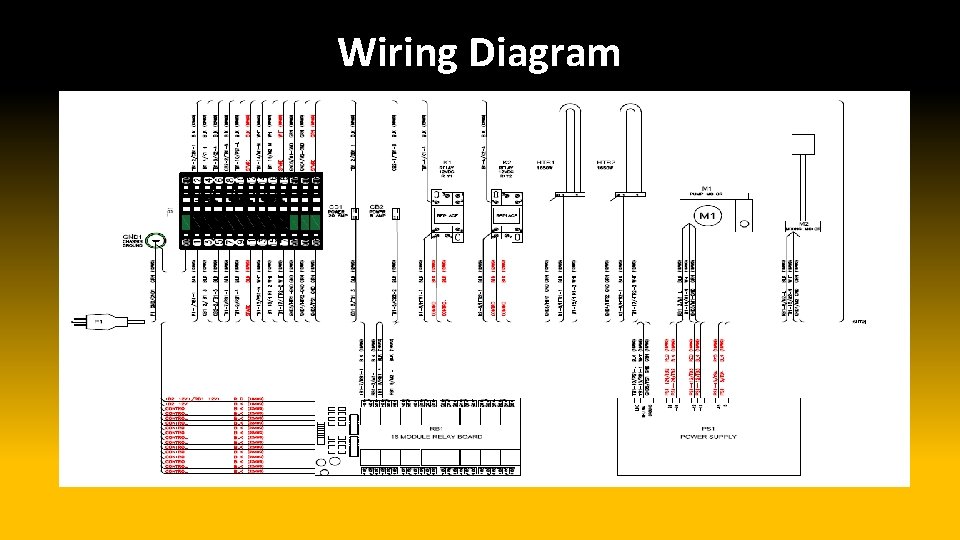
Wiring Diagram
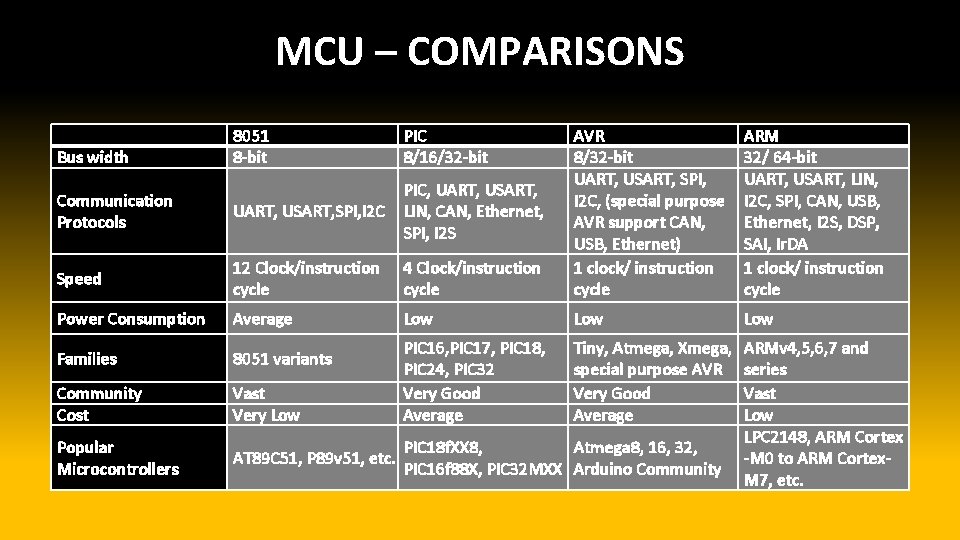
MCU – COMPARISONS 8051 8 -bit PIC 8/16/32 -bit Communication Protocols UART, USART, SPI, I 2 C PIC, UART, USART, LIN, CAN, Ethernet, SPI, I 2 S Speed 12 Clock/instruction cycle Power Consumption Average Families 8051 variants Community Cost Vast Very Low Popular Microcontrollers AT 89 C 51, P 89 v 51, etc. Bus width 4 Clock/instruction cycle AVR 8/32 -bit UART, USART, SPI, I 2 C, (special purpose AVR support CAN, USB, Ethernet) 1 clock/ instruction cycle ARM 32/ 64 -bit UART, USART, LIN, I 2 C, SPI, CAN, USB, Ethernet, I 2 S, DSP, SAI, Ir. DA 1 clock/ instruction cycle Low Low PIC 16, PIC 17, PIC 18, PIC 24, PIC 32 Very Good Average Tiny, Atmega, Xmega, special purpose AVR Very Good Average ARMv 4, 5, 6, 7 and series Vast Low LPC 2148, ARM Cortex -M 0 to ARM Cortex. M 7, etc. PIC 18 f. XX 8, Atmega 8, 16, 32, PIC 16 f 88 X, PIC 32 MXX Arduino Community
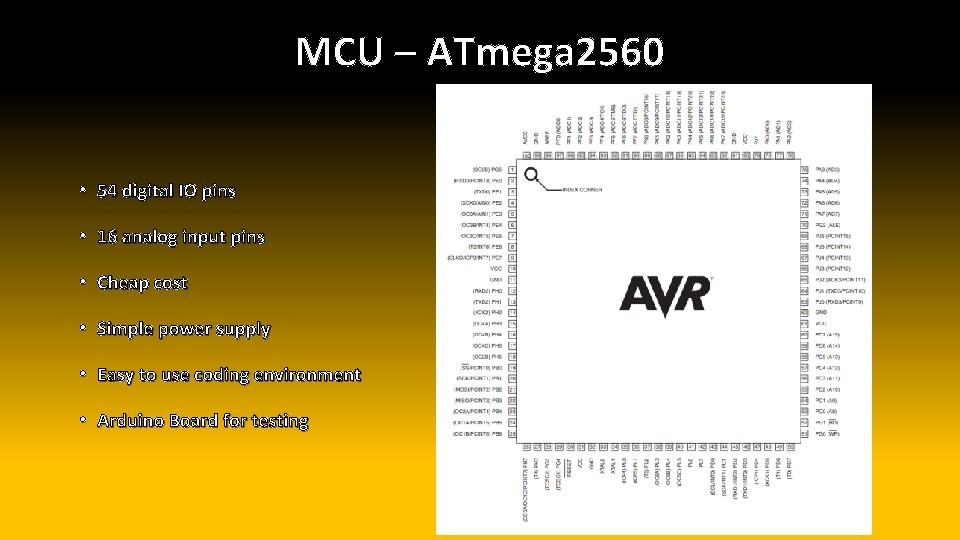
MCU – ATmega 2560 • 54 digital IO pins • 16 analog input pins • Cheap cost • Simple power supply • Easy to use coding environment • Arduino Board for testing
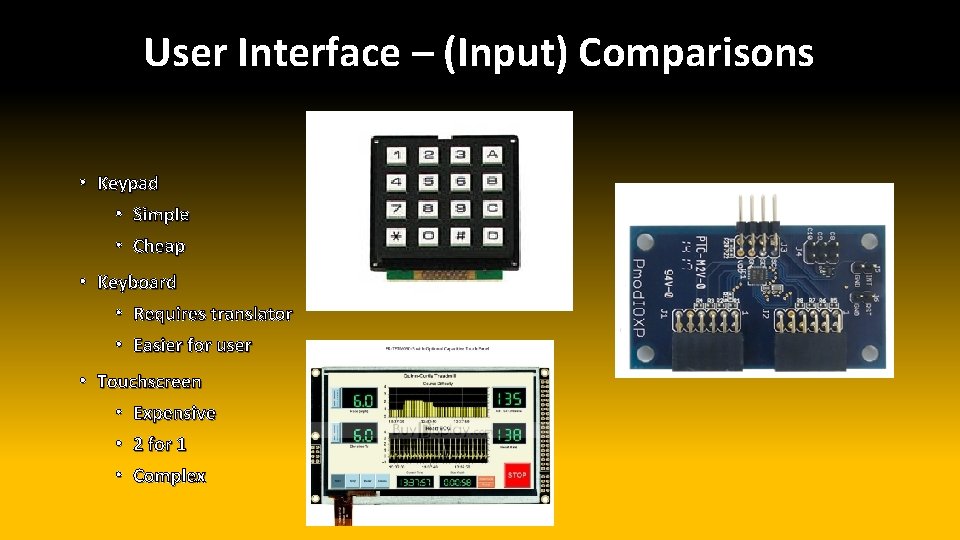
User Interface – (Input) Comparisons • Keypad • Simple • Cheap • Keyboard • Requires translator • Easier for user • Touchscreen • Expensive • 2 for 1 • Complex
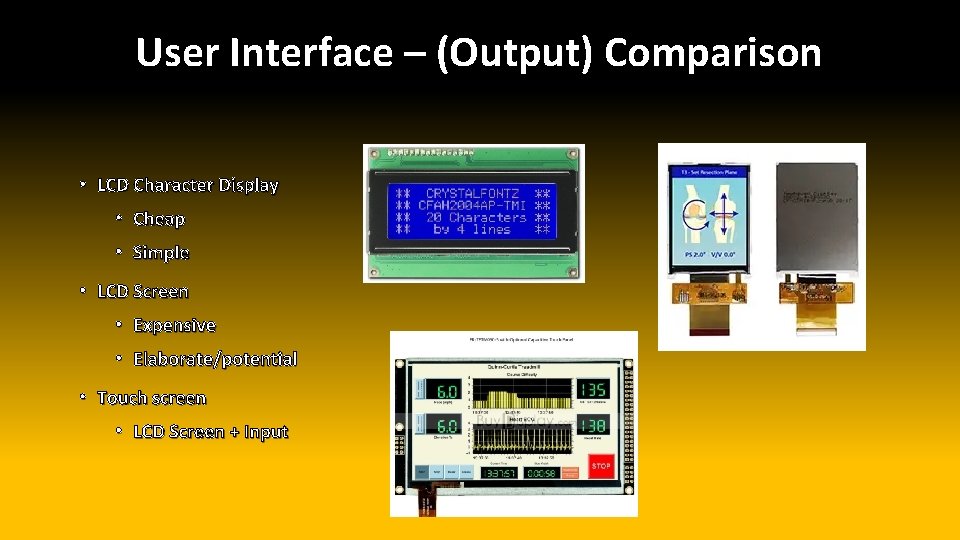
User Interface – (Output) Comparison • LCD Character Display • Cheap • Simple • LCD Screen • Expensive • Elaborate/potential • Touch screen • LCD Screen + Input
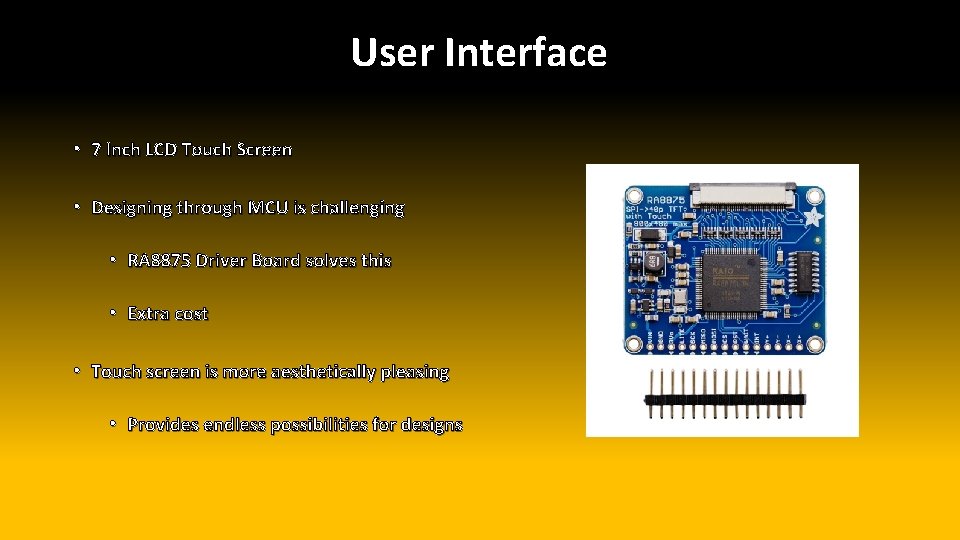
User Interface • 7 Inch LCD Touch Screen • Designing through MCU is challenging • RA 8875 Driver Board solves this • Extra cost • Touch screen is more aesthetically pleasing • Provides endless possibilities for designs
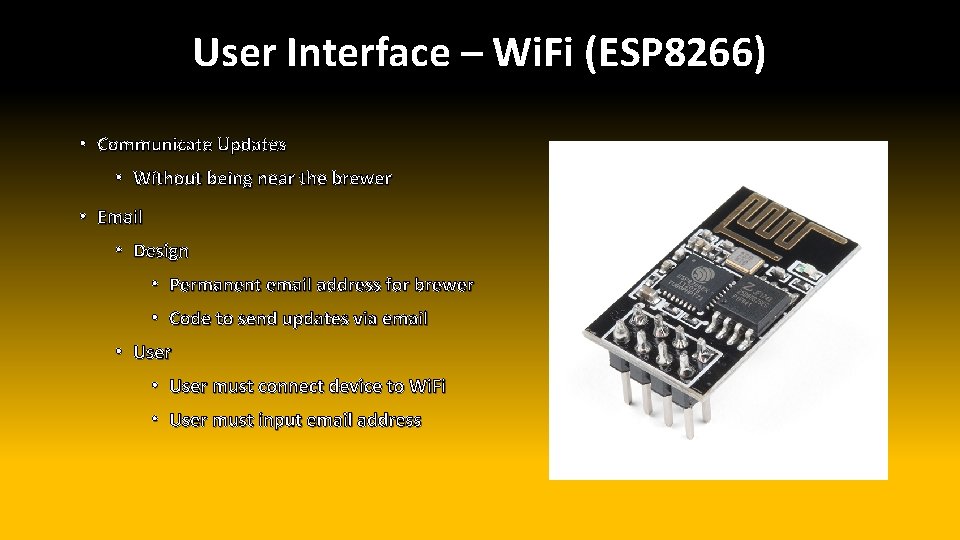
User Interface – Wi. Fi (ESP 8266) • Communicate Updates • Without being near the brewer • Email • Design • Permanent email address for brewer • Code to send updates via email • User must connect device to Wi. Fi • User must input email address
MCU/UI Success and Difficulties • MCU • Success • Controls relay board • Lots of input/output pins • Difficulties • Designing PCB • UI • Success • RA 8875 Driver board simplifies designing process • Difficulties • Communication with MCU • Wi. Fi/Email setup
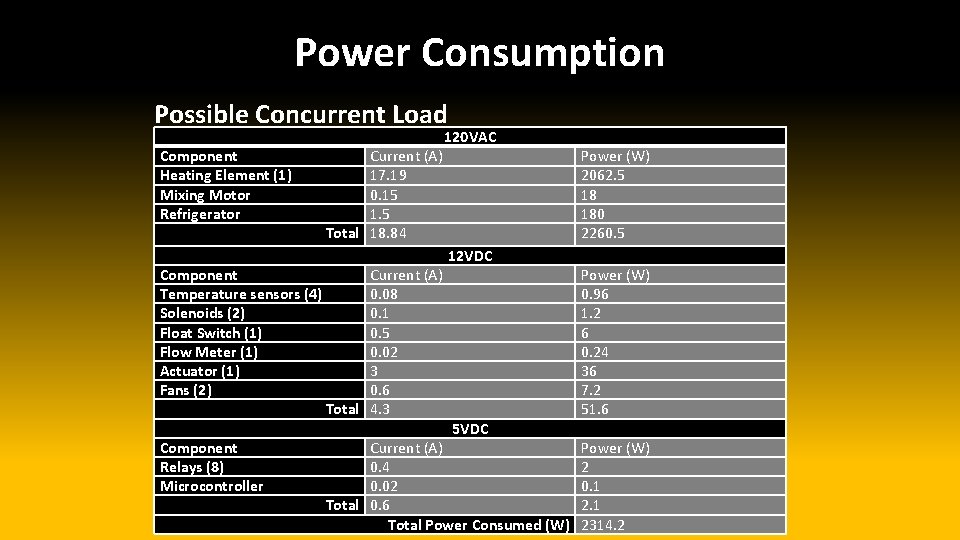
Power Consumption Possible Concurrent Load Component Heating Element (1) Mixing Motor Refrigerator Component Temperature sensors (4) Solenoids (2) Float Switch (1) Flow Meter (1) Actuator (1) Fans (2) Component Relays (8) Microcontroller Current (A) 17. 19 0. 15 1. 5 Total 18. 84 Current (A) 0. 08 0. 1 0. 5 0. 02 3 0. 6 Total 4. 3 120 VAC 12 VDC 5 VDC Current (A) 0. 4 0. 02 Total 0. 6 Total Power Consumed (W) Power (W) 2062. 5 18 180 2260. 5 Power (W) 0. 96 1. 2 6 0. 24 36 7. 2 51. 6 Power (W) 2 0. 1 2314. 2
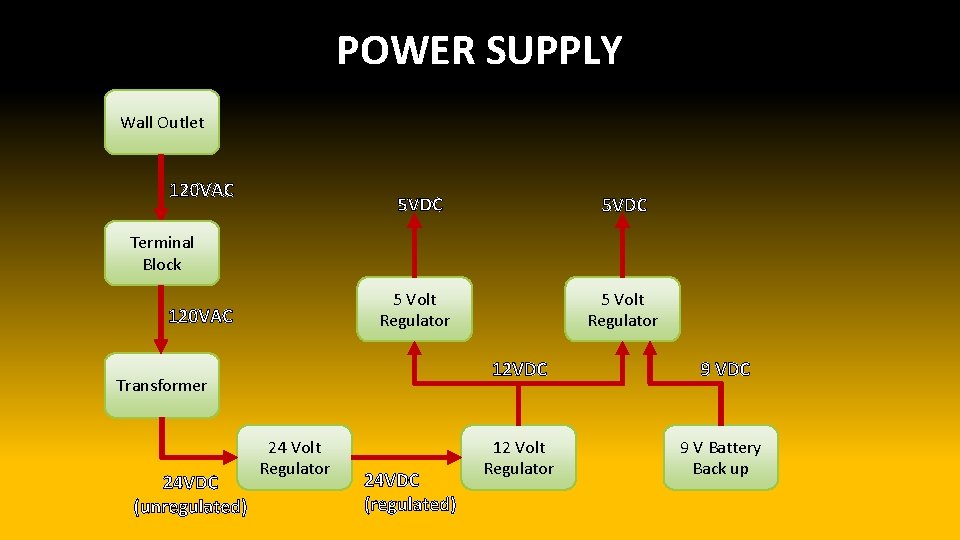
POWER SUPPLY Wall Outlet 120 VAC 5 VDC Terminal Block 5 Volt Regulator 120 VAC Transformer 24 VDC (unregulated) 24 Volt Regulator 24 VDC (regulated) 5 Volt Regulator 12 VDC 9 VDC 12 Volt Regulator 9 V Battery Back up
Battery Backup System • Only for MCU in the case of temporary power losses in fermenting phase • 9 Volt battery, 500 m. Ah • Will meet the 4 hour specification • Exceeding 4 hours causes system time to reset

Administrative
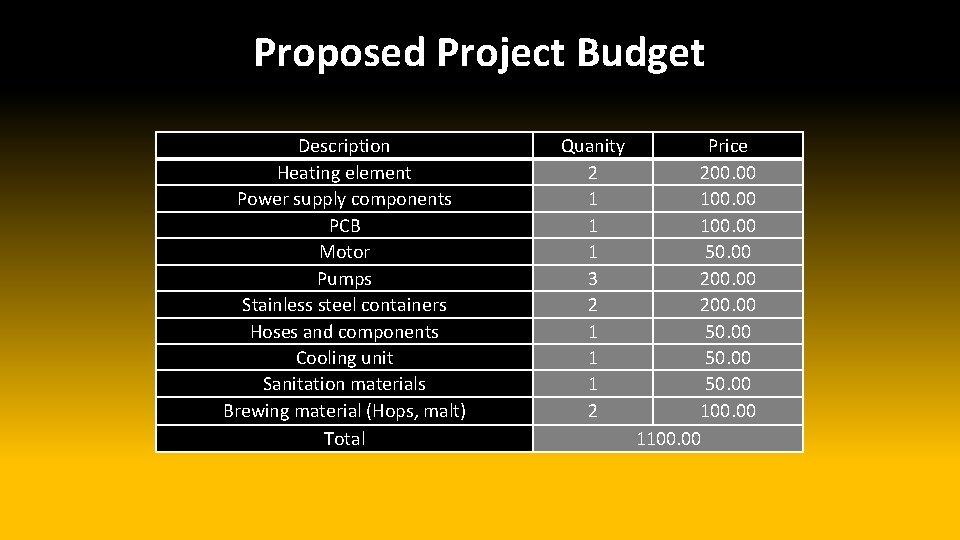
Proposed Project Budget Description Heating element Power supply components PCB Motor Pumps Stainless steel containers Hoses and components Cooling unit Sanitation materials Brewing material (Hops, malt) Total Quanity 2 1 1 1 3 2 1 1 1 2 Price 200. 00 100. 00 50. 00 200. 00 50. 00 100. 00 1100. 00
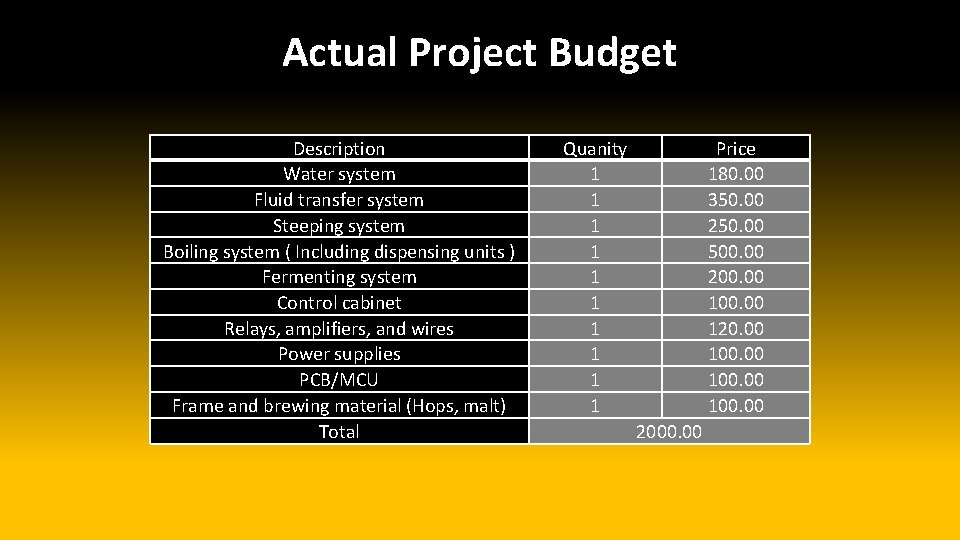
Actual Project Budget Description Water system Fluid transfer system Steeping system Boiling system ( Including dispensing units ) Fermenting system Control cabinet Relays, amplifiers, and wires Power supplies PCB/MCU Frame and brewing material (Hops, malt) Total Quanity 1 1 1 1 1 Price 180. 00 350. 00 250. 00 500. 00 200. 00 120. 00 100. 00 2000. 00
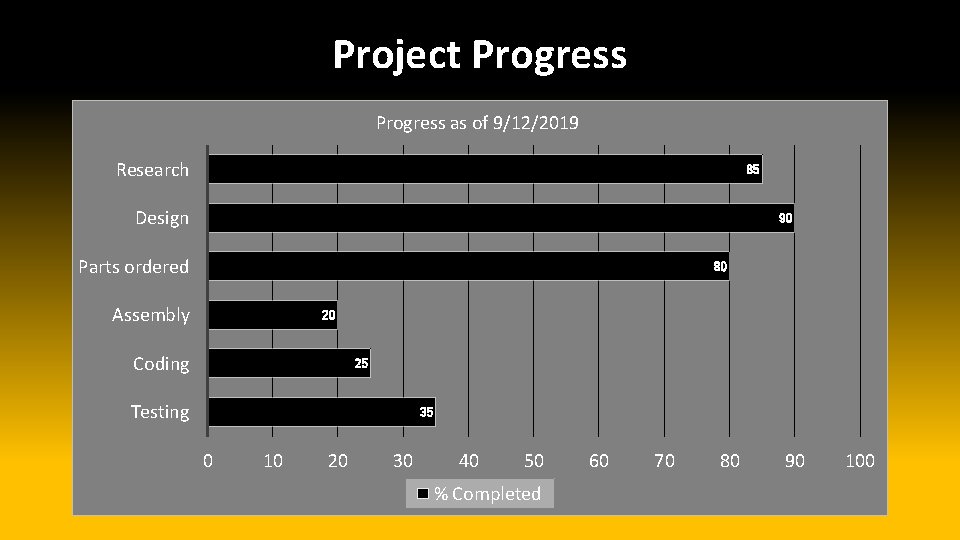
Project Progress as of 9/12/2019 Research 85 Design 90 Parts ordered 80 Assembly 20 Coding 25 Testing 35 0 10 20 30 40 50 % Completed 60 70 80 90 100
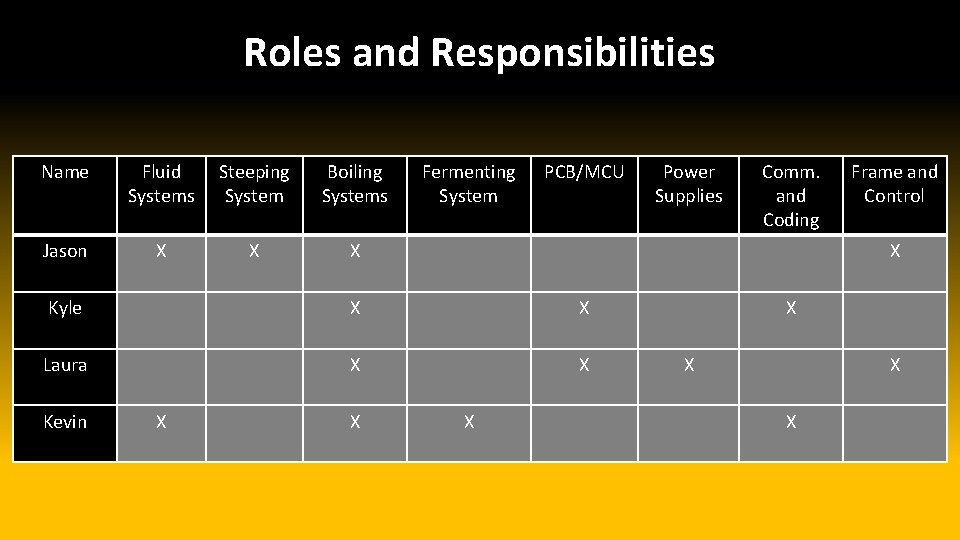
Roles and Responsibilities Name Fluid Systems Steeping System Boiling Systems Jason X X X Fermenting System PCB/MCU X X Laura X X Comm. and Coding Frame and Control X Kyle Kevin Power Supplies X X X
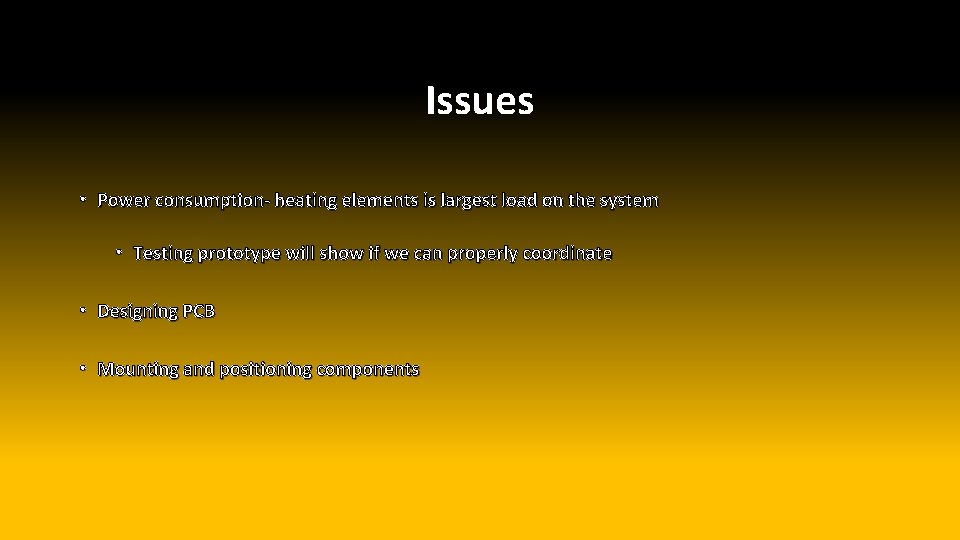
Issues • Power consumption- heating elements is largest load on the system • Testing prototype will show if we can properly coordinate • Designing PCB • Mounting and positioning components
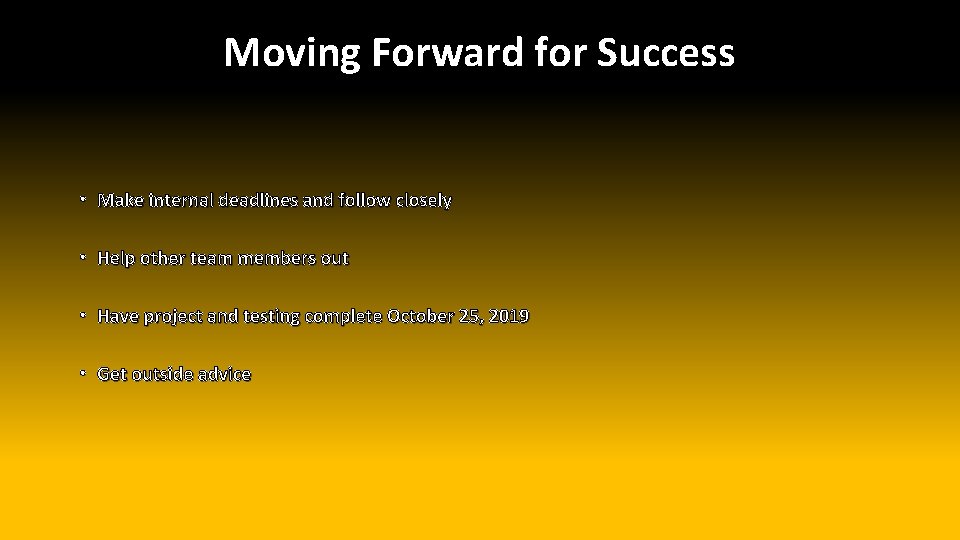
Moving Forward for Success • Make internal deadlines and follow closely • Help other team members out • Have project and testing complete October 25, 2019 • Get outside advice

Questions?
- Slides: 41