
Groundwater Unit 4 Gradational Processes Ms Thind What





- Slides: 14
Groundwater Unit 4: Gradational Processes Ms. Thind
What is groundwater? • fresh water (from rain or melting ice and snow) that soaks into the soil and is stored in the tiny spaces between rocks and particles of soil. • can stay underground for hundreds of thousands of years, or it can come to the surface and help fill rivers, streams, lakes, ponds, and wetlands. • can also come to the surface as a spring or be pumped from a well. • Both of these are common ways we get water for municipal, domestic, and agricultural purposes.
Groundwater • Groundwater is dependent on the permeability and porosity of rock layers. • Permeability: refers to how fast water can pass through rock layers. • Porosity: refers to the portion of open spaces in the soil material.
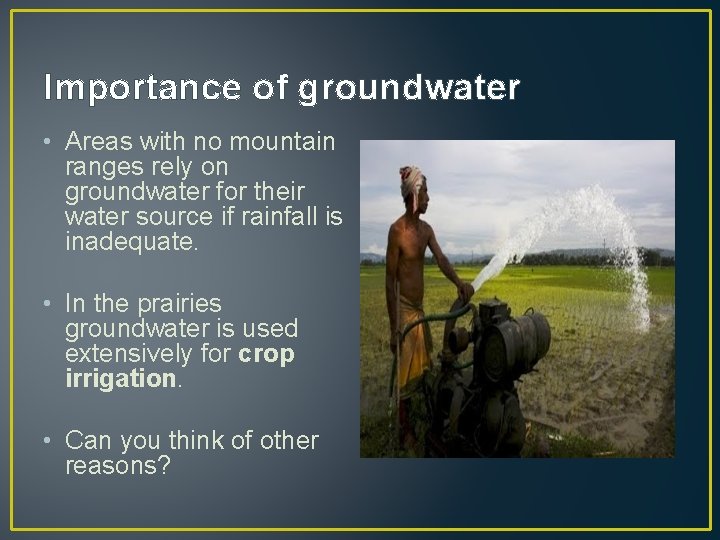
Importance of groundwater • Areas with no mountain ranges rely on groundwater for their water source if rainfall is inadequate. • In the prairies groundwater is used extensively for crop irrigation. • Can you think of other reasons?
Groundwater zones: • When water infiltrates the ground a section of rock becomes saturated zone of saturation this is the groundwater. • The top of the saturated rock/soil is the water table. • The portion of rock that is not 100% saturated is called the zone aeration.
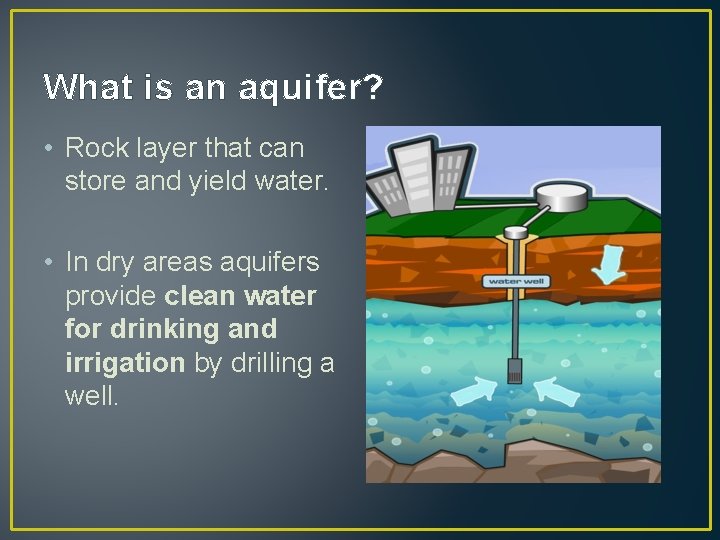
What is an aquifer? • Rock layer that can store and yield water. • In dry areas aquifers provide clean water for drinking and irrigation by drilling a well.
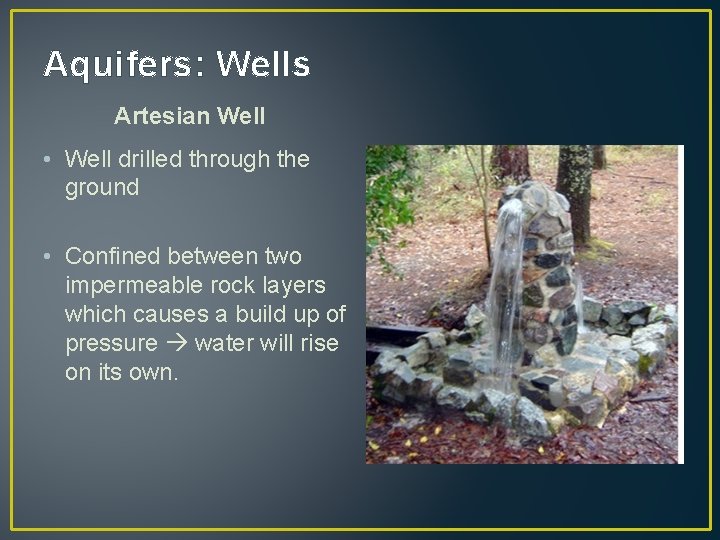
Aquifers: Wells Artesian Well • Well drilled through the ground • Confined between two impermeable rock layers which causes a build up of pressure water will rise on its own.
Aquifers: Wells Ordinary Wells: • Located in-between permeable rock. • Water is not under pressure and is forced to rise with a pump.
Landforms created by groundwater Travertine Terraces: • Layered deposits of rock • Found in areas where there is an abundant amount of hot groundwater. • Hot water carries dissolved material and when it reaches the surface it quickly cools and deposits minerals on existing rock. http: //www. atlasofwonders. com/2012/11/travertineterraces. html
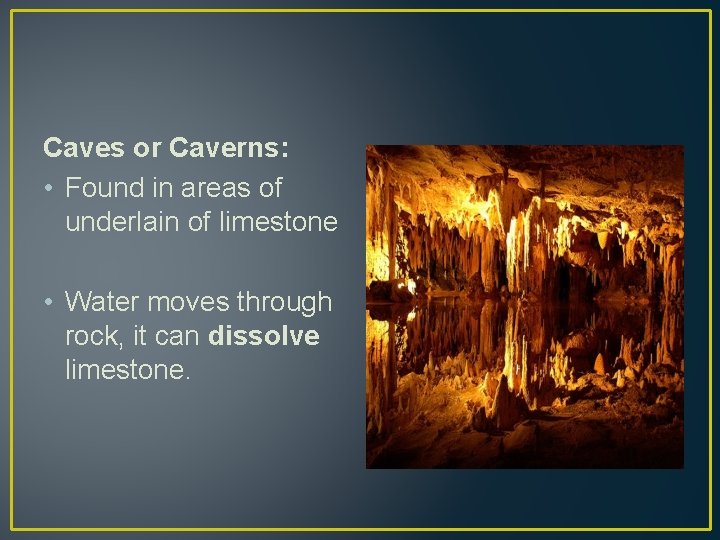
Caves or Caverns: • Found in areas of underlain of limestone • Water moves through rock, it can dissolve limestone.
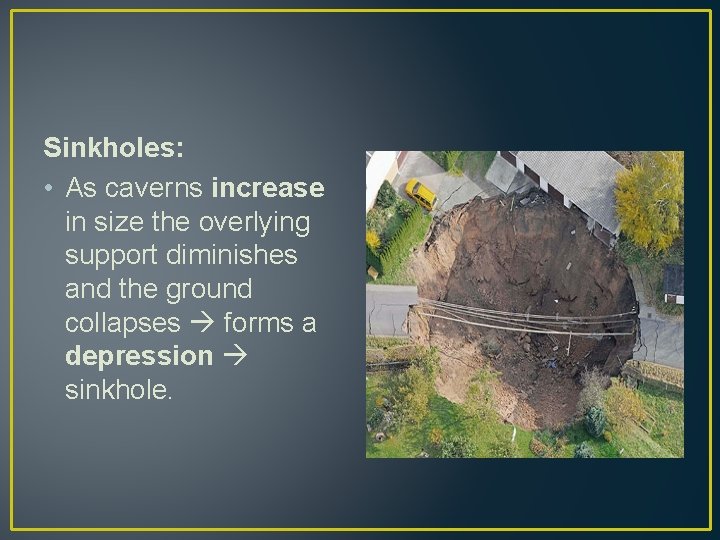
Sinkholes: • As caverns increase in size the overlying support diminishes and the ground collapses forms a depression sinkhole.
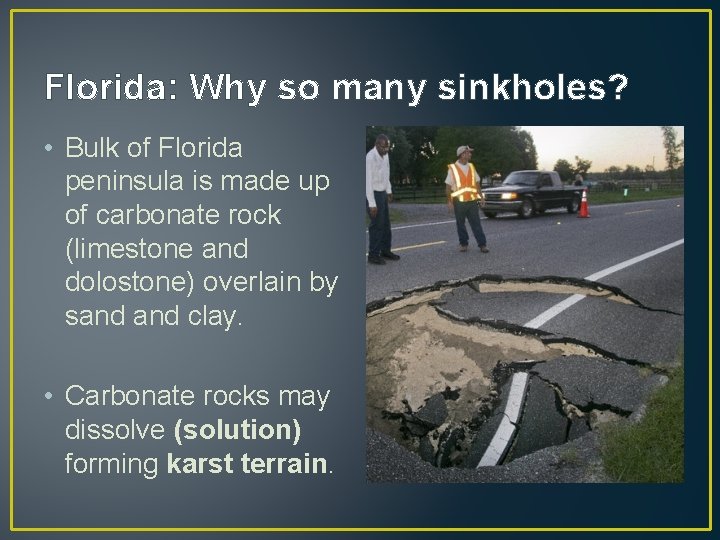
Florida: Why so many sinkholes? • Bulk of Florida peninsula is made up of carbonate rock (limestone and dolostone) overlain by sand clay. • Carbonate rocks may dissolve (solution) forming karst terrain.
• https: //www. youtube. com/watch? v=t. Qvv 8 YFCGs. Y
Key Terms use pgs. 145 -149 Permeability Porosity Zone of saturation Zone of aeration Water table Ordinary well Artesian well Aquifer Cave or cavern Travertine terraces Sinkhole