
Groundwater Groundwater Terminology Confined and Unconfined Aquifers Saturated





- Slides: 64
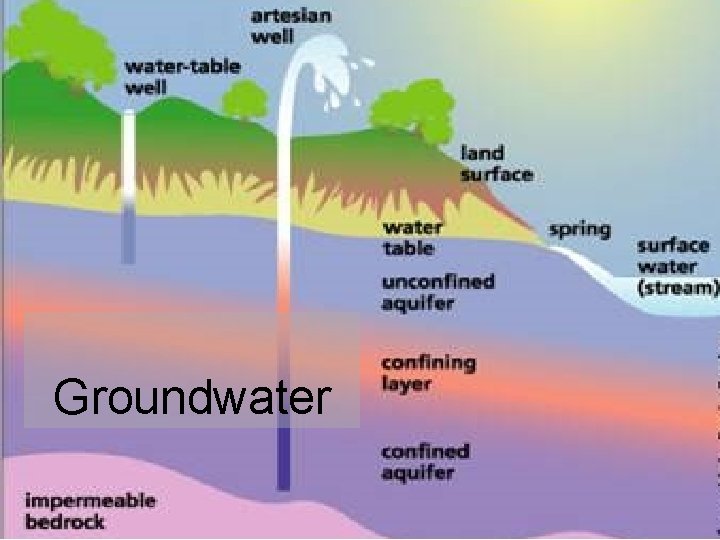
Groundwater
Groundwater Terminology • Confined and Unconfined Aquifers • Saturated Zone, Unsaturated Zone, Aerated/Transition Zone • Porosity and Permeability • Fresh or Salt water • Cone of Depression • Artisanal Well • Subsidence and Sinkholes
Groundwater and Permeability
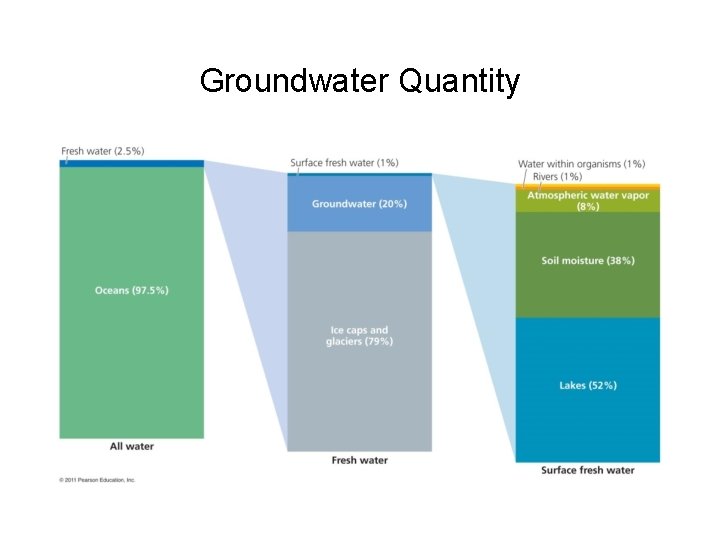
Groundwater Quantity
Groundwater Facts • Freshwater is found under ground, in rivers, lakes, icebergs, icecaps, swamps, and from rain fall • Fresh groundwater makes up about 20% of the total freshwater on Earth • Fresh groundwater only makes up 0. 76% of all water on Earth • There is approximately 3. 5 x as much freshwater stored in glaciers and icecaps than groundwater • 7. 7 quintillion (7. 7 x 10¹⁸) gallons compared with 2. 2 quintillion gallons
Aquifers/Groundwater • Groundwater is: • Contained in an aquifer • collects in loose gravel and/or soil above a strata of low permeability (the water can’t get through) and is called an unconfined aquifer or • Is overlaid with a strata of low permeability (essentially tapping for hundreds of thousands or millions of years until tapped) and is called a confined aquifer
Aquifers/Groundwater • Groundwater is not: • If it discharges from an aquifer, it is no longer considered groundwater. • It is called a spring if the water flows out of the ground due to gravity • It is called an artisanal well if water flows out of the ground under pressure (from a confined aquifer) • Can be called “well water” if a hole is drilled or dug to a level below the water table in order to allow easy access to it.
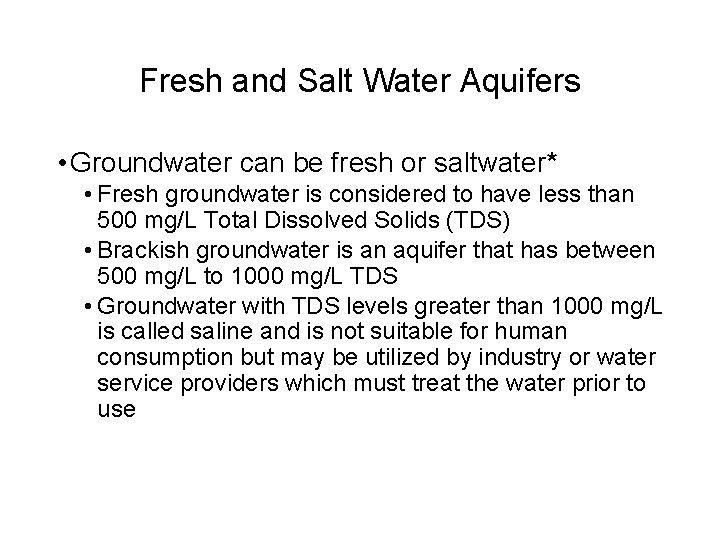
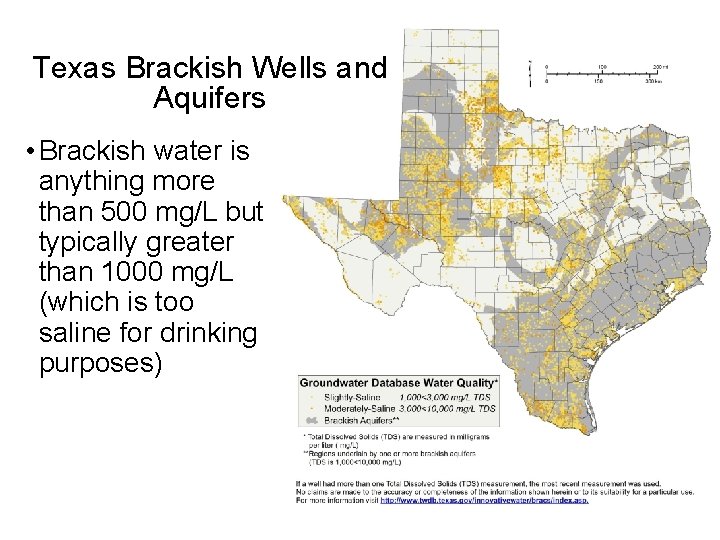
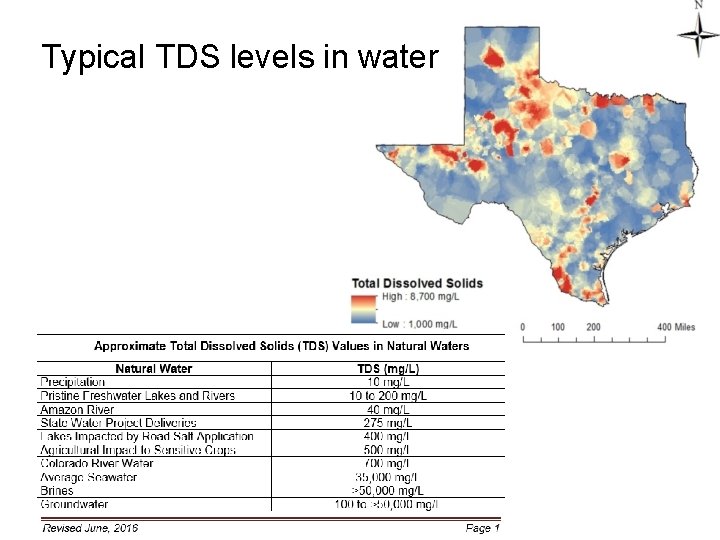
Fresh and Salt Water Aquifers • Groundwater can be fresh or saltwater* • Fresh groundwater is considered to have less than 500 mg/L Total Dissolved Solids (TDS) • Brackish groundwater is an aquifer that has between 500 mg/L to 1000 mg/L TDS • Groundwater with TDS levels greater than 1000 mg/L is called saline and is not suitable for human consumption but may be utilized by industry or water service providers which must treat the water prior to use
Groundwater in the US
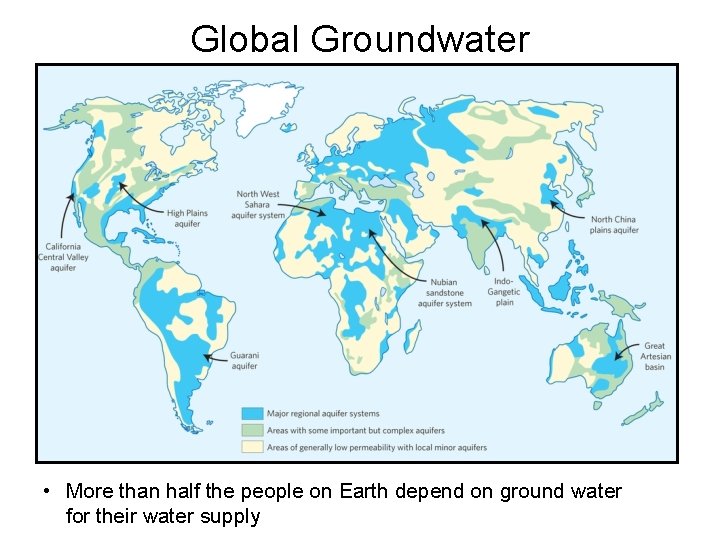
Global Groundwater • More than half the people on Earth depend on ground water for their water supply
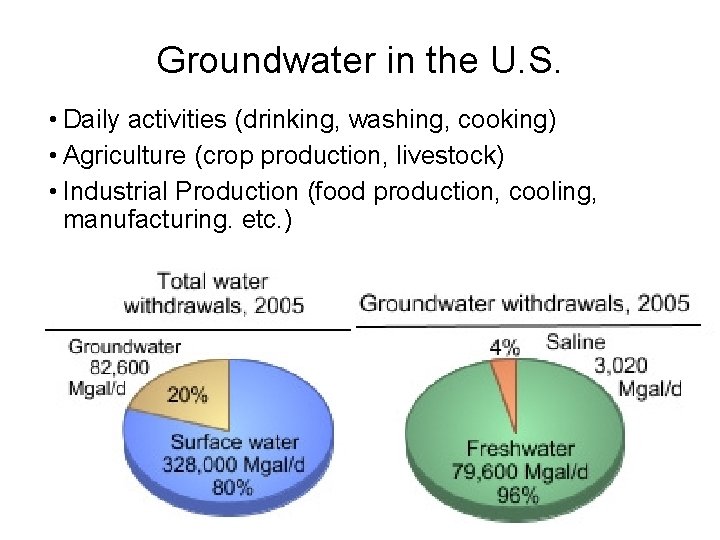
Groundwater in the U. S. • Daily activities (drinking, washing, cooking) • Agriculture (crop production, livestock) • Industrial Production (food production, cooling, manufacturing. etc. )
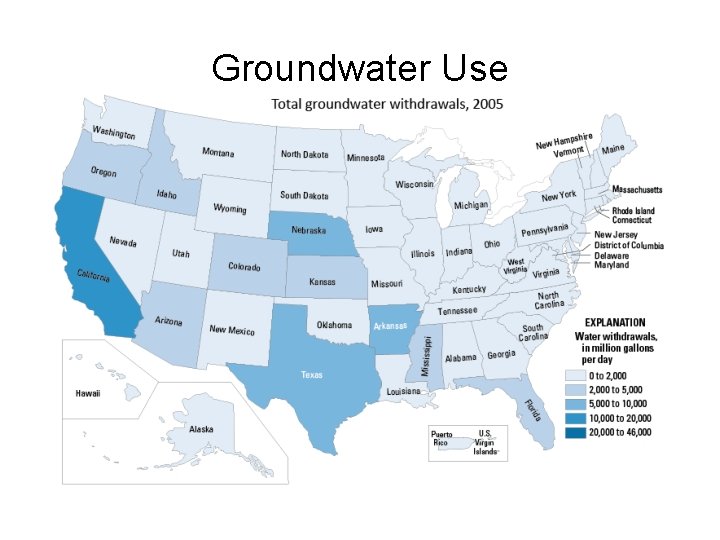
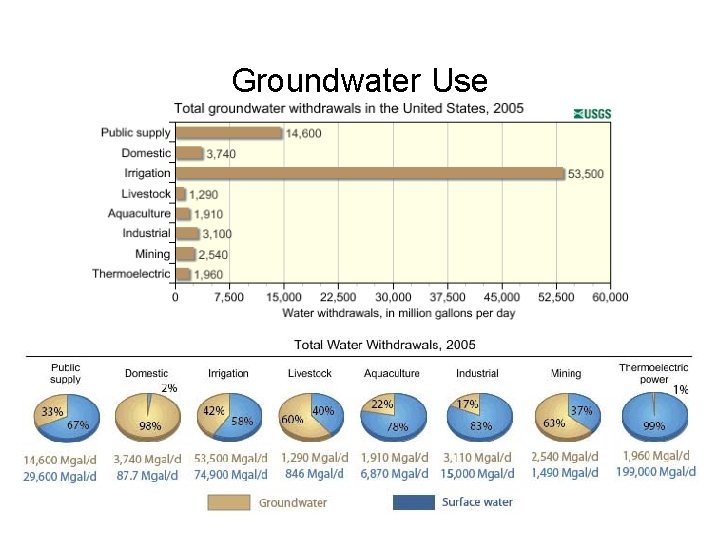
Groundwater Use
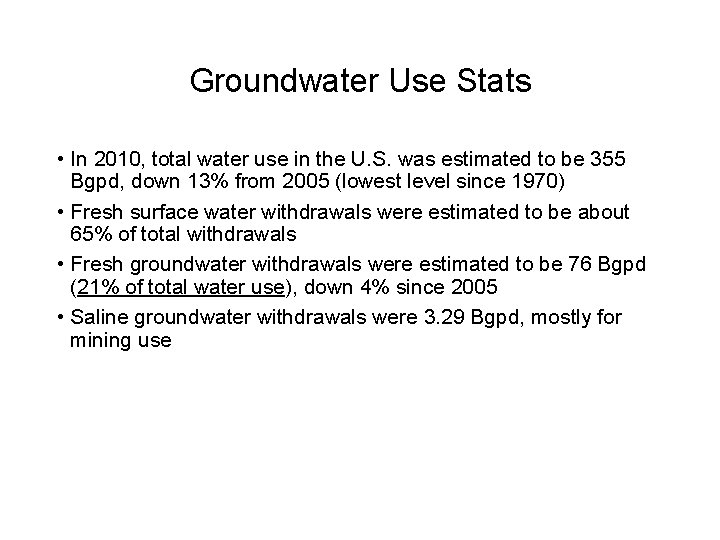
Groundwater Use Stats • In 2010, total water use in the U. S. was estimated to be 355 Bgpd, down 13% from 2005 (lowest level since 1970) • Fresh surface water withdrawals were estimated to be about 65% of total withdrawals • Fresh groundwater withdrawals were estimated to be 76 Bgpd (21% of total water use), down 4% since 2005 • Saline groundwater withdrawals were 3. 29 Bgpd, mostly for mining use
Groundwater Use
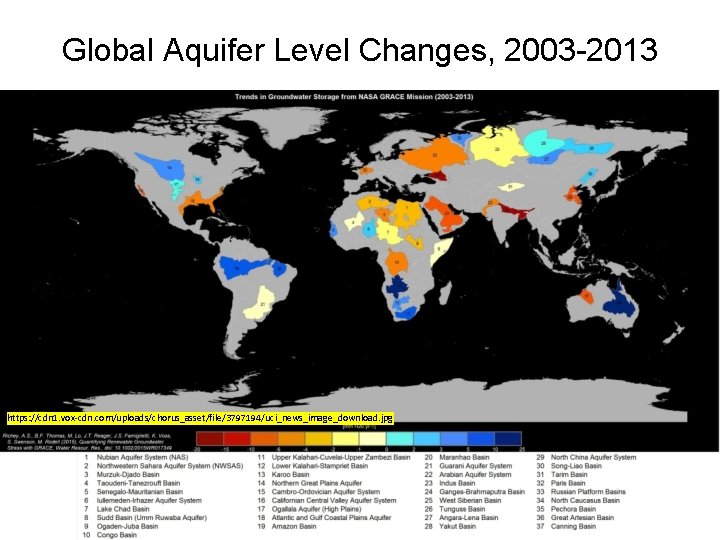
Global Aquifer Level Changes, 2003 -2013 https: //cdn 1. vox-cdn. com/uploads/chorus_asset/file/3797194/uci_news_image_download. jpg
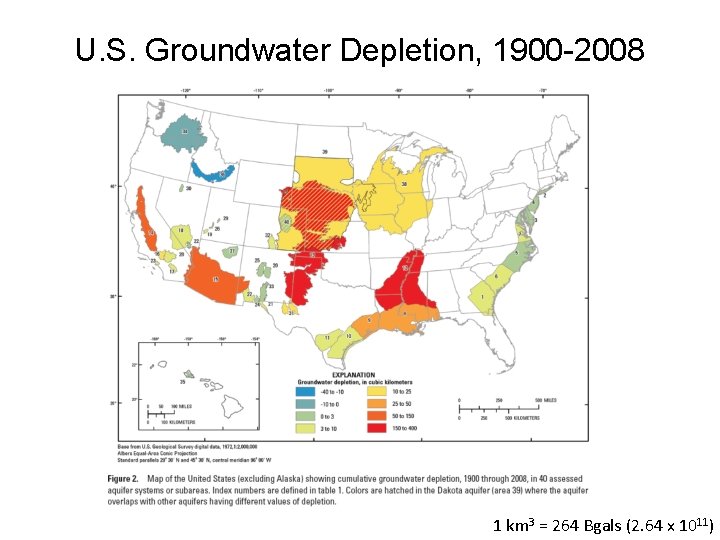
U. S. Groundwater Depletion, 1900 -2008 1 km 3 = 264 Bgals (2. 64 x 1011)
Texas Groundwater • Texas mostly relies on groundwater for its water needs • Texas Water Development Board (TWDB) reviews and approves groundwater management plans and advises on best management practices • 36% of municipal demand is from groundwater • 59% overall use in state is from groundwater • About 140, 000 water wells documented • North Texas (DFW area) relies mostly on surface waters
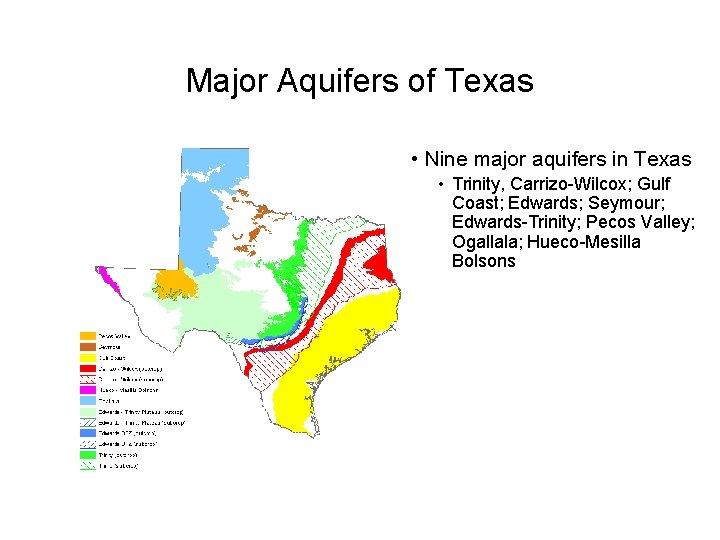
Major Aquifers of Texas • Nine major aquifers in Texas • Trinity, Carrizo-Wilcox; Gulf Coast; Edwards; Seymour; Edwards-Trinity; Pecos Valley; Ogallala; Hueco-Mesilla Bolsons
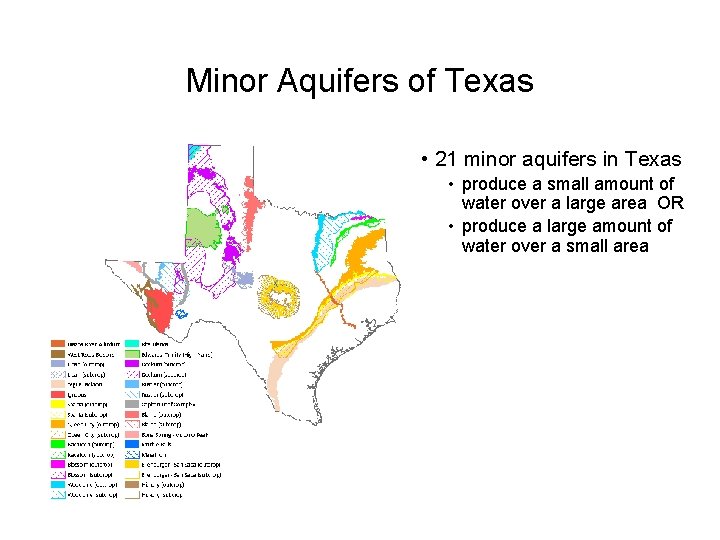
Minor Aquifers of Texas • 21 minor aquifers in Texas • produce a small amount of water over a large area OR • produce a large amount of water over a small area
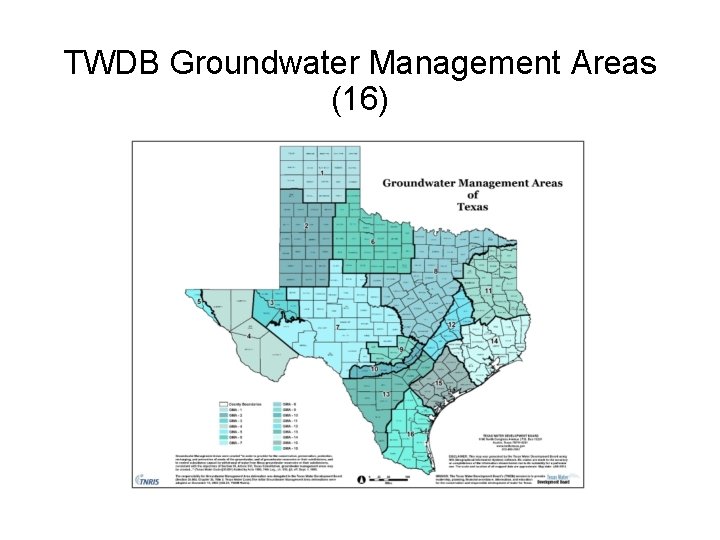
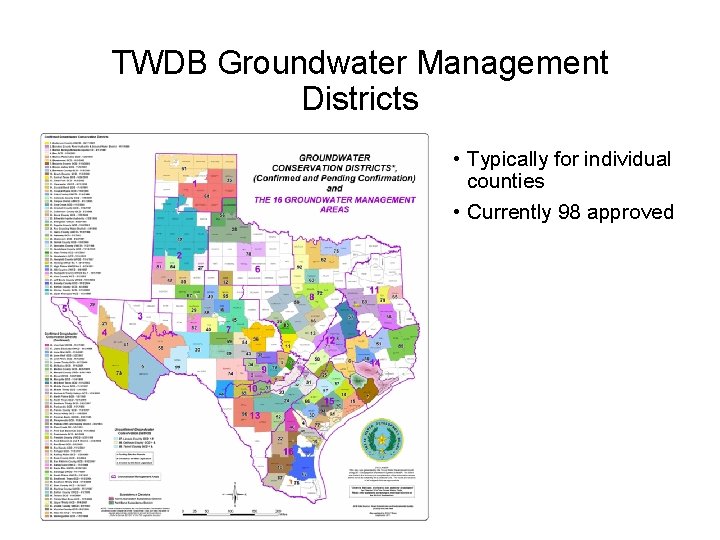
TWDB Groundwater Management Areas (16)
TWDB Groundwater Management Districts • Typically for individual counties • Currently 98 approved
Groundwater Conservation District Plans • Describe a district’s groundwater management goals • include providing the most efficient use of groundwater • controlling and preventing waste of groundwater • controlling and preventing subsidence • addressing conjunctive surface water management issues (optimized use and storage) • addressing natural resource issues • addressing drought conditions • and addressing conservation, groundwater recharge, and desired future aquifer conditions (Texas Administrative Code § 356. 52).
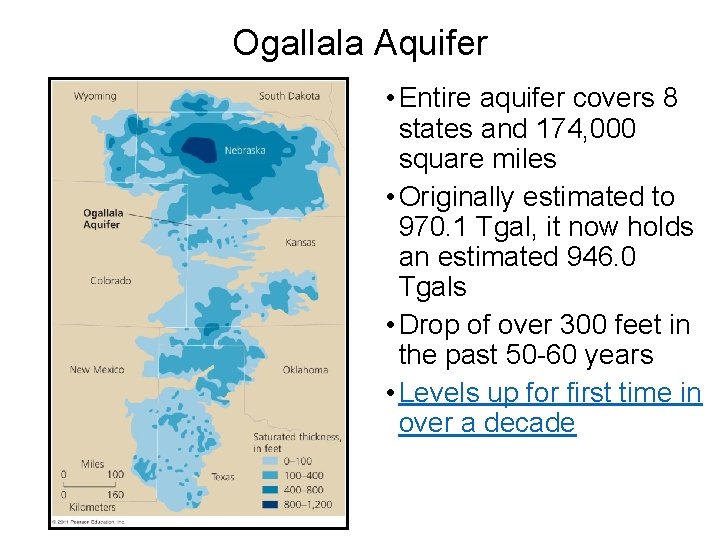
Ogallala Aquifer • Entire aquifer covers 8 states and 174, 000 square miles • Originally estimated to 970. 1 Tgal, it now holds an estimated 946. 0 Tgals • Drop of over 300 feet in the past 50 -60 years • Levels up for first time in over a decade
Ogallala Aquifer continued • In Texas, 82% of population in Ogallala Aquifer area rely on it as primary source of drinking water • Primary source for Lubbock, Amarillo, and all other cities (and farmers) in area • 95% of groundwater pumped is used for irrigation (compared with 79% statewide groundwater use for irrigation) • Quality in Texas: • North of Canadian River (Northern Texas Panhandle) TDS levels <400 mg/L • The further south, TDS levels can be above 1000 mg/L
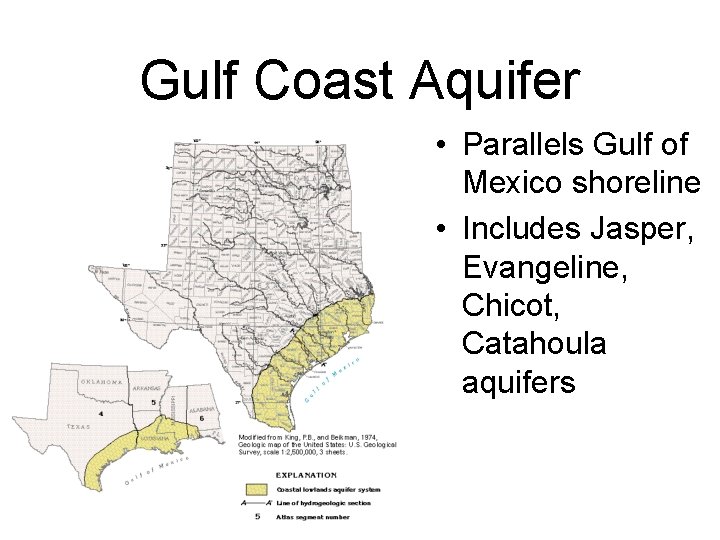
Gulf Coast Aquifer • Parallels Gulf of Mexico shoreline • Includes Jasper, Evangeline, Chicot, Catahoula aquifers
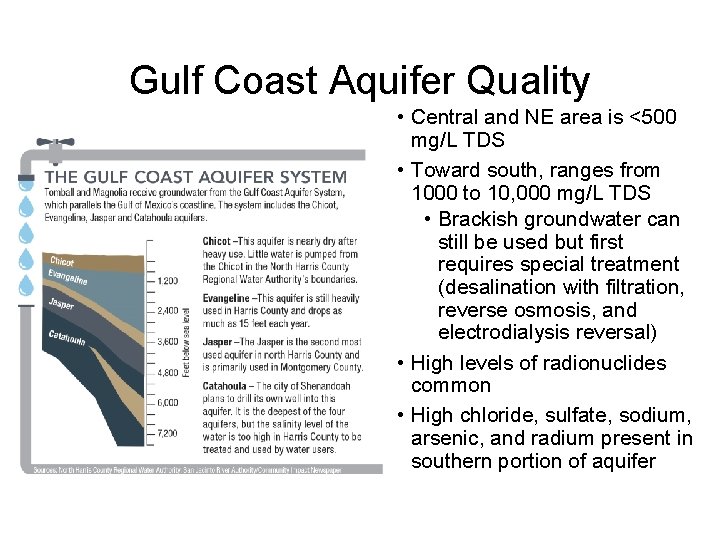
Gulf Coast Aquifer Quality • Central and NE area is <500 mg/L TDS • Toward south, ranges from 1000 to 10, 000 mg/L TDS • Brackish groundwater can still be used but first requires special treatment (desalination with filtration, reverse osmosis, and electrodialysis reversal) • High levels of radionuclides common • High chloride, sulfate, sodium, arsenic, and radium present in southern portion of aquifer
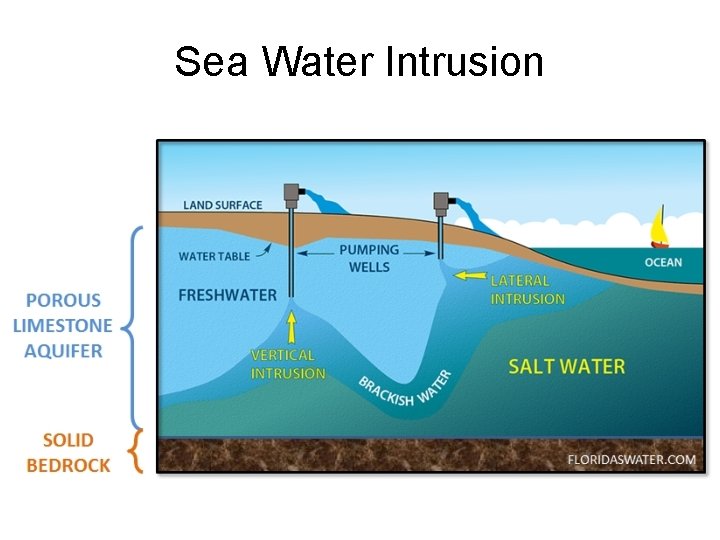
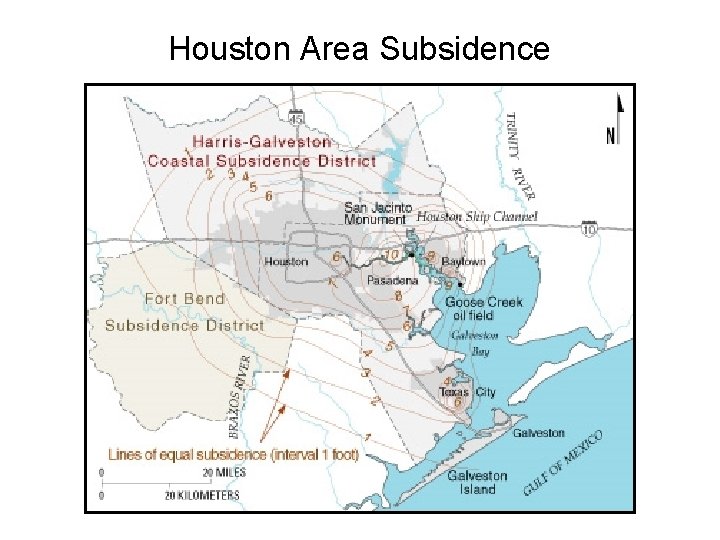
Gulf Coast Aquifer Status • Aquifer levels have dropped as much as 350 feet in some areas near Houston leading to land subsidence • Seawater Intrusion • In some locations, groundwater overdraft (excessive pumping) has caused the natural groundwater gradient to reverse and has allowed seawater to intrude coastal aquifers that historically contained only fresh water. • Seawater intrusion can ruin drinking water and irrigation wells, and render some areas unsuitable for continued agriculture.
Sea Water Intrusion
Texas Brackish Wells and Aquifers • Brackish water is anything more than 500 mg/L but typically greater than 1000 mg/L (which is too saline for drinking purposes)
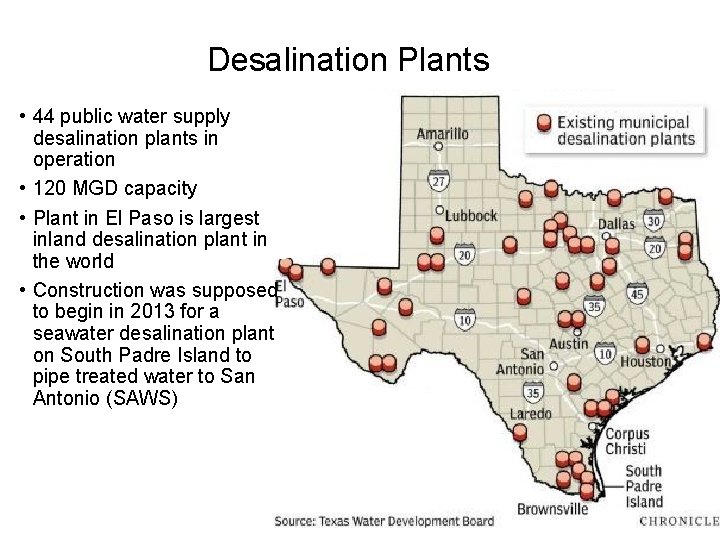
Desalination Plants • 44 public water supply desalination plants in operation • 120 MGD capacity • Plant in El Paso is largest inland desalination plant in the world • Construction was supposed to begin in 2013 for a seawater desalination plant on South Padre Island to pipe treated water to San Antonio (SAWS)
Typical TDS levels in water
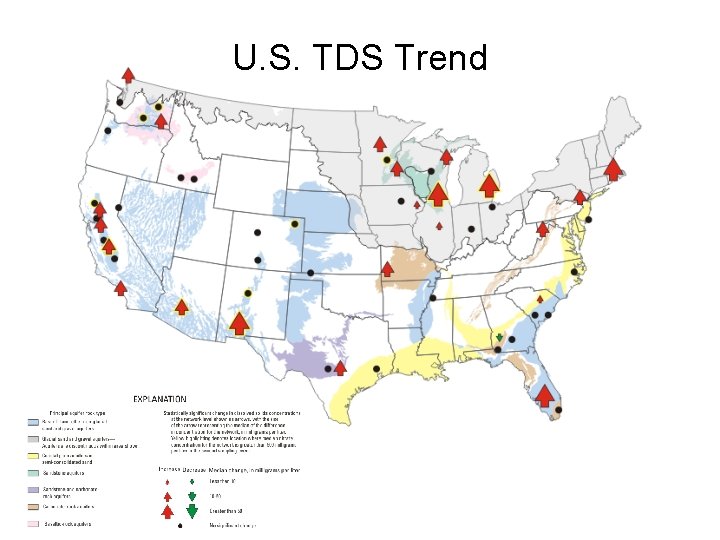
U. S. TDS Trend
TDS • Where they come from: • Salts enter groundwater naturally through dissolution of soil, rock, and organic material. • Application of synthetic fertilizers, manures, and wastewater treatment facilities can all contribute salt to surface and groundwater. • Why we care: • High concentrations of nitrate are a health threat. • High concentrations of salts can damage crops, affect plant growth, degrade drinking water, and damage home or industrial equipment.
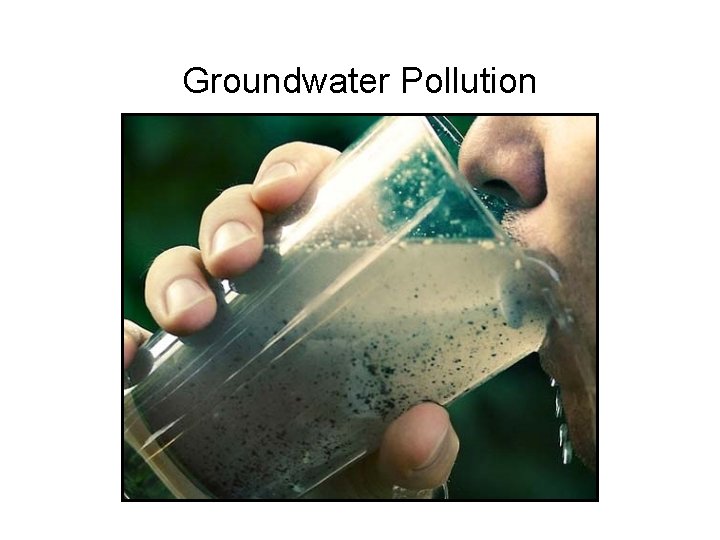
Groundwater Pollution
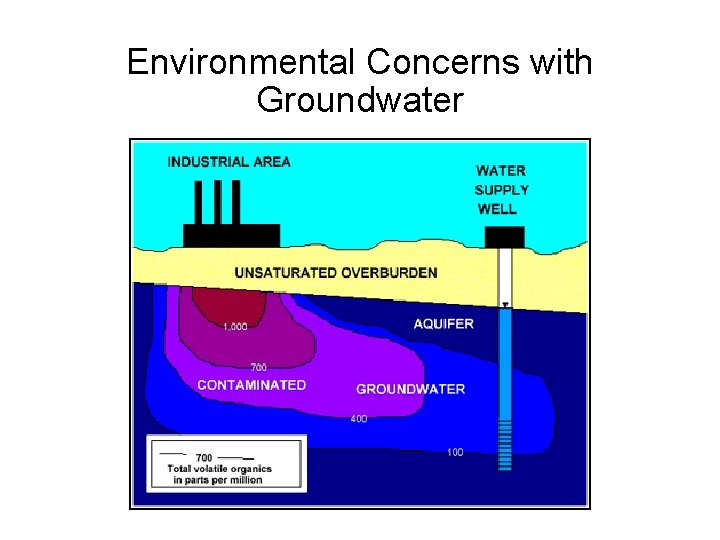
Environmental Concerns with Groundwater
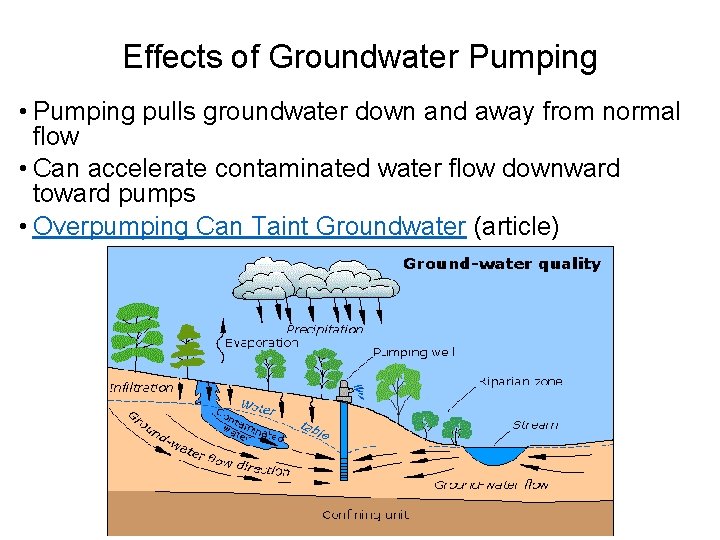
Effects of Groundwater Pumping • Pumping pulls groundwater down and away from normal flow • Can accelerate contaminated water flow downward toward pumps • Overpumping Can Taint Groundwater (article)
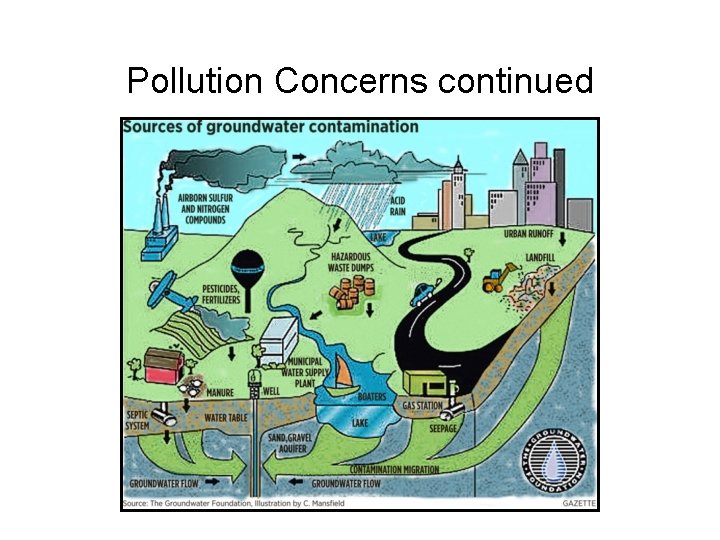
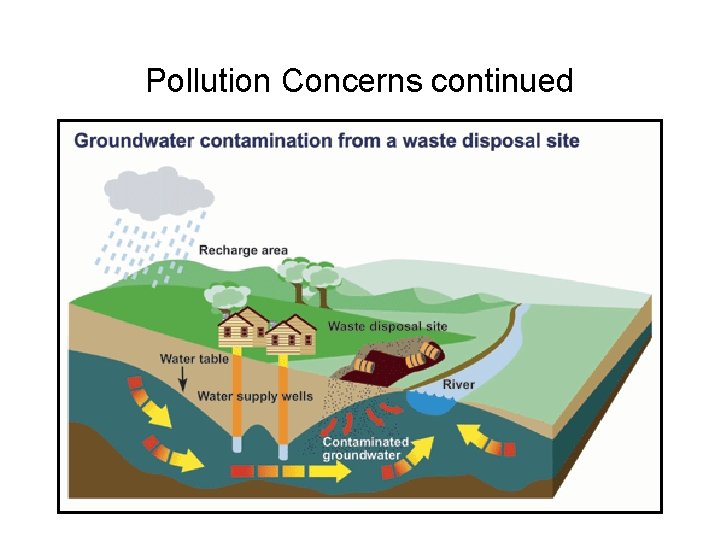
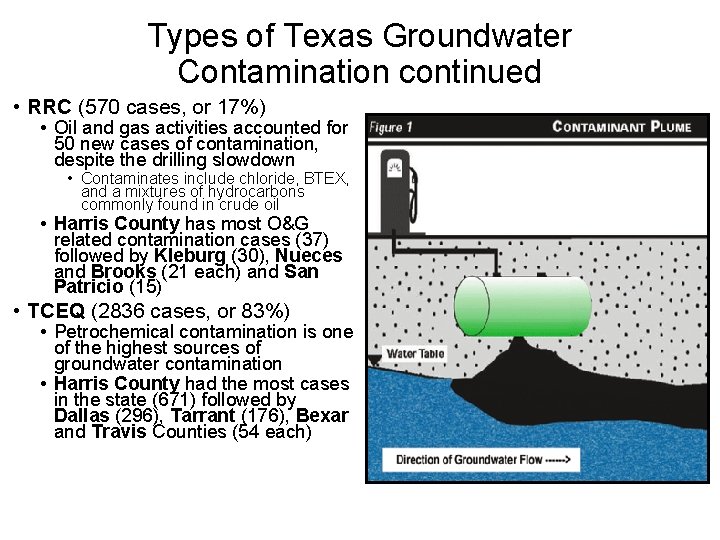
Pollution Concerns • Groundwater can be easily polluted by the things we dump whether intentionally or not • Buried or leaking chemical waste • Garbage from landfill • Unlined landfills/pits, etc. • Lead paint disposal • Insecticides from fields and bug killers from your garden • Leaking Underground or Petroleum Storage Tanks (U/PSTs) • It only takes one gallon of gasoline to pollute up to a million gallons of ground water
Pollution Concerns continued
Pollution Concerns continued
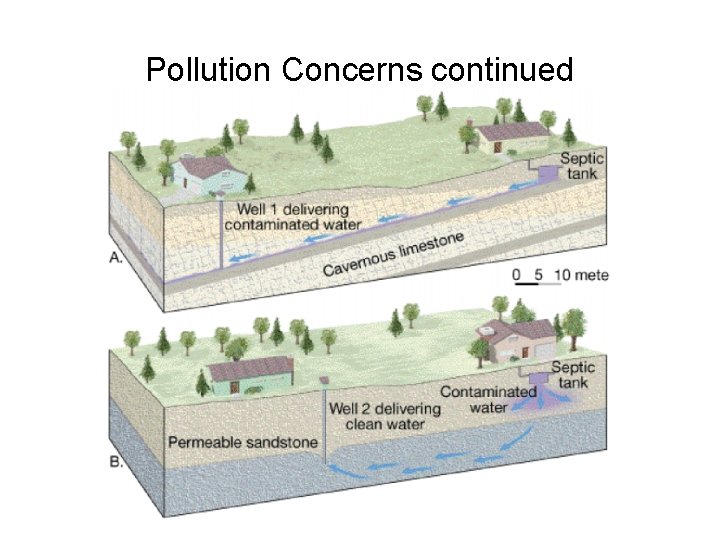
Pollution Concerns continued
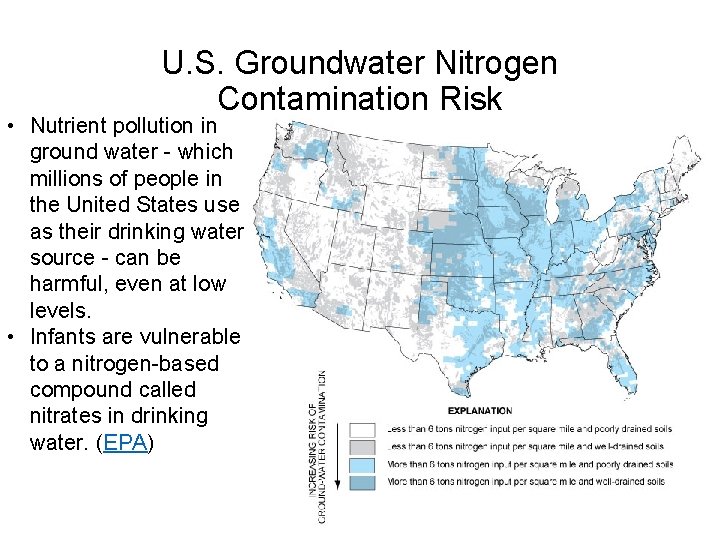
U. S. Groundwater Nitrogen Contamination Risk • Nutrient pollution in ground water - which millions of people in the United States use as their drinking water source - can be harmful, even at low levels. • Infants are vulnerable to a nitrogen-based compound called nitrates in drinking water. (EPA)
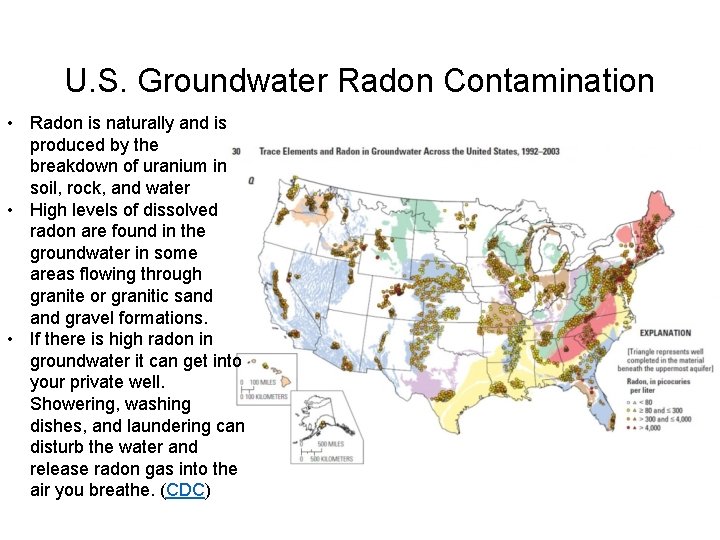
U. S. Groundwater Radon Contamination • Radon is naturally and is produced by the breakdown of uranium in soil, rock, and water • High levels of dissolved radon are found in the groundwater in some areas flowing through granite or granitic sand gravel formations. • If there is high radon in groundwater it can get into your private well. Showering, washing dishes, and laundering can disturb the water and release radon gas into the air you breathe. (CDC)
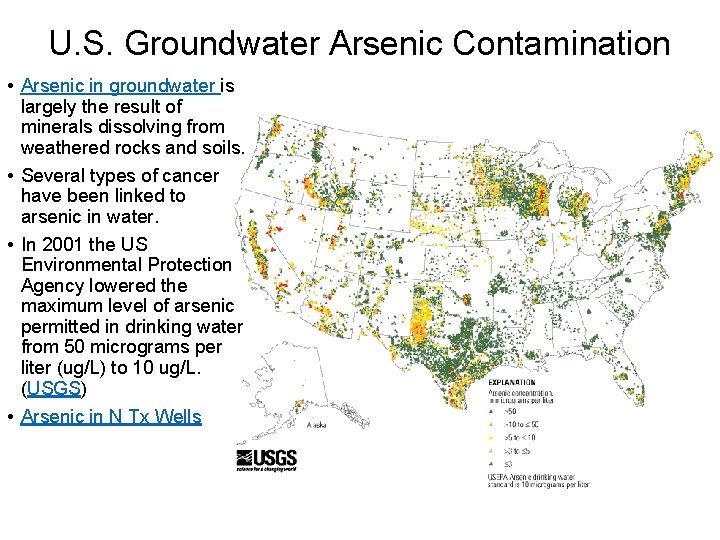
U. S. Groundwater Arsenic Contamination • Arsenic in groundwater is largely the result of minerals dissolving from weathered rocks and soils. • Several types of cancer have been linked to arsenic in water. • In 2001 the US Environmental Protection Agency lowered the maximum level of arsenic permitted in drinking water from 50 micrograms per liter (ug/L) to 10 ug/L. (USGS) • Arsenic in N Tx Wells
TWDB Groundwater Contaminant Ranking • Rank 1 – Severe Health Threat • Bacteria (gastroenteritis), typically due to fecal contamination • Nitrates (NO 3 -) and Nitrites (NO 2 -) (risk during pregnancy – blue baby syndrome), can also indicate fecal contamination • Rank 2 – Moderate Health Threat • Arsenic, Fluoride, Radionuclides (gross alpha, radium 226, radium 228), Uranium (non-radionuclide) • Rank 3 – Minimal Health Threat • VOCs, naturally occurring and anthropogenic • Pesticides • Sulfate (SO 4 -), can cause traveler’s diarrhea to people not acclimated to the water • Manganese, mostly causes colored water • Perchlorate (Cl. O 4 -), naturally occurring and anthropogenic (no EPA standard set) • Radon, more concern in air than water but radon in water can become airborne when agitated (TWDB)
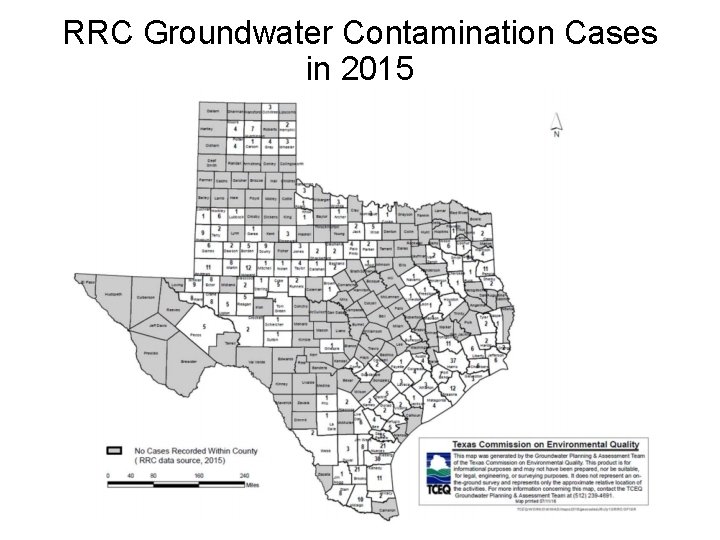
Types of Texas Groundwater Contamination continued • RRC (570 cases, or 17%) • Oil and gas activities accounted for 50 new cases of contamination, despite the drilling slowdown • Contaminates include chloride, BTEX, and a mixtures of hydrocarbons commonly found in crude oil • Harris County has most O&G related contamination cases (37) followed by Kleburg (30), Nueces and Brooks (21 each) and San Patricio (15) • TCEQ (2836 cases, or 83%) • Petrochemical contamination is one of the highest sources of groundwater contamination • Harris County had the most cases in the state (671) followed by Dallas (296), Tarrant (176), Bexar and Travis Counties (54 each)
RRC Groundwater Contamination Cases in 2015
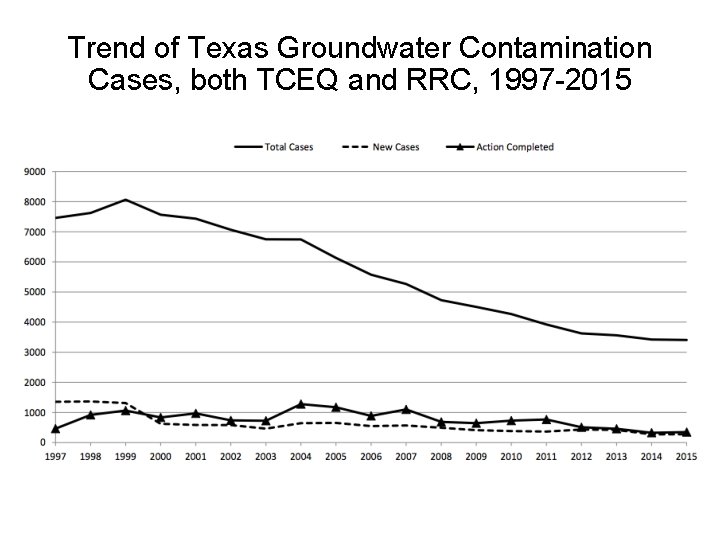
Trend of Texas Groundwater Contamination Cases, both TCEQ and RRC, 1997 -2015
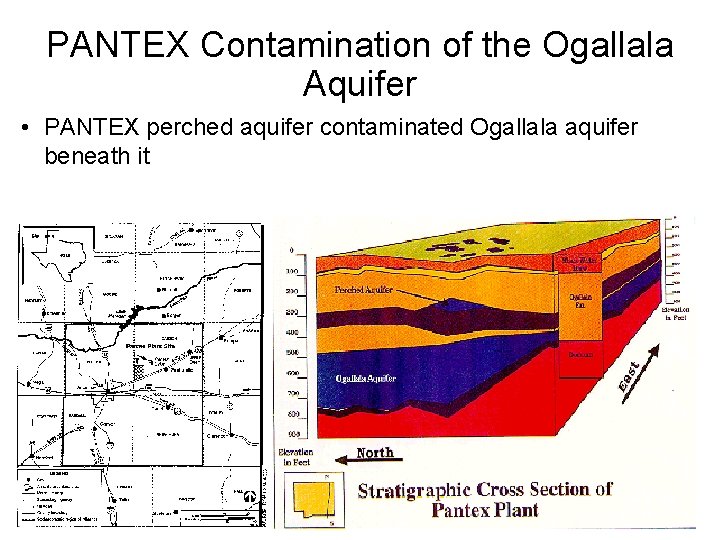
PANTEX Contamination of the Ogallala Aquifer • PANTEX perched aquifer contaminated Ogallala aquifer beneath it
Contamination of Ogallala Aquifer • Between 1954 and 1980 between 150, 000 to 300, 000 gallons of waste oil and solvents were disposed in unlined pits on the PANTEX site • High organic and explosive contaminants (mostly acetone and toluene) around site and down-gradient of pit area
Trinity Aquifer Contamination • Texas drinking water contaminated by natural gas operations (article) • Natural infiltration from gas-bearing formations • Clip from Gasland documentary • CBS Evening News: PA town blames contaminated water on fracking • Lighting well water on fire
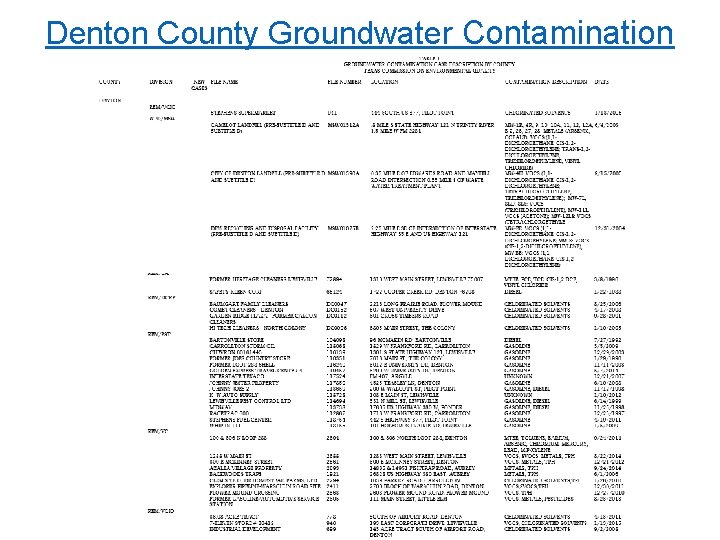
Denton County Groundwater Contamination
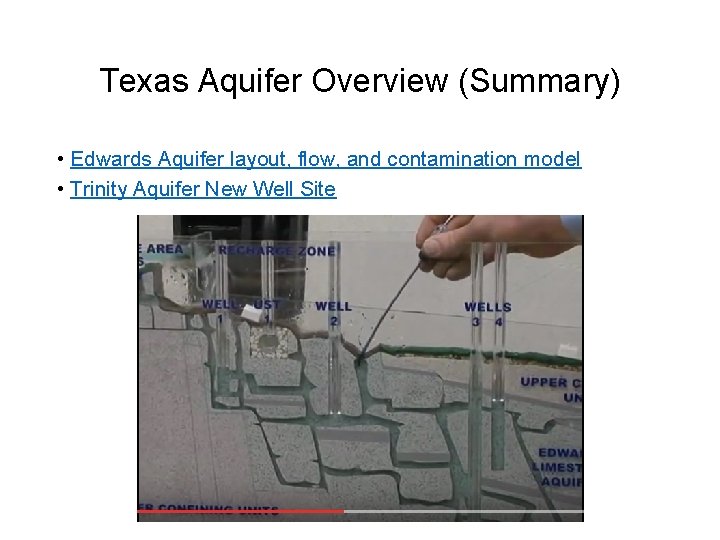
Texas Aquifer Overview (Summary) • Edwards Aquifer layout, flow, and contamination model • Trinity Aquifer New Well Site
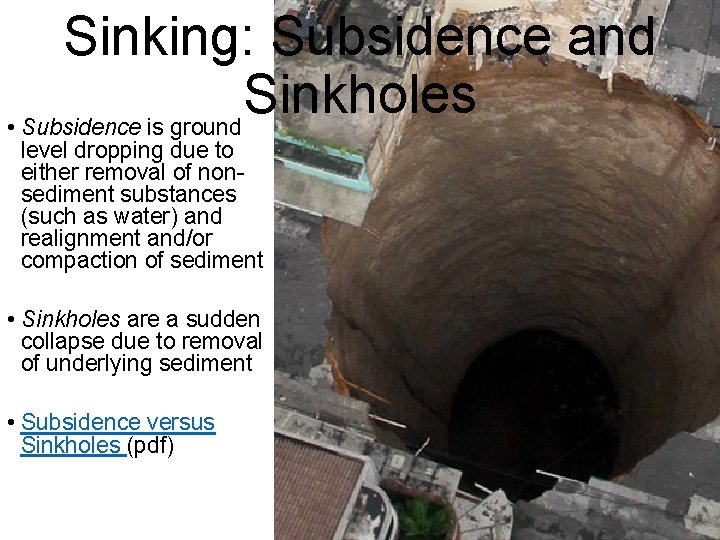
Sinking: Subsidence and Sinkholes • Subsidence is ground level dropping due to either removal of nonsediment substances (such as water) and realignment and/or compaction of sediment • Sinkholes are a sudden collapse due to removal of underlying sediment • Subsidence versus Sinkholes (pdf)
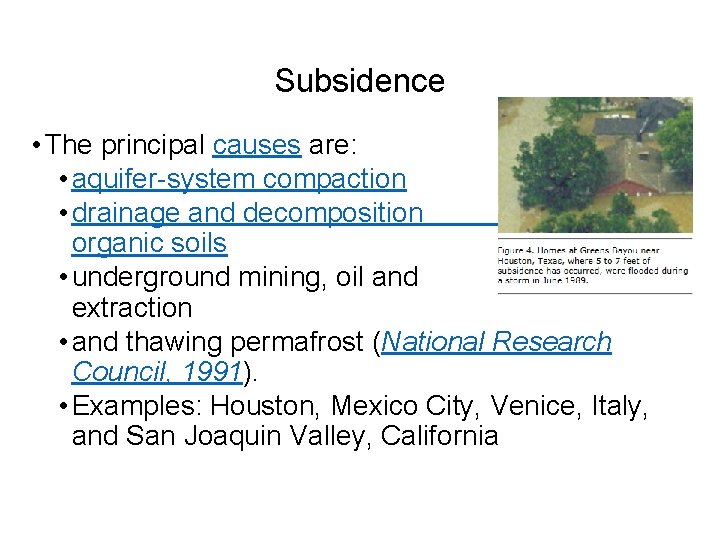
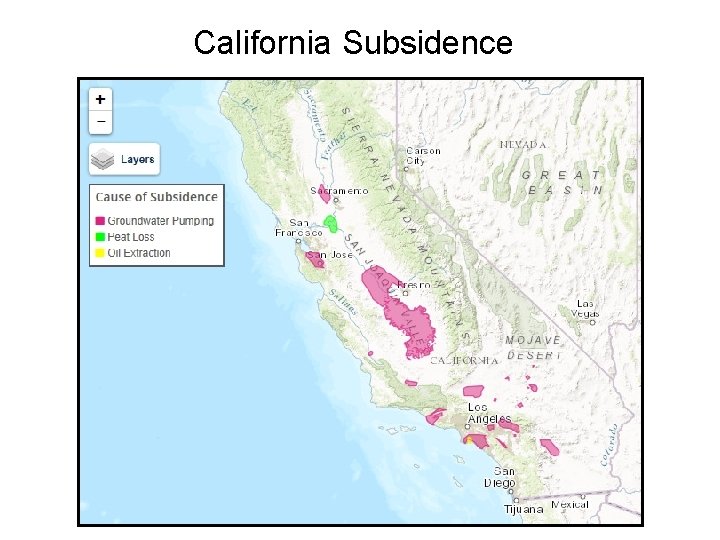
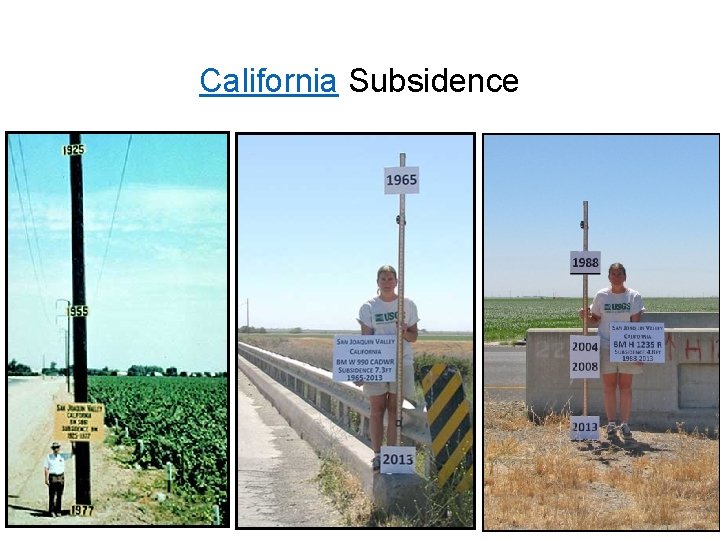
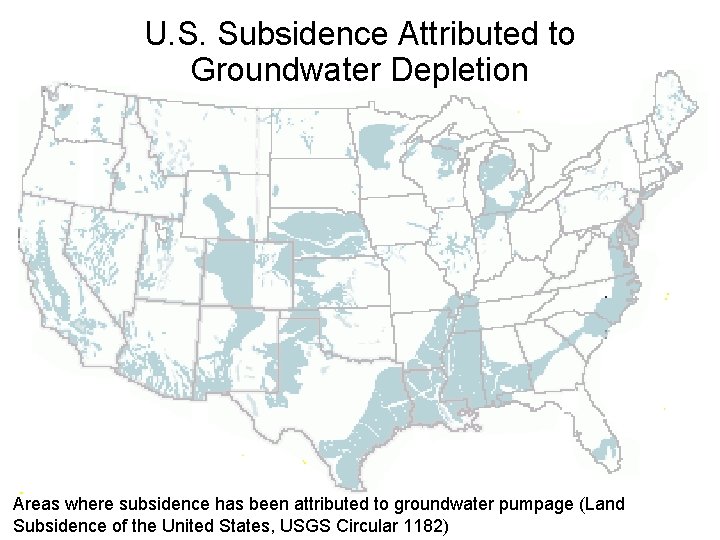
Subsidence • The principal causes are: • aquifer-system compaction • drainage and decomposition of organic soils • underground mining, oil and gas extraction • and thawing permafrost (National Research Council, 1991). • Examples: Houston, Mexico City, Venice, Italy, and San Joaquin Valley, California
Houston Area Subsidence
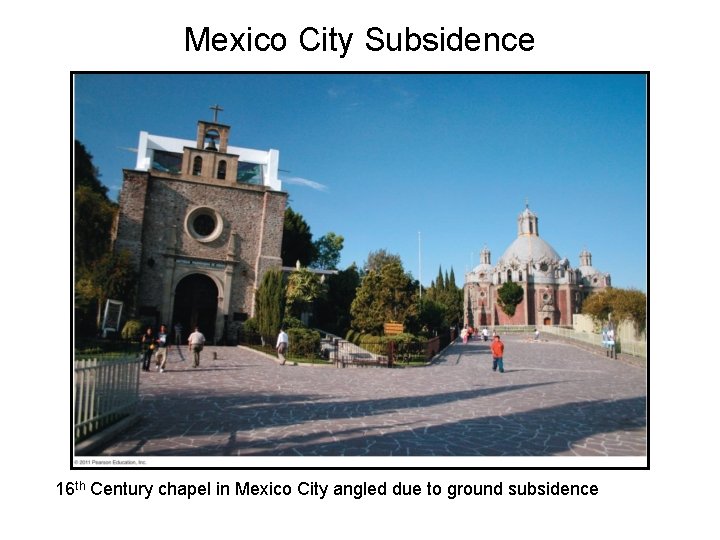
Mexico City Subsidence 16 th Century chapel in Mexico City angled due to ground subsidence
California Subsidence
California Subsidence
U. S. Subsidence Attributed to Groundwater Depletion Areas where subsidence has been attributed to groundwater pumpage (Land Subsidence of the United States, USGS Circular 1182)
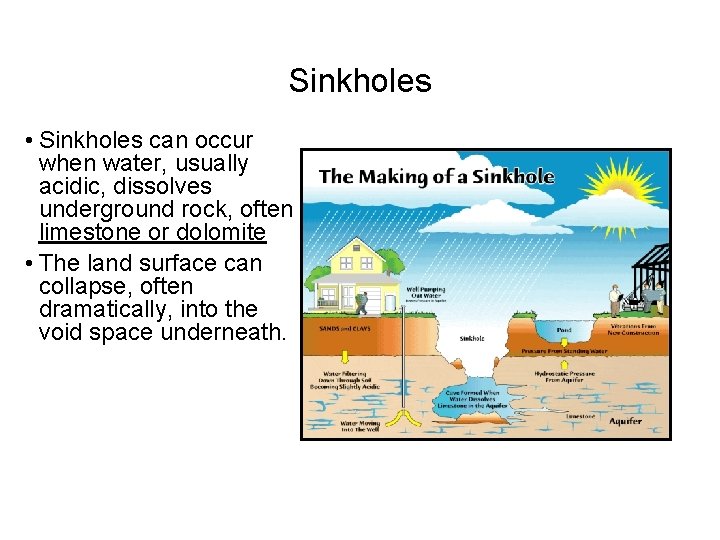
Sinkholes • Sinkholes can occur when water, usually acidic, dissolves underground rock, often limestone or dolomite • The land surface can collapse, often dramatically, into the void space underneath.
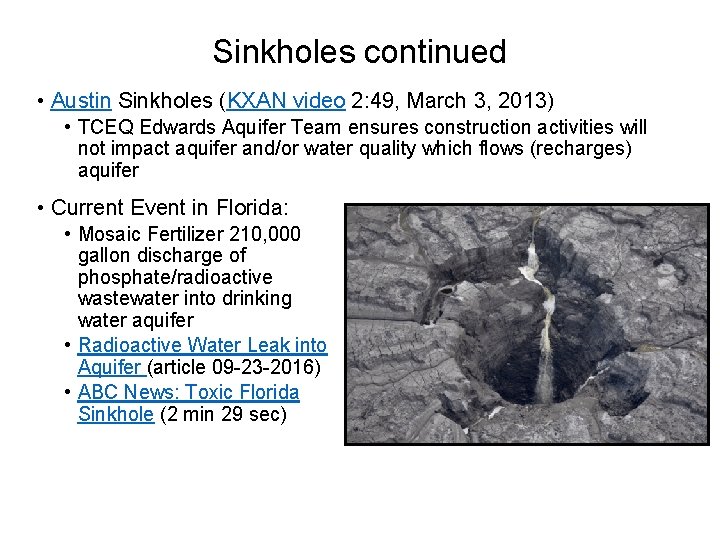
Sinkholes continued • Austin Sinkholes (KXAN video 2: 49, March 3, 2013) • TCEQ Edwards Aquifer Team ensures construction activities will not impact aquifer and/or water quality which flows (recharges) aquifer • Current Event in Florida: • Mosaic Fertilizer 210, 000 gallon discharge of phosphate/radioactive wastewater into drinking water aquifer • Radioactive Water Leak into Aquifer (article 09 -23 -2016) • ABC News: Toxic Florida Sinkhole (2 min 29 sec)
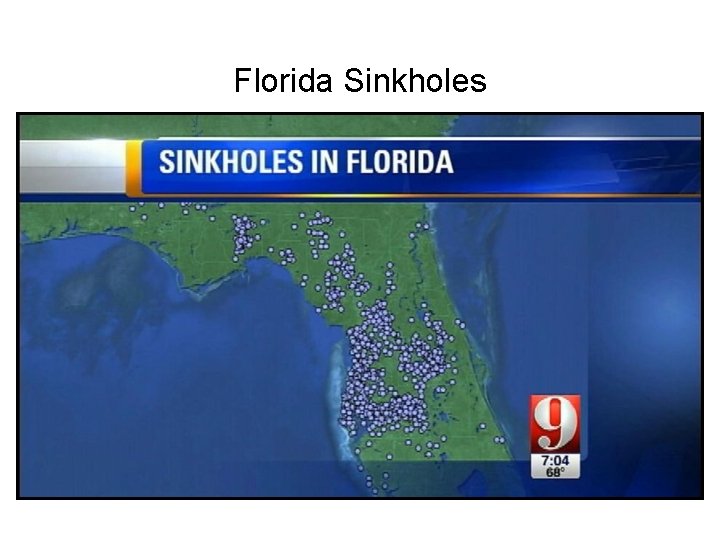
Florida Sinkholes
Sinkholes: Buried Alive • NOVA Sinkhole documentary (53 minutes)