
GroundLevel Air Pollution SMOG Smog combination of smoke
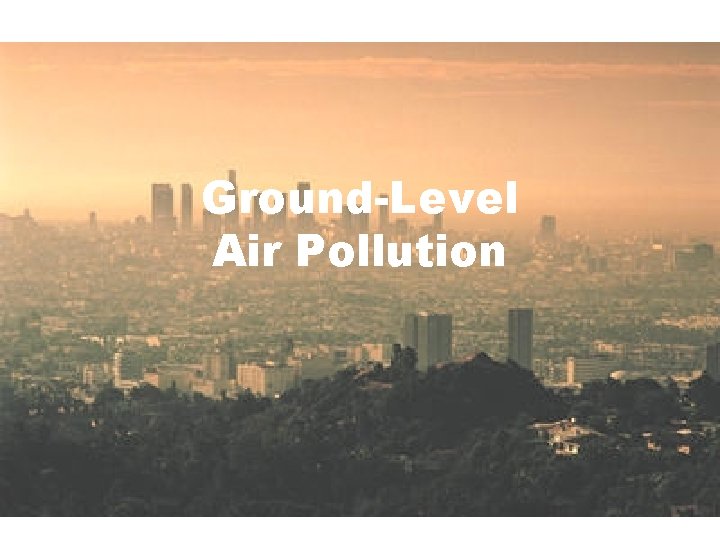
Ground-Level Air Pollution
SMOG • Smog: combination of smoke and fog • Smoke + fog (London-type) Smog – results from the burning of coal and other raw materials in the presence of a fog • Photochemical (Los Angeles-type) Smog – results from the emissions of hydrocarbons and oxides of nitrogen in the presence of sunlight

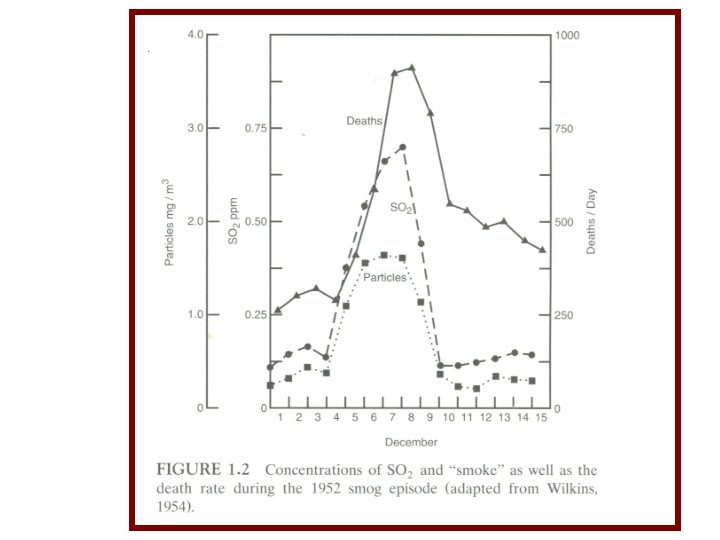
London-type smog • Several deadly London-type smog events in the 19 th and 20 th centuries, such as the on December 1952 (London): >4000 deaths!
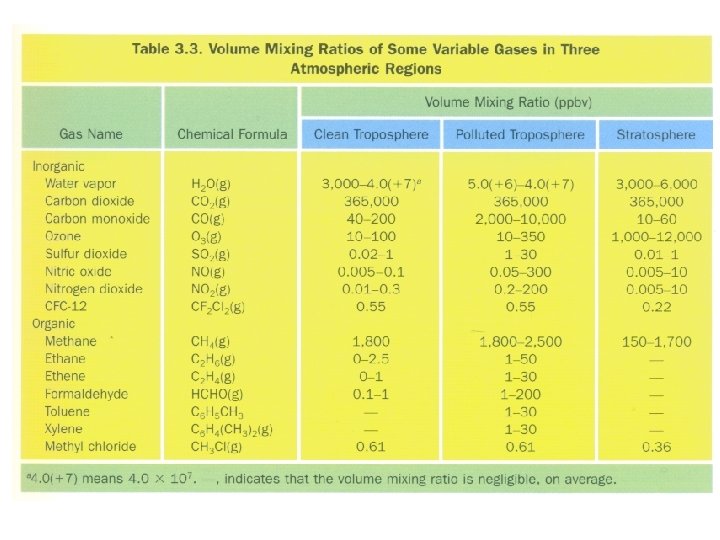
Photochemical (LA) smog • “soup” of gases and aerosol particles • some of the substances are emitted (primary pollutants) whereas others form chemically or physically in the air (secondary pollutants) • involves hundreds of different reactions (our atmosphere is a “giant chemical reactor”) • sunshine: vital ingredient • relatively little movement of the air masses • relatively high levels of ozone at ground level (“ozone in the wrong place”)
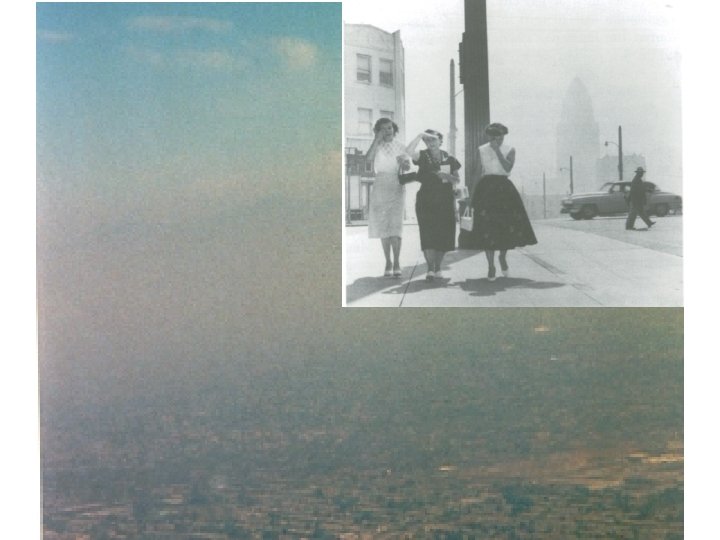
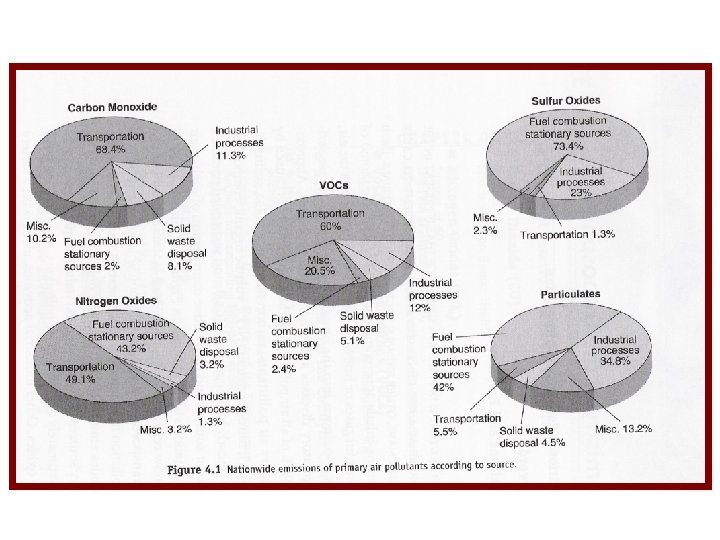
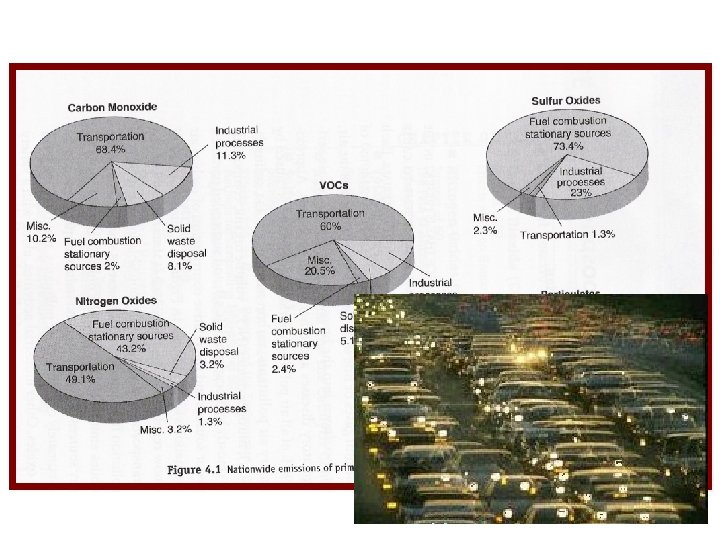
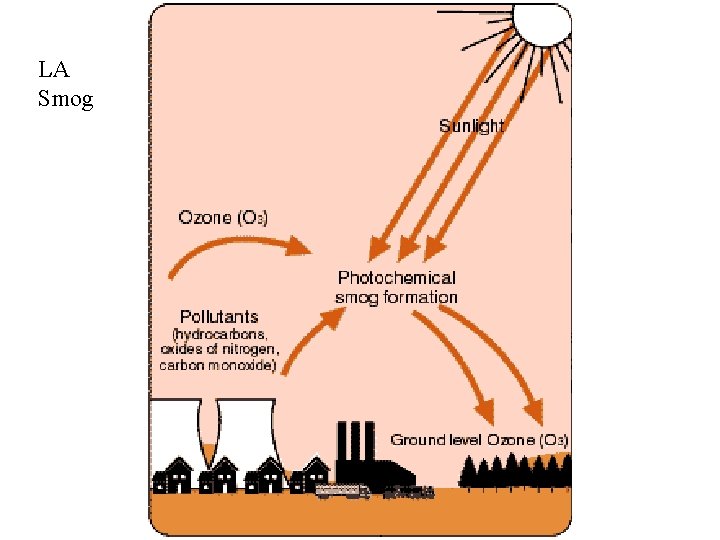
LA Smog
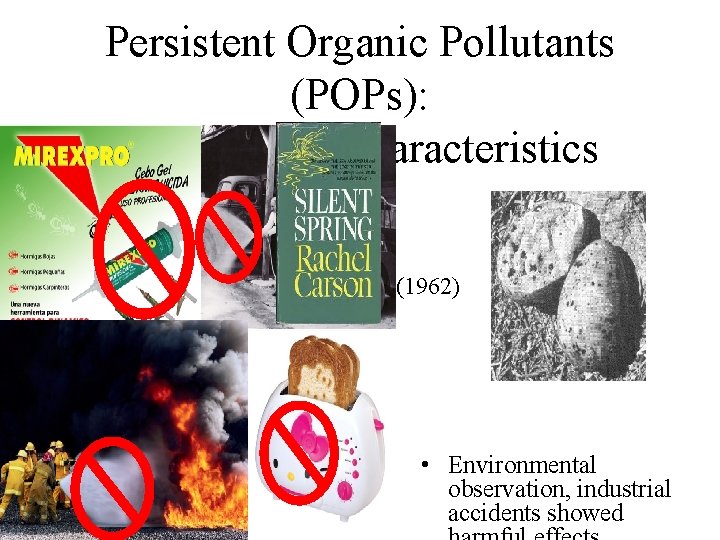
Persistent Organic Pollutants (POPs): History and Characteristics (1962) • Environmental observation, industrial accidents showed
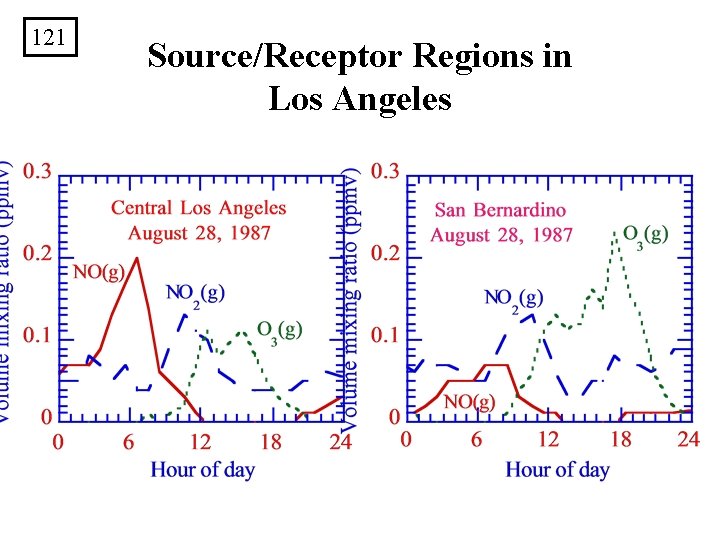
121 Source/Receptor Regions in Los Angeles
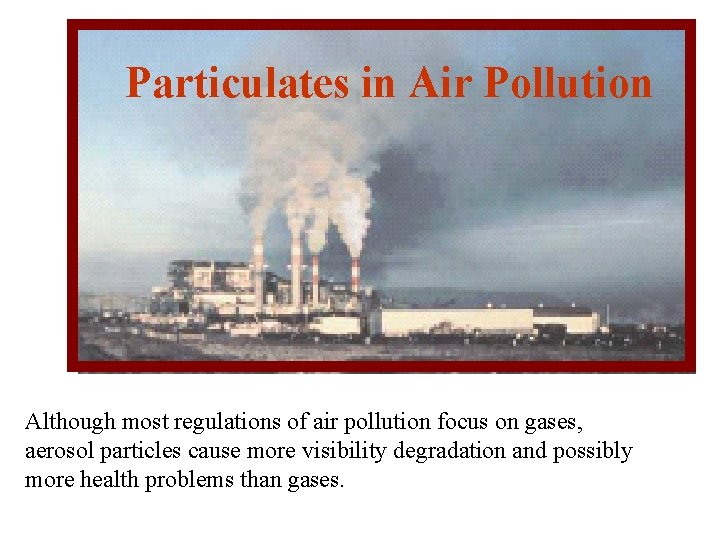
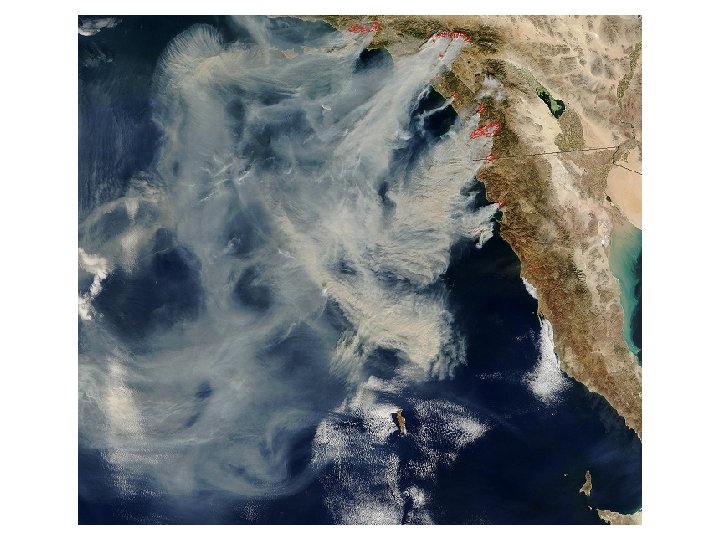
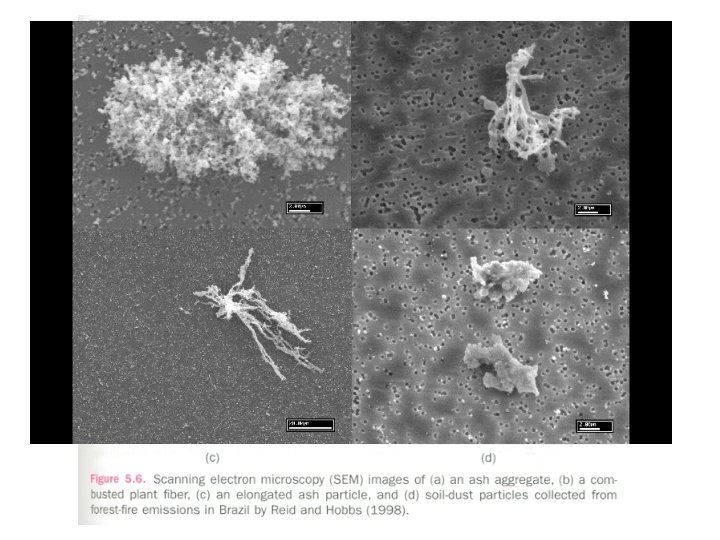
Particulates in Air Pollution Although most regulations of air pollution focus on gases, aerosol particles cause more visibility degradation and possibly more health problems than gases.
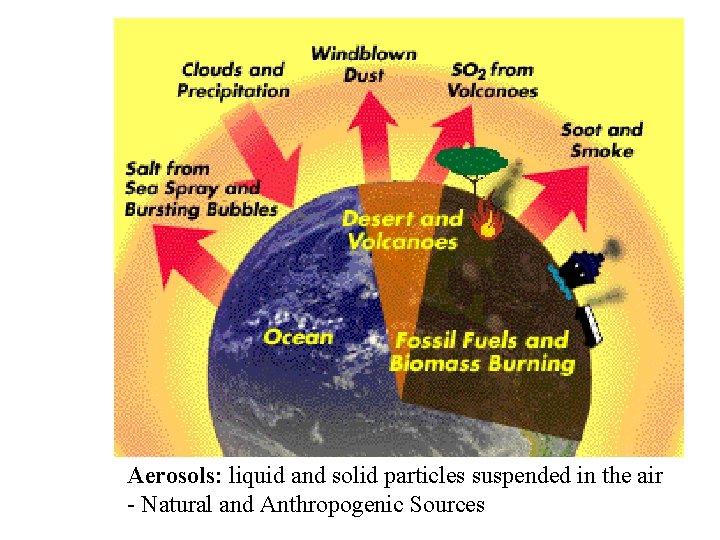
Aerosols: liquid and solid particles suspended in the air - Natural and Anthropogenic Sources
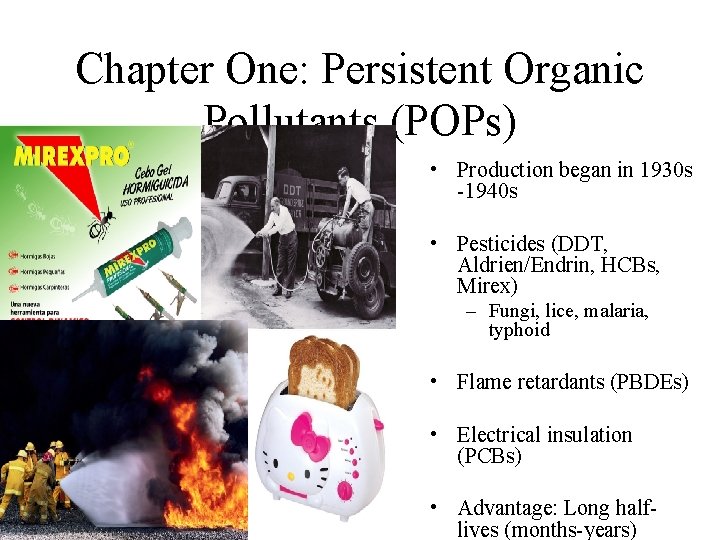
Chapter One: Persistent Organic Pollutants (POPs) • Production began in 1930 s -1940 s • Pesticides (DDT, Aldrien/Endrin, HCBs, Mirex) – Fungi, lice, malaria, typhoid • Flame retardants (PBDEs) • Electrical insulation (PCBs) • Advantage: Long halflives (months-years)
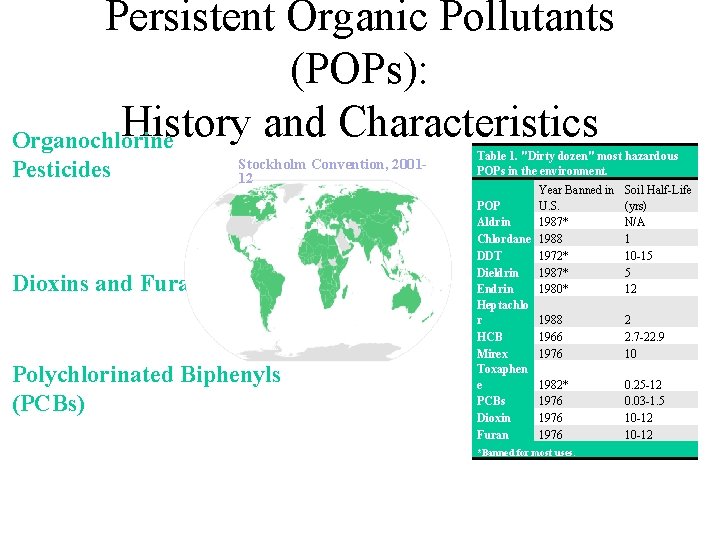
Persistent Organic Pollutants (POPs): History and Characteristics Organochlorine Pesticides Stockholm Convention, 200112 Dioxins and Furans Polychlorinated Biphenyls (PCBs) Table 1. "Dirty dozen" most hazardous POPs in the environment. Year Banned in U. S. POP Aldrin 1987* Chlordane 1988 DDT 1972* Dieldrin 1987* Endrin 1980* Heptachlo r 1988 HCB 1966 Mirex 1976 Toxaphen e 1982* PCBs 1976 Dioxin 1976 Furan 1976 *Banned for most uses. Soil Half-Life (yrs) N/A 1 10 -15 5 12 2 2. 7 -22. 9 10 0. 25 -12 0. 03 -1. 5 10 -12
Persistent Organic Pollutants (POPs): History and Characteristics Organochlorine Pesticides • 300+ Da, halogenated • Household and (degradation resistance) agricultural • Semi-volatile (longpesticides/fungicides range atmospheric Dioxins and Furans transport) • Industrial byproducts • Lipophilic (ease of (combustion, transport across PMs) Polychlorinated unintentional) Biphenyls • Bioaccumulation (PCBs) – ’ 97 AMAP: PCBs in Canadian • Electrical insulation caribou/wolves leeching Polybrominated diphenyl ethers (PBDEs), hexachlorobenzene (HCB), chlorophenols, PFOS, Lindane, PBBs…
Persistent Organic Pollutants (POPs): History and Characteristics • Byproducts in first-world countries (dioxins/furans, PCBs) • Still produced in secondworld countries – No affordable alternatives (DDT) • PBDEs for export (no PCBs) • Fish oil, salmon feeds
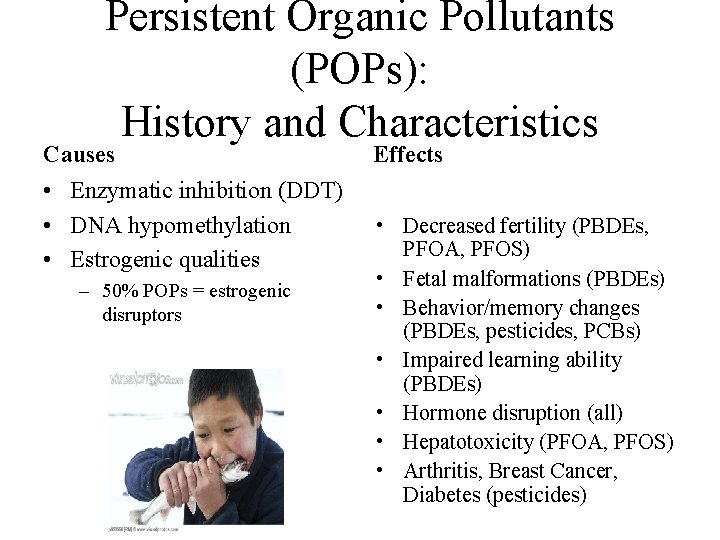
Persistent Organic Pollutants (POPs): History and Characteristics Causes • Enzymatic inhibition (DDT) • DNA hypomethylation • Estrogenic qualities – 50% POPs = estrogenic disruptors Effects • Decreased fertility (PBDEs, PFOA, PFOS) • Fetal malformations (PBDEs) • Behavior/memory changes (PBDEs, pesticides, PCBs) • Impaired learning ability (PBDEs) • Hormone disruption (all) • Hepatotoxicity (PFOA, PFOS) • Arthritis, Breast Cancer, Diabetes (pesticides)
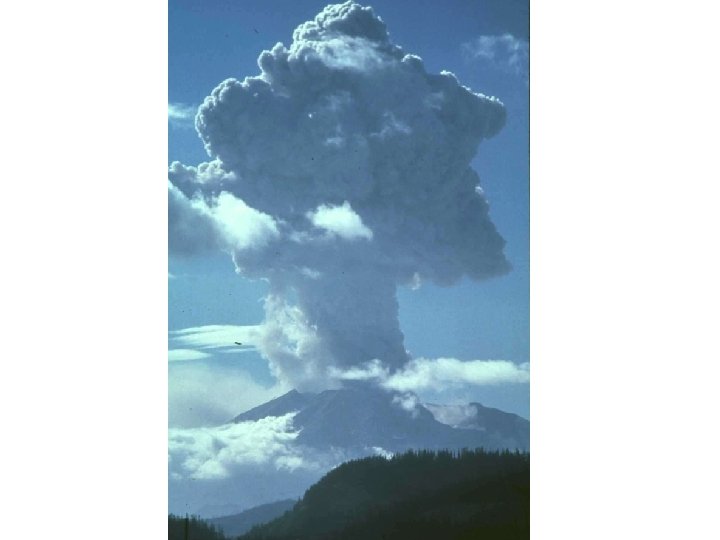
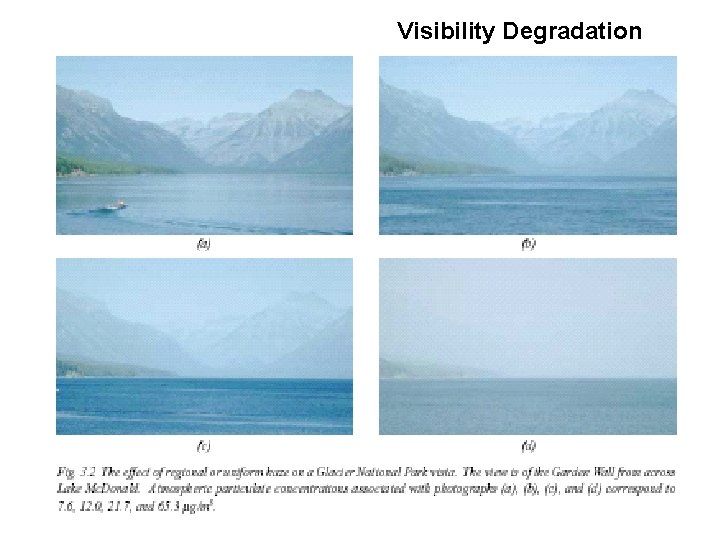
Visibility Degradation
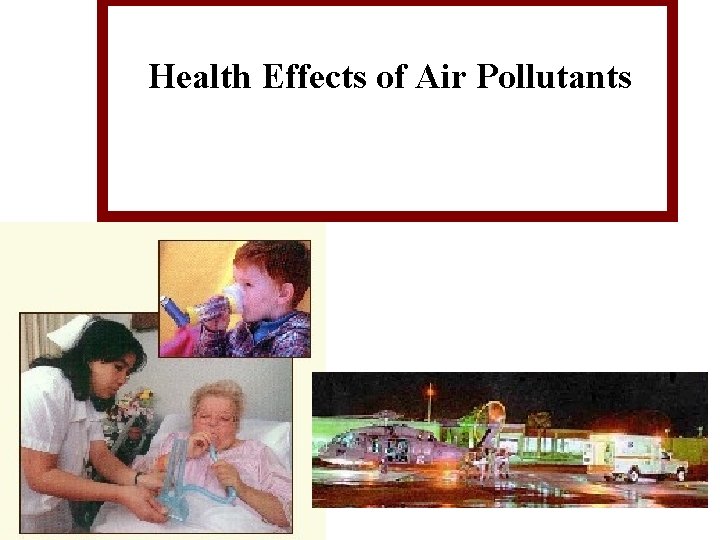
Health Effects of Air Pollutants
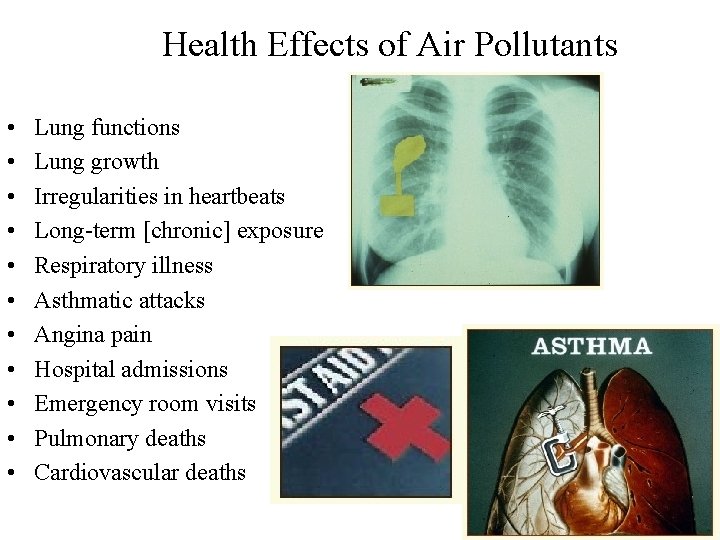
Health Effects of Air Pollutants • • • Lung functions Lung growth Irregularities in heartbeats Long-term [chronic] exposure Respiratory illness Asthmatic attacks Angina pain Hospital admissions Emergency room visits Pulmonary deaths Cardiovascular deaths
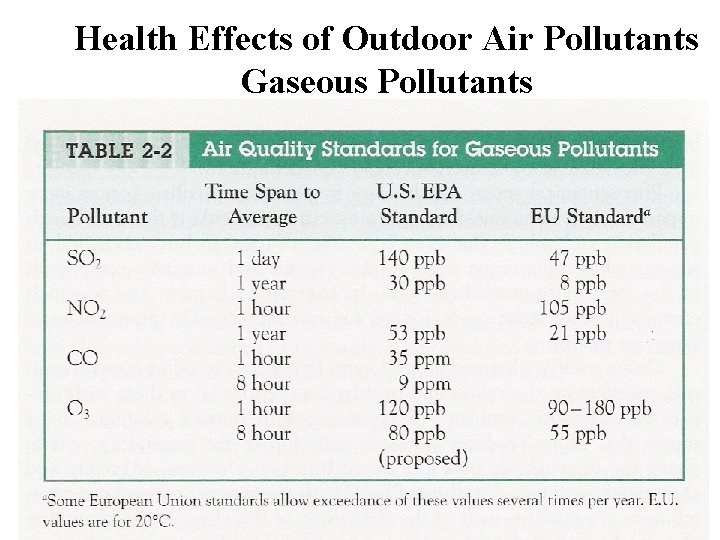
Health Effects of Outdoor Air Pollutants Gaseous Pollutants
Regulation in the U. S. • • • Air Pollution Act of 1955 Clean Air Act of 1963 Motor Vehicle Air Pollution Control Act of 1965 Air Quality Act of 1967 Clean Air Act Amendments of 1970 Clean Air Act Amendments of 1977 Clean Air Act Amendments of 1990 Clean Air Act Revision of 1997 New Clean Air Act Regulations (2002/2003) New Source Review (NSR) modification
INDOOR AIR POLLUTION Although epidemiological studies have found an association between short-term exposure to outdoor particulate air pollution and health problems, people spend most of their times indoors, and concentrations of aerosol particles are often greater indoors than outdoors.
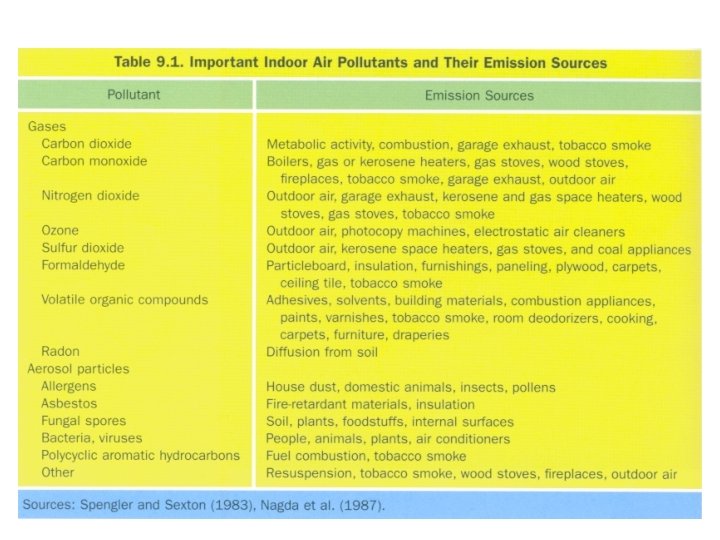
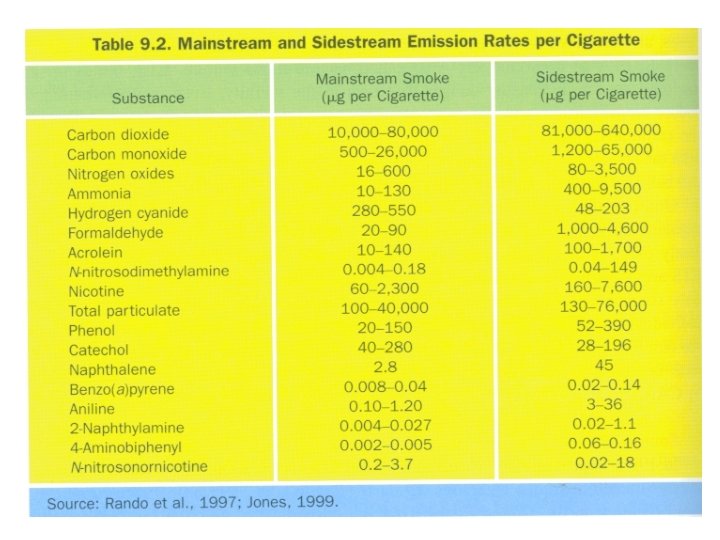
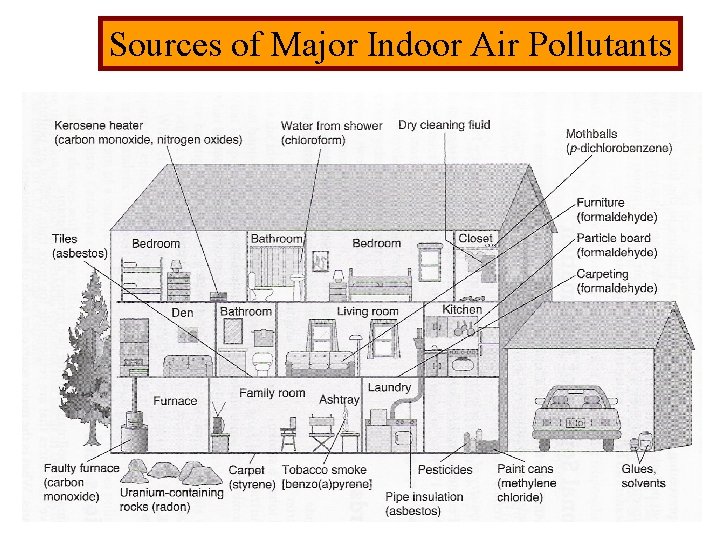
Sources of Major Indoor Air Pollutants
- Slides: 32