
Grounded Theory Map of Innovation Knowledge Name Student
- Slides: 19
Grounded Theory Map of “Innovation Knowledge” Name: Student ID: Supervisor: Date: Ms. Hinal Shah 41388577 Dr. Peter Busch 13 th November 2009
Agenda � Theory of Knowledge � Innovation � Grounded Theory � Application of Grounded Theory on Innovation � Conclusion 13 November 2009 2
Theory of Knowledge � Definition of Knowledge – acquaintance with facts, truths. Knowledge could be subjective or objective � Epistemology is a branch of philosophy in theory of knowledge 13 November 2009 3
Research � Positivism – believe in formulating hypotheses and then testing it for a clearer picture � Interpretivism - ‘explore’ the data first and then come about with a framework � Quantitative - is concerned with numeric data � Qualitative - collecting and analyzing nonnumeric data 13 November 2009 4
Innovation � “The act of introducing something new” � Innovation vs Invention – “The three stages in the process of innovation: invention, translation and commercialization” � Why – Primary purpose is to bring ‘change’, competitive advantage � How – Starts with understanding the problem, identifying new ideas, filtering new ideas, design and development 13 November 2009 5
IT Innovation � Innovation in IT � Generating and Adapting Organizations � How can innovation be measured – R&D, patents 13 November 2009 6
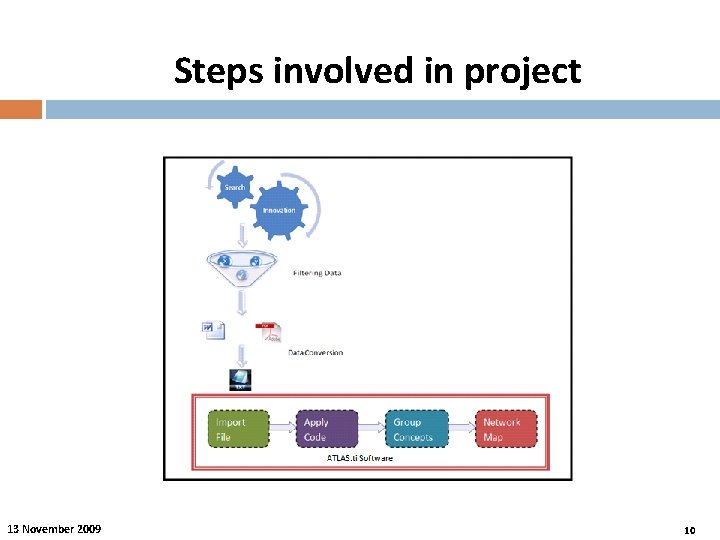
Grounded Theory � This theory is developed from the data i. e. data gathering, rather than first creating a hypothesis which is then followed by data collection. � Qualitative research methodology � Steps involved Data Collection Marking Text Grouping Network Map generation 13 November 2009 7
Memos and Coding techniques Memo Coding Techniques Open Coding Axial Coding Selective Coding 13 November 2009 8
Manual VS Software for GT Manual process Comparing the software � ATLAS. ti � Nudist 13 November 2009 9
Steps involved in project 13 November 2009 10
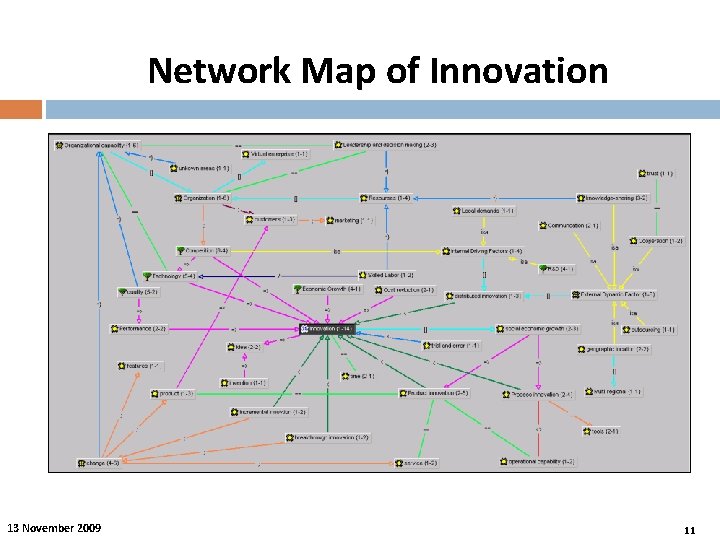
Network Map of Innovation 13 November 2009 11
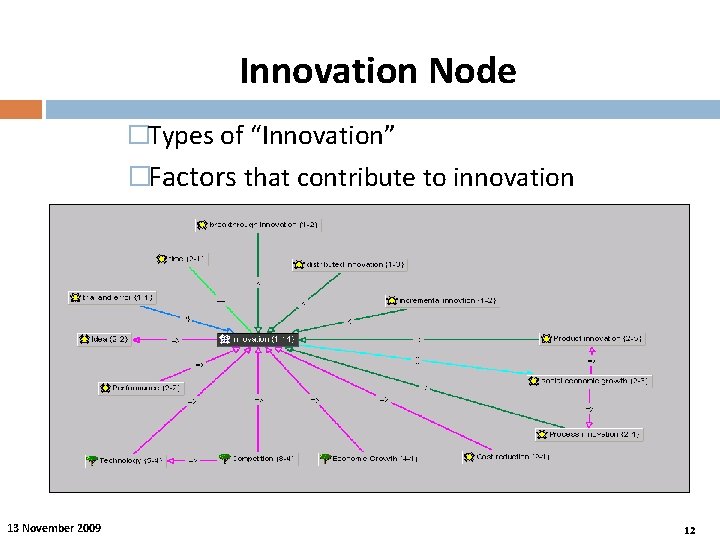
Innovation Node �Types of “Innovation” �Factors that contribute to innovation 13 November 2009 12
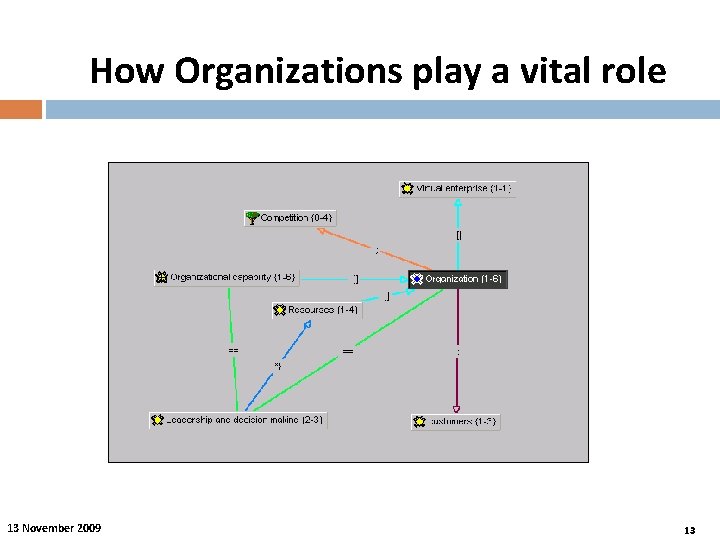
How Organizations play a vital role 13 November 2009 13
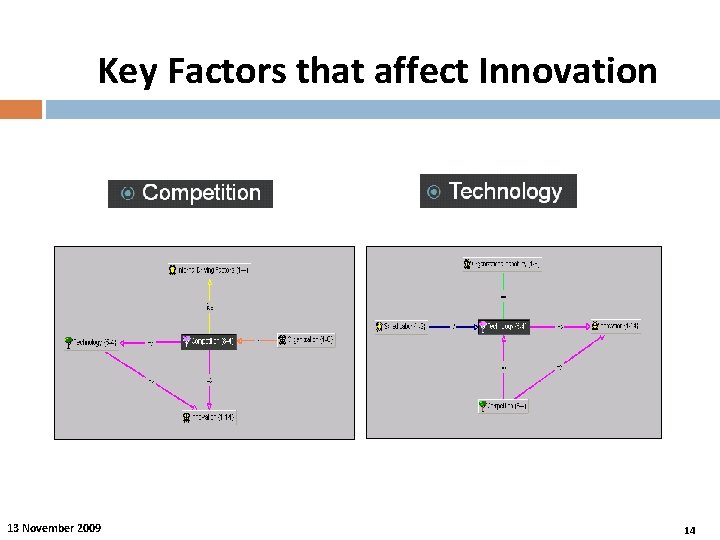
Key Factors that affect Innovation 13 November 2009 14
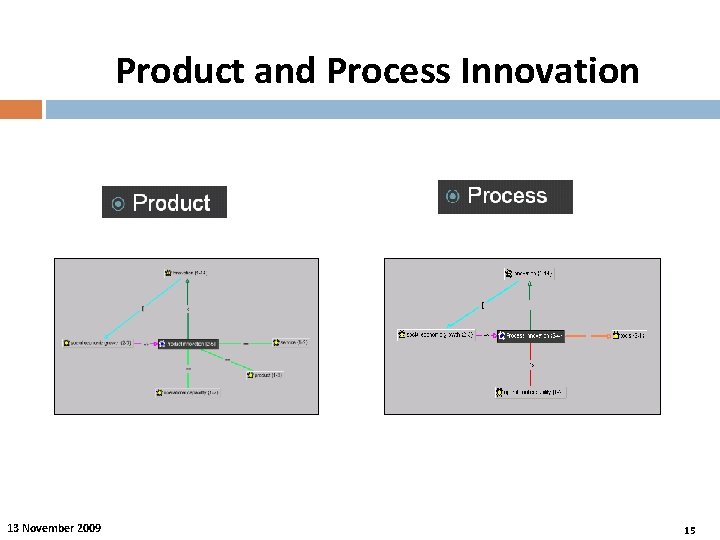
Product and Process Innovation 13 November 2009 15
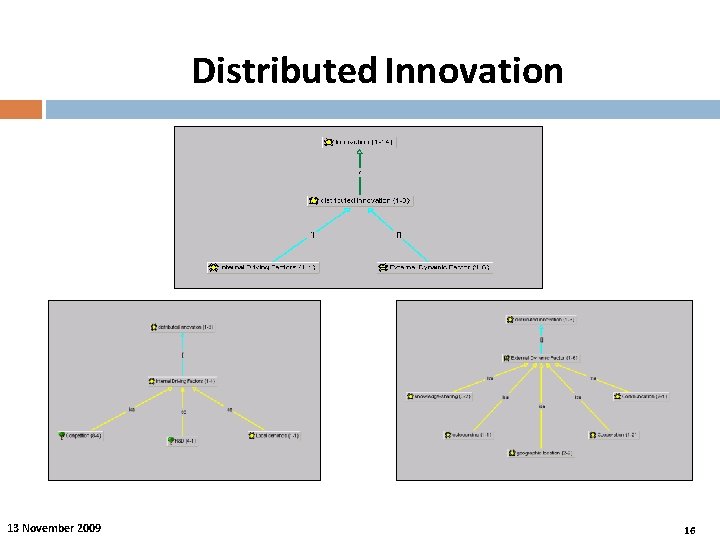
Distributed Innovation 13 November 2009 16
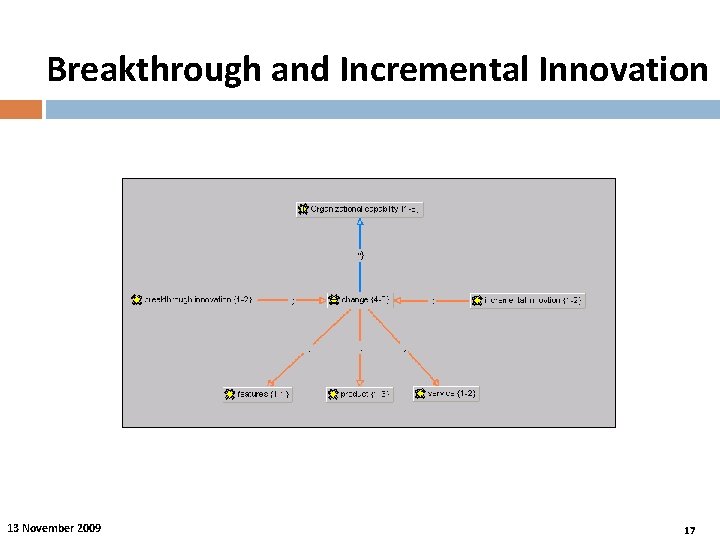
Breakthrough and Incremental Innovation 13 November 2009 17
Conclusion Innovation knowledge Grounded theory benefits Future Work 13 November 2009 18
Thank You 13 November 2009 19