
GROSS ANATOMY OF THE BRAIN Dr G R
GROSS ANATOMY OF THE BRAIN Dr. G. R. Leichnetz
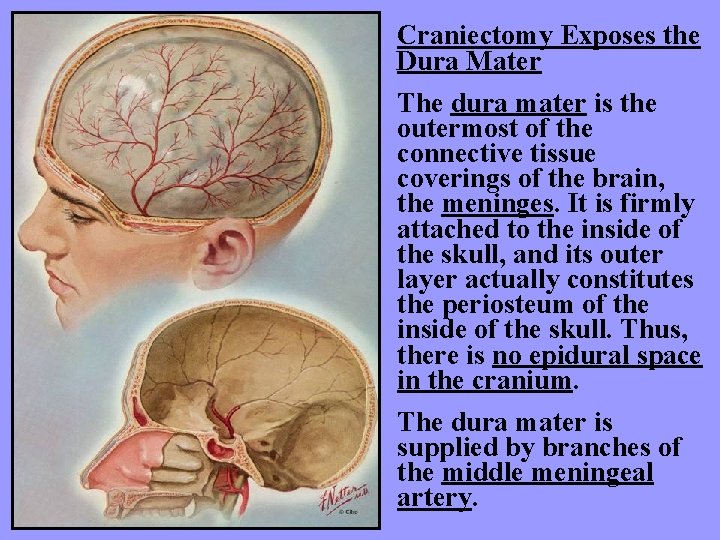
Craniectomy Exposes the Dura Mater The dura mater is the outermost of the connective tissue coverings of the brain, the meninges. It is firmly attached to the inside of the skull, and its outer layer actually constitutes the periosteum of the inside of the skull. Thus, there is no epidural space in the cranium. The dura mater is supplied by branches of the middle meningeal artery.
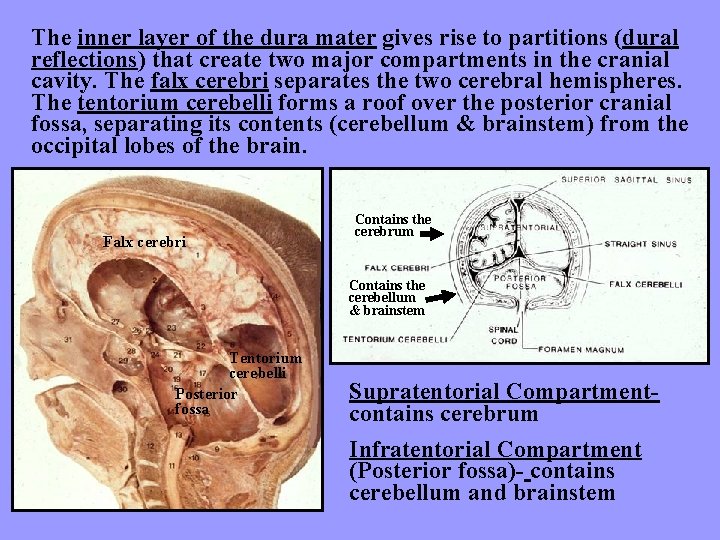
The inner layer of the dura mater gives rise to partitions (dural reflections) that create two major compartments in the cranial cavity. The falx cerebri separates the two cerebral hemispheres. The tentorium cerebelli forms a roof over the posterior cranial fossa, separating its contents (cerebellum & brainstem) from the occipital lobes of the brain. Falx cerebri Contains the cerebrum Contains the cerebellum & brainstem Tentorium cerebelli Posterior fossa Supratentorial Compartmentcontains cerebrum Infratentorial Compartment (Posterior fossa)- contains cerebellum and brainstem
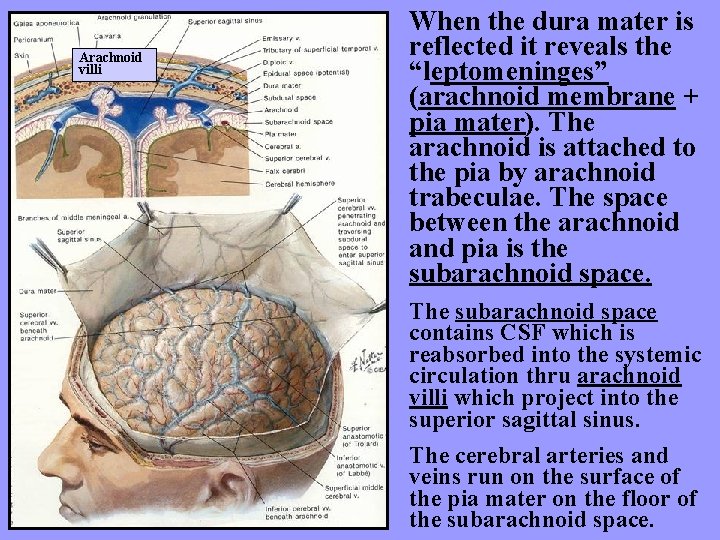
Arachnoid villi When the dura mater is reflected it reveals the “leptomeninges” (arachnoid membrane + pia mater). The arachnoid is attached to the pia by arachnoid trabeculae. The space between the arachnoid and pia is the subarachnoid space. The subarachnoid space contains CSF which is reabsorbed into the systemic circulation thru arachnoid villi which project into the superior sagittal sinus. The cerebral arteries and veins run on the surface of the pia mater on the floor of the subarachnoid space.
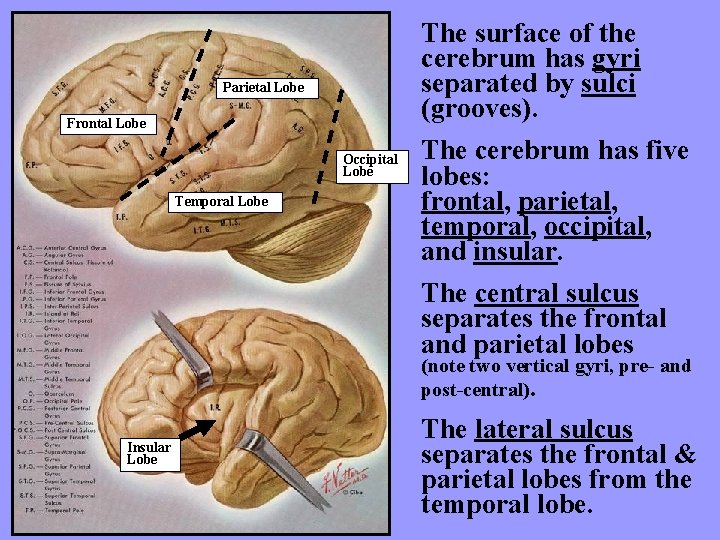
The surface of the cerebrum has gyri separated by sulci (grooves). Parietal Lobe Frontal Lobe Occipital Lobe Temporal Lobe The cerebrum has five lobes: frontal, parietal, temporal, occipital, and insular. The central sulcus separates the frontal and parietal lobes (note two vertical gyri, pre- and post-central). Insular Lobe The lateral sulcus separates the frontal & parietal lobes from the temporal lobe.
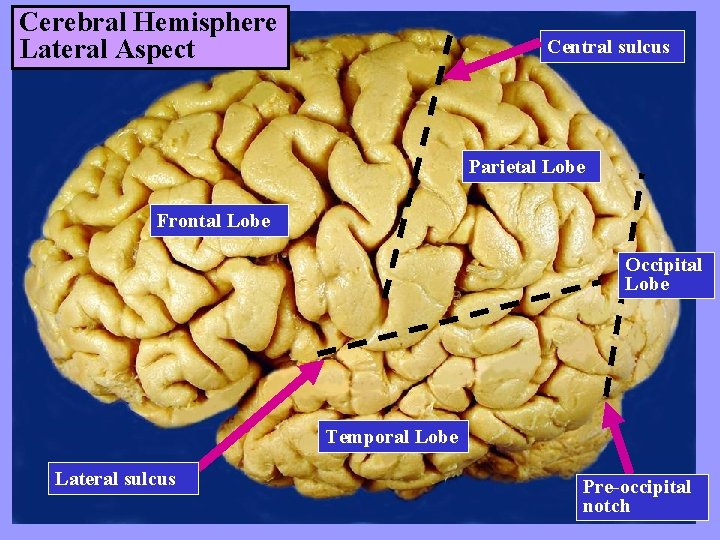
Cerebral Hemisphere Lateral Aspect Central sulcus Parietal Lobe Frontal Lobe Occipital Lobe Temporal Lobe Lateral sulcus Pre-occipital notch
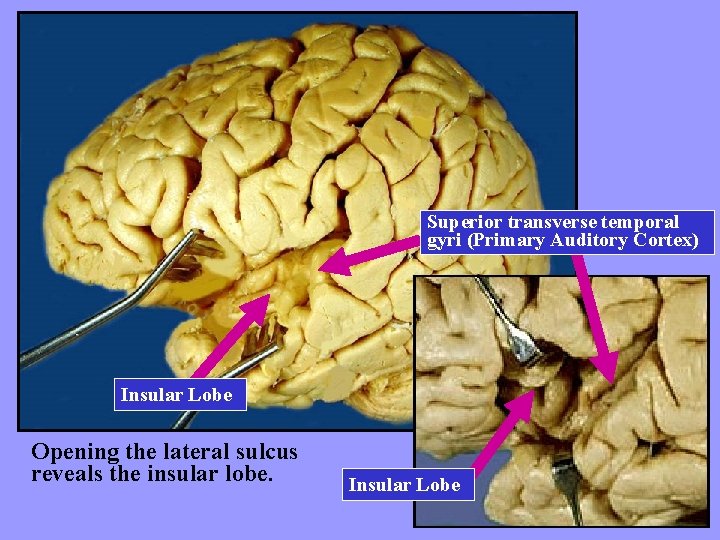
Superior transverse temporal gyri (Primary Auditory Cortex) Insular Lobe Opening the lateral sulcus reveals the insular lobe. Insular Lobe
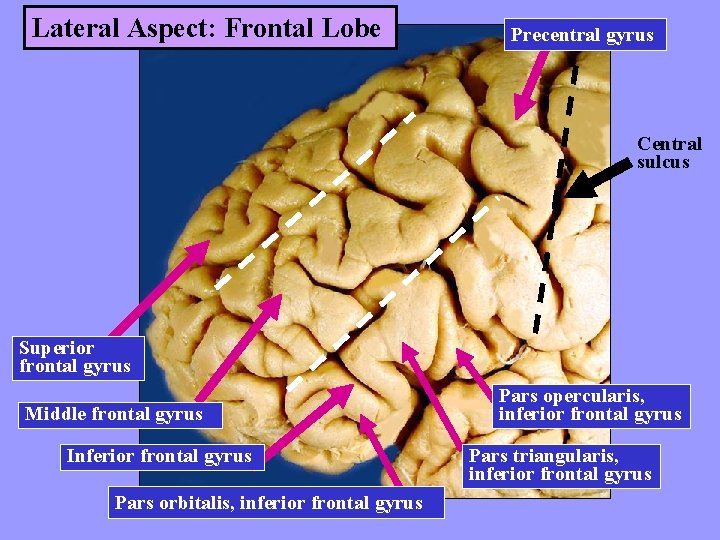
Lateral Aspect: Frontal Lobe Precentral gyrus Central sulcus Superior frontal gyrus Middle frontal gyrus Inferior frontal gyrus Pars orbitalis, inferior frontal gyrus Pars opercularis, inferior frontal gyrus Pars triangularis, inferior frontal gyrus
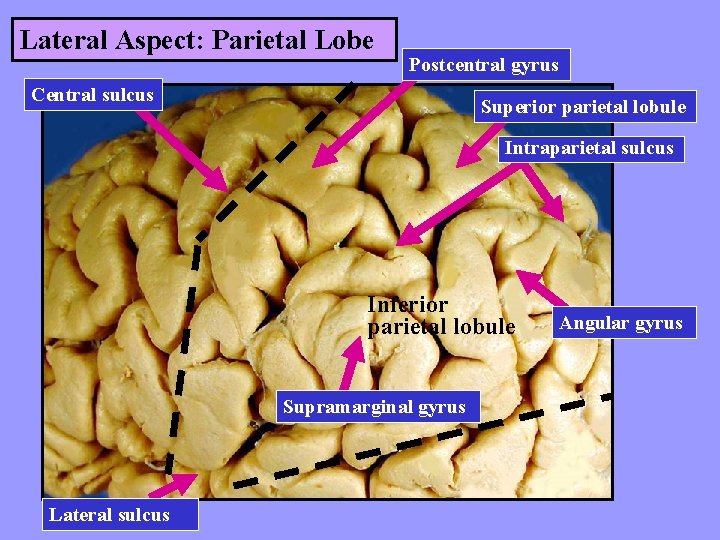
Lateral Aspect: Parietal Lobe Postcentral gyrus Central sulcus Superior parietal lobule Intraparietal sulcus Inferior parietal lobule Supramarginal gyrus Lateral sulcus Angular gyrus
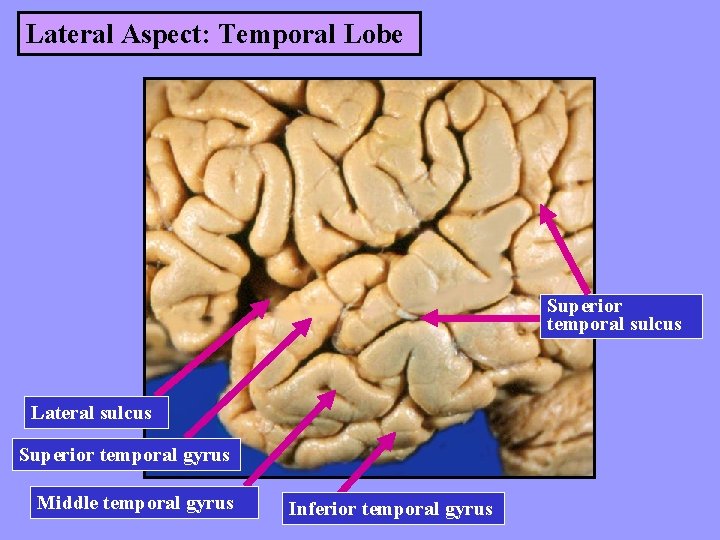
Lateral Aspect: Temporal Lobe Superior temporal sulcus Lateral sulcus Superior temporal gyrus Middle temporal gyrus Inferior temporal gyrus
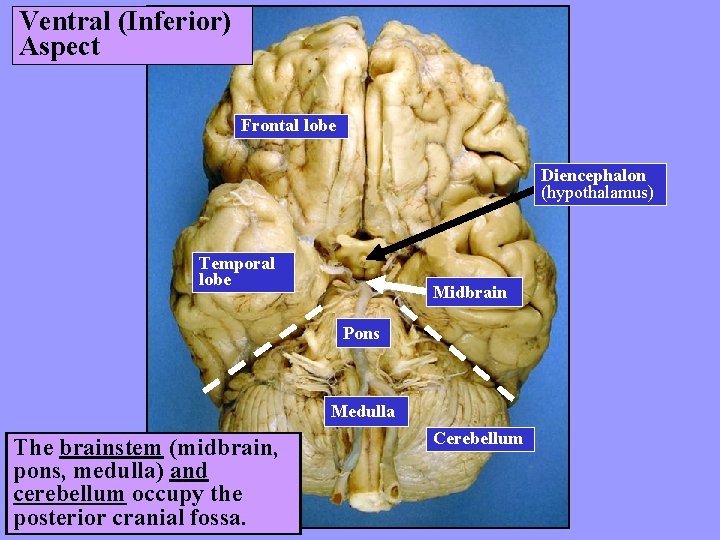
Ventral (Inferior) Aspect Frontal lobe Diencephalon (hypothalamus) Temporal lobe Midbrain Pons Medulla The brainstem (midbrain, pons, medulla) and cerebellum occupy the posterior cranial fossa. Cerebellum
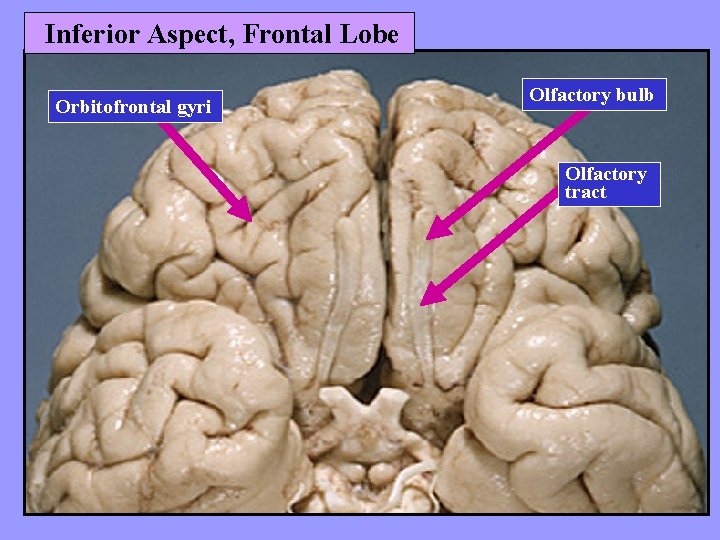
Inferior Aspect, Frontal Lobe Orbitofrontal gyri Olfactory bulb Olfactory tract
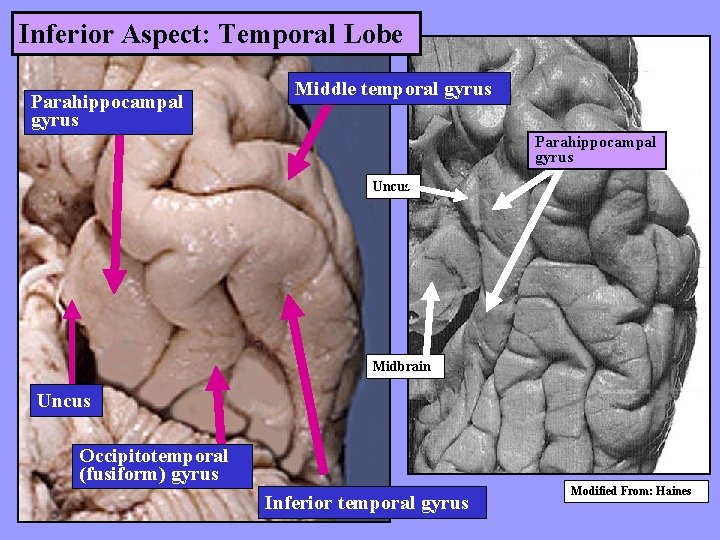
Inferior Aspect: Temporal Lobe Parahippocampal gyrus Middle temporal gyrus Parahippocampal gyrus Uncus Midbrain Uncus Occipitotemporal (fusiform) gyrus Inferior temporal gyrus Modified From: Haines
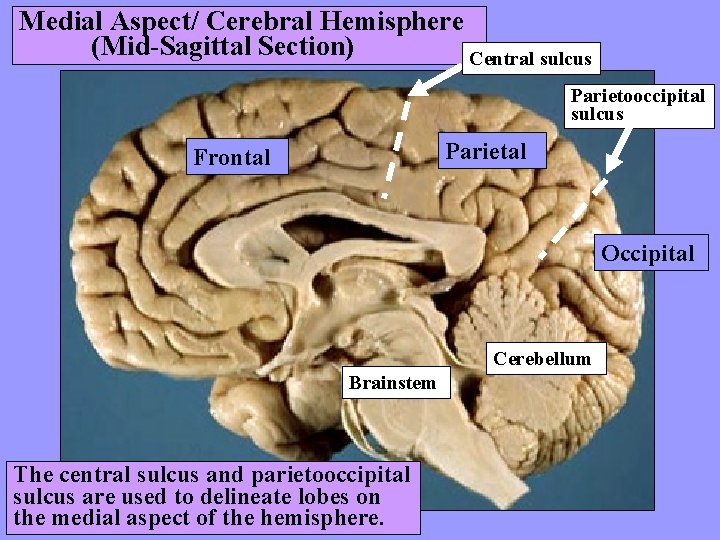
Medial Aspect/ Cerebral Hemisphere (Mid-Sagittal Section) Central sulcus Parietooccipital sulcus Parietal Frontal Occipital Cerebellum Brainstem The central sulcus and parietooccipital sulcus are used to delineate lobes on the medial aspect of the hemisphere.
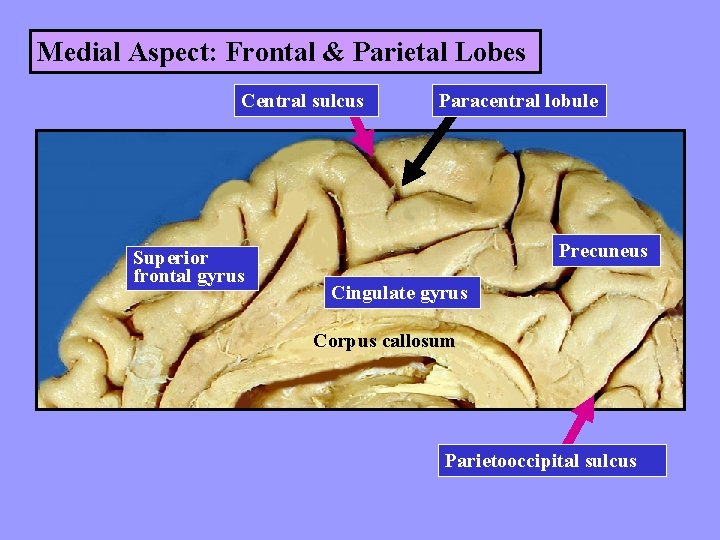
Medial Aspect: Frontal & Parietal Lobes Central sulcus Superior frontal gyrus Paracentral lobule Precuneus Cingulate gyrus Corpus callosum Parietooccipital sulcus
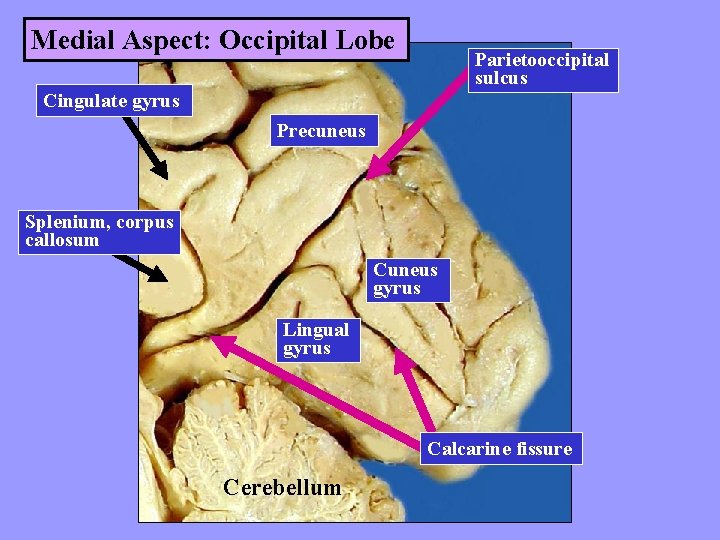
Medial Aspect: Occipital Lobe Parietooccipital sulcus Cingulate gyrus Precuneus Splenium, corpus callosum Cuneus gyrus Lingual gyrus Calcarine fissure Cerebellum
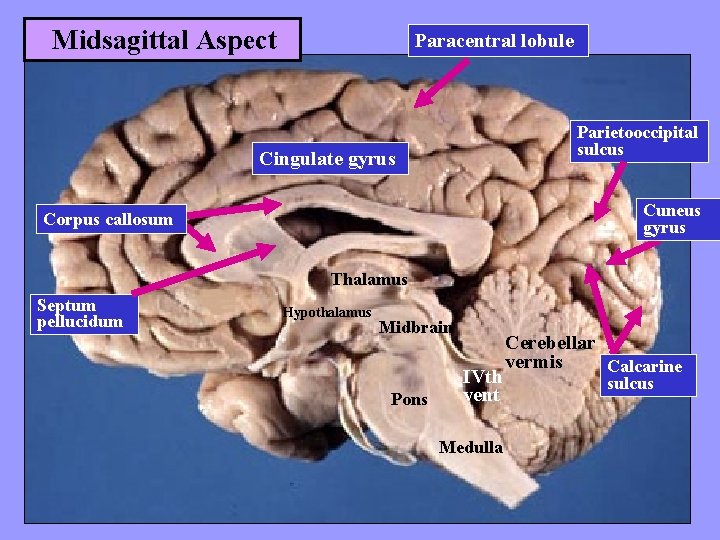
Midsagittal Aspect Paracentral lobule Parietooccipital sulcus Cingulate gyrus Cuneus gyrus Corpus callosum Thalamus Septum pellucidum Hypothalamus Midbrain Pons IVth vent Medulla Cerebellar vermis Calcarine sulcus
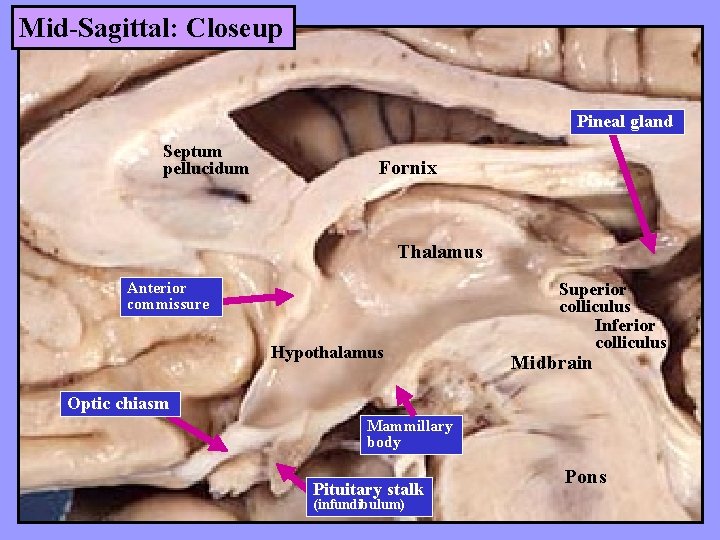
Mid-Sagittal: Closeup Pineal gland Septum pellucidum Fornix Thalamus Anterior commissure Hypothalamus Superior colliculus Inferior colliculus Midbrain Optic chiasm Mammillary body Pituitary stalk (infundibulum) Pons
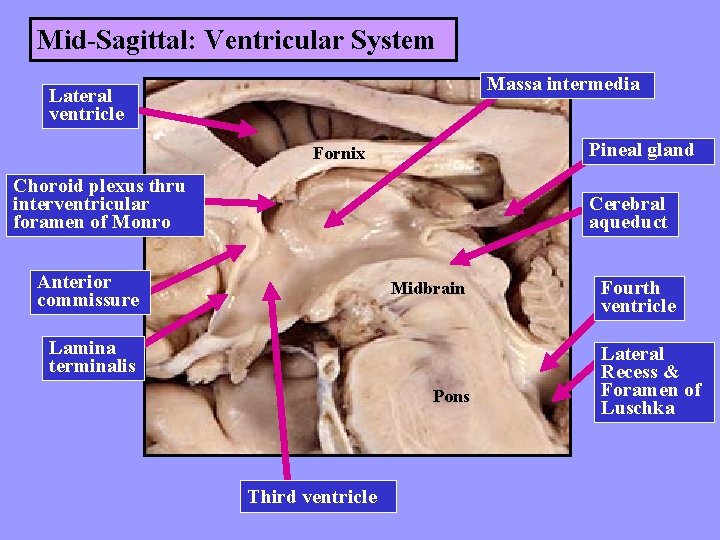
Mid-Sagittal: Ventricular System Massa intermedia Lateral ventricle Pineal gland Fornix Choroid plexus thru interventricular foramen of Monro Cerebral aqueduct Anterior commissure Midbrain Lamina terminalis Pons Third ventricle Fourth ventricle Lateral Recess & Foramen of Luschka
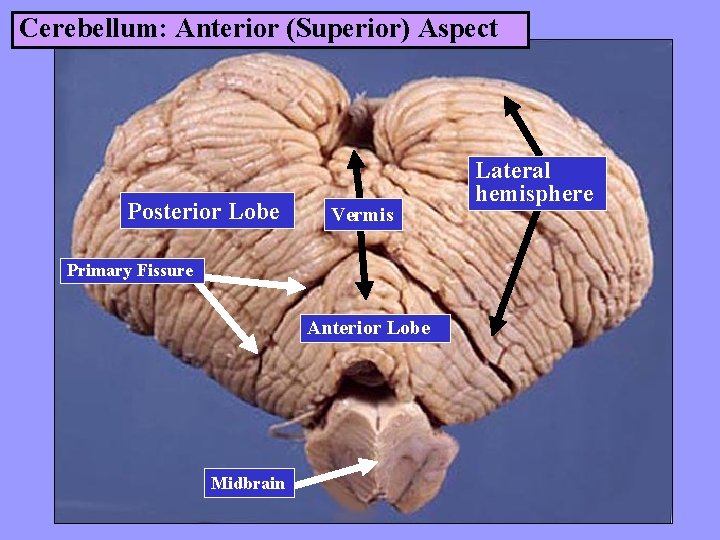
Cerebellum: Anterior (Superior) Aspect Posterior Lobe Vermis Primary Fissure Anterior Lobe Midbrain Lateral hemisphere

Cerebellum, Posterior View Vermis Posterior Lobe Hemisphere Pyramis Uvula Tonsils of cerebellum Medulla Foramen of Magendie (opening in post. medullary velum from 4 th ventricle)
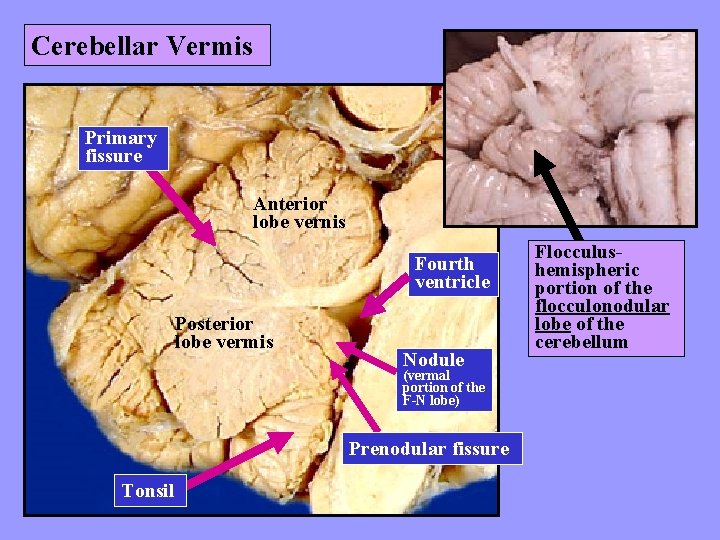
Cerebellar Vermis Primary fissure Anterior lobe vernis Fourth ventricle Posterior lobe vermis Nodule (vermal portion of the F-N lobe) Prenodular fissure Tonsil Flocculushemispheric portion of the flocculonodular lobe of the cerebellum
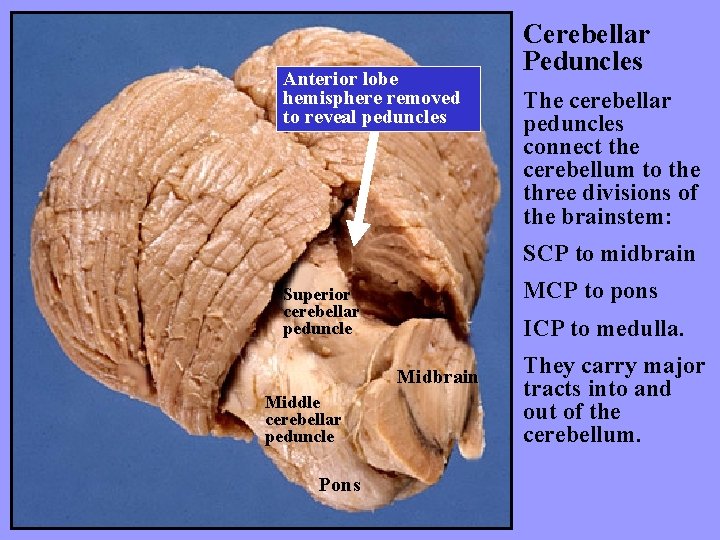
Anterior lobe hemisphere removed to reveal peduncles Cerebellar Peduncles The cerebellar peduncles connect the cerebellum to the three divisions of the brainstem: SCP to midbrain MCP to pons Superior cerebellar peduncle ICP to medulla. Midbrain Middle cerebellar peduncle Pons They carry major tracts into and out of the cerebellum.
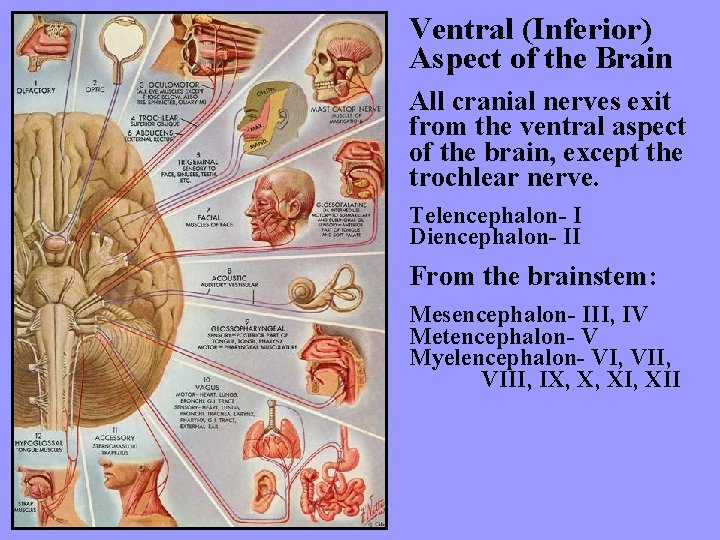
Ventral (Inferior) Aspect of the Brain All cranial nerves exit from the ventral aspect of the brain, except the trochlear nerve. Telencephalon- I Diencephalon- II From the brainstem: Mesencephalon- III, IV Metencephalon- V Myelencephalon- VI, VIII, IX, X, XII
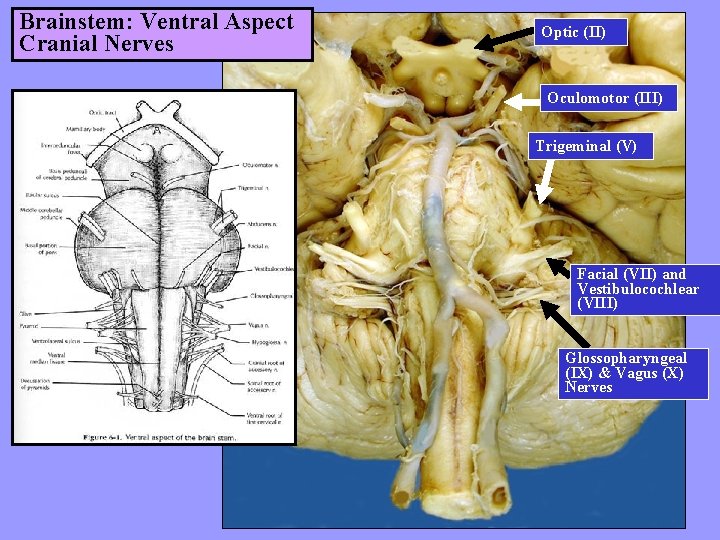
Brainstem: Ventral Aspect Cranial Nerves Optic (II) Oculomotor (III) Trigeminal (V) Facial (VII) and Vestibulocochlear (VIII) Glossopharyngeal (IX) & Vagus (X) Nerves
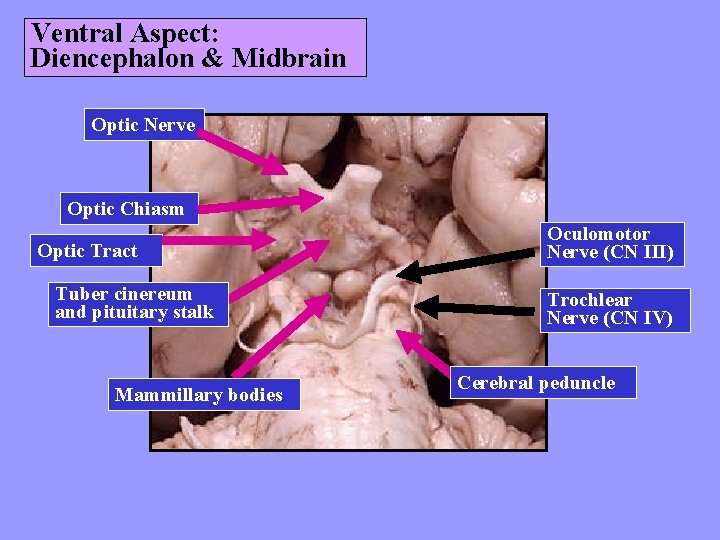
Ventral Aspect: Diencephalon & Midbrain Optic Nerve Optic Chiasm Optic Tract Tuber cinereum and pituitary stalk Mammillary bodies Oculomotor Nerve (CN III) Trochlear Nerve (CN IV) Cerebral peduncle
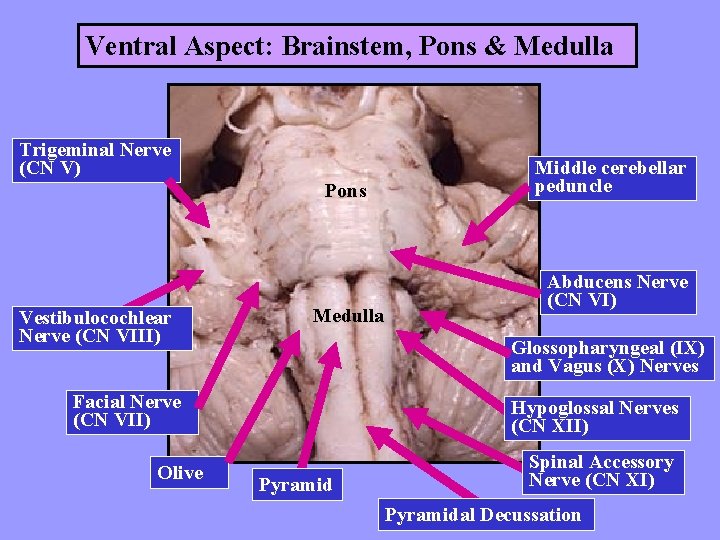
Ventral Aspect: Brainstem, Pons & Medulla Trigeminal Nerve (CN V) Pons Vestibulocochlear Nerve (CN VIII) Medulla Abducens Nerve (CN VI) Glossopharyngeal (IX) and Vagus (X) Nerves Facial Nerve (CN VII) Olive Middle cerebellar peduncle Hypoglossal Nerves (CN XII) Pyramid Spinal Accessory Nerve (CN XI) Pyramidal Decussation
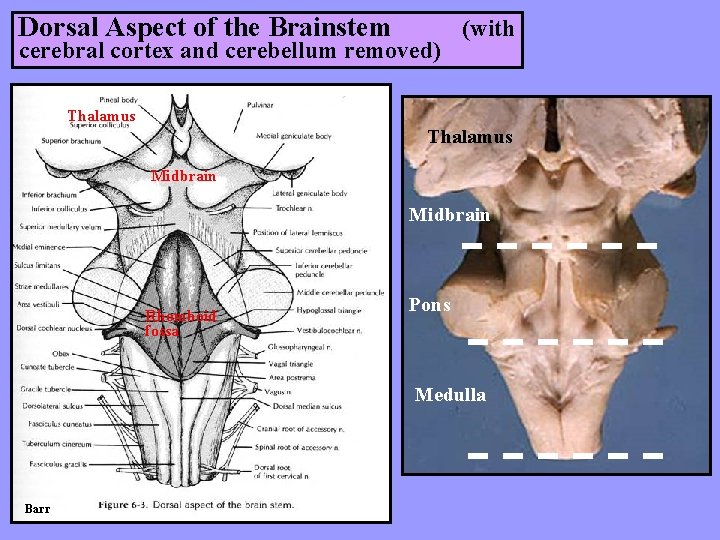
Dorsal Aspect of the Brainstem cerebral cortex and cerebellum removed) (with Thalamus Midbrain Rhomboid fossa Pons Medulla Barr
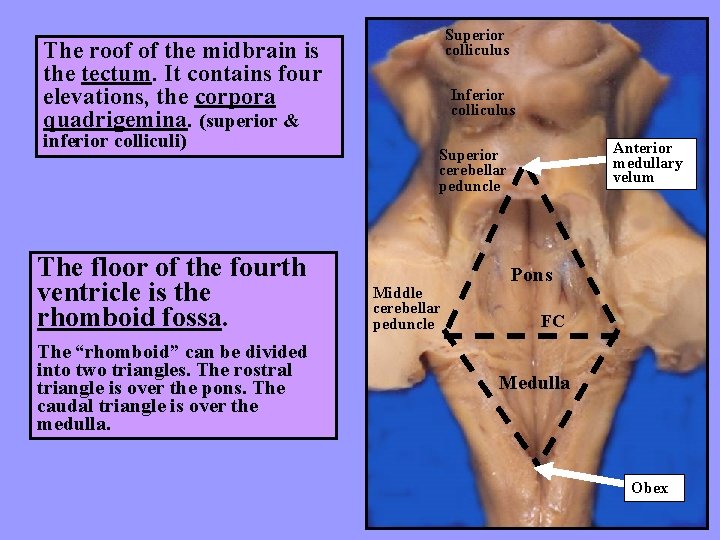
Superior colliculus The roof of the midbrain is the tectum. It contains four elevations, the corpora quadrigemina. (superior & inferior colliculi) The floor of the fourth ventricle is the rhomboid fossa. The “rhomboid” can be divided into two triangles. The rostral triangle is over the pons. The caudal triangle is over the medulla. Inferior colliculus Anterior medullary velum Superior cerebellar peduncle Middle cerebellar peduncle Pons FC Medulla Obex
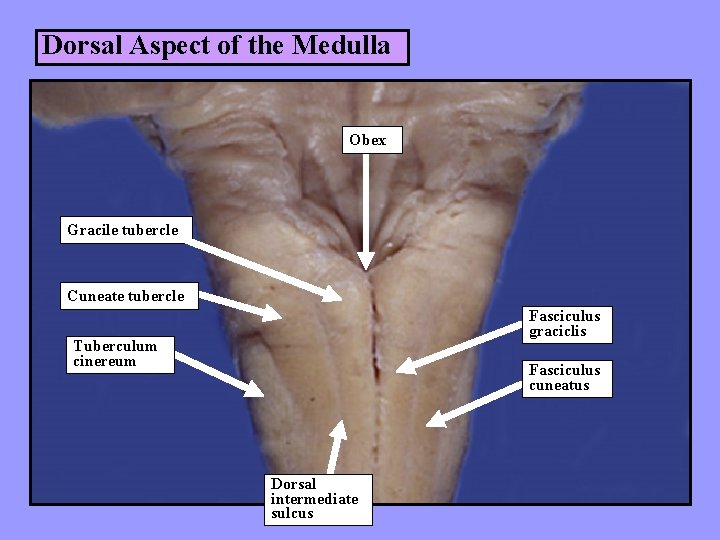
Dorsal Aspect of the Medulla Obex Gracile tubercle Cuneate tubercle Fasciculus graciclis Tuberculum cinereum Fasciculus cuneatus Dorsal intermediate sulcus
- Slides: 30