
GROSS ALPHA DETERMINATION IN DRINKING WATER USING A
- Slides: 26
GROSS ALPHA DETERMINATION IN DRINKING WATER USING A HIGHLY SPECIFIC RESIN AND LSC S. HAPPEL*a, P. LETESSIERa, W. ENSINGER, J. H. EIKENBERGd, A. H. THAKKARb, E. P. HORWITZb a EICHROM EUROPE - Parc de Lormandière - Bât. C - Rue Maryse Bastié - Campus de Ker Lann - 35170 Bruz – France b EICHROM TECHNOLOGIES - 8205 S. Cass Ave / Suite 106 - Darien, IL 60561 USA c Philipps-Universität Marburg, Fachbereich Chemie – Hans-Meerwein-Strasse – 35043 Marburg - Germany d PAUL SCHERRER INSTITUTE - Villigen PSI - 5232 - Switzerland
Introduction Ø Drinking Water Directive 98/83/EC Ø Planchet Evaporation Ø Resin / LSC Approach • Extraction • Interferences • LS counting Ø Gross alpha protocol Ø Real samples Ø Conclusions / Next steps
Drinking Water Directive 98/83/EC Ø Covers water intended for human consumption • • Water for drinking, food preparation and other domestic use Implementation by latest 25 December 2003 Ø Radiological aspects implemented • • • Recommended by WHO guidelines H-3 < 100 Bq L-1 Total indicative dose < 0. 1 m. Sv a-1 (H-3, K-40, Rn-222 & daughters excluded) Ø Screening approach (guideline values, WHO): • • • 0. 1 Bq L-1 gross alpha activity 1 Bq L-1 gross beta activity No further action if determined activities are below
Planchet Evaporation Ø Commonly used method • Evaporation of 100 – 1000 ml water on 50 – 200 mm Ø planchets • Gas proportional counting Ø Pro: • Number of samples counted simultaneously • b to a-spill-over Ø Drawbacks: • • • Evaporation time Dissolved solids (self absorption correction) Inhomogeneous distribution of solids Reproducibility of sample preparation Detection efficiency / counting time
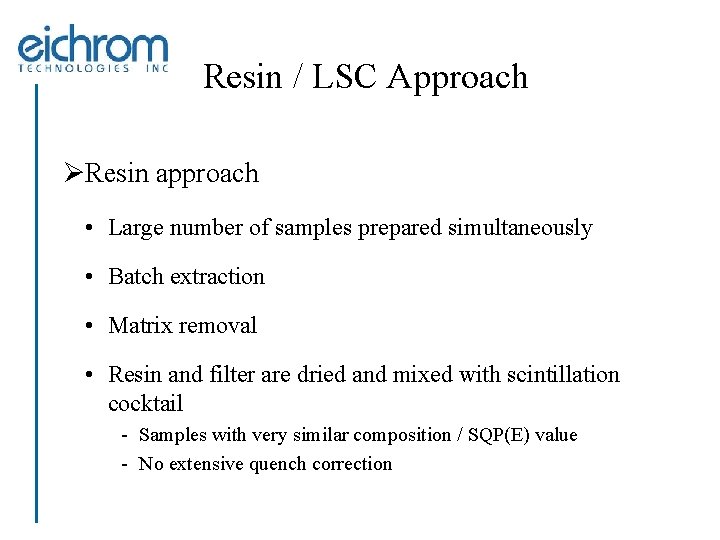
Resin / LSC Approach ØResin approach • Large number of samples prepared simultaneously • Batch extraction • Matrix removal • Resin and filter are dried and mixed with scintillation cocktail - Samples with very similar composition / SQP(E) value - No extensive quench correction
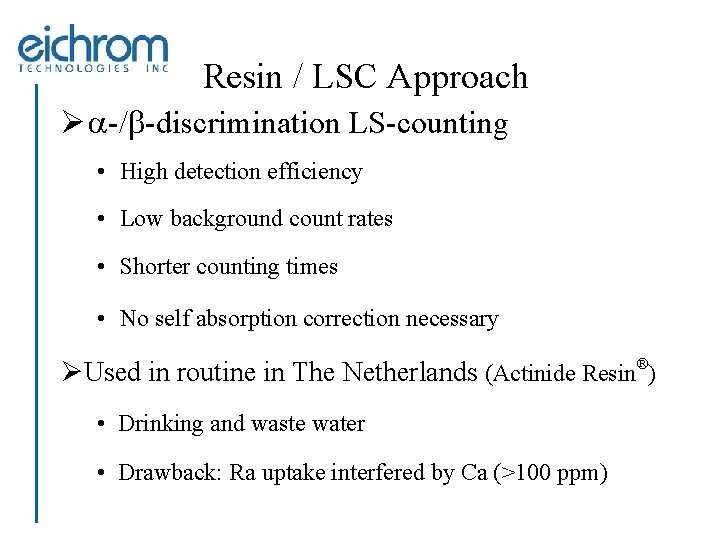
Resin / LSC Approach Ø a-/b-discrimination LS-counting • High detection efficiency • Low background count rates • Shorter counting times • No self absorption correction necessary ØUsed in routine in The Netherlands (Actinide Resin®) • Drinking and waste water • Drawback: Ra uptake interfered by Ca (>100 ppm)
Resin / LSC Approach Ø Optimization of extraction resin approach necesarry Ø Elimination of Ca interference Ø Development of a new resin Ø Validation of the resin • • Extraction conditions Interferences LS counting Test with real samples
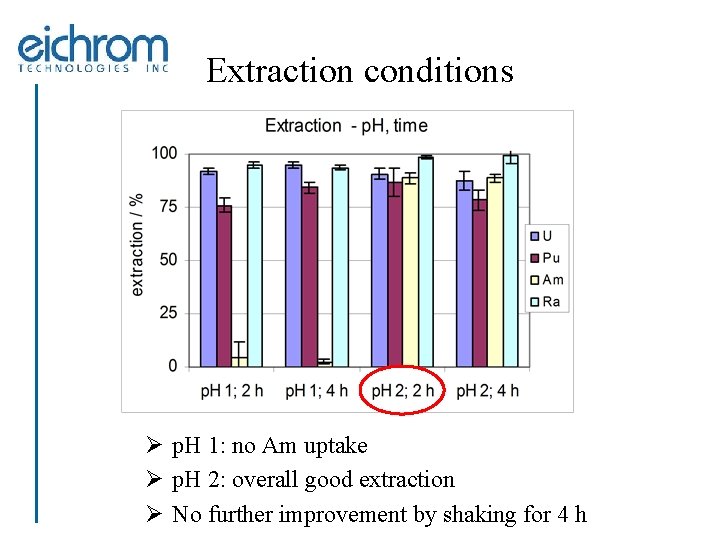
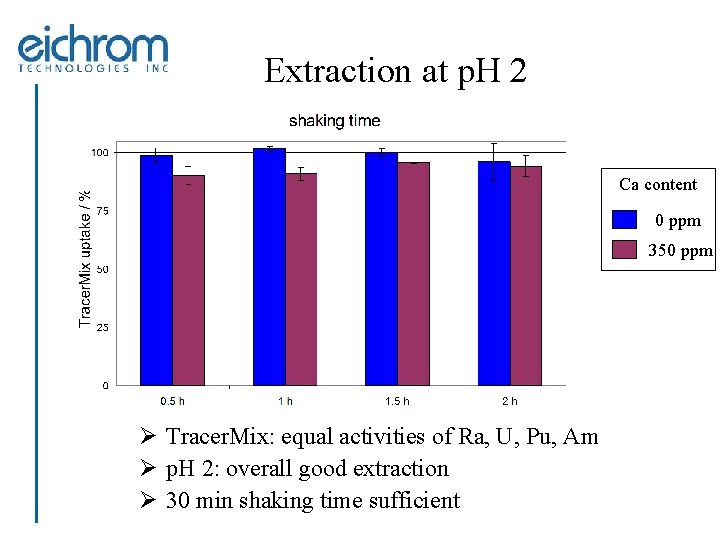
Extraction conditions Ø p. H 1: no Am uptake Ø p. H 2: overall good extraction Ø No further improvement by shaking for 4 h
Extraction at p. H 2 Ca content 0 ppm 350 ppm Ø Tracer. Mix: equal activities of Ra, U, Pu, Am Ø p. H 2: overall good extraction Ø 30 min shaking time sufficient
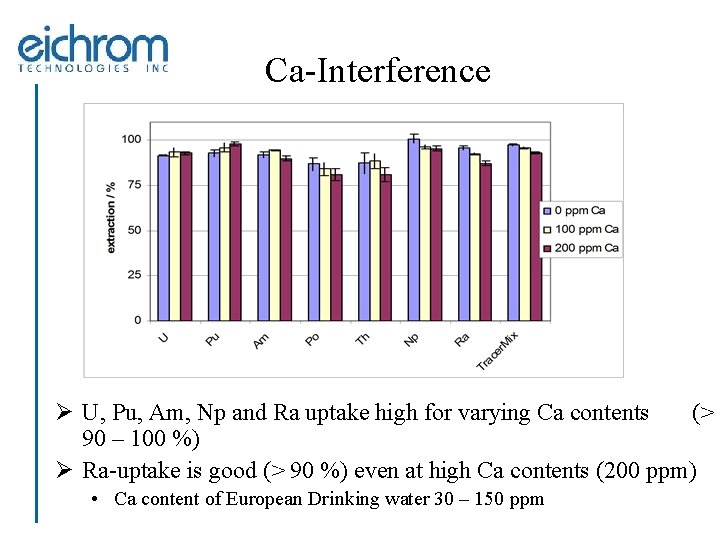
Ca-Interference Ø U, Pu, Am, Np and Ra uptake high for varying Ca contents (> 90 – 100 %) Ø Ra-uptake is good (> 90 %) even at high Ca contents (200 ppm) • Ca content of European Drinking water 30 – 150 ppm
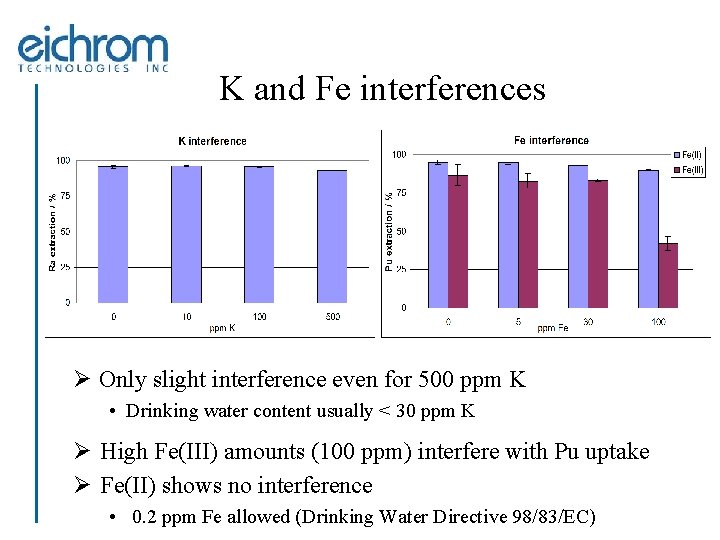
K and Fe interferences Ø Only slight interference even for 500 ppm K • Drinking water content usually < 30 ppm K Ø High Fe(III) amounts (100 ppm) interfere with Pu uptake Ø Fe(II) shows no interference • 0. 2 ppm Fe allowed (Drinking Water Directive 98/83/EC)
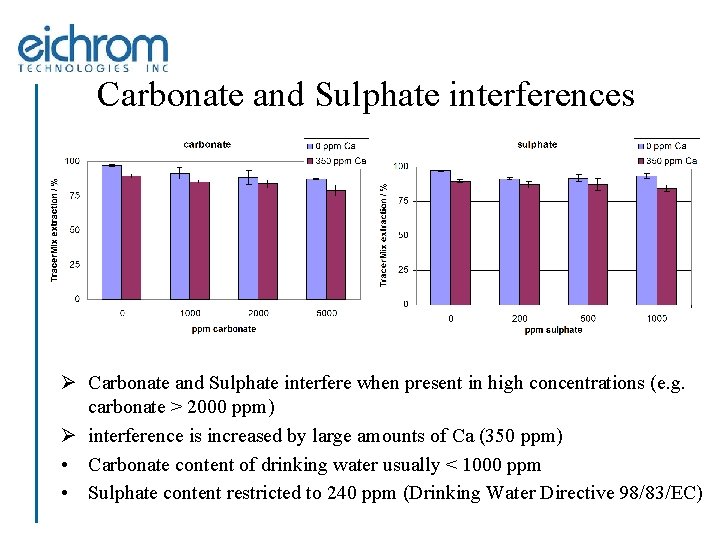
Carbonate and Sulphate interferences Ø Carbonate and Sulphate interfere when present in high concentrations (e. g. carbonate > 2000 ppm) Ø interference is increased by large amounts of Ca (350 ppm) • Carbonate content of drinking water usually < 1000 ppm • Sulphate content restricted to 240 ppm (Drinking Water Directive 98/83/EC)
Resin approach Ø Extraction near quantitative Ø Actinides and Ra Ø p. H 2 (commonly used) Ø 30 min shaking time Ø Interferences Ø Ca, Fe(III), carbonate and sulphate do not interfere (except when present in contents usually not found or not allowed in water) Ø No K interference ØResin approach suited
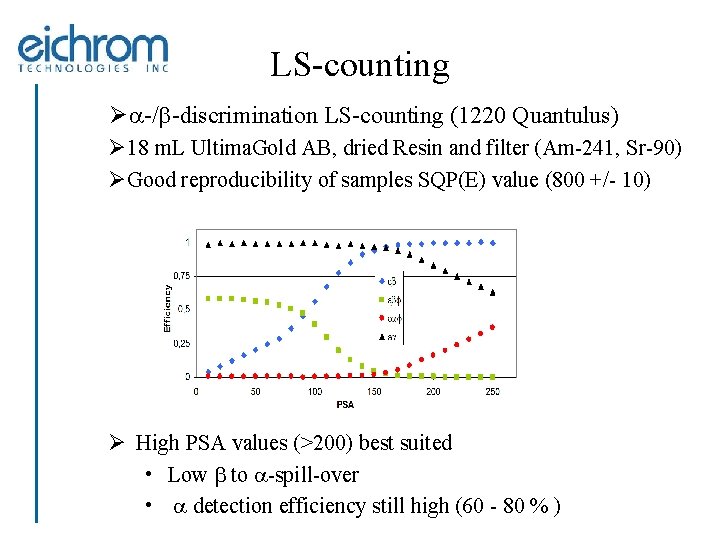
LS-counting Øa-/b-discrimination LS-counting (1220 Quantulus) Ø 18 m. L Ultima. Gold AB, dried Resin and filter (Am-241, Sr-90) ØGood reproducibility of samples SQP(E) value (800 +/- 10) Ø High PSA values (>200) best suited • Low b to a-spill-over • a detection efficiency still high (60 - 80 % )
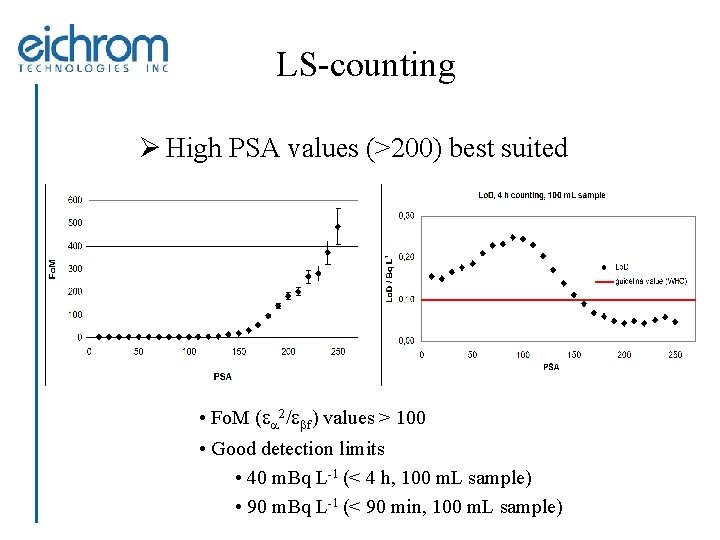
LS-counting Ø High PSA values (>200) best suited • Fo. M (ea 2/ebf) values > 100 • Good detection limits • 40 m. Bq L-1 (< 4 h, 100 m. L sample) • 90 m. Bq L-1 (< 90 min, 100 m. L sample)
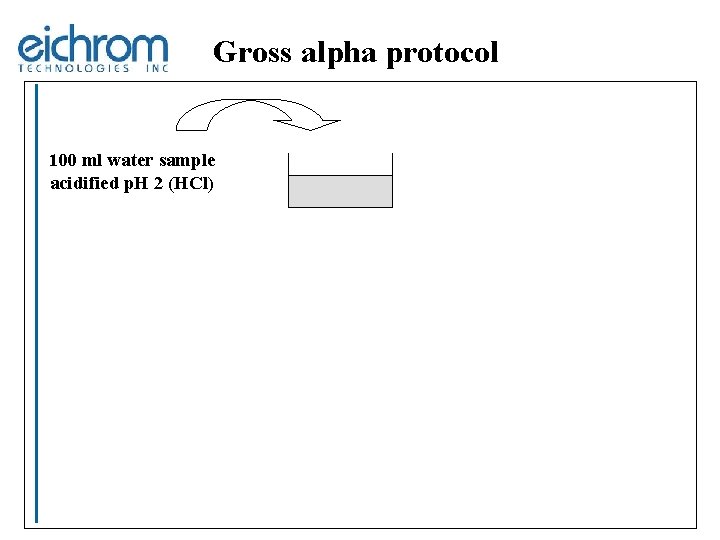
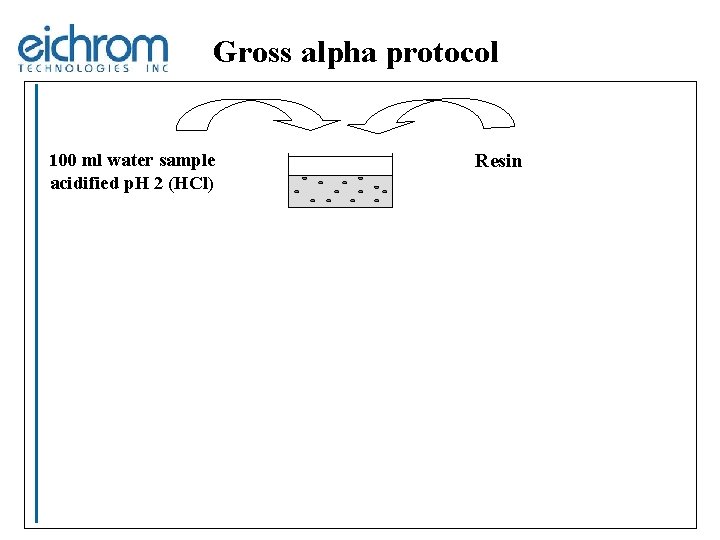
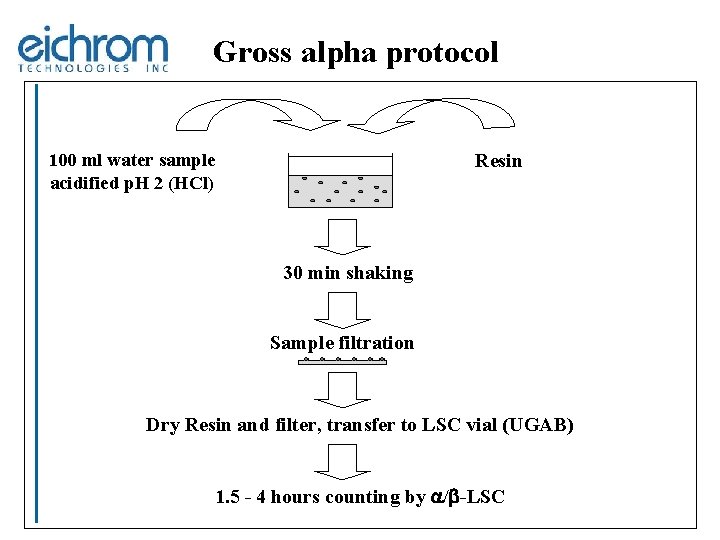
Gross alpha protocol 100 ml water sample acidified p. H 2 (HCl)
Gross alpha protocol 100 ml water sample acidified p. H 2 (HCl) Resin
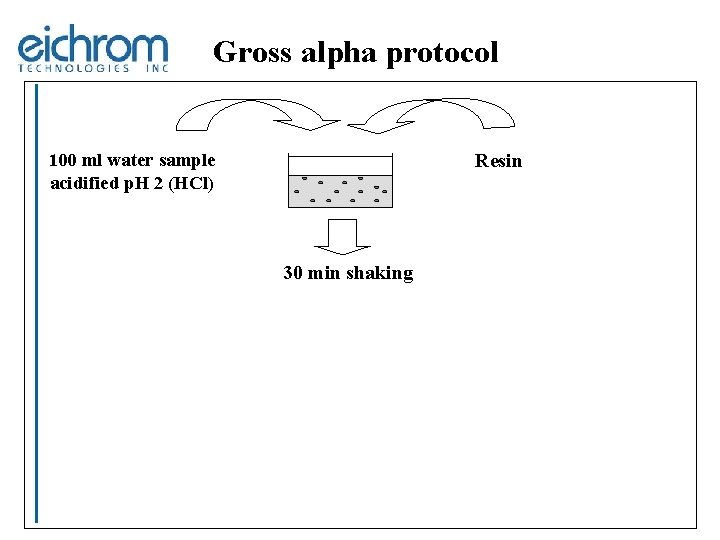
Gross alpha protocol 100 ml water sample acidified p. H 2 (HCl) Resin 30 min shaking
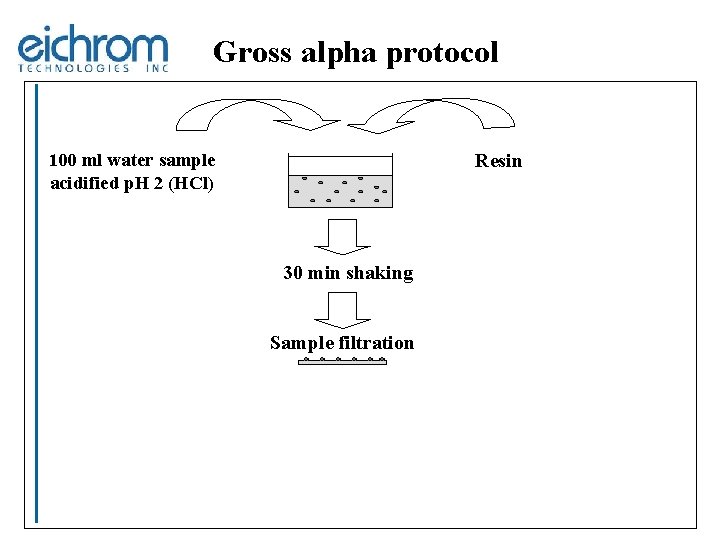
Gross alpha protocol 100 ml water sample acidified p. H 2 (HCl) Resin 30 min shaking Sample filtration
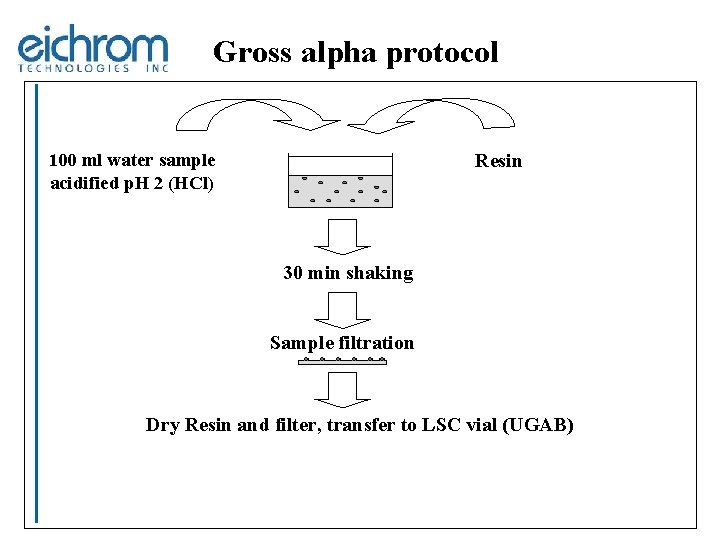
Gross alpha protocol 100 ml water sample acidified p. H 2 (HCl) Resin 30 min shaking Sample filtration Dry Resin and filter, transfer to LSC vial (UGAB)
Gross alpha protocol 100 ml water sample acidified p. H 2 (HCl) Resin 30 min shaking Sample filtration Dry Resin and filter, transfer to LSC vial (UGAB) 1. 5 - 4 hours counting by / -LSC
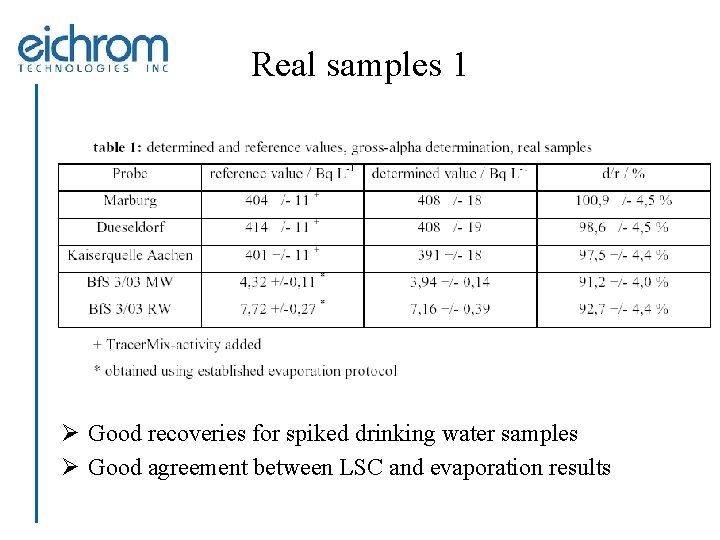
Real samples 1 Ø Good recoveries for spiked drinking water samples Ø Good agreement between LSC and evaporation results
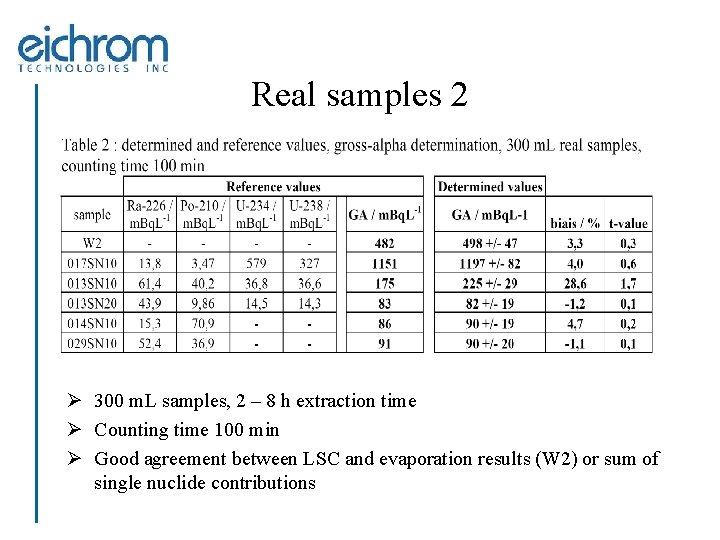
Real samples 2 Ø 300 m. L samples, 2 – 8 h extraction time Ø Counting time 100 min Ø Good agreement between LSC and evaporation results (W 2) or sum of single nuclide contributions
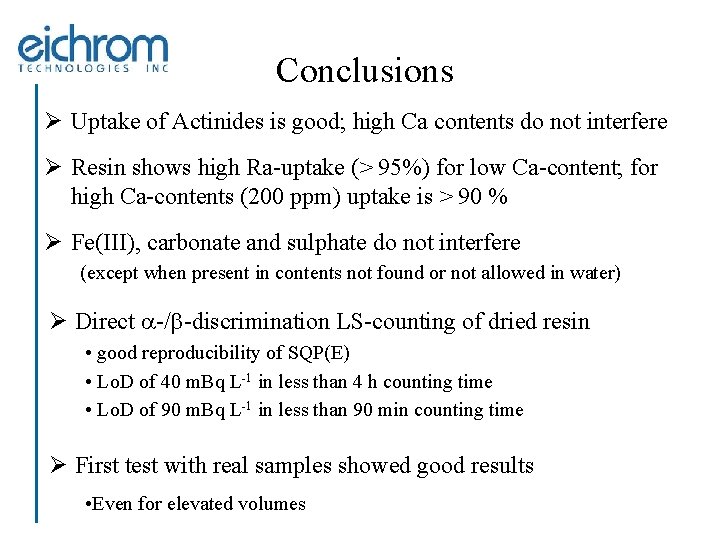
Conclusions Ø Uptake of Actinides is good; high Ca contents do not interfere Ø Resin shows high Ra-uptake (> 95%) for low Ca-content; for high Ca-contents (200 ppm) uptake is > 90 % Ø Fe(III), carbonate and sulphate do not interfere (except when present in contents not found or not allowed in water) Ø Direct a-/b-discrimination LS-counting of dried resin • good reproducibility of SQP(E) • Lo. D of 40 m. Bq L-1 in less than 4 h counting time • Lo. D of 90 m. Bq L-1 in less than 90 min counting time Ø First test with real samples showed good results • Even for elevated volumes
Next steps Ø Improvement of LS-counting conditions Ø Further evaluation with intercomparison/reference samples Ø GPC-option (elution step) Ø Other matrices Ø Natural b emitters • First results for Pb-210, Ra-228, Sr-90
Acknowledgements • A. Vetter; LAf. A Düsseldorf • Dr. M. Beyermann; Bf. S Berlin • Dr. P. J. M Kwakmann; RIVM Netherlands • Prof. Dr. H. Jungclas, R. Streng, M. Stumpf, A. Zulauf, A. Brand; Philipps-Universität Marburg