
Grizzly Bears CharacteristicsBehaviours Grizzly bears have a large
Grizzly Bears
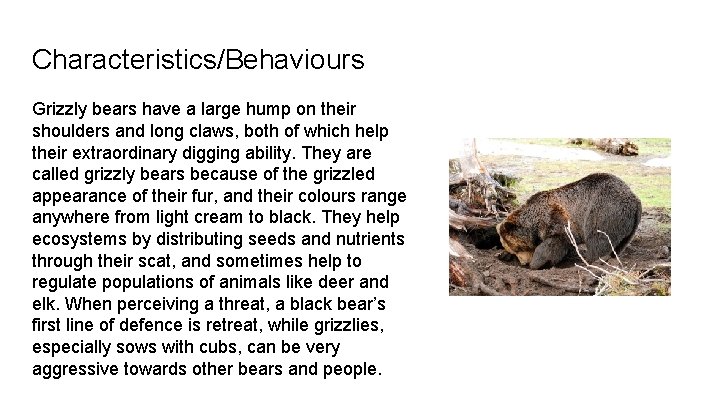
Characteristics/Behaviours Grizzly bears have a large hump on their shoulders and long claws, both of which help their extraordinary digging ability. They are called grizzly bears because of the grizzled appearance of their fur, and their colours range anywhere from light cream to black. They help ecosystems by distributing seeds and nutrients through their scat, and sometimes help to regulate populations of animals like deer and elk. When perceiving a threat, a black bear’s first line of defence is retreat, while grizzlies, especially sows with cubs, can be very aggressive towards other bears and people.
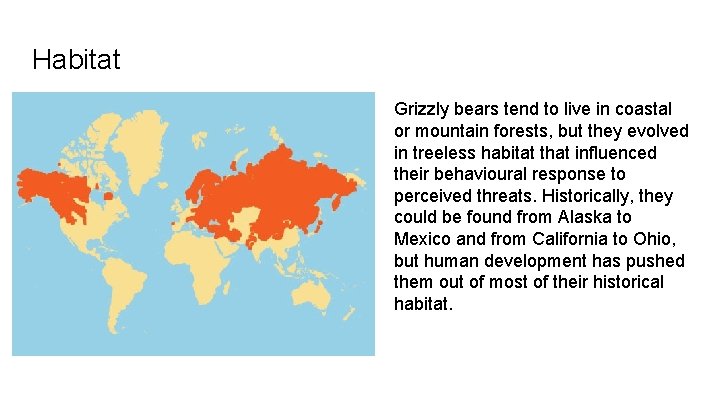
Habitat Grizzly bears tend to live in coastal or mountain forests, but they evolved in treeless habitat that influenced their behavioural response to perceived threats. Historically, they could be found from Alaska to Mexico and from California to Ohio, but human development has pushed them out of most of their historical habitat.
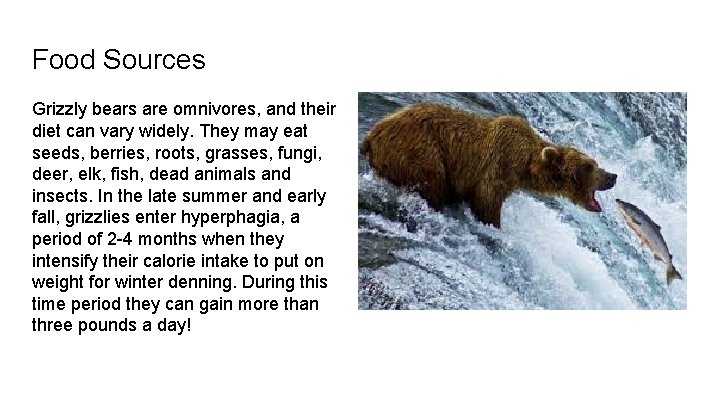
Food Sources Grizzly bears are omnivores, and their diet can vary widely. They may eat seeds, berries, roots, grasses, fungi, deer, elk, fish, dead animals and insects. In the late summer and early fall, grizzlies enter hyperphagia, a period of 2 -4 months when they intensify their calorie intake to put on weight for winter denning. During this time period they can gain more than three pounds a day!
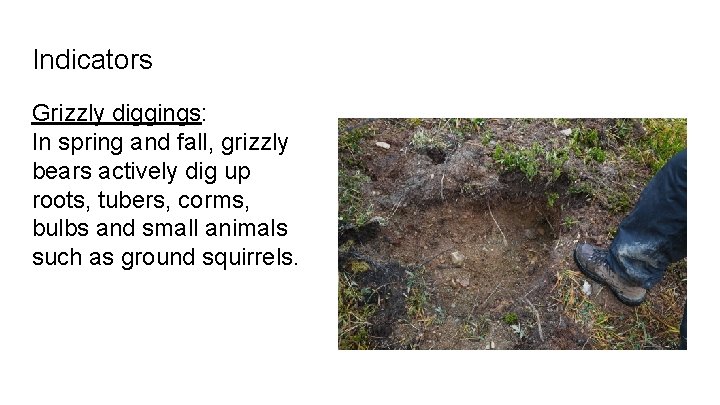
Indicators Grizzly diggings: In spring and fall, grizzly bears actively dig up roots, tubers, corms, bulbs and small animals such as ground squirrels.
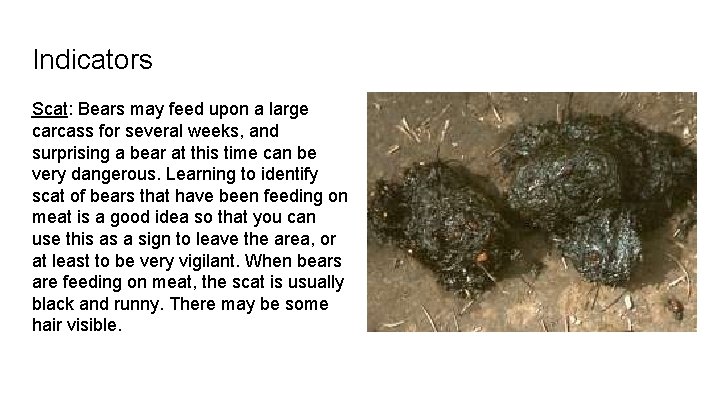
Indicators Scat: Bears may feed upon a large carcass for several weeks, and surprising a bear at this time can be very dangerous. Learning to identify scat of bears that have been feeding on meat is a good idea so that you can use this as a sign to leave the area, or at least to be very vigilant. When bears are feeding on meat, the scat is usually black and runny. There may be some hair visible.
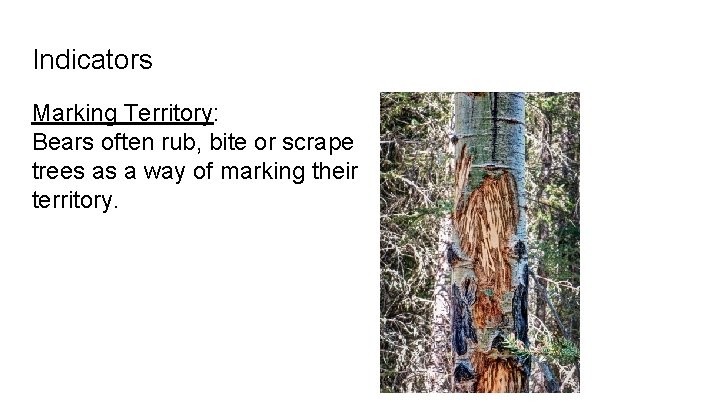
Indicators Marking Territory: Bears often rub, bite or scrape trees as a way of marking their territory.
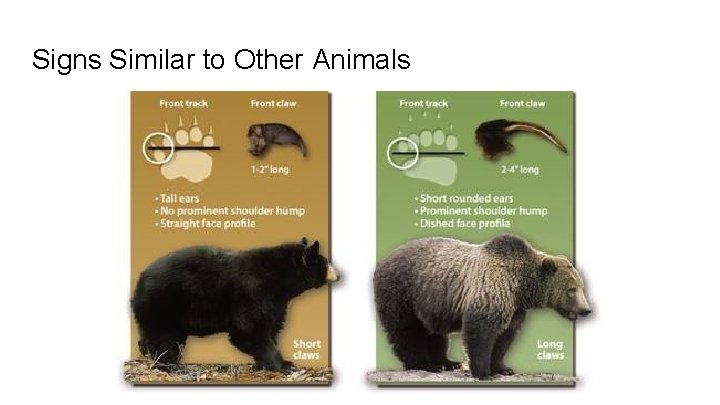
Signs Similar to Other Animals
- Slides: 8