
Griffiths Experiment In 1928 British biologist Frederick Griffith
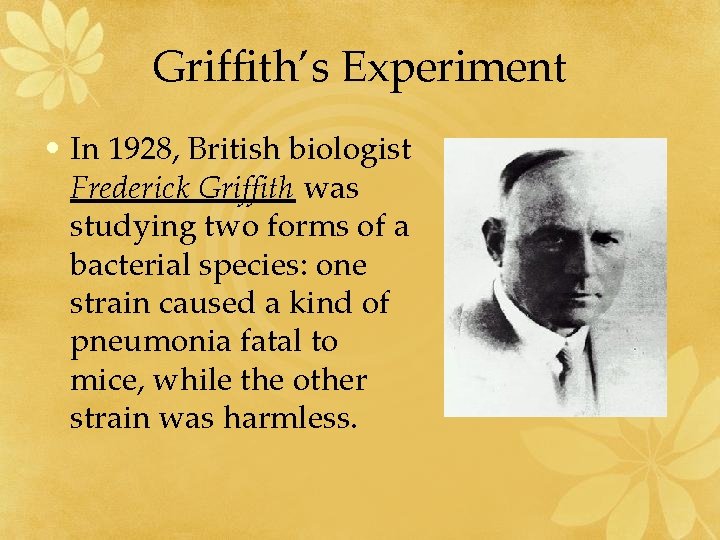
Griffith’s Experiment • In 1928, British biologist Frederick Griffith was studying two forms of a bacterial species: one strain caused a kind of pneumonia fatal to mice, while the other strain was harmless.
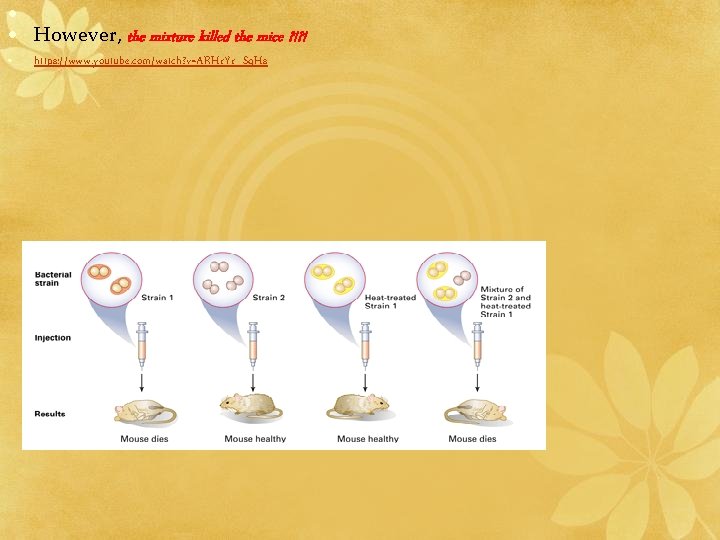
• • However, the mixture killed the mice ? !? ! • https: //www. youtube. com/watch? v=ARHr. Yr_Sq. Hs
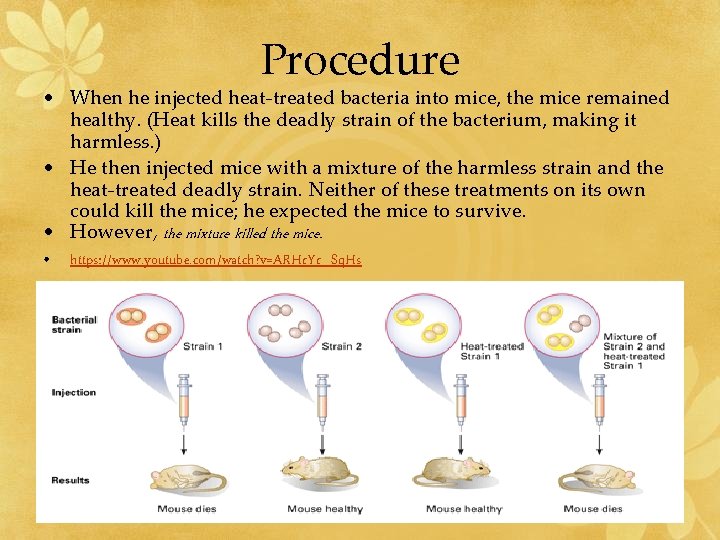
Procedure • When he injected heat-treated bacteria into mice, the mice remained healthy. (Heat kills the deadly strain of the bacterium, making it harmless. ) • He then injected mice with a mixture of the harmless strain and the heat-treated deadly strain. Neither of these treatments on its own could kill the mice; he expected the mice to survive. • However, the mixture killed the mice. • https: //www. youtube. com/watch? v=ARHr. Yr_Sq. Hs

Griffith’s Experiment & Results

Griffith’s Conclusion • Some of the harmless bacteria had been "transformed, " becoming deadly, lethal bacteria. • Furthermore, Griffith discovered that all of the descendants of the transformed bacteria inherited the killer trait. • Clearly, some substance (Griffith called it a “transforming factor” ) in the deadly strain remained active despite the heat treatment. This substance caused a heritable change in the other strain.
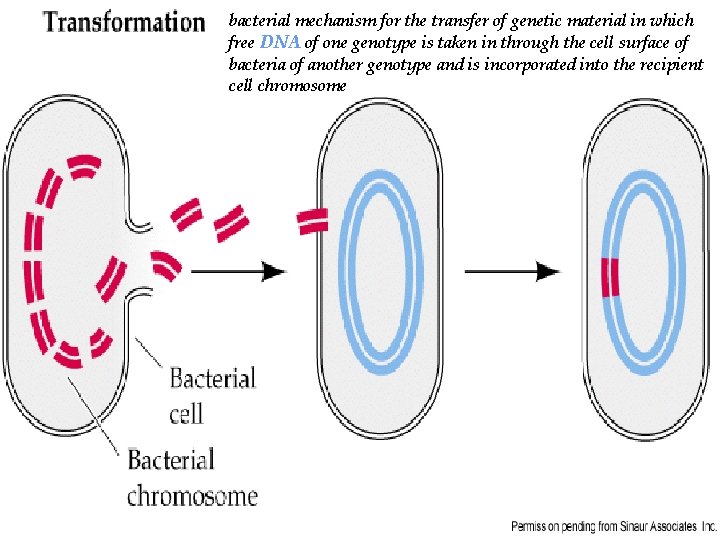
bacterial mechanism for the transfer of genetic material in which free DNA of one genotype is taken in through the cell surface of bacteria of another genotype and is incorporated into the recipient cell chromosome
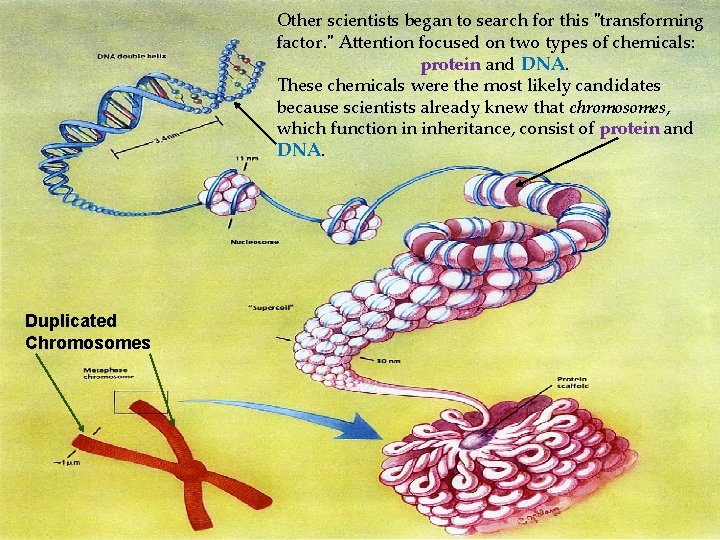
Other scientists began to search for this "transforming factor. " Attention focused on two types of chemicals: protein and DNA. These chemicals were the most likely candidates because scientists already knew that chromosomes, which function in inheritance, consist of protein and DNA. Duplicated Chromosomes

Avery Shows DNA to be the “Transforming Factor” In 1944, American biologist Oswald Avery and his colleagues took Griffith's experiments one step further: 1. They treated Griffith's mixture of heat-treated deadly strain and live harmless strain with protein -destroying enzymes. The bacterial colonies grown from the mixture were still transformed. Avery and his colleagues concluded that protein could not be the transforming factor. 2. They treated the mixture with DNA-destroying enzymes. This time the colonies failed to transform.
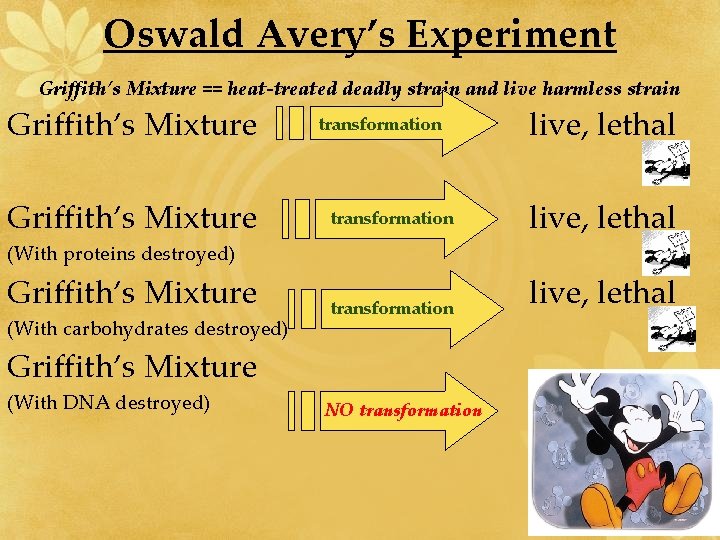
Oswald Avery’s Experiment Griffith’s Mixture == heat-treated deadly strain and live harmless strain Griffith’s Mixture transformation live, lethal (With proteins destroyed) Griffith’s Mixture (With carbohydrates destroyed) Griffith’s Mixture (With DNA destroyed) NO transformation

Avery’s Conclusion • Since transformation did not occur when the DNA was destroyed, Avery concluded that DNA is the genetic material of the cell. • As the experiments of Griffith and Avery illustrate, science is a process in which discoveries often build upon the results of previous experiments.

Virus Experiments Provide More Evidence • Despite Avery's findings, many scientists remained skeptical that genes were made of DNA rather than protein. • Proteins are made of 20 different amino acid building blocks. DNA has only 4 nucleotide building blocks. Many people thought DNA seemed too simple to account for the large variety of traits inherited by organisms. • Which one, protein or DNA, was truly the hereditary material?
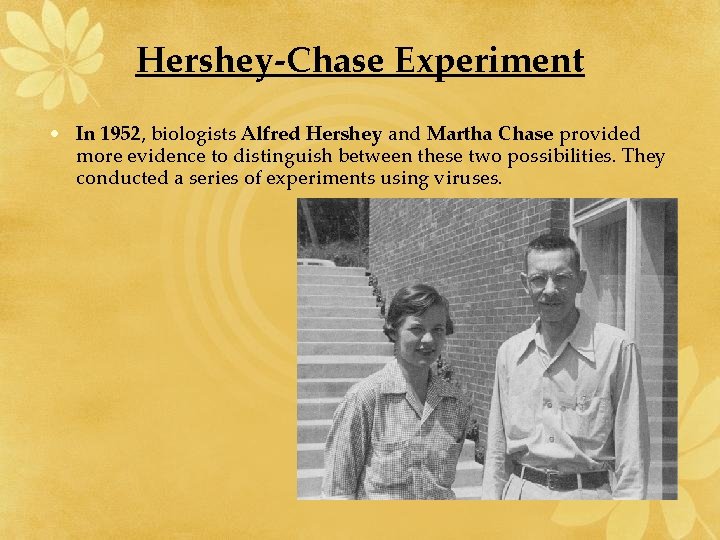
Hershey-Chase Experiment • In 1952, biologists Alfred Hershey and Martha Chase provided more evidence to distinguish between these two possibilities. They conducted a series of experiments using viruses.
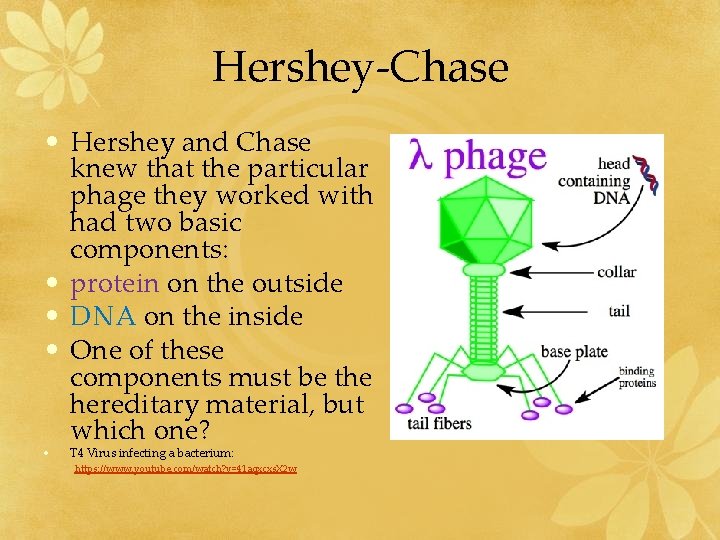
Hershey-Chase • Hershey and Chase knew that the particular phage they worked with had two basic components: • protein on the outside • DNA on the inside • One of these components must be the hereditary material, but which one? • T 4 Virus infecting a bacterium: https: //www. youtube. com/watch? v=41 aqxcxs. X 2 w
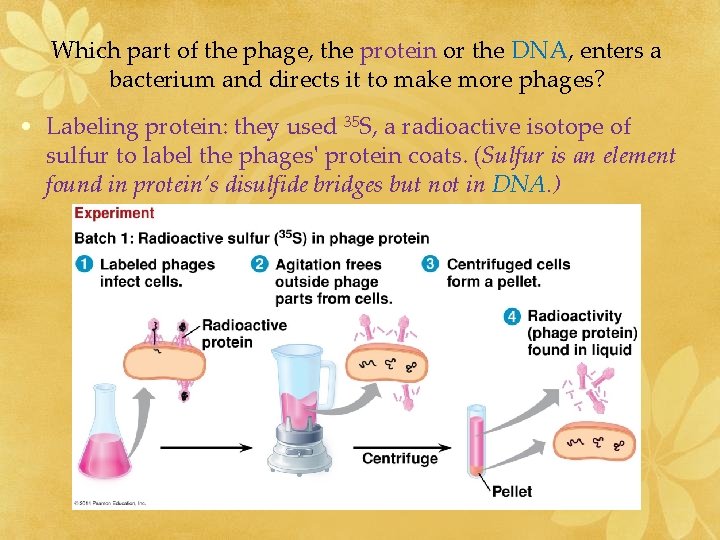
Which part of the phage, the protein or the DNA, enters a bacterium and directs it to make more phages? • Labeling protein: they used 35 S, a radioactive isotope of sulfur to label the phages' protein coats. (Sulfur is an element found in protein’s disulfide bridges but not in DNA. )
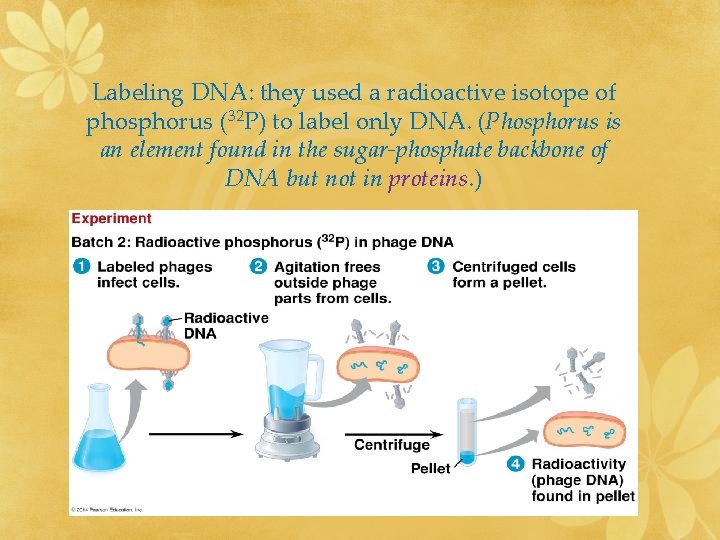
Labeling DNA: they used a radioactive isotope of phosphorus (32 P) to label only DNA. (Phosphorus is an element found in the sugar-phosphate backbone of DNA but not in proteins. )
Hershey-Chase Procedure • Next, they allowed each batch of phages to infect separate cultures of nonradioactive bacterial cells. • They then whirled each culture in a blender to shake loose any parts of the phages that remained outside the bacterial cells. • They measured radioactivity in the loose phage parts and in the bacterial cells.
Hershey-Chase Procedure • When only phage protein coats were labeled, most of the radioactivity was detected outside the cells. But when phage DNA was labeled, most of the radioactivity was detected inside the cells.
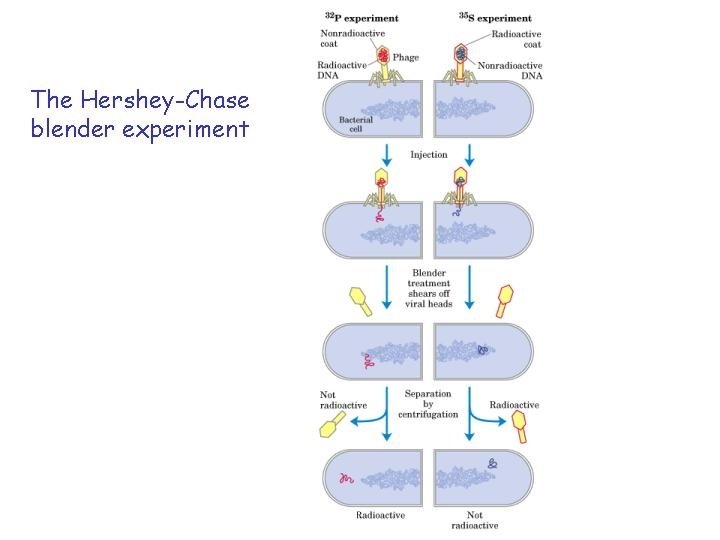
Conclusions • Hershey and Chase concluded that the phage's DNA entered the bacterial cell during infection, but the proteins did not. They further concluded that DNA must carry the genetic information responsible for producing new phages. Their results convinced the scientific world that DNA was the hereditary material.
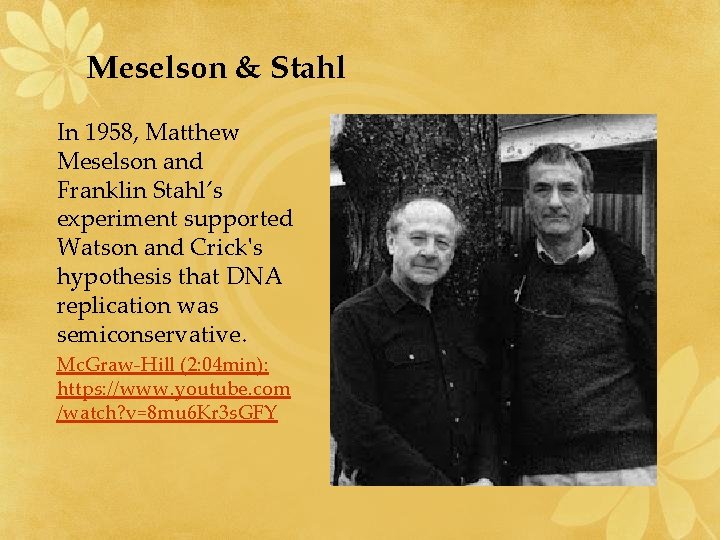
Meselson & Stahl In 1958, Matthew Meselson and Franklin Stahl’s experiment supported Watson and Crick's hypothesis that DNA replication was semiconservative. Mc. Graw-Hill (2: 04 min): https: //www. youtube. com /watch? v=8 mu 6 Kr 3 s. GFY
Three models of replication were proposed. • Conservative • Semiconservative • Dispersive
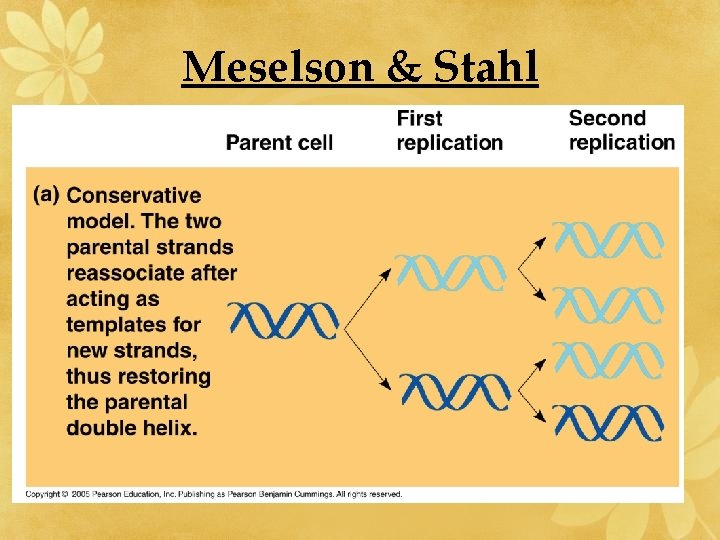
Meselson & Stahl
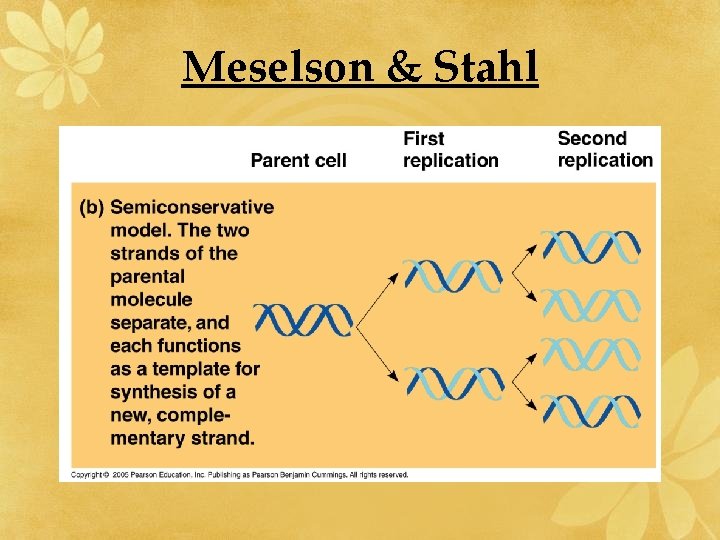
Meselson & Stahl
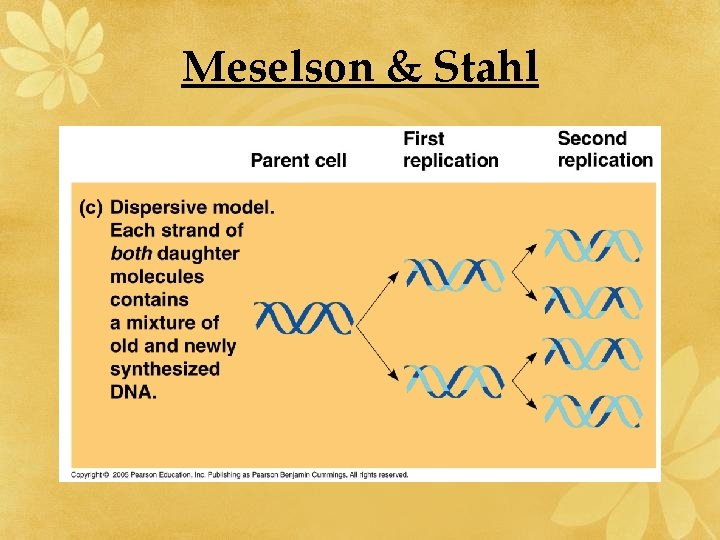
Meselson & Stahl
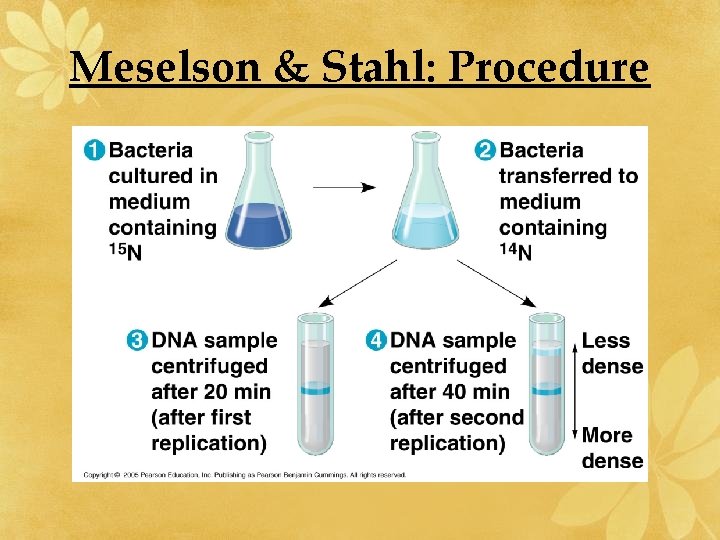
Meselson & Stahl: Procedure
Meselson & Stahl: Results • The first replication in the 14 N medium produced a band of hybrid (15 N-14 N) DNA. This result eliminated the conservative model. • A second replication produced both light and hybrid DNA, this eliminated the dispersive model and supported the semiconservative model.
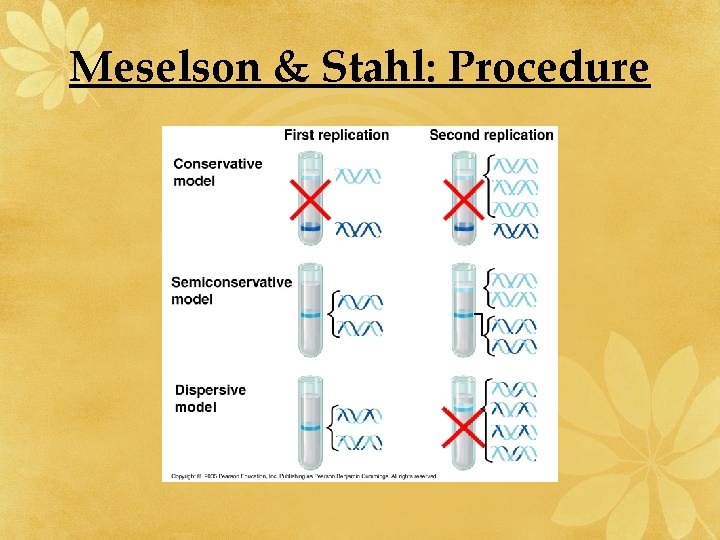
Meselson & Stahl: Procedure
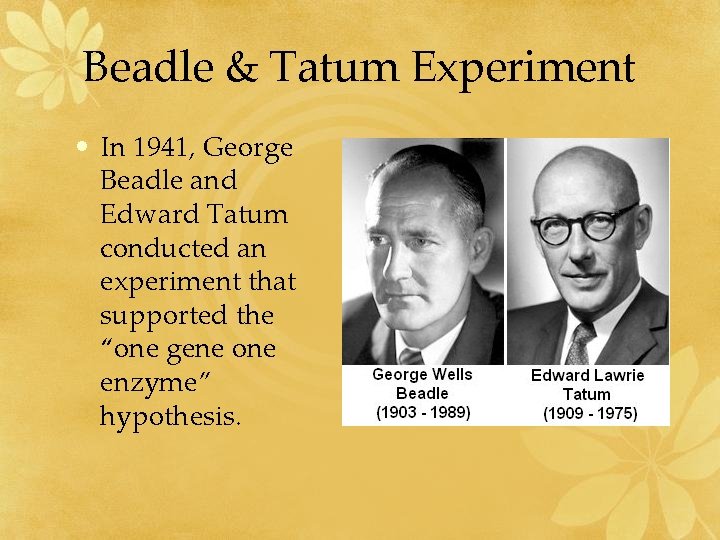
Beadle & Tatum Experiment • In 1941, George Beadle and Edward Tatum conducted an experiment that supported the “one gene one enzyme” hypothesis.
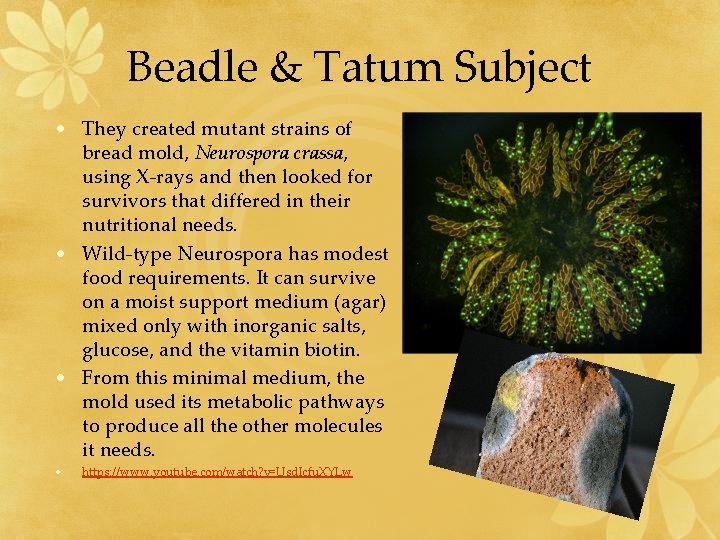
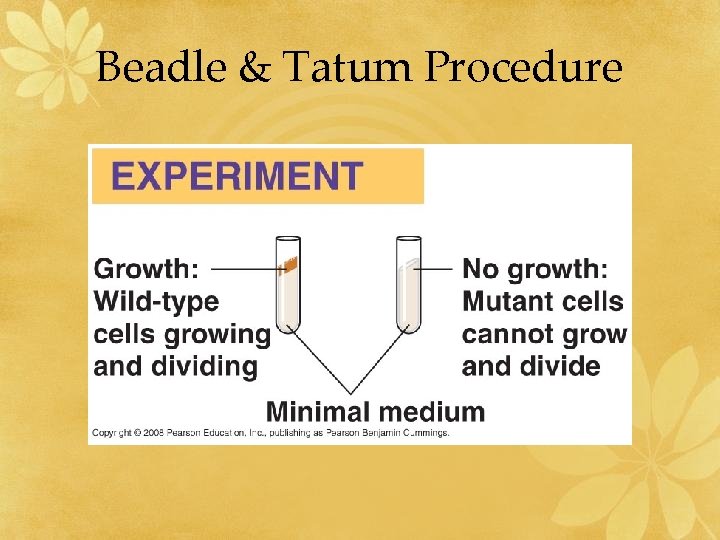
Beadle & Tatum Subject • They created mutant strains of bread mold, Neurospora crassa, using X-rays and then looked for survivors that differed in their nutritional needs. • Wild-type Neurospora has modest food requirements. It can survive on a moist support medium (agar) mixed only with inorganic salts, glucose, and the vitamin biotin. • From this minimal medium, the mold used its metabolic pathways to produce all the other molecules it needs. • https: //www. youtube. com/watch? v=Usd. Icfu. XYLw
Beadle & Tatum Procedure
How a metabolic pathway works
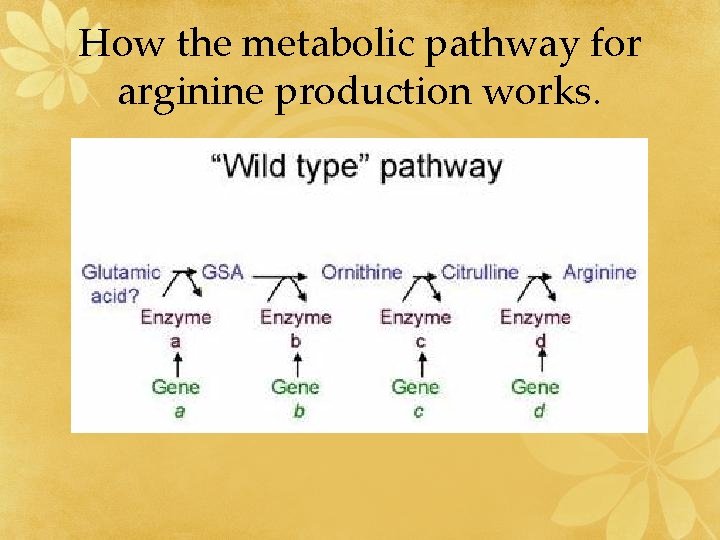
How the metabolic pathway for arginine production works.
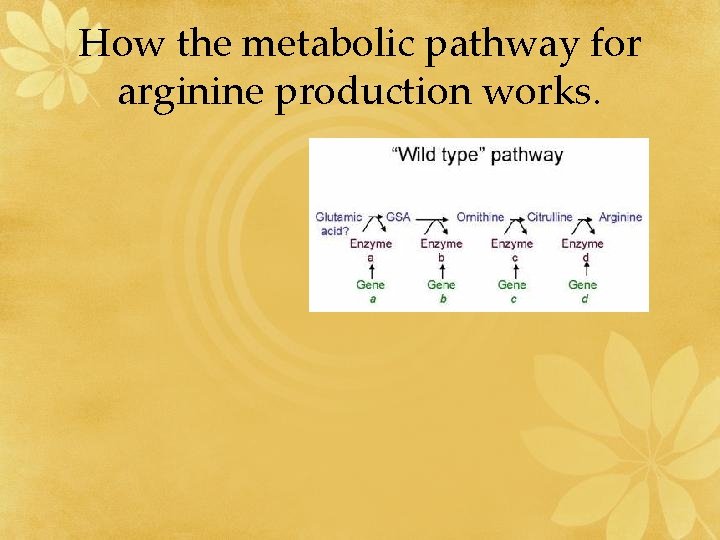
How the metabolic pathway for arginine production works.
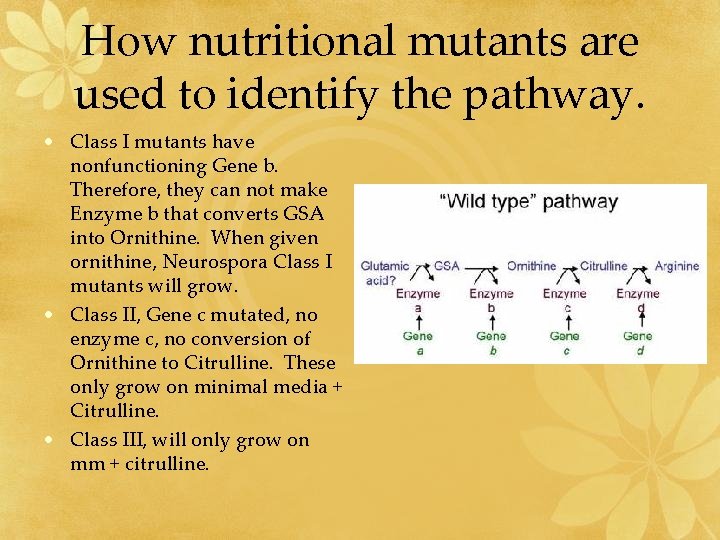
How nutritional mutants are used to identify the pathway. • Class I mutants have nonfunctioning Gene b. Therefore, they can not make Enzyme b that converts GSA into Ornithine. When given ornithine, Neurospora Class I mutants will grow. • Class II, Gene c mutated, no enzyme c, no conversion of Ornithine to Citrulline. These only grow on minimal media + Citrulline. • Class III, will only grow on mm + citrulline.
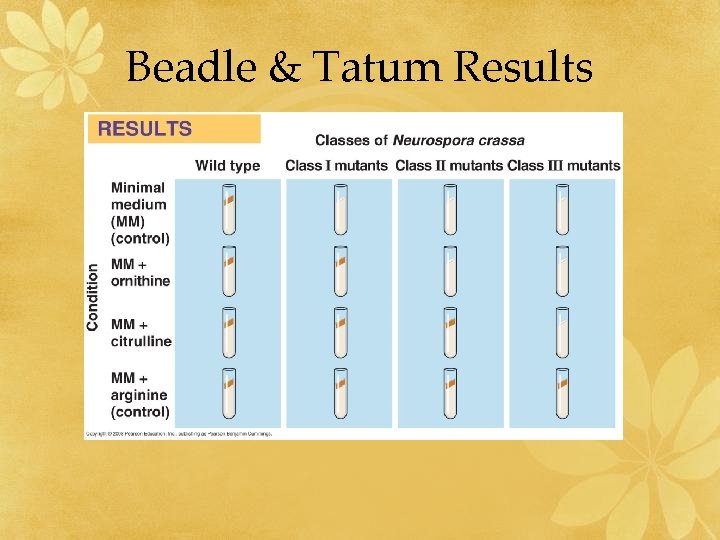
Beadle & Tatum Results
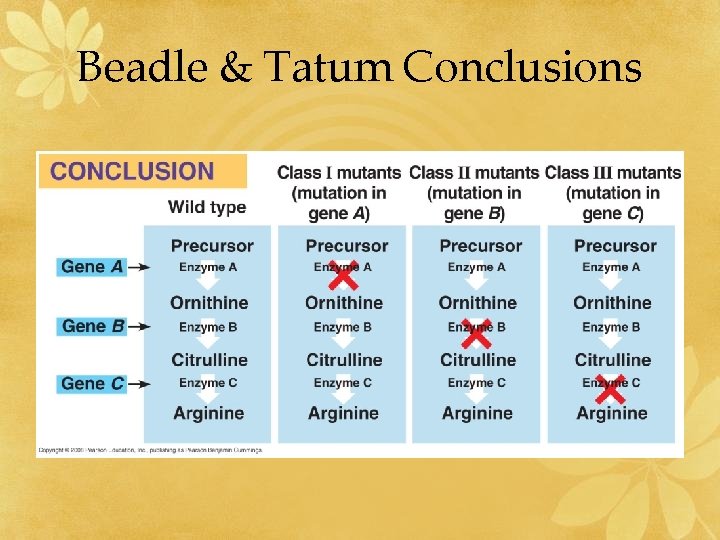
Beadle & Tatum Conclusions
Beadle & Tatum Conclusions • From the growth pattern of the mutants, Beadle and Tatum deduced that each mutant was unable to carry out one step in the pathway for synthesizing arginine, presumably because it lacked the necessary enzyme. • Because each of their mutants were mutated in a single gene, they concluded that each mutated gene must normally dictate the production of one enzyme. • Their results supported the one gene-one enzyme hypothesis. • It also confirmed the arginine pathway.
- Slides: 38