
Grief Bereavement support Sharon King Palliative and End
Grief & Bereavement support Sharon King Palliative and End of Life Organisation Lead for Livewell Southwest Alison Crane Health Improvement Practitioner for Livewell Southwest
Dying matters Click on the link below and ……… (tip: keep the link minimised whilst watching so that you can return to your learning Power Point afterwards) Let’s start talking If unable to access the link above please copy and paste: https: //www. youtube. com/watch? v=AVRGq. Gn. Zs 6 Q&feature=youtu. be
Talking about death and dying There is lots of talk about coronavirus, death and dying all around us at the moment. This can bring up difficult feelings and remind you of grief and those who have died in the past. It may also make you feel worried about yourself or a loved one dying.
A Compassionate City Charter: Plymouth is now officially the first Compassionate City in England A Community wide approach to end of life, loss and bereavement. “Every day people die and hearts are broken. Death and dying are more than medical issues and caring for those affected is not just the role of the doctor and the chaplain. End of life care is everyone’s responsibility and we all have a practical role to play” Kellehear (2018)
What is Grief & Bereavement? Grief is the acute pain that accompanies loss. Because it is a reflection of what we love, it can feel all-encompassing. Be mindful that grief is not limited to the loss of people. www. psychologytoday. com
What is grief & bereavement? • • It is a natural response There is no ‘right’ way to grieve Everyone experiences it differently There are many different types of grief…….

Types of grief & bereavement List as many types of grief and bereavement you can think of…. .
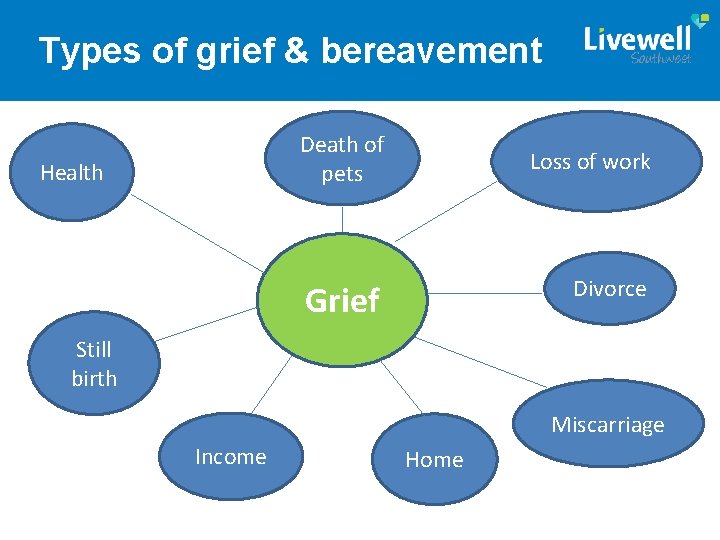
Types of grief & bereavement Health Death of pets Loss of work Grief Divorce Still birth Miscarriage Income Home
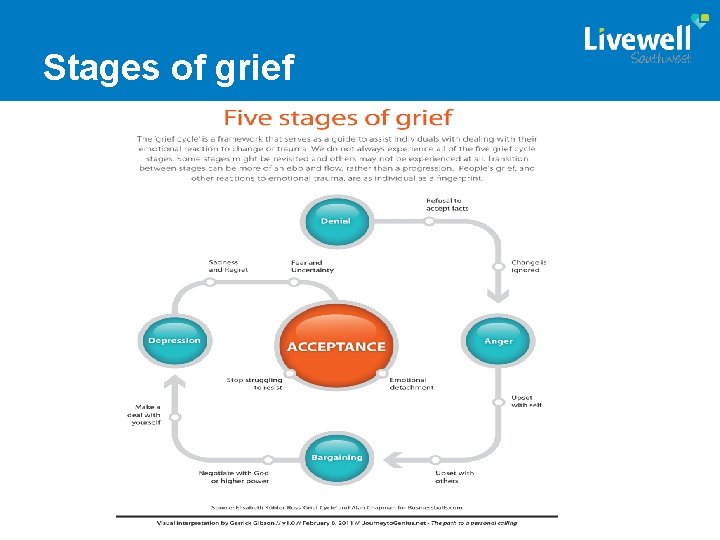
Stages of grief
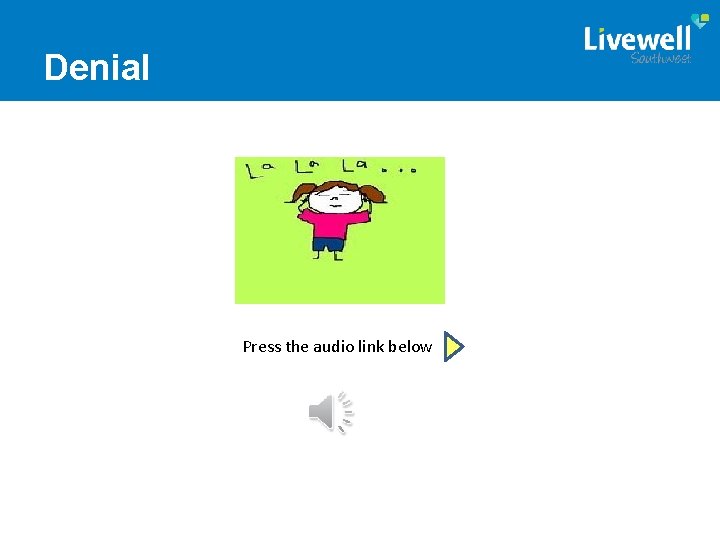
Denial Press the audio link below
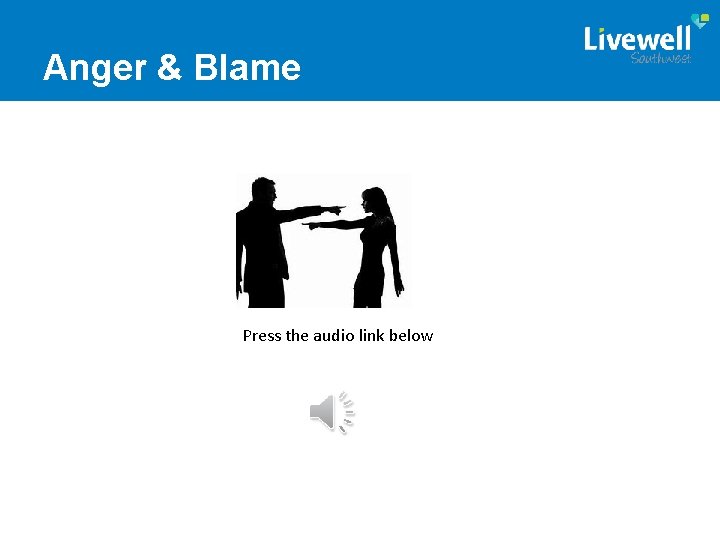
Anger & Blame Press the audio link below
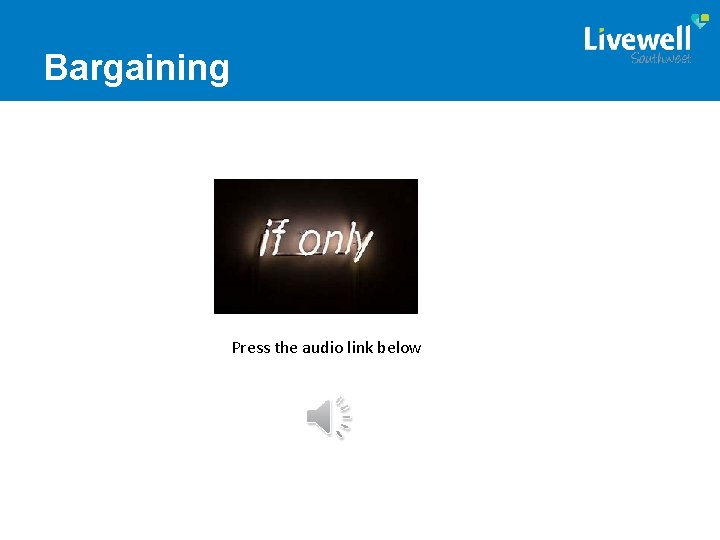
Bargaining Press the audio link below
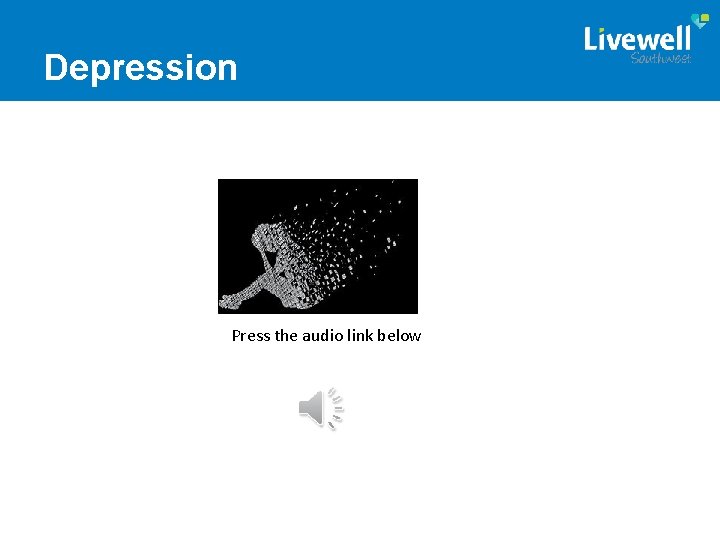
Depression Press the audio link below
Acceptance Press the audio link below
Grieving & Isolation Being bereaved can be a very lonely time. Talking with friends and family can be one of the most helpful ways to cope after someone close to us dies. Advice is usually to avoid spending lots of time alone. But at the moment many of us need to self-isolate. Grieving while being alone can mean that: • Your feelings of loneliness and grief are stronger. • You might have to stay by yourself in a place you shared with the person who has died. This can bring up painful memories. • If you are living with a family in the same house, you may be able to support each other. But sometimes being together all the time can lead to tension or arguments. • It is harder to deal with your grief because everyone is also worried about the coronavirus situation and this complicates the grieving process.
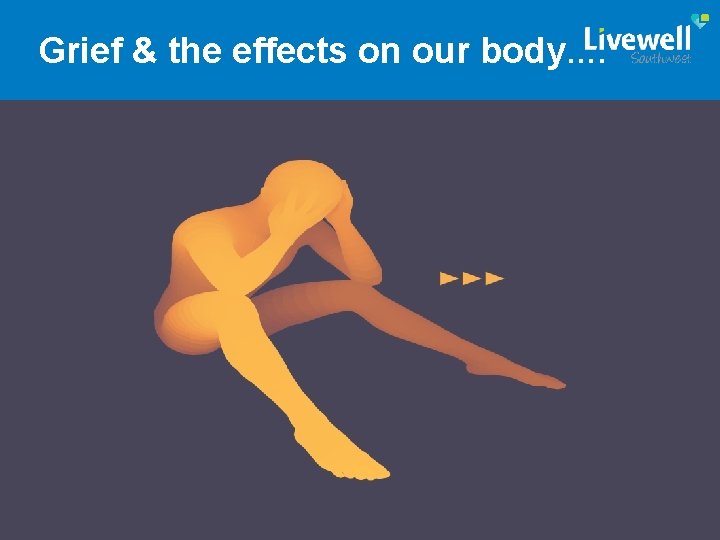
Grief & the effects on our body….
Can…. • interrupt our normal brain function & can cause chemical changes-Dopamine & Serotonin levels alter in our brain and alters our “pleasure” function. • effect concentration, thought processes, sleep patterns. • cause headaches & nausea. • Impact on the emotional, physical, spiritual and psychological well-being of the person who is bereaved.
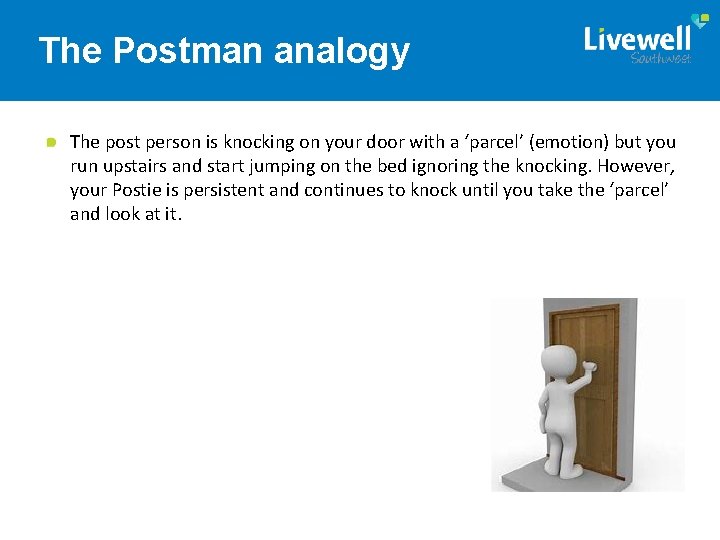
The Postman analogy The post person is knocking on your door with a ‘parcel’ (emotion) but you run upstairs and start jumping on the bed ignoring the knocking. However, your Postie is persistent and continues to knock until you take the ‘parcel’ and look at it.
True or false? Read the following 5 common thoughts around death and dying. Take a note of how you feel about these statements and we will discuss your thoughts and feeling in the live session
Myth busting 1. There is no point in thinking about dying
Myth busting 2. It’s inevitable that most of us will die in hospital
Myth busting 3. It’s better to keep loved ones in the dark to protect their feelings
Myth busting 4. Death is generally very quick or very painful
Myth busting 5. I’ll be vulnerable and powerless towards the end of my life
What stops you? What stops you from talking about death, grief and bereavement? Jot down a few of the feelings that are coming into your mind and we will discuss some of these thoughts and feelings in our live session
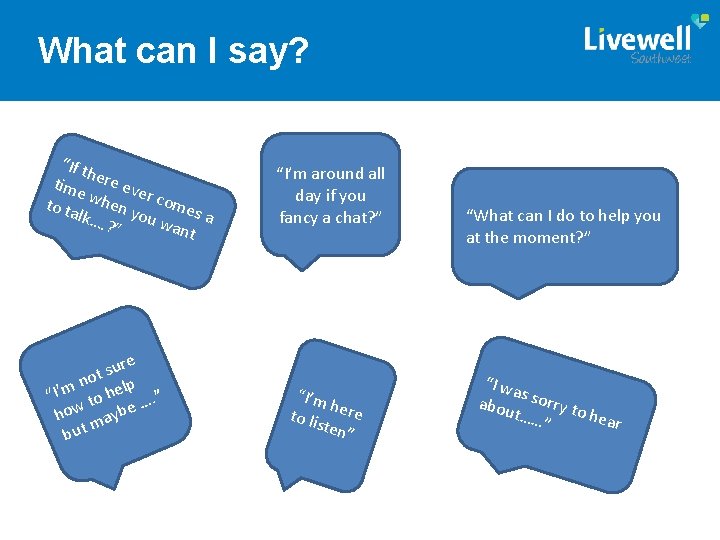
What can I say? “If t h time ere eve to ta when y r comes o lk…. a ? ” u want re u s ot lp n m “I’ to he …. ” how maybe but “I’m around all day if you fancy a chat? ” “I’m h to lis ere ten” “What can I do to help you at the moment? ” “I wa s abou sorry to t…… hear ”
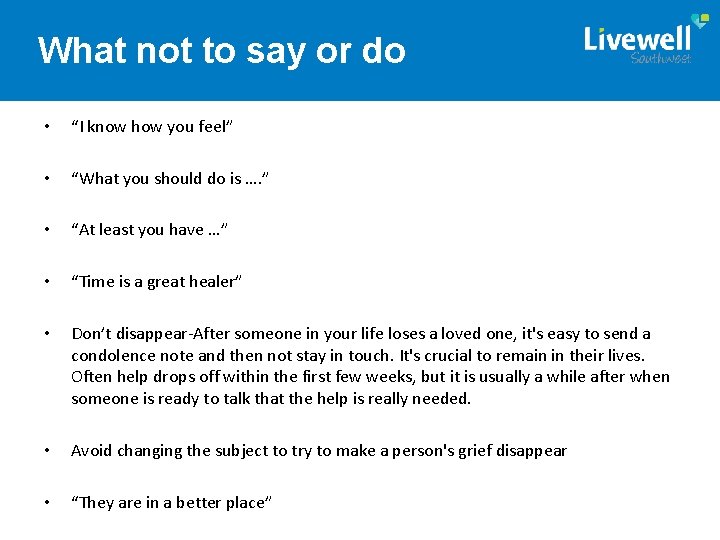
What not to say or do • “I know how you feel” • “What you should do is …. ” • “At least you have …” • “Time is a great healer” • Don’t disappear-After someone in your life loses a loved one, it's easy to send a condolence note and then not stay in touch. It's crucial to remain in their lives. Often help drops off within the first few weeks, but it is usually a while after when someone is ready to talk that the help is really needed. • Avoid changing the subject to try to make a person's grief disappear • “They are in a better place”
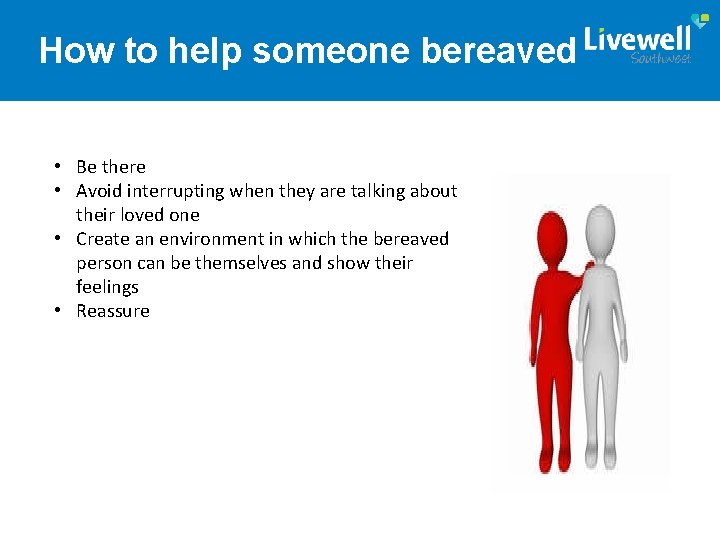
How to help someone bereaved • Be there • Avoid interrupting when they are talking about their loved one • Create an environment in which the bereaved person can be themselves and show their feelings • Reassure
Listening and allowing a person to 'tell their story' in their own way and in their own time is often the best way to start a supportive conversation. • Complete our ‘listening activity’ to see what sort of listener you are. On a piece of paper mark down each statement that fits you (always/sometimes/rarely) then add them up and see what your results reveal…. go to the next slide to have a go!
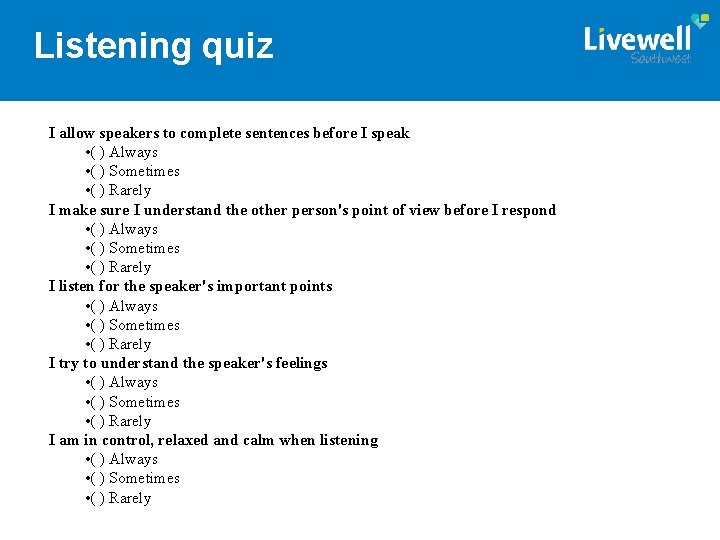
Listening quiz I allow speakers to complete sentences before I speak • ( ) Always • ( ) Sometimes • ( ) Rarely I make sure I understand the other person's point of view before I respond • ( ) Always • ( ) Sometimes • ( ) Rarely I listen for the speaker's important points • ( ) Always • ( ) Sometimes • ( ) Rarely I try to understand the speaker's feelings • ( ) Always • ( ) Sometimes • ( ) Rarely I am in control, relaxed and calm when listening • ( ) Always • ( ) Sometimes • ( ) Rarely
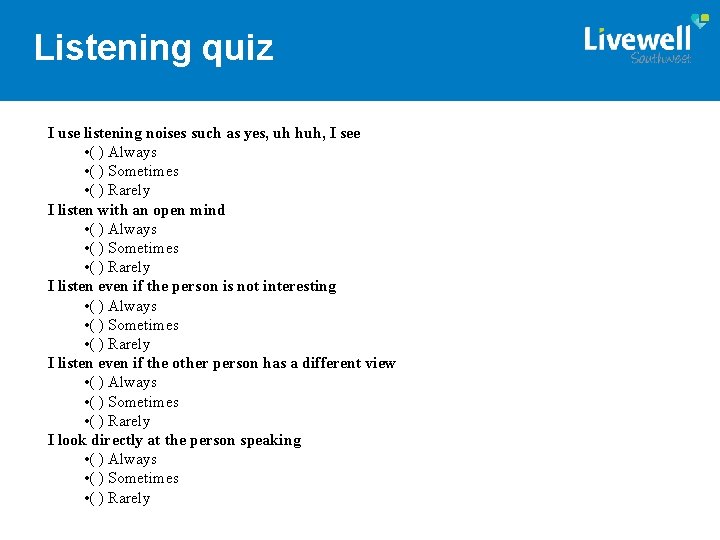
Listening quiz I use listening noises such as yes, uh huh, I see • ( ) Always • ( ) Sometimes • ( ) Rarely I listen with an open mind • ( ) Always • ( ) Sometimes • ( ) Rarely I listen even if the person is not interesting • ( ) Always • ( ) Sometimes • ( ) Rarely I listen even if the other person has a different view • ( ) Always • ( ) Sometimes • ( ) Rarely I look directly at the person speaking • ( ) Always • ( ) Sometimes • ( ) Rarely
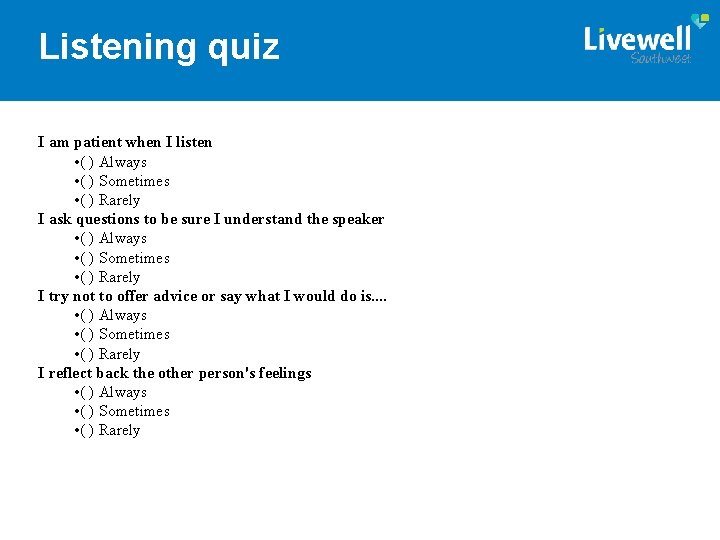
Listening quiz I am patient when I listen • ( ) Always • ( ) Sometimes • ( ) Rarely I ask questions to be sure I understand the speaker • ( ) Always • ( ) Sometimes • ( ) Rarely I try not to offer advice or say what I would do is. . • ( ) Always • ( ) Sometimes • ( ) Rarely I reflect back the other person's feelings • ( ) Always • ( ) Sometimes • ( ) Rarely
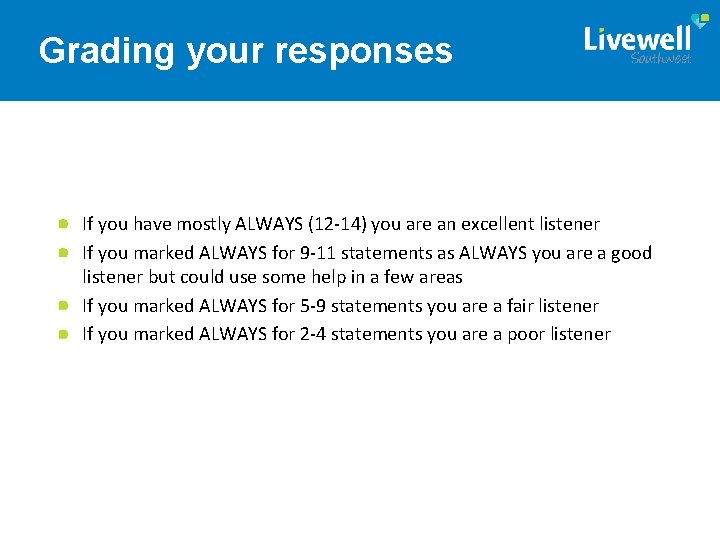
Grading your responses If you have mostly ALWAYS (12 -14) you are an excellent listener If you marked ALWAYS for 9 -11 statements as ALWAYS you are a good listener but could use some help in a few areas If you marked ALWAYS for 5 -9 statements you are a fair listener If you marked ALWAYS for 2 -4 statements you are a poor listener
Don’t…. • avoid someone who has been bereaved. • be alarmed if the bereaved person doesn’t want to talk or demonstrates anger. • underestimate how emotionally draining it can be when supporting a grieving person. Make sure you take care of yourself too.

Acknowledgement Some times it is simply about acknowledging If you are unable to access the link above please copy and paste: https: //www. youtube. com/watch? v=l 2 z. LCCRTn. E&feature=youtu. be
Dementia and grief When someone close to a person with dementia dies, you may wonder whether to tell them. If the person is in the early stages of dementia, it is usually best to tell them about the death and see how they react to the news. If they are in the later stages, they are less likely to be able to understand so it may not be appropriate to tell them. • Think about what is in their best interests. Discuss what to do with a professional such as a dementia specialist nurse, dementia support worker or doctor. • If not told about the death it may prevent them from grieving, leaving them feeling afraid and unsupported if, for example, the person who has died appears to have stopped visiting without them knowing why. • Whether to tell the person will depend on a range of things – who the person is, what situation they are in and what is in their best interests. Whatever you decide to do, it is important to acknowledge and support the person with their feelings.
Dementia and grief • Explain what has happened clearly and simply. Don’t use euphemisms like ‘losing’ someone or saying they have ‘gone to sleep’, as they can be misunderstood. • Try not to give too much information at once. Allow plenty of time for the conversation and be supportive. Be prepared to repeat information.
Dementia and grief There are many ways that a person with dementia may respond to the death of someone close to them: • They may think there’s another reason why the person is no longer around – for example, that they’re at work or on holiday. This may be caused by denial or poor memory. • They may mistake others for the person who has died – for example, thinking their son is their husband. This can be caused by memory loss or problems recognising people. • Changes in the brain mean they may have difficulty expressing how they’re feeling and may express their grief in different ways, such as through their behaviour. They may become attached to one possession, for example a coat or an ornament, and not want to be parted from it, or they may refuse to take part in a particular activity.
Learning disability support Support for people with a learning disability during COVID – 19 and beyond If unable to use link above please copy and paste: https: //www. scld. org. uk/covid-19 -guided-self-help-booklet-series/

What helps? Press this link to find out what could help you after grief If you are unable to access the link above please copy and paste: https: //www. youtube. com/watch? v=R 7_95 v. QPp. AQ&feature=youtu. be
Be Kind to Yourself • When supporting others………If the person still chooses not to respond, you have not failed • When people are upset, they sometimes become critical or angry, so try to remember that this is quite common and the chances are it is not something you did or said • One of the most important skills is being able to acknowledge when you are unable to help. Be realistic when you feel a situation is beyond your capabilities. Advise the person to seek the help of appropriate services, e. g. the person's GP or an accredited counsellor. • It’s O. K for you to shed a tear with them as long as it doesn’t become about you. It shows compassion and empathy.
Things to think about…. Tips for how to help support your mental health and wellbeing whilst supporting someone through bereavement and when you are going through it yourself • Whilst living through the COVID 19 pandemic try asking friends or relatives to talk about other things for a while. Take regular breaks from the news and social media. Only check ‘official’ updates at certain times of the day. • Practice mindfulness or meditation to help your mind and body ‘be in the moment’ and let your mind rest. • Try to keep to some kind of routine: it can help to have some structure to your day, try to look after yourself: loss of appetite is normal, but try to eat even if you don’t feel like it. • Take a break from grieving-stop and forget then remember good times. It’s O. K to do this, do not feel guilty. (There is some good advice for those dealing with anxiety or mental health issues on www. mind. org. uk or call their Infoline on 0300 123 3393)

Resources
St Luke’s Turnchapel Independent charity providing specialist support and advice to people with progressive life-limiting illnesses in Plymouth Tel: 01752 401172 Bereavement office at Derriford Hospital Providing sensitive, sympathetic support and assistance to the individual needs of bereaved relatives and carers to help them through the procedures following the death of a patient at the hospital. Tel: 01752 439492 Pete’s Dragons Options (IAPT) A range of bereavement support to anyone affected by suicide Tel: 01395 277 780 Jerimiahs Journey A charity for grieving children, young people and families Tel: 01752 424348 Listening service In an Emergency Staffed by volunteers trained by St Luke’s Hospice Plymouth. It provides opportunities to tell your story and explore feelings. Confidential and open to anyone over 18 who has experienced or are anticipating the loss of a loved one Tel: 01752 964200 Cinnamon Trust The National Charity for the elderly, the terminally ill and their pets Tel: 01736 757 900
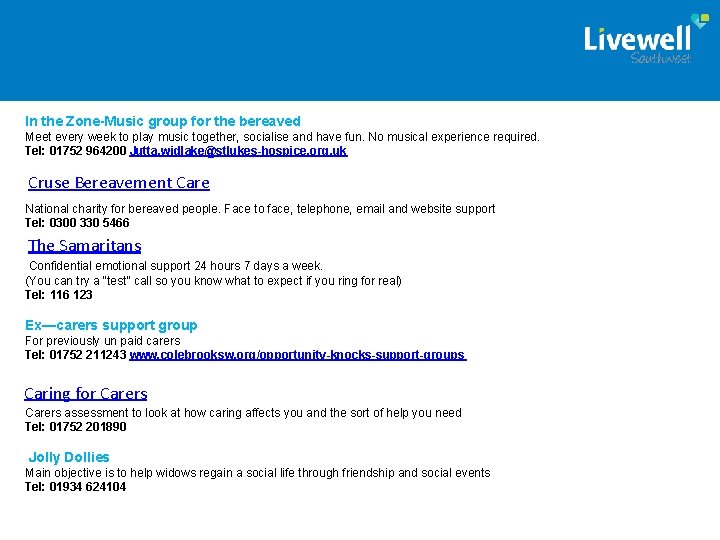
In the Zone-Music group for the bereaved Meet every week to play music together, socialise and have fun. No musical experience required. Tel: 01752 964200 Jutta. widlake@stlukes-hospice. org. uk Cruse Bereavement Care National charity for bereaved people. Face to face, telephone, email and website support Tel: 0300 330 5466 The Samaritans Confidential emotional support 24 hours 7 days a week. (You can try a “test” call so you know what to expect if you ring for real) Tel: 116 123 Ex—carers support group For previously un paid carers Tel: 01752 211243 www. colebrooksw. org/opportunity-knocks-support-groups Caring for Carers assessment to look at how caring affects you and the sort of help you need Tel: 01752 201890 Jolly Dollies Main objective is to help widows regain a social life through friendship and social events Tel: 01934 624104
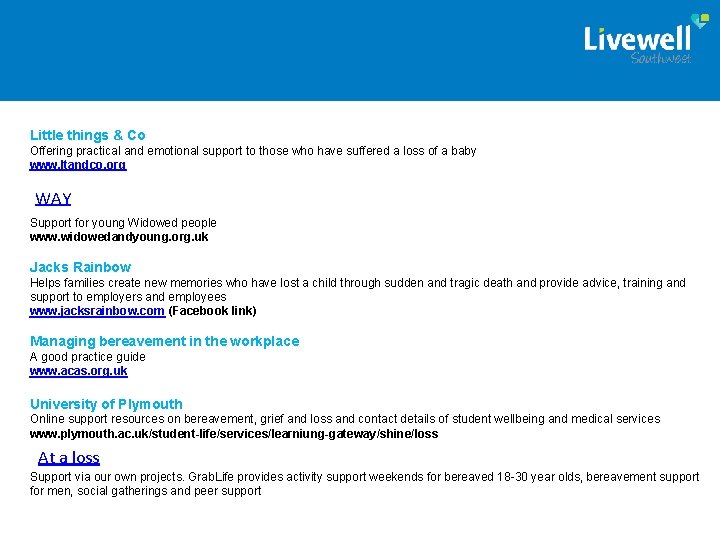
Little things & Co Offering practical and emotional support to those who have suffered a loss of a baby www. ltandco. org WAY Support for young Widowed people www. widowedandyoung. org. uk Jacks Rainbow Helps families create new memories who have lost a child through sudden and tragic death and provide advice, training and support to employers and employees www. jacksrainbow. com (Facebook link) Managing bereavement in the workplace A good practice guide www. acas. org. uk University of Plymouth Online support resources on bereavement, grief and loss and contact details of student wellbeing and medical services www. plymouth. ac. uk/student-life/services/learniung-gateway/shine/loss At a loss Support via our own projects. Grab. Life provides activity support weekends for bereaved 18 -30 year olds, bereavement support for men, social gatherings and peer support
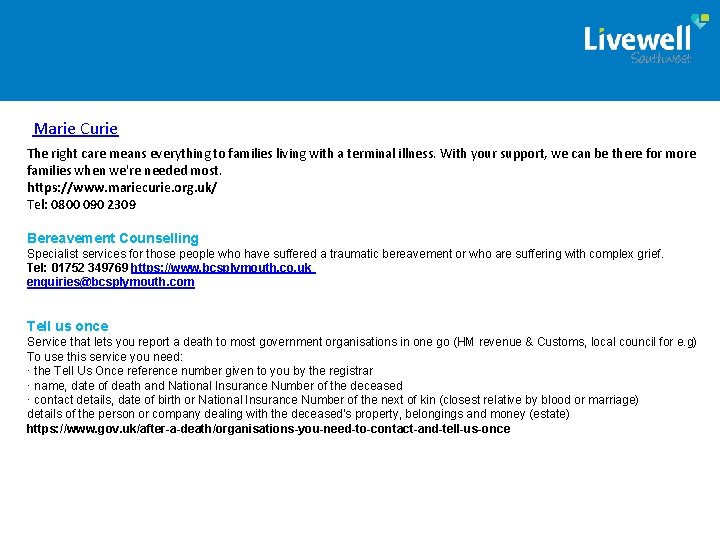
Marie Curie The right care means everything to families living with a terminal illness. With your support, we can be there for more families when we're needed most. https: //www. mariecurie. org. uk/ Tel: 0800 090 2309 Bereavement Counselling Specialist services for those people who have suffered a traumatic bereavement or who are suffering with complex grief. Tel: 01752 349769 https: //www. bcsplymouth. co. uk enquiries@bcsplymouth. com Tell us once Service that lets you report a death to most government organisations in one go (HM revenue & Customs, local council for e. g) To use this service you need: · the Tell Us Once reference number given to you by the registrar · name, date of death and National Insurance Number of the deceased · contact details, date of birth or National Insurance Number of the next of kin (closest relative by blood or marriage) details of the person or company dealing with the deceased's property, belongings and money (estate) https: //www. gov. uk/after-a-death/organisations-you-need-to-contact-and-tell-us-once
Plymouth COVID-19 Grief & Bereavement contacts April 2020
Cruse Bereavement We have put together resources to share how bereavement & grief may be affected by this pandemic https: //www. cruse. org. uk/get-help/coronavirus-dealing-bereavement-and-grief helpline@cruse’org. uk Tel: 0808 8081677 Coping during the Coronavirus Pandemic booklets for all
*******Plymouth Registry Office********** During the COVID-19 pandemic (updated 2 nd April 2020) PLEASE DO NOT CALL US – we will be provided with next of kin details as well as the medical certificate of cause of death by the doctor/hospital involved and will then contact you. Tel: 01752 668000
Further Reading & study With the End in Mind By Kathryn Mannix NHS England-Education Portal. End of Life Care Marie Curie-Professionals website
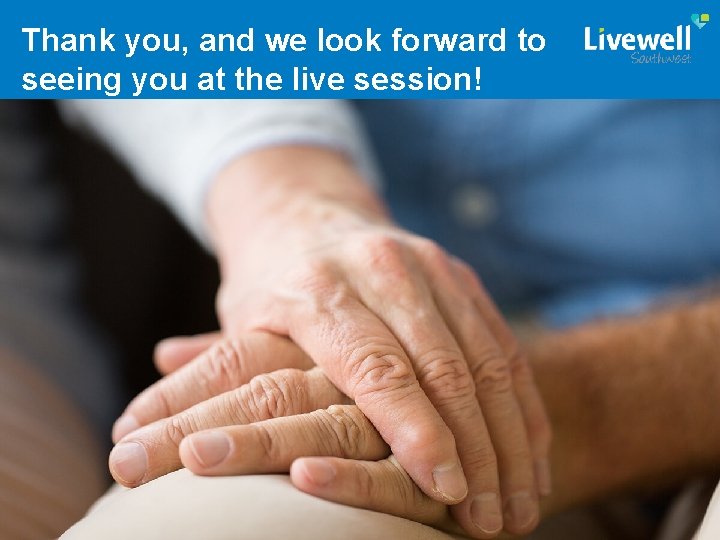
Thank you, and we look forward to seeing you at the live session!
- Slides: 52