
Grief and Loss presented for Personal Touch Volunteers

- Slides: 21
Grief and Loss presented for: Personal Touch Volunteers
What is Grief ? A normal human response to loss of any kind
American society is a grief denying society. We often deny the need to express grief and to feel the pain that accompanies a loss, both of which are beneficial to healing.
3 Key Concepts • We are all grieving the loss of something • Grief is cumulative • Grief is a process
We are all grieving the loss of something • Death of Parent, Grandparent, Sibling, Partner, Child, Close Friend, Roommate, Classmate, Colleague • Loss/Breakup of Marriage or Relationship • Loss of Friendship • Serious Illness (Self or Significant Other)
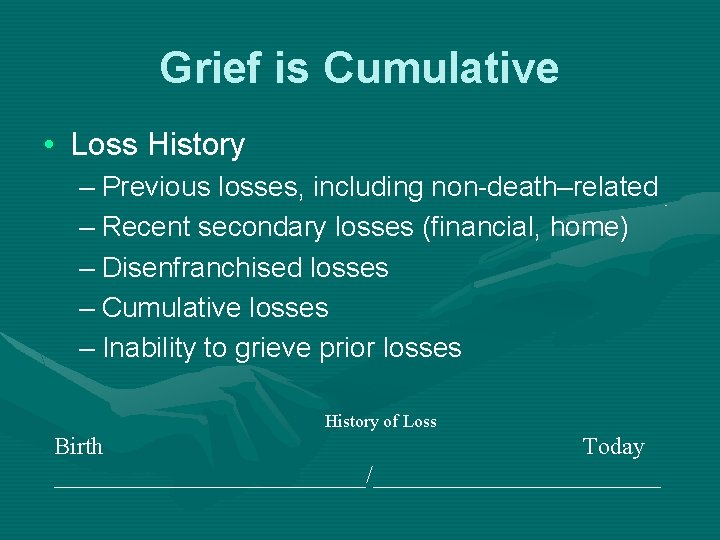
Grief is Cumulative • Loss History – Previous losses, including non-death–related – Recent secondary losses (financial, home) – Disenfranchised losses – Cumulative losses – Inability to grieve prior losses History of Loss Birth Today _____________/____________
Grief is a Process Change = Loss = Grief A change of circumstance of any kind produces a loss of some kind which will produce a grief reaction.
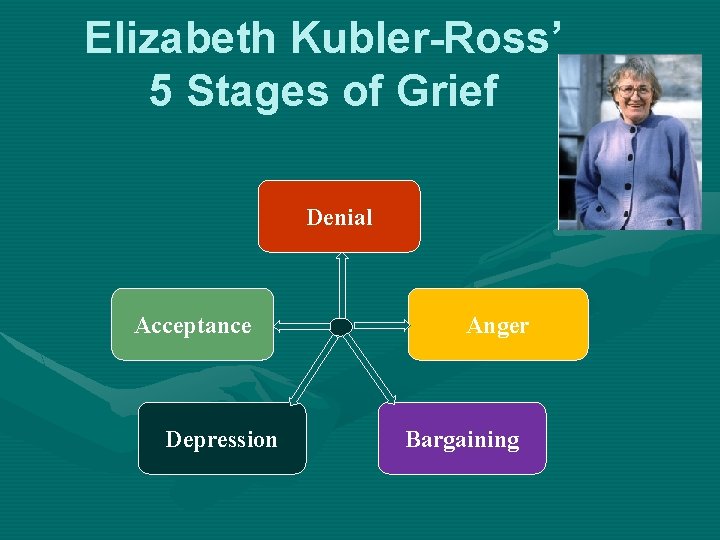
Elizabeth Kubler-Ross’ 5 Stages of Grief Denial Acceptance Depression Anger Bargaining
Denial “This can't be happening to me". No crying. Not accepting or even acknowledging the loss. “Surely this isn't happening to me. ” Everything's really okay.
Anger “Why me? ” Feelings of wanting to fight back, get even, or blame others. Anger is normal and sometimes appropriate. Let's be honest, sometimes you have been directly or indirectly wronged. Acknowledge and accept the feelings of anger you have…either toward yourself or others, while at the same time avoiding behaviors that will hurt yourself and others
Bargaining "I'll do anything -- just tell me what" kind of statements that people make when grieving. “God, if you heal my mom, I promise to go to church every Sunday. ” “What if…” or “If only…” Wanting things to go back to how they use to be.
Depression Feelings of hopelessness, frustration, bitterness, self pity, lack of control, and feeling numb. Depression is a different flavor of anger. Instead of being directed at others, depression is anger you turn toward yourself.
Acceptance There is a difference between resignation and acceptance. You have to accept the loss, not just try to bear it quietly. Finding the good that can come out of the pain of loss, finding comfort and healing.
Grief is a Journey • • Grief Process does not appear linear May go from shock → anger → denial → bargaining → anger → depression → acceptance → anger, and so forth Grief is Messy. There’s no perfect model. There’s no right or wrong way. We can’t put grief into a perfect box.
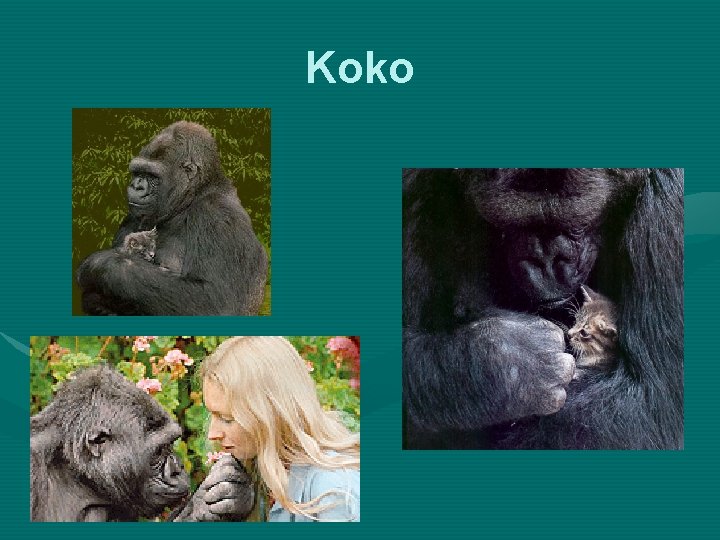
Koko
Variables that Influence Grief • Nature of prior attachment/perceived value of loss. • Mode of death. • Social support available. • Coping strategies of the bereaved. • Age of bereaved.
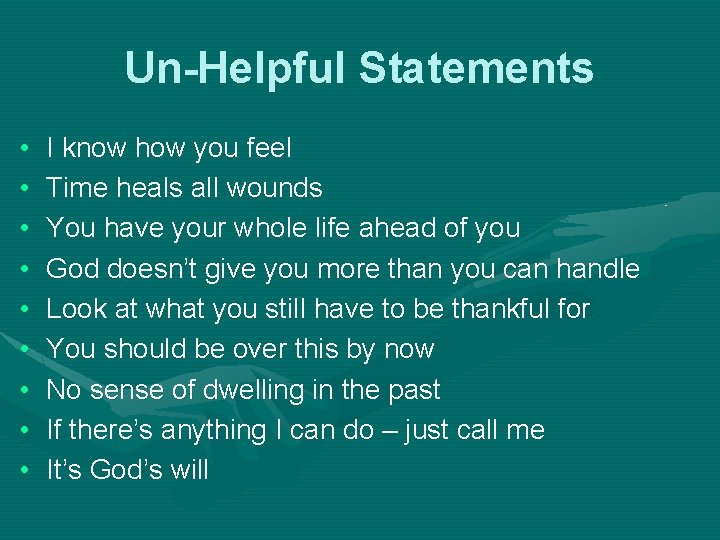
Un-Helpful Statements • • • I know how you feel Time heals all wounds You have your whole life ahead of you God doesn’t give you more than you can handle Look at what you still have to be thankful for You should be over this by now No sense of dwelling in the past If there’s anything I can do – just call me It’s God’s will
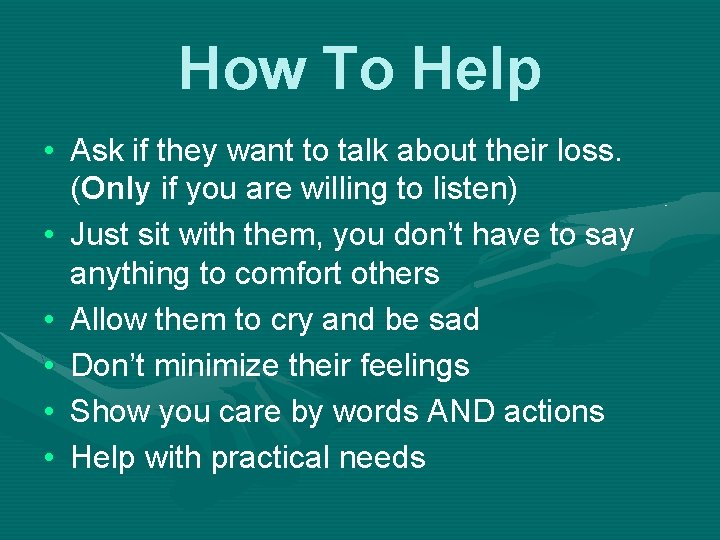
How To Help • Ask if they want to talk about their loss. (Only if you are willing to listen) • Just sit with them, you don’t have to say anything to comfort others • Allow them to cry and be sad • Don’t minimize their feelings • Show you care by words AND actions • Help with practical needs
Recap • • Grief is a process Loss is more than the death of a loved one Loss is cumulative Don’t be afraid to reach out to a grieving person • Ask how you can help
Recap • • Grief is a process Loss is more than the death of a loved one Loss is cumulative Don’t be afraid to reach out to a grieving person • Ask how you can help