
Gregor Mendel n The father of modern genetics


- Slides: 54
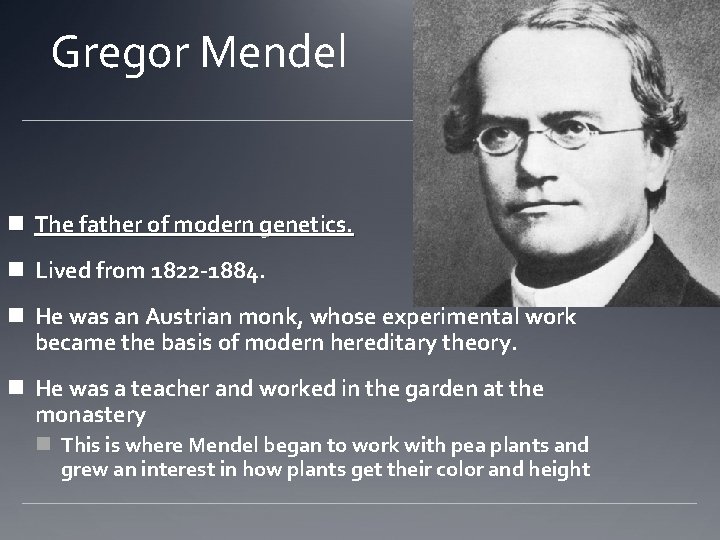
Gregor Mendel n The father of modern genetics. n Lived from 1822 -1884. n He was an Austrian monk, whose experimental work became the basis of modern hereditary theory. n He was a teacher and worked in the garden at the monastery n This is where Mendel began to work with pea plants and grew an interest in how plants get their color and height
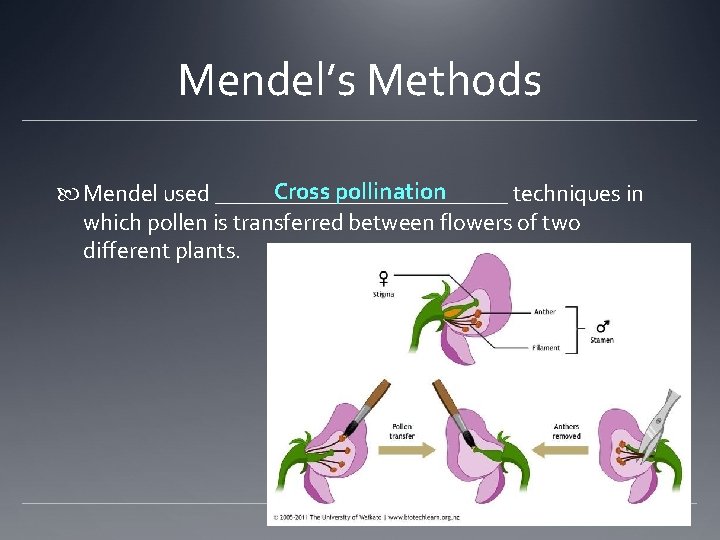
Mendel’s Methods Cross pollination Mendel used _____________ techniques in which pollen is transferred between flowers of two different plants.
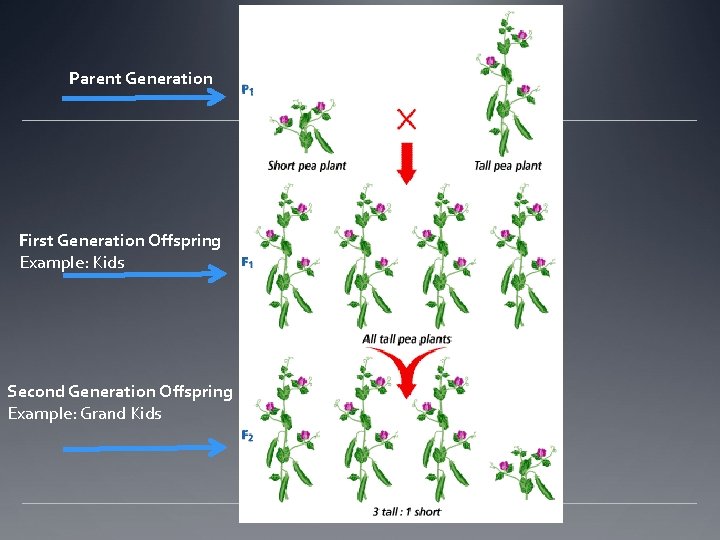
Mendel’s Experiment Mendel bred plants for several generations that were true breeding ___________ (TT, tt) for specific traits genetic characteristics (____________) and called these the P generation (Parent Generation). Offsprings (babies) of the P generation were called the ______ F 1 generation (F = Filial; Latin for son or daughter). Offspring of the F 1 generation were called the F 2 generation.
Parent Generation First Generation Offspring Example: Kids Second Generation Offspring Example: Grand Kids
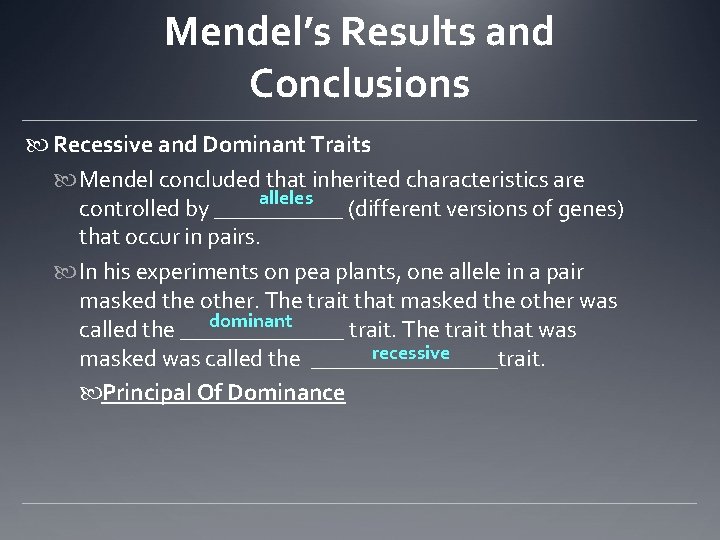
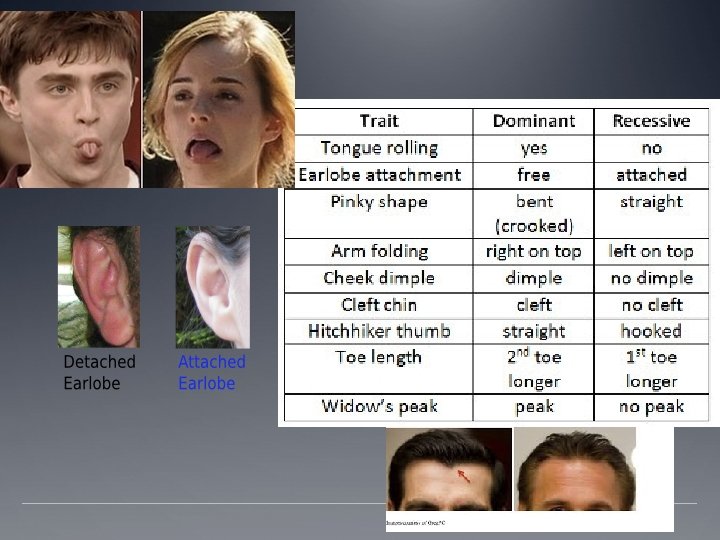
Mendel’s Results and Conclusions Recessive and Dominant Traits Mendel concluded that inherited characteristics are alleles controlled by ______ (different versions of genes) that occur in pairs. In his experiments on pea plants, one allele in a pair masked the other. The trait that masked the other was dominant called the _______ trait. The trait that was recessive masked was called the ________trait. Principal Of Dominance
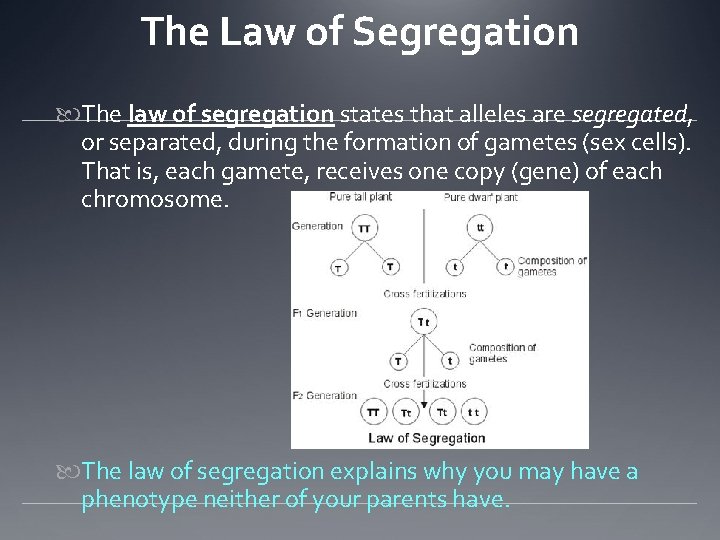
The Law of Segregation The law of segregation states that alleles are segregated, or separated, during the formation of gametes (sex cells). That is, each gamete, receives one copy (gene) of each chromosome. The law of segregation explains why you may have a phenotype neither of your parents have.
Practice Problems
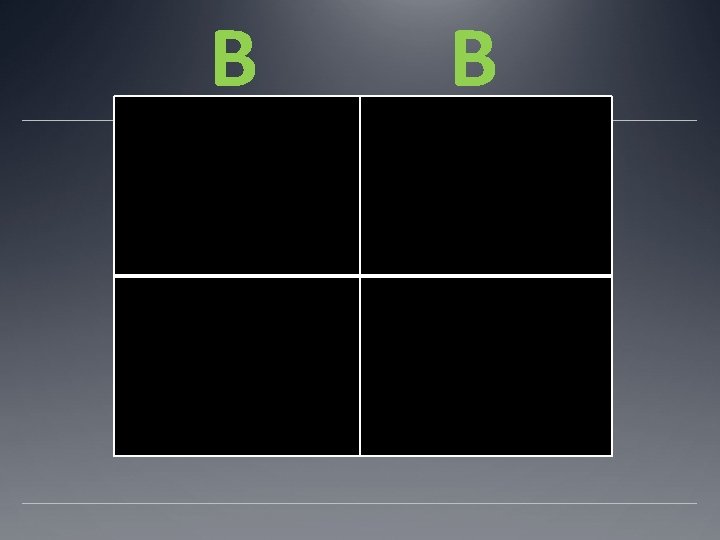
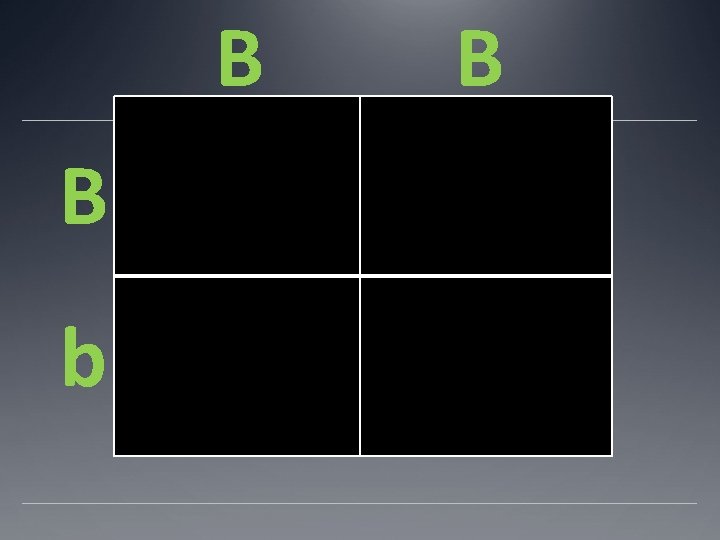
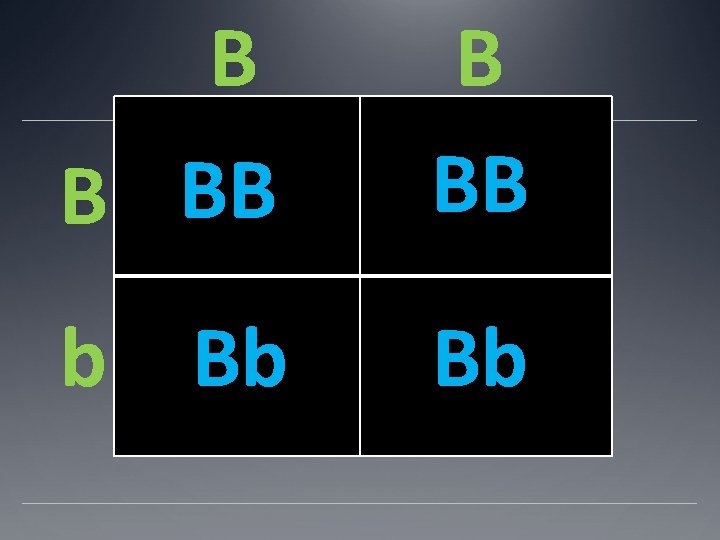
# 1 Cross a dog that is pure for black fur with a hybrid black fur dog. Use B for black fur and b for light fur.
B B
B B b B
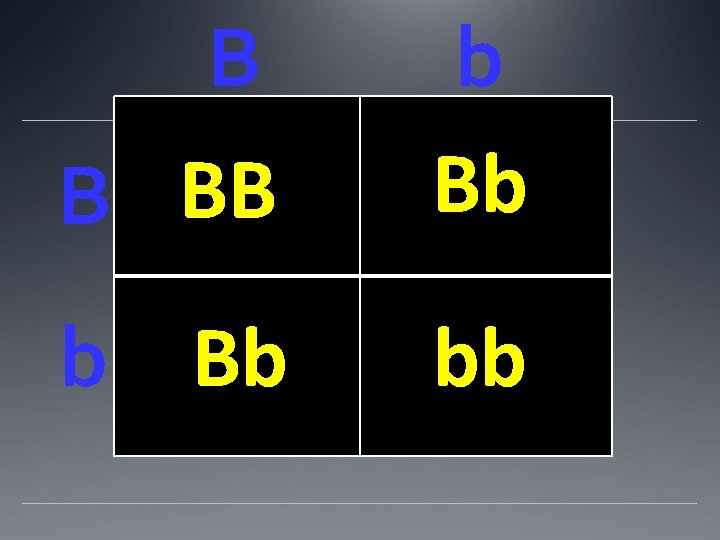
B B BB b Bb Bb
How many offspring have black fur? Four offspring have Black fur
How many offspring have light colored fur? None of the offspring have light colored fur
How many offspring are pure black? Two offspring are Pure black (BB)
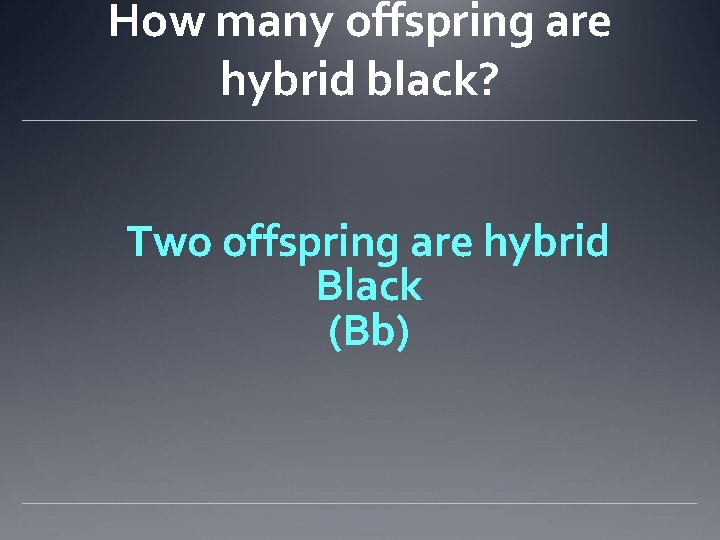
How many offspring are hybrid black? Two offspring are hybrid Black (Bb)
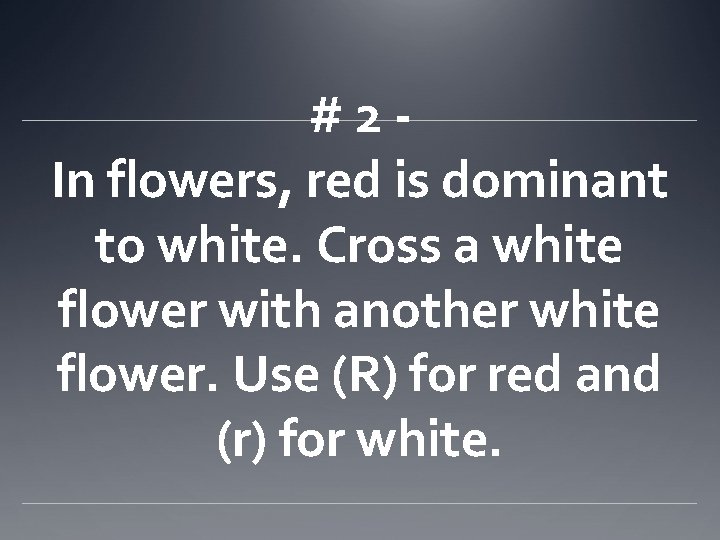
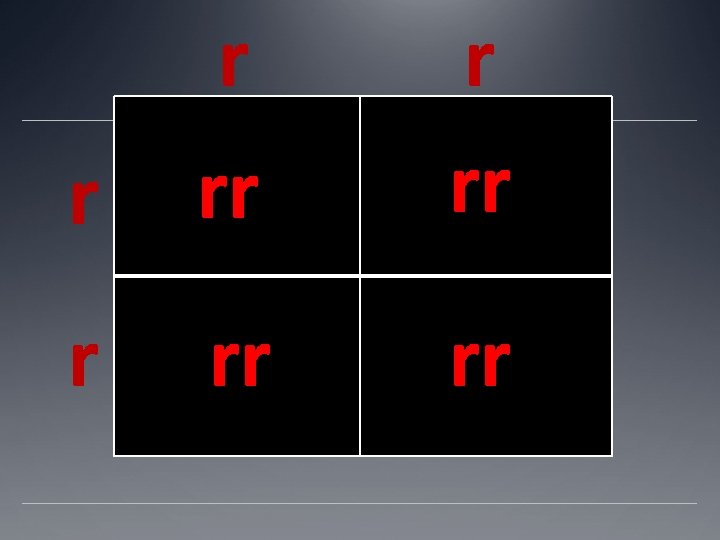
#2 In flowers, red is dominant to white. Cross a white flower with another white flower. Use (R) for red and (r) for white.
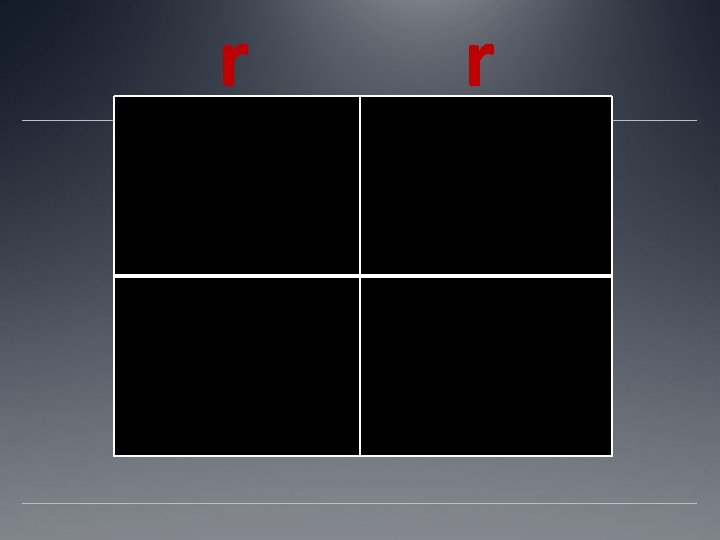
r r
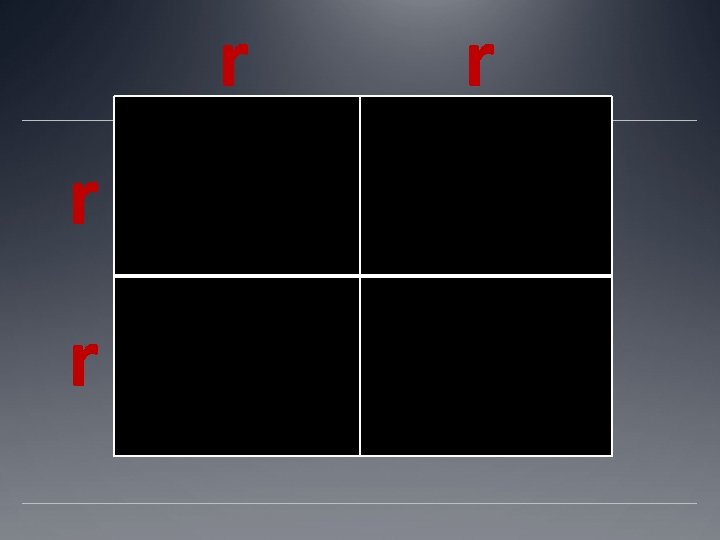
r r
r r rr rr
How many offspring are red? None of the offspring are red (rr = white)
How many offspring are white? All of the offspring are white (rr)
#3 If two dogs with black fur are crossed and out of the 12 offspring, 9 were black and 3 were light, what are the genotypes of the parents?
B B
B B b b
B B BB b Bb bb
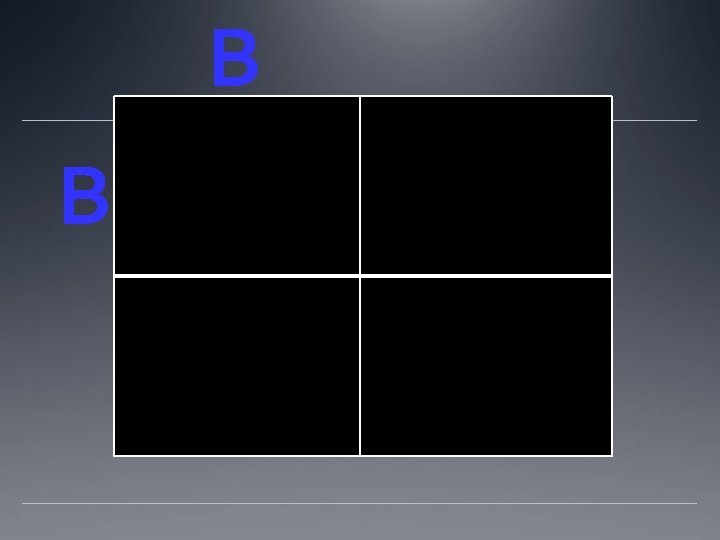
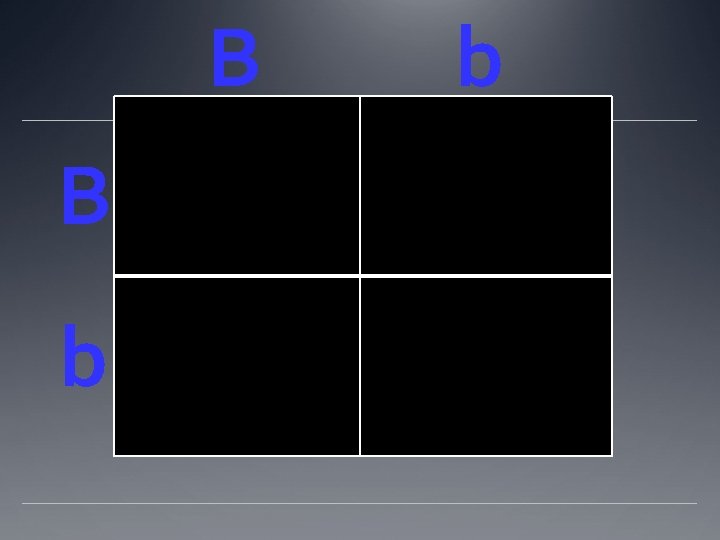
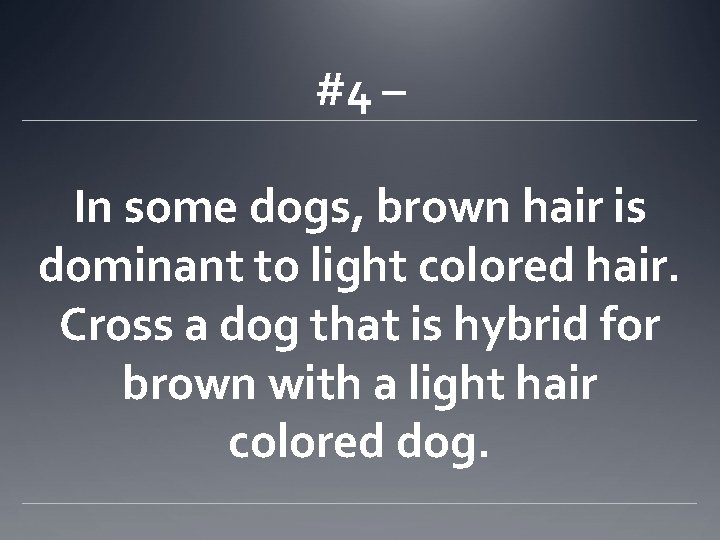
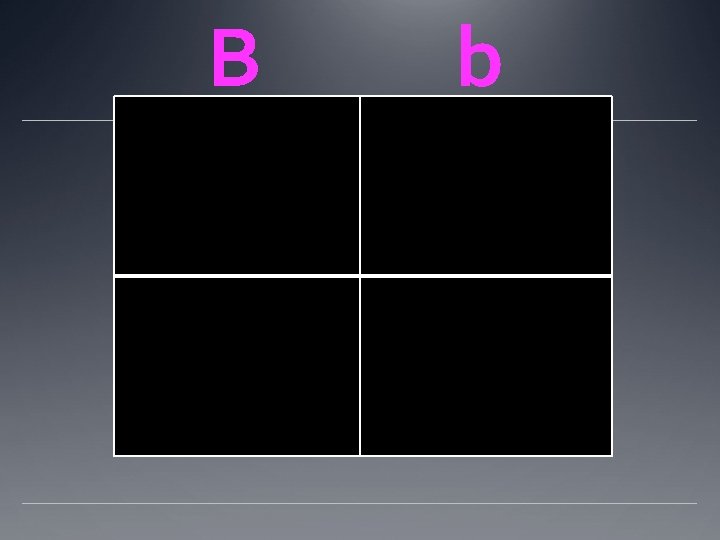
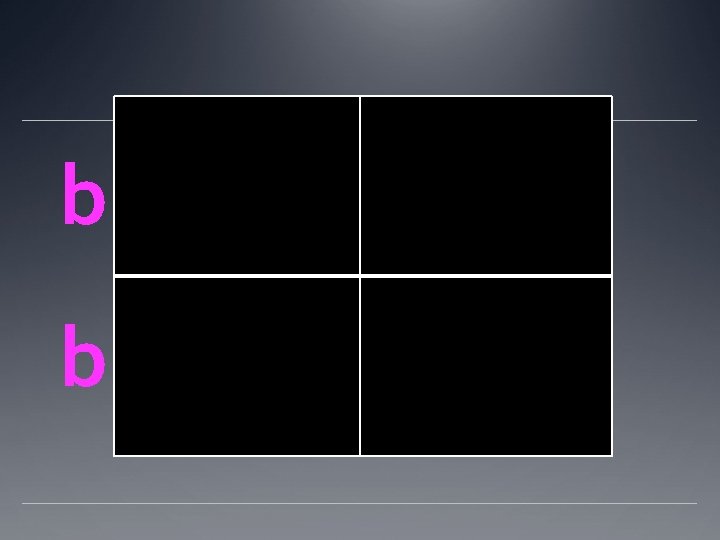
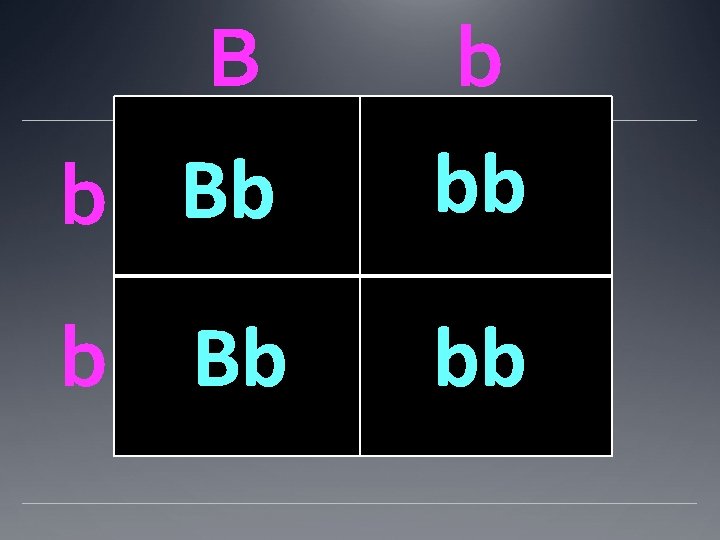
#4 – In some dogs, brown hair is dominant to light colored hair. Cross a dog that is hybrid for brown with a light hair colored dog.
B b
b b
B b Bb b bb b Bb bb
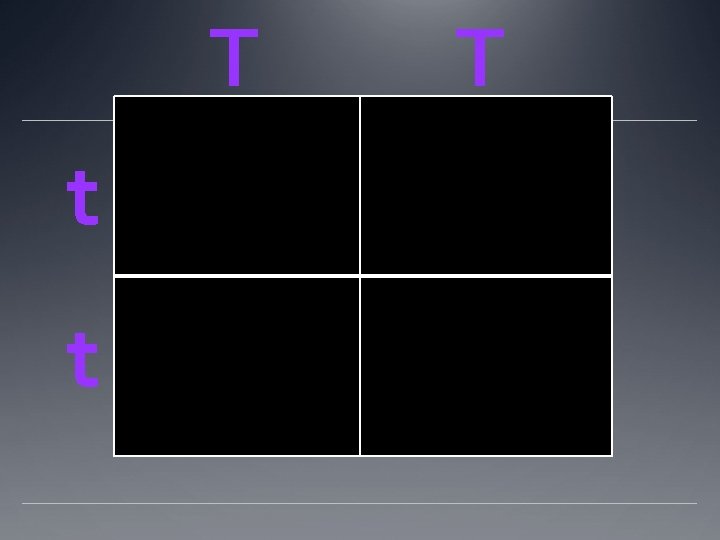
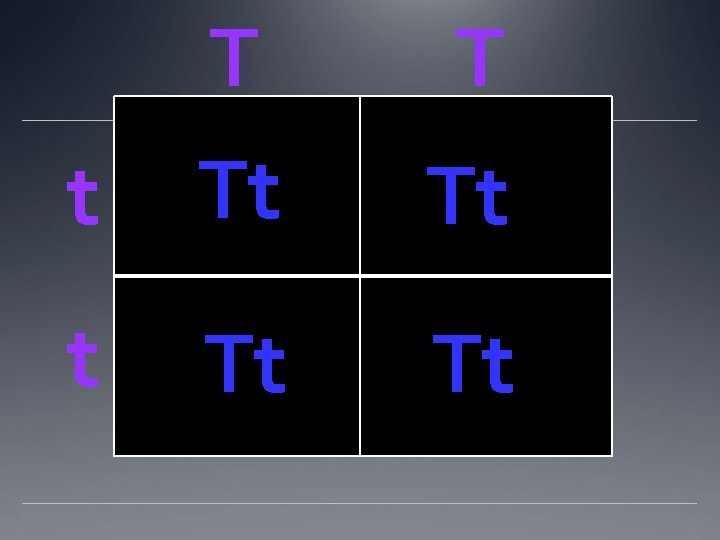
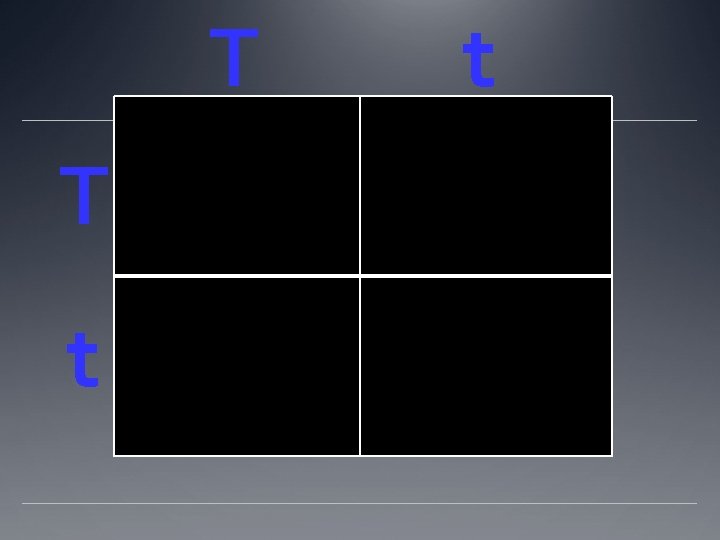
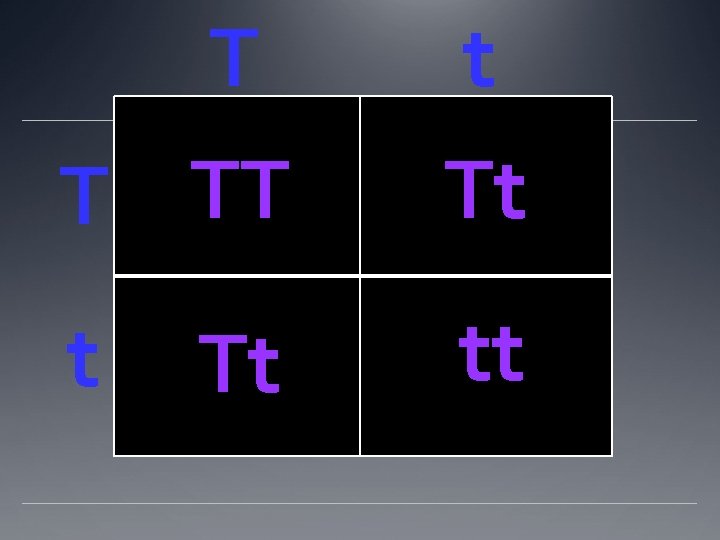
#5 1) Cross a pure tall plant with a short plant. 2) Then cross two of the offspring from this cross.
T t t T
T T t Tt Tt
T T t t
T t T TT Tt t tt Tt
What is the phenotypic ratio and genotypic ratio of this cross? Phenotypic Ratio = 3: 1 Genotypic Ratio = 1: 2: 1
Ch. 11 - 3 Exploring Mendelian Genetics
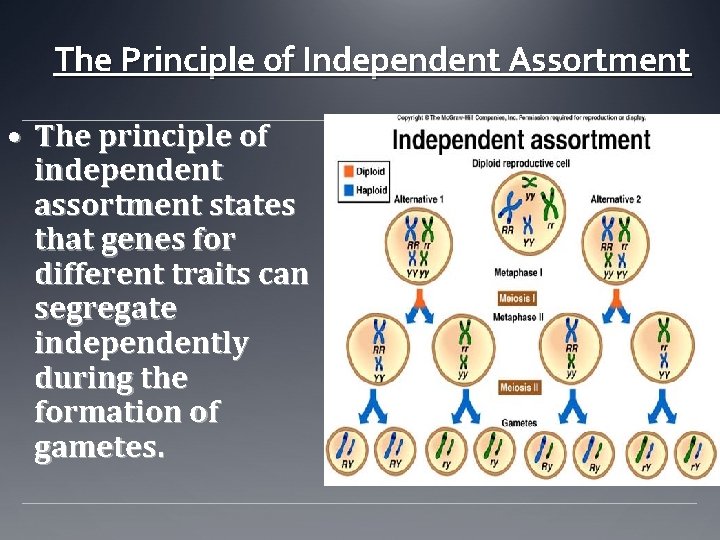
The Principle of Independent Assortment • The principle of independent assortment states that genes for different traits can segregate independently during the formation of gametes.
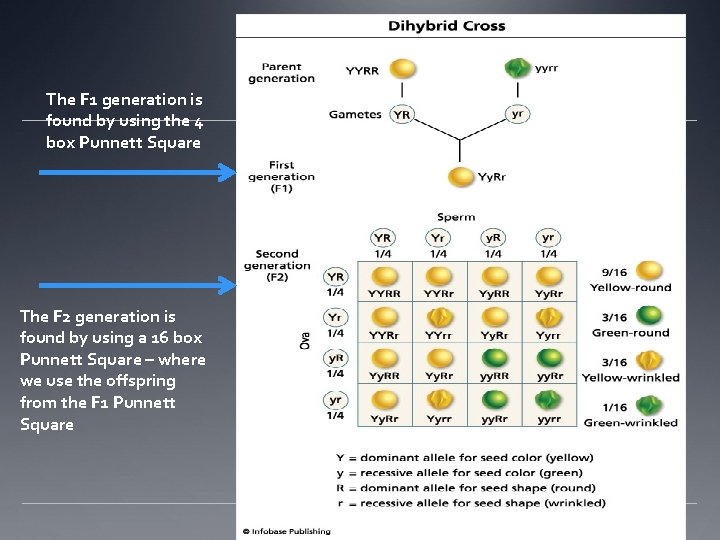
The F 1 generation is found by using the 4 box Punnett Square The F 2 generation is found by using a 16 box Punnett Square – where we use the offspring from the F 1 Punnett Square
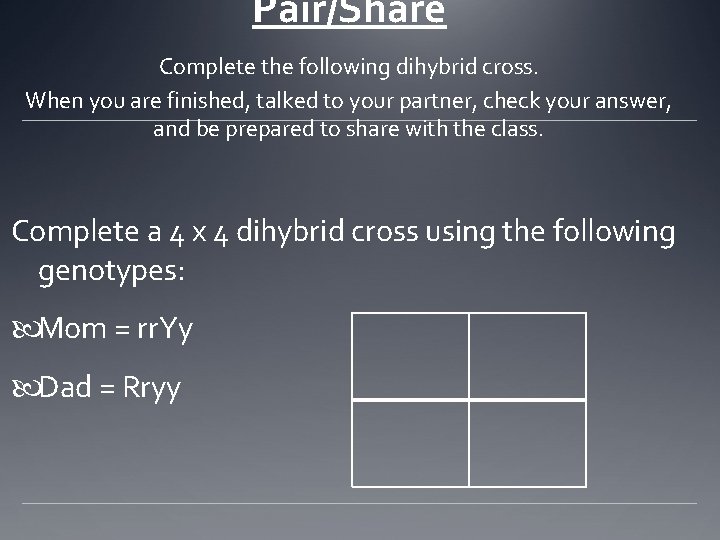
Pair/Share Complete the following dihybrid cross. When you are finished, talked to your partner, check your answer, and be prepared to share with the class. Complete a 4 x 4 dihybrid cross using the following genotypes: Mom = rr. Yy Dad = Rryy
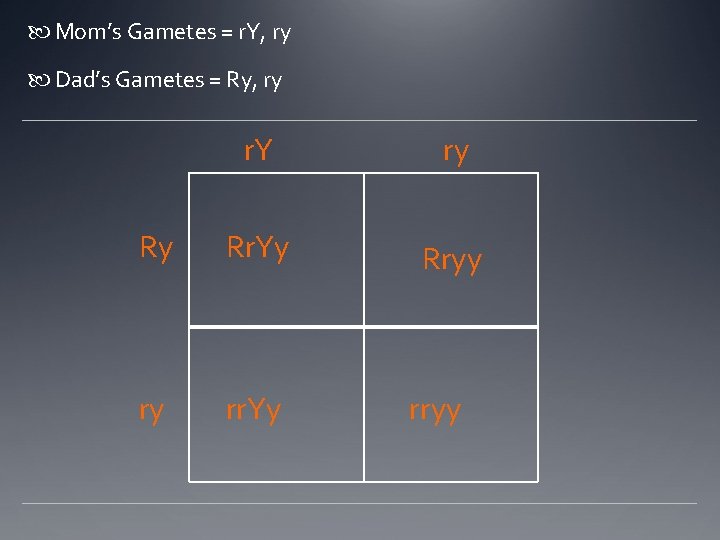
Mom’s Gametes = r. Y, ry Dad’s Gametes = Ry, ry r. Y ry Ry Rr. Yy Rryy ry rr. Yy rryy
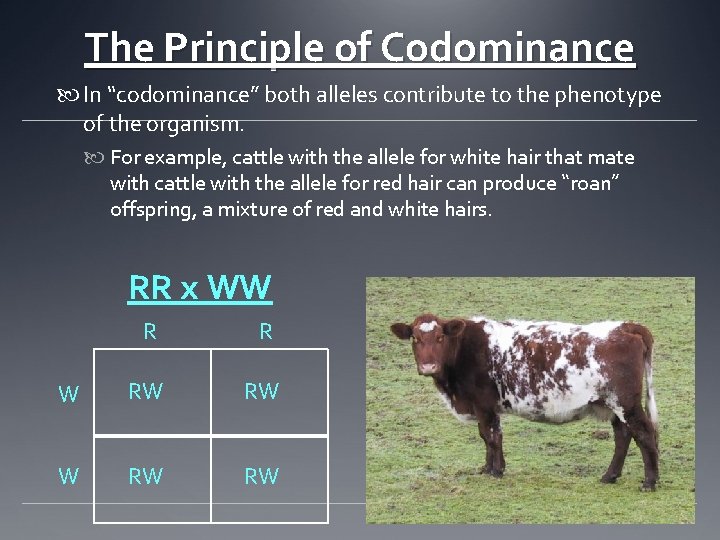
The Principle of Codominance In “codominance” both alleles contribute to the phenotype of the organism. For example, cattle with the allele for white hair that mate with cattle with the allele for red hair can produce “roan” offspring, a mixture of red and white hairs. RR x WW R R W RW RW
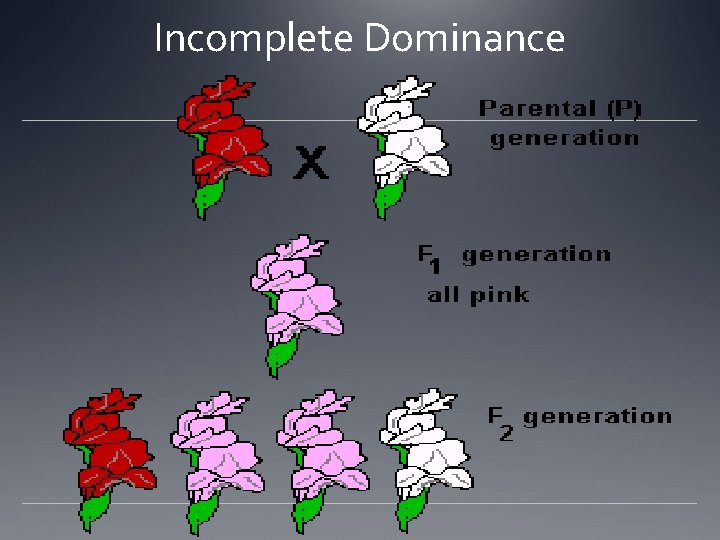
The Principle of Incomplete Dominance Sometimes alleles are neither recessive nor dominant. Cases in which one allele is not completely dominant over another is called “incomplete dominance. ” The hybrid, heterozygous phenotype is somewhere in between the two phenotypes.
Incomplete Dominance
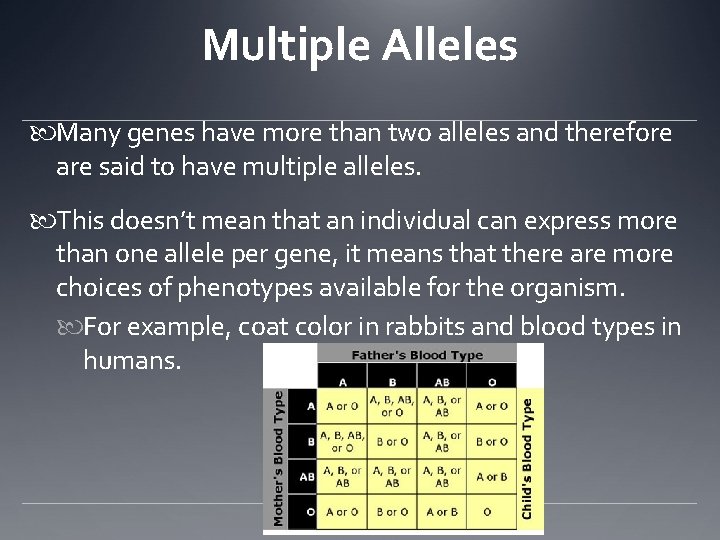
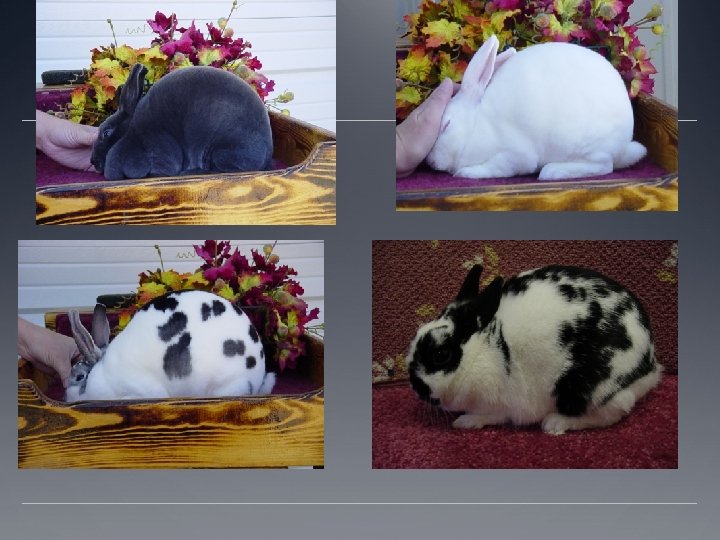
Multiple Alleles Many genes have more than two alleles and therefore are said to have multiple alleles. This doesn’t mean that an individual can express more than one allele per gene, it means that there are more choices of phenotypes available for the organism. For example, coat color in rabbits and blood types in humans.
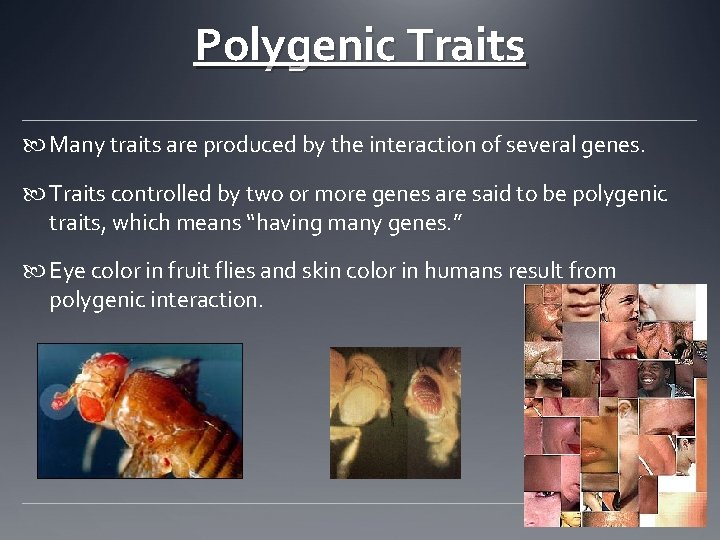
Polygenic Traits Many traits are produced by the interaction of several genes. Traits controlled by two or more genes are said to be polygenic traits, which means “having many genes. ” Eye color in fruit flies and skin color in humans result from polygenic interaction.
Pair/Share Complete the following problems in your notes. When you are finished, talked to your partner, check your answers, and be prepared to share with the class.
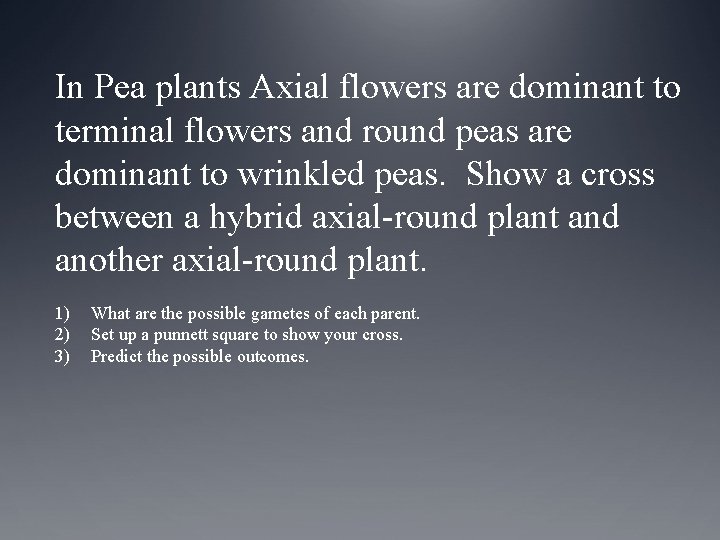
In Pea plants Axial flowers are dominant to terminal flowers and round peas are dominant to wrinkled peas. Show a cross between a hybrid axial-round plant and another axial-round plant. 1) 2) 3) What are the possible gametes of each parent. Set up a punnett square to show your cross. Predict the possible outcomes.
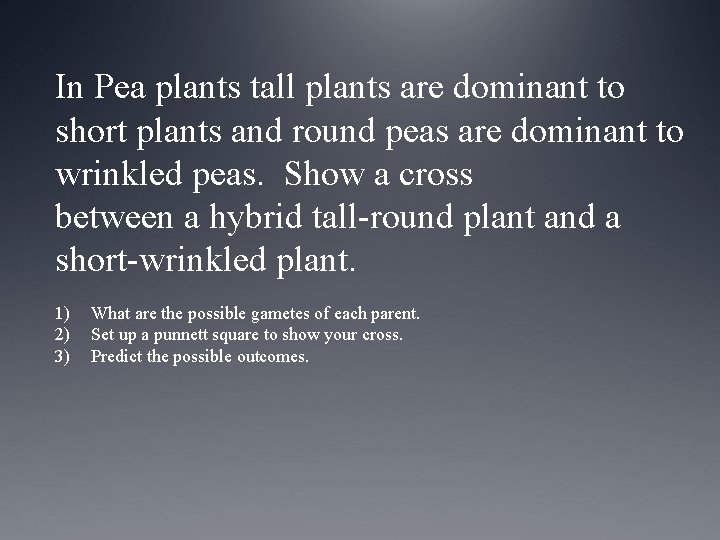
In Pea plants tall plants are dominant to short plants and round peas are dominant to wrinkled peas. Show a cross between a hybrid tall-round plant and a short-wrinkled plant. 1) 2) 3) What are the possible gametes of each parent. Set up a punnett square to show your cross. Predict the possible outcomes.
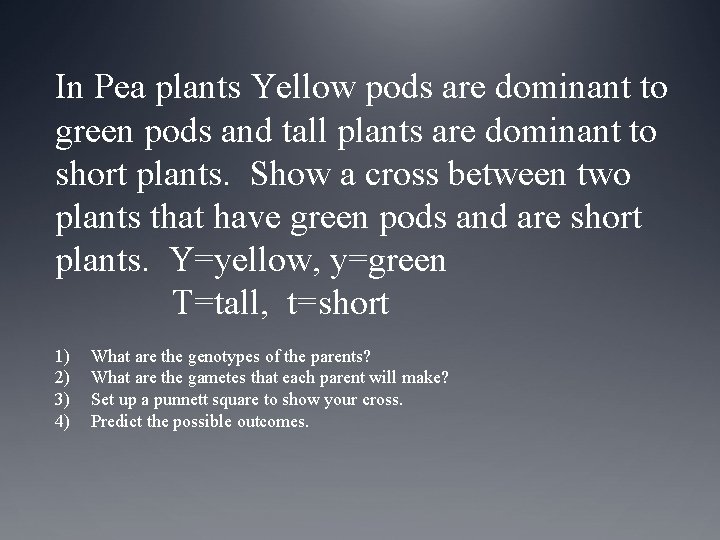
In Pea plants Yellow pods are dominant to green pods and tall plants are dominant to short plants. Show a cross between two plants that have green pods and are short plants. Y=yellow, y=green T=tall, t=short 1) 2) 3) 4) What are the genotypes of the parents? What are the gametes that each parent will make? Set up a punnett square to show your cross. Predict the possible outcomes.