
Gregor Mendel and Pea Plant Notes Learning Target

- Slides: 14
Gregor Mendel and Pea Plant Notes
Learning Target • I can discuss the work Gregor Mendel did with pea plants.
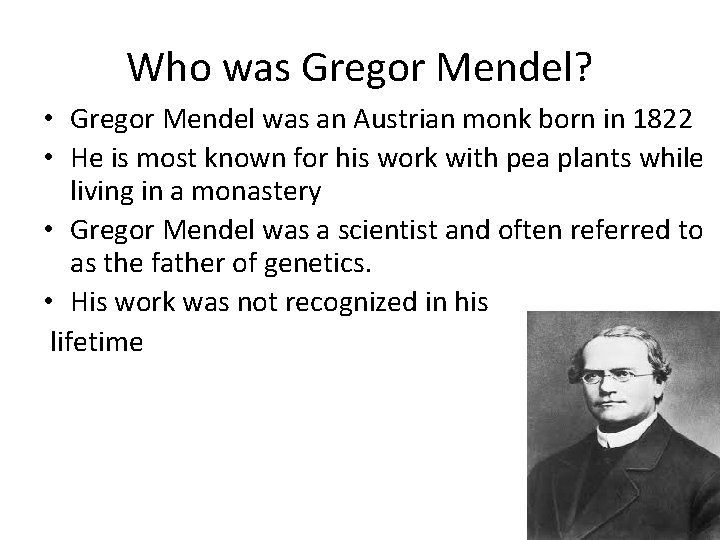
Who was Gregor Mendel? • Gregor Mendel was an Austrian monk born in 1822 • He is most known for his work with pea plants while living in a monastery • Gregor Mendel was a scientist and often referred to as the father of genetics. • His work was not recognized in his lifetime
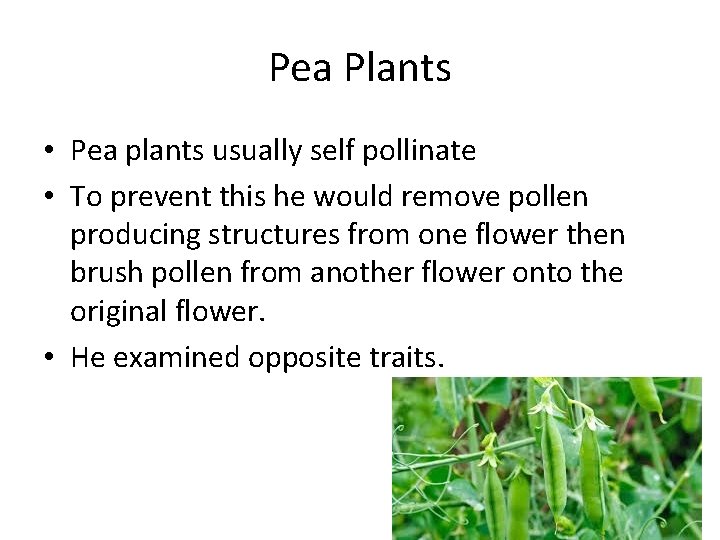
Pea Plants • Pea plants usually self pollinate • To prevent this he would remove pollen producing structures from one flower then brush pollen from another flower onto the original flower. • He examined opposite traits.
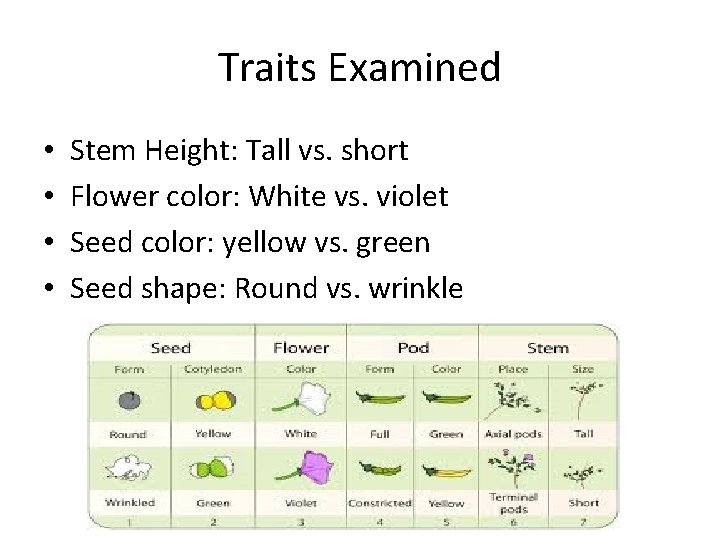
Traits Examined • • Stem Height: Tall vs. short Flower color: White vs. violet Seed color: yellow vs. green Seed shape: Round vs. wrinkle
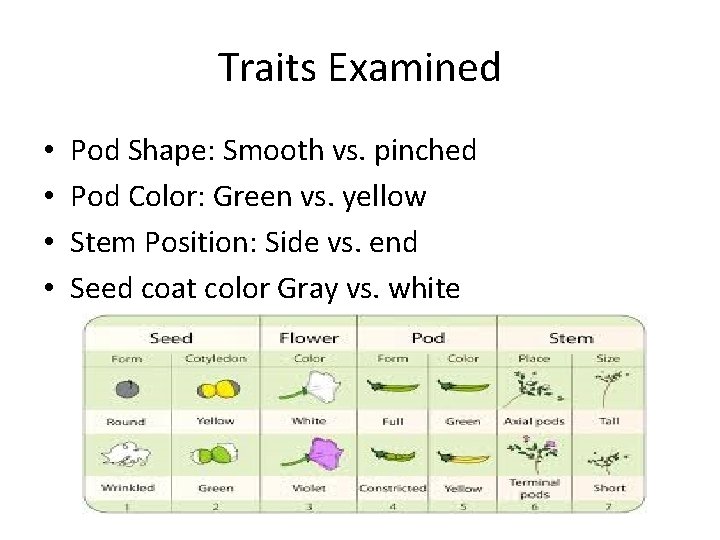
Traits Examined • • Pod Shape: Smooth vs. pinched Pod Color: Green vs. yellow Stem Position: Side vs. end Seed coat color Gray vs. white
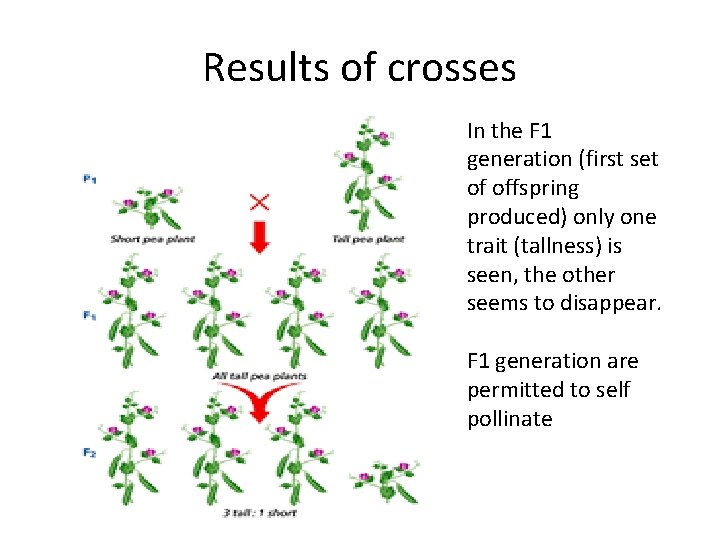
Results of crosses In the F 1 generation (first set of offspring produced) only one trait (tallness) is seen, the other seems to disappear. F 1 generation are permitted to self pollinate
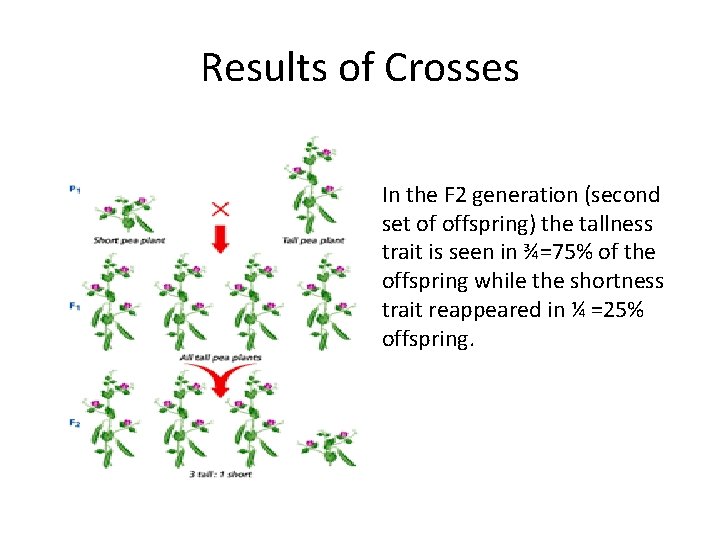
Results of Crosses In the F 2 generation (second set of offspring) the tallness trait is seen in ¾=75% of the offspring while the shortness trait reappeared in ¼ =25% offspring.
Alleles • Alleles: Are different forms of a gene • Dominant Allele: Always shows up in organism when allele is present • Recessive Allele: An allele that is masked if dominant is present, need two recessive alleles to be expressed
Dominant Vs. Recessive • Gregor Mendel found that for each trait he examined there were two forms of the trait. • One trait was seen more often and was decided to be dominant. • If at least one dominant allele was inherited the dominant trait was displayed • The recessive trait would reappear in the second generation for about 25% of offspring • Recessive traits are only displayed if an offspring inherits two recessive alleles for that trait (one from each parent)
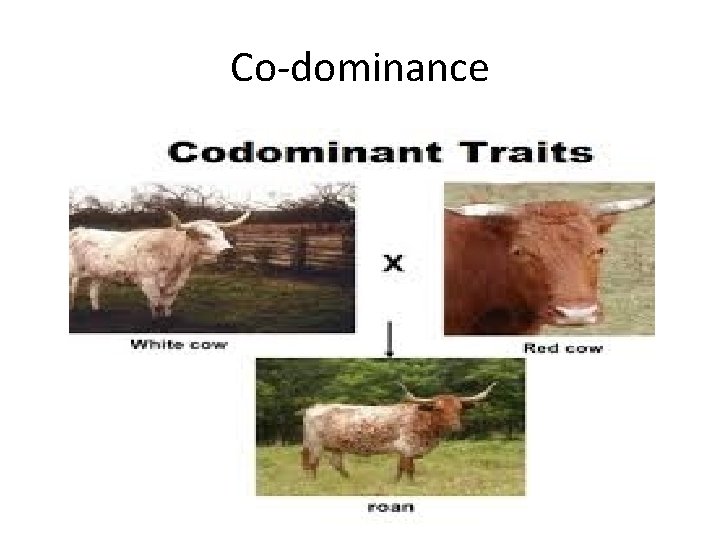
Co-dominance • Neither Allele is dominant or recessive • Both alleles are expressed physically in the organism. • Example: Blood type in humans type AB is condiment and results when an offspring get an allele for type A from one parent and type B from the other parent.
Co-dominance
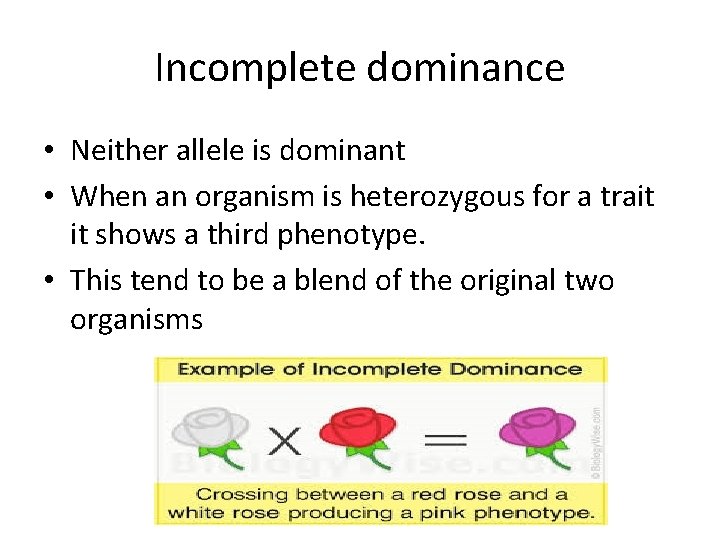
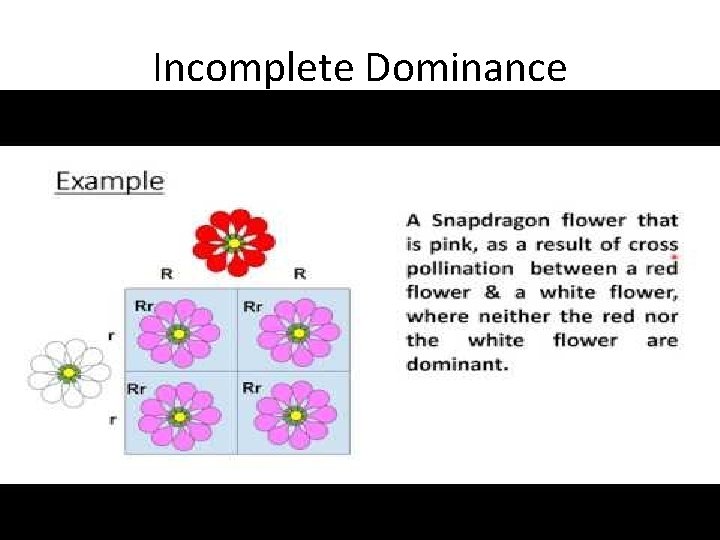
Incomplete dominance • Neither allele is dominant • When an organism is heterozygous for a trait it shows a third phenotype. • This tend to be a blend of the original two organisms
Incomplete Dominance