
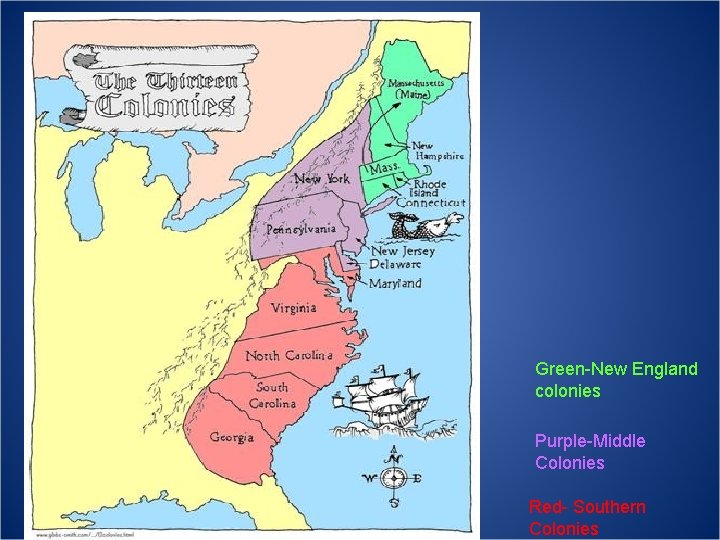
GreenNew England colonies PurpleMiddle Colonies Red Southern Colonies

- Slides: 17
Green-New England colonies Purple-Middle Colonies Red- Southern Colonies
NEW ENGLAND COLONIES
LIST THE COLONIES • • Massachusetts New Hampshire Rhode Island Connecticut
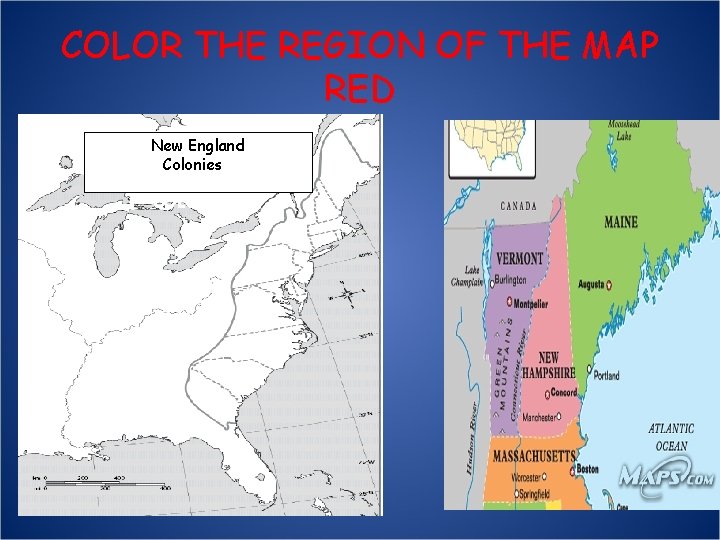
COLOR THE REGION OF THE MAP RED New England Colonies. C NEW ENGLAND COLONIES
Why They Settled • For religious reasons • Desire for land • Economic opportunity
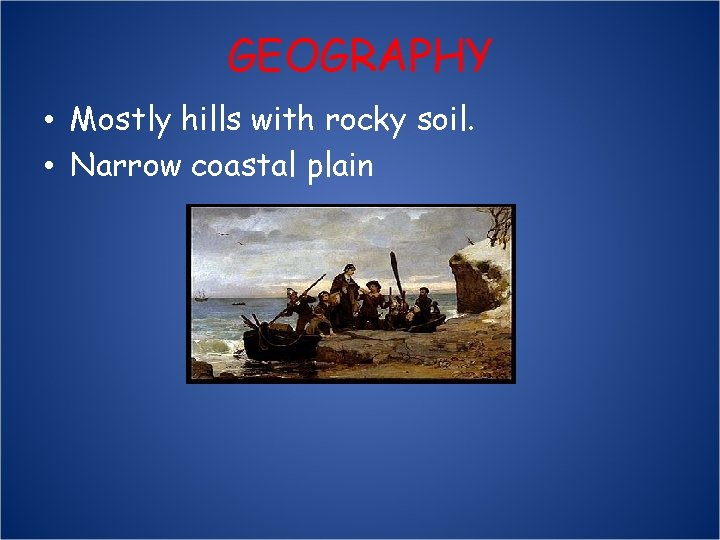
GEOGRAPHY • Mostly hills with rocky soil. • Narrow coastal plain
Climate • Colder—long, harsh winters • Growing season was short—limited crops
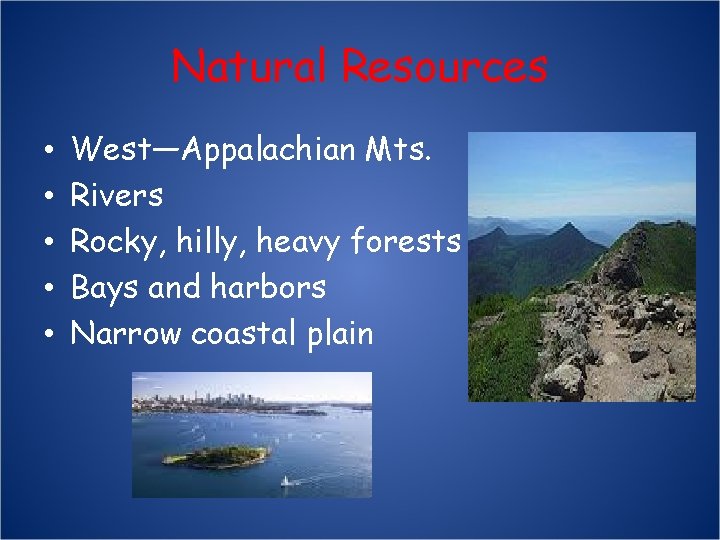
Natural Resources • • • West—Appalachian Mts. Rivers Rocky, hilly, heavy forests Bays and harbors Narrow coastal plain
Immigration • England
Government • Similar to English government— governor, legislature, courts. • Laws passed by the English Parliament had to be obeyed. • Town meeting—direct democracy.
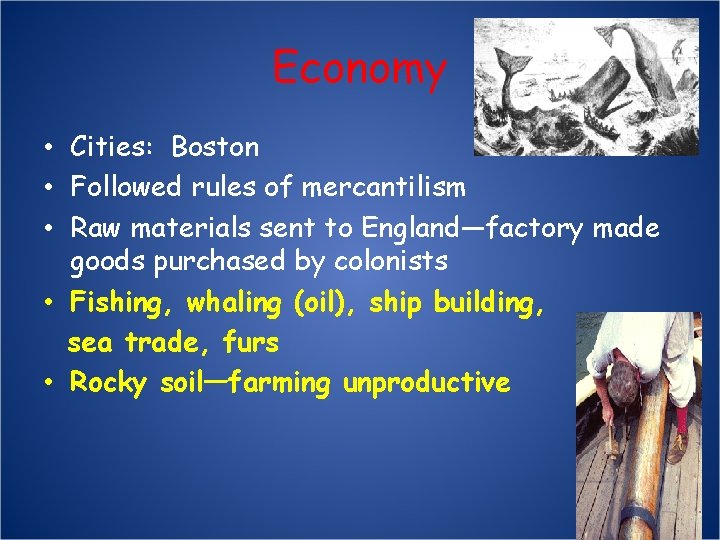
Economy • Cities: Boston • Followed rules of mercantilism • Raw materials sent to England—factory made goods purchased by colonists • Fishing, whaling (oil), ship building, sea trade, furs • Rocky soil—farming unproductive
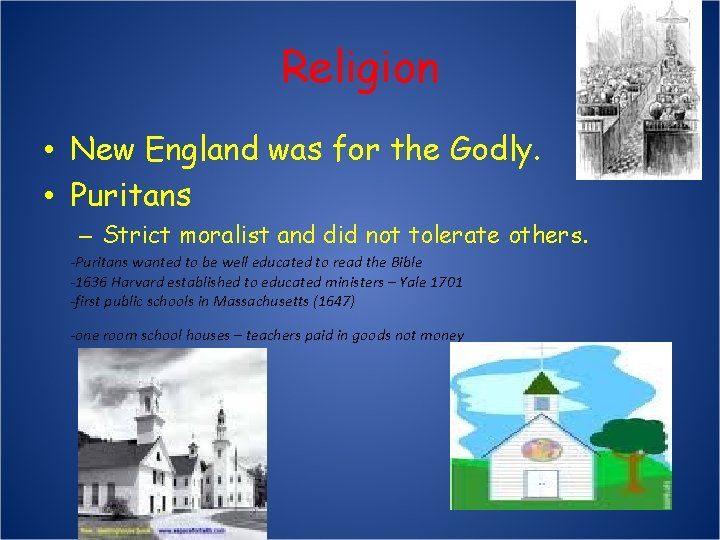
Religion • New England was for the Godly. • Puritans – Strict moralist and did not tolerate others. -Puritans wanted to be well educated to read the Bible -1636 Harvard established to educated ministers – Yale 1701 -first public schools in Massachusetts (1647) -one room school houses – teachers paid in goods not money
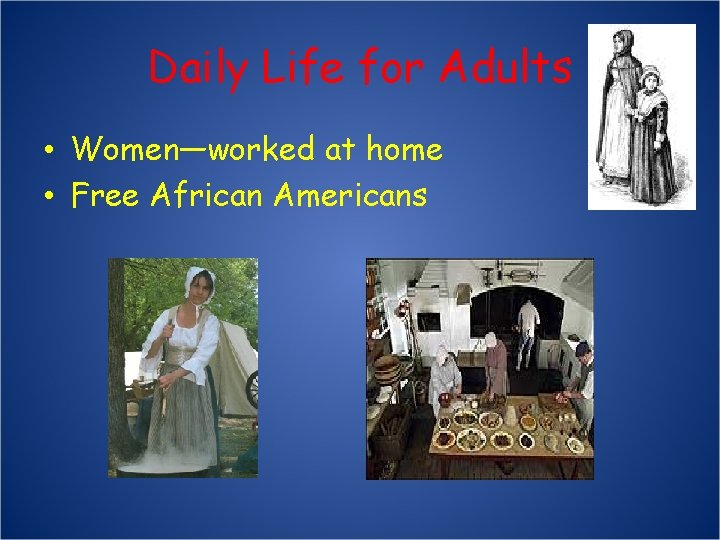
Daily Life for Adults • Women—worked at home • Free African Americans
Daily Life For Children • Became apprentices to learn a trade
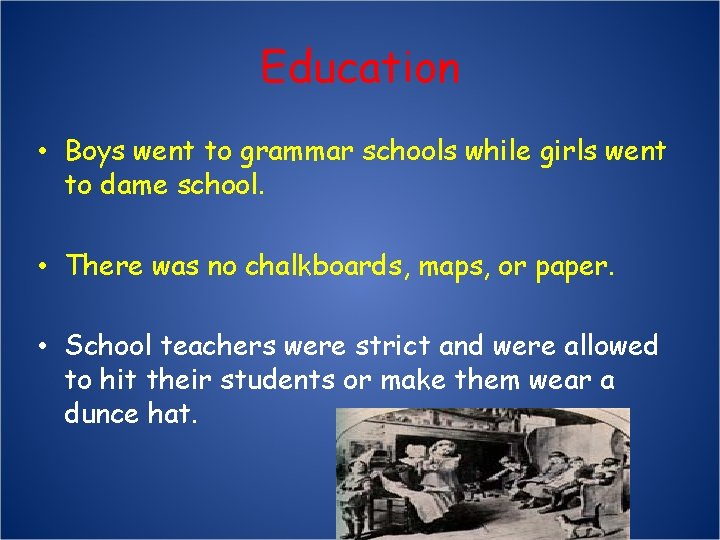
Education • Boys went to grammar schools while girls went to dame school. • There was no chalkboards, maps, or paper. • School teachers were strict and were allowed to hit their students or make them wear a dunce hat.
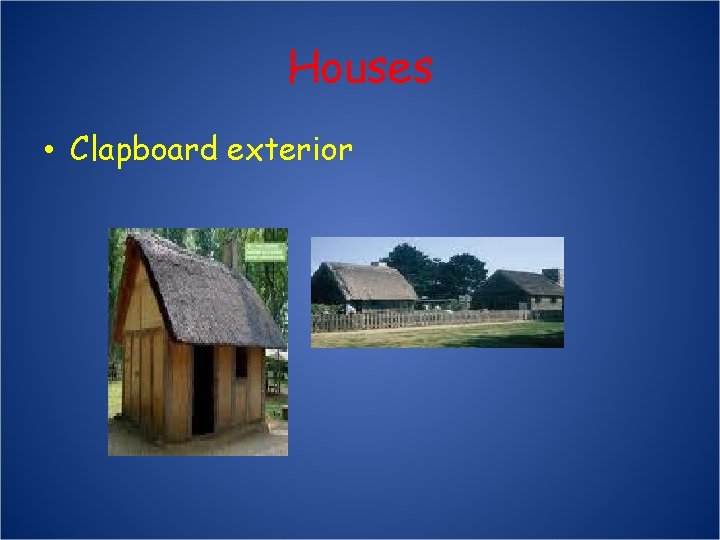
Houses • Clapboard exterior
Other BEN FRANKLIN: (1706 -1790) -one of 17 children -born in Boston (Self Educated) -at 17 Franklin ran away from Boston to Philadelphia -becomes a successful inventor and scientist -stove, almanac, electricity, helped improve city life