
Greenhouse Gases Emissions and Mitigation from Rice Production
- Slides: 26
Greenhouse Gases Emissions and Mitigation from Rice Production Kruamas Smakgahn*, Tamon Fumoto and Kazuyuki Yagi National Institute for Agro-Environmental Sciences Tsukuba, Ibaraki, Japan E-mail: smakgahn@affrc. go. jp
Contents n n n Background Objectives Introduction to models Results Models validation Sensitivity test Conclusions
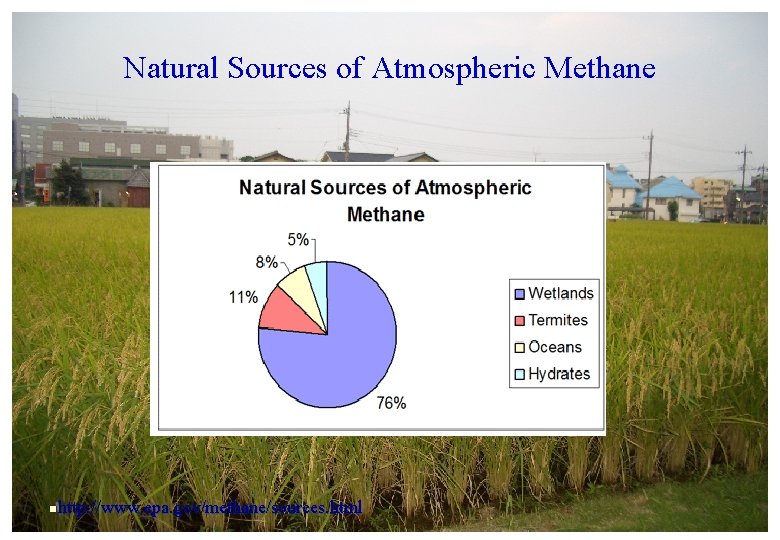
Natural Sources of Atmospheric Methane nhttp: //www. epa. gov/methane/sources. html
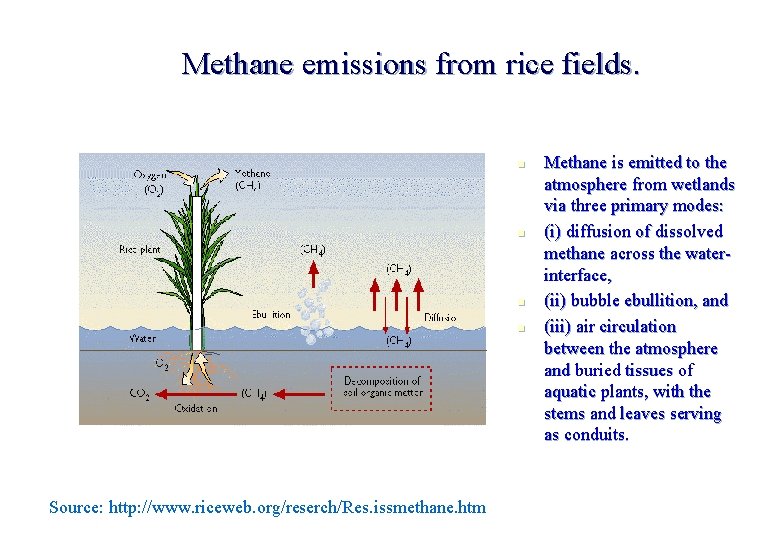
Methane emissions from rice fields. n n Source: http: //www. riceweb. org/reserch/Res. issmethane. htm Methane is emitted to the atmosphere from wetlands via three primary modes: (i) diffusion of dissolved methane across the waterinterface, (ii) bubble ebullition, and (iii) air circulation between the atmosphere and buried tissues of aquatic plants, with the stems and leaves serving as conduits.
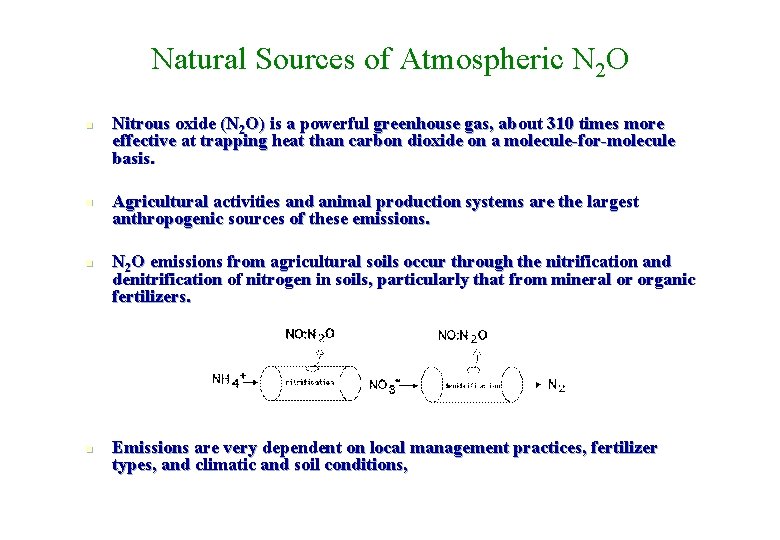
Natural Sources of Atmospheric N 2 O n n Nitrous oxide (N 2 O) is a powerful greenhouse gas, about 310 times more effective at trapping heat than carbon dioxide on a molecule-for-molecule basis. Agricultural activities and animal production systems are the largest anthropogenic sources of these emissions. N 2 O emissions from agricultural soils occur through the nitrification and denitrification of nitrogen in soils, particularly that from mineral or organic fertilizers. Emissions are very dependent on local management practices, fertilizer types, and climatic and soil conditions,
n n Expanding cultivation areas of rice have significantly contributed to the increase in the concentration of atmospheric CH 4 and N 2 O concentration It is difficult to measure emission in large scale and obtain mitigation options, thus model implementation is a promising options for predictions. Objectives To simulate CH 4 and N 2 O emissions from rice fields with varying cultivations practice in different locations in order to consider an accuracy of estimation To obtain mitigation options of CH 4 and N 2 O emissions from rice fields
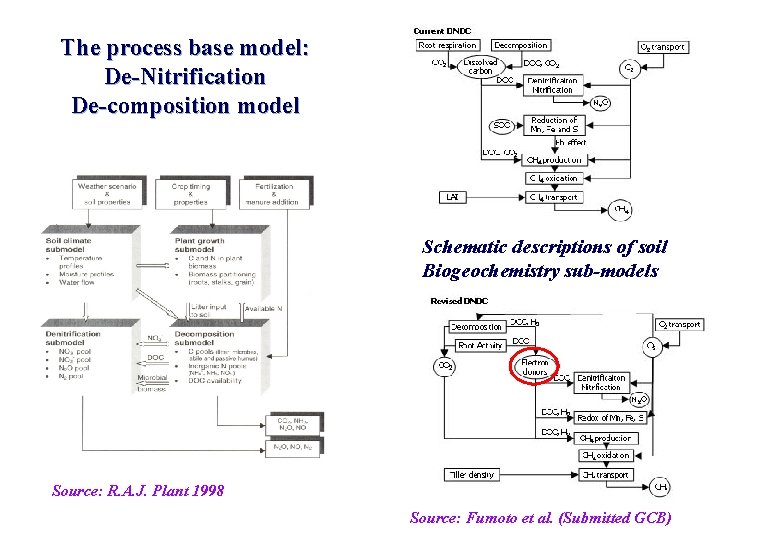
The process base model: De-Nitrification De-composition model Schematic descriptions of soil Biogeochemistry sub-models Source: R. A. J. Plant 1998 Source: Fumoto et al. (Submitted GCB)
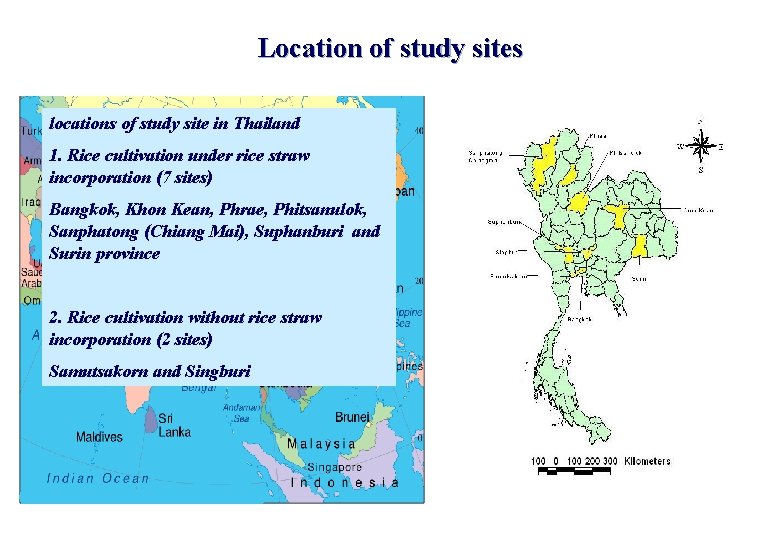
Location of study sites locations of study site in Thailand 1. Rice cultivation under rice straw incorporation (7 sites) Bangkok, Khon Kean, Phrae, Phitsanulok, Sanphatong (Chiang Mai), Suphanburi and Surin province 2. Rice cultivation without rice straw incorporation (2 sites) Samutsakorn and Singburi
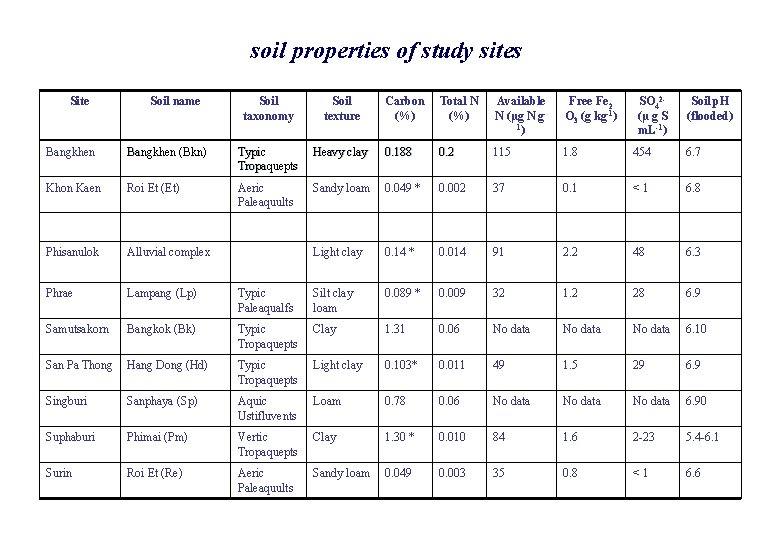
soil properties of study sites Site Soil name Soil taxonomy Soil texture Carbon (%) Total N (%) Available N (µg N g 1) Free Fe 2 O 3 (g kg-1) SO 42(µ g S m. L-1) Soil p. H (flooded) Bangkhen (Bkn)) Typic Tropaquepts Heavy clay 0. 188 0. 2 115 1. 8 454 6. 7 Khon Kaen Roi Et (Et) Aeric Paleaquults Sandy loam 0. 049 * 0. 002 37 0. 1 <1 6. 8 Phisanulok Alluvial complex Light clay 0. 14 * 0. 014 91 2. 2 48 6. 3 Phrae Lampang (Lp) Typic Paleaqualfs Silt clay loam 0. 089 * 0. 009 32 1. 2 28 6. 9 Samutsakorn Bangkok (Bk) Typic Tropaquepts Clay 1. 31 0. 06 No data 6. 10 San Pa Thong Hang Dong (Hd) Typic Tropaquepts Light clay 0. 103* 0. 011 49 1. 5 29 6. 9 Singburi Sanphaya (Sp) Aquic Ustifluvents Loam 0. 78 0. 06 No data 6. 90 Suphaburi Phimai (Pm) Vertic Tropaquepts Clay 1. 30 * 0. 010 84 1. 6 2 -23 5. 4 -6. 1 Surin Roi Et (Re) Aeric Paleaquults Sandy loam 0. 049 0. 003 35 0. 8 <1 6. 6
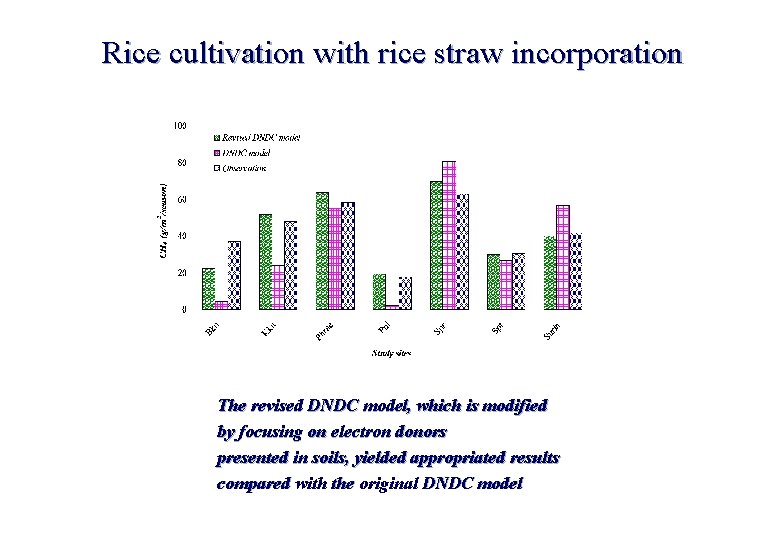
Rice cultivation with rice straw incorporation The revised DNDC model, which is modified by focusing on electron donors presented in soils, yielded appropriated results compared with the original DNDC model
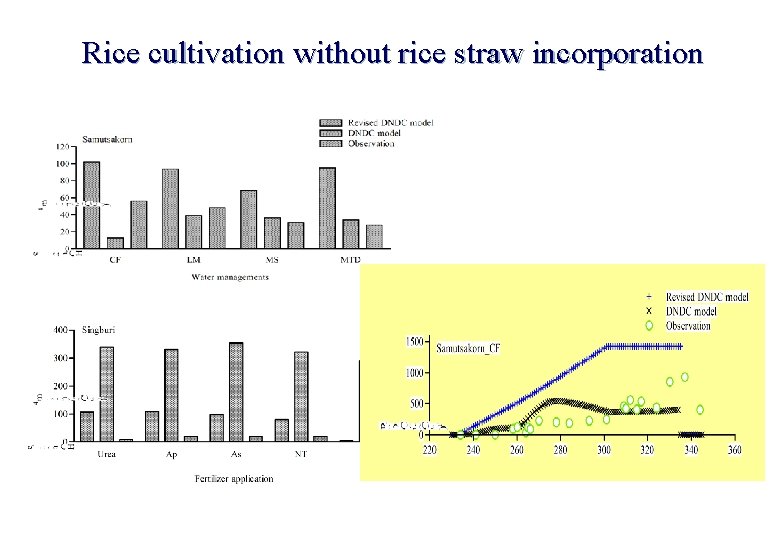
Rice cultivation without rice straw incorporation
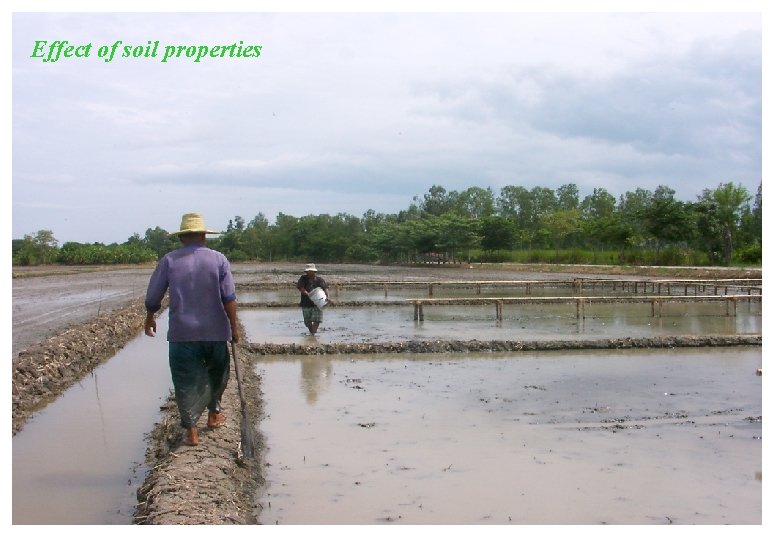
Effect of soil properties
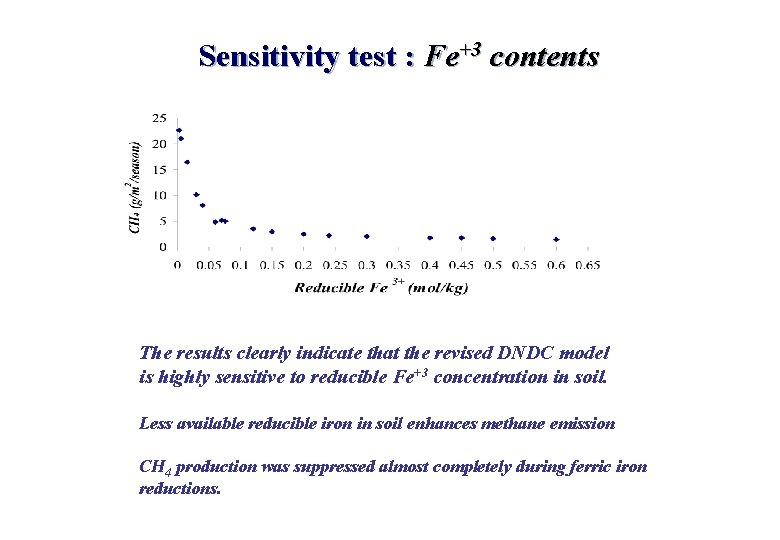
Sensitivity test : Fe+3 contents The results clearly indicate that the revised DNDC model is highly sensitive to reducible Fe+3 concentration in soil. Less available reducible iron in soil enhances methane emission CH 4 production was suppressed almost completely during ferric iron reductions.
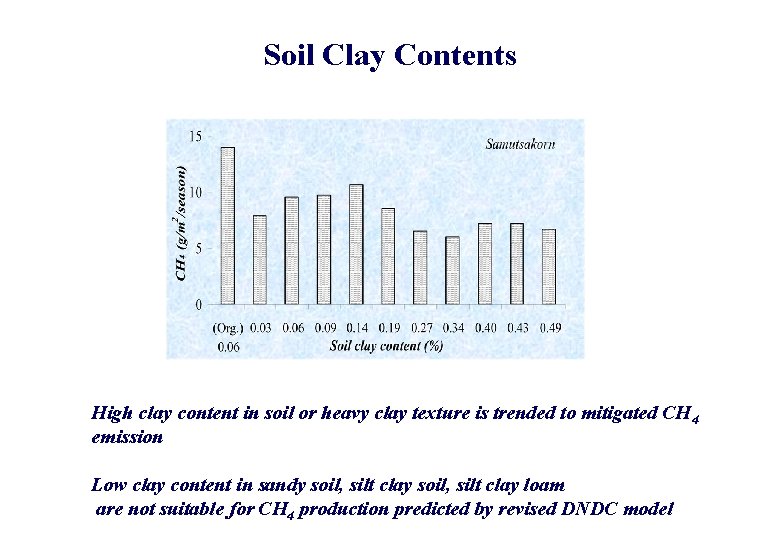
Soil Clay Contents High clay content in soil or heavy clay texture is trended to mitigated CH 4 emission Low clay content in sandy soil, silt clay loam are not suitable for CH 4 production predicted by revised DNDC model
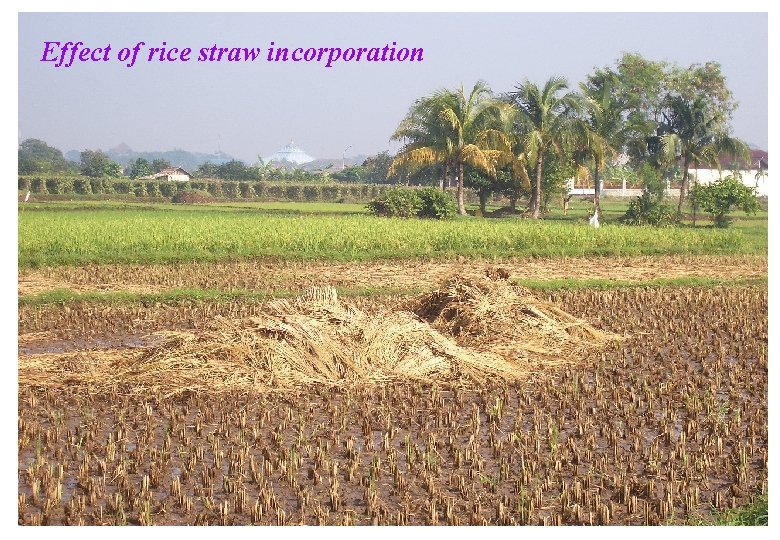
Effect of rice straw incorporation
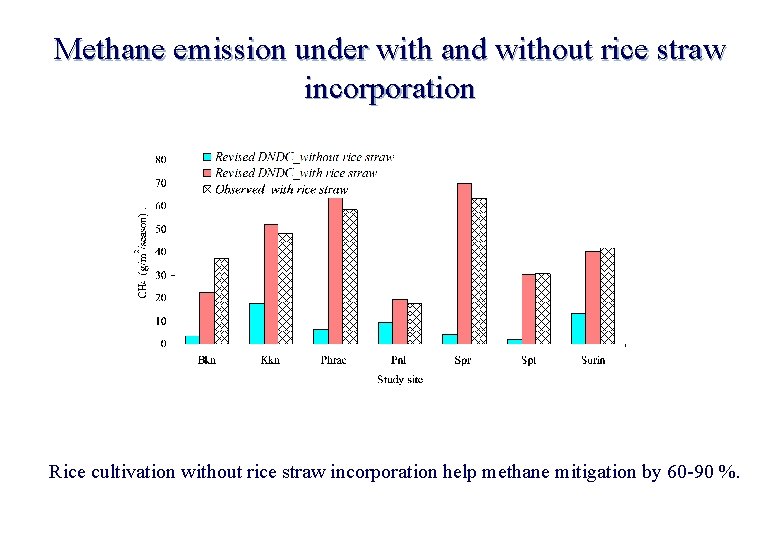
Methane emission under with and without rice straw incorporation Rice cultivation without rice straw incorporation help methane mitigation by 60 -90 %.
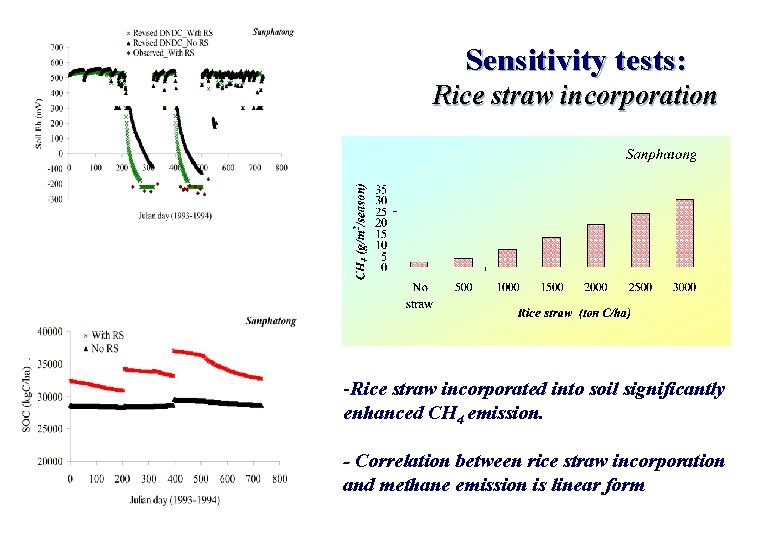
Sensitivity tests: Rice straw incorporation -Rice straw incorporated into soil significantly enhanced CH 4 emission. - Correlation between rice straw incorporation and methane emission is linear form
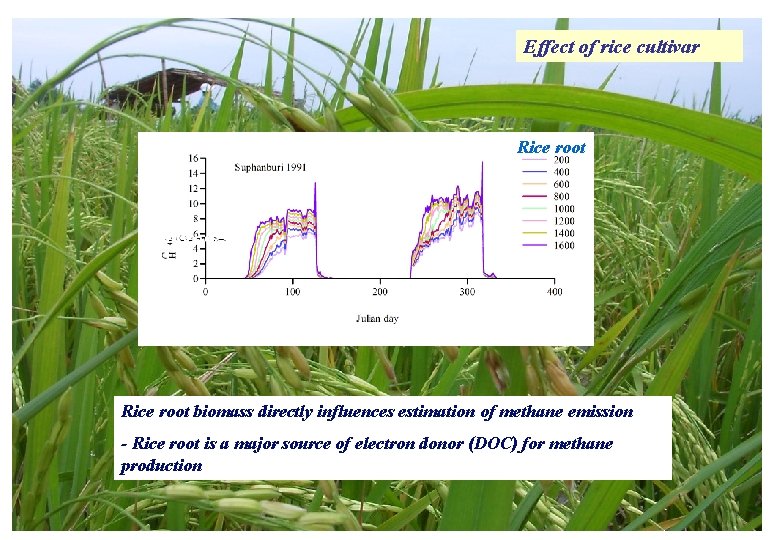
Effect of rice cultivar Rice root biomass directly influences estimation of methane emission - Rice root is a major source of electron donor (DOC) for methane production
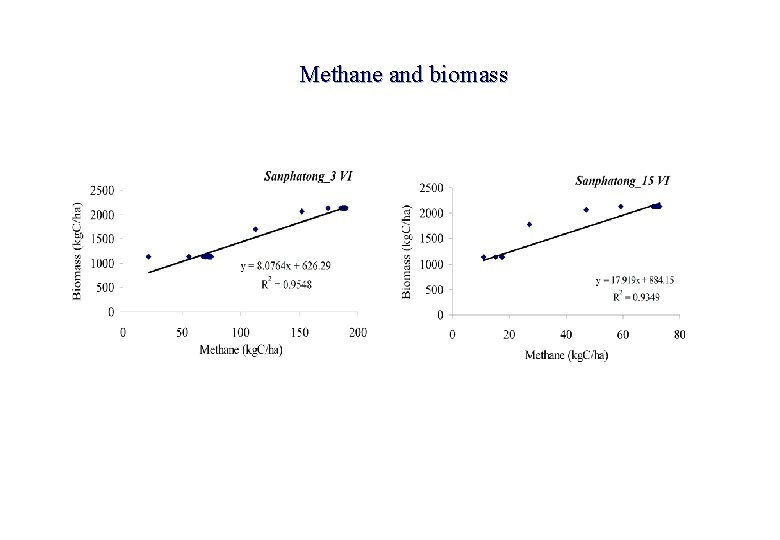
Methane and biomass
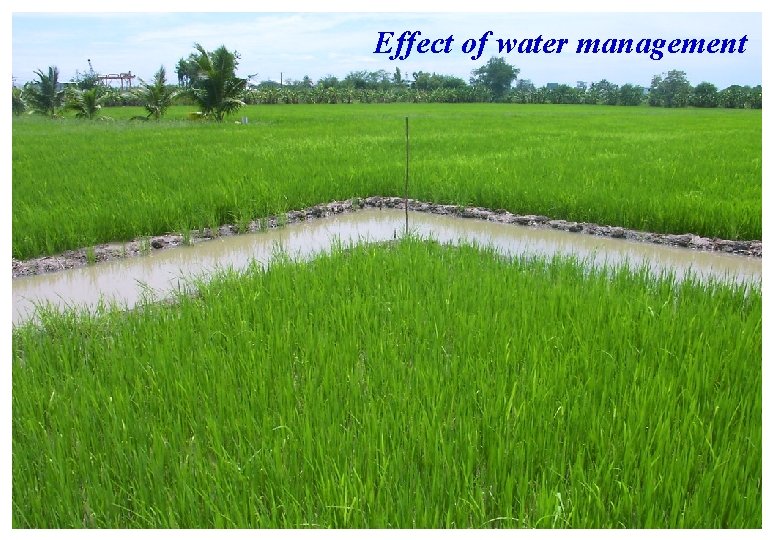
Effect of water management
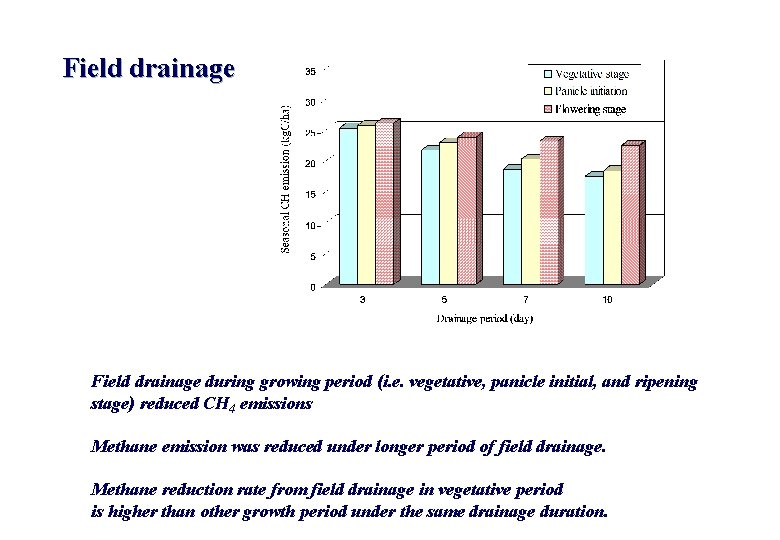
Field drainage during growing period (i. e. vegetative, panicle initial, and ripening stage) reduced CH 4 emissions Methane emission was reduced under longer period of field drainage. Methane reduction rate from field drainage in vegetative period is higher than other growth period under the same drainage duration.
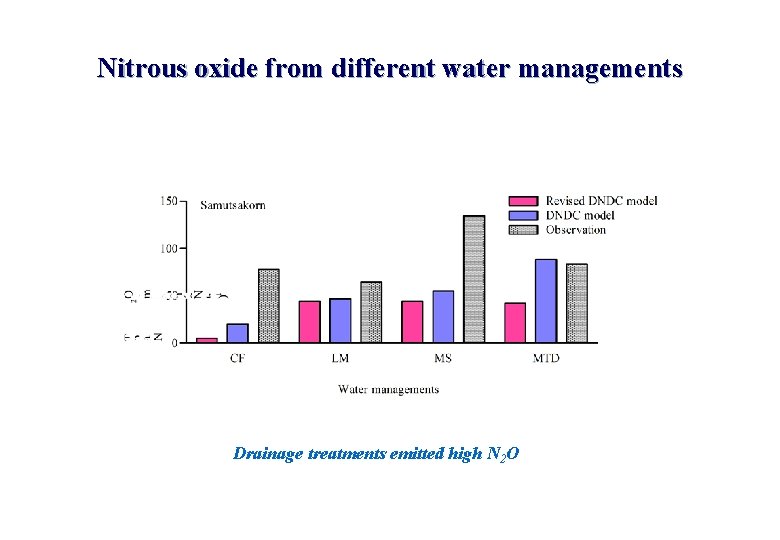
Nitrous oxide from different water managements Drainage treatments emitted high N 2 O
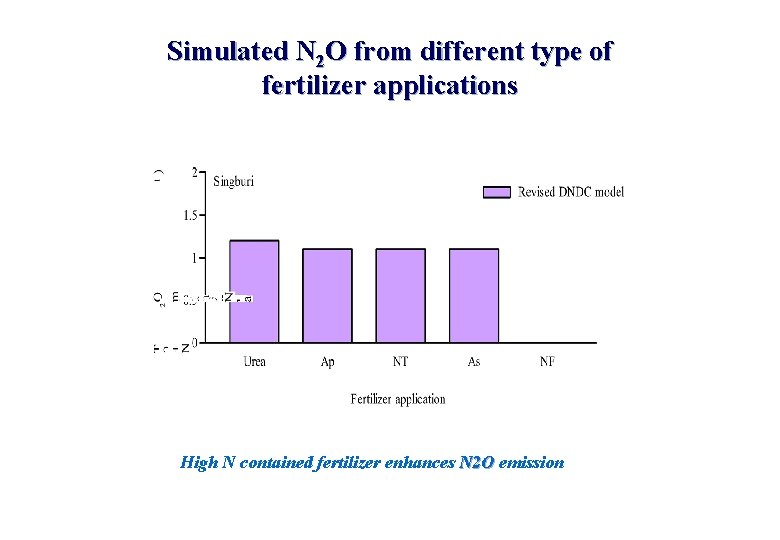
Simulated N 2 O from different type of fertilizer applications High N contained fertilizer enhances N 2 O emission N 2 O
Conclusions n n The sensitivity analysis suggested that soil properties such as Fe+3 contents, rice straw incorporation and field drainage are the main factors influence on CH 4 emission Field drainage and fertilizer application influence on N 2 O emission
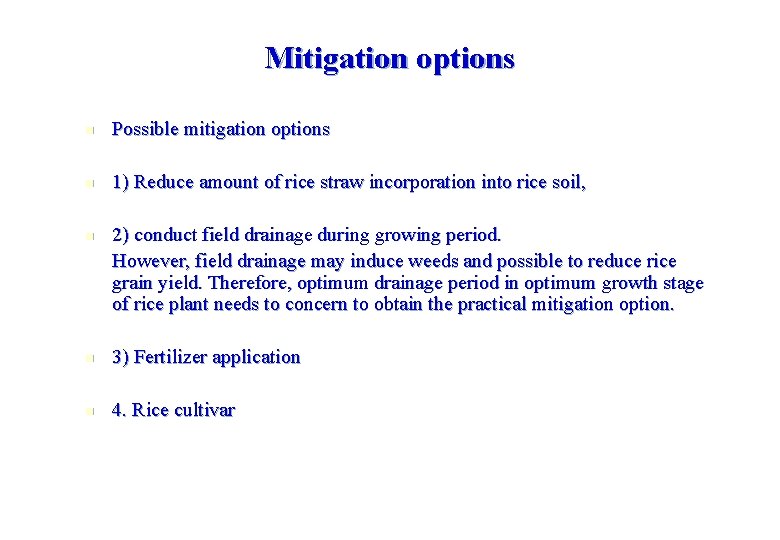
Mitigation options n Possible mitigation options n 1) Reduce amount of rice straw incorporation into rice soil, n 2) conduct field drainage during growing period. However, field drainage may induce weeds and possible to reduce rice grain yield. Therefore, optimum drainage period in optimum growth stage of rice plant needs to concern to obtain the practical mitigation option. n 3) Fertilizer application n 4. Rice cultivar
Acknowledgements n n n This research was funded by the grant of Eco-Frontier Fellowship program by Ministry of the Environment, Japan. We thanks Prof. C. S. Li for DNDC model. Sincere thanks to Prof. Shu Fukai, Dr. Naruo Matsumoto, Dr. Niwat Nadheerong, Mr. Chitnucha Buddhaboon for valuable data and their kindly suggestions on of Thai rice plants characteristics.