
Green Revolution Curse or Blessing A Development Diffusion
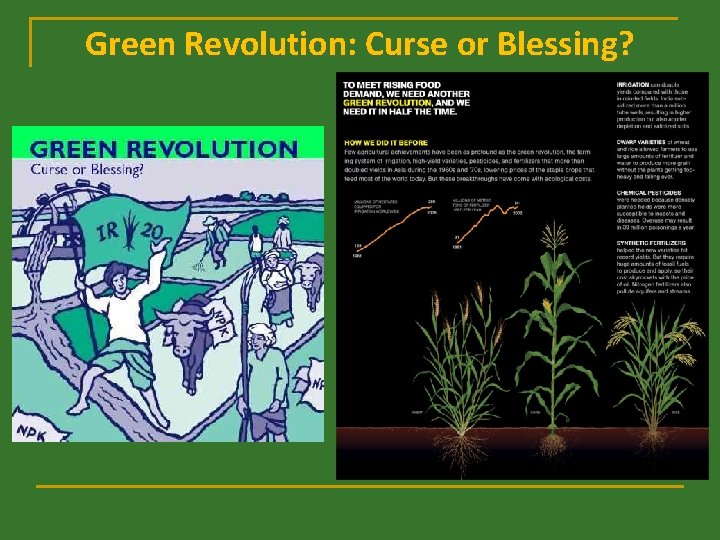
Green Revolution: Curse or Blessing?
A. Development & Diffusion of Agriculture: Three agricultural revolutions: n 1. n Neolithic Revolution (12, 000 yrs ago): first plant & animal domestication The role of women? - female deities - women were first to farm - ~80% of all food eaten in Africa is grown by women
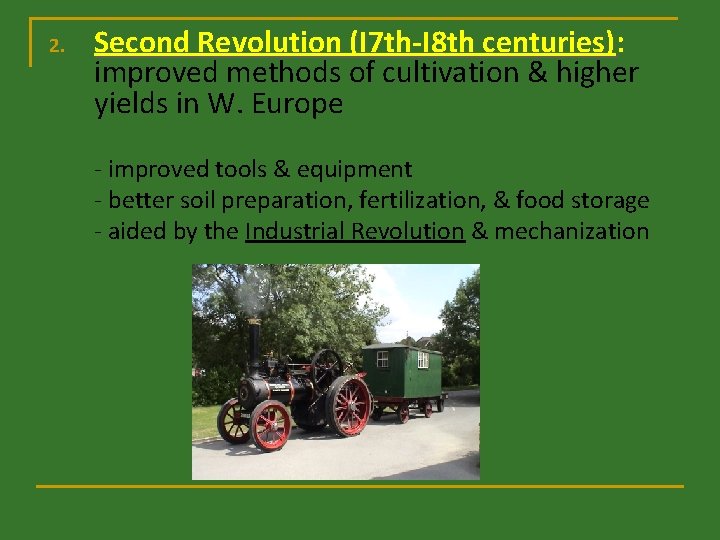
2. Second Revolution (I 7 th-I 8 th centuries): improved methods of cultivation & higher yields in W. Europe - improved tools & equipment - better soil preparation, fertilization, & food storage - aided by the Industrial Revolution & mechanization

2 (continued). Second Agricultural Revolution 1. 2. 3. 4. 5. 6. from late Middle Ages into Industrial Age open fields enclosed by fences use of crop rotation seeds & breeding stock improved tools improved: use of the “heavy” plow horses replaced oxen for plowing
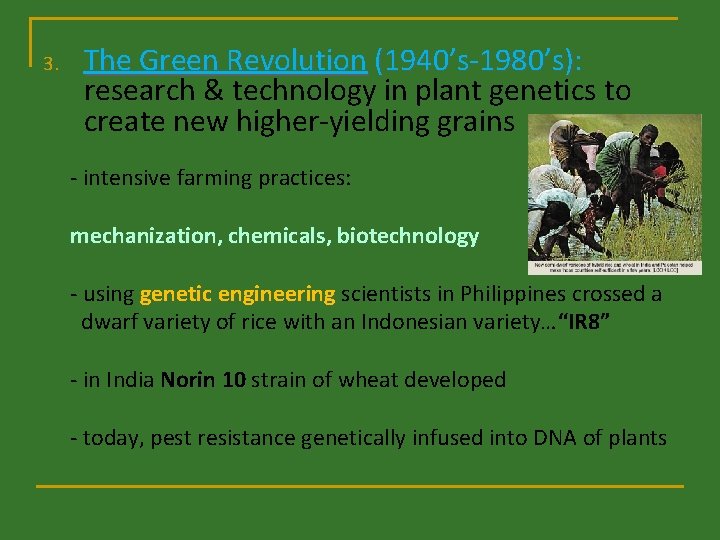
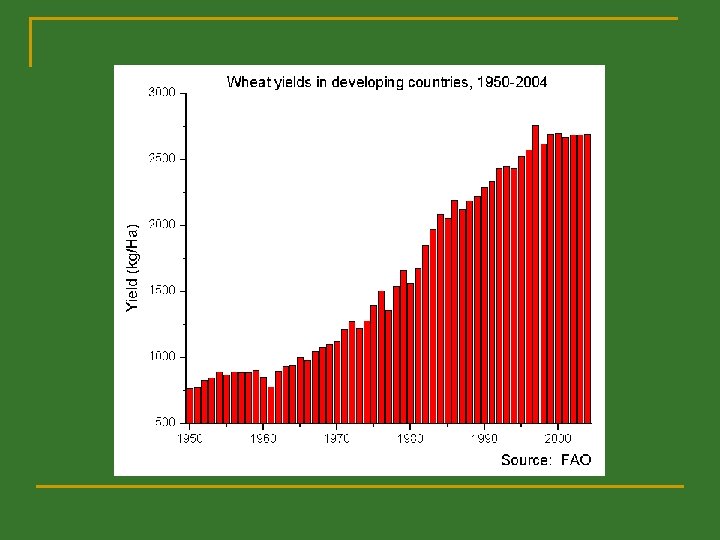
3. The Green Revolution (1940’s-1980’s): research & technology in plant genetics to create new higher-yielding grains - intensive farming practices: mechanization, chemicals, biotechnology - using genetic engineering scientists in Philippines crossed a dwarf variety of rice with an Indonesian variety…“IR 8” - in India Norin 10 strain of wheat developed - today, pest resistance genetically infused into DNA of plants
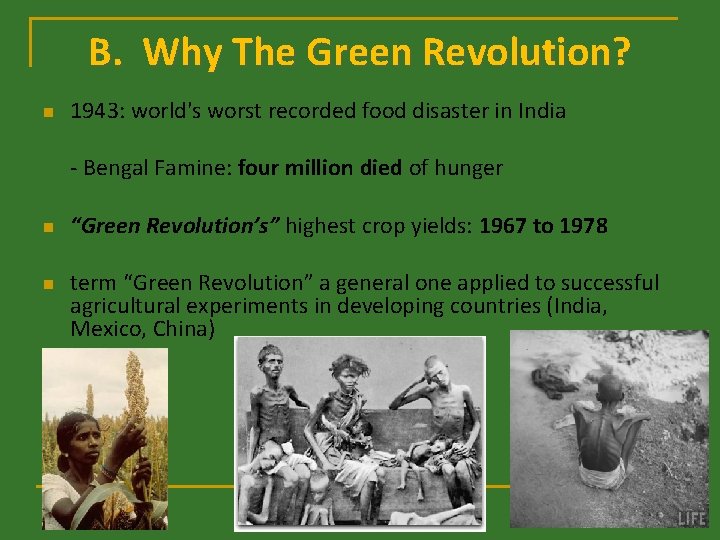
B. Why The Green Revolution? n 1943: world's worst recorded food disaster in India - Bengal Famine: four million died of hunger n n “Green Revolution’s” highest crop yields: 1967 to 1978 term “Green Revolution” a general one applied to successful agricultural experiments in developing countries (India, Mexico, China)
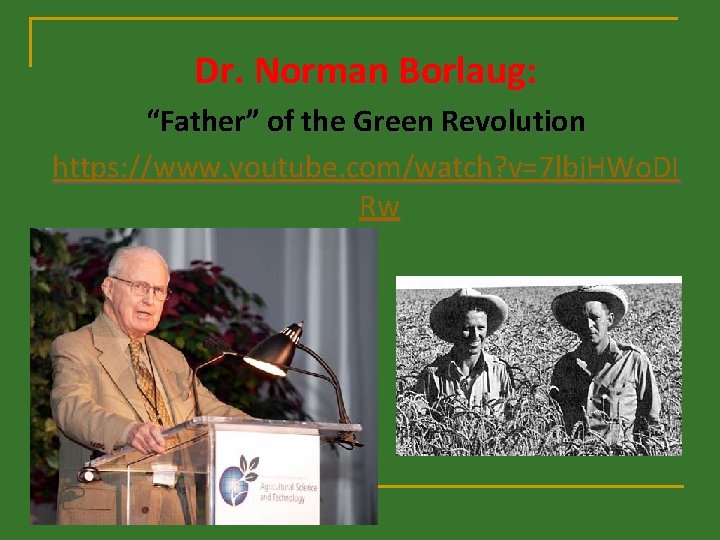
Dr. Norman Borlaug: “Father” of the Green Revolution https: //www. youtube. com/watch? v=7 lbj. HWo. DI Rw
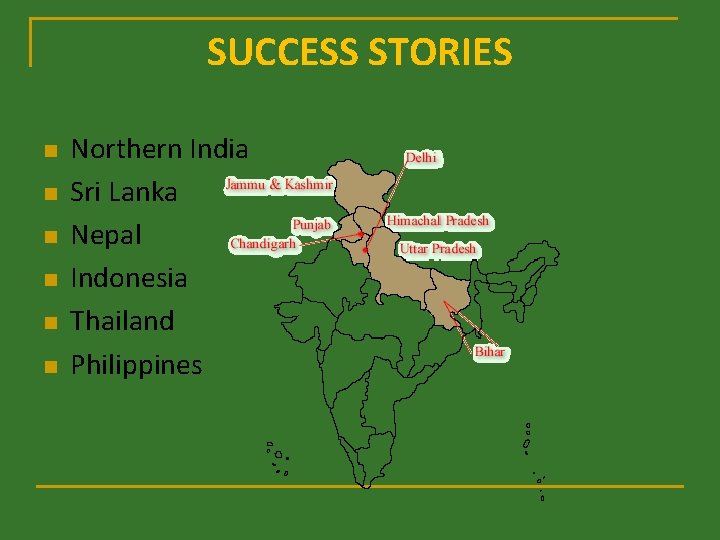
SUCCESS STORIES n n n Northern India Sri Lanka Nepal Indonesia Thailand Philippines
C. Basic methods: 1) expansion of farming areas 2) double-cropping 3) genetically engineering crops 4) machinery, fertilizers, pesticides, herbicides n Other benefits: - higher yields of wheat, corn, & rice - improved appearance of fruits - grains used to fatten livestock faster… https: //www. youtube. com/watch? v=-e. UKj 8 s. Oyq 8
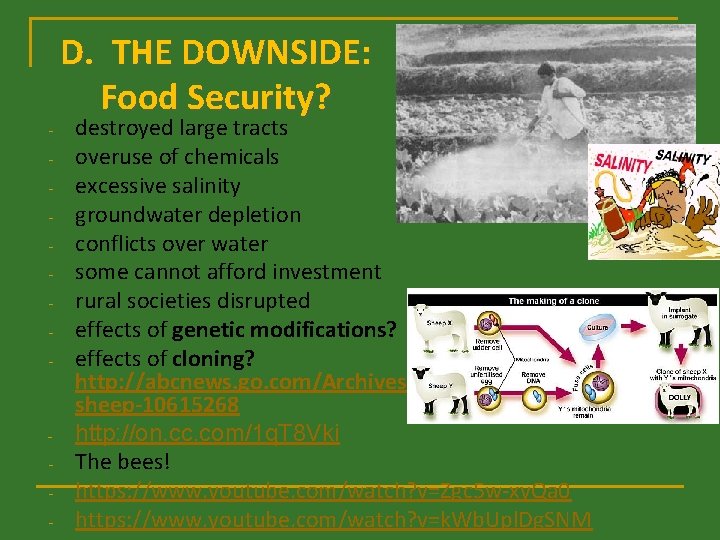
- - - D. THE DOWNSIDE: Food Security? destroyed large tracts overuse of chemicals excessive salinity groundwater depletion conflicts over water some cannot afford investment rural societies disrupted effects of genetic modifications? effects of cloning? http: //abcnews. go. com/Archives/video/feb-24 -1997 -dollysheep-10615268 http: //on. cc. com/1 q. T 8 Vki The bees! https: //www. youtube. com/watch? v=Zgc 5 w-xy. Qa 0 https: //www. youtube. com/watch? v=k. Wb. Upl. Dg. SNM
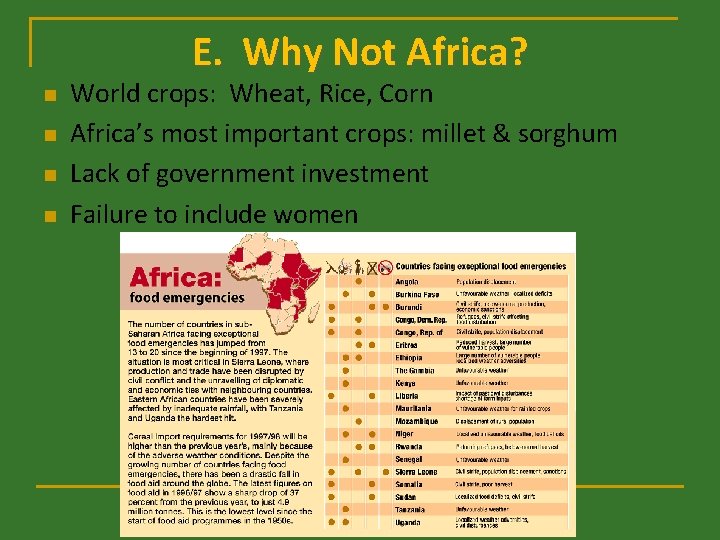
E. Why Not Africa? n n World crops: Wheat, Rice, Corn Africa’s most important crops: millet & sorghum Lack of government investment Failure to include women
- Slides: 12