
Green Lands Blue Waters A Vision and Roadmap
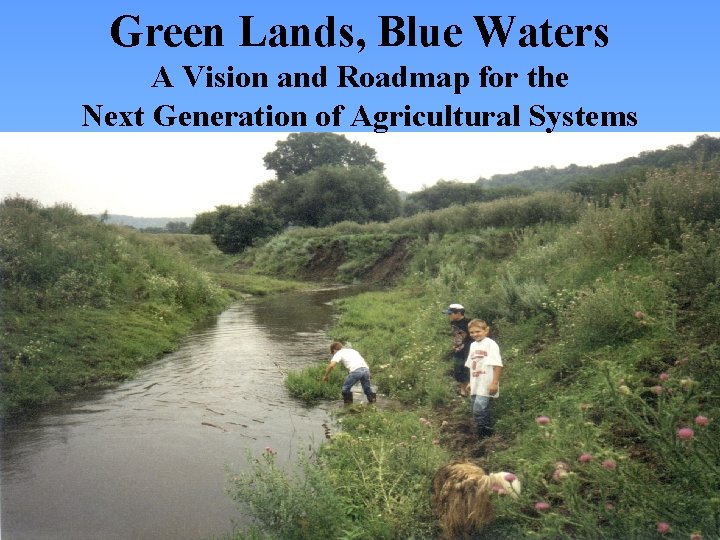
Green Lands, Blue Waters A Vision and Roadmap for the Next Generation of Agricultural Systems
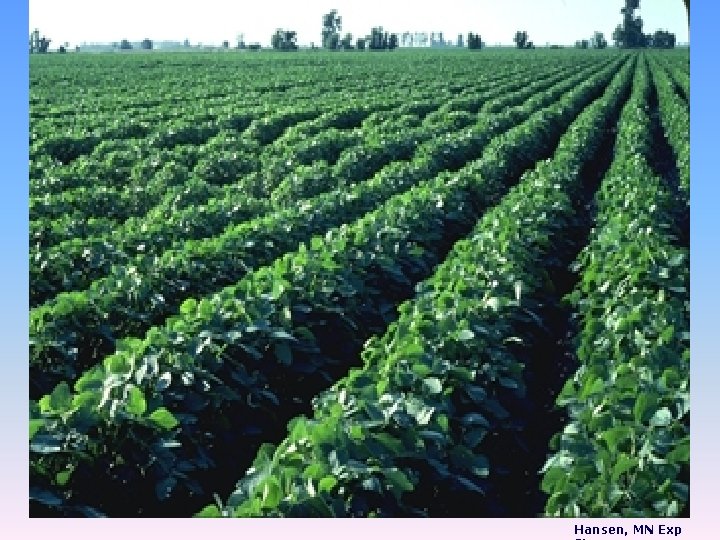
Hansen, MN Exp
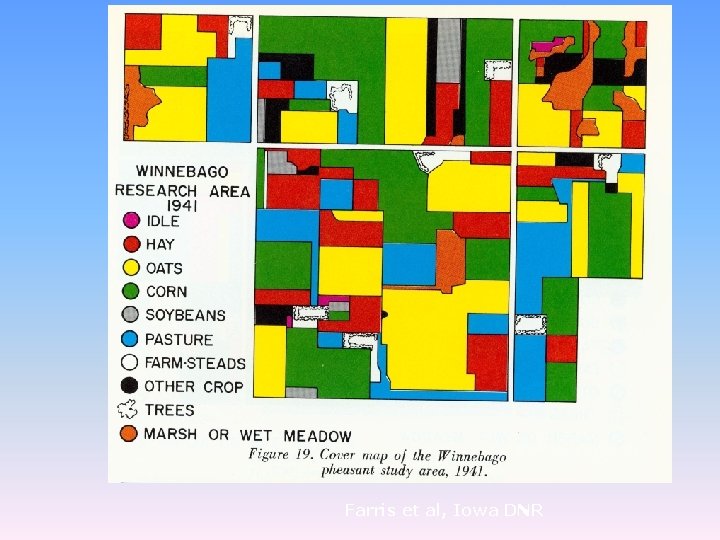
Farris et al, Iowa DNR
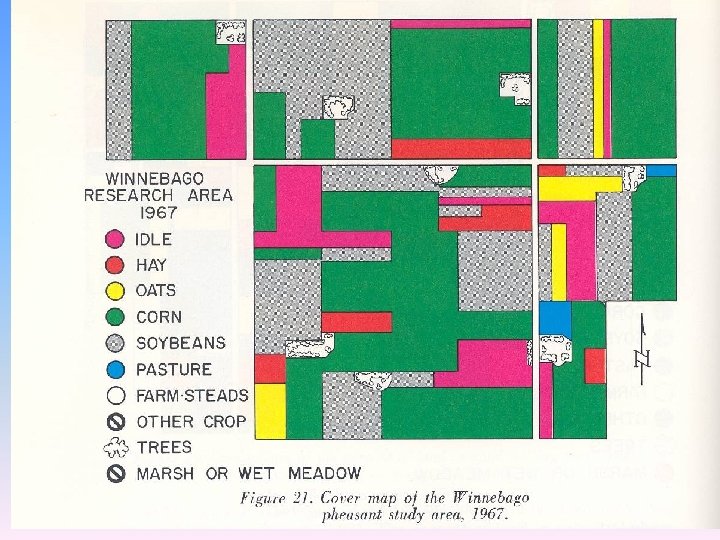
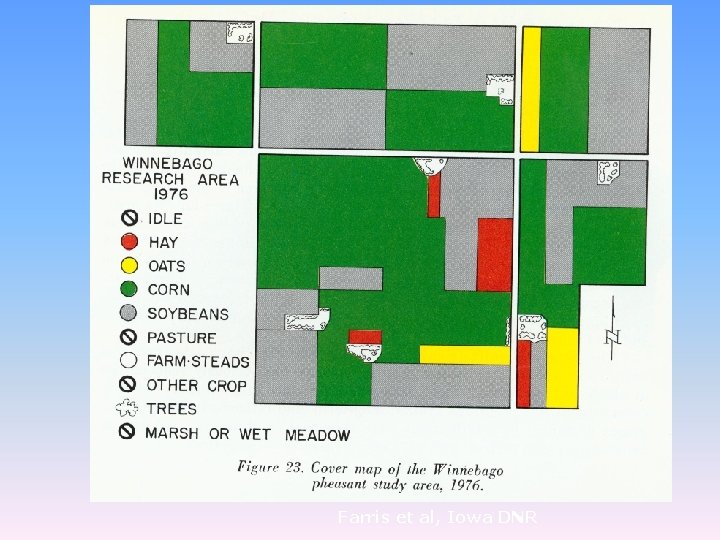
Farris et al, Iowa DNR
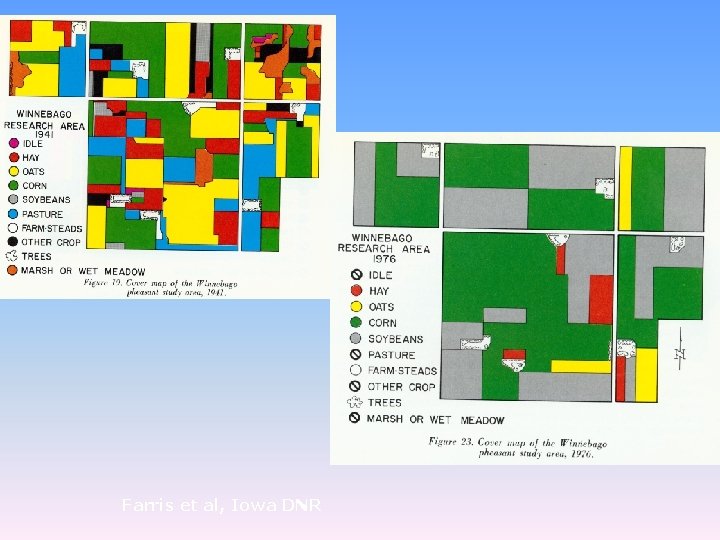
DNR Farris et al, Iowa DNR
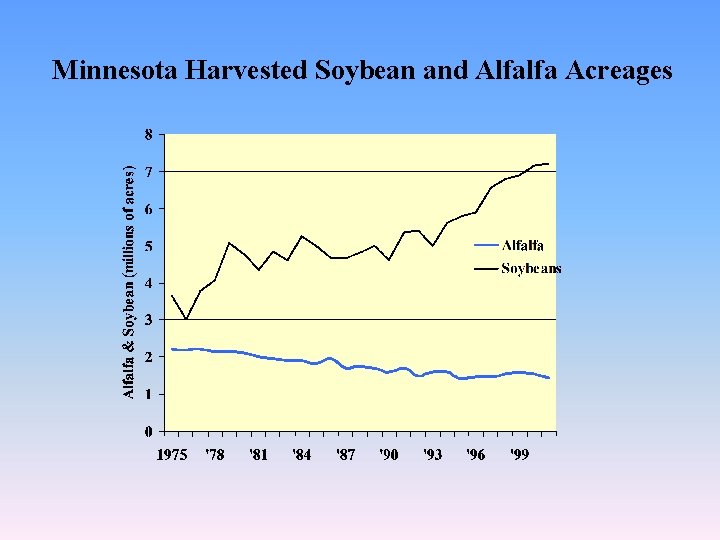
Minnesota Harvested Soybean and Alfalfa Acreages
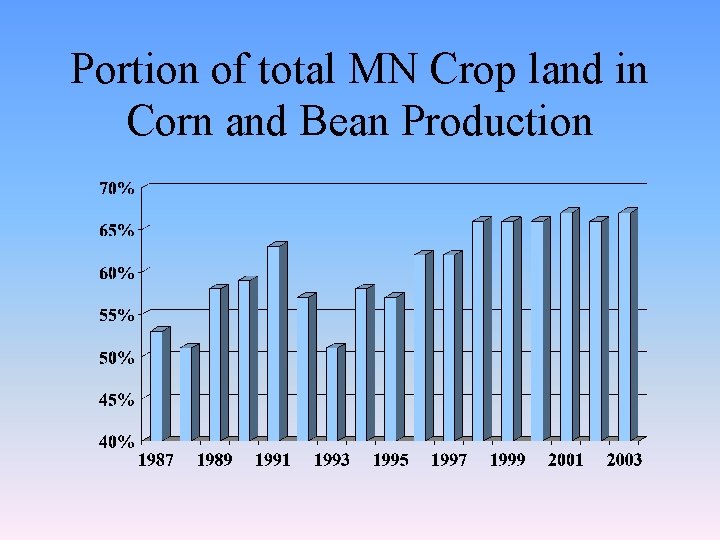
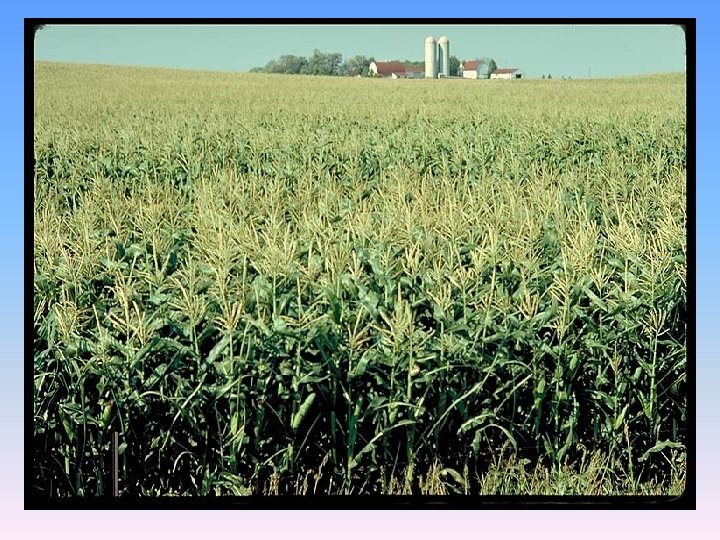
Portion of total MN Crop land in Corn and Bean Production
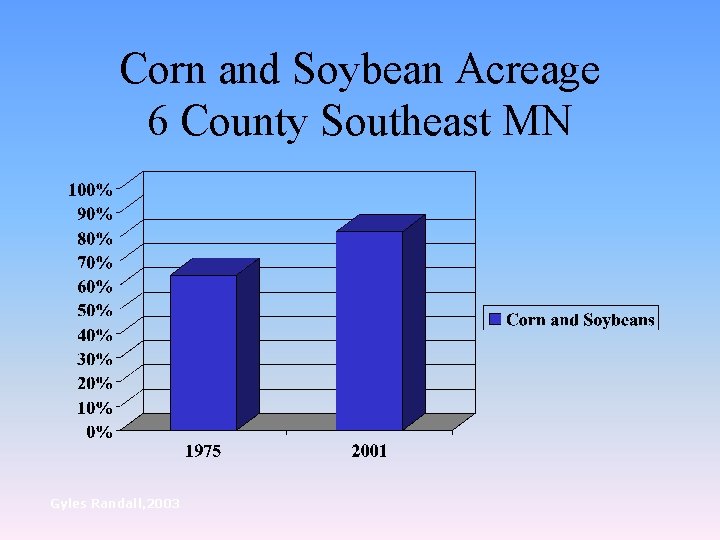
Corn and Soybean Acreage 6 County Southeast MN Gyles Randall, 2003
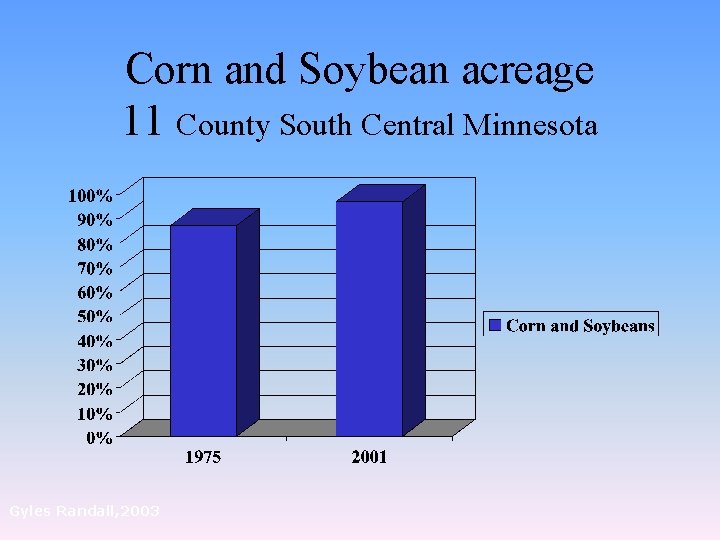
Corn and Soybean acreage 11 County South Central Minnesota Gyles Randall, 2003
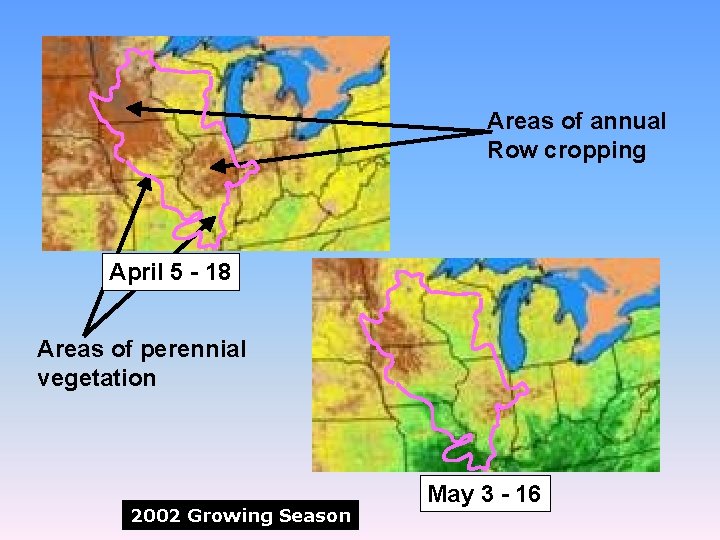
Areas of annual Row cropping April 5 - 18 Areas of perennial vegetation 2002 Growing Season May 3 - 16
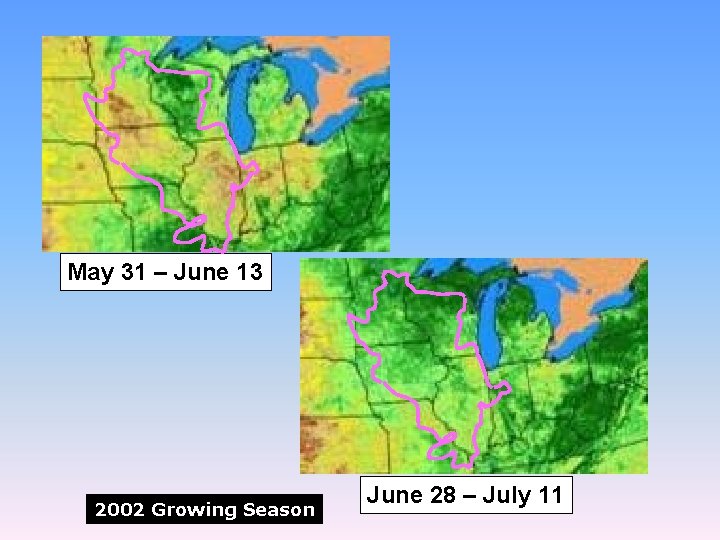
May 31 – June 13 2002 Growing Season June 28 – July 11
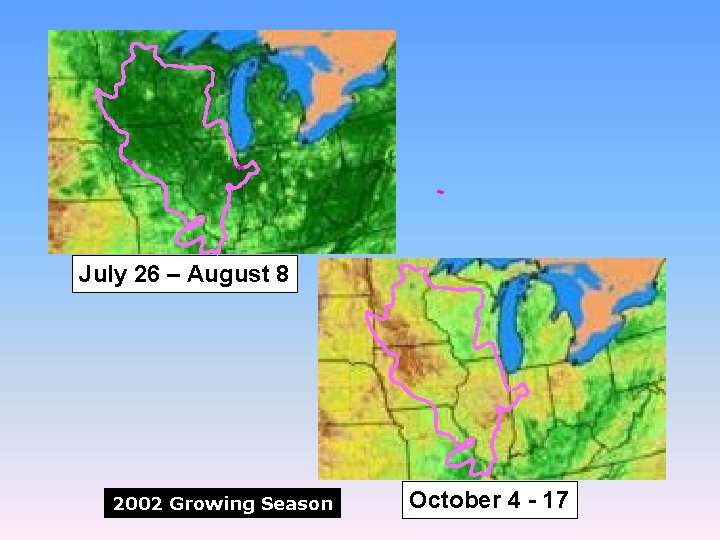
July 26 – August 8 2002 Growing Season October 4 - 17
Cottonwood River Watershed Precipitation and Runoff
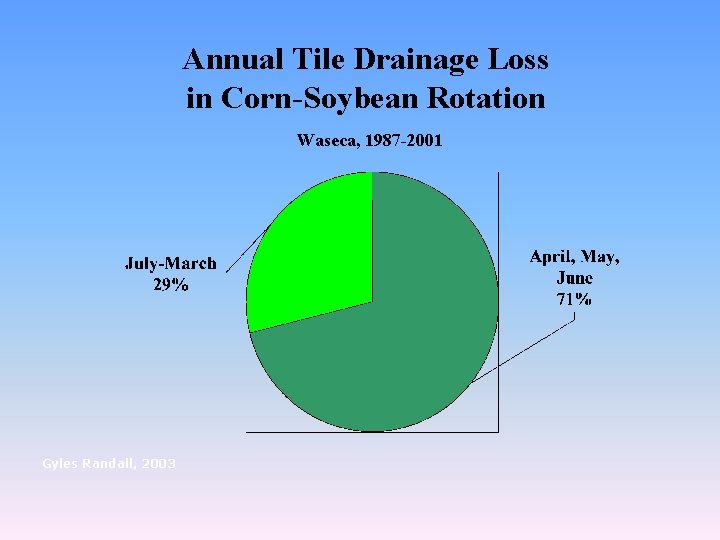
Annual Tile Drainage Loss in Corn-Soybean Rotation Waseca, 1987 -2001 Gyles Randall, 2003
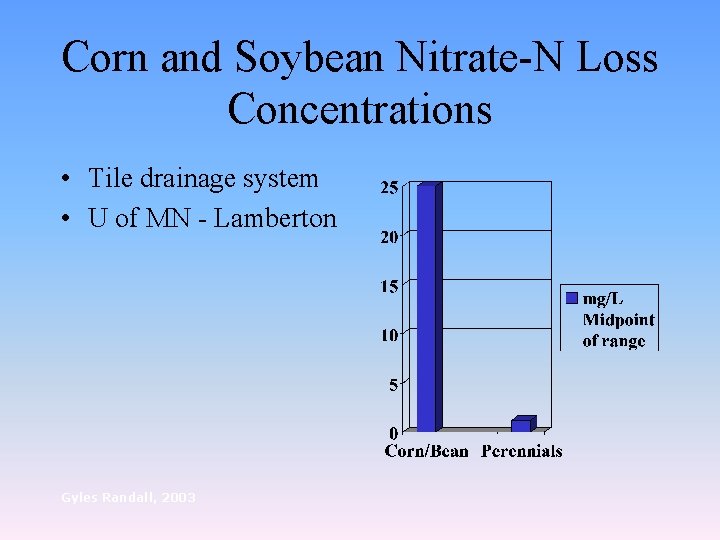
Corn and Soybean Nitrate-N Loss Concentrations • Tile drainage system • U of MN - Lamberton Gyles Randall, 2003
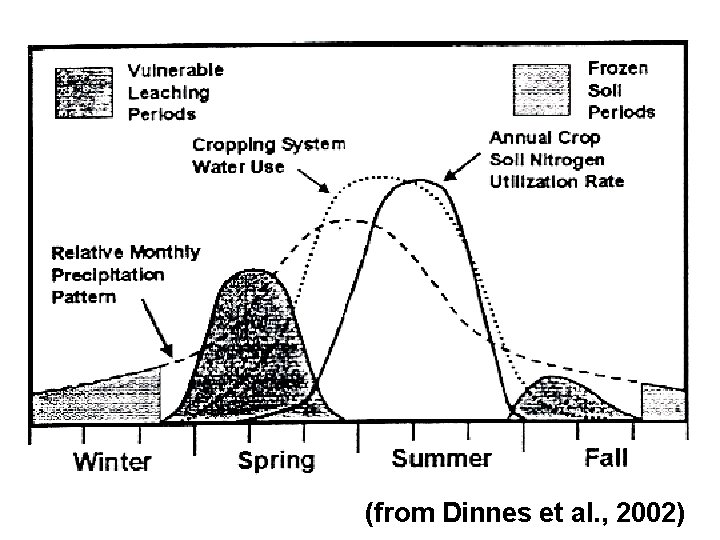
(from Dinnes et al. , 2002)
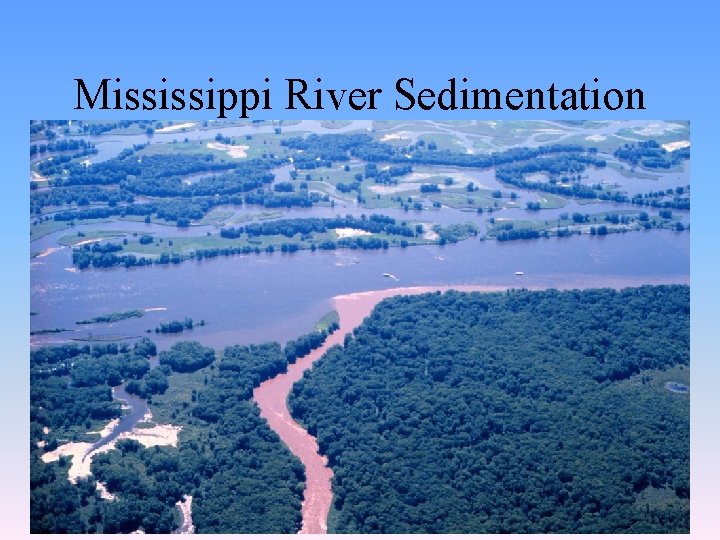
Mississippi River Sedimentation
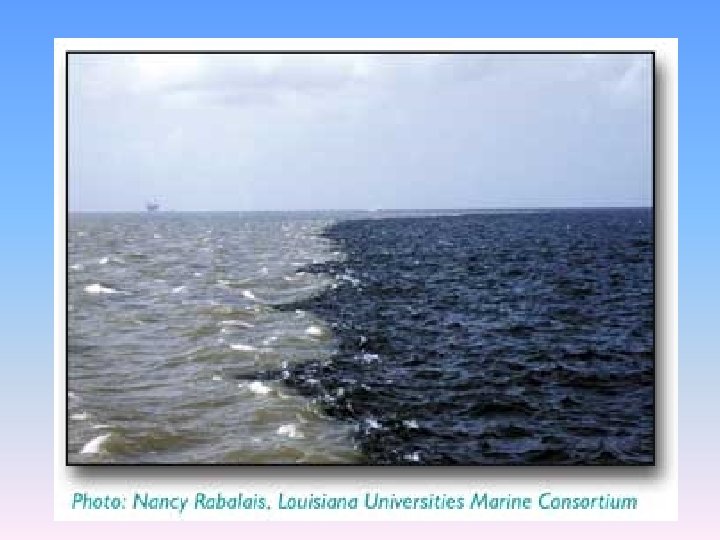
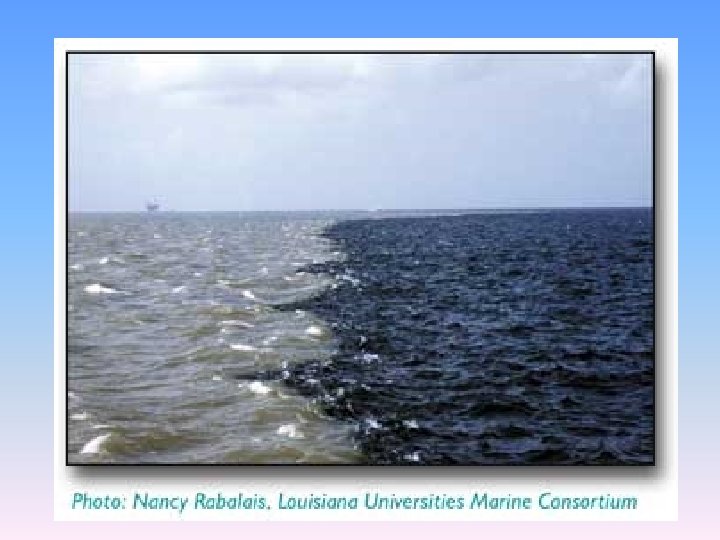
Hypoxia in the Gulf of Mexico Rabalais et al. 2000
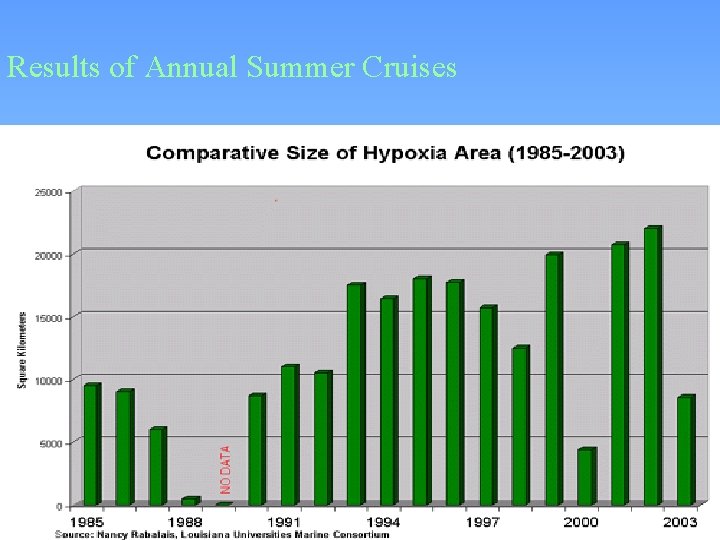
Results of Annual Summer Cruises
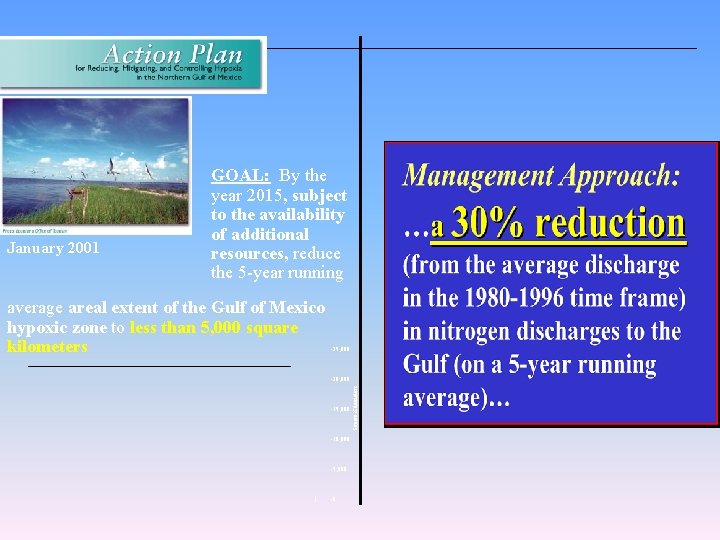
average areal extent of the Gulf of Mexico hypoxic zone to less than 5, 000 square kilometers -25, 000 -20, 000 -15, 000 -10, 000 -5, 000 -0 Square Kilometers January 2001 GOAL: By the year 2015, subject to the availability of additional resources, reduce the 5 -year running
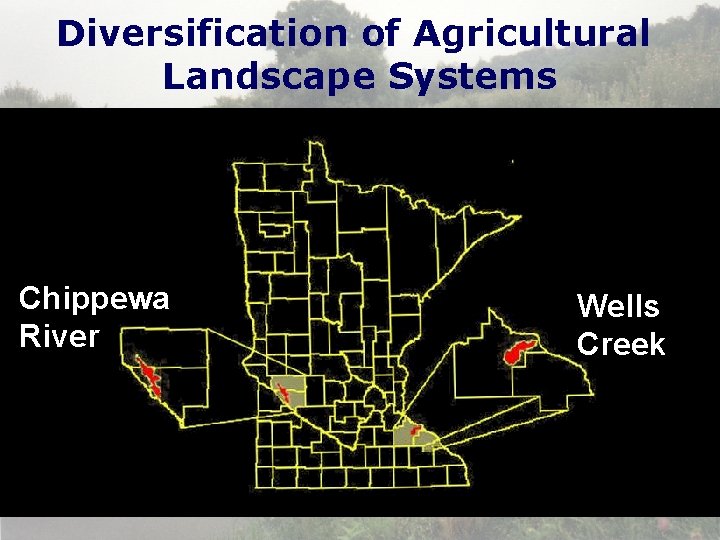
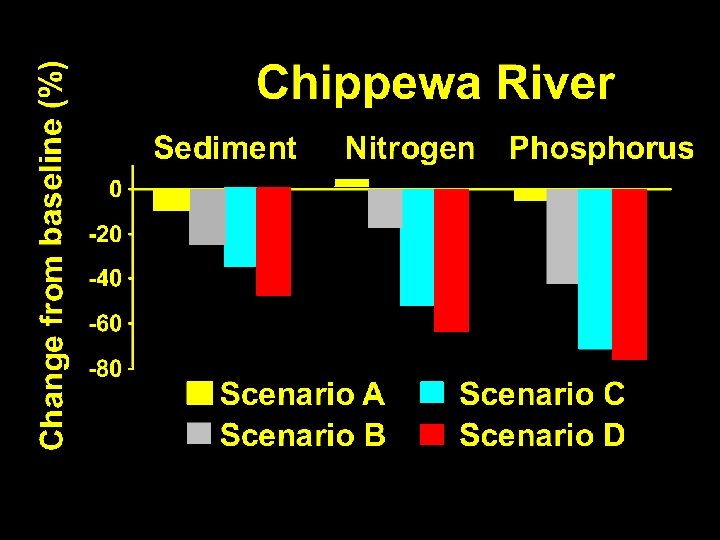
Diversification of Agricultural Landscape Systems Chippewa River Wells Creek
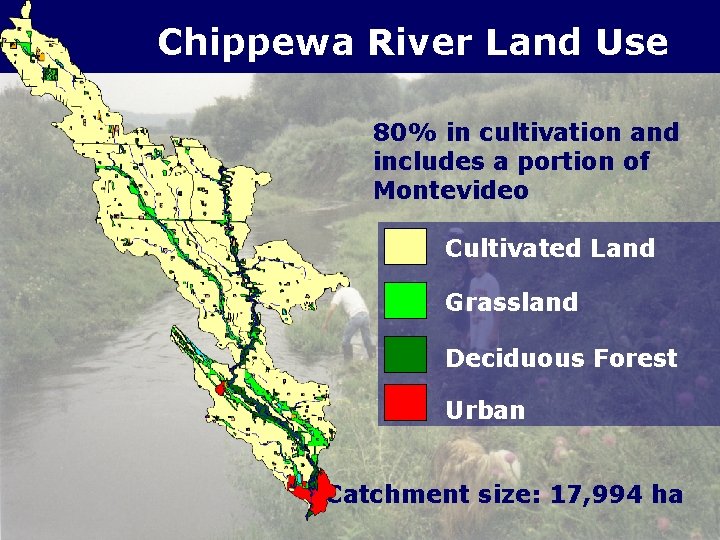
Chippewa River Land Use 80% in cultivation and includes a portion of Montevideo Cultivated Land Grassland Deciduous Forest Urban Catchment size: 17, 994 ha
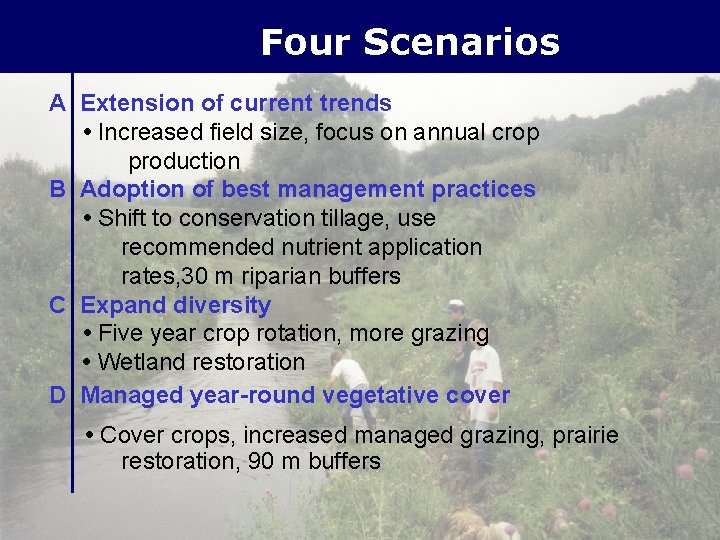
Four Scenarios A Extension of current trends • Increased field size, focus on annual crop production B Adoption of best management practices • Shift to conservation tillage, use recommended nutrient application rates, 30 m riparian buffers C Expand diversity • Five year crop rotation, more grazing • Wetland restoration D Managed year-round vegetative cover • Cover crops, increased managed grazing, prairie restoration, 90 m buffers
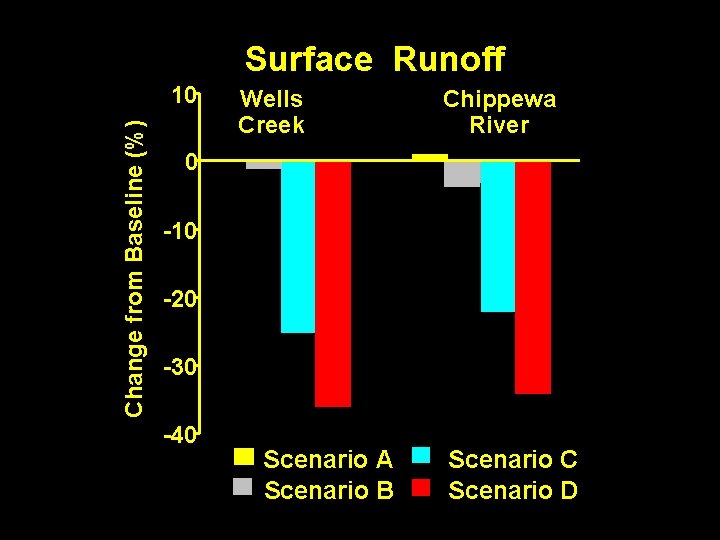
Surface Runoff Change from Baseline (%) 10 Wells Creek Chippewa River 0 -10 -20 -30 -40 Scenario A Scenario B Scenario C Scenario D
Green Lands, Blue Waters A Vision and Roadmap for the Next Generation of Agricultural Systems
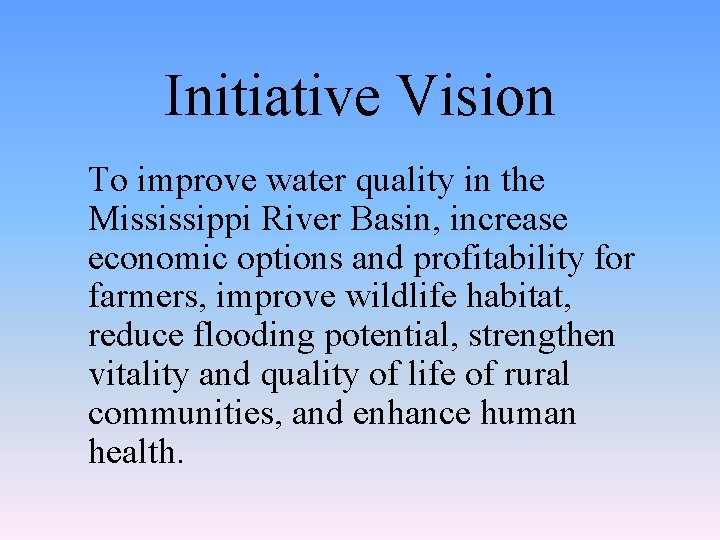
Initiative Vision To improve water quality in the Mississippi River Basin, increase economic options and profitability for farmers, improve wildlife habitat, reduce flooding potential, strengthen vitality and quality of life of rural communities, and enhance human health.
Initiative Mission To support development of and transition to a new generation of agricultural systems in the Mississippi River Basin that integrate more perennial plants and other continuous living cover into the agricultural landscape.
Potential Ecosystem Services Provided by Perennial Cropping Systems Nutrient Cycling, Flood Management, Natural Pest Management, Soil Health, Wildlife Diversity, Water Quality, Erosion Control, Carbon Management, Climate Mediation
Benefits to Bird Populations Bird responses to habitat changes (sightings per 160 acres) • Tilled row crops > 18 species • Tilled row crops, herbaceous fencerow, grass waterway, alfalfa and pasture > 25 species • Tilled row crops, herbaceous fencerow, grass waterway, pasture, alfalfa, and marsh > 52 species • Tilled row crops, herbaceous and wooded fencerows, grass waterway, pasture, alfalfa, marsh, and farmstead shelterbelt > 93 species Best, L. et al. 1995. A Review and synthesis of Habitat Use by Breeding Birds in Agricultural Landscapes of Iowa. The American Midland Naturalist, 134: 1
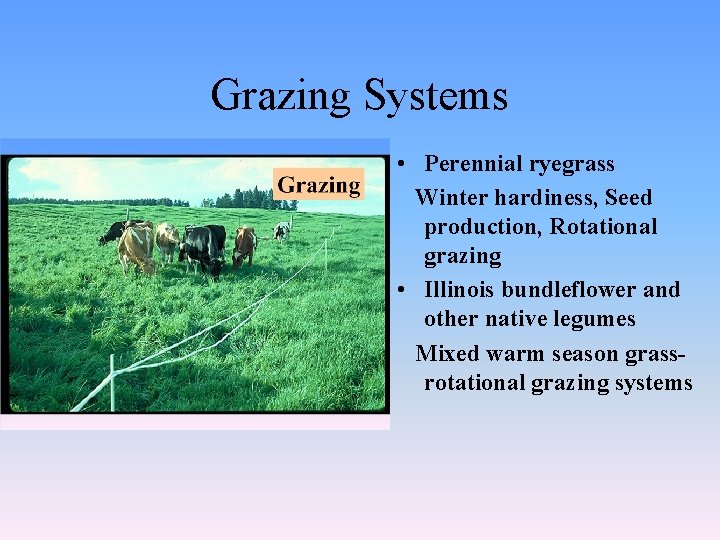
Grazing Systems • Perennial ryegrass Winter hardiness, Seed production, Rotational grazing • Illinois bundleflower and other native legumes Mixed warm season grassrotational grazing systems
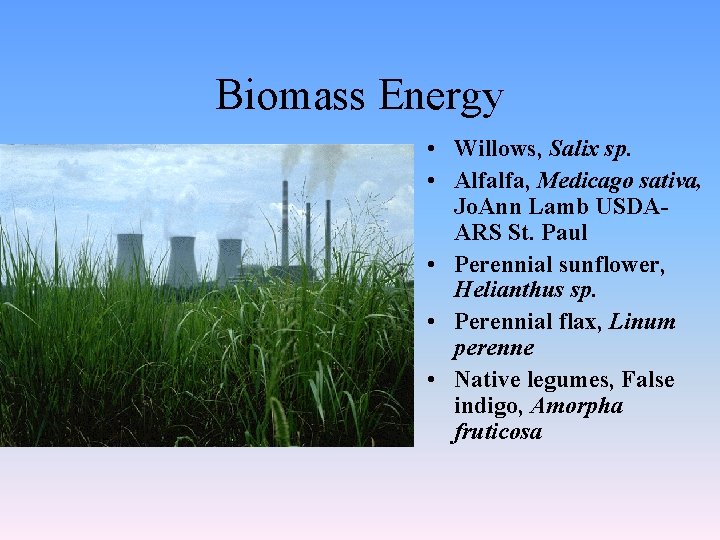
Biomass Energy • Willows, Salix sp. • Alfalfa, Medicago sativa, Jo. Ann Lamb USDAARS St. Paul • Perennial sunflower, Helianthus sp. • Perennial flax, Linum perenne • Native legumes, False indigo, Amorpha fruticosa
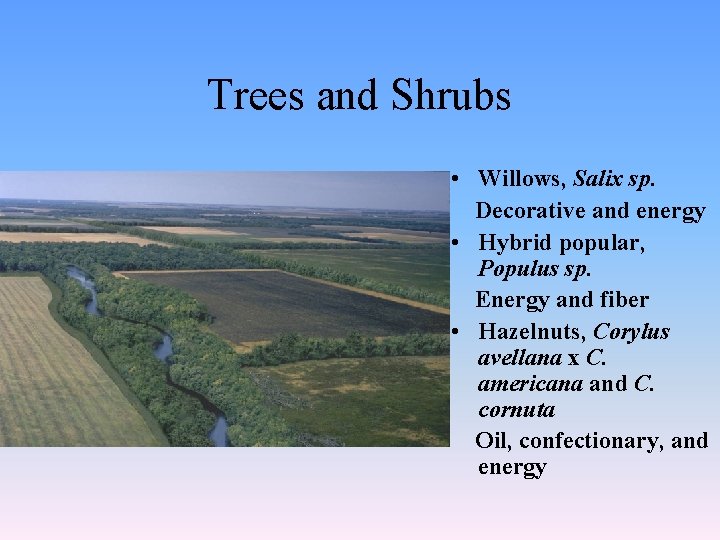
Trees and Shrubs • Willows, Salix sp. Decorative and energy • Hybrid popular, Populus sp. Energy and fiber • Hazelnuts, Corylus avellana x C. americana and C. cornuta Oil, confectionary, and energy
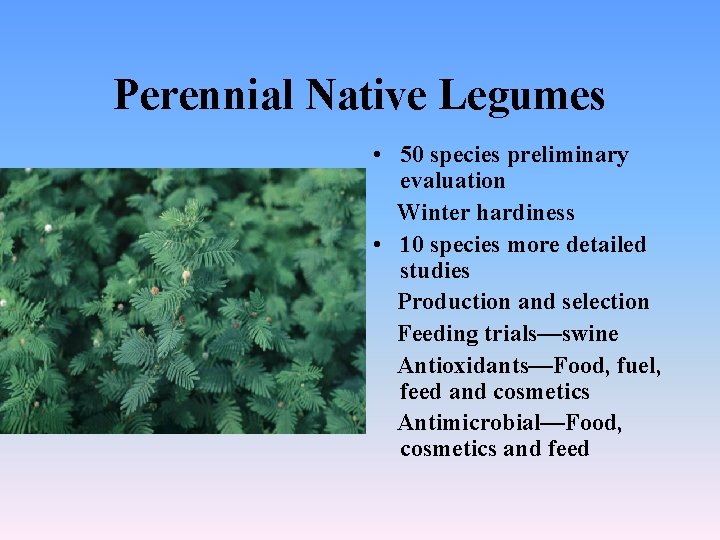
Perennial Native Legumes • 50 species preliminary evaluation Winter hardiness • 10 species more detailed studies Production and selection Feeding trials—swine Antioxidants—Food, fuel, feed and cosmetics Antimicrobial—Food, cosmetics and feed
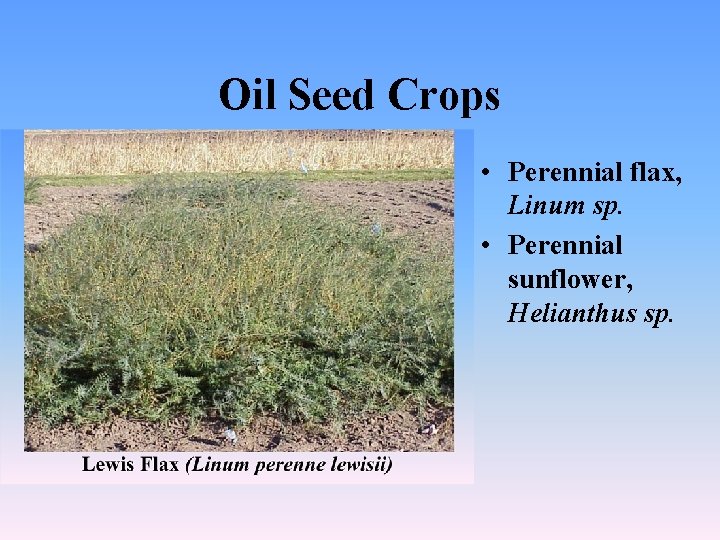
Oil Seed Crops • Perennial flax, Linum sp. • Perennial sunflower, Helianthus sp.
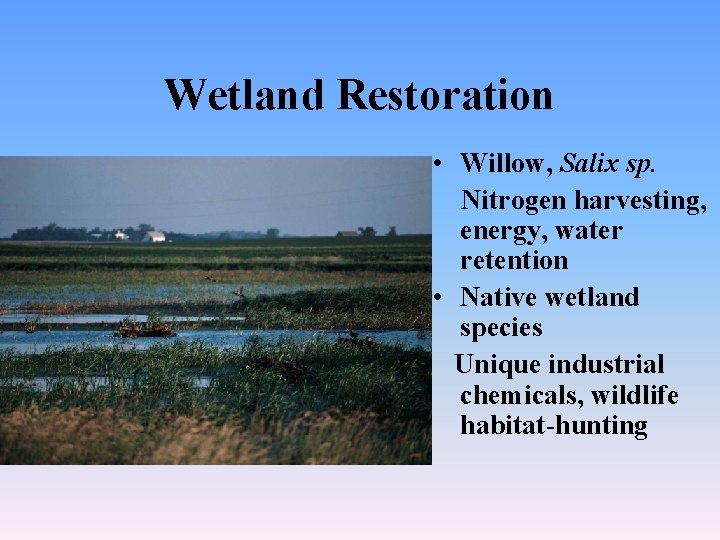
Wetland Restoration • Willow, Salix sp. Nitrogen harvesting, energy, water retention • Native wetland species Unique industrial chemicals, wildlife habitat-hunting
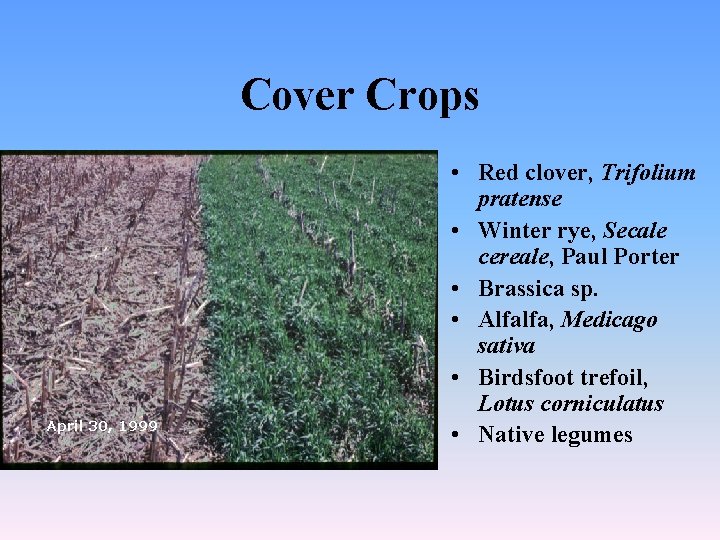
Cover Crops April 30, 1999 • Red clover, Trifolium pratense • Winter rye, Secale cereale, Paul Porter • Brassica sp. • Alfalfa, Medicago sativa • Birdsfoot trefoil, Lotus corniculatus • Native legumes
Advantages to Production Agriculture • • Improve environmental performance Improve economic diversity/profitability Keep working lands working Adopt a non-regulatory, long term strategy
Strategy 1 Involve diverse stakeholders – – – – – Audubon Society, Upper Mississippi Basin Initiative** Illinois Stewardship Alliance** Institute for Agriculture and Trade Policy** The Land Institute** Land Stewardship Project** Minnesota Farm Bureau Mississippi River Basin Alliance** National/Minnesota Farmers Union The Nature Conservancy, Upper Mississippi Basin Project** – Minnesota Pollution Control Agency – US Environmental Protection Agency – USDA/US Forest Service
Strategy 2: Engage land-grant institutions – The University of Illinois** – Iowa State University, including the Leopold Center for Sustainable Agriculture** – Louisiana State University – North Dakota State University ** – University of Minnesota ** – University of Missouri – University of Wisconsin**
Strategy 3: Organize at the Watershed, State & Basin Levels • Watershed Learning Groups (Kellogg Foundation) – Initially focus on two watersheds/state – Develop learning groups • State Coordinating Committees (Federal Leopold) – Representatives from learning groups and the consortium – Responsible for planning, implementing and monitoring in that state • Multi-state consortium (Charter Partners & Mc. Knight) – Land-grants, NGOs, and government agencies – Responsible for overall planning, monitoring and budget oversight
Strategy 4: Targeting a portion of the most environmentally sensitive lands will maximize the environmental benefit Strategy 5: Develop Supporting Infrastruture Market – Technical – Financial Social – Human - Policy
Strategy 6: Imbed in Mainstream Thought Strategy 7: Rely on Voluntary Approaches
Objectives: Develop and promote profitable enterprises • Build Capacity of stakeholders regarding continuous living cover systems and water quality; • Significantly expand the knowledge base regarding continuous living cover systems and their impacts and potential • Coordinate and build on related new and existing activities • Heighten visibility and increase financial support of and focus on continuous living cover systems • Identify and promote supporting policy changes
Ten-Year Outcomes • Development of new crops, products, and associated markets for products of continuous living cover systems • Increased continuous living cover on the agricultural landscape in the Mississippi River Basin • Reduced N loading from agricultural production at the watershed level by 30% • Reduced number of impaired waters in the watersheds • Increased migratory waterfowl and neo-tropical songbird populations at the watershed level by 30% or more. • Shrinkage of the hypoxic zone from its 2002 level
Budget On the scale of $105 million over ten years
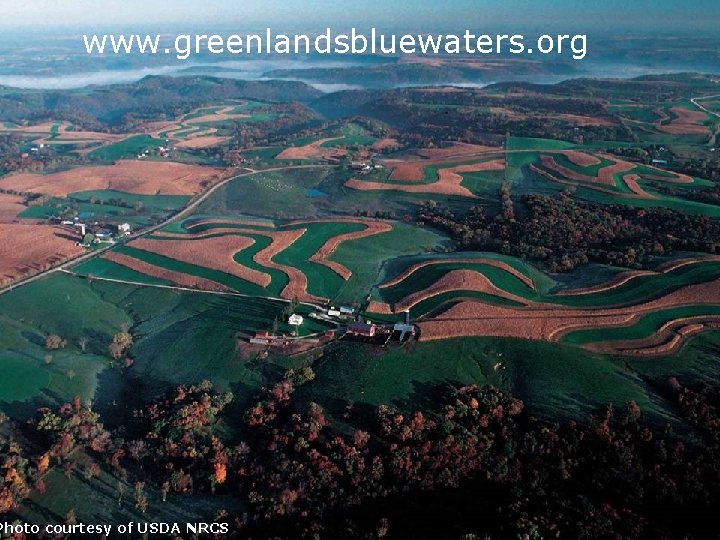
www. greenlandsbluewaters. org Photo courtesy of USDA NRCS
- Slides: 52