
Green competitiveness in the silicon industry Professor Leiv

- Slides: 27
Green competitiveness in the silicon industry? Professor Leiv Kolbeinsen, Dep. Mat. Sci. & Eng. , NTNU • • Climate change has gone from If to When to Now (World Bank) Everyone is entitled to his/her own opinion, but not his/her own facts.
Content of this presentation Metal production: Reductants/Energy sources The system Earth is not closed with respect to energy The Renewable energy leader globally Silicon Use and Production Silicon production, Si production and CO 2 emissions, “Triple bypass”, The Solsilc process and The Elkem Solar Route Gas. Ferro. Sil Green (Si-production) economy examples: Elkem: Carbon Neutral Metal Production (CNMP)/Finnfjord Sustainable Business Models – Industrial Symbiosis (Clusters) Summing up
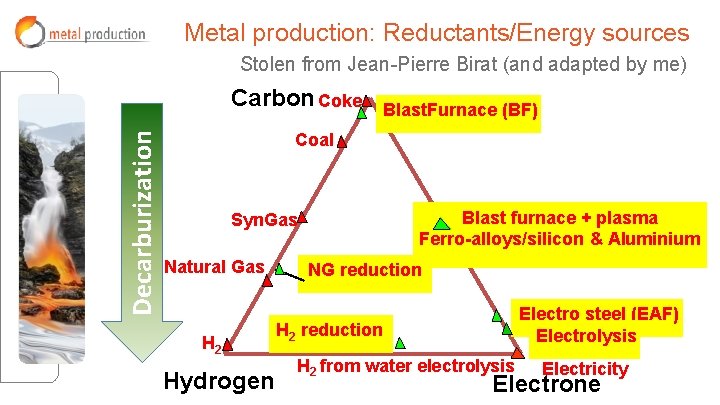
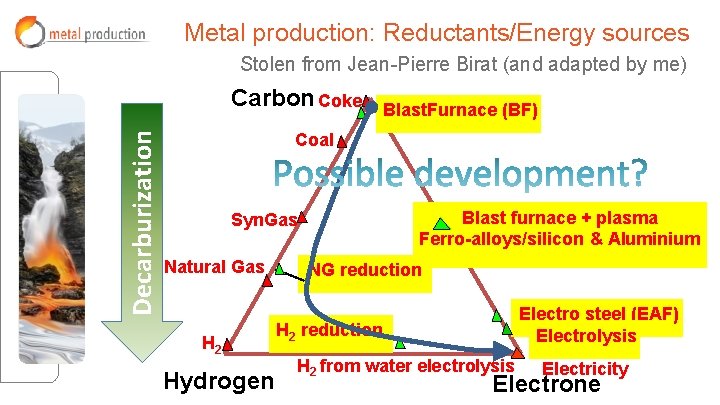
Metal production: Reductants/Energy sources Stolen from Jean-Pierre Birat (and adapted by me) Decarburization Carbon Coke Blast. Furnace (BF) Coal Blast furnace + plasma Ferro-alloys/silicon & Aluminium Syn. Gas Natural Gas H 2 Hydrogen NG reduction Electro steel (EAF) Electrolysis H 2 reduction H 2 from water electrolysis Electricity Electrone
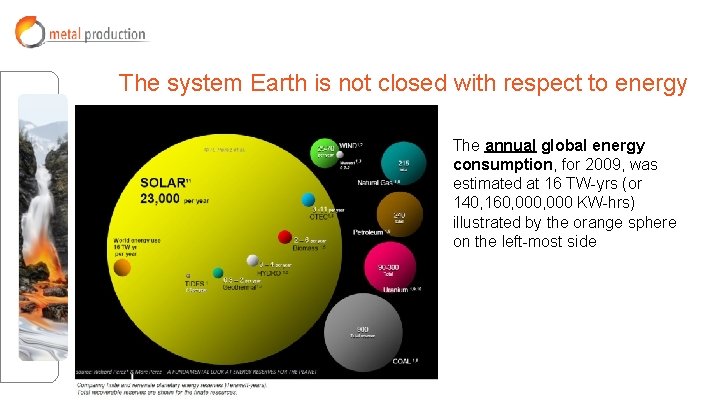
The system Earth is not closed with respect to energy The annual global energy consumption, for 2009, was estimated at 16 TW-yrs (or 140, 160, 000 KW-hrs) illustrated by the orange sphere on the left-most side
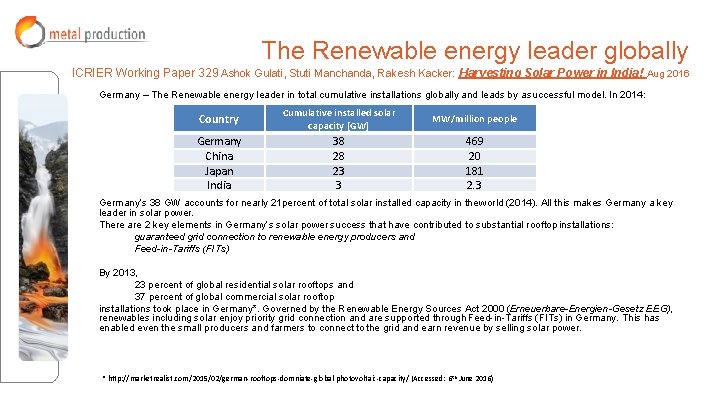
The Renewable energy leader globally ICRIER Working Paper 329 Ashok Gulati, Stuti Manchanda, Rakesh Kacker: Harvesting Solar Power in India! Aug 2016 Germany – The Renewable energy leader in total cumulative installations globally and leads by a successful model. In 2014: Country Cumulative installed solar capacity [GW] MW/million people Germany China Japan India 38 28 23 3 469 20 181 2. 3 Germany’s 38 GW accounts for nearly 21 percent of total solar installed capacity in the world (2014). All this makes Germany a key leader in solar power. There are 2 key elements in Germany’s solar power success that have contributed to substantial rooftop installations: guaranteed grid connection to renewable energy producers and Feed-in-Tariffs (FITs) By 2013, 23 percent of global residential solar rooftops and 37 percent of global commercial solar rooftop installations took place in Germany*. Governed by the Renewable Energy Sources Act 2000 (Erneuerbare-Energien-Gesetz EEG), renewables including solar enjoy priority grid connection and are supported through Feed-in-Tariffs (FITs) in Germany. This has enabled even the small producers and farmers to connect to the grid and earn revenue by selling solar power. * http: //marketrealist. com/2015/02/german-rooftops-domniate-global-photovoltaic-capacity/ (Accessed: 6 th June 2016)
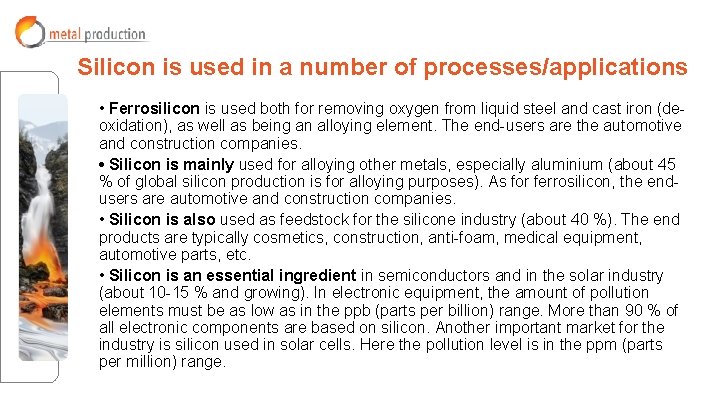
Silicon is used in a number of processes/applications • Ferrosilicon is used both for removing oxygen from liquid steel and cast iron (deoxidation), as well as being an alloying element. The end-users are the automotive and construction companies. • Silicon is mainly used for alloying other metals, especially aluminium (about 45 % of global silicon production is for alloying purposes). As for ferrosilicon, the endusers are automotive and construction companies. • Silicon is also used as feedstock for the silicone industry (about 40 %). The end products are typically cosmetics, construction, anti-foam, medical equipment, automotive parts, etc. • Silicon is an essential ingredient in semiconductors and in the solar industry (about 10 -15 % and growing). In electronic equipment, the amount of pollution elements must be as low as in the ppb (parts per billion) range. More than 90 % of all electronic components are based on silicon. Another important market for the industry is silicon used in solar cells. Here the pollution level is in the ppm (parts per million) range.
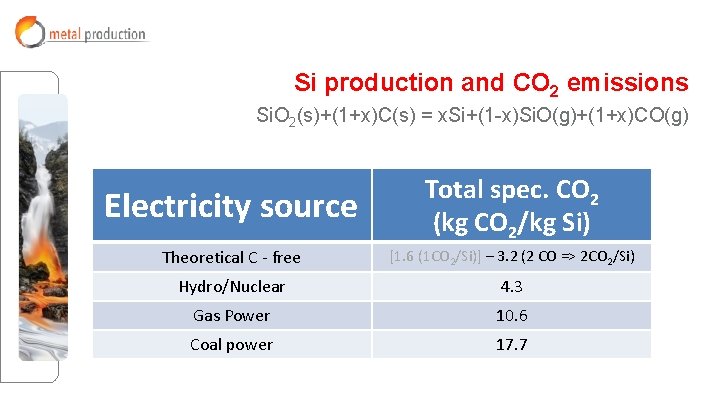
Si production and CO 2 emissions Si. O 2(s)+(1+x)C(s) = x. Si+(1 -x)Si. O(g)+(1+x)CO(g) Electricity source Total spec. CO 2 (kg CO 2/kg Si) Theoretical C - free [1. 6 (1 CO 2/Si)] – 3. 2 (2 CO => 2 CO 2/Si) Hydro/Nuclear 4. 3 Gas Power 10. 6 Coal power 17. 7
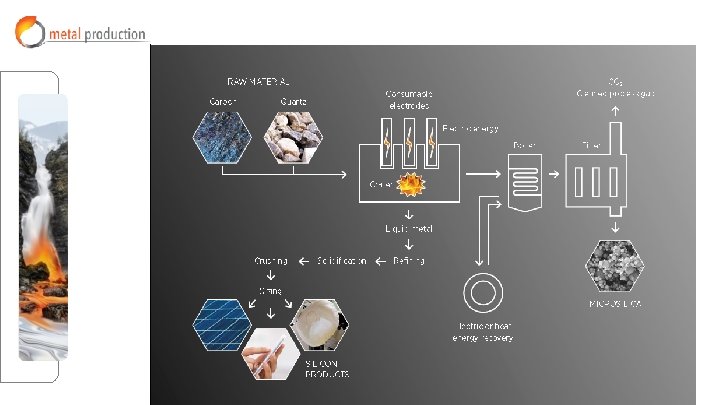
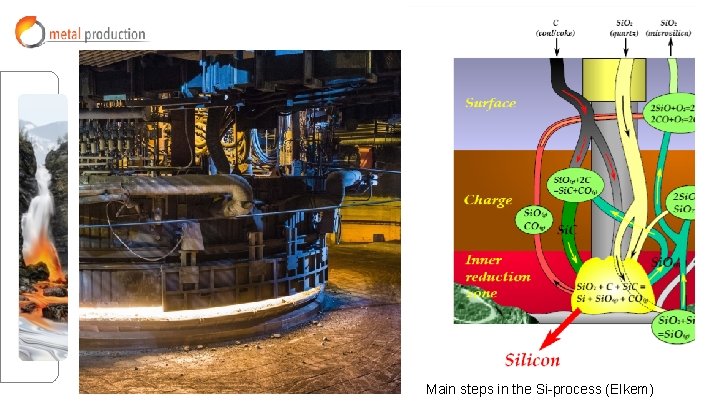
Elkem sustainability report 2014 Main steps in the Si-process (Elkem)
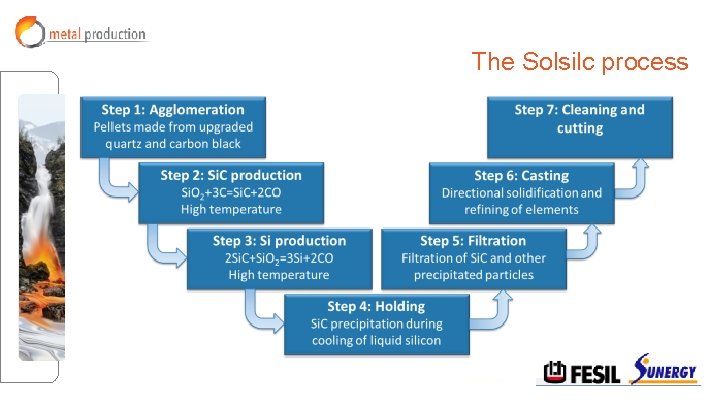
The Solsilc process
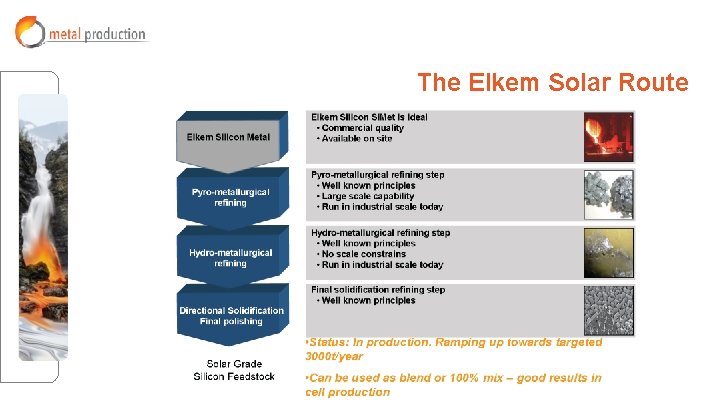
The Elkem Solar Route
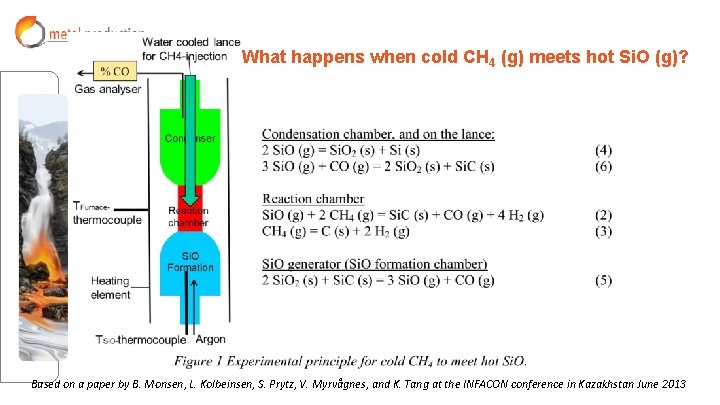
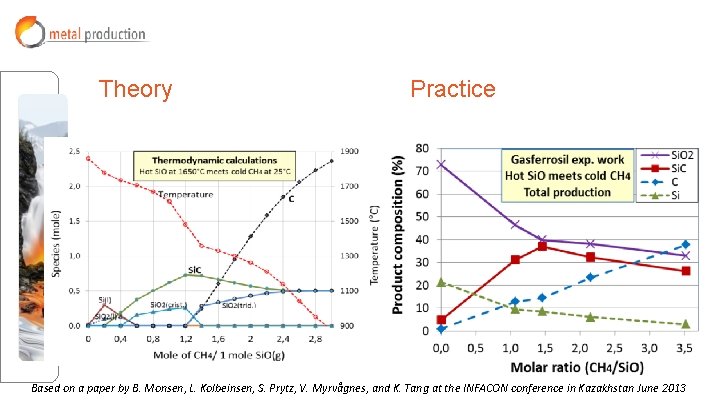
What happens when cold CH 4 (g) meets hot Si. O (g)? Based on a paper by B. Monsen, L. Kolbeinsen, S. Prytz, V. Myrvågnes, and K. Tang at the INFACON conference in Kazakhstan June 2013
Theory Practice Based on a paper by B. Monsen, L. Kolbeinsen, S. Prytz, V. Myrvågnes, and K. Tang at the INFACON conference in Kazakhstan June 2013
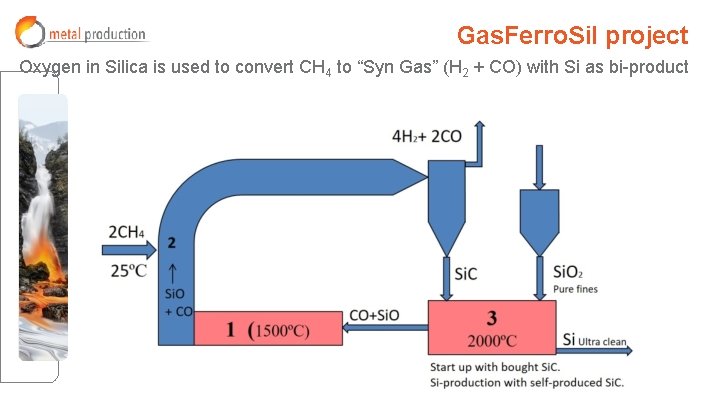
Gas. Ferro. Sil project Oxygen in Silica is used to convert CH 4 to “Syn Gas” (H 2 + CO) with Si as bi-product
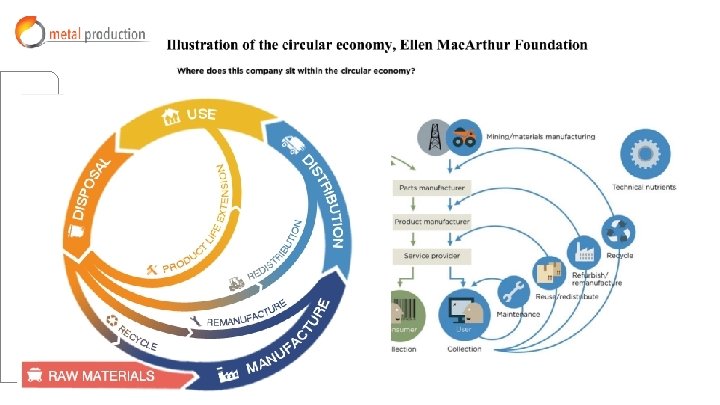
Green = Circular?
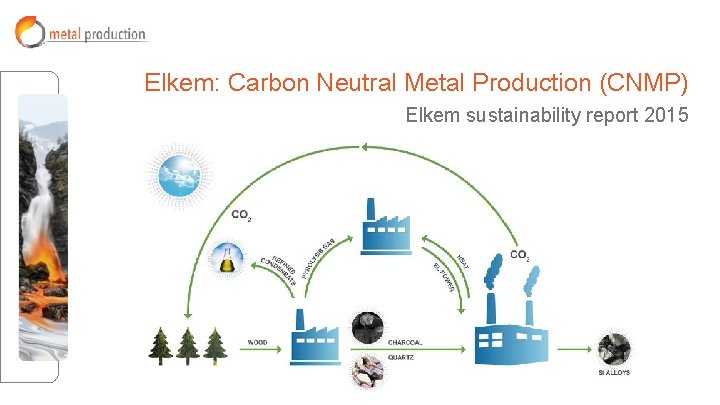
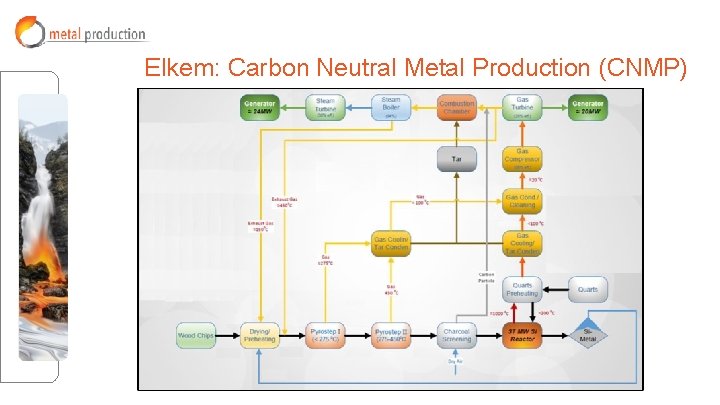
Elkem: Carbon Neutral Metal Production (CNMP) Elkem sustainability report 2015
Elkem: Carbon Neutral Metal Production (CNMP)
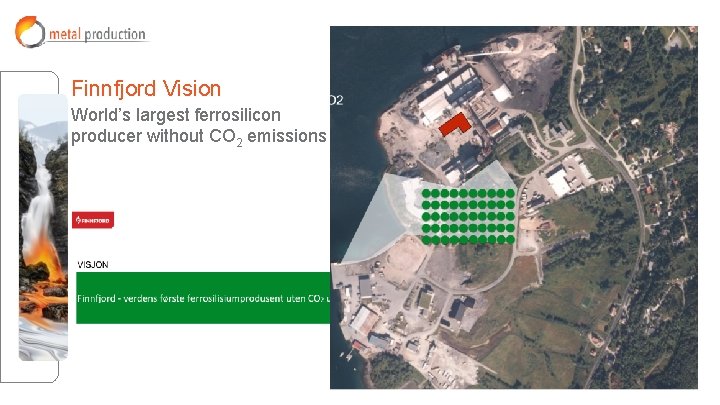
Finnfjord Vision World’s largest ferrosilicon producer without CO 2 emissions
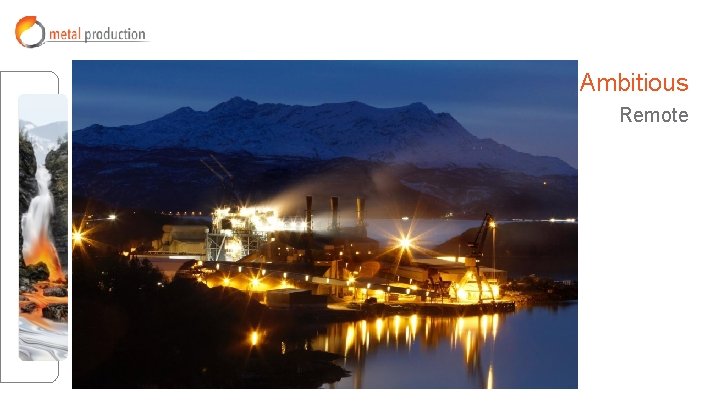
Ambitious Remote
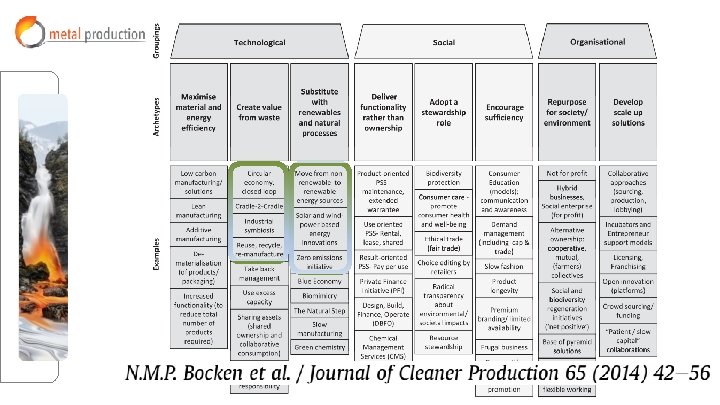
Sustainable business models
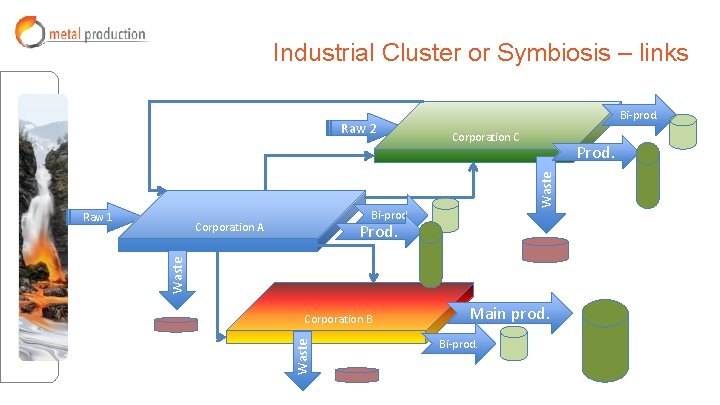
Industrial Cluster or Symbiosis – links Raw 1 Corporation C Bi-prod. Corporation A Prod. Waste Raw 2 Bi-prod. Waste Prod. Waste Corporation B Main prod. Bi-prod.
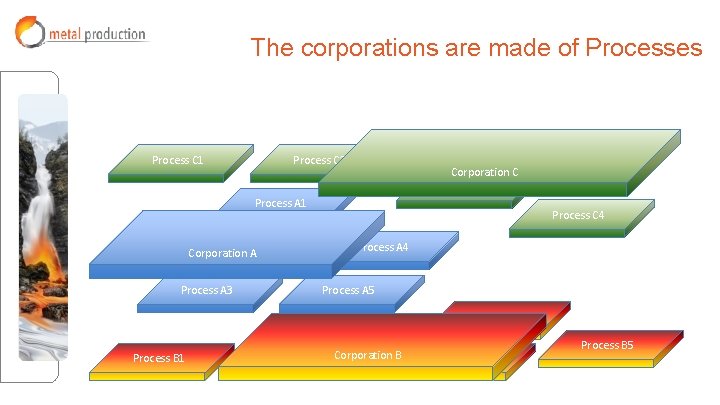
The corporations are made of Processes Process C 1 Process C 2 Corporation C Process C 3 Process A 1 Process. AA 2 Corporation Process A 3 Process C 4 Process A 5 Process B 4 Process B 1 Process B 2 Corporation B Process B 3 Process B 5
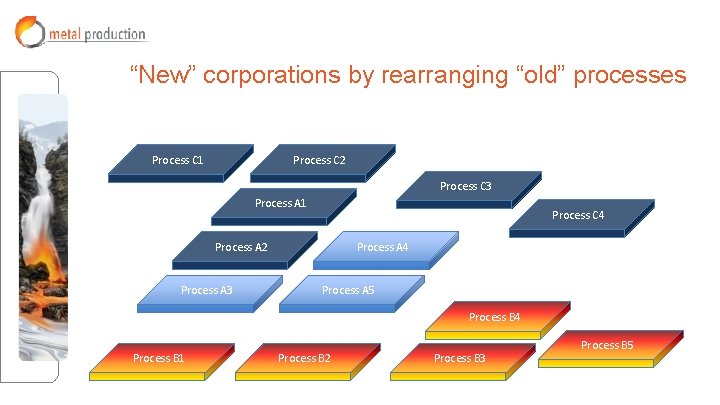
“New” corporations by rearranging “old” processes Process C 1 Process C 2 Process C 3 Process A 1 Process C 4 Process A 2 Process A 3 Process A 4 Process A 5 Process B 4 Process B 1 Process B 2 Process B 3 Process B 5
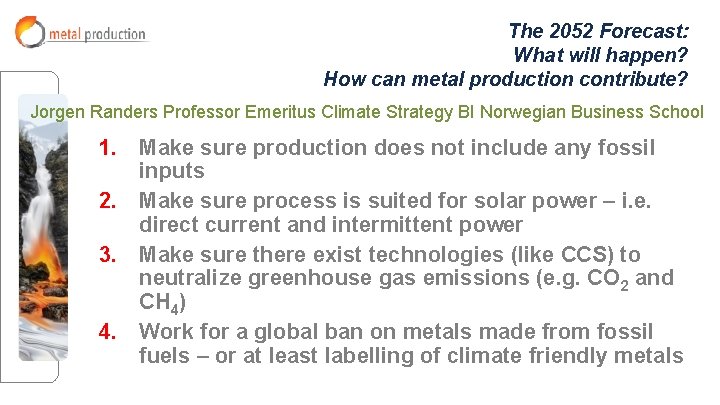
The 2052 Forecast: What will happen? How can metal production contribute? Jorgen Randers Professor Emeritus Climate Strategy BI Norwegian Business School 1. Make sure production does not include any fossil inputs 2. Make sure process is suited for solar power – i. e. direct current and intermittent power 3. Make sure there exist technologies (like CCS) to neutralize greenhouse gas emissions (e. g. CO 2 and CH 4) 4. Work for a global ban on metals made from fossil fuels – or at least labelling of climate friendly metals
Metal production: Reductants/Energy sources Stolen from Jean-Pierre Birat (and adapted by me) Decarburization Carbon Coke Blast. Furnace (BF) Coal Blast furnace + plasma Ferro-alloys/silicon & Aluminium Syn. Gas Natural Gas H 2 Hydrogen NG reduction Electro steel (EAF) Electrolysis H 2 reduction H 2 from water electrolysis Electricity Electrone
Hi, name is Mingus, Thank you for listening to my «daddy» !