
Greeks Geography of Greece Greece is a mountainous
- Slides: 31
Greeks
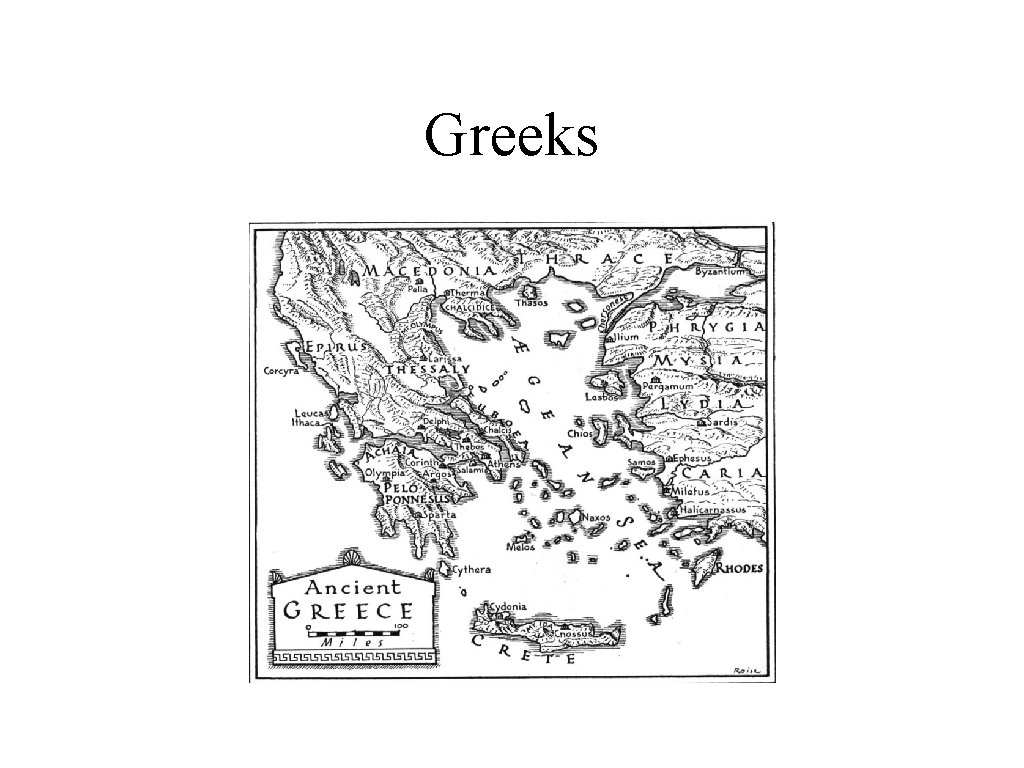
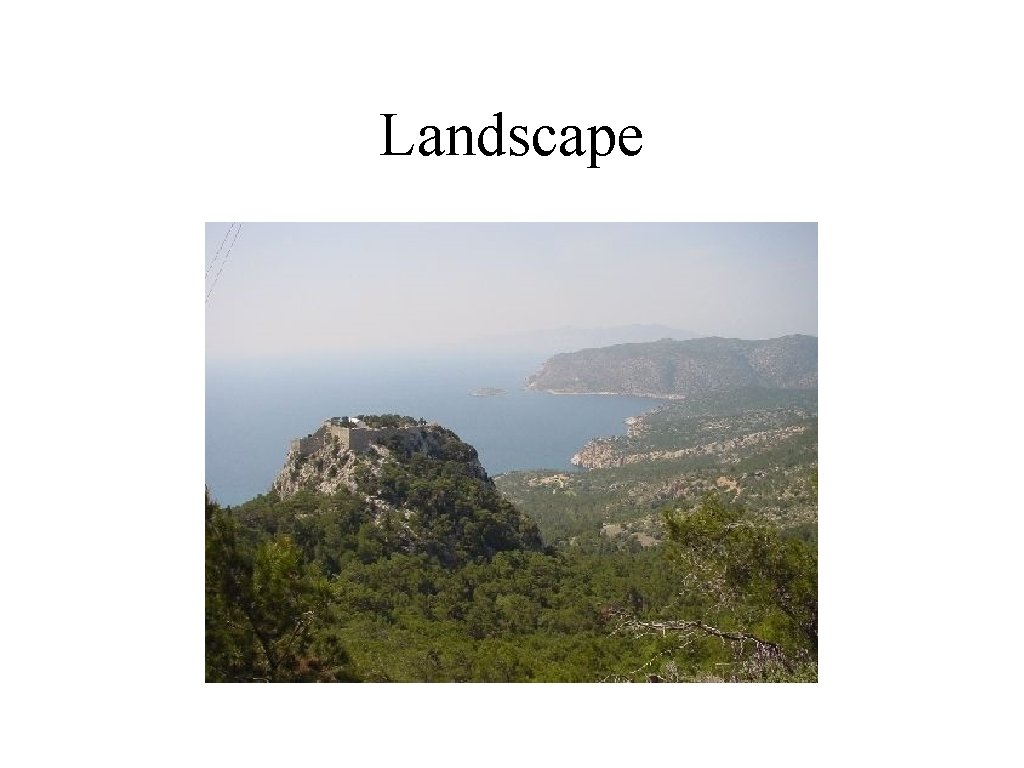
Geography of Greece • Greece is a mountainous peninsula about the size of Louisiana. • The mountains and the sea were the most important geographical influences on Greece. • The many mountain ranges caused small, independent communities to develop different ways of life. • Their size and independence probably encouraged political participation within, and war among, the different communities.
Landscape
Geography of Greece • Greece has many ports, inlets, and islands. • The Greeks became seafarers. • They sailed into the Aegean, the Black, and the Mediterranean Seas, making contact with the outside world and spreading colonies and trade throughout the Mediterranean area.
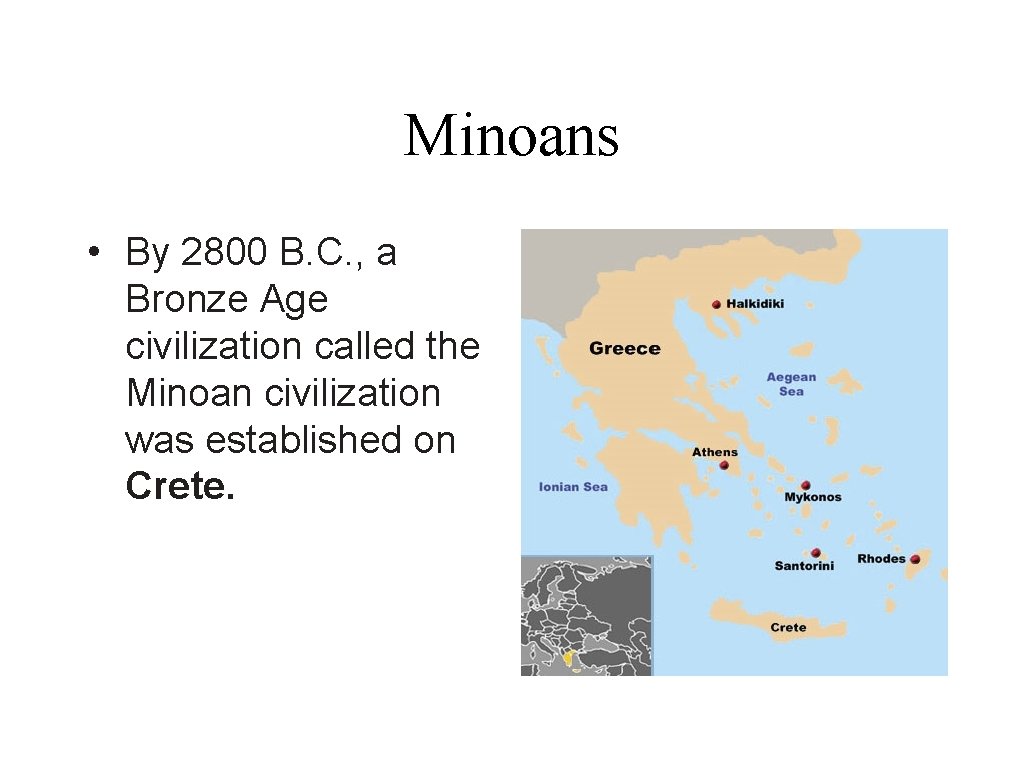
Minoans • By 2800 B. C. , a Bronze Age civilization called the Minoan civilization was established on Crete.
Minoans • It was named after the legendary king of Crete, Minos, by the British archaeologist • Arthur Evans, who dug on Crete. • The Minoan civilization flourished between 2000 and 1450 B. C. • Evans discovered the remains of a rich trading culture based on seafaring at the city of Knossos.
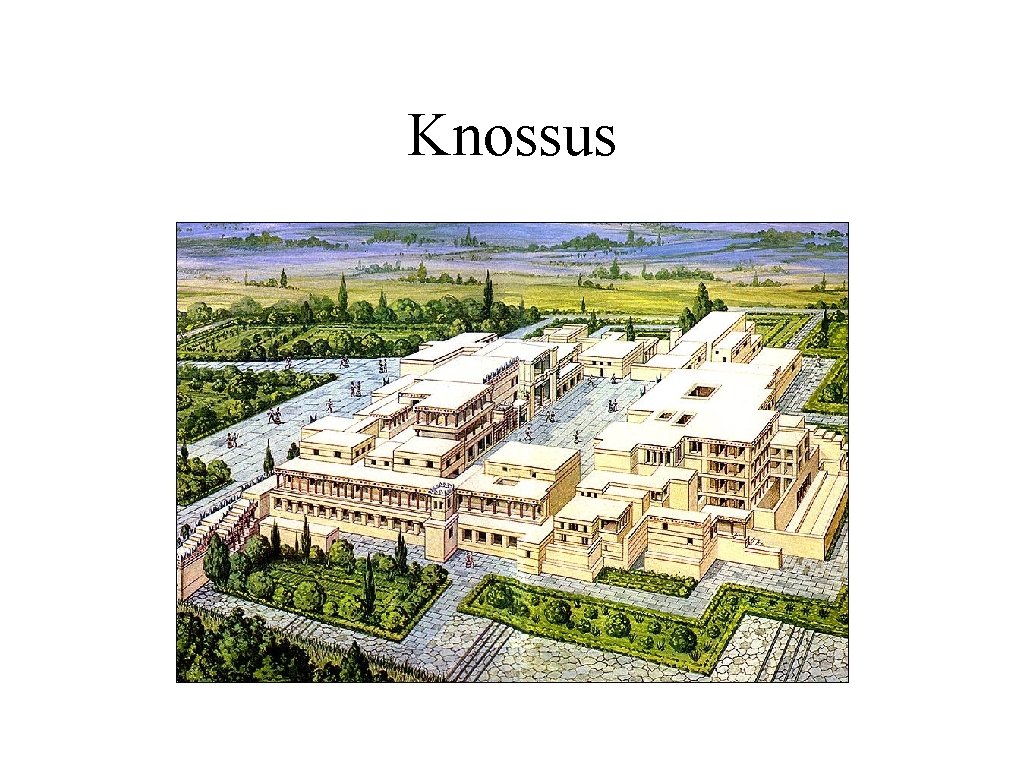
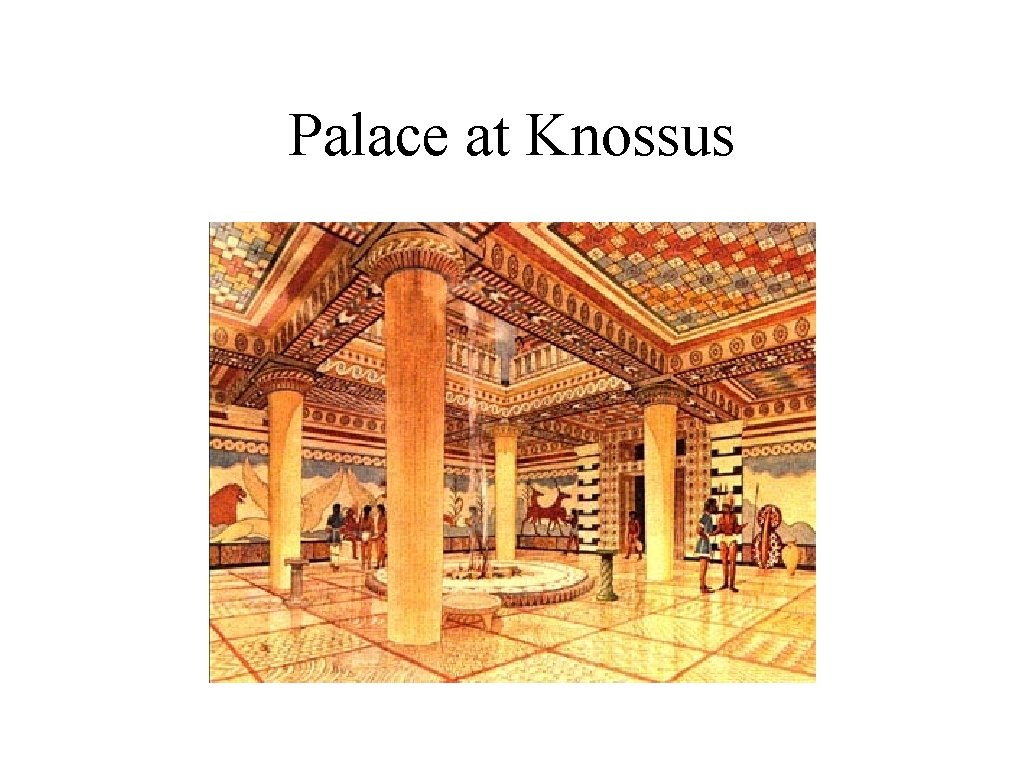
Minoans • The Minoans sailed to southern Greece and Egypt for trade. • The elaborate palace at Knossos contained many brightly colored rooms for living, workshops for making vases, ivory figurines, and jewelry, and bathrooms with drains. • Giant jars for oil, wine, and grain held the taxes paid to the king.
Knossus
Palace at Knossus
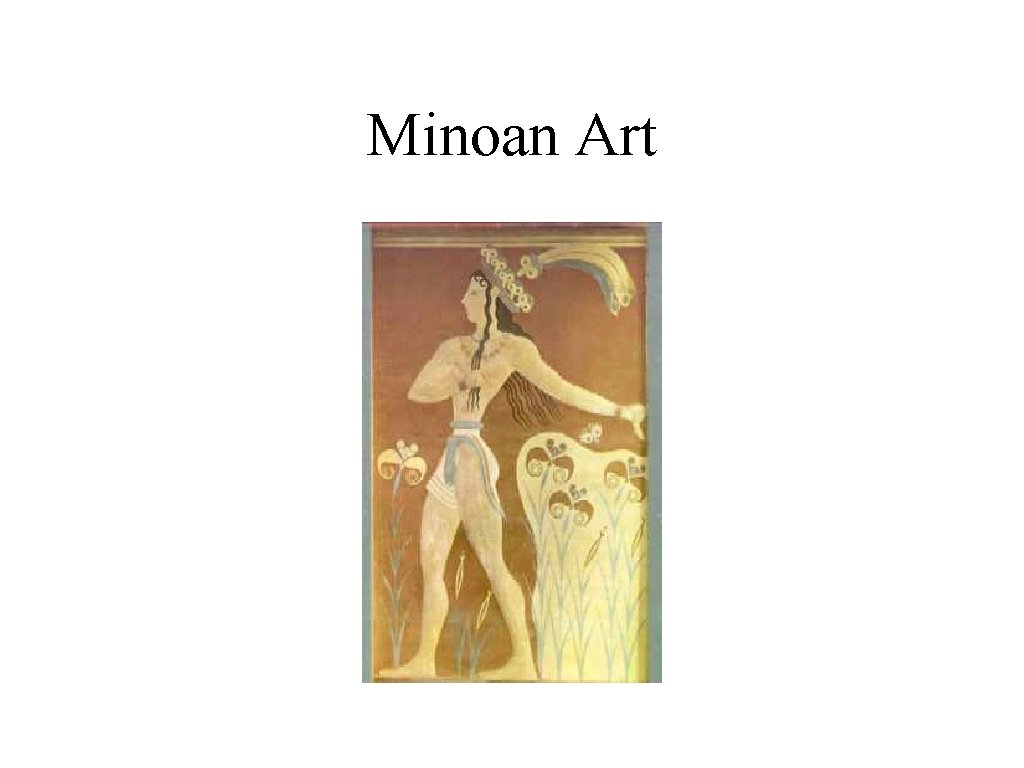
Minoan Art
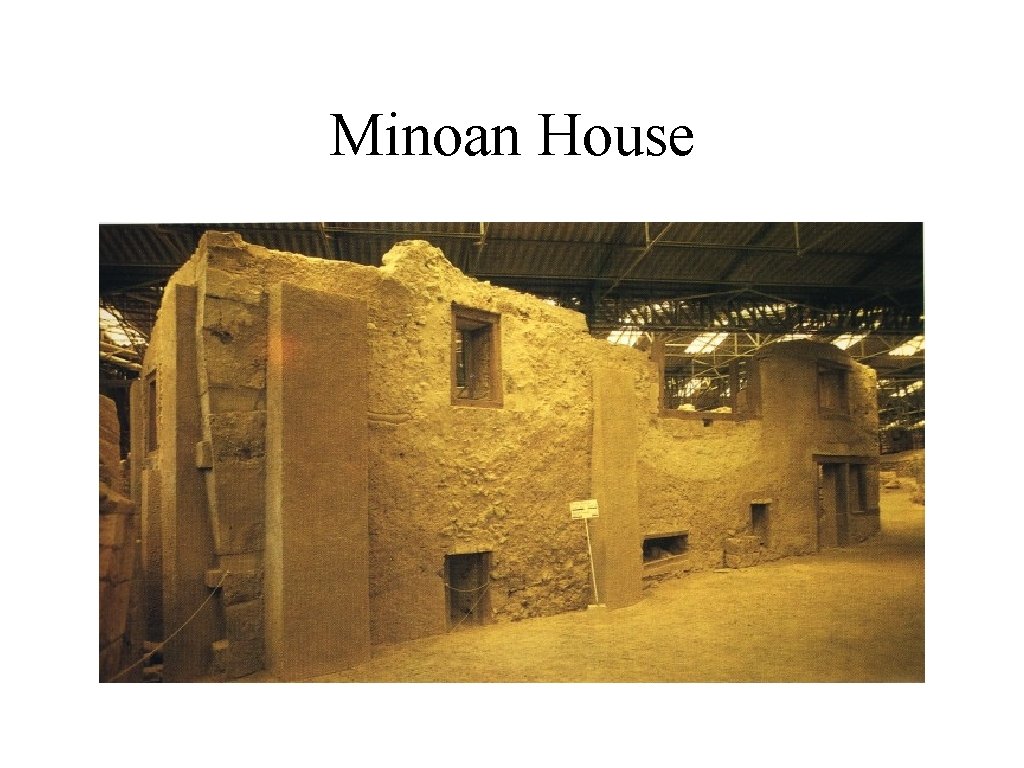
Minoan House
Minoans • The Minoan civilization on Crete suffered a catastrophe around 1450 B. C. Some historians believe that a tidal wave caused by a volcanic eruption on the island of Thera was the cause. • Others believe the civilization was destroyed by an invasion of mainland Greeks known as the Mycenaeans.
Mycenaean • The term Mycenaean comes from Mycenae, a fortified site in Greece first discovered by the German archaeologist Heinrich Schliemann. • The Mycenaean civilization thrived between 1600 and 1100 B. C. , reaching its height between 1400 and 1200 B. C.
Mycenaean • It was made up of an alliance of powerful monarchies, each living in a fortified center within large stone walls. • The rest of the population lived outside these walls. • One interesting architectural feature is the large beehive-shaped tholos tombs, where the royal family was buried.
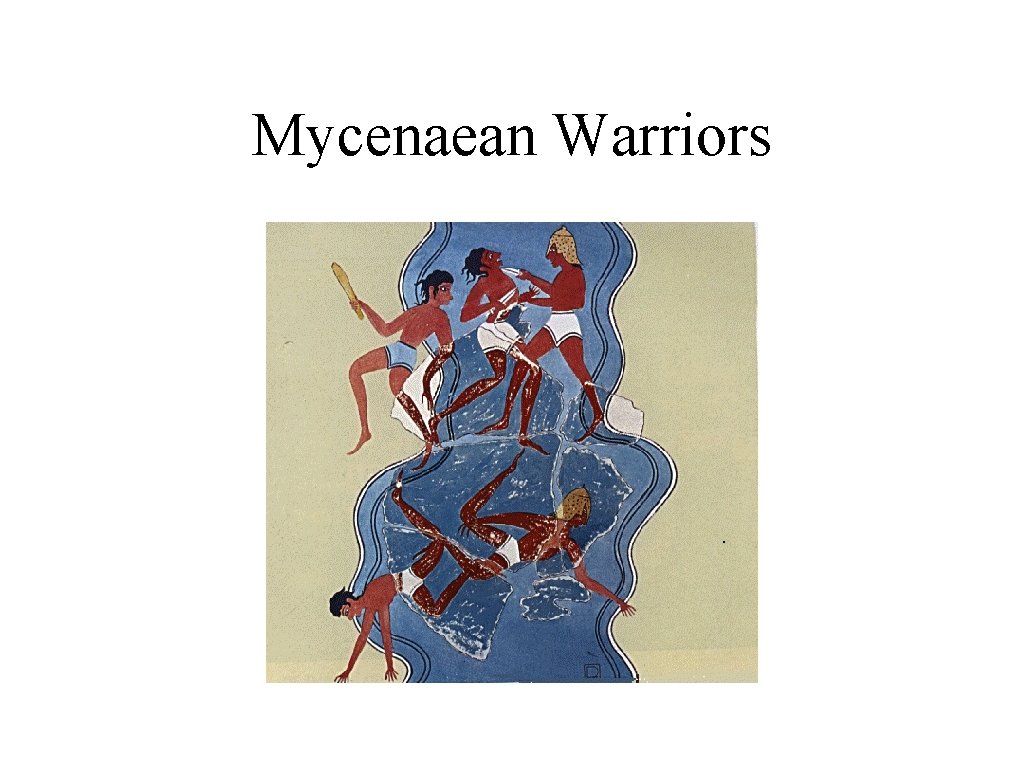
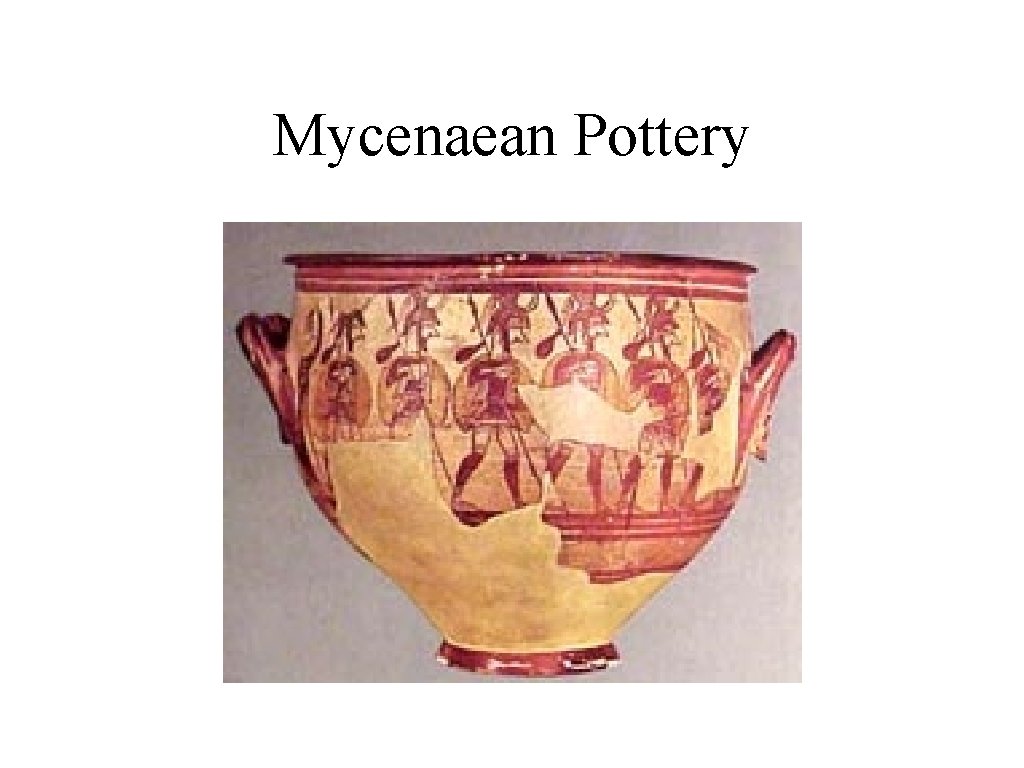
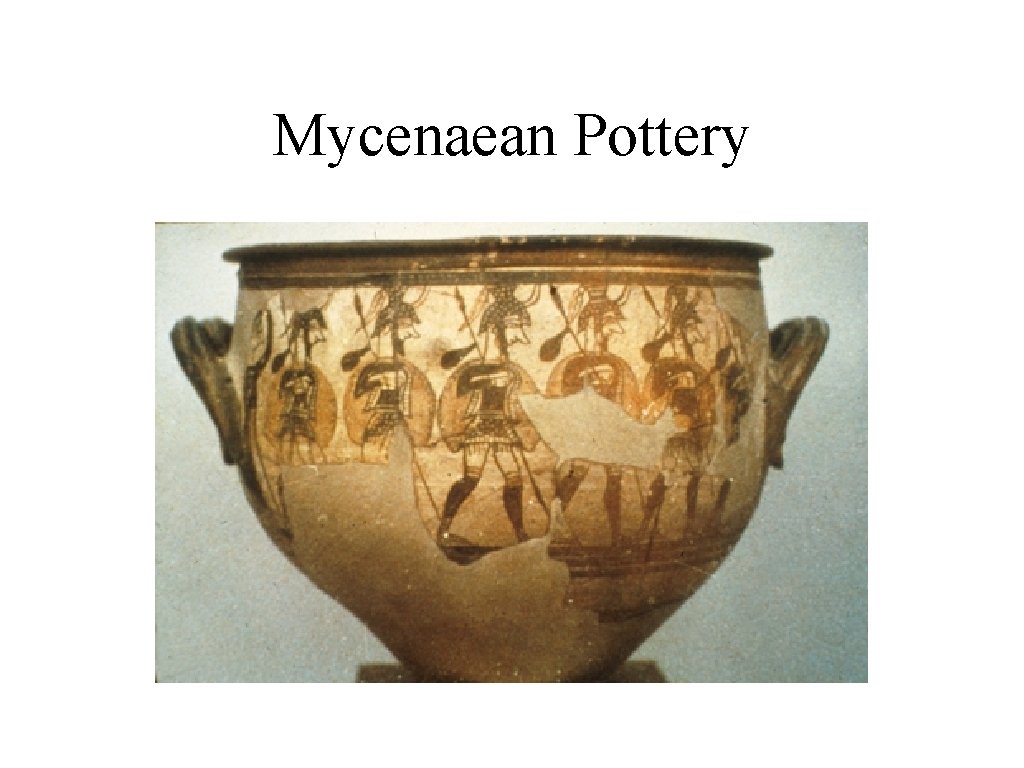
Mycenaean • The Mycenaeans had a warrior culture. • Their murals show the typical occupations of a warrior aristocracy—hunting and fighting. • They also developed an extensive commercial network. • Their pottery has been found throughout the Mediterranean area. • They conquered some of the Greek islands, perhaps even Crete.
Mycenaean Warriors
Mycenaean Pottery
Mycenaean Pottery
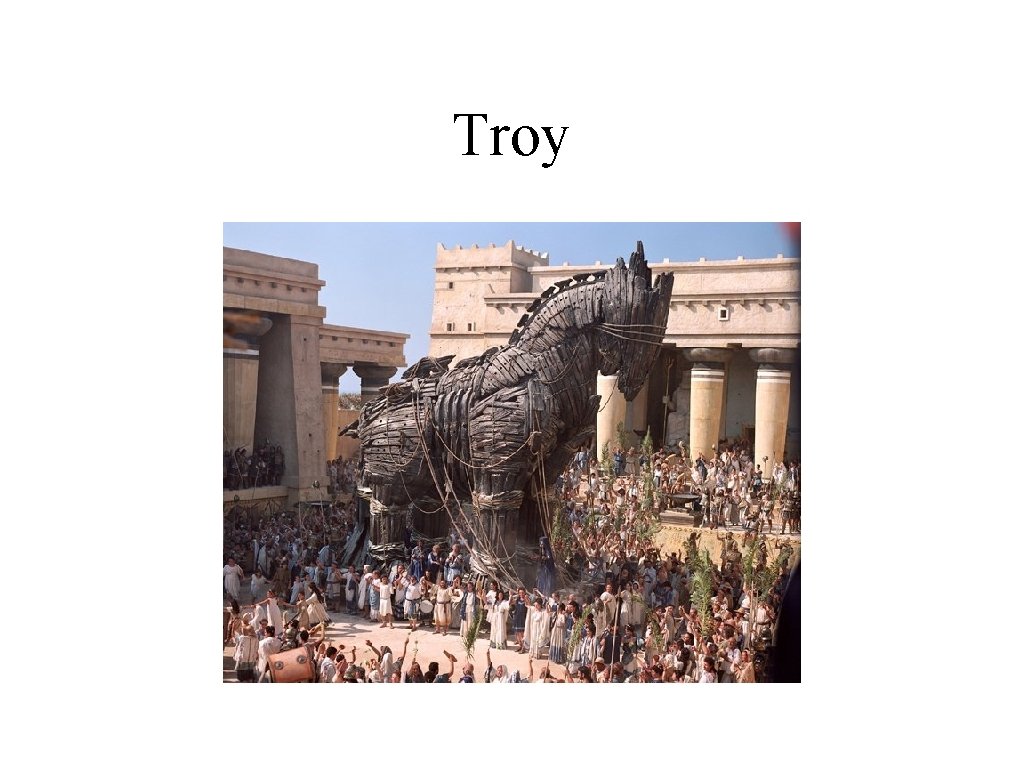
Mycenaean • The most famous of their supposed military adventures comes to us in the poetry of Homer. • According to Homer, the Mycenaeans sacked the city of Troy, on the northwestern coast of modern Turkey, around 1250 B. C. • Agamemnon, king of Mycenae, led them. • Ever since Schliemann’s excavation of Troy, some people have believed Homer’s account is based in fact, but no one is certain.
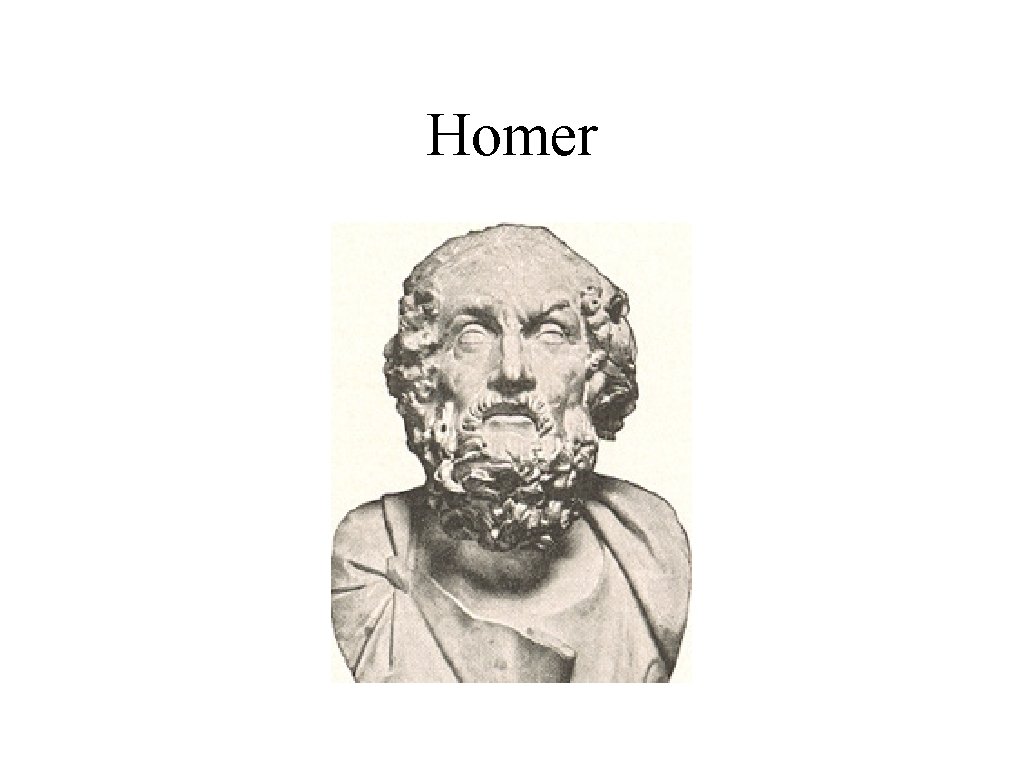
Homer
Troy
Mycenaean • The Mycenaean states began to war on each other, and earthquakes damaged their civilization. • It collapsed by 1100 B. C. after new waves of invaders moved into Greece from the north.
Hmmmmmmm • The Mycenaean culture was based on warfare. • What values do you think are important to a warrior culture?
Greeks • The period from 1100 to 750 B. C. in Greece is called the Dark Age because few records of that period exist. • Both population and food production fell. • Around 850 B. C. farming revived and the basis of a new Greek civilization began to be formed.
Greeks • During the Dark Age, many Greeks immigrated to the west coast of modern Turkey to Ionia. • Iron replaced bronze during the Dark Age, improving weaponry and farming. • During the eighth century B. C. , the Greeks adopted the Phoenician alphabet, which made reading and writing simpler.
Greeks • The works of Homer, one of the world’s great poets, appeared near the end of the Dark Age. • Homer’s two great epic poems were the Iliad and the Odyssey. • An epic poem is a long poem that tells of a great hero’s deeds. • Homer’s epic poems were based on stories passed down for generations.
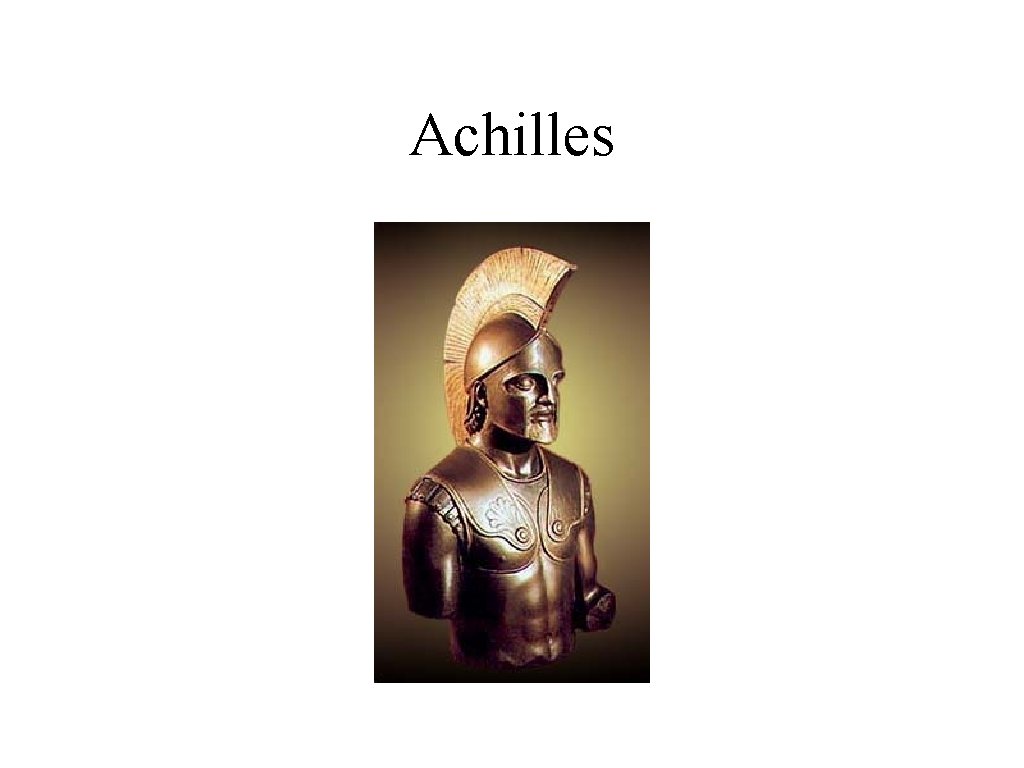
Greeks • The Iliad takes place during the Trojan War. Paris, a Trojan prince, kidnaps Helen, the • wife of the king of Sparta. The Mycenaean Greeks lay siege to Troy for ten years, finally • taking the city with the famous Trojan horse. The Iliad, however, is more a tale about • the destruction caused by the anger of the Greek hero Achilles.
Achilles
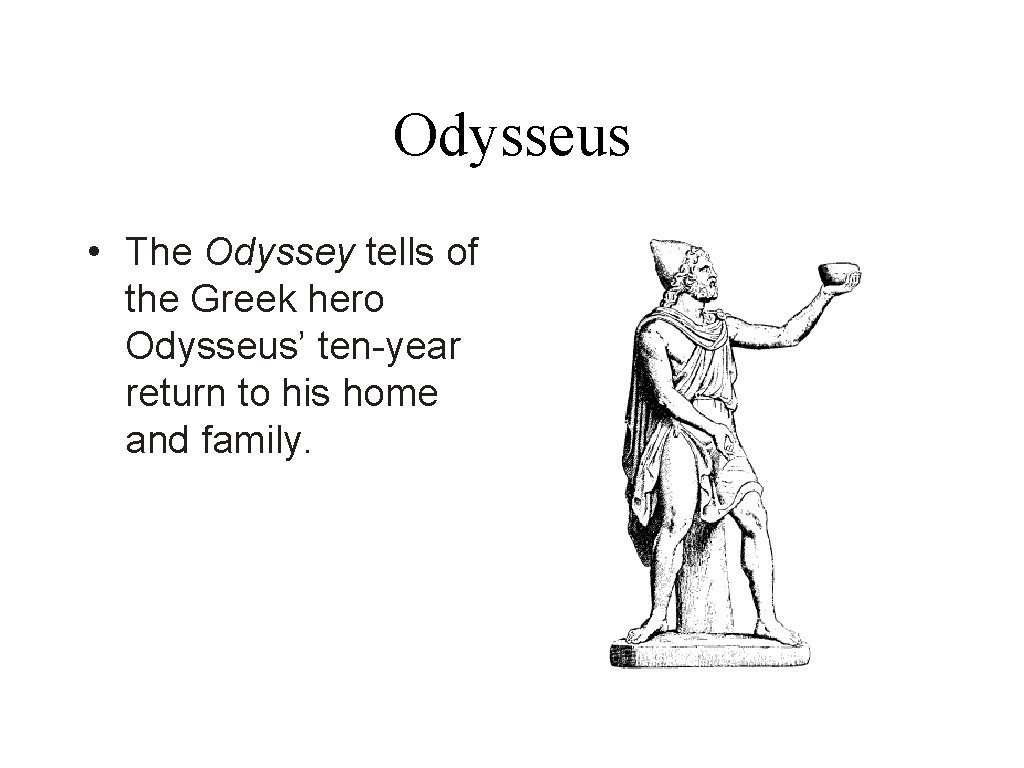
Odysseus • The Odyssey tells of the Greek hero Odysseus’ ten-year return to his home and family.
Greeks • Both of Homer’s poems gave the Greeks an ideal past and a set of values. • The values in them were used to educate Greek males for generations. • Fathers even had their sons memorize all of Homer to learn how to act well and be virtuous men. • The basic Homeric values were courage and honor.
Greeks • The Greek hero struggled for excellence, or arete, which is won in a struggle or contest. • Through fighting and protecting family and friends, the man preserves his and his family’s honor. • He also wins an honorable reputation, the sign of arete.