
Greek Theatre Greek Theatre 4 Athenian 5 th
- Slides: 28
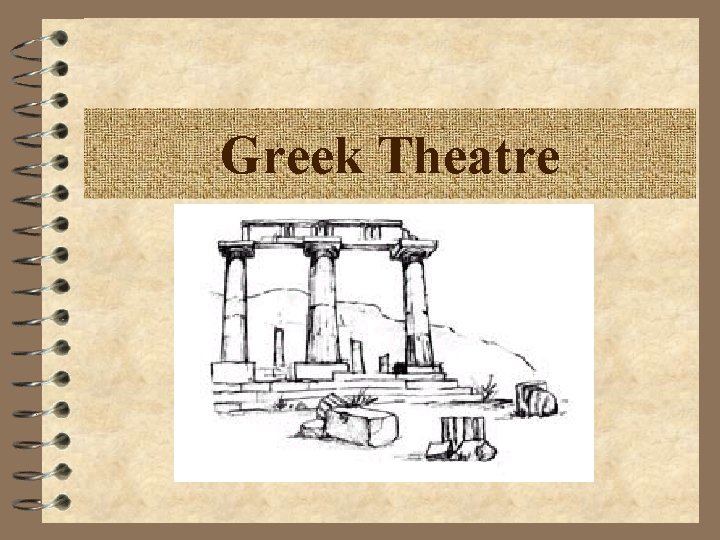
Greek Theatre
Greek Theatre 4 Athenian – 5 th – 4 th century BC 4 Result of a contest; each playwright submitted a trilogy of tragedy and one satyr play 4 Much pageantry and a winner at the end of each week 4 Combination of myth, philosophy, music and dance 4 Explored the violence of living
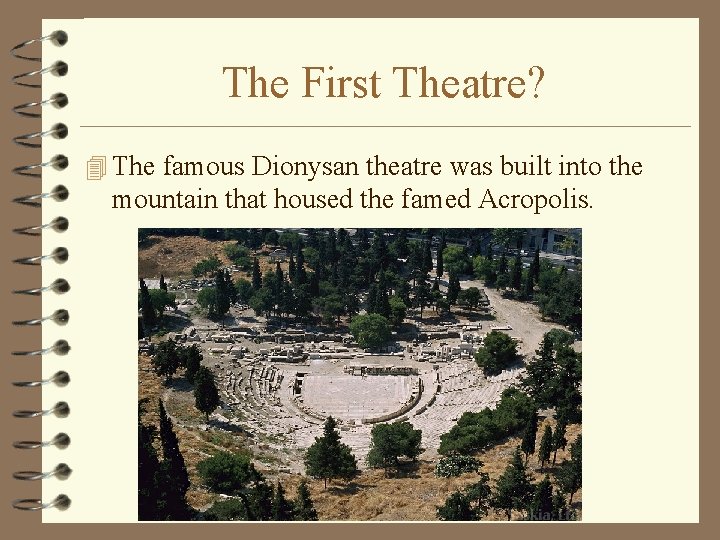
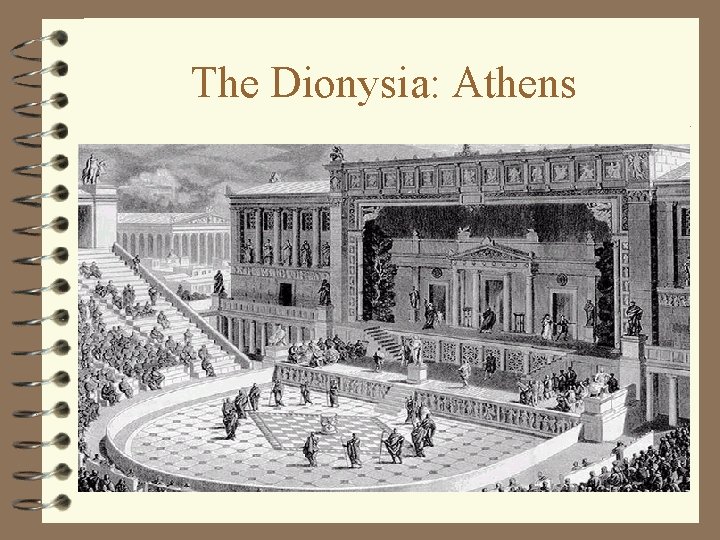
The First Theatre? 4 The famous Dionysan theatre was built into the mountain that housed the famed Acropolis.
The Academy Awards 4 The Dionysia was a spring celebration of the fertility god Dionysus – known as the Festival of Dionysus 4 The last 3 days of the festival was dedicated to 3 writers and their tragedies. 4 The winner received a lily wreath. 4 Famous competitors: Aeschylus, Sophocles and Euripedes.
Order of Festival Days 4 Day 1 – proagon – plays announced 4 Day 2 – processions, parades, sacrifices 4 Day 3 – performance of the first five comedies 4 Day 4 -6 – performance of tragedies 4 Day 7 – judging and awards
The Dionysia: Athens
The Three Tragedians 4 Aeschylus – used two men as actors; one talking to the other 4 Sophocles – used three actors; each played several parts 4 Euripedes – used even more actors; angered the Greeks because he showed the Greeks and gods in a sometimes negative light as they really were; portrayed strong female character; killed by wild dogs
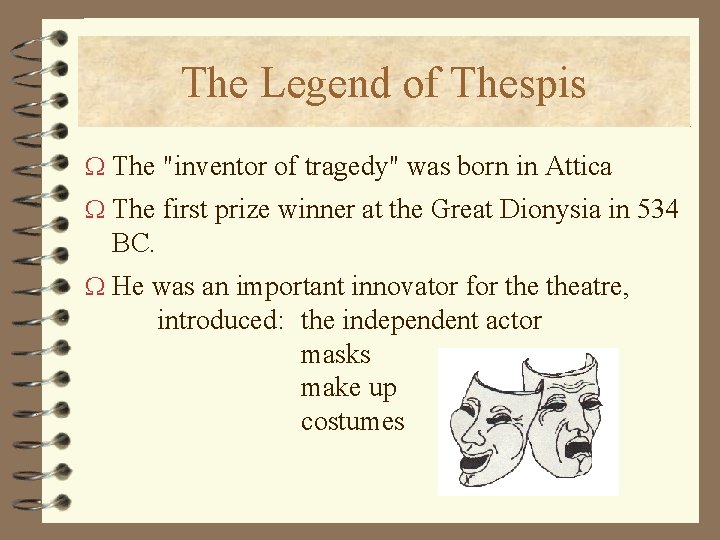
The Legend of Thespis W The "inventor of tragedy" was born in Attica W The first prize winner at the Great Dionysia in 534 BC. W He was an important innovator for theatre, introduced: the independent actor masks make up costumes
More About Thespis W Thespis walked around Athens pulling a handcart, setting up a kind of one man play, where he showed the bad behavior of man. W The word for actor " thespian" comes from his name. W His contemporary Solon resented him, with the claim that what Thespis showed on stage would soon be acted out in reality as well.
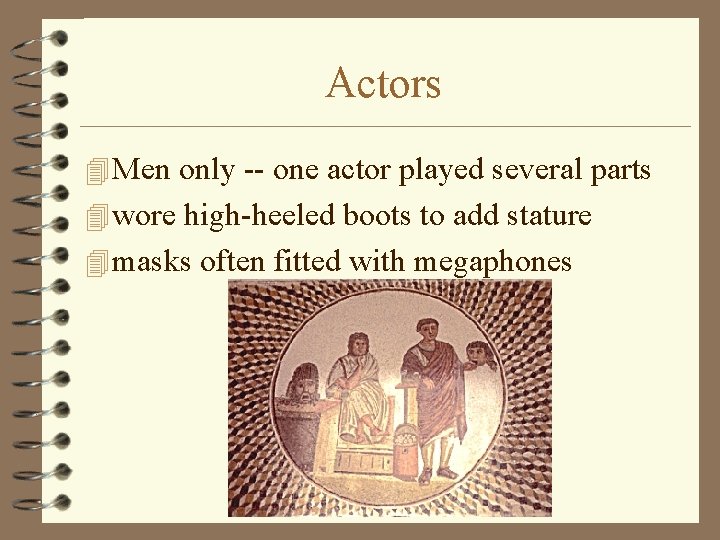
Actors 4 Men only -- one actor played several parts 4 wore high-heeled boots to add stature 4 masks often fitted with megaphones
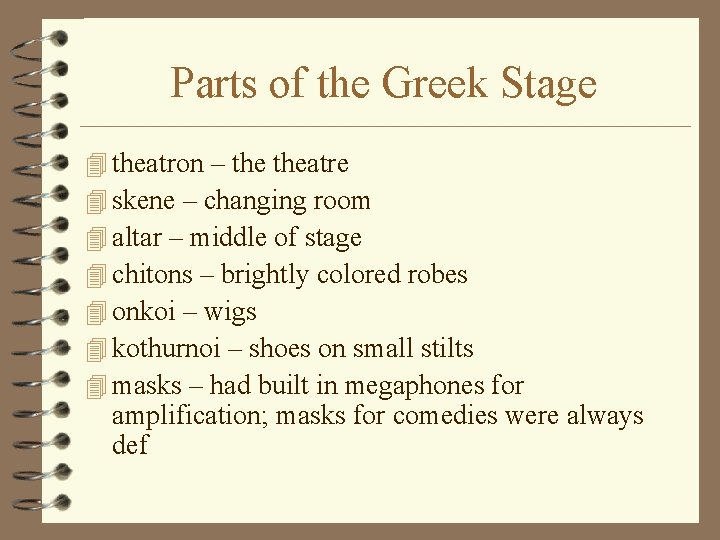
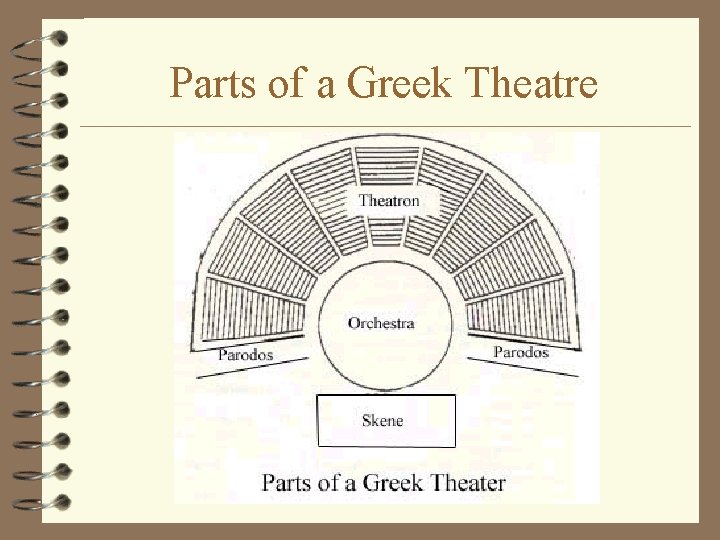
Parts of the Greek Stage 4 theatron – theatre 4 skene – changing room 4 altar – middle of stage 4 chitons – brightly colored robes 4 onkoi – wigs 4 kothurnoi – shoes on small stilts 4 masks – had built in megaphones for amplification; masks for comedies were always def
Parts of a Greek Theatre
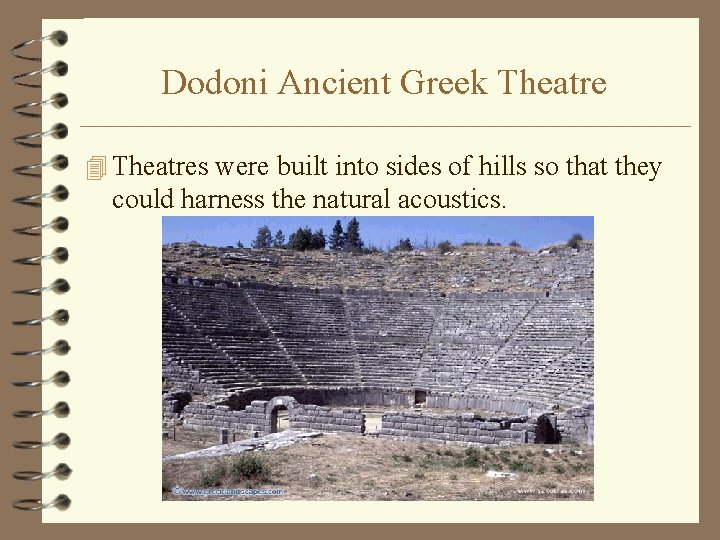
Dodoni Ancient Greek Theatre 4 Theatres were built into sides of hills so that they could harness the natural acoustics.
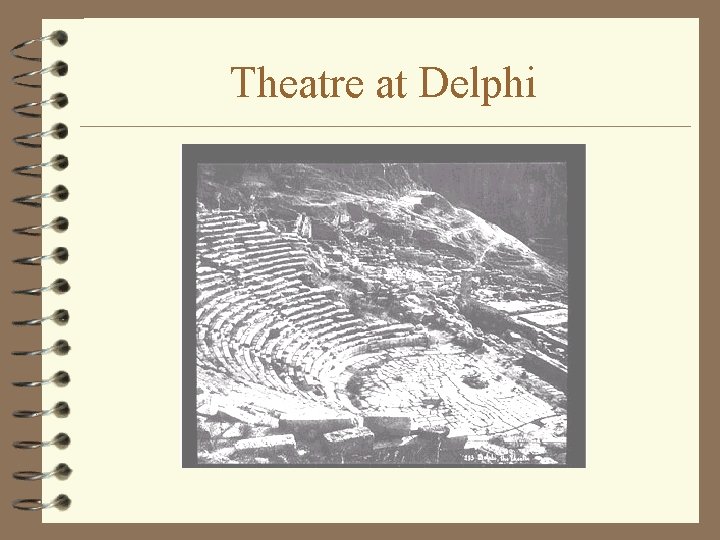
Theatre at Delphi
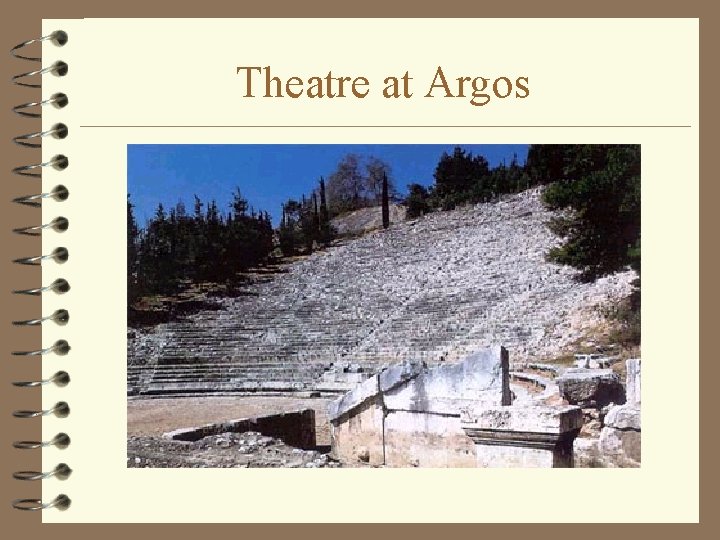
Theatre at Argos
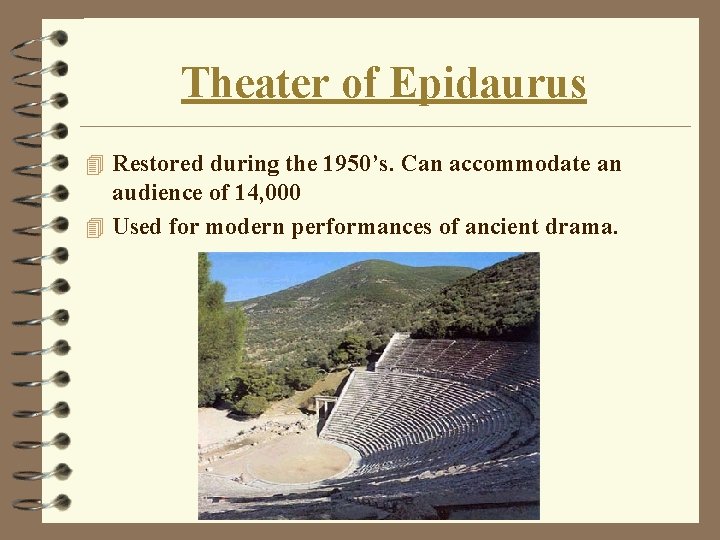
Theater of Epidaurus 4 Restored during the 1950’s. Can accommodate an audience of 14, 000 4 Used for modern performances of ancient drama.
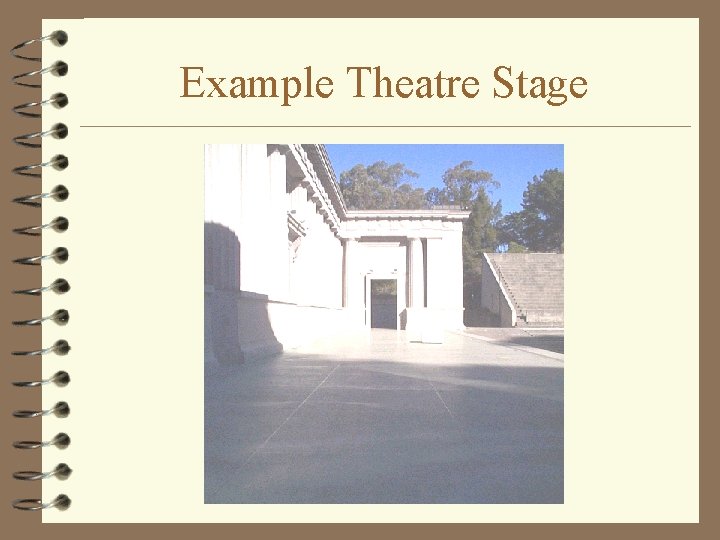
Example Theatre Stage
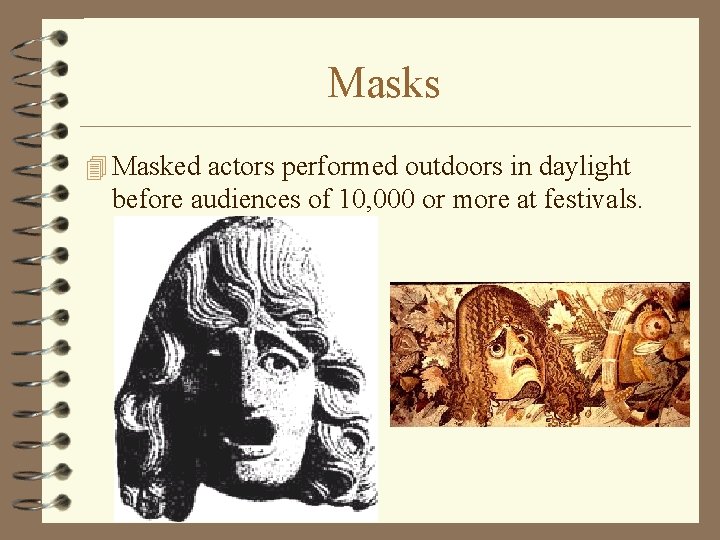
Masks 4 Masked actors performed outdoors in daylight before audiences of 10, 000 or more at festivals.
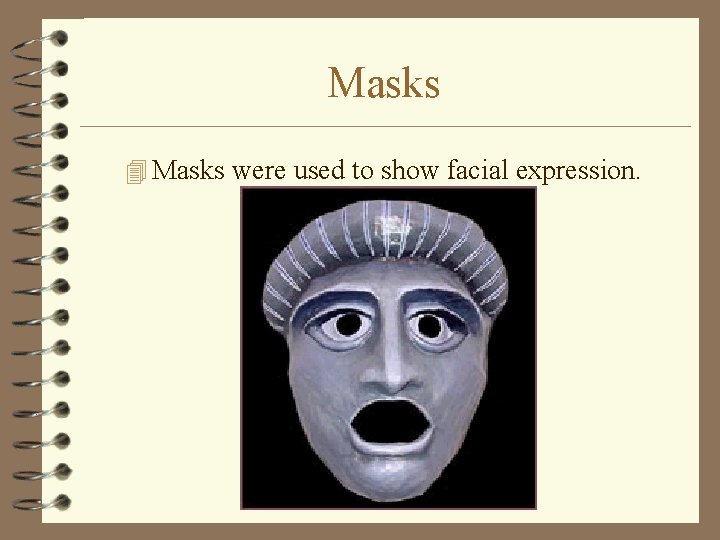
Masks 4 Masks were used to show facial expression.
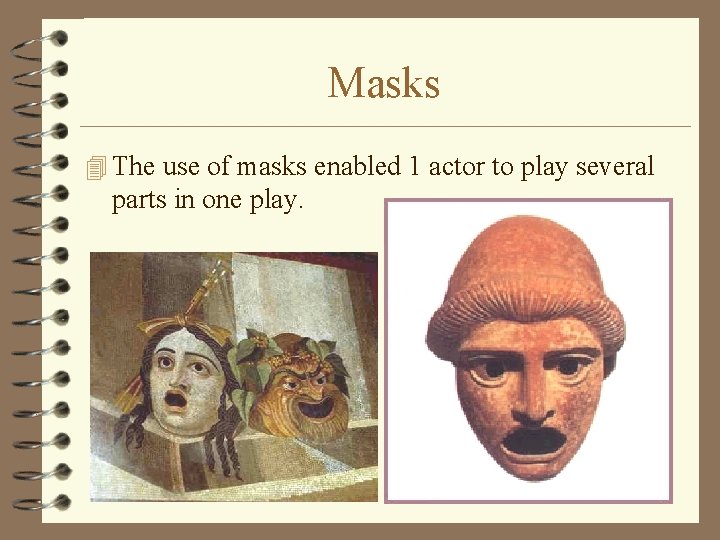
Masks 4 The use of masks enabled 1 actor to play several parts in one play.
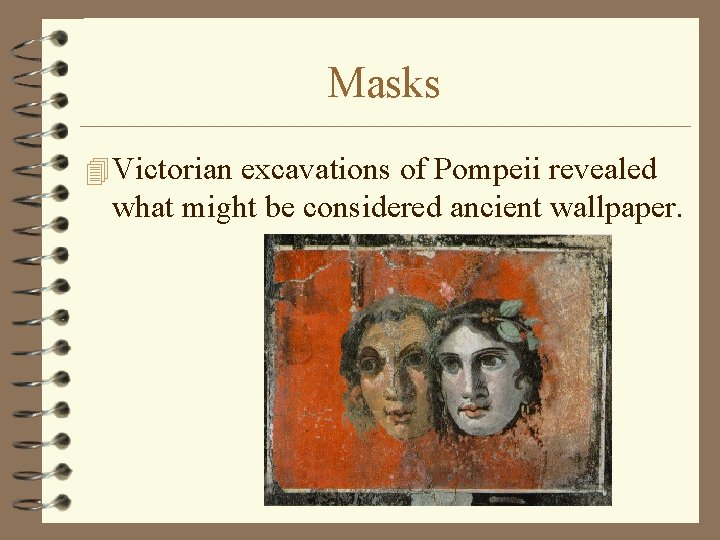
Masks 4 Victorian excavations of Pompeii revealed what might be considered ancient wallpaper.
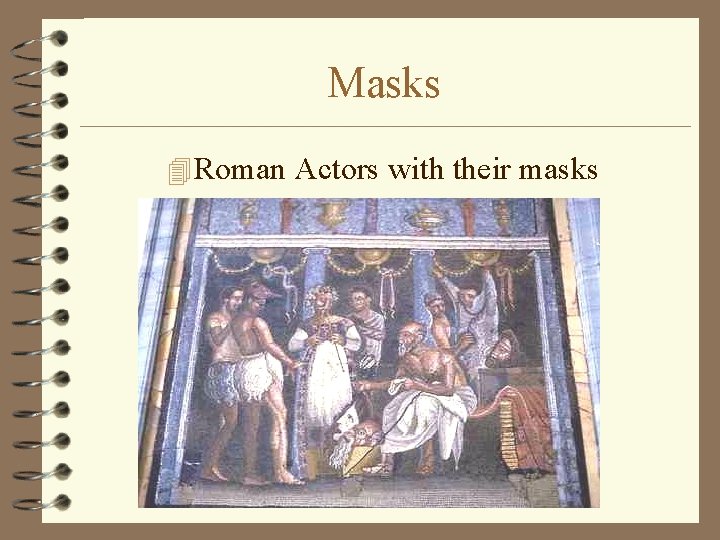
Masks 4 Roman Actors with their masks
Greek Modesty 4 No censorship of events. 4 However, Greeks very polite on stage. 4 all spectacular action (death, murder, adultery) happens off stage -- only described.
Functions of the Chorus 4 represents the feelings or morals of the characters or audience 4 gives important background information 4 summarizes events 4 comments on action or gives advice to the characters
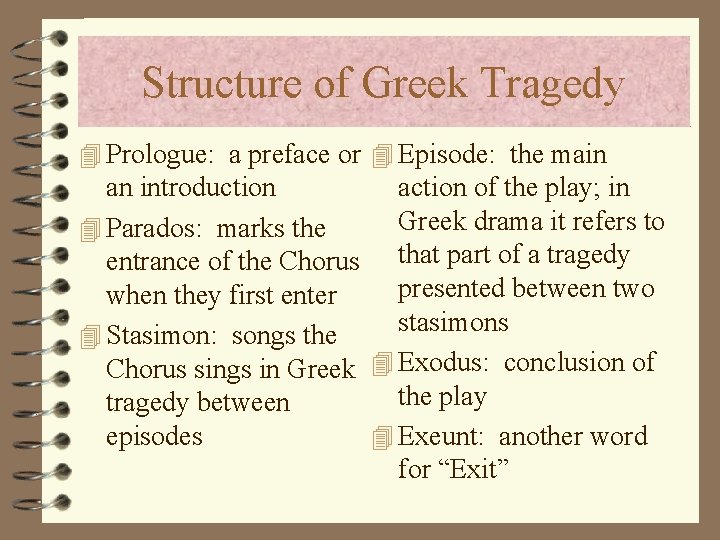
Structure of Greek Tragedy 4 Prologue: a preface or 4 Episode: the main an introduction action of the play; in Greek drama it refers to 4 Parados: marks the entrance of the Chorus that part of a tragedy presented between two when they first enter stasimons 4 Stasimon: songs the Chorus sings in Greek 4 Exodus: conclusion of the play tragedy between episodes 4 Exeunt: another word for “Exit”
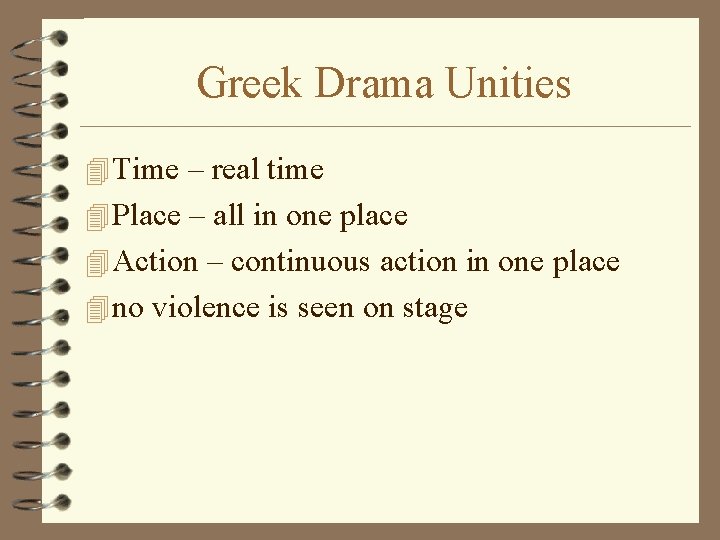
Greek Drama Unities 4 Time – real time 4 Place – all in one place 4 Action – continuous action in one place 4 no violence is seen on stage
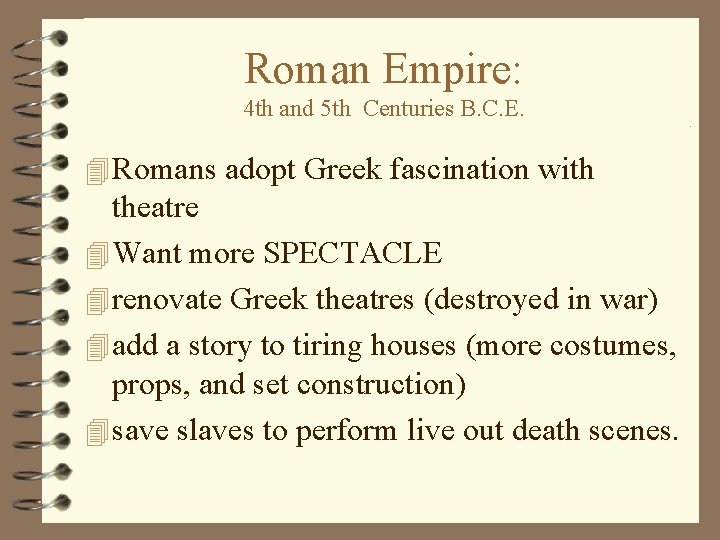
Roman Empire: 4 th and 5 th Centuries B. C. E. 4 Romans adopt Greek fascination with theatre 4 Want more SPECTACLE 4 renovate Greek theatres (destroyed in war) 4 add a story to tiring houses (more costumes, props, and set construction) 4 save slaves to perform live out death scenes.
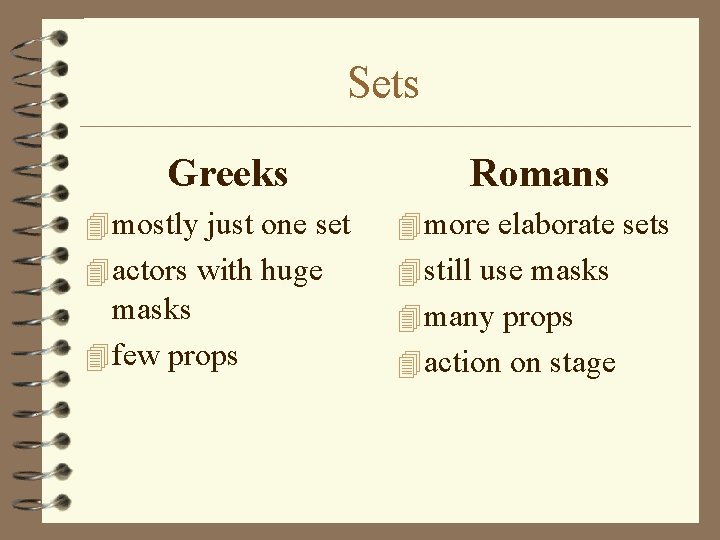
Sets Greeks Romans 4 mostly just one set 4 more elaborate sets 4 actors with huge 4 still use masks 4 few props 4 many props 4 action on stage