
Greek Mythology World History I Greek Mythology Power

![PERSIAN WARS (499– 449 B. C. [B. C. E. ]) GOAL: To protect Greece](https://slidetodoc.com/presentation_image_h2/77d1702777814efd3671459e6958b08b/image-20.jpg "PERSIAN WARS (499– 449 B. C. [B. C. E. ]) GOAL: To protect Greece")
![Importance of Peloponnesian War (431– 404 B. C. [B. C. E. ]) GOAL: TO](https://slidetodoc.com/presentation_image_h2/77d1702777814efd3671459e6958b08b/image-22.jpg "Importance of Peloponnesian War (431– 404 B. C. [B. C. E. ]) GOAL: TO")
- Slides: 31
Greek Mythology World History I
Greek Mythology Power. Point (Quiz Grade) 1. Identify each of the following gods & goddesses in a Power. Point (one god/goddess per slide): Zeus 2. Hera 3. Apollo 4. Artemis 5. Athena 6. Aphrodite Each page should have 1. A picture 2. What the god was in charge of 3. A summary of the god/goddess behavior *******CITE YOUR SOURCES ON THE LAST SLIDE*****
Warm up 11/30/2015 List everything you know about Ancient Greece. Examples: places, physical features, economy, social life, politics, religions, etc.
Map activity Locate the following on your maps. 1. Aegean Sea 2. Balkan and Peloponnesus peninsula¬, Europe, Asia Minor 3. Mediterranean Sea 4. Black Sea, Dardanelles 5. Athens, Sparta, Troy 6. Macedonia
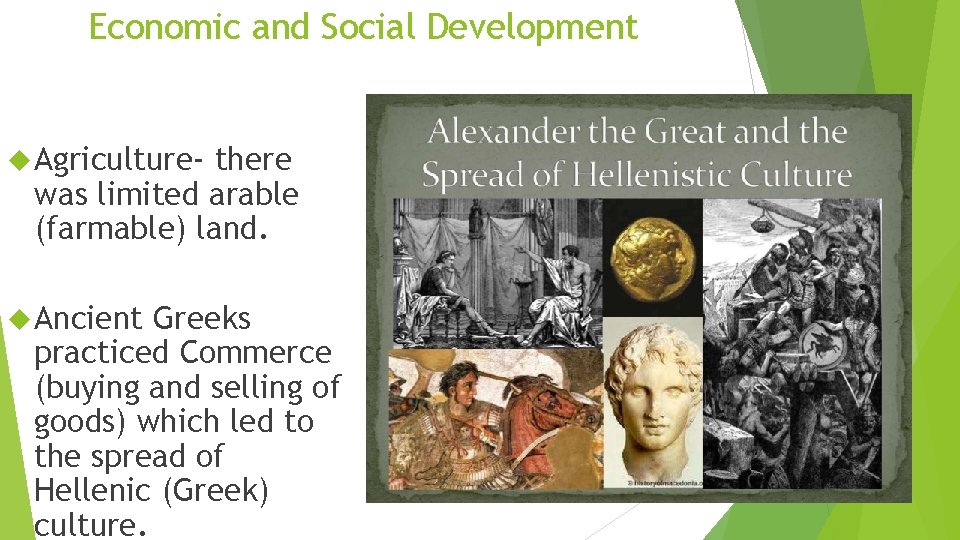
Economic and Social Development Agriculture- there was limited arable (farmable) land. Ancient Greeks practiced Commerce (buying and selling of goods) which led to the spread of Hellenic (Greek) culture.
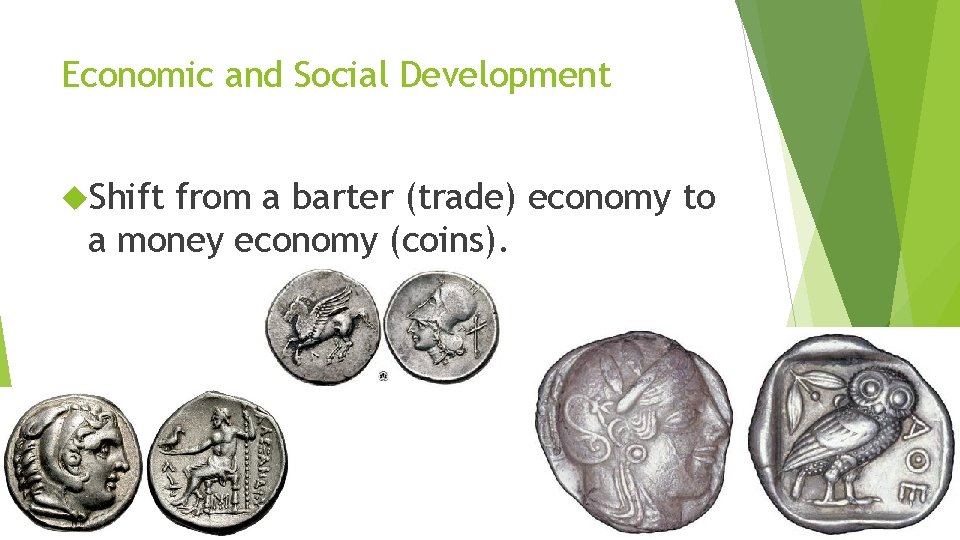
Economic and Social Development Shift from a barter (trade) economy to a money economy (coins).
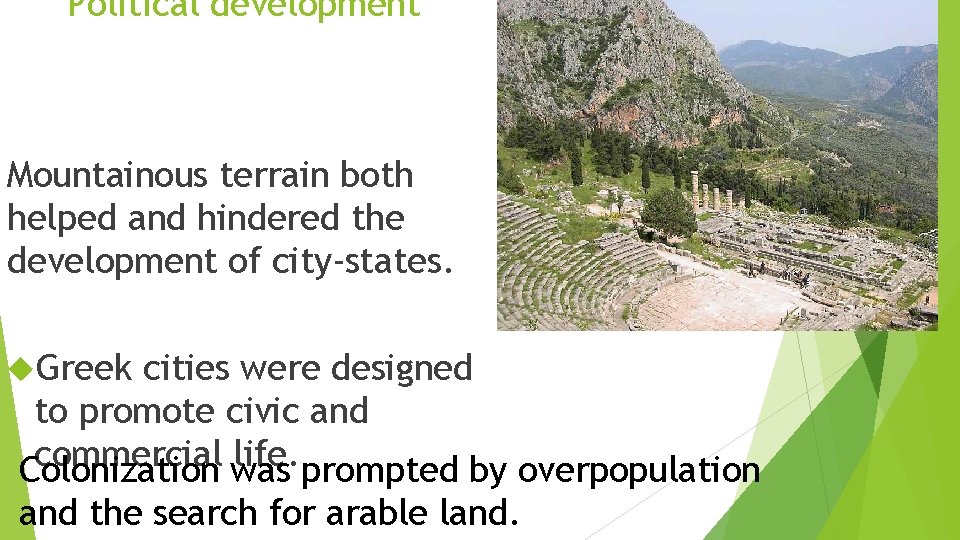
Political development Mountainous terrain both helped and hindered the development of city-states. Greek cities were designed to promote civic and commercial life. Colonization was prompted by overpopulation and the search for arable land.
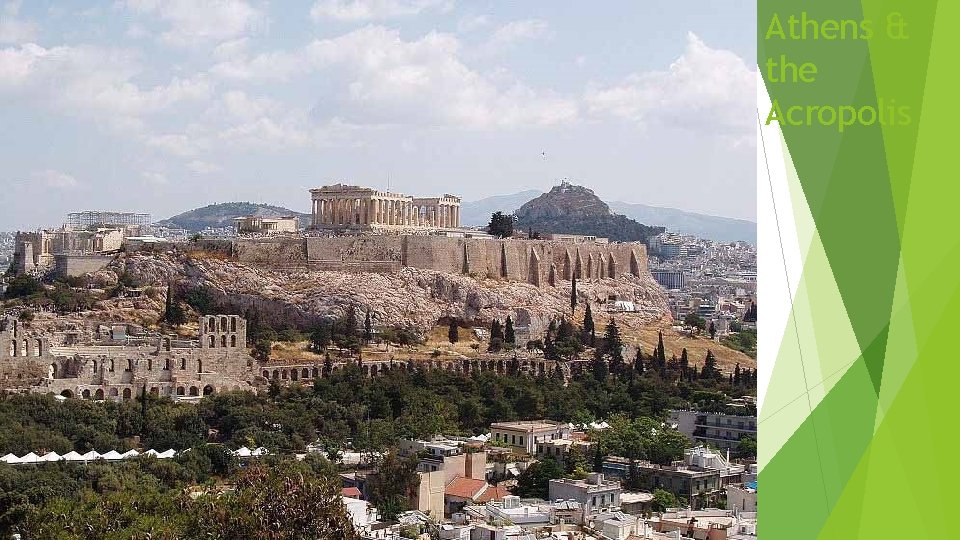
Athens & the Acropolis
Warm up Who do you think should be allowed to vote or participate in American Government? Why?
Ancient Greece Vocabulary Citizens- Free adult males. They had political rights and the responsibility of civic participation in government. Polis- the word for a Greek city-state Monarchy- A government where one person rules, usually a king or queen. Aristocracy- family. A society controlled by nobility or a royal
Ancient Greece Vocabulary Tyranny- Cruel and oppressive government rule. Democracy- a system of government where the entire eligible population can participate in the government. Rule by the people. Majority rule. Oligarchy- Rule by a small group
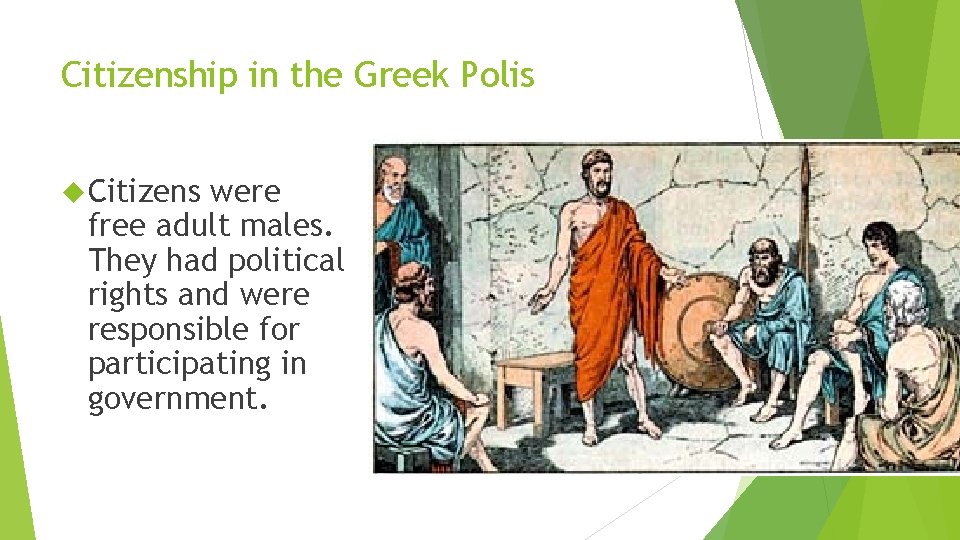
Citizenship in the Greek Polis Citizens were free adult males. They had political rights and were responsible for participating in government.
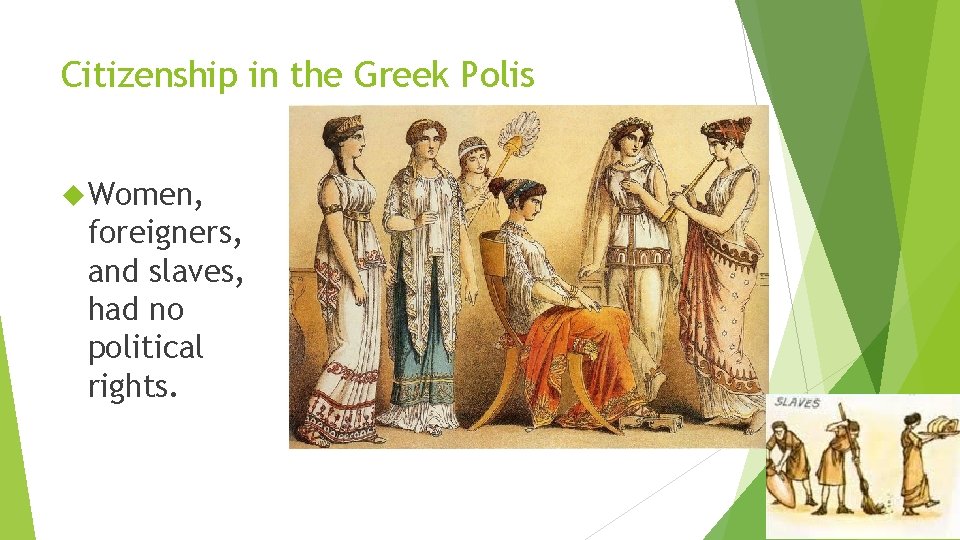
Citizenship in the Greek Polis Women, foreigners, and slaves, had no political rights.
ATHENS Stages of Athenian government went as follows: 1. Monarchy 2. Aristocracy 3. Tyranny 4. Democracy
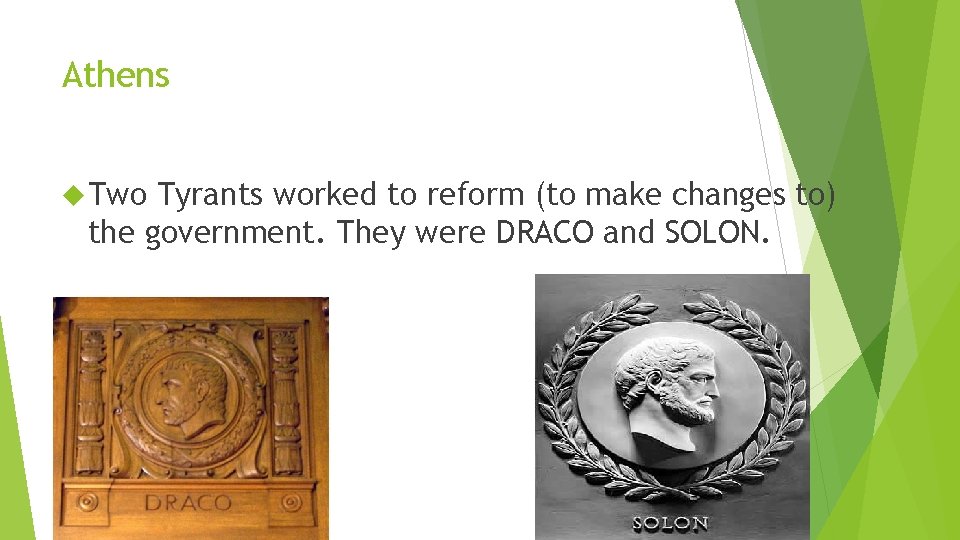
Athens Two Tyrants worked to reform (to make changes to) the government. They were DRACO and SOLON.
Athens The following democratic principles originated in Athens. 1. Direct Democracy- Everybody votes in a place at the same time. 2. Public debate- discussing an issue in front of peers or other citizens 3. Duties of a citizen- voting, debating, bettering your polis.
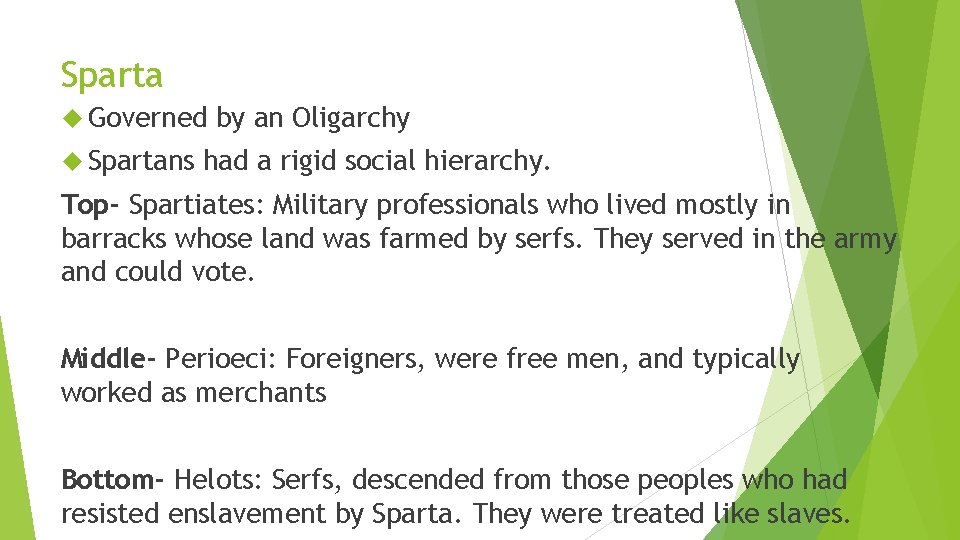
Sparta Governed Spartans by an Oligarchy had a rigid social hierarchy. Top- Spartiates: Military professionals who lived mostly in barracks whose land was farmed by serfs. They served in the army and could vote. Middle- Perioeci: Foreigners, were free men, and typically worked as merchants Bottom- Helots: Serfs, descended from those peoples who had resisted enslavement by Sparta. They were treated like slaves.
Class Assignment List and define the types of government that were in place before democracy in Athens. Essay: Two paragraphs In what ways was did Sparta and Athens differ? In what ways were they the same?
Warm up What happened at the battle of Marathon? What happened at the battle of Salamis? What was the Delian League? What was the Peloponnesian League?
PERSIAN WARS (499– 449 B. C. [B. C. E. ]) GOAL: To protect Greece from Persian rule WHO: Greece versus Persia RESULT: 1. Athens and Sparta united against the Persian Empire 2. Athenian victories over the Persians at Marathon and Salamis left Greeks in control of the Aegean Sea. 3. Athens preserved its independence and continued innovations in government and culture.
Exit Ticket Who fought in the Persian Wars? Why did they fight? What Who were two key battles? won the Persian Wars?
Importance of Peloponnesian War (431– 404 B. C. [B. C. E. ]) GOAL: TO CONTROL THE GREEK WORLD WHO: Athens and the Delian League versus Sparta and the Peloponnesian League RESULT: slowing of cultural advance and the weakening of political power
Assignment- Complete sentences List three ways that the Peloponnesian wars and the Persian wars were different List three ways the Peloponnesian wars and the Persian wars were the same Which Why league would you prefer to be in? Why? do you think the Peloponnesian war slowed the cultural advance and weakened the political power of Greece?
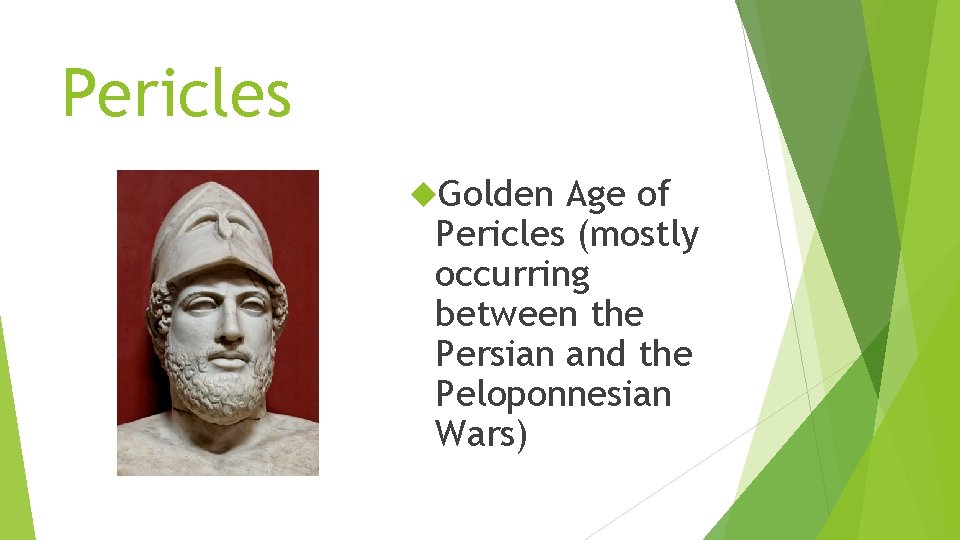
Pericles Golden Age of Pericles (mostly occurring between the Persian and the Peloponnesian Wars)
Why is Pericles important? Pericles extended democracy; most adult males had an equal voice. Pericles had Athens rebuilt after destruction in the Persian Wars; the Parthenon is an example of this reconstruction
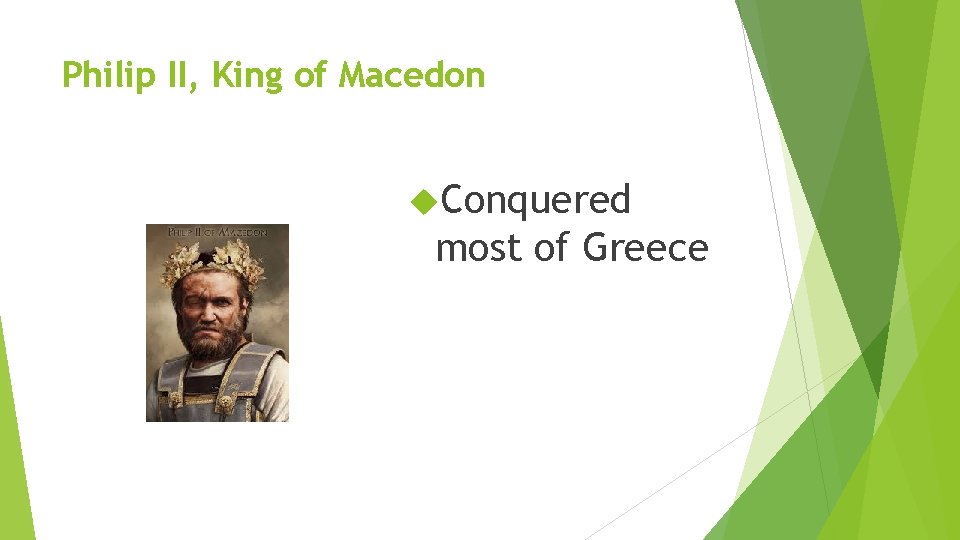
Philip II, King of Macedon Conquered most of Greece
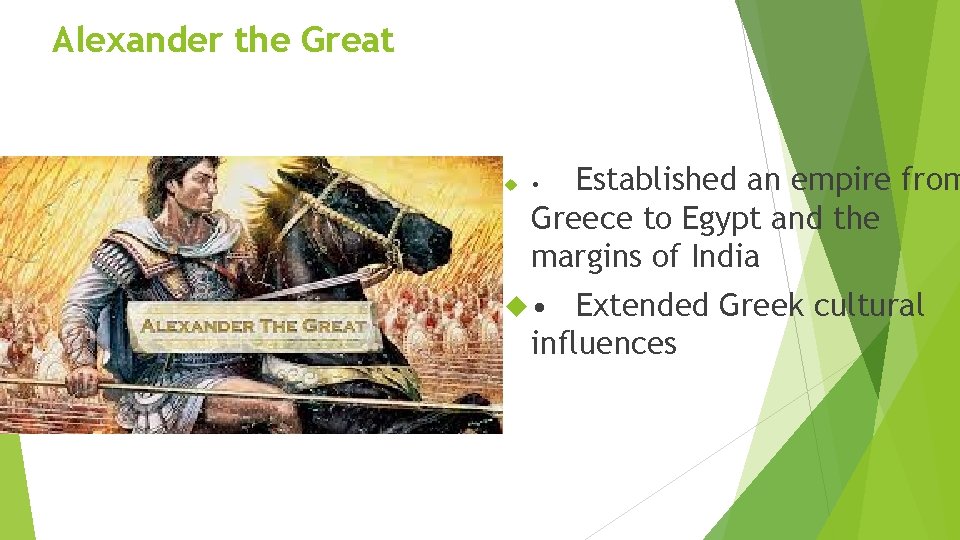
Alexander the Great Established an empire from Greece to Egypt and the margins of India • • Extended Greek cultural influences
Hellenistic Age Blend of Greek and oriental elements • • Spread of Hellenistic culture through trade
Ancient Greeks made many contributions to society that are still used today. Drama: Aeschylus, Sophocles Poetry: Homer (Iliad and Odyssey) History: Herodotus, Thucydides Sculpture: Phidias Architecture: Types of columns, including the Doric (Parthenon), Ionic, and Corinthian. Science: Archimedes, Hippocrates Mathematics: Euclid, Pythagoras Philosophy: Socrates, Plato, Aristotle
Exit Ticket When was the golden age of Pericles? Why is Pericles important? What did Phillip II of Macedon do? What were the accomplishments of Alexander the Great? What does Hellenistic mean?
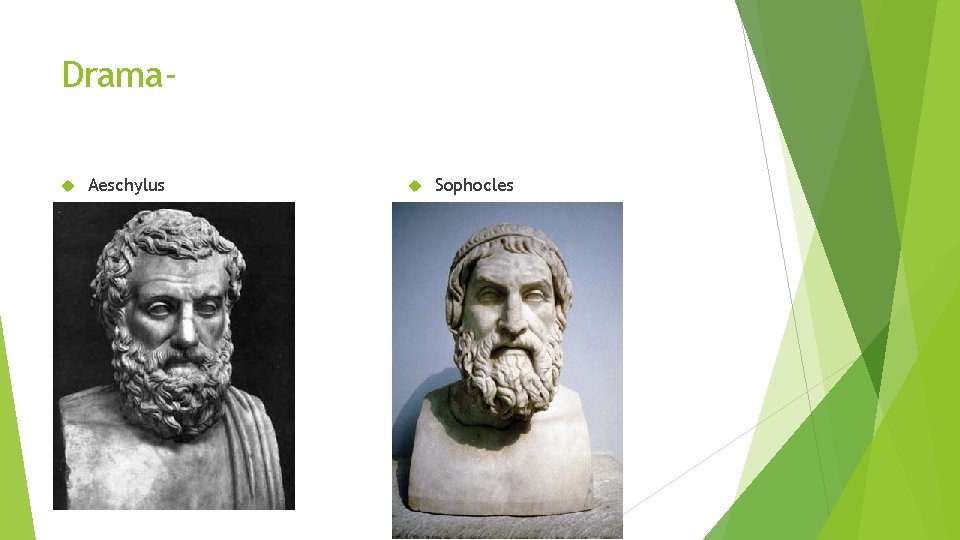
Drama Aeschylus Sophocles