
Greek Mythology Part II The Olympians Aphrodite Venus

- Slides: 12
Greek Mythology Part II The Olympians
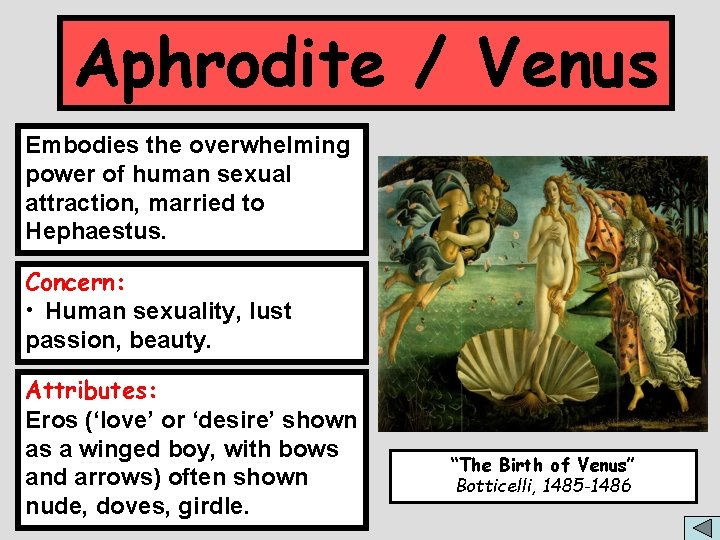
Aphrodite / Venus Embodies the overwhelming power of human sexual attraction, married to Hephaestus. Concern: • Human sexuality, lust passion, beauty. Attributes: Eros (‘love’ or ‘desire’ shown as a winged boy, with bows and arrows) often shown nude, doves, girdle. “The Birth of Venus” Botticelli, 1485 -1486
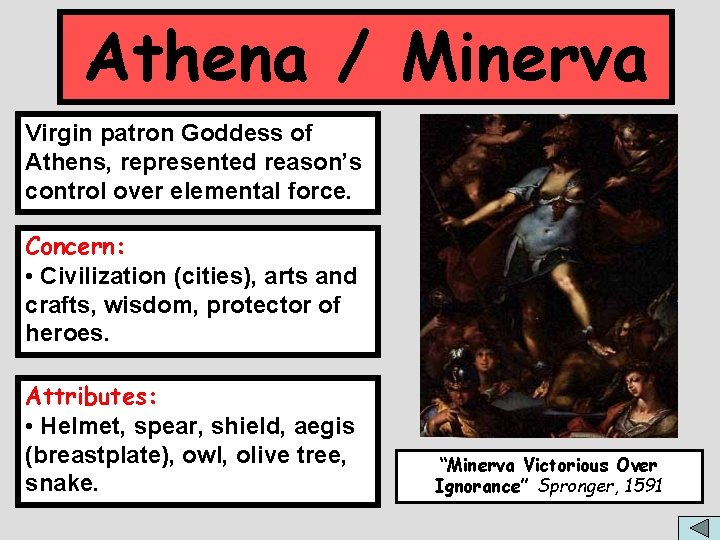
Athena / Minerva Virgin patron Goddess of Athens, represented reason’s control over elemental force. Concern: • Civilization (cities), arts and crafts, wisdom, protector of heroes. Attributes: • Helmet, spear, shield, aegis (breastplate), owl, olive tree, snake. “Minerva Victorious Over Ignorance” Spronger, 1591
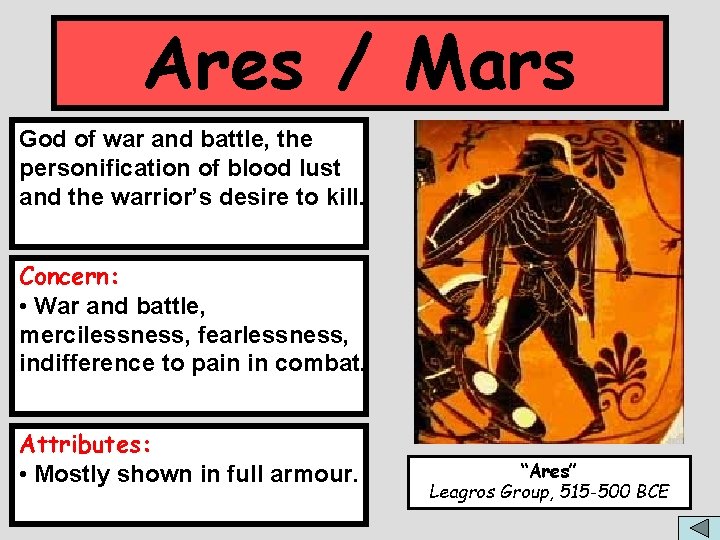
Ares / Mars God of war and battle, the personification of blood lust and the warrior’s desire to kill. Concern: • War and battle, mercilessness, fearlessness, indifference to pain in combat. Attributes: • Mostly shown in full armour. “Ares” Leagros Group, 515 -500 BCE
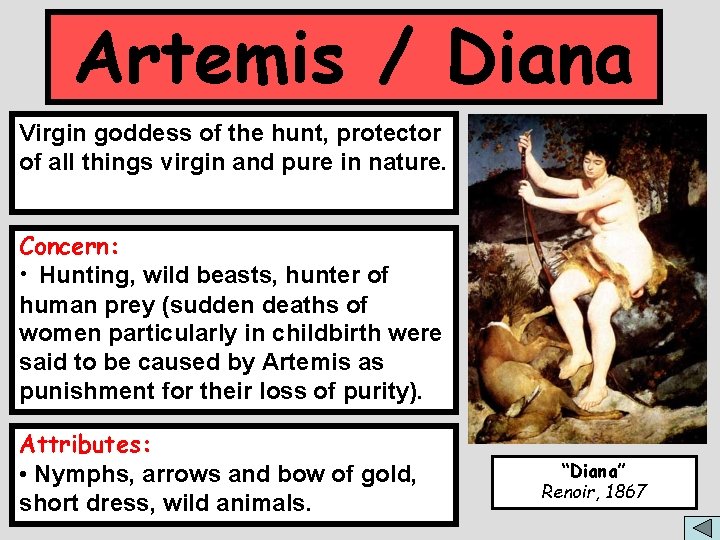
Artemis / Diana Virgin goddess of the hunt, protector of all things virgin and pure in nature. Concern: • Hunting, wild beasts, hunter of human prey (sudden deaths of women particularly in childbirth were said to be caused by Artemis as punishment for their loss of purity). Attributes: • Nymphs, arrows and bow of gold, short dress, wild animals. “Diana” Renoir, 1867
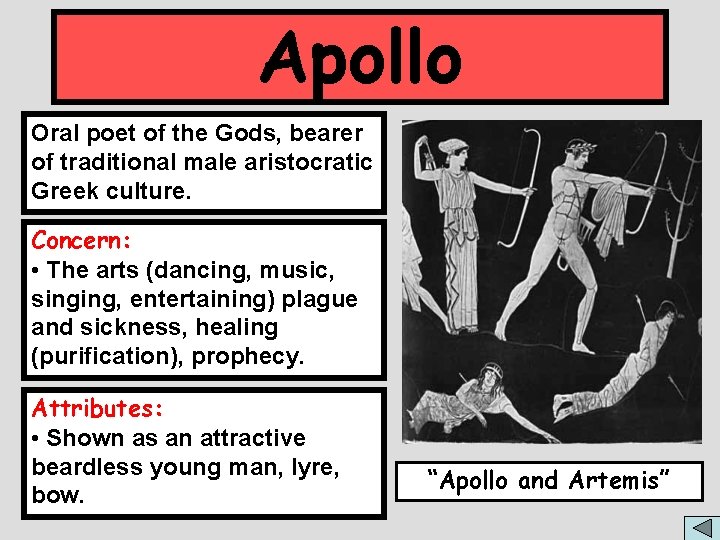
Apollo Oral poet of the Gods, bearer of traditional male aristocratic Greek culture. Concern: • The arts (dancing, music, singing, entertaining) plague and sickness, healing (purification), prophecy. Attributes: • Shown as an attractive beardless young man, lyre, bow. “Apollo and Artemis”
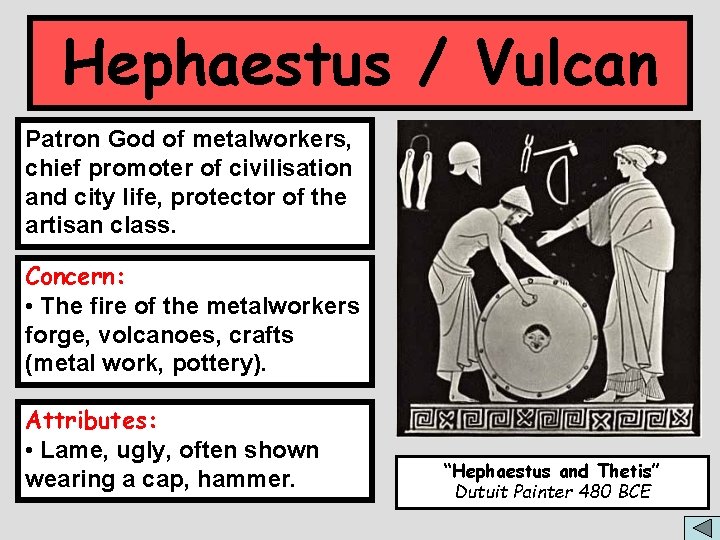
Hephaestus / Vulcan Patron God of metalworkers, chief promoter of civilisation and city life, protector of the artisan class. Concern: • The fire of the metalworkers forge, volcanoes, crafts (metal work, pottery). Attributes: • Lame, ugly, often shown wearing a cap, hammer. “Hephaestus and Thetis” Dutuit Painter 480 BCE
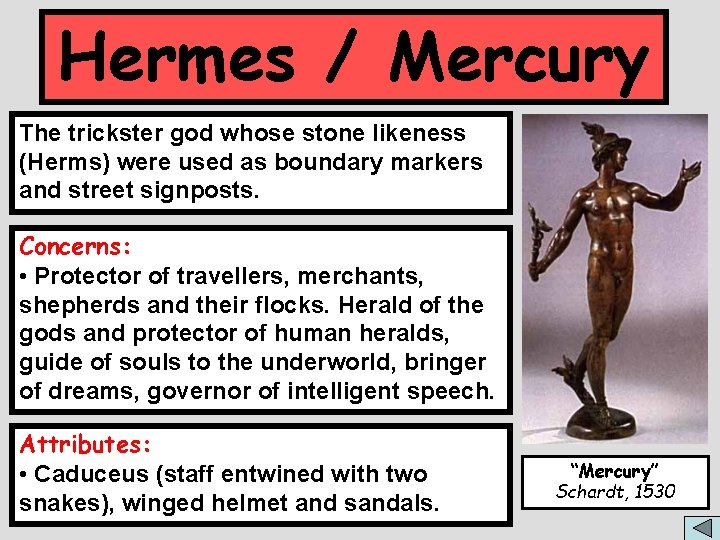
Hermes / Mercury The trickster god whose stone likeness (Herms) were used as boundary markers and street signposts. Concerns: • Protector of travellers, merchants, shepherds and their flocks. Herald of the gods and protector of human heralds, guide of souls to the underworld, bringer of dreams, governor of intelligent speech. Attributes: • Caduceus (staff entwined with two snakes), winged helmet and sandals. “Mercury” Schardt, 1530
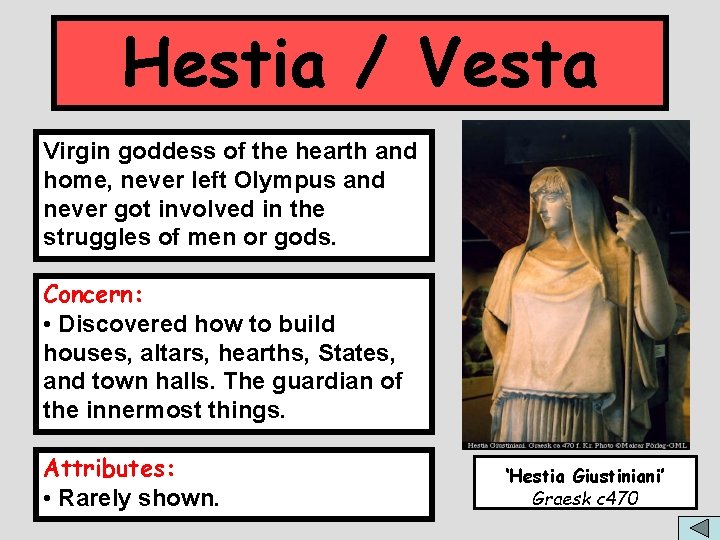
Hestia / Vesta Virgin goddess of the hearth and home, never left Olympus and never got involved in the struggles of men or gods. Concern: • Discovered how to build houses, altars, hearths, States, and town halls. The guardian of the innermost things. Attributes: • Rarely shown. ‘Hestia Giustiniani’ Graesk c 470
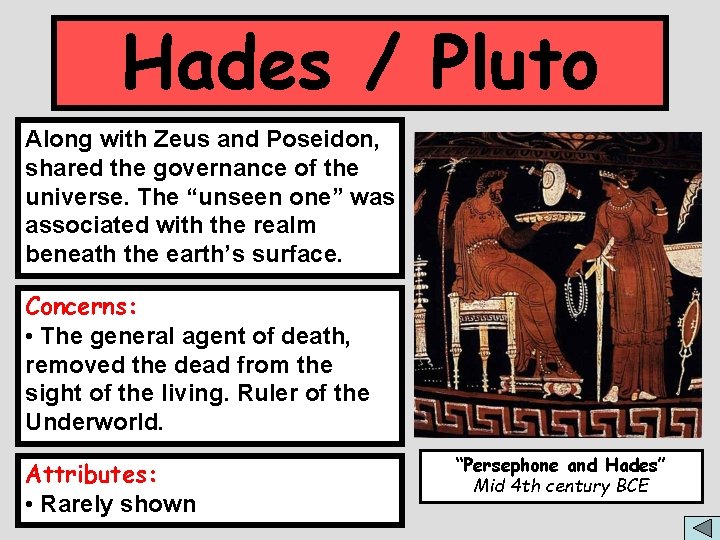
Hades / Pluto Along with Zeus and Poseidon, shared the governance of the universe. The “unseen one” was associated with the realm beneath the earth’s surface. Concerns: • The general agent of death, removed the dead from the sight of the living. Ruler of the Underworld. Attributes: • Rarely shown “Persephone and Hades” Mid 4 th century BCE
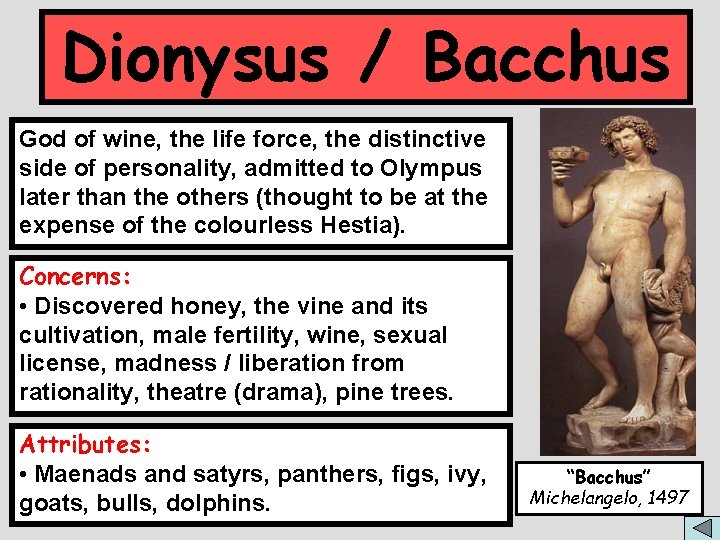
Dionysus / Bacchus God of wine, the life force, the distinctive side of personality, admitted to Olympus later than the others (thought to be at the expense of the colourless Hestia). Concerns: • Discovered honey, the vine and its cultivation, male fertility, wine, sexual license, madness / liberation from rationality, theatre (drama), pine trees. Attributes: • Maenads and satyrs, panthers, figs, ivy, goats, bulls, dolphins. “Bacchus” Michelangelo, 1497
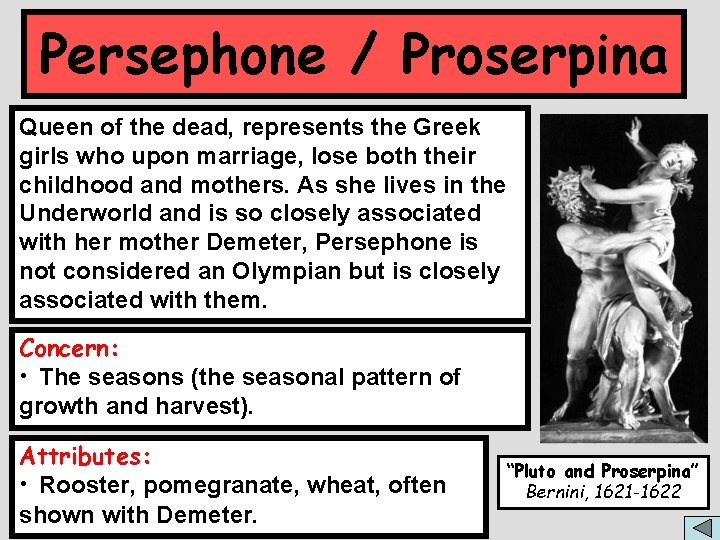
Persephone / Proserpina Queen of the dead, represents the Greek girls who upon marriage, lose both their childhood and mothers. As she lives in the Underworld and is so closely associated with her mother Demeter, Persephone is not considered an Olympian but is closely associated with them. Concern: • The seasons (the seasonal pattern of growth and harvest). Attributes: • Rooster, pomegranate, wheat, often shown with Demeter. “Pluto and Proserpina” Bernini, 1621 -1622