
Greek Drama Key Terms Drama a story acted
- Slides: 21
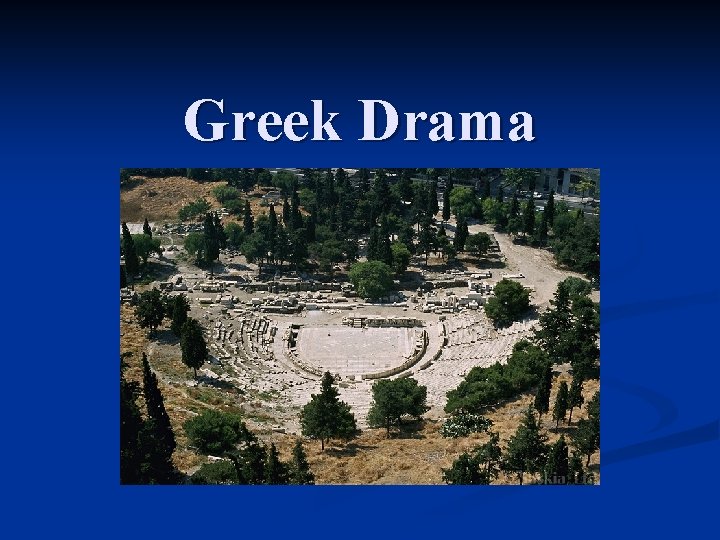
Greek Drama
Key Terms Ø Drama: a story acted out on a stage for an audience. Ø Tragedy: a dramatic work that presents the downfall of a dignified character, usually ending in a character’s death. Ø Comedy: a dramatic work that is light and often humorous in tone, usually ending happily, with a peaceful
Ø Irony: Key Terms usually involved a misunderstanding or difference in understanding, creating a gap in understanding that is appreciated by the audience. Ø Situational or Dramatic Irony: the reader or audience has knowledge of a situation that the characters do not know. The characters’ subsequent actions based on that missing information creates irony. Ø Tragic Irony: a noble character is undone by mistaken judgment.
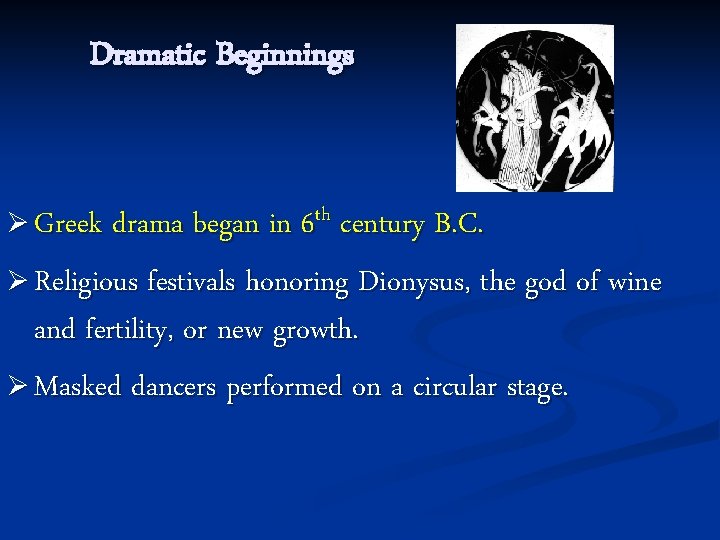
Dramatic Beginnings Ø Greek drama began in 6 th century B. C. Ø Religious festivals honoring Dionysus, the god of wine and fertility, or new growth. Ø Masked dancers performed on a circular stage.
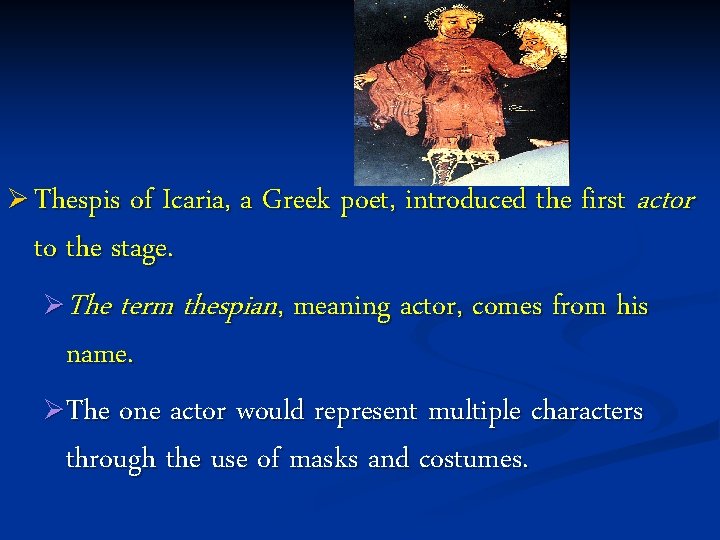
Ø Thespis of Icaria, a Greek poet, introduced the first to the stage. actor ØThe term thespian, meaning actor, comes from his name. ØThe one actor would represent multiple characters through the use of masks and costumes.
Ø Plays continued to be religious in nature. Ø Asked questions about the role of fate in human life and the relationship between mortals and the gods. Ø tragedy comes from the Greek word for goat, a sacred animal to Dionysus.
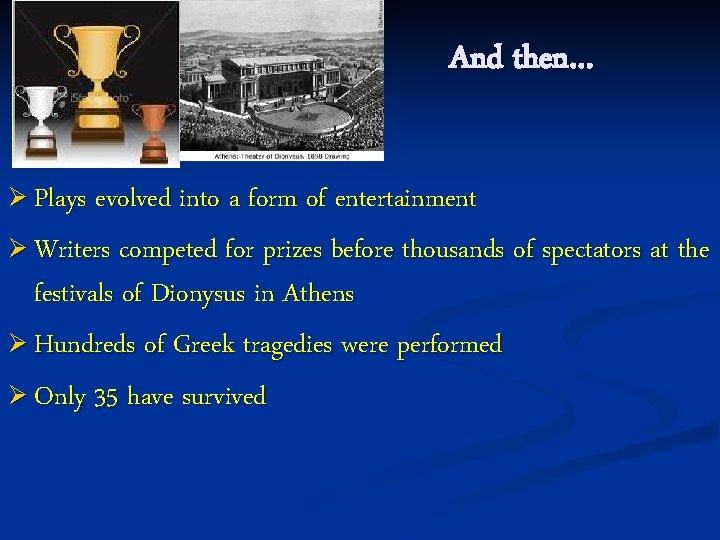
And then… Ø Plays evolved into a form of entertainment Ø Writers competed for prizes before thousands of spectators at the festivals of Dionysus in Athens Ø Hundreds of Greek tragedies were performed Ø Only 35 have survived
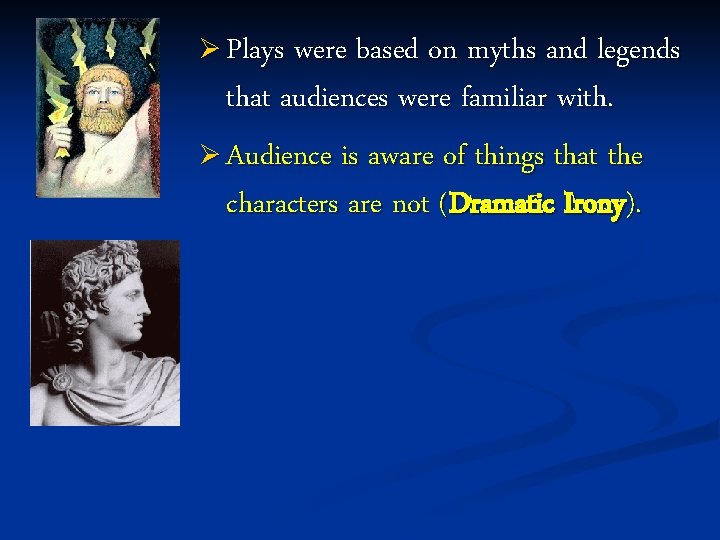
Ø Plays were based on myths and legends that audiences were familiar with. Ø Audience is aware of things that the characters are not (Dramatic Irony).
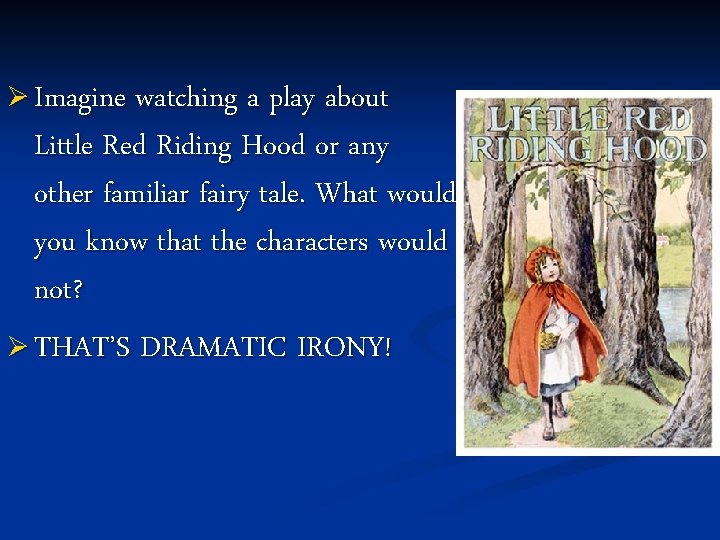
Ø Imagine watching a play about Little Red Riding Hood or any other familiar fairy tale. What would you know that the characters would not? Ø THAT’S DRAMATIC IRONY!
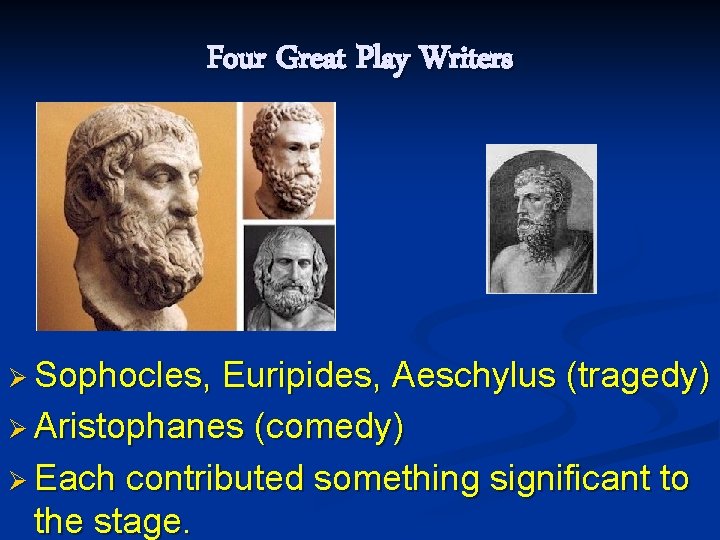
Four Great Play Writers Ø Sophocles, Euripides, Aeschylus (tragedy) Ø Aristophanes (comedy) Ø Each contributed something significant to the stage.
What They Did for the Tragedy: Ø Aeschylus: added a second actor, which created dialogue Ø Sophocles: added a third actor, which created more intriguing plots Ø Euripides: added stage effects and more realistic characters
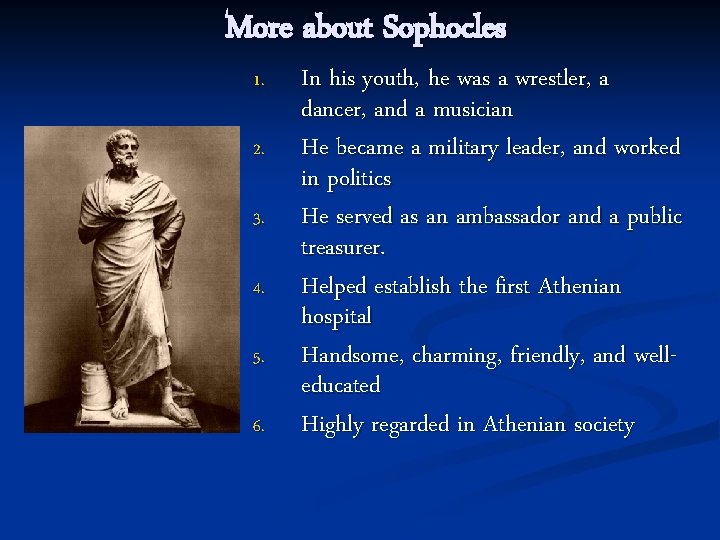
More about Sophocles 1. 2. 3. 4. 5. 6. In his youth, he was a wrestler, a dancer, and a musician He became a military leader, and worked in politics He served as an ambassador and a public treasurer. Helped establish the first Athenian hospital Handsome, charming, friendly, and welleducated Highly regarded in Athenian society
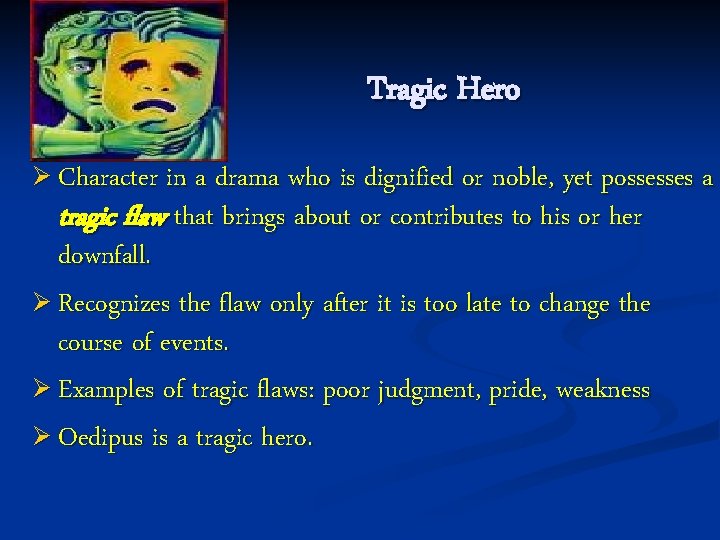
Tragic Hero Ø Character in a drama who is dignified or noble, yet possesses a tragic flaw that brings about or contributes to his or her downfall. Ø Recognizes the flaw only after it is too late to change the course of events. Ø Examples of tragic flaws: poor judgment, pride, weakness Ø Oedipus is a tragic hero.
The Legend of Oedipus: Somebody Call CPS Ø Oedipus was the son of King Laius and Queen Jocasta of Thebes. Ø An oracle told Laius (Oedipus's father) that a son born to him would kill him. Ø Laius ordered servant to pin baby’s feet together and leave him to die on a mountain. Ø The servant pitied the infant and, instead, gave him to a shepherd. Ø The shepherd gave him to King Polybus and Queen Merope of Corinth.
The Plot Thickens Ø Oedipus learns that his father was not actually his father from a drunken partier. Ø Oedipus goes to see the oracle at Delphi (local psychic) to find out the truth about his parents. Ø The oracle reveals a terrible prophecy: ØOedipus would kill his father and marry his mother.
I Know Something You Don’t Know Ø Oedipus flees Corinth in an attempt to prevent the prophecy from coming true. Ø On his way to Thebes, he runs into King Laius and some servants at a crossroad (symbolic? ). Ø Remember, he does not know this is his dad (but we do: dramatic irony). Ø They get into an argument and Oedipus kills Laius.
What’s That Egyptian Thing Have to Do With This? Ø When Oedipus gets to Thebes, there is a monster (The Sphinx) terrorizing the town. Ø The Sphinx has the face of a woman, the body of a lion, and the wings of a bird. Ø A riddle for you: “What is it that walks on four legs in the morning, on two at midday, and on three in the evening? ” Ø It (she? ) ate anyone who could not solve the riddle.
And the Answer is: Ø Oedipus was a smart guy: “Man, for he crawls as a baby, walks erect in maturity, and uses a staff in old age. ” Ø With the riddle answered, the Sphinx destroyed itself, and Thebes was freed from the terror Ø Go Oedipus!
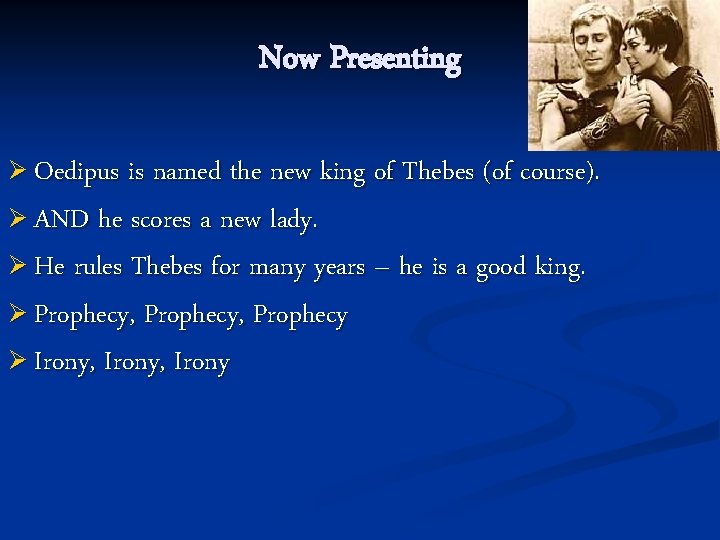
Now Presenting Ø Oedipus is named the new king of Thebes (of course). Ø AND he scores a new lady. Ø He rules Thebes for many years – he is a good king. Ø Prophecy, Prophecy Ø Irony, Irony
Thebes in Trouble Again Ø The Sphinx is dead, but now the city is dealing with a terrible plague. Ø It is in his effort to bring the plague to an end that Oedipus discovers the secret of his birth. Ø Some scholars believe that this drama may have first been performed after Athens had suffered through a terrible plague, which began in 430 B. C.
Things to Ponder as We Read Does Oedipus fit the definition of a tragic hero? Ø How do the words and actions of minor characters help you understand the main characters? Ø What strategies do you need to use in reading a play? Ø Where do you see examples of dramatic irony? Ø How does this add to the telling of the story? Ø Preview the questions that you will be answering at the end of the play. Ø