
Greek defenses were weakened after the Peloponnesian War

- Slides: 11
Greek defenses were weakened after the Peloponnesian War. This left room for invasion from the outside…
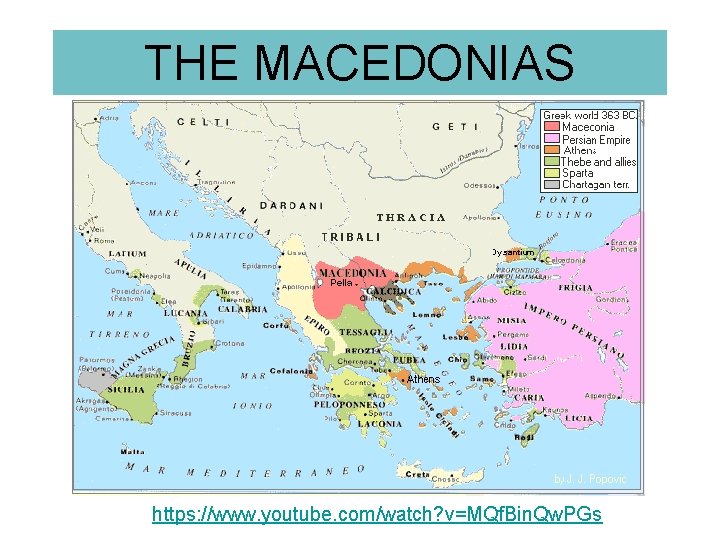
THE MACEDONIAS https: //www. youtube. com/watch? v=MQf. Bin. Qw. PGs
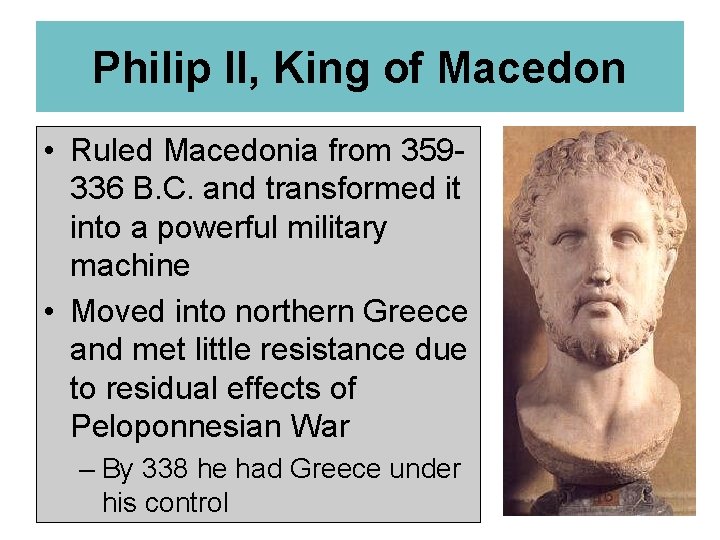
Philip II, King of Macedon • Ruled Macedonia from 359336 B. C. and transformed it into a powerful military machine • Moved into northern Greece and met little resistance due to residual effects of Peloponnesian War – By 338 he had Greece under his control
Alexander the Great • Philip intended to use Greece as a launching pad to invade Persia, but he was assassinated before he could begin his plan • Instead the invasion of Persia would be left for Philip’s son Alexander who was just 20 when Philip was assassinated – “Alexander inherited from his father the most perfectly organized, trained, and equipped army of ancient times. ” • J. F. C. Fuller, The Generalship of Alexander the Great
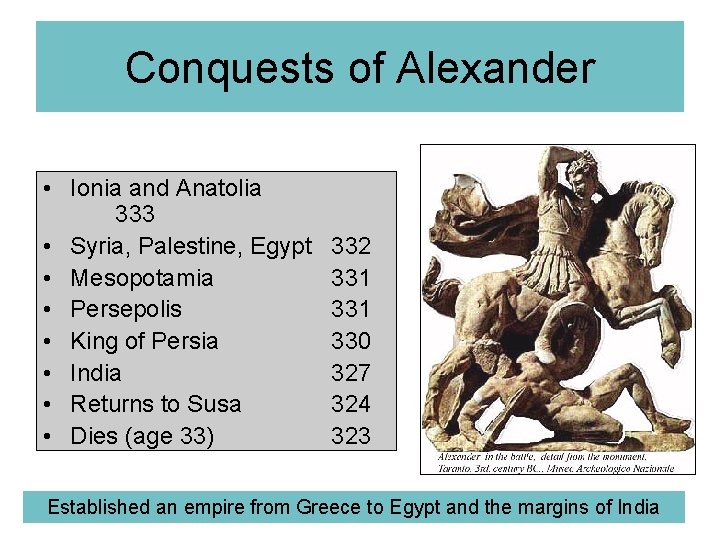
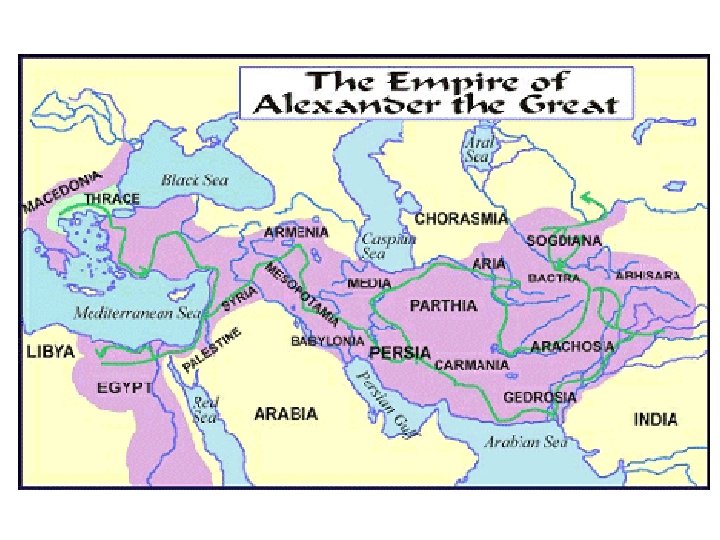
Conquests of Alexander • Ionia and Anatolia 333 • Syria, Palestine, Egypt • Mesopotamia • Persepolis • King of Persia • India • Returns to Susa • Dies (age 33) 332 331 330 327 324 323 Established an empire from Greece to Egypt and the margins of India
How Did He Do It?
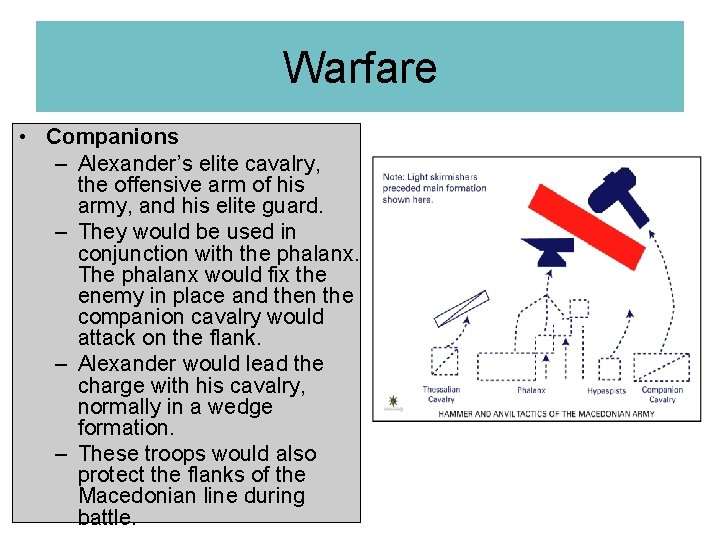
Warfare • Companions – Alexander’s elite cavalry, the offensive arm of his army, and his elite guard. – They would be used in conjunction with the phalanx. The phalanx would fix the enemy in place and then the companion cavalry would attack on the flank. – Alexander would lead the charge with his cavalry, normally in a wedge formation. – These troops would also protect the flanks of the Macedonian line during battle.
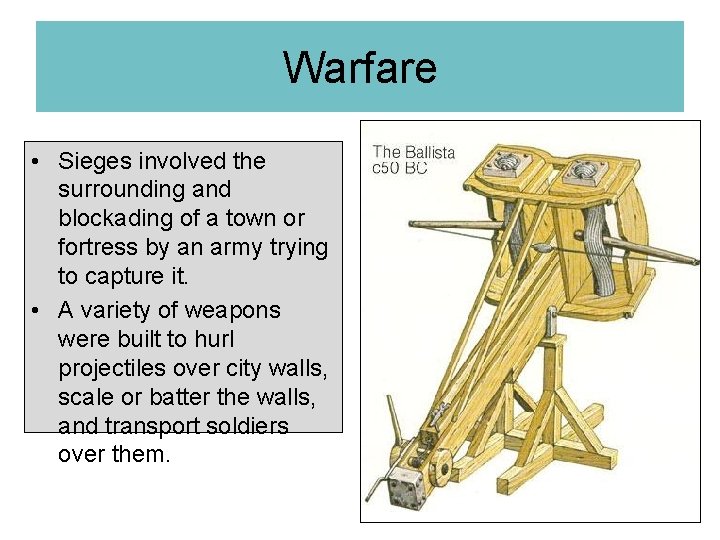
Warfare • Sieges involved the surrounding and blockading of a town or fortress by an army trying to capture it. • A variety of weapons were built to hurl projectiles over city walls, scale or batter the walls, and transport soldiers over them.
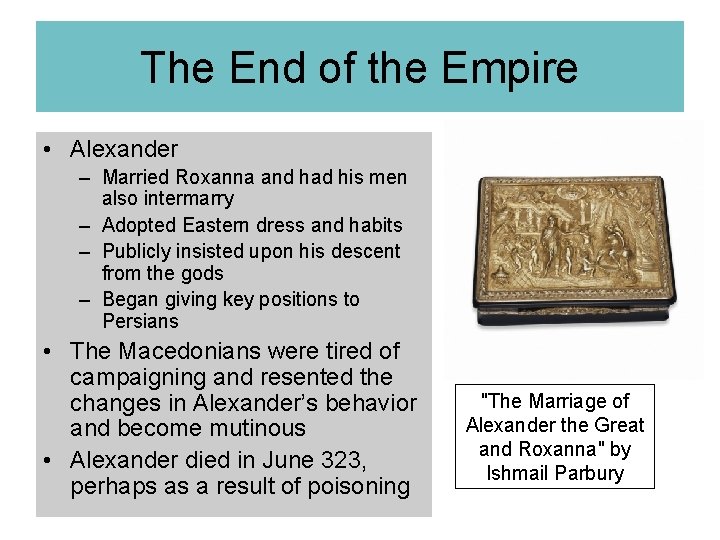
The End of the Empire • Alexander – Married Roxanna and had his men also intermarry – Adopted Eastern dress and habits – Publicly insisted upon his descent from the gods – Began giving key positions to Persians • The Macedonians were tired of campaigning and resented the changes in Alexander’s behavior and become mutinous • Alexander died in June 323, perhaps as a result of poisoning "The Marriage of Alexander the Great and Roxanna" by Ishmail Parbury
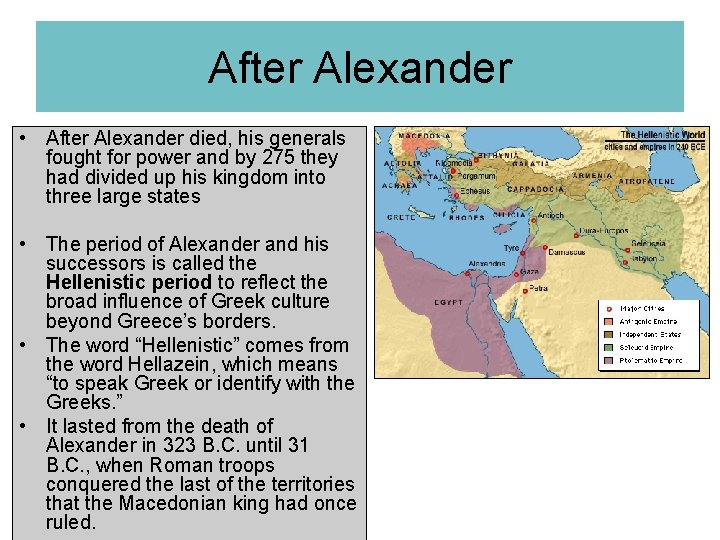
After Alexander • After Alexander died, his generals fought for power and by 275 they had divided up his kingdom into three large states • The period of Alexander and his successors is called the Hellenistic period to reflect the broad influence of Greek culture beyond Greece’s borders. • The word “Hellenistic” comes from the word Hellazein, which means “to speak Greek or identify with the Greeks. ” • It lasted from the death of Alexander in 323 B. C. until 31 B. C. , when Roman troops conquered the last of the territories that the Macedonian king had once ruled.