
Greek Architecture Mr Mulligan Chapter 8 Greek Architecture





- Slides: 42
Greek Architecture Mr. Mulligan Chapter 8
Greek Architecture • Greek temples were dwellings for Gods who portrayed humans • Gods supposedly controlled the universe and the destiny of every person on Earth • Their highest goal was pleasing the gods so fortunetelling the Gods’ wills were an important religious practice
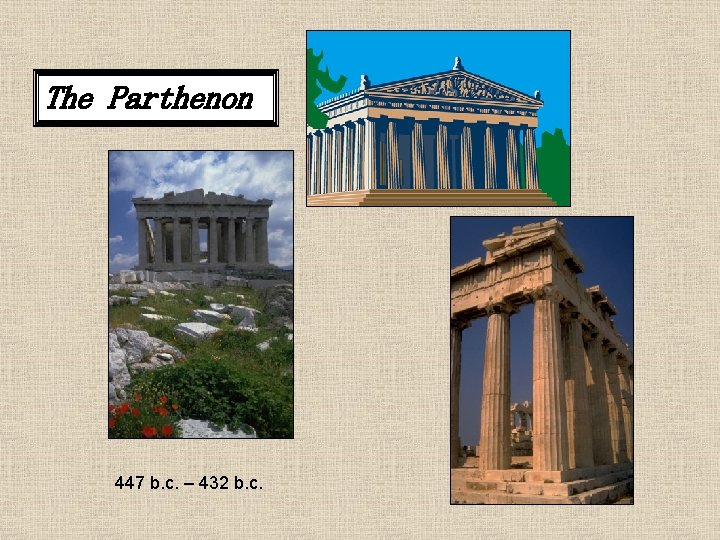
Early Greek Temples • The earliest were made of wood and brick • As the economy flourished they used stone, but limestone and marble became the favored materials • Greek design didn’t change over time, instead they made small improvements • Proof of these improvements are showed in the Parthenon which was built as a home for Athena, the goddess of wisdom
The Parthenon 447 b. c. – 432 b. c.
Exterior Design of the Parthenon • Since few were allowed in the Parthenon there was no need to decorate the interior • The attention was put on the exterior design • Although its hard to see, there are very few straight lines in the structure • The columns have a gradual curve to them to add a sense of stability to the building
Exterior Design of the Parthenon • Located on the Acropolis served different purposes • First a temple to Athena • Then a Christian Church in the 5 th Century • Then a Mosque in the 15 th Century • Until it blew up in the 17 th century
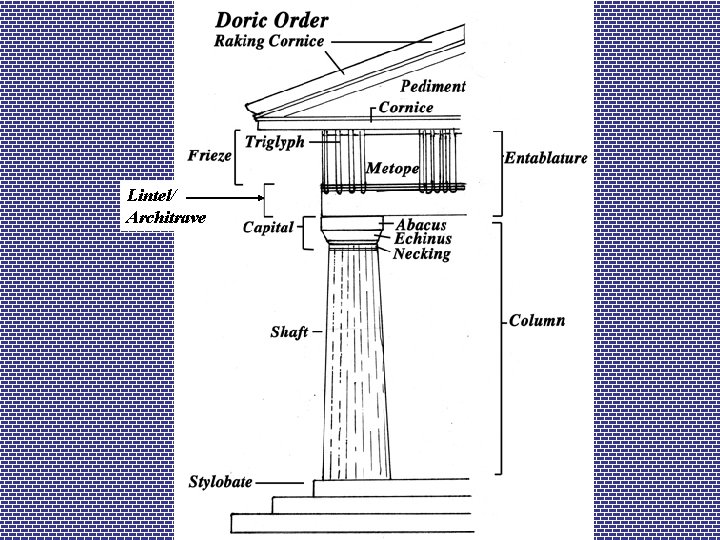
Lintel/ Architrave
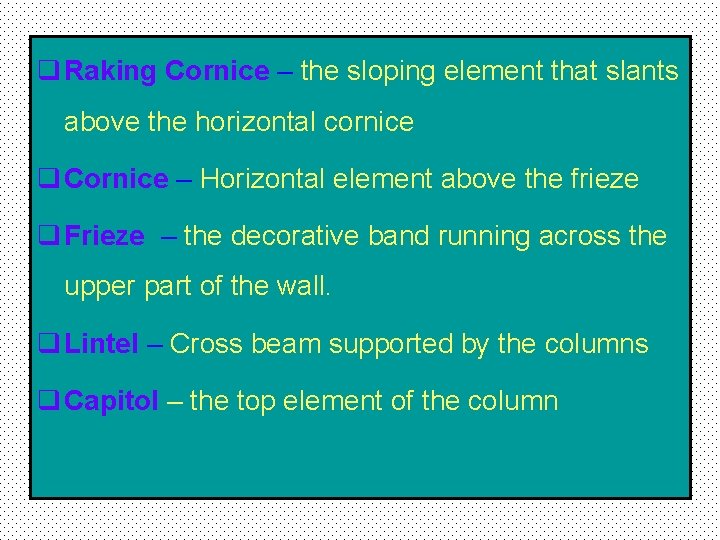
q Raking Cornice – the sloping element that slants above the horizontal cornice q Cornice – Horizontal element above the frieze q Frieze – the decorative band running across the upper part of the wall. q Lintel – Cross beam supported by the columns q Capitol – the top element of the column
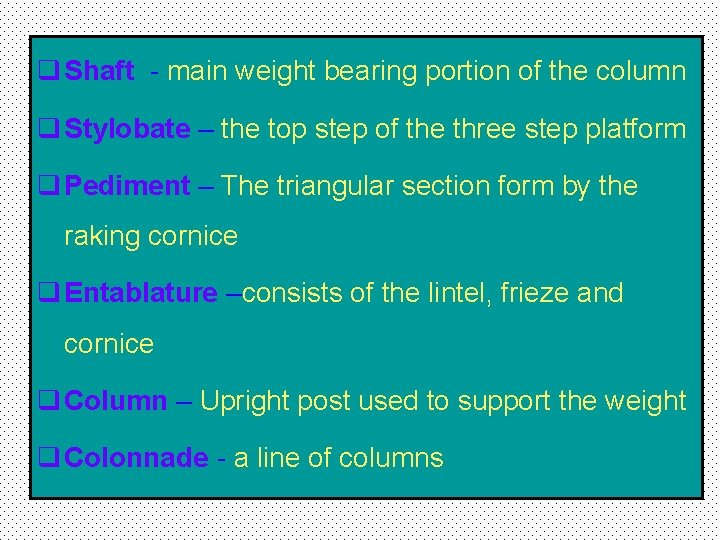
q Shaft - main weight bearing portion of the column q Stylobate – the top step of the three step platform q Pediment – The triangular section form by the raking cornice q Entablature –consists of the lintel, frieze and cornice q Column – Upright post used to support the weight q Colonnade - a line of columns
Use of Color • The Greeks preferred the use of bright colors instead of plain marble • Blue, red, green and yellow were used often • Exposure to weather has made the colors fade over the years, but if you look closely at more protected places or buildings you can still find traces of paint
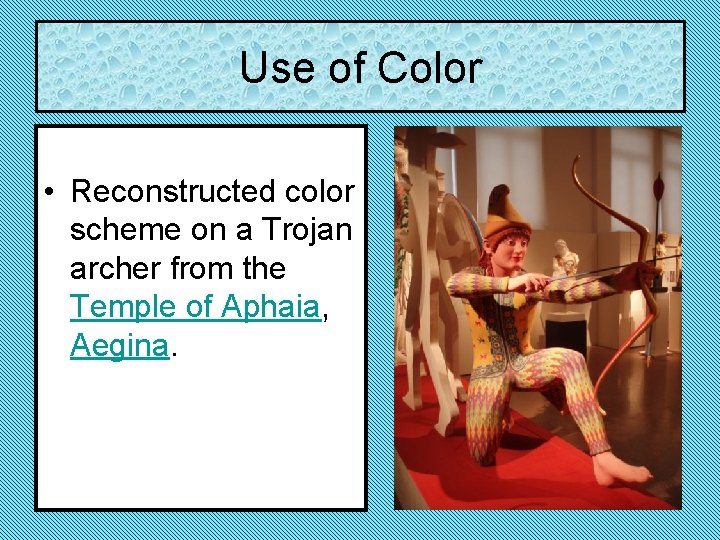
Use of Color • Reconstructed color scheme on a Trojan archer from the Temple of Aphaia, Aegina.
The Acropolis • The acropolis was located in Athens and was about 500 feet about the city. • It has magnificent buildings on top of it to symbolize the beauty of Athens • It covered around 8 acres of land. • It contained statues of some of the Greek gods. (Athena & Phidias)
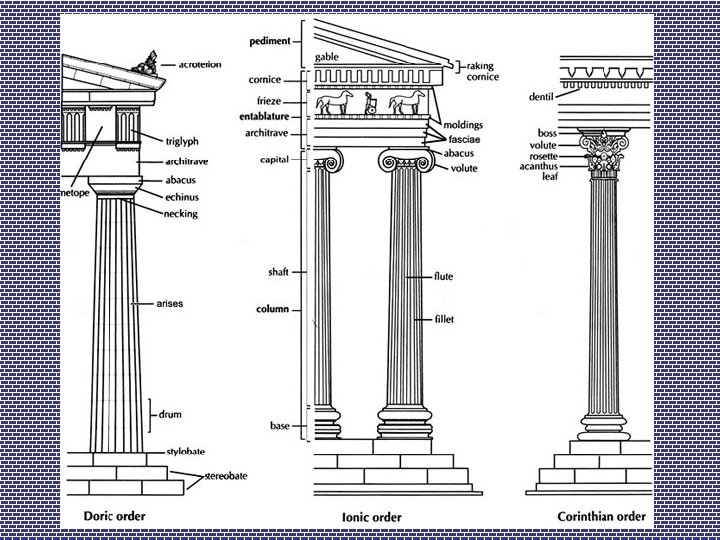
The Three Orders of Decorative Style • • The Doric The Ionic The Corinthian The Parthenon was built according to the earliest decorative style…
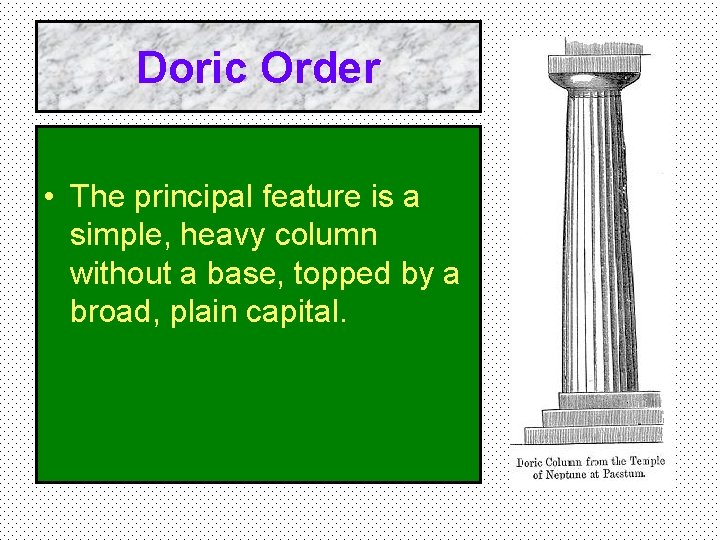
Doric Order • The principal feature is a simple, heavy column without a base, topped by a broad, plain capital.
Entasis Paestum, Italy • A slight swelling of a column, intended to compensate for the illusion of concavity resulting from straight sides.
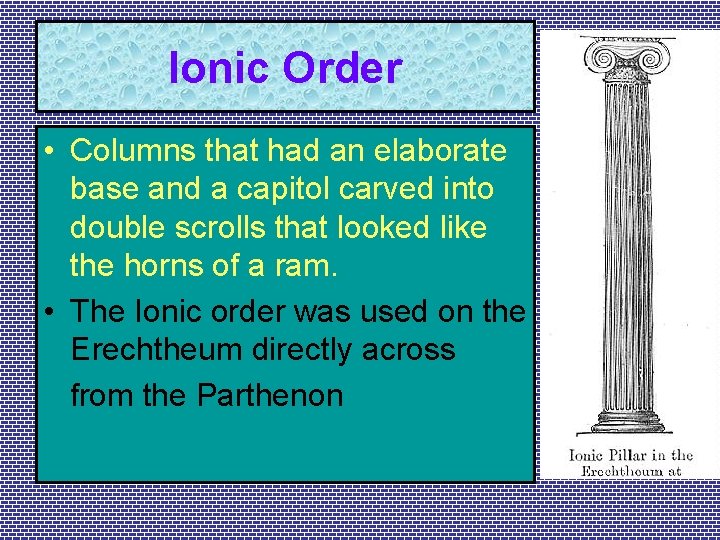
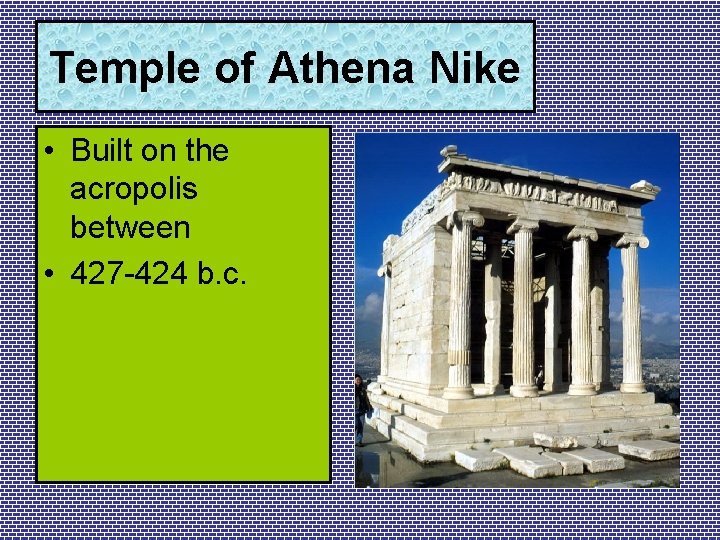
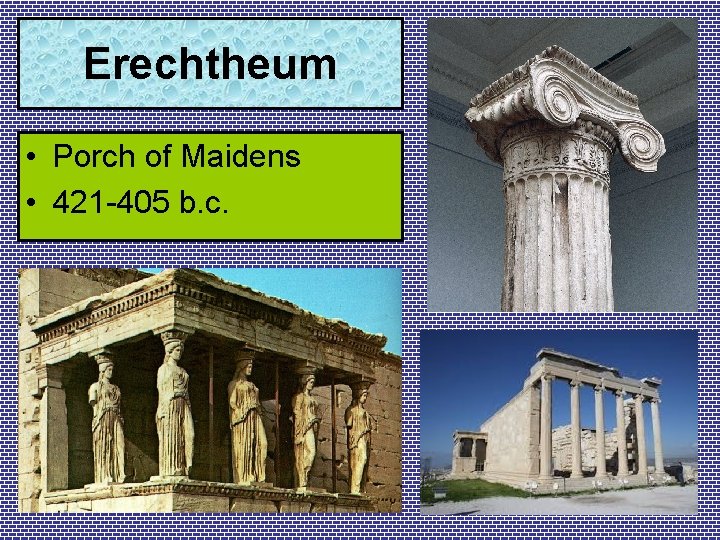
Ionic Order • Columns that had an elaborate base and a capitol carved into double scrolls that looked like the horns of a ram. • The Ionic order was used on the Erechtheum directly across from the Parthenon
Temple of Athena Nike • Built on the acropolis between • 427 -424 b. c.
Erechtheum • Porch of Maidens • 421 -405 b. c.
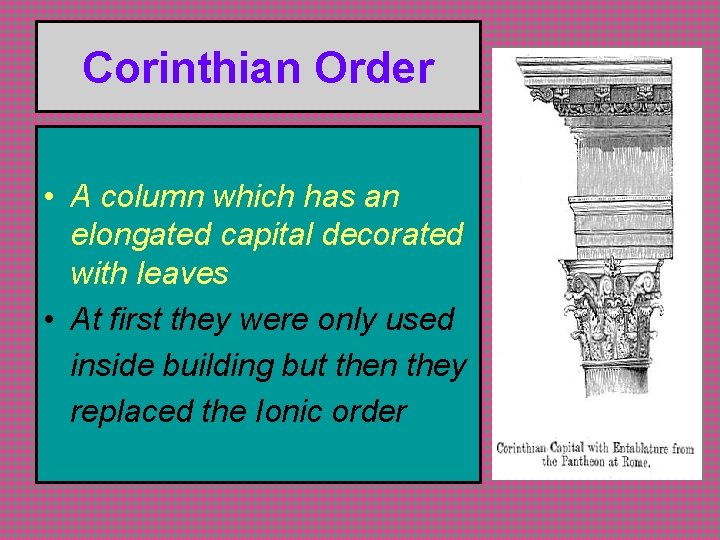
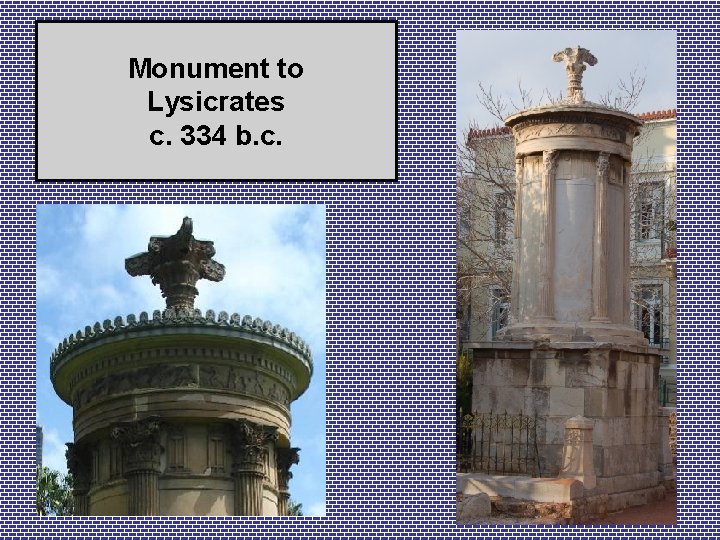
Corinthian Order • A column which has an elongated capital decorated with leaves • At first they were only used inside building but then they replaced the Ionic order
Monument to Lysicrates c. 334 b. c.
Name the Greek Order that influenced this building
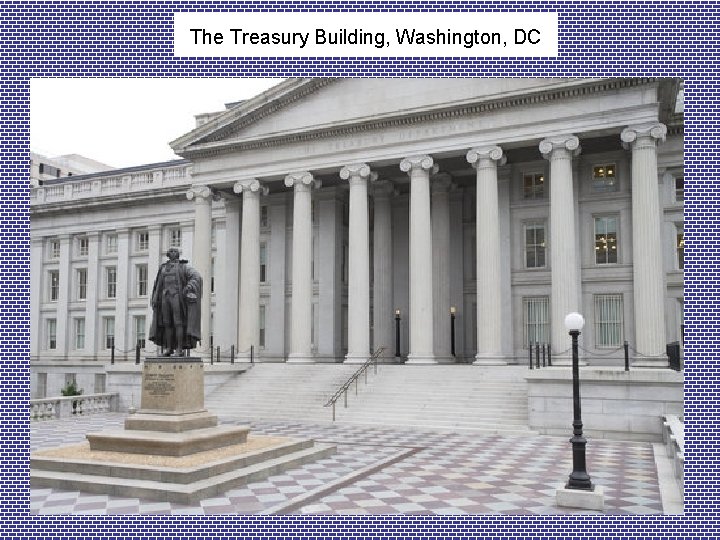
The Treasury Building, Washington, DC
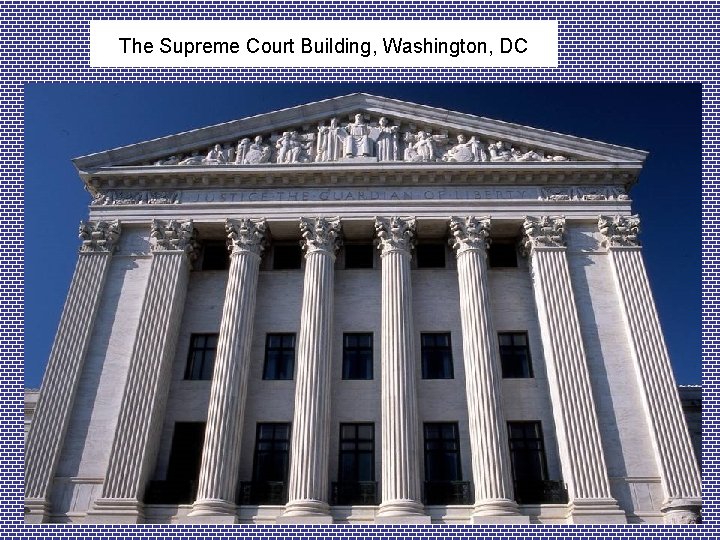
The Supreme Court Building, Washington, DC
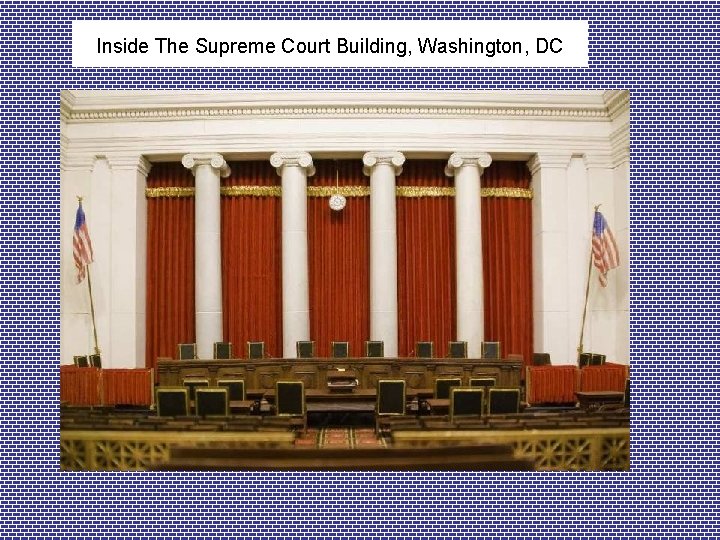
Inside The Supreme Court Building, Washington, DC
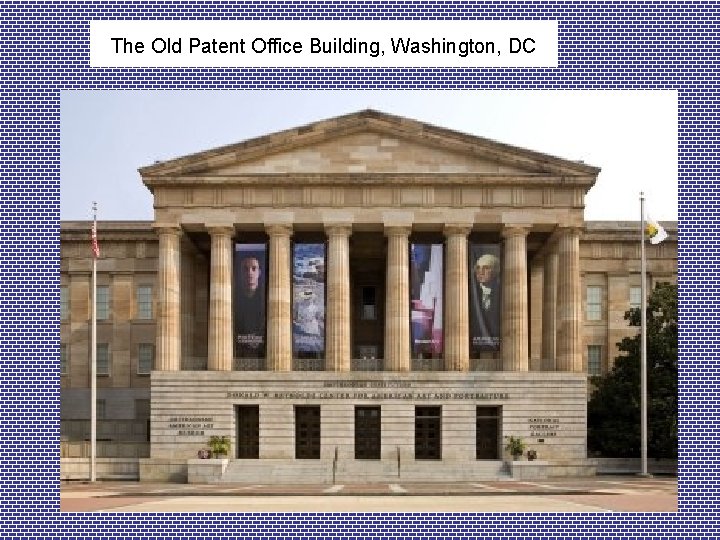
The Old Patent Office Building, Washington, DC
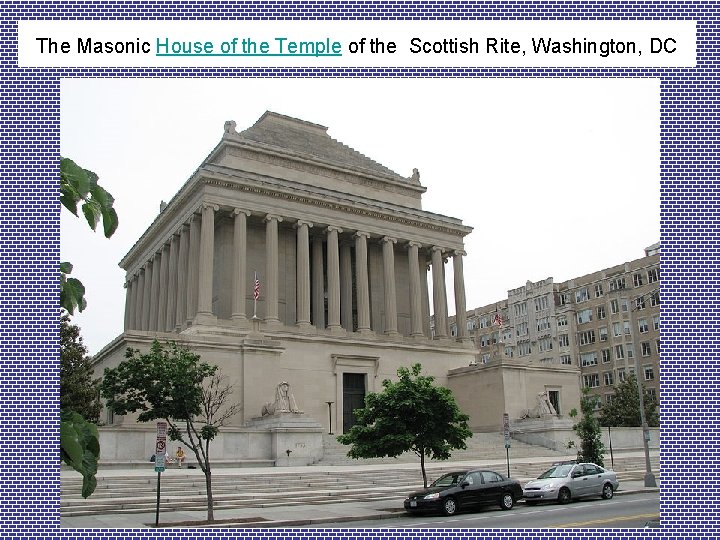
The Masonic House of the Temple of the Scottish Rite, Washington, DC
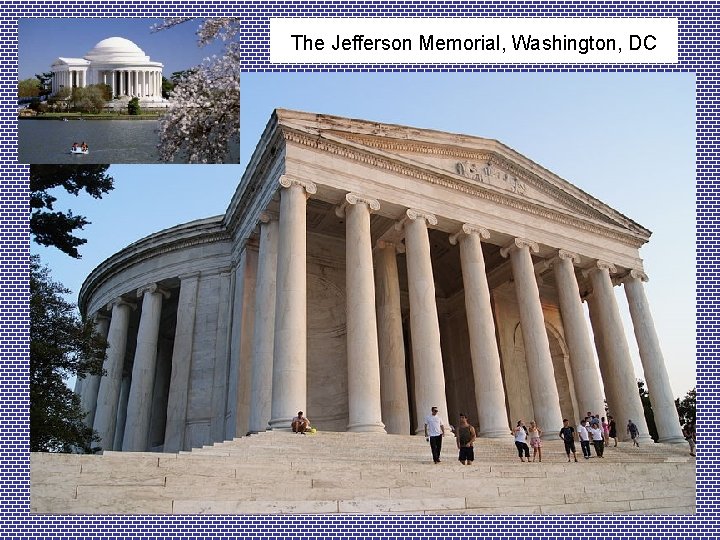
The Jefferson Memorial, Washington, DC
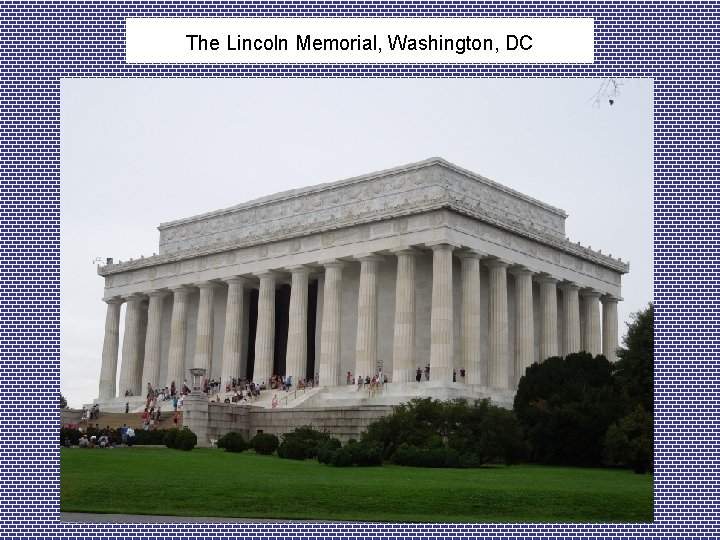
The Lincoln Memorial, Washington, DC
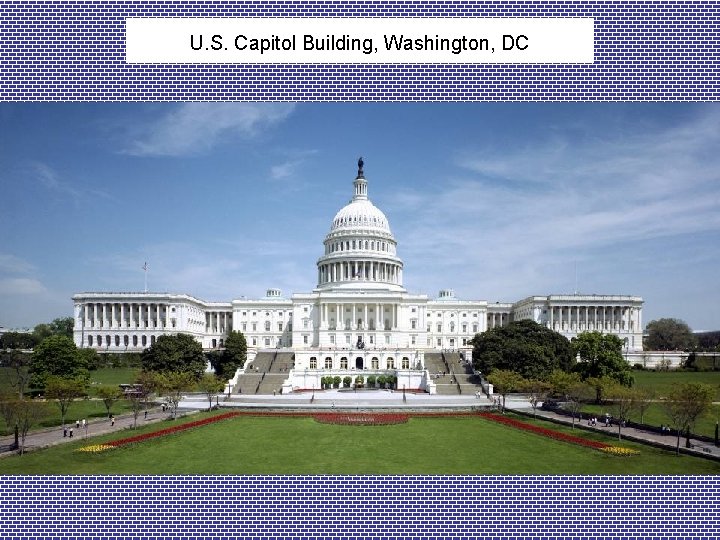
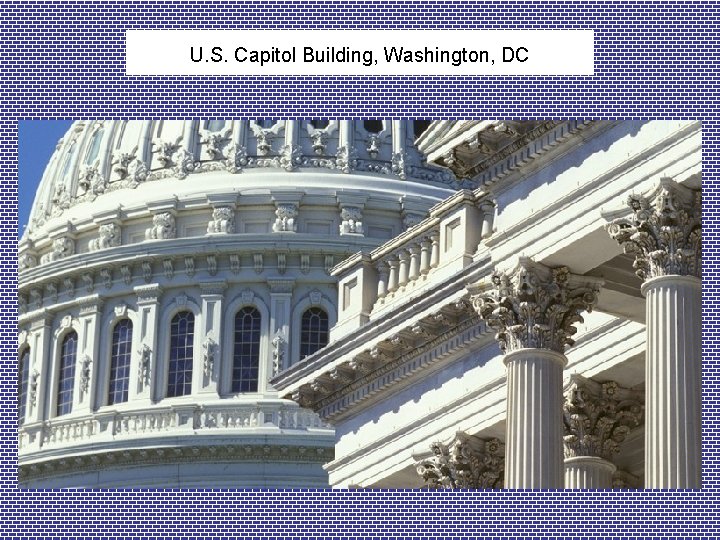
U. S. Capitol Building, Washington, DC
U. S. Capitol Building, Washington, DC
U. S. Capitol Building, Washington, DC
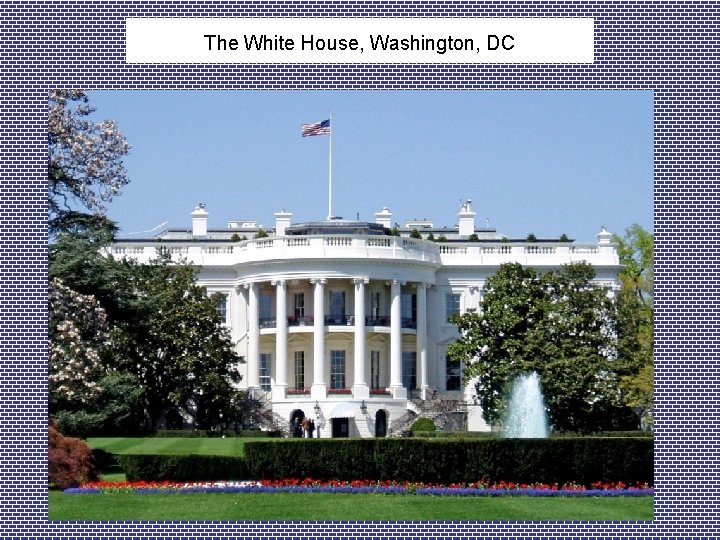
The White House, Washington, DC
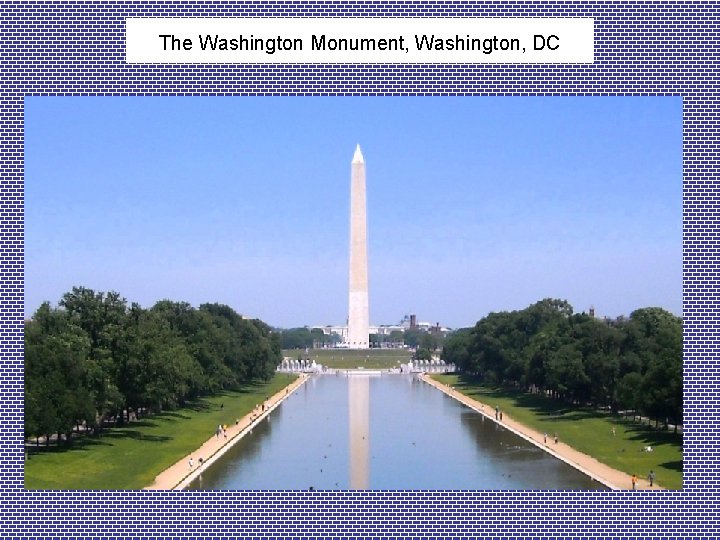
The Washington Monument, Washington, DC
New York City
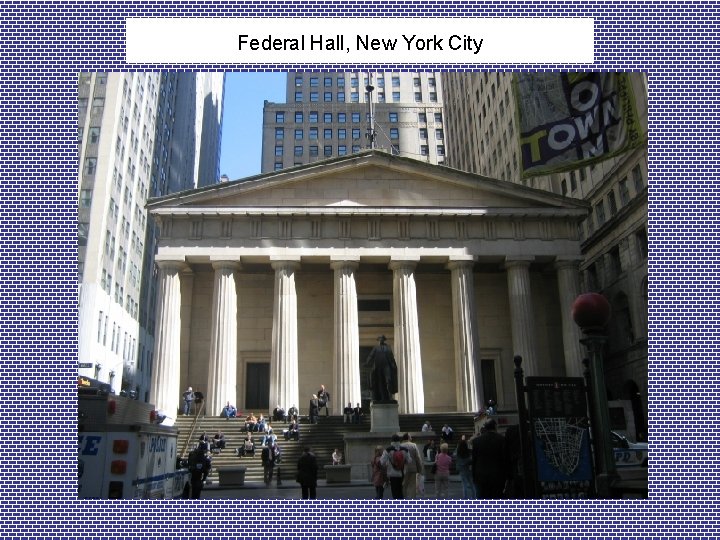
Federal Hall, New York City
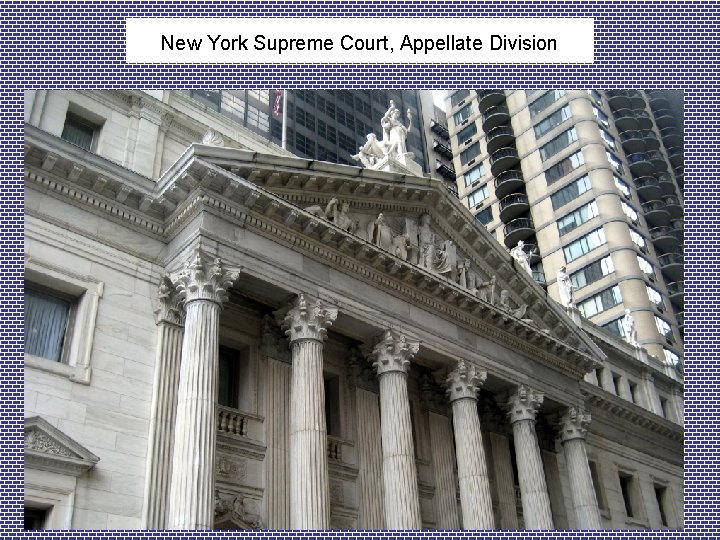
New York Supreme Court, Appellate Division
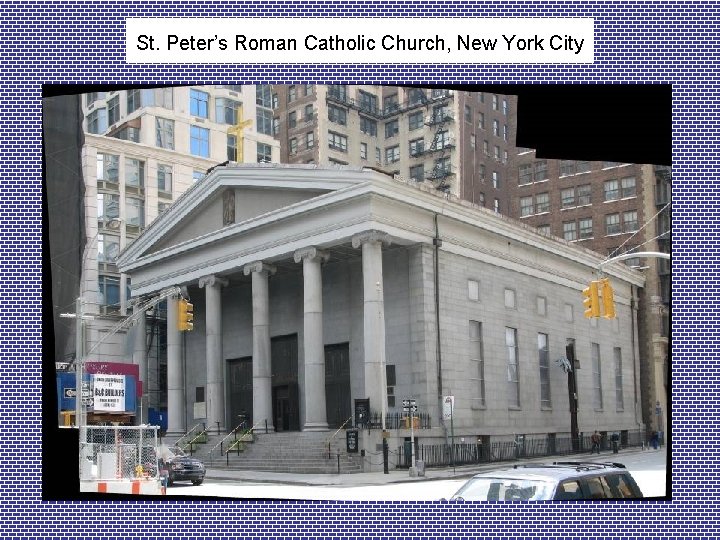
St. Peter’s Roman Catholic Church, New York City
New York Stock Exchange, New York City
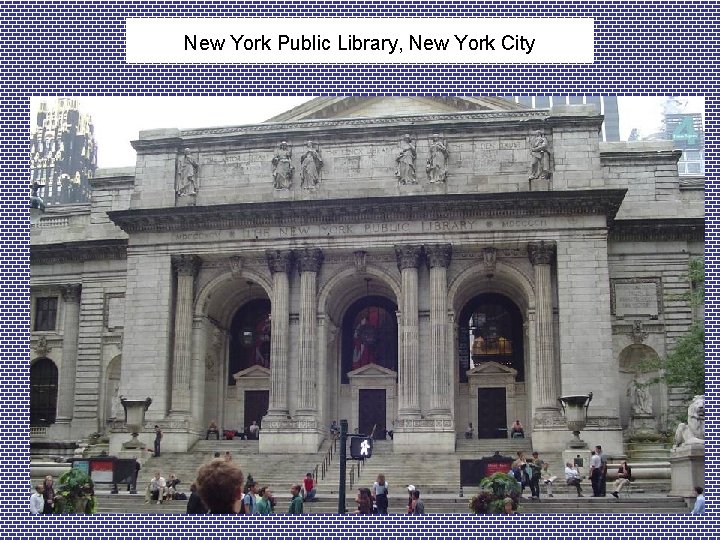
New York Public Library, New York City
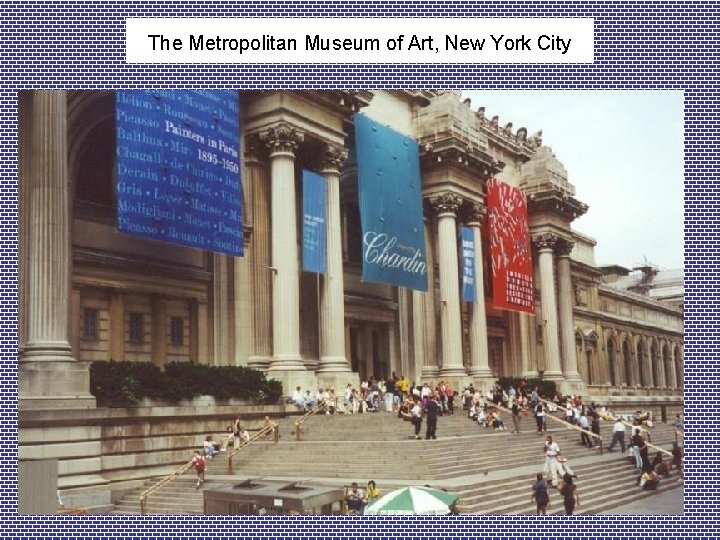
The Metropolitan Museum of Art, New York City
The next time you are in a major city, look up and say, “Hey I know what style of Architecture that is. I learned it from Mr. Mulligan. ”