
GREEK and ROMAN ARCHITECTURE Structure of the Presentation

- Slides: 27
GREEK and ROMAN ARCHITECTURE Structure of the Presentation: Review of Temple Parts Other Architectural Forms Recognizing Classical Architecture © 2006 -2011 MDW
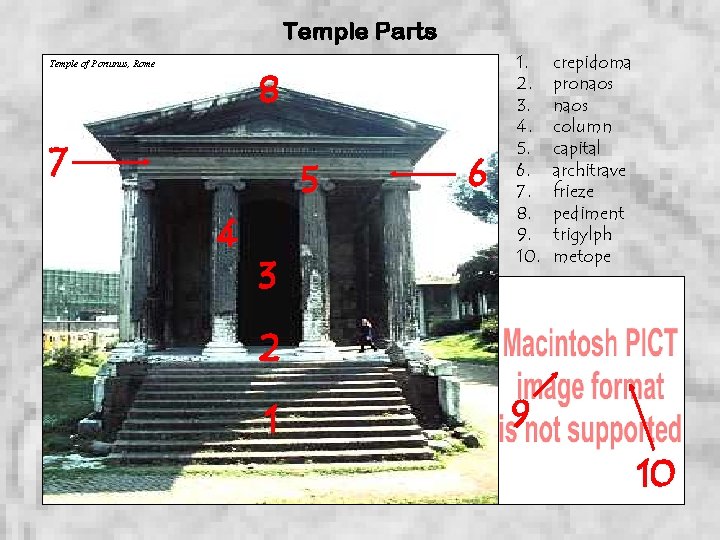
Temple Parts Temple of Portunus, Rome 8 7 5 4 3 6 1. 2. 3. 4. 5. 6. 7. 8. 9. 10. crepidoma pronaos column capital architrave frieze pediment trigylph metope 2 1 9 10
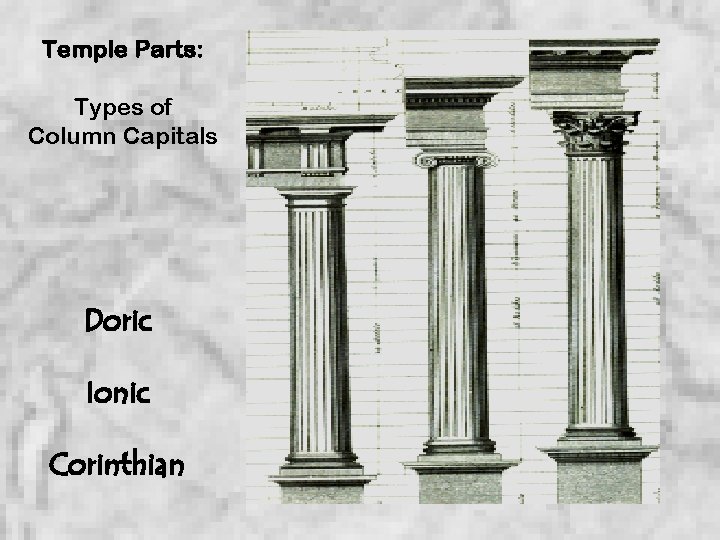
Temple Parts: Types of Column Capitals Doric Ionic Corinthian
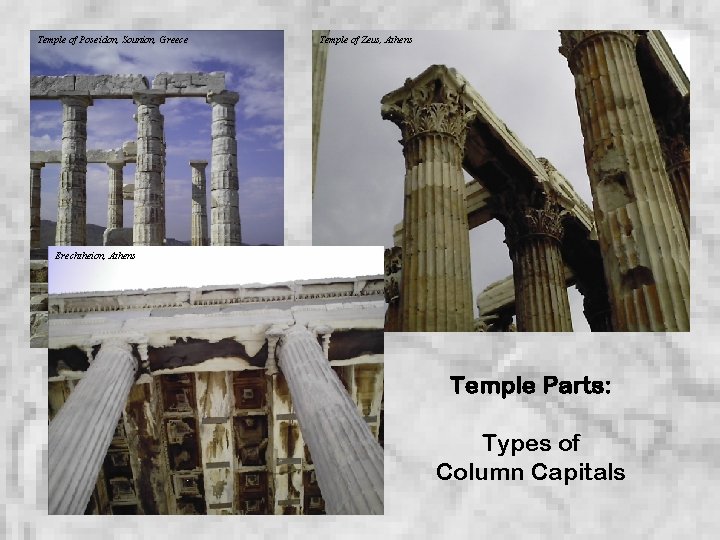
Temple of Poseidon, Sounion, Greece Temple of Zeus, Athens Erechtheion, Athens Temple Parts: Types of Column Capitals
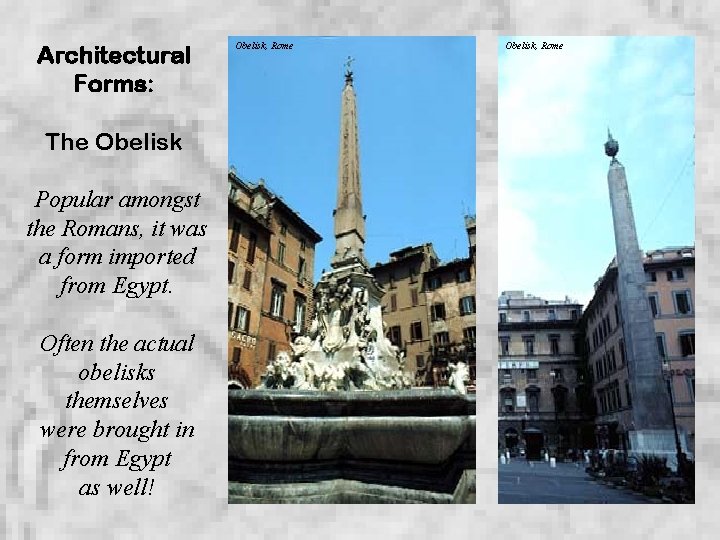
Architectural Forms: The Obelisk Popular amongst the Romans, it was a form imported from Egypt. Often the actual obelisks themselves were brought in from Egypt as well! Obelisk, Rome
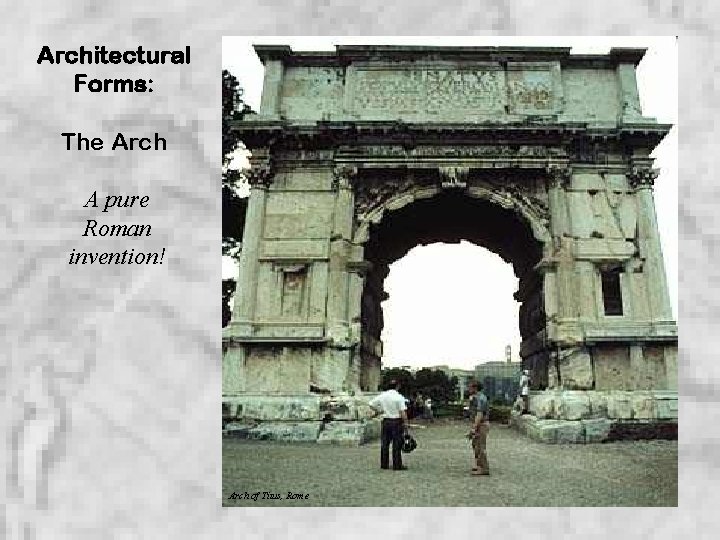
Architectural Forms: The Arch A pure Roman invention! Arch of Titus, Rome
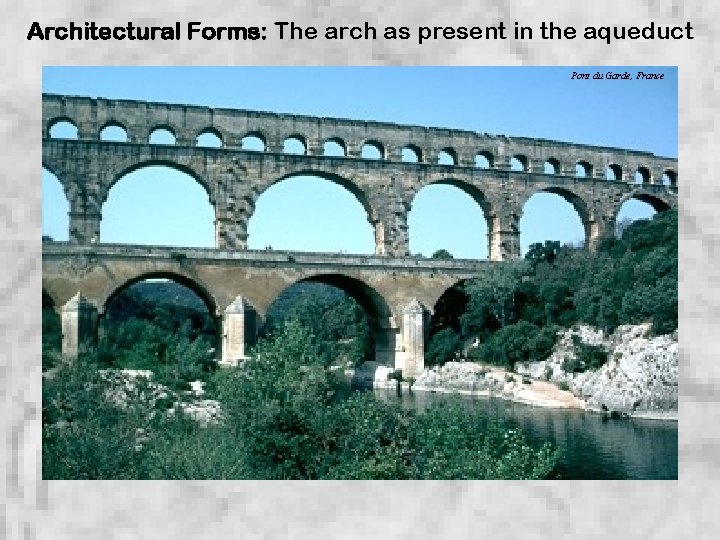
Architectural Forms: The arch as present in the aqueduct Pont du Garde, France
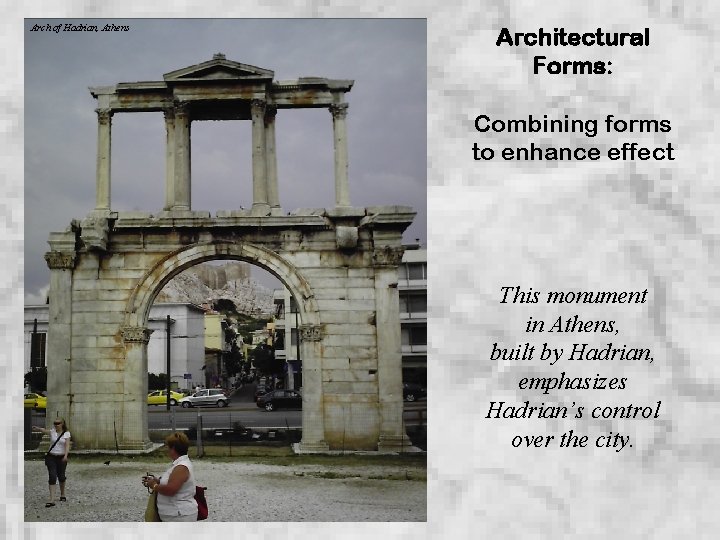
Arch of Hadrian, Athens Architectural Forms: Combining forms to enhance effect This monument in Athens, built by Hadrian, emphasizes Hadrian’s control over the city.
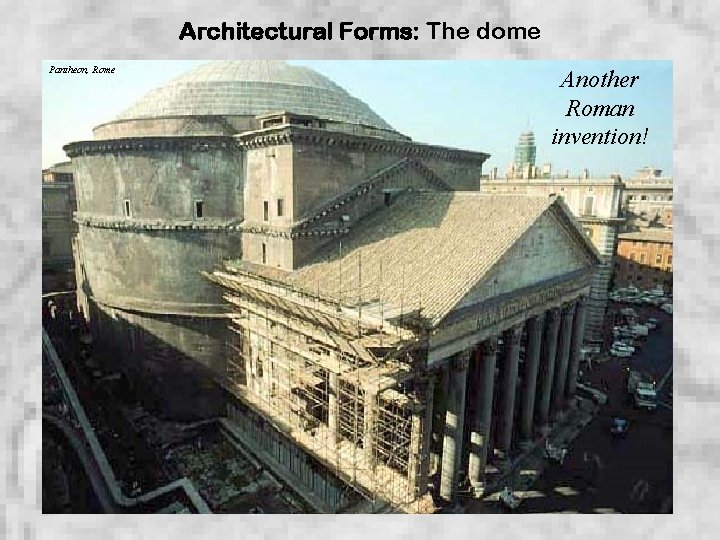
Architectural Forms: The dome Pantheon, Rome Another Roman invention!
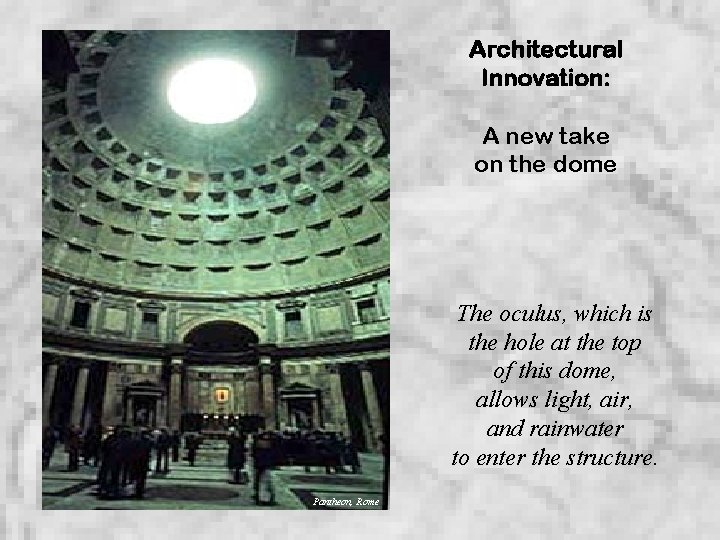
Architectural Innovation: A new take on the dome The oculus, which is the hole at the top of this dome, allows light, air, and rainwater to enter the structure. Pantheon, Rome
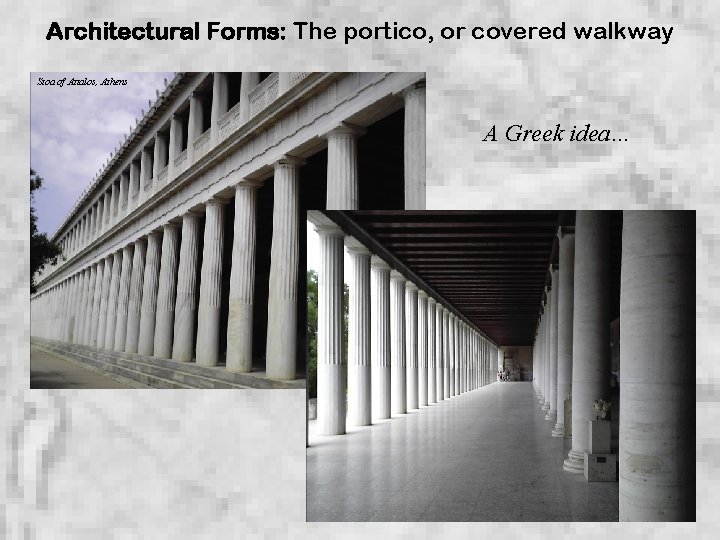
Architectural Forms: The portico, or covered walkway Stoa of Attalos, Athens A Greek idea…
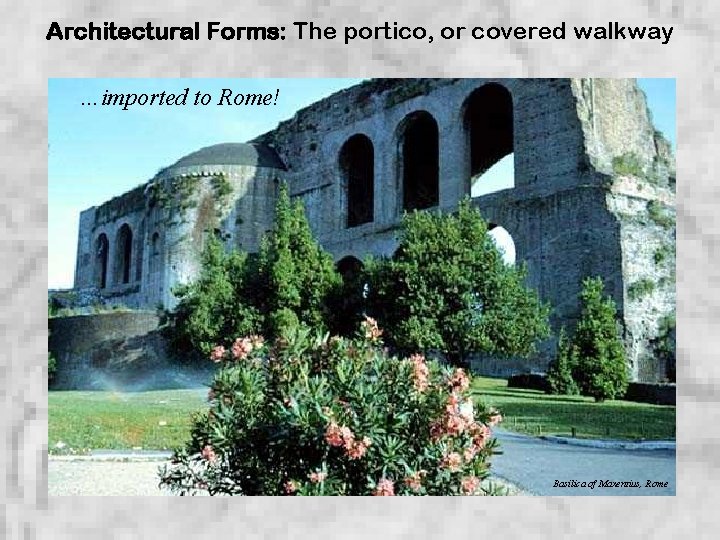
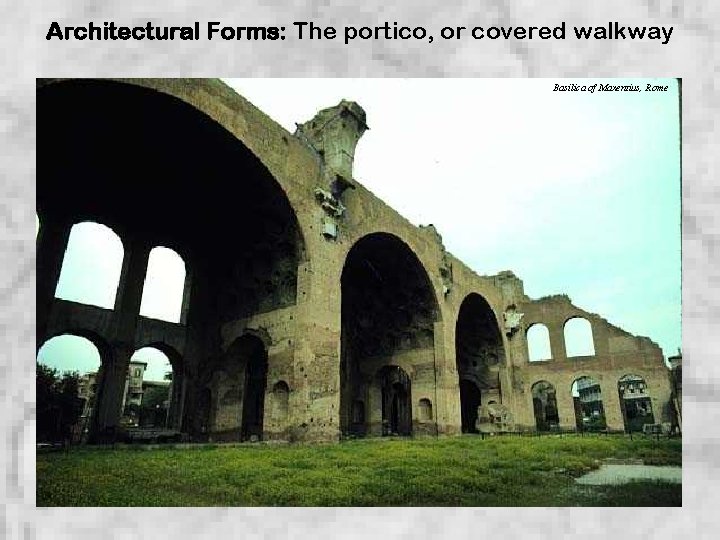
Architectural Forms: The portico, or covered walkway …imported to Rome! Basilica of Maxentius, Rome
Architectural Forms: The portico, or covered walkway Basilica of Maxentius, Rome
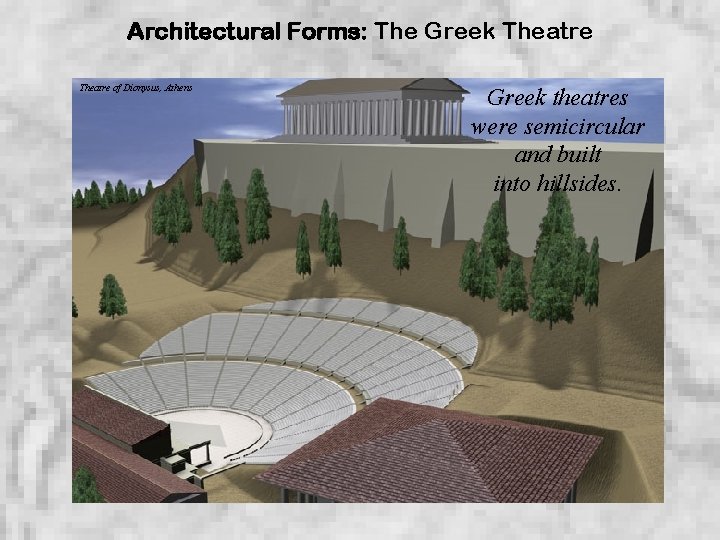
Architectural Forms: The Greek Theatre of Dionysus, Athens Greek theatres were semicircular and built into hillsides.
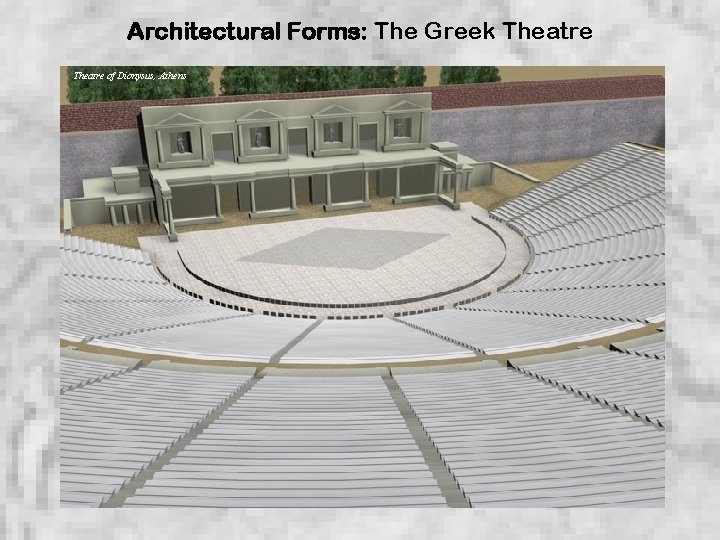
Architectural Forms: The Greek Theatre of Dionysus, Athens
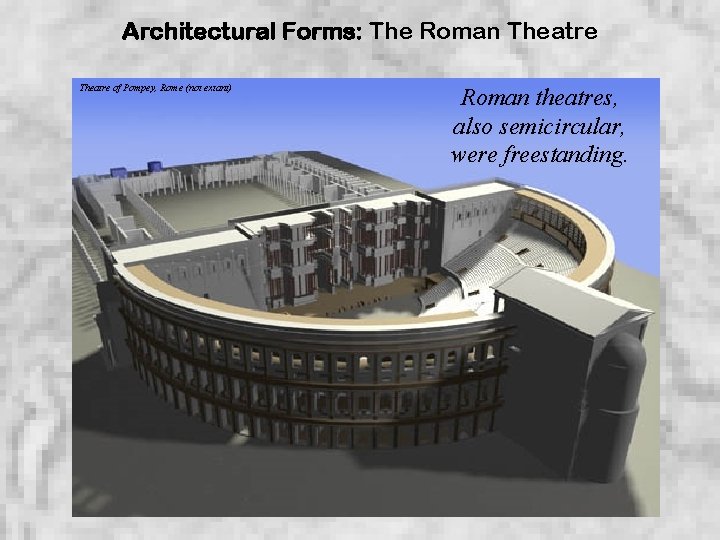
Architectural Forms: The Roman Theatre of Pompey, Rome (not extant) Roman theatres, also semicircular, were freestanding.
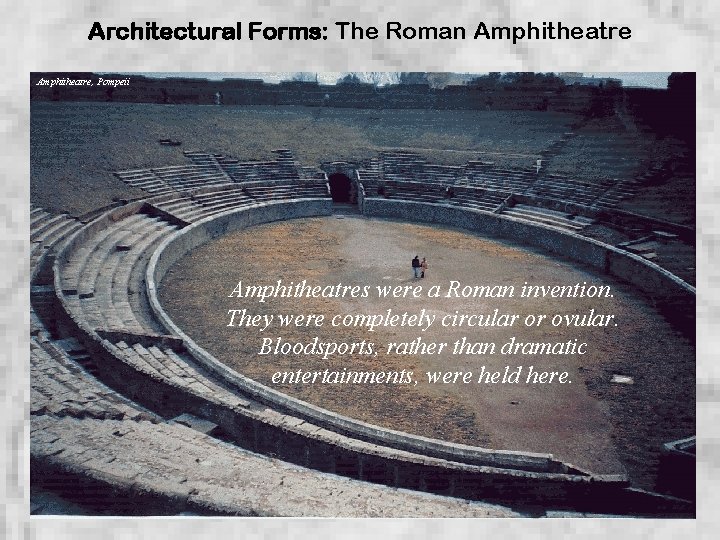
Architectural Forms: The Roman Amphitheatre, Pompeii Amphitheatres were a Roman invention. They were completely circular or ovular. Bloodsports, rather than dramatic entertainments, were held here.
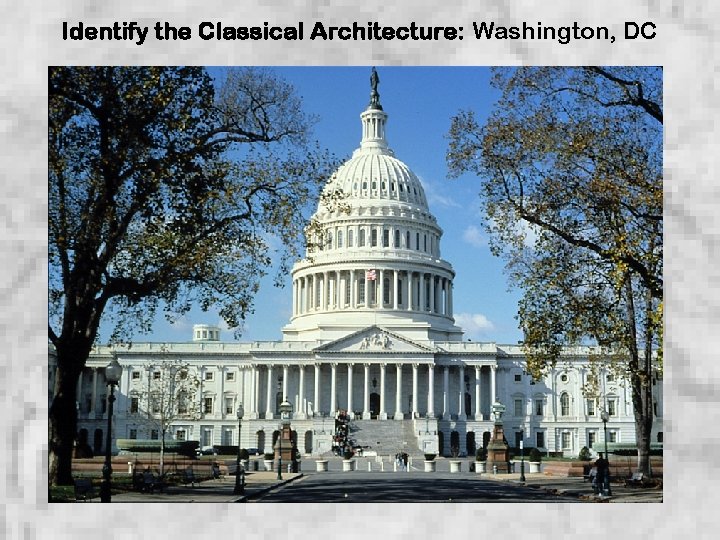
Identify the Classical Architecture: Washington, DC
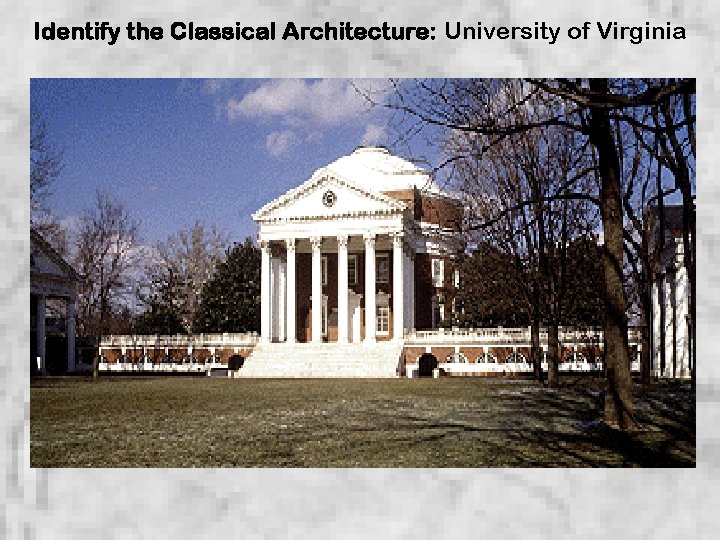
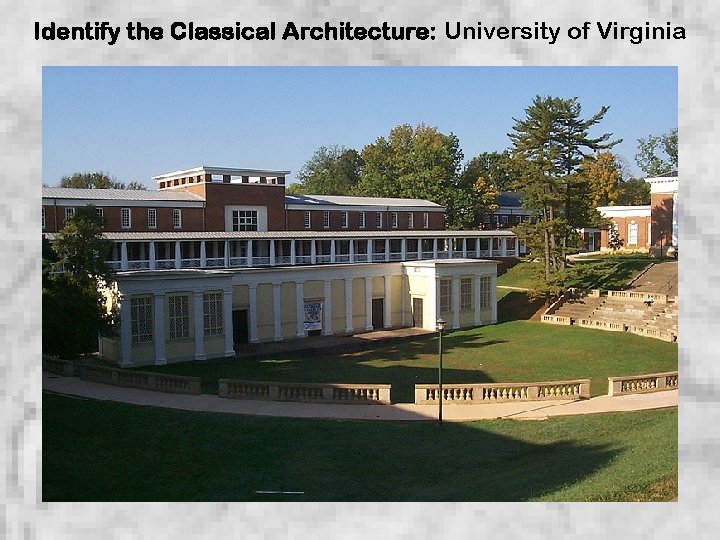
Identify the Classical Architecture: University of Virginia
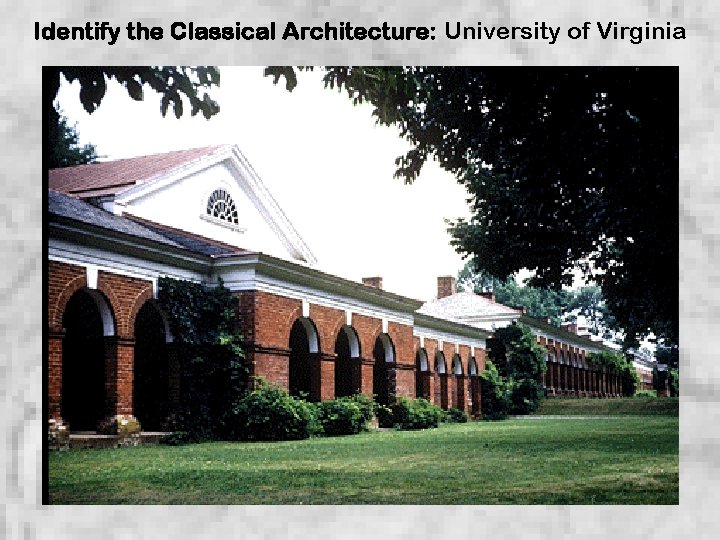
Identify the Classical Architecture: University of Virginia
Identify the Classical Architecture: University of Virginia
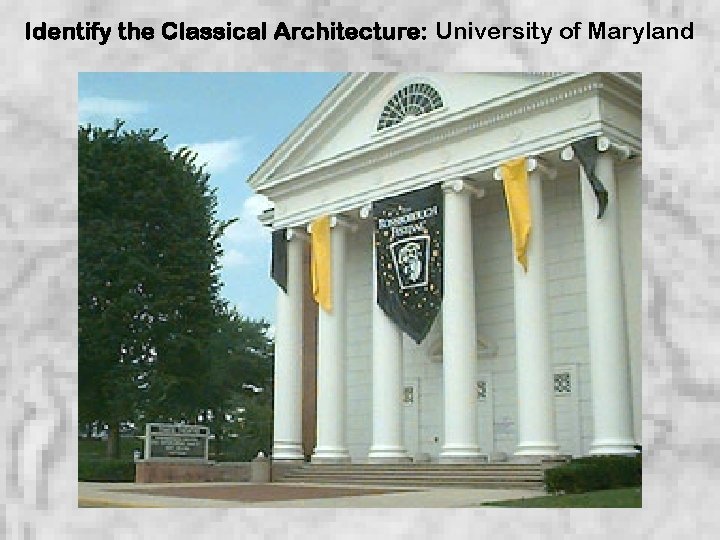
Identify the Classical Architecture: University of Maryland
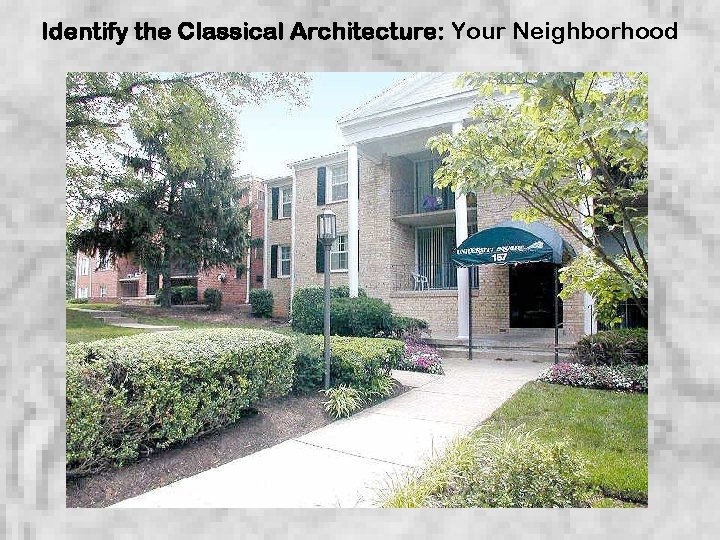
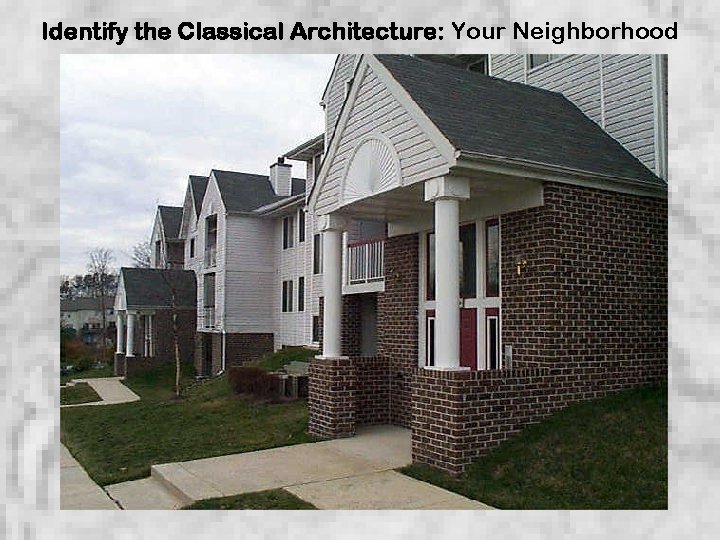
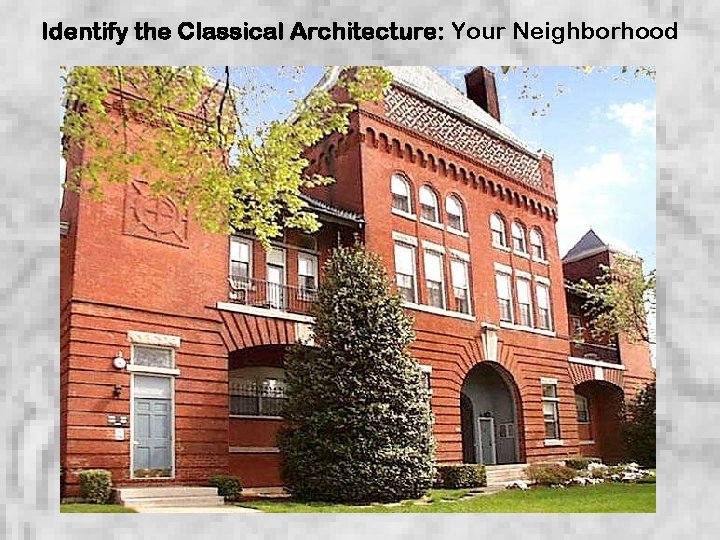
Identify the Classical Architecture: Your Neighborhood
Identify the Classical Architecture: Your Neighborhood
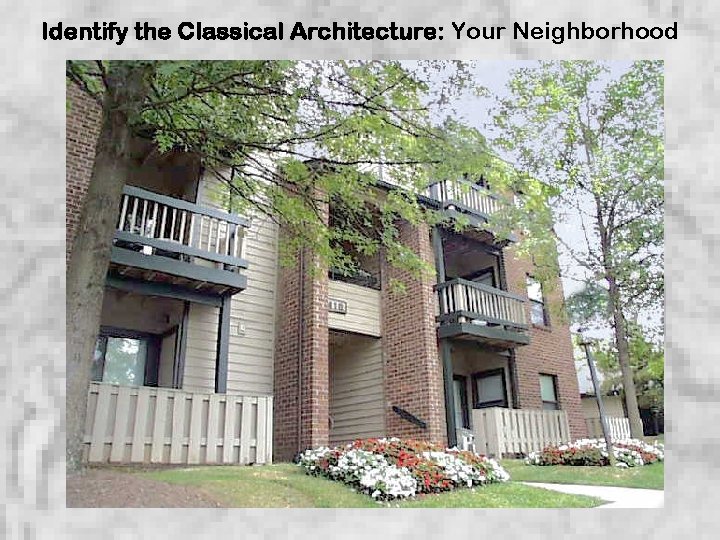
Identify the Classical Architecture: Your Neighborhood
Identify the Classical Architecture: Your Neighborhood
THE END