
GRECOROMAN WRESTLING Prepared by the 6 th class
GRECO-ROMAN WRESTLING Prepared by the 6 th class student of MOU “SOSH c. Ternovka” Karagulov Marat head: Romanteevа Tatiana V.
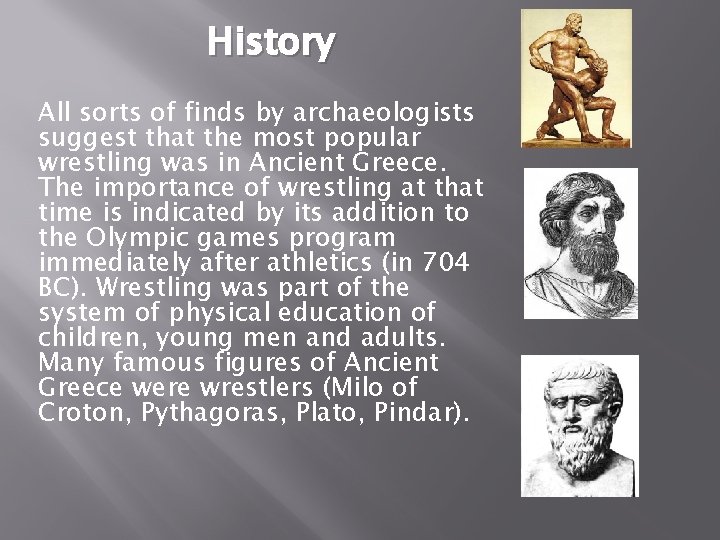
History Аll sorts of finds by archaeologists suggest that the most popular wrestling was in Ancient Greece. The importance of wrestling at that time is indicated by its addition to the Olympic games program immediately after athletics (in 704 BC). Wrestling was part of the system of physical education of children, young men and adults. Many famous figures of Ancient Greece were wrestlers (Milo of Croton, Pythagoras, Plato, Pindar).
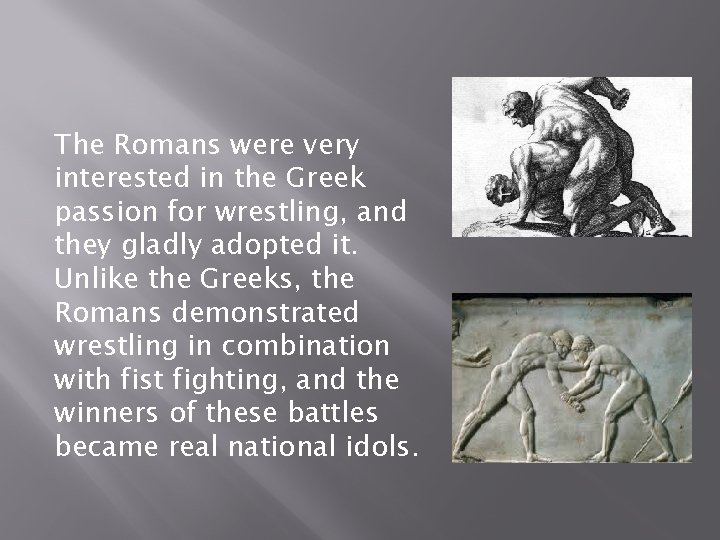
The Romans were very interested in the Greek passion for wrestling, and they gladly adopted it. Unlike the Greeks, the Romans demonstrated wrestling in combination with fist fighting, and the winners of these battles became real national idols.
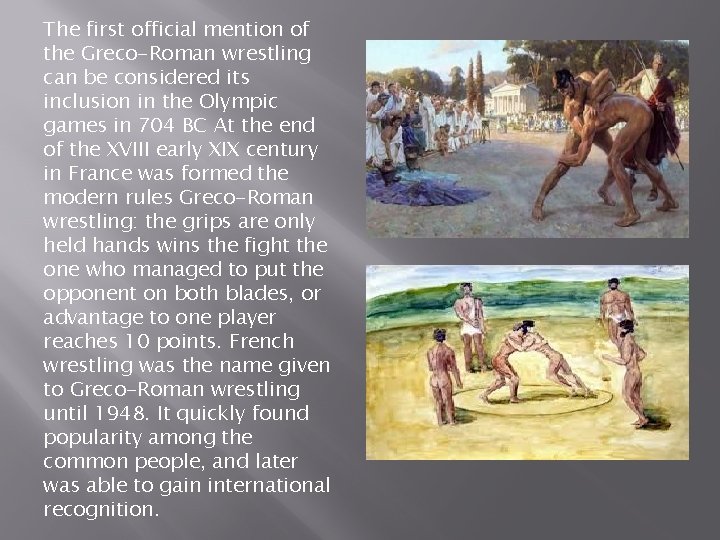
The first official mention of the Greco-Roman wrestling can be considered its inclusion in the Olympic games in 704 BC At the end of the XVIII early XIX century in France was formed the modern rules Greco-Roman wrestling: the grips are only held hands wins the fight the one who managed to put the opponent on both blades, or advantage to one player reaches 10 points. French wrestling was the name given to Greco-Roman wrestling until 1948. It quickly found popularity among the common people, and later was able to gain international recognition.
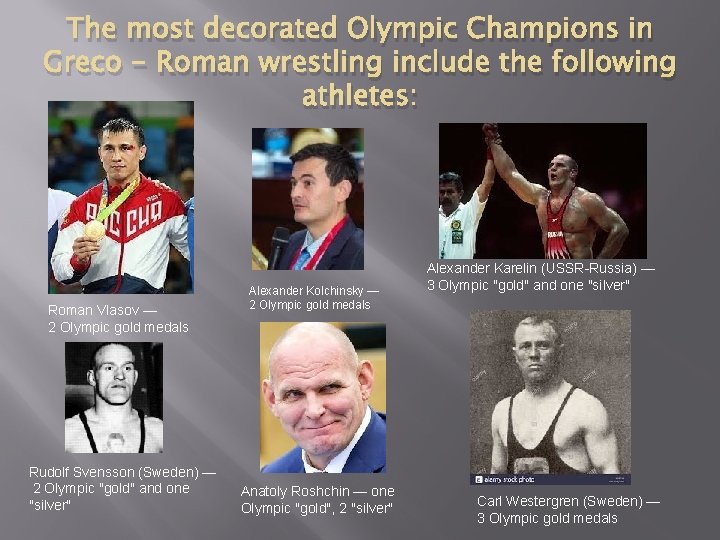
The most decorated Olympic Champions in Greco - Roman wrestling include the following athletes: Roman Vlasov — 2 Olympic gold medals Rudolf Svensson (Sweden) — 2 Olympic "gold" and one "silver" Alexander Kolchinsky — 2 Olympic gold medals Anatoly Roshchin — one Olympic "gold", 2 "silver" Alexander Karelin (USSR-Russia) — 3 Olympic "gold" and one "silver" Carl Westergren (Sweden) — 3 Olympic gold medals
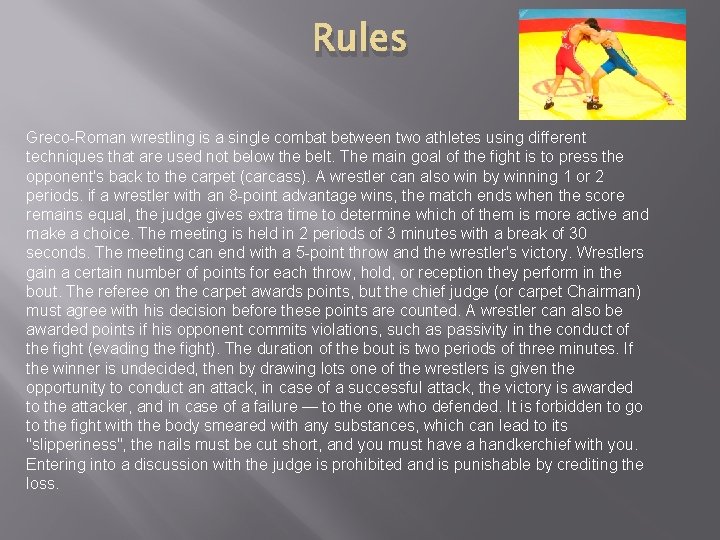
Rules Greco-Roman wrestling is a single combat between two athletes using different techniques that are used not below the belt. The main goal of the fight is to press the opponent's back to the carpet (carcass). A wrestler can also win by winning 1 or 2 periods. if a wrestler with an 8 -point advantage wins, the match ends when the score remains equal, the judge gives extra time to determine which of them is more active and make a choice. The meeting is held in 2 periods of 3 minutes with a break of 30 seconds. The meeting can end with a 5 -point throw and the wrestler's victory. Wrestlers gain a certain number of points for each throw, hold, or reception they perform in the bout. The referee on the carpet awards points, but the chief judge (or carpet Chairman) must agree with his decision before these points are counted. A wrestler can also be awarded points if his opponent commits violations, such as passivity in the conduct of the fight (evading the fight). The duration of the bout is two periods of three minutes. If the winner is undecided, then by drawing lots one of the wrestlers is given the opportunity to conduct an attack, in case of a successful attack, the victory is awarded to the attacker, and in case of a failure — to the one who defended. It is forbidden to go to the fight with the body smeared with any substances, which can lead to its "slipperiness", the nails must be cut short, and you must have a handkerchief with you. Entering into a discussion with the judge is prohibited and is punishable by crediting the loss.
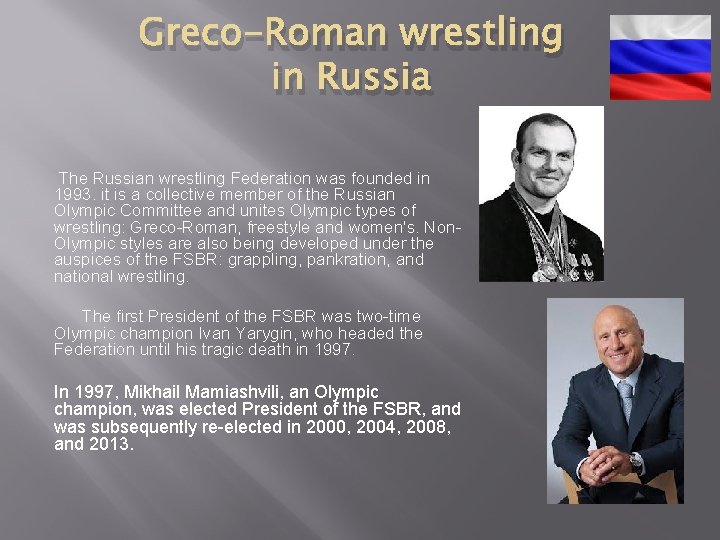
Greco-Roman wrestling in Russia The Russian wrestling Federation was founded in 1993. it is a collective member of the Russian Olympic Committee and unites Olympic types of wrestling: Greco-Roman, freestyle and women's. Non. Olympic styles are also being developed under the auspices of the FSBR: grappling, pankration, and national wrestling. The first President of the FSBR was two-time Olympic champion Ivan Yarygin, who headed the Federation until his tragic death in 1997. In 1997, Mikhail Mamiashvili, an Olympic champion, was elected President of the FSBR, and was subsequently re-elected in 2000, 2004, 2008, and 2013.
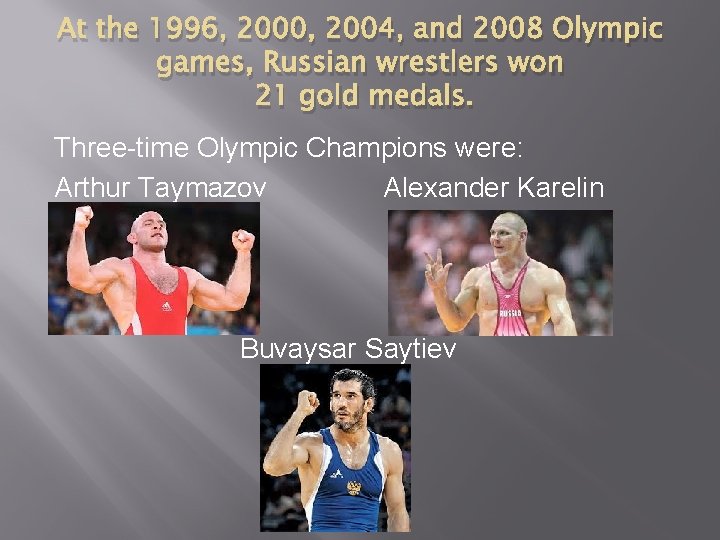
At the 1996, 2000, 2004, and 2008 Olympic games, Russian wrestlers won 21 gold medals. Three-time Olympic Champions were: Arthur Taymazov Alexander Karelin Buvaysar Saytiev
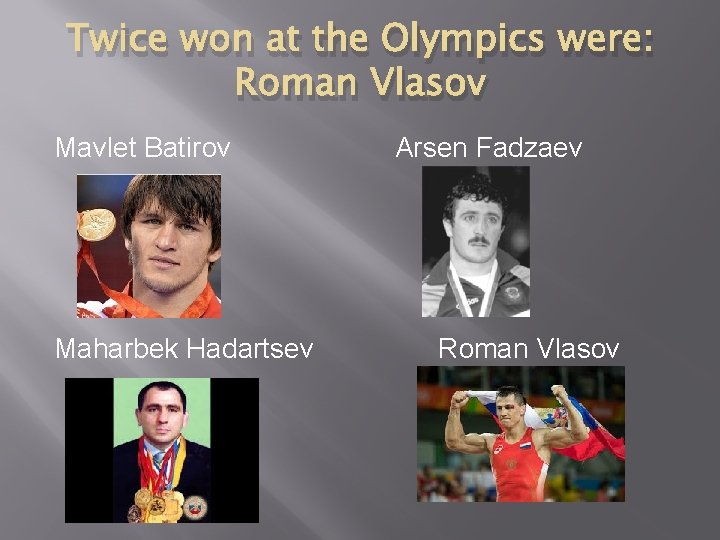
Twice won at the Olympics were: Roman Vlasov Mavlet Batirov Maharbek Hadartsev Arsen Fadzaev Roman Vlasov
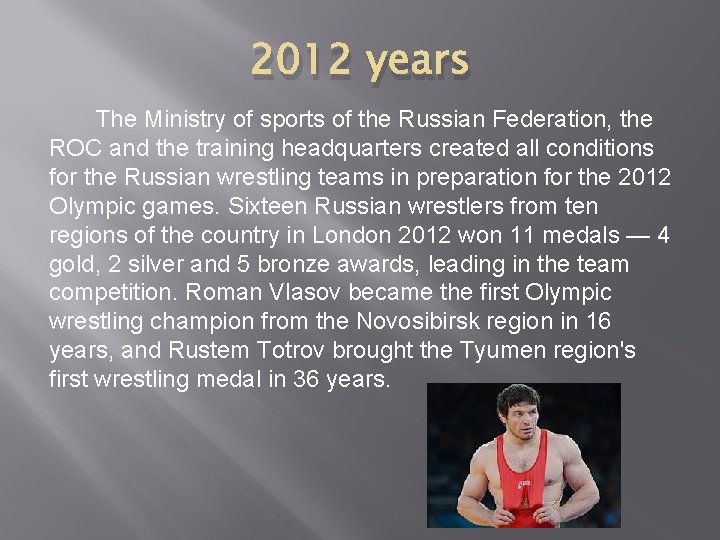
2012 years The Ministry of sports of the Russian Federation, the ROC and the training headquarters created all conditions for the Russian wrestling teams in preparation for the 2012 Olympic games. Sixteen Russian wrestlers from ten regions of the country in London 2012 won 11 medals — 4 gold, 2 silver and 5 bronze awards, leading in the team competition. Roman Vlasov became the first Olympic wrestling champion from the Novosibirsk region in 16 years, and Rustem Totrov brought the Tyumen region's first wrestling medal in 36 years.
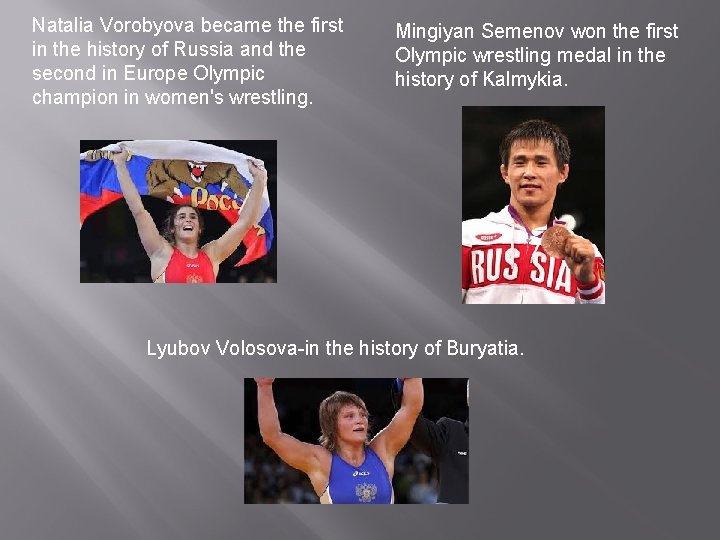
Natalia Vorobyova became the first in the history of Russia and the second in Europe Olympic champion in women's wrestling. Mingiyan Semenov won the first Olympic wrestling medal in the history of Kalmykia. Lyubov Volosova-in the history of Buryatia.
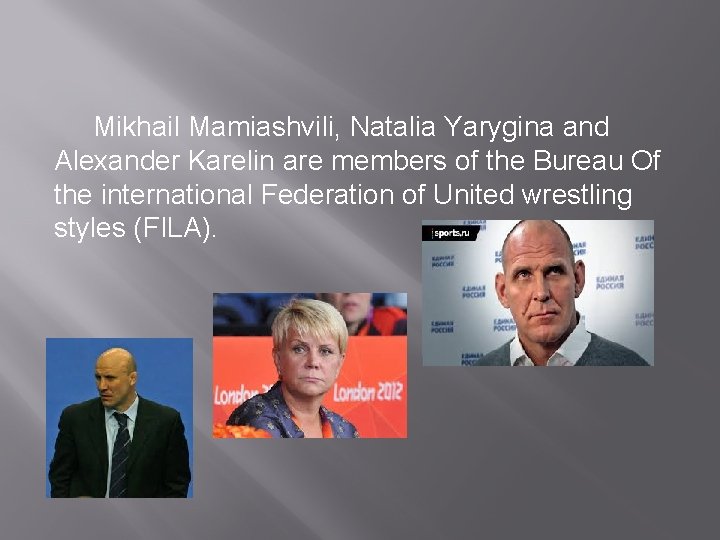
Mikhail Mamiashvili, Natalia Yarygina and Alexander Karelin are members of the Bureau Of the international Federation of United wrestling styles (FILA).
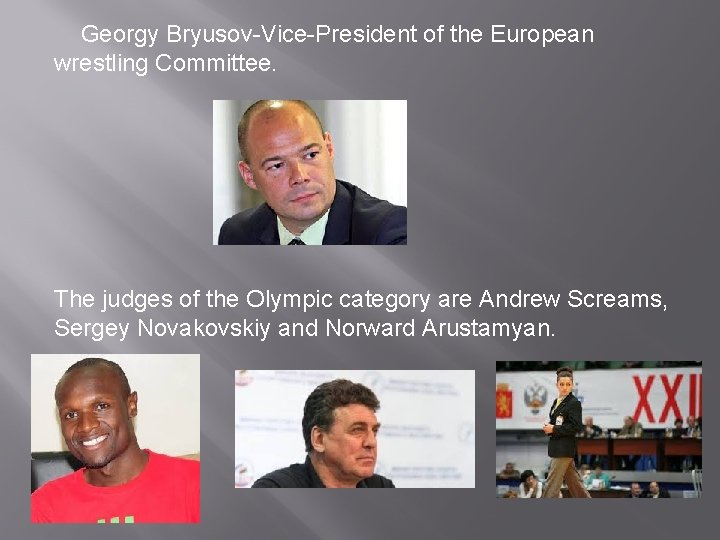
Georgy Bryusov-Vice-President of the European wrestling Committee. The judges of the Olympic category are Andrew Screams, Sergey Novakovskiy and Norward Arustamyan.

Thank you for your attention!
Resources: https: //www. google. com/search? q=фото+пифаг ора&rlz=1 C 1 GGRV_en. RU 784 RU 785&sxsrf https: //www. google. com/search? rlz=1 C 1 GGRV _en. RU 784 RU 785&biw=1440&bih=757&tbm=is ch&sxsrf https: //ru. wikipedia. org/wiki/%D 0%93%D 1%80 %D 0%B 5%D 0%BA%D 0%BE%D 1%80%D 0%B 8%D 0%BC%D 1%81%D 0%B A%D 0%B 0%D 1%8 F_%D 0%B 1%D 0%BE%D 1 %80%D 1%8 C%D 0%B 1%D 0%B 0
- Slides: 15