
Great Theoretical Ideas In Computer Science Victor Adamchik






- Slides: 62
Great Theoretical Ideas In Computer Science Victor Adamchik Lecture 1 CS 15 -251 Aug 27, 2013 Fall 2013 Carnegie Mellon University Cooking for Computer Scientists
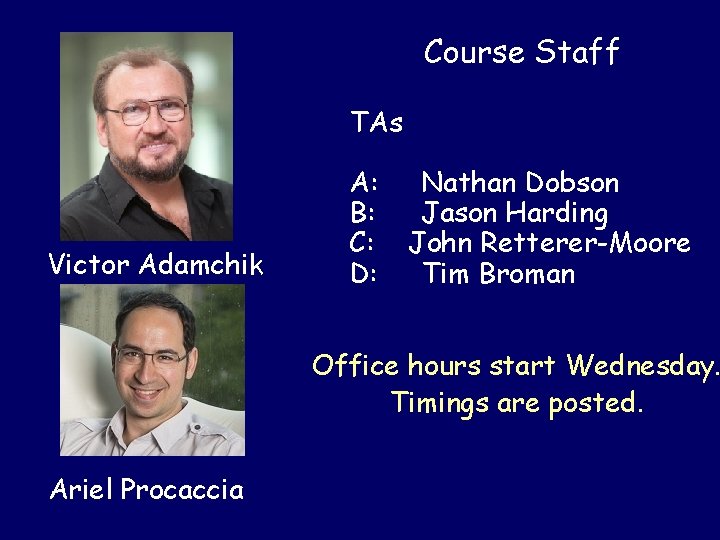
Course Staff TAs Victor Adamchik A: B: C: D: Nathan Dobson Jason Harding John Retterer-Moore Tim Broman Office hours start Wednesday. Timings are posted. Ariel Procaccia
Web Sites http: //www. andrew. cmu. edu/course/15 -251 Calendar, Slides, Notes, Homeworks, Course Policy, Grades, … https: //piazza. com/cmu/fall 2013/15251 Questions, Comments, Announcements, …
Textbook There is no textbook. Slides will be posted on the website. Some supplementary notes will also be posted.
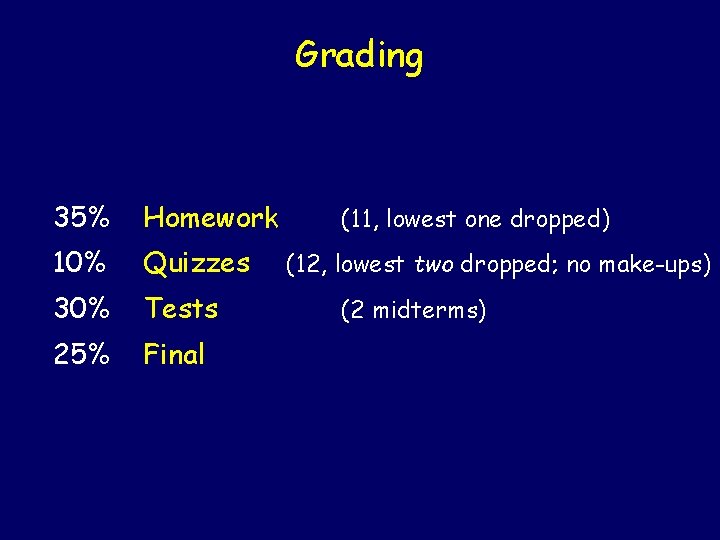
Grading 35% Homework 10% Quizzes 30% Tests 25% Final (11, lowest one dropped) (12, lowest two dropped; no make-ups) (2 midterms)
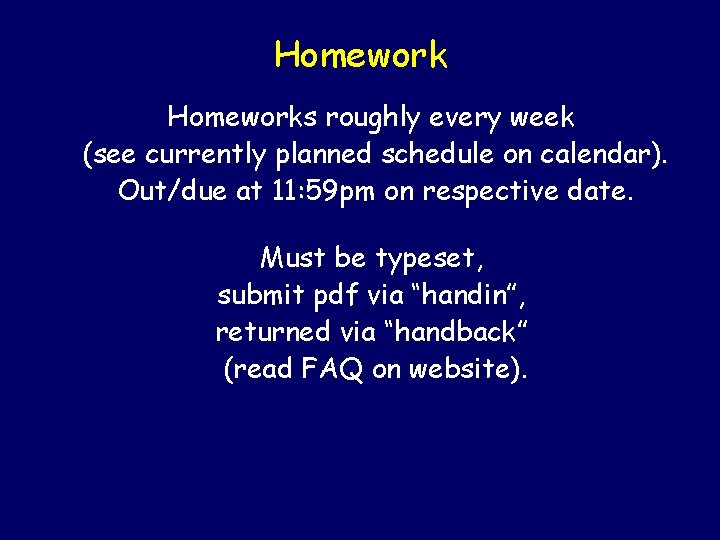
Homeworks roughly every week (see currently planned schedule on calendar). Out/due at 11: 59 pm on respective date. Must be typeset, submit pdf via “handin”, returned via “handback” (read FAQ on website).
Homework
Homework Late Policy You have 8 late days (total), but you cannot use more than 2 late days per homework.
Collaboration You may work in a group of ≤ 4 people. You must report who you worked with. You must think about each of the problems by yourself for ≥ 30 minutes before discussing them with others. You must write up all solutions by yourself.
Cheating You MAY NOT Share written work. Get help from anyone besides your collaborators, staff. Refer to solutions/materials from earlier versions of 251 or the web
Quizzes Every Tuesday, beginning of class The quiz will be DUE AT 3: 10 pm. Therefore, do NOT be late to class. Tested on material from the previous 2 -3 lectures. These are designed to be easy, assuming you are keeping up with the lectures.
Midterm tests Designed to be doable in 1 hour. You will have 1. 5 hours. “Semi-cumulative. ” Given in lectures. Oct 1, Nov. 5 Mark these dates on your calendar now!
((( Feel free to ask questions )))
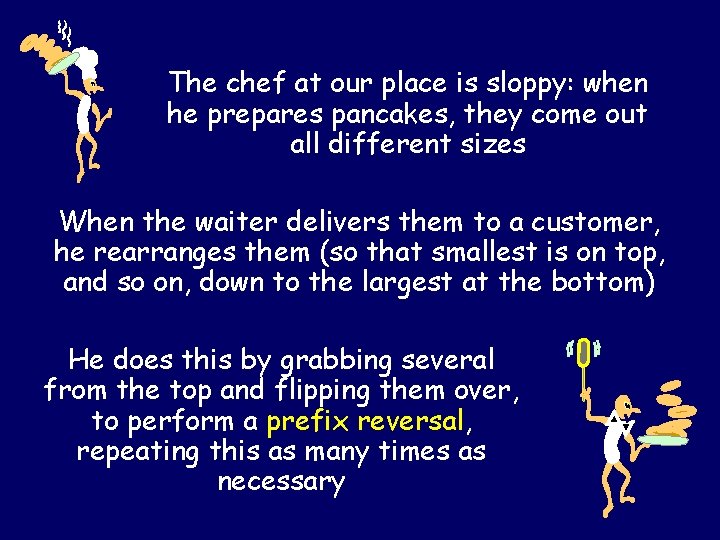
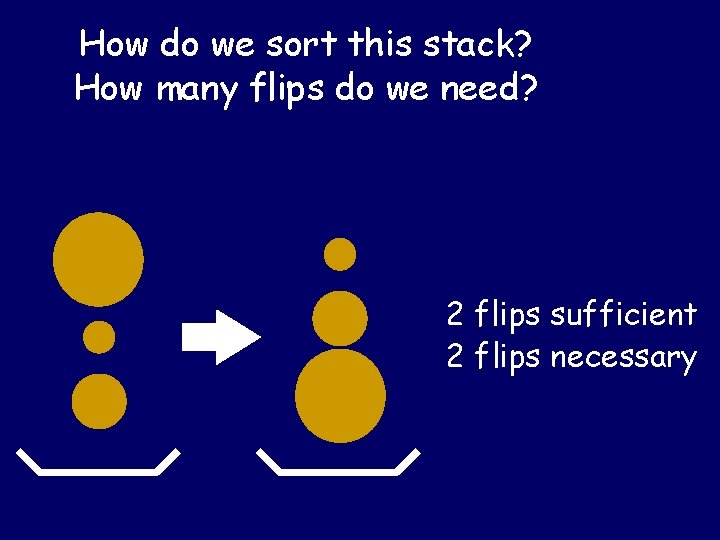
The chef at our place is sloppy: when he prepares pancakes, they come out all different sizes When the waiter delivers them to a customer, he rearranges them (so that smallest is on top, and so on, down to the largest at the bottom) He does this by grabbing several from the top and flipping them over, to perform a prefix reversal, repeating this as many times as necessary
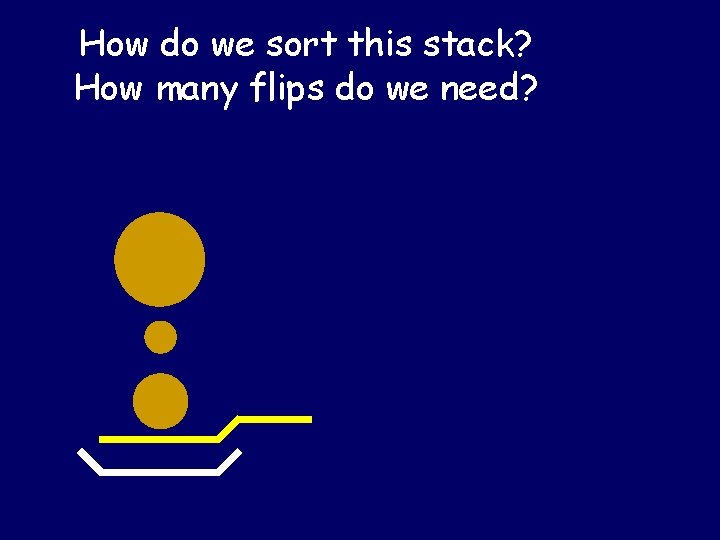
How do we sort this stack? How many flips do we need?
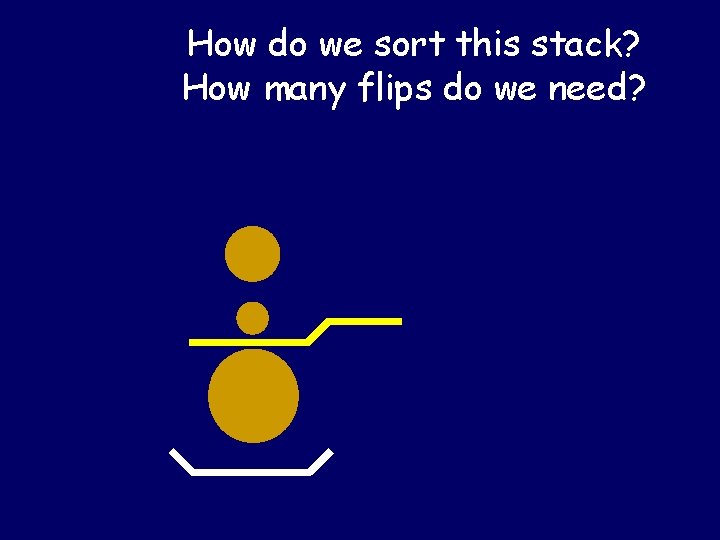
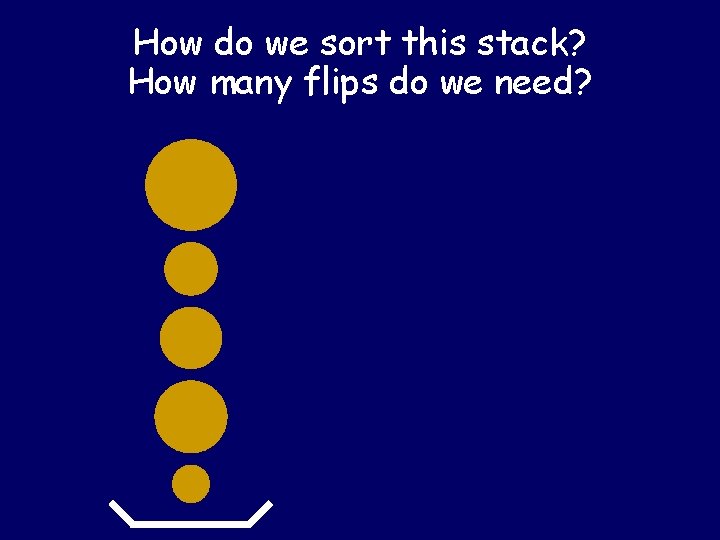
How do we sort this stack? How many flips do we need?
How do we sort this stack? How many flips do we need? 2 flips sufficient 2 flips necessary
How do we sort this stack? How many flips do we need?
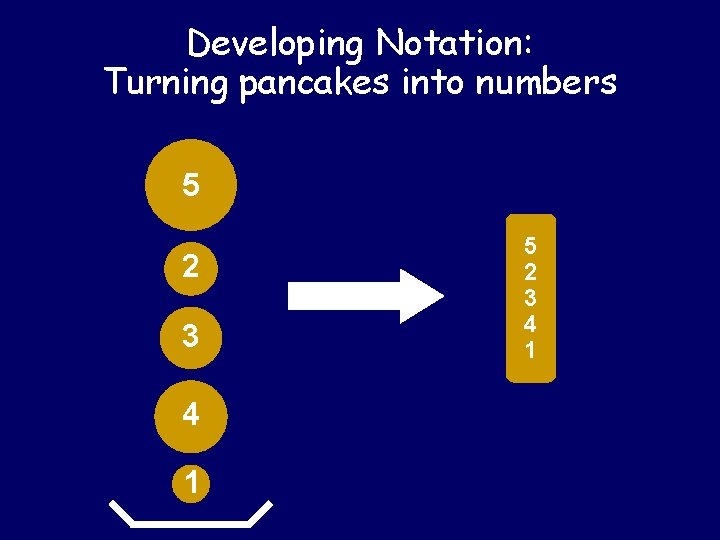
Developing Notation: Turning pancakes into numbers 5 2 3 4 1
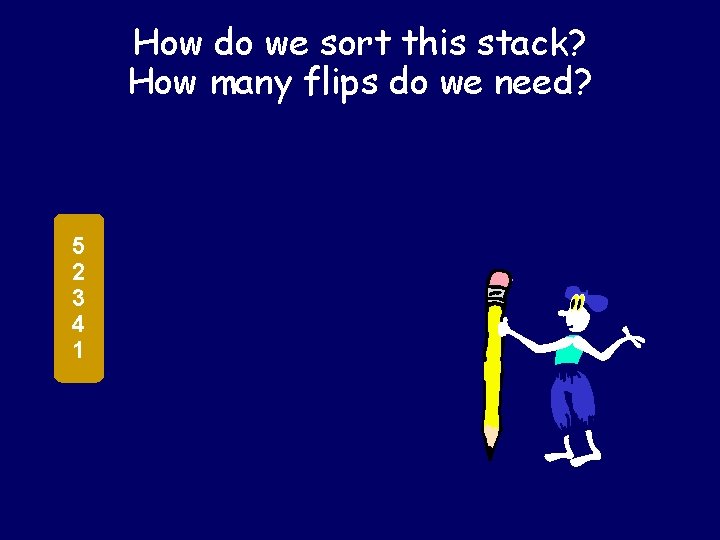
How do we sort this stack? How many flips do we need? 5 2 3 4 1
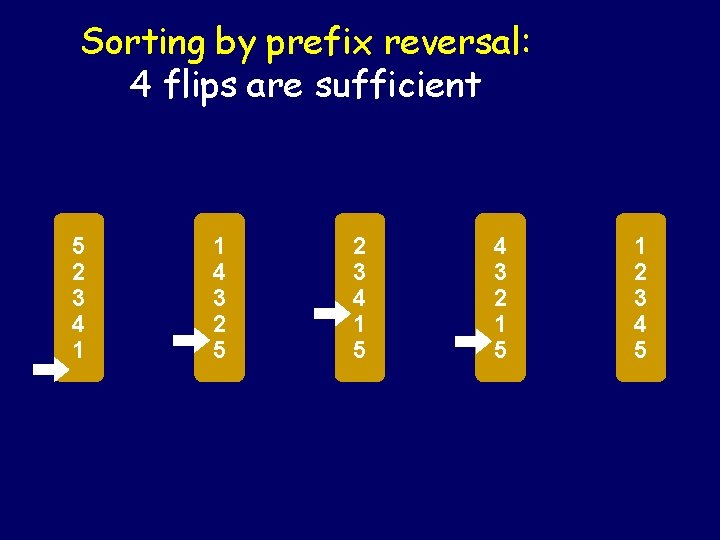
Sorting by prefix reversal: 4 flips are sufficient 5 2 3 4 1 1 4 3 2 5 2 3 4 1 5 4 3 2 1 5 1 2 3 4 5
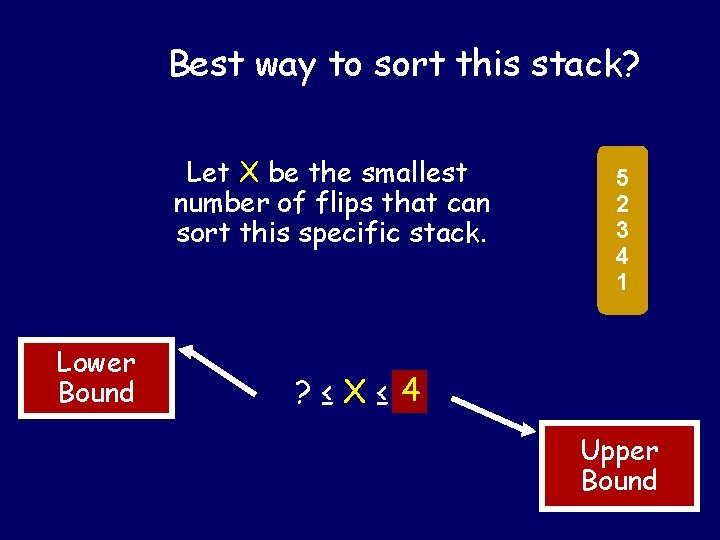
Best way to sort this stack? Let X be the smallest number of flips that can sort this specific stack. Lower Bound 5 2 3 4 1 ? ≤ X ≤ ? 4 Upper Bound
Is 4 a lower bound? What would it take to show that? A convincing argument that every way of sorting the stack uses at least 4 flips. Lower Bound 5 2 3 4 1 ? ≤X≤ 4 Upper Bound
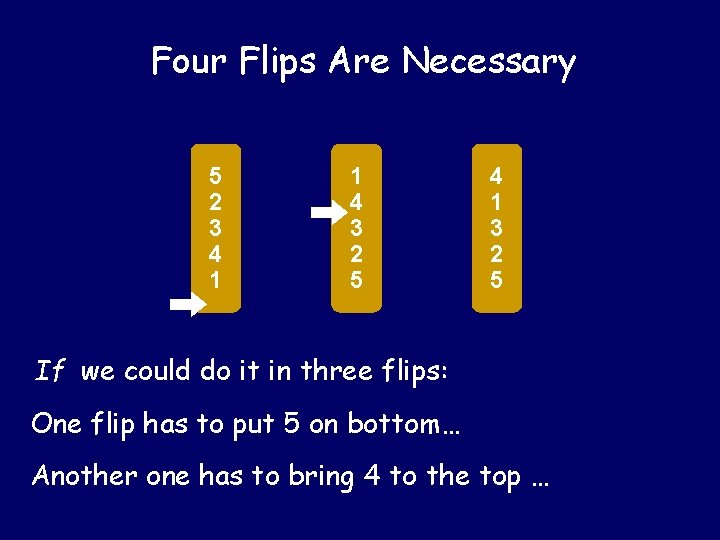
Four Flips Are Necessary 5 2 3 4 1 1 4 3 2 5 4 1 3 2 5 If we could do it in three flips: One flip has to put 5 on bottom… Another one has to bring 4 to the top …
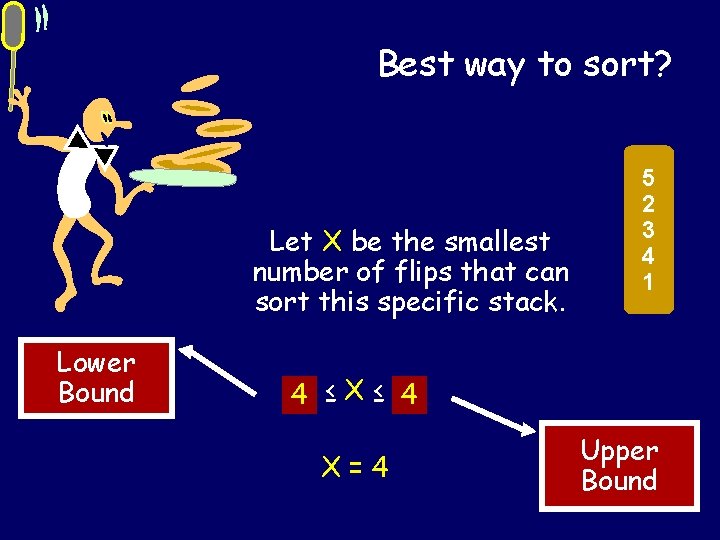
Best way to sort? Let X be the smallest number of flips that can sort this specific stack. Lower Bound 5 2 3 4 1 4? ≤ X ≤ ? 4 X=4 Upper Bound
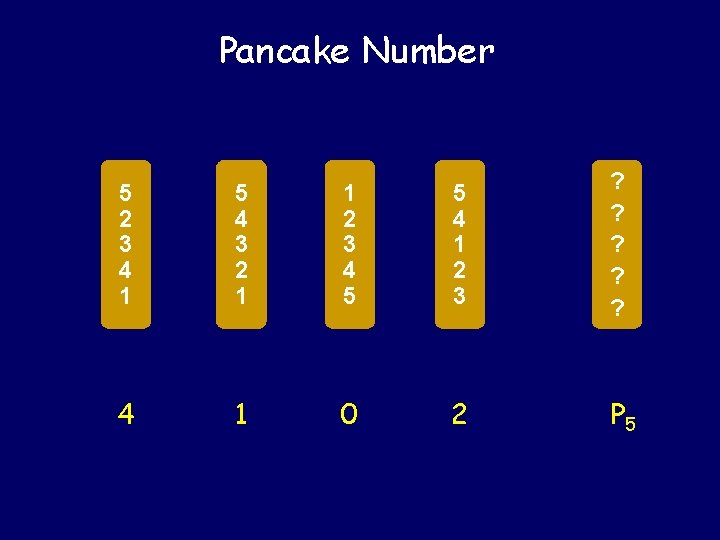
Pancake Number 5 2 3 4 1 5 4 3 2 1 1 2 3 4 5 5 4 1 2 3 ? ? ? 4 1 0 2 P 5
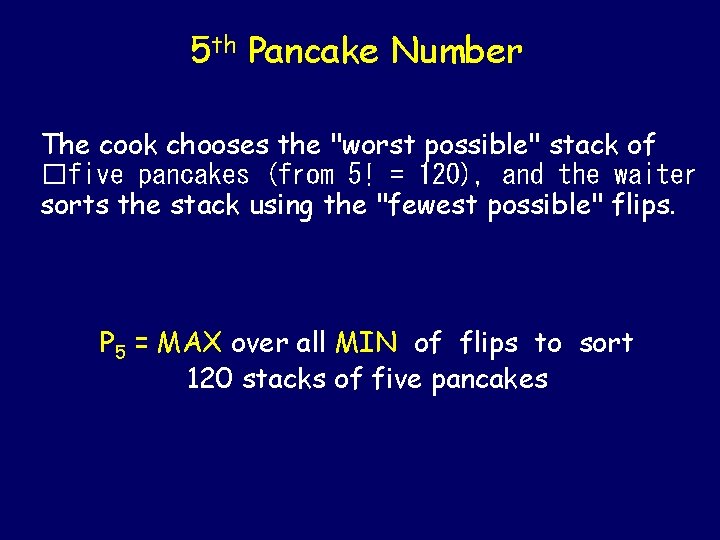
5 th Pancake Number The cook chooses the "worst possible" stack of �five pancakes (from 5! = 120), and the waiter sorts the stack using the "fewest possible" flips. P 5 = MAX over all MIN of flips to sort 120 stacks of five pancakes
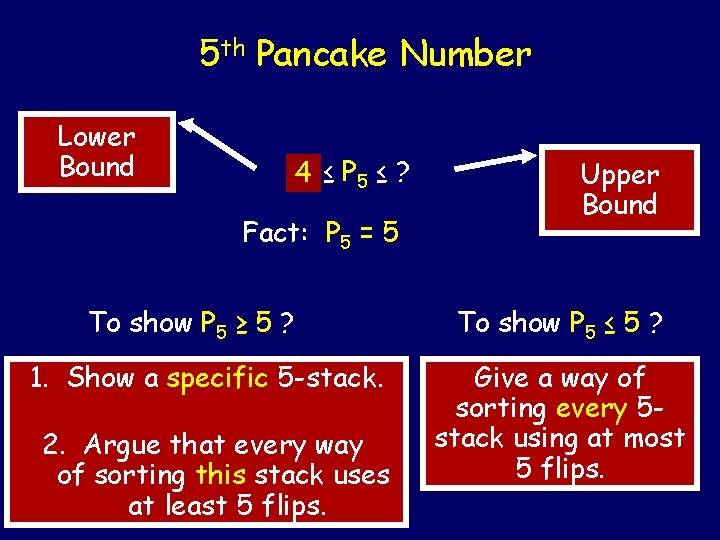
5 th Pancake Number Lower Bound 4? ≤ P 5 ≤ ? Fact: P 5 = 5 To show P 5 ≥ 5 ? 1. Show a specific 5 -stack. 2. Argue that every way of sorting this stack uses at least 5 flips. Upper Bound To show P 5 ≤ 5 ? Give a way of sorting every 5 stack using at most 5 flips.
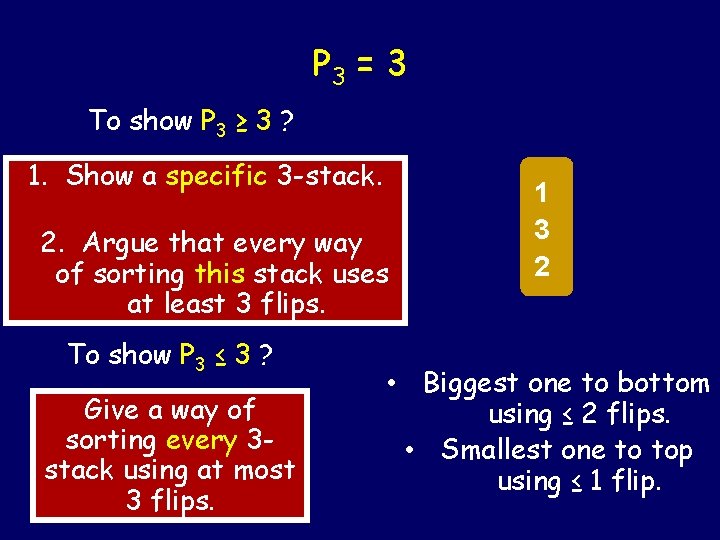
P 3 = 3 To show P 3 ≥ 3 ? 1. Show a specific 3 -stack. 2. Argue that every way of sorting this stack uses at least 3 flips. To show P 3 ≤ 3 ? Give a way of sorting every 3 stack using at most 3 flips. 1 3 2 • Biggest one to bottom using ≤ 2 flips. • Smallest one to top using ≤ 1 flip.
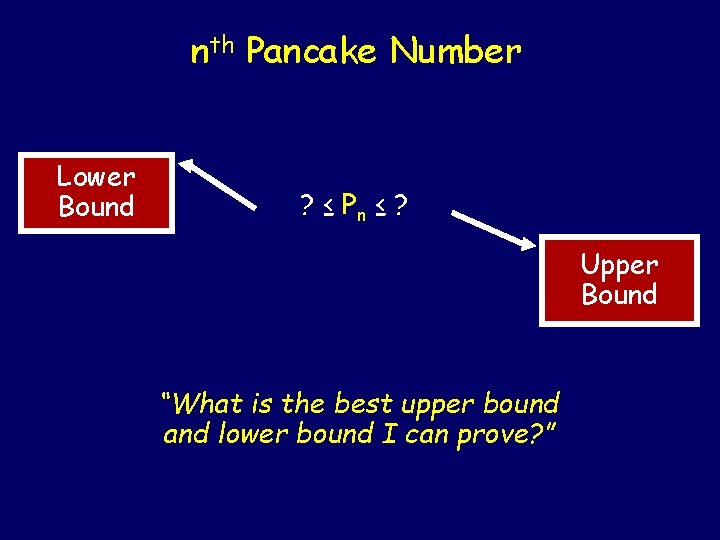
nth Pancake Number Lower Bound ? ≤ Pn ≤ ? Upper Bound “What is the best upper bound and lower bound I can prove? ”
nth Pancake Number ≤ Pn ≤ ? Let’s start by thinking about an upper bound. Upper Bound
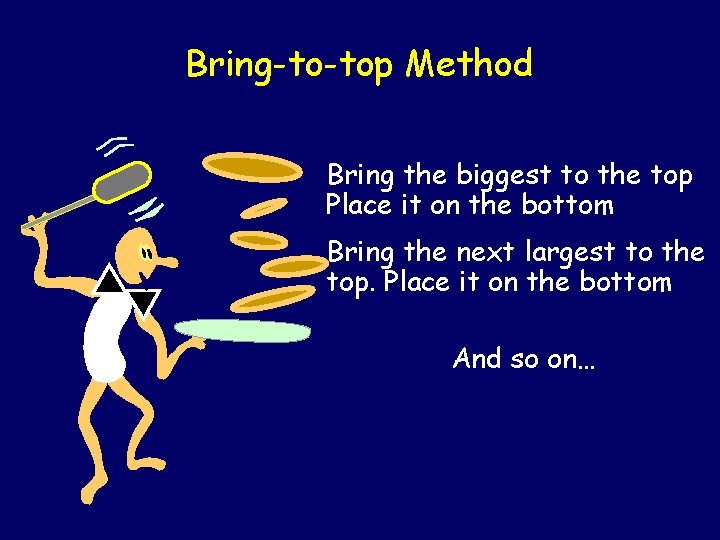
Bring-to-top Method Bring the biggest to the top Place it on the bottom Bring the next largest to the top. Place it on the bottom And so on…
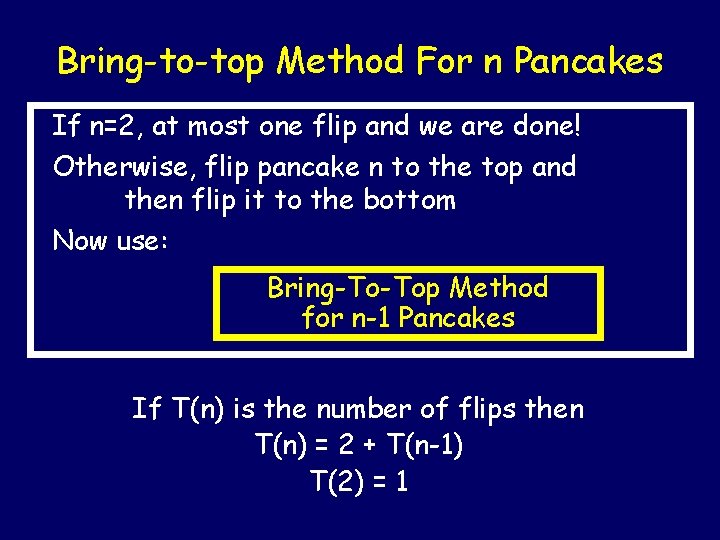
Bring-to-top Method For n Pancakes If n=2, at most one flip and we are done! Otherwise, flip pancake n to the top and then flip it to the bottom Now use: Bring-To-Top Method for n-1 Pancakes If T(n) is the number of flips then T(n) = 2 + T(n-1) T(2) = 1
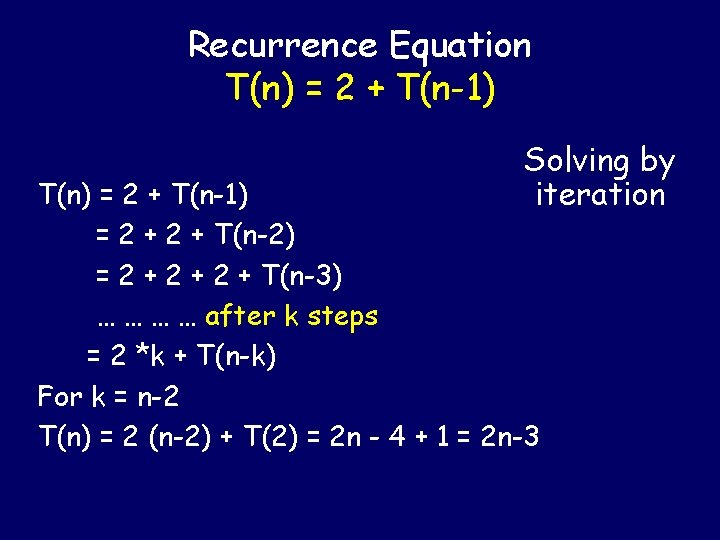
Recurrence Equation T(n) = 2 + T(n-1) Solving by iteration T(n) = 2 + T(n-1) = 2 + T(n-2) = 2 + 2 + T(n-3) … … after k steps = 2 *k + T(n-k) For k = n-2 T(n) = 2 (n-2) + T(2) = 2 n - 4 + 1 = 2 n-3
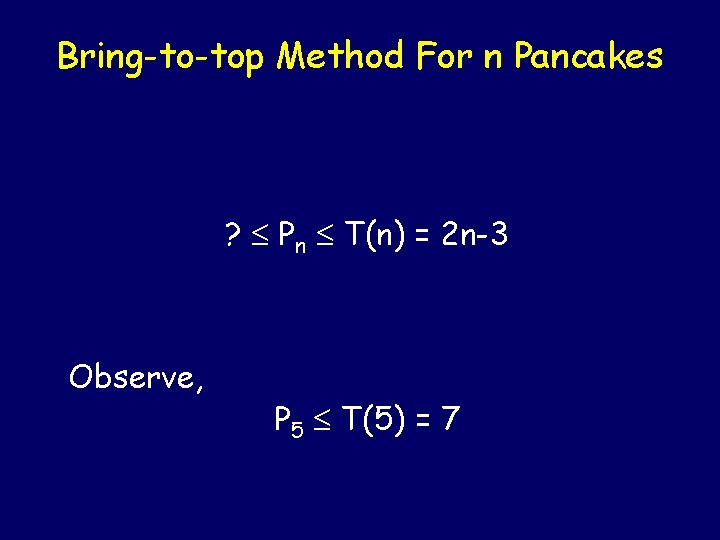
Bring-to-top Method For n Pancakes ? Pn T(n) = 2 n-3 Observe, P 5 T(5) = 7
? Pn 2 n-3 Let’s think about a lower bound for Pn
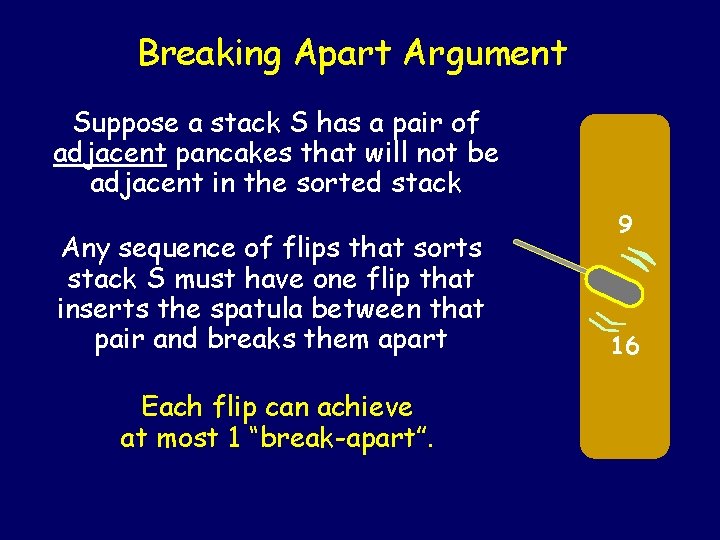
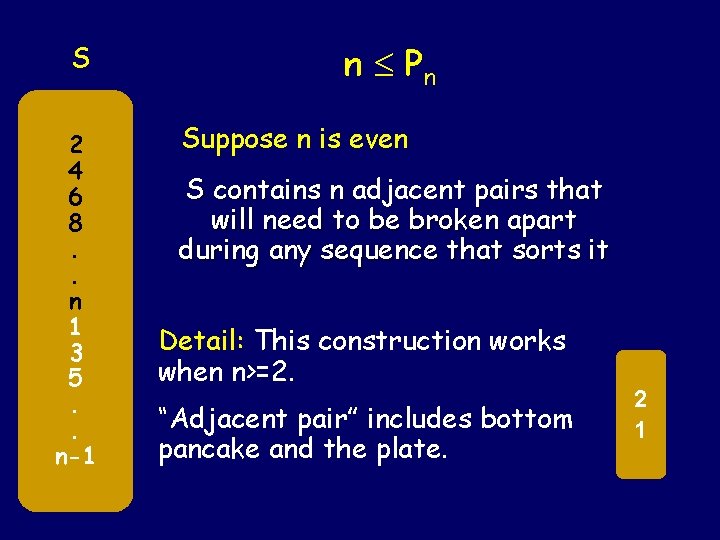
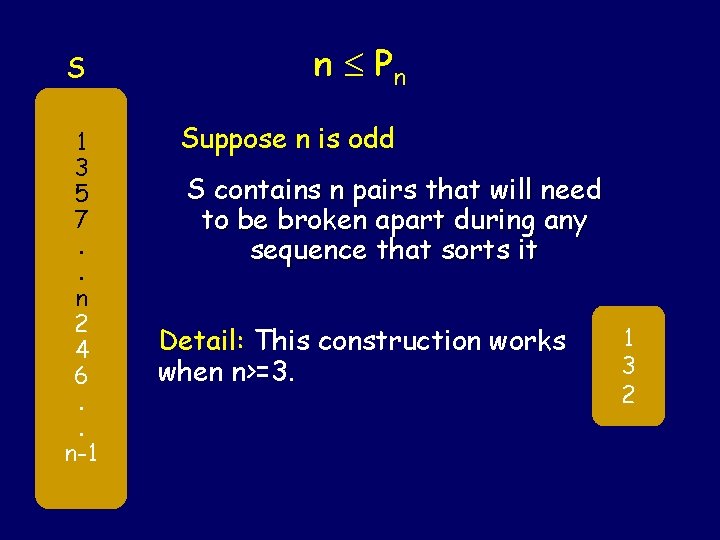
Breaking Apart Argument Suppose a stack S has a pair of adjacent pancakes that will not be adjacent in the sorted stack Any sequence of flips that sorts stack S must have one flip that inserts the spatula between that pair and breaks them apart Each flip can achieve at most 1 “break-apart”. 9 16
S 2 4 6 8. . n 1 3 5. . n-1 n Pn Suppose n is even S contains n adjacent pairs that will need to be broken apart during any sequence that sorts it Detail: This construction works when n>=2. “Adjacent pair” includes bottom pancake and the plate. 2 1
S 1 3 5 7. . n 2 4 6. . n-1 n Pn Suppose n is odd S contains n pairs that will need to be broken apart during any sequence that sorts it Detail: This construction works when n>=3. 1 3 2
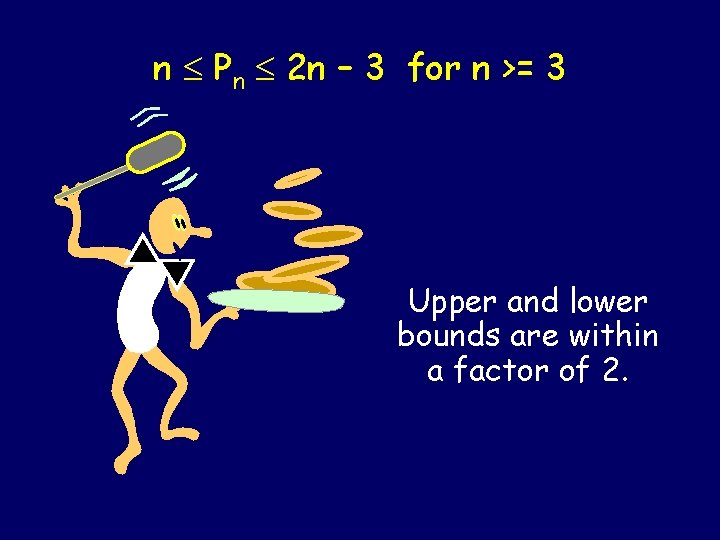
n Pn 2 n – 3 for n >= 3 Upper and lower bounds are within a factor of 2.
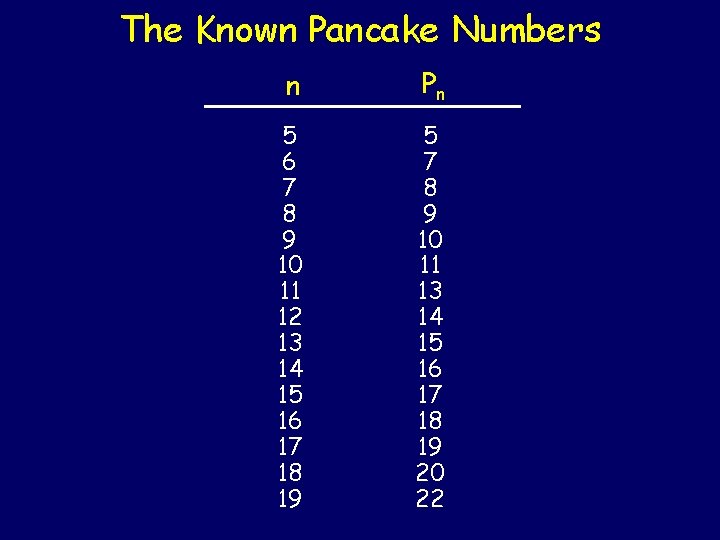
The Known Pancake Numbers n Pn 5 6 7 8 9 10 11 12 13 14 15 16 17 18 19 5 7 8 9 10 11 13 14 15 16 17 18 19 20 22
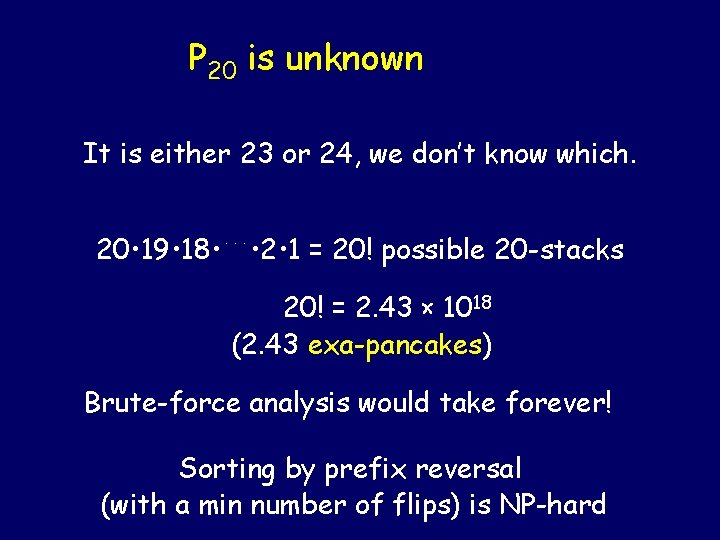
P 20 is unknown It is either 23 or 24, we don’t know which. 20 • 19 • 18 • ⋅⋅⋅ • 2 • 1 = 20! possible 20 -stacks 20! = 2. 43 × 1018 (2. 43 exa-pancakes) Brute-force analysis would take forever! Sorting by prefix reversal (with a min number of flips) is NP-hard
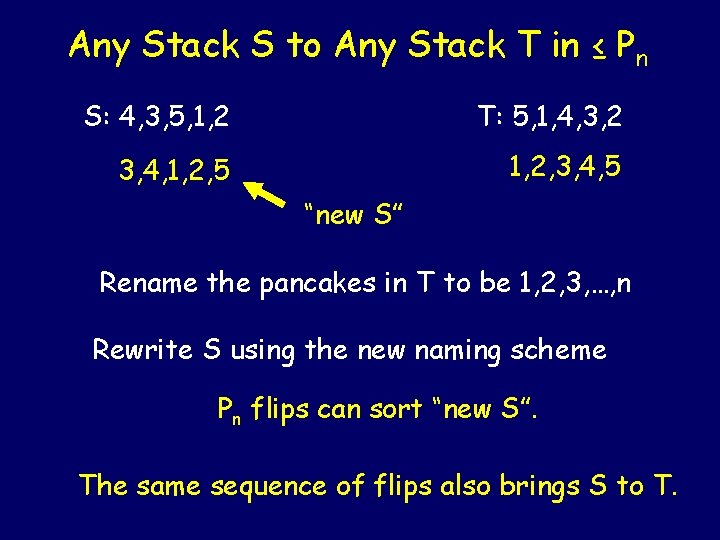
Any Stack to Any Stack Suppose we didn't want to sort the stack of pancakes: instead we wanted to go from a “source” stack (4 3 5 1 2) to some “target" stack (5 1 4 3 2). How should we do this?
Any Stack to Any Stack ((( ))) From any stack to a sorted stack in ≤ Pn From a sorted stack to any stack in ≤ Pn (by reversing) Hence, from ANY stack to ANY stack in ≤ 2 Pn
Can you find a faster way than 2 Pn flips to go from ANY to ANY?
Any Stack S to Any Stack T in ≤ Pn S: 4, 3, 5, 1, 2 T: 5, 1, 4, 3, 2 3, 4, 1, 2, 5 1, 2, 3, 4, 5 “new S” Rename the pancakes in T to be 1, 2, 3, …, n Rewrite S using the new naming scheme Pn flips can sort “new S”. The same sequence of flips also brings S to T.
Is This Really Computer Science?
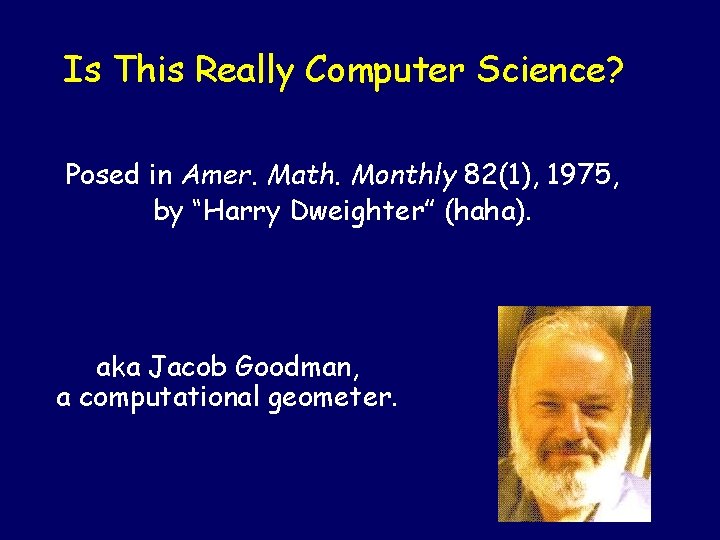
Is This Really Computer Science? Posed in Amer. Math. Monthly 82(1), 1975, by “Harry Dweighter” (haha). aka Jacob Goodman, a computational geometer.
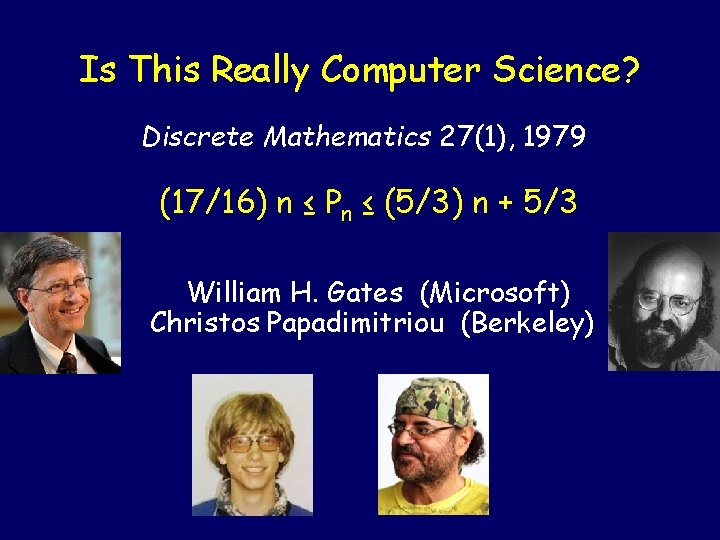
Is This Really Computer Science? Discrete Mathematics 27(1), 1979 (17/16) n ≤ Pn ≤ (5/3) n + 5/3 William H. Gates (Microsoft) Christos Papadimitriou (Berkeley)
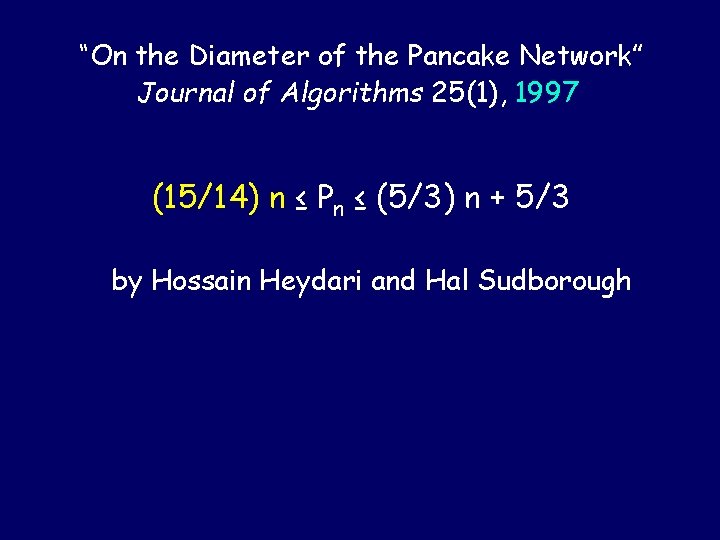
“On the Diameter of the Pancake Network” Journal of Algorithms 25(1), 1997 (15/14) n ≤ Pn ≤ (5/3) n + 5/3 by Hossain Heydari and Hal Sudborough
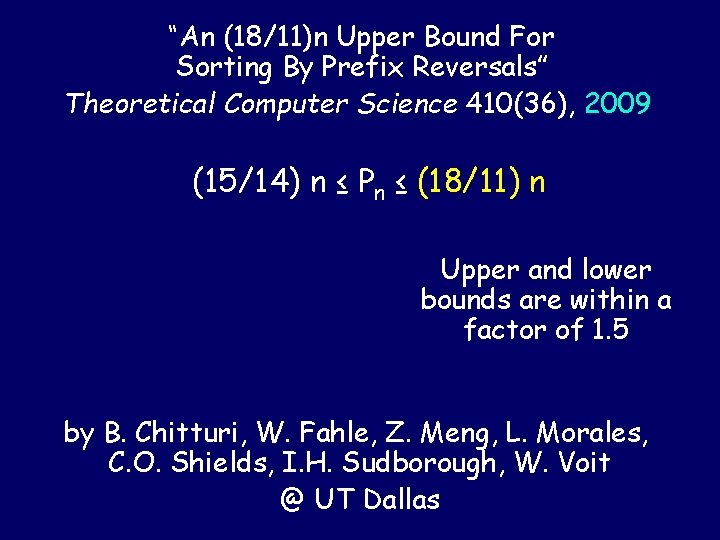
“An (18/11)n Upper Bound For Sorting By Prefix Reversals” Theoretical Computer Science 410(36), 2009 (15/14) n ≤ Pn ≤ (18/11) n Upper and lower bounds are within a factor of 1. 5 by B. Chitturi, W. Fahle, Z. Meng, L. Morales, C. O. Shields, I. H. Sudborough, W. Voit @ UT Dallas
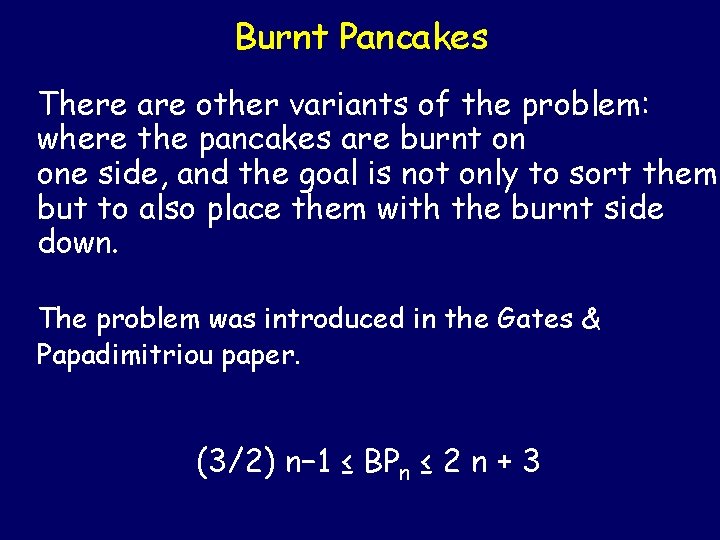
Burnt Pancakes There are other variants of the problem: where the pancakes are burnt on one side, and the goal is not only to sort them but to also place them with the burnt side down. The problem was introduced in the Gates & Papadimitriou paper. (3/2) n− 1 ≤ BPn ≤ 2 n + 3
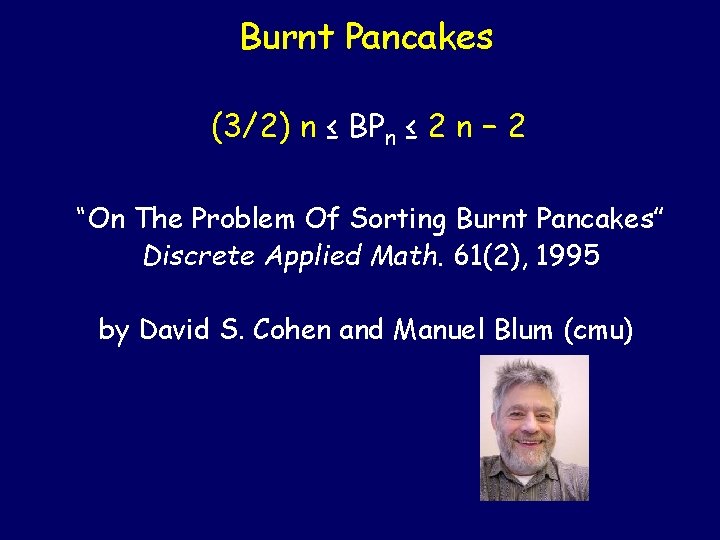
Burnt Pancakes (3/2) n ≤ BPn ≤ 2 n − 2 “On The Problem Of Sorting Burnt Pancakes” Discrete Applied Math. 61(2), 1995 by David S. Cohen and Manuel Blum (cmu)
Application: The Pancake Network
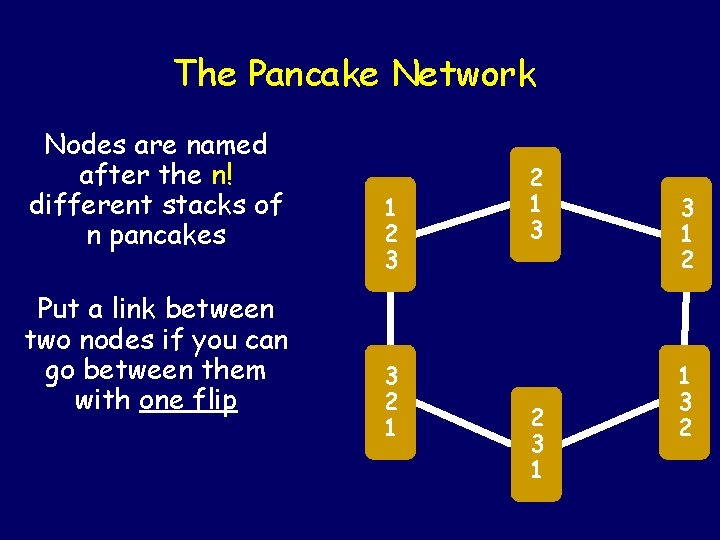
The Pancake Network Nodes are named after the n! different stacks of n pancakes Put a link between two nodes if you can go between them with one flip 1 2 3 3 2 1 3 2 3 1 2 1 3 2
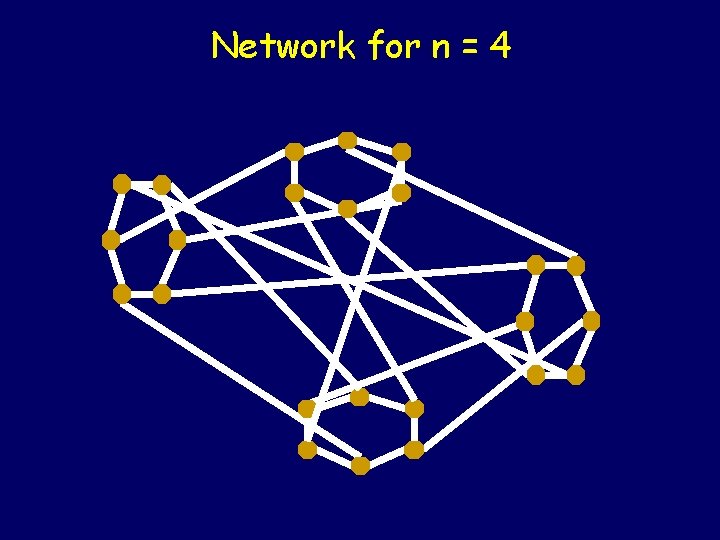
Network for n = 4
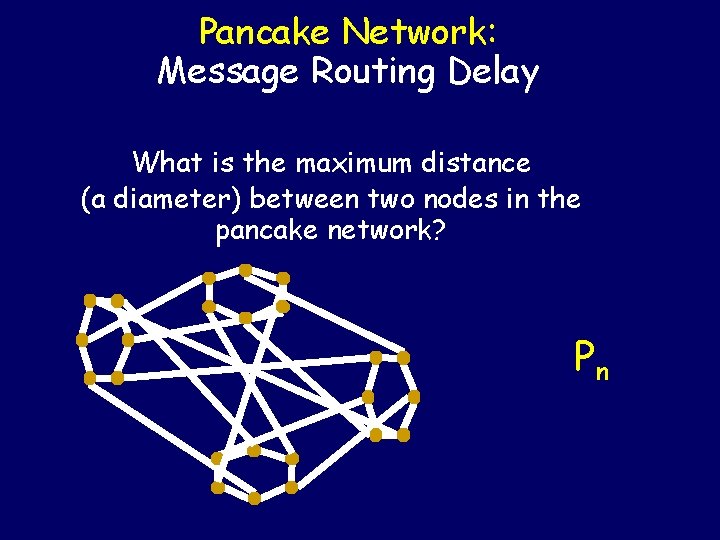
Pancake Network: Message Routing Delay What is the maximum distance (a diameter) between two nodes in the pancake network? Pn
Pancake Network: Reliability If up to n− 2 nodes get hit by lightning, the network remains connected, even though each node is connected to only n− 1 others The Pancake Network is optimally reliable for its number of nodes and links
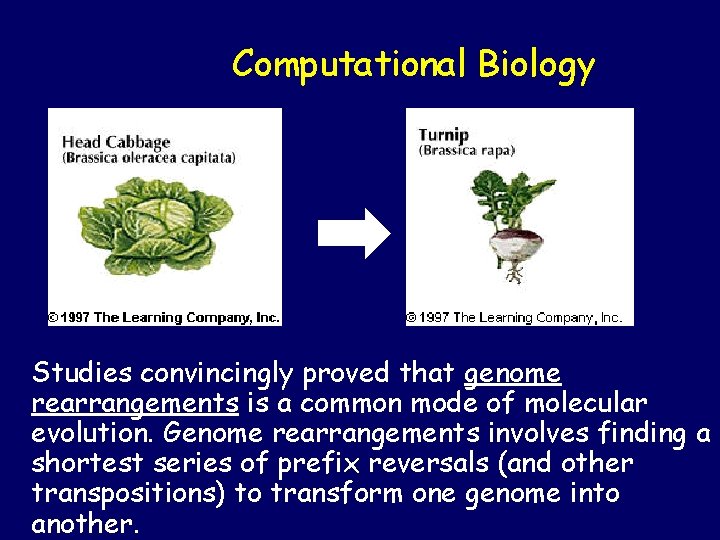
Computational Biology Studies convincingly proved that genome rearrangements is a common mode of molecular evolution. Genome rearrangements involves finding a shortest series of prefix reversals (and other transpositions) to transform one genome into another.
One “Simple” Problem A host of problems and applications at the frontiers of science
High Level Point Computer science is no more about computers than astronomy is about telescopes – E. Dijkstra Computer Science is not merely about computers and programming, it is about mathematically modeling our world, and about finding better and better ways to solve problems
Definitions of: Sort by Prefix Reversal Pancake number Lower bound Upper bound Study Bee Proof of: Bring-To-Top Breaking-Apart ANY to ANY in ≤ Pn