
Great Theoretical Ideas In Computer Science S Rudich

![Continued Fraction Representation = [1, 1, 1, 0, 0, 0, …]](https://slidetodoc.com/presentation_image_h2/0ca146fdb378d39caf538953472b03e7/image-36.jpg "Continued Fraction Representation = [1, 1, 1, 0, 0, 0, …]")
![A Pattern for Let r 1 = [1, 0, 0, 0, …] = 1](https://slidetodoc.com/presentation_image_h2/0ca146fdb378d39caf538953472b03e7/image-40.jpg "A Pattern for Let r 1 = [1, 0, 0, 0, …] = 1")
- Slides: 59
Great Theoretical Ideas In Computer Science S. Rudich V. Adamchik Lecture 13 CS 15 -251 Feb 28, 2006 Spring 2006 Carnegie Mellon University Recurrences, Phi and CF
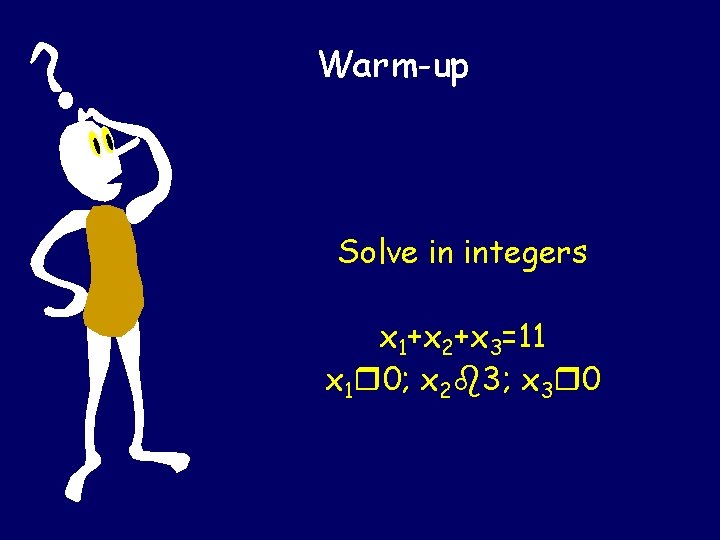
Warm-up Solve in integers x 1+x 2+x 3=11 x 1 r 0; x 2 b 3; x 3 r 0
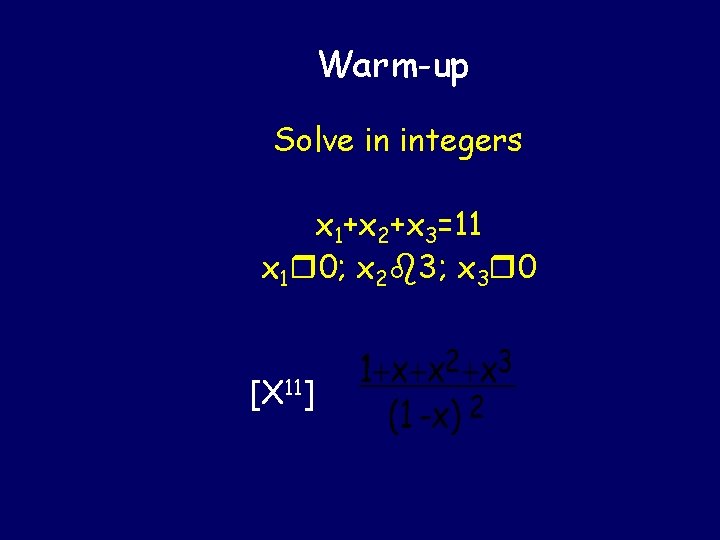
Warm-up Solve in integers x 1+x 2+x 3=11 x 1 r 0; x 2 b 3; x 3 r 0 [X 11]
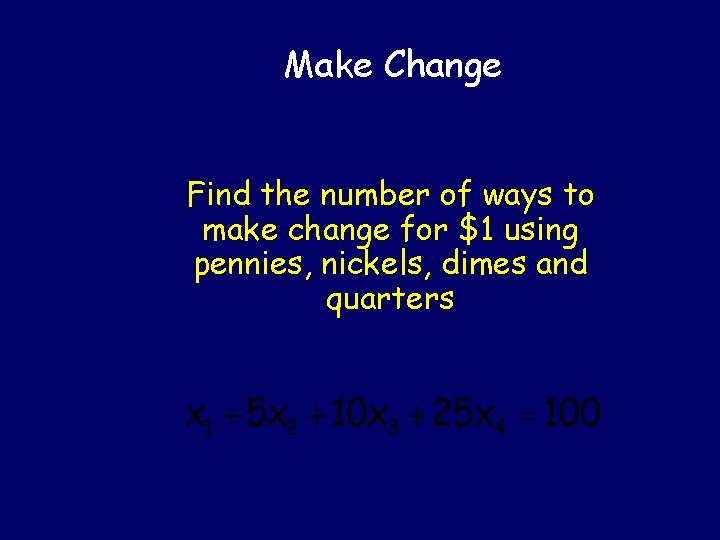
Make Change (interview question) Find the number of ways to make change for $1 using pennies, nickels, dimes and quarters
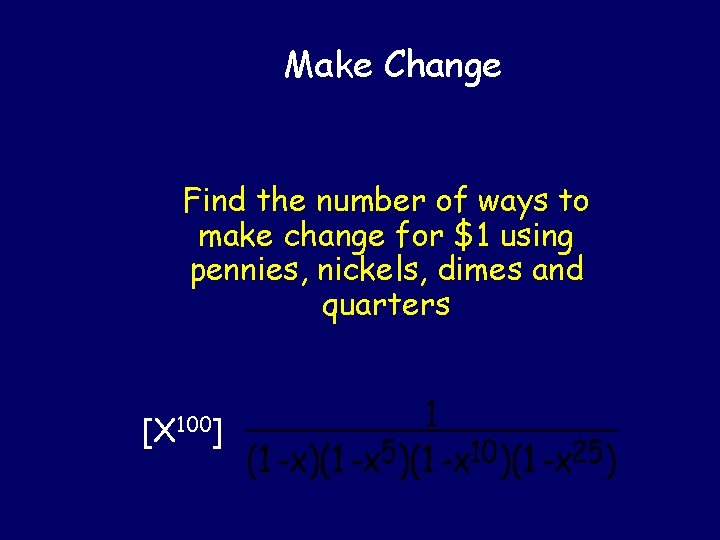
Make Change Find the number of ways to make change for $1 using pennies, nickels, dimes and quarters [X 100]
Make Change Find the number of ways to make change for $1 using pennies, nickels, dimes and quarters
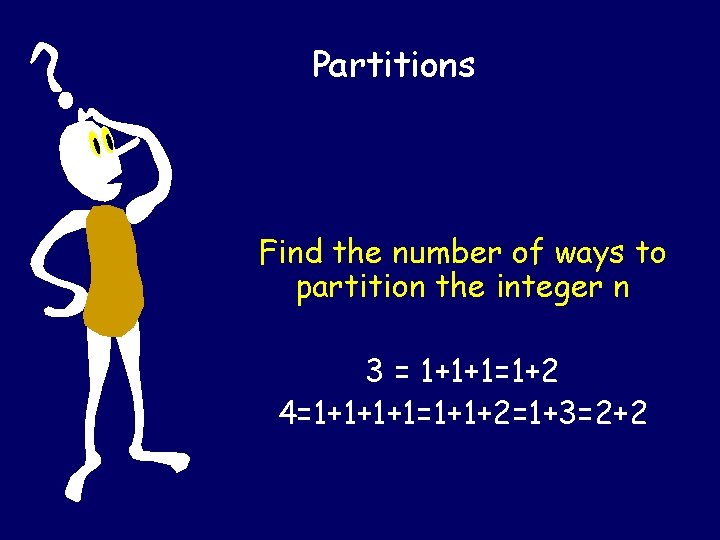
Partitions Find the number of ways to partition the integer n 3 = 1+1+1=1+2 4=1+1+1+1=1+1+2=1+3=2+2
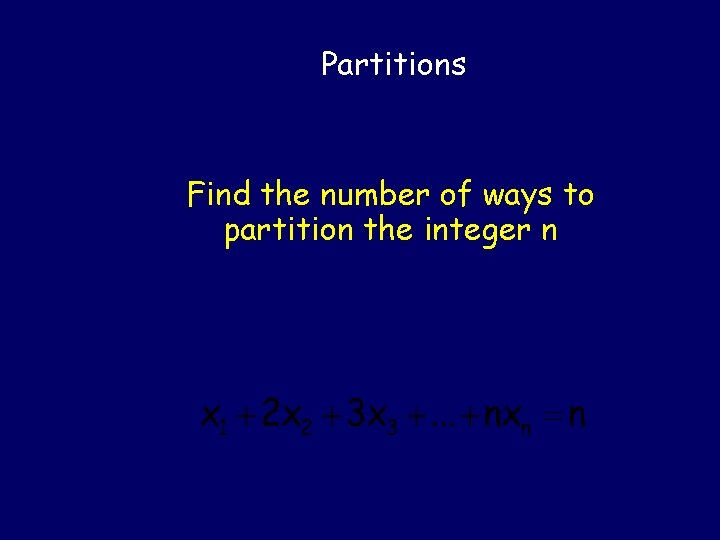
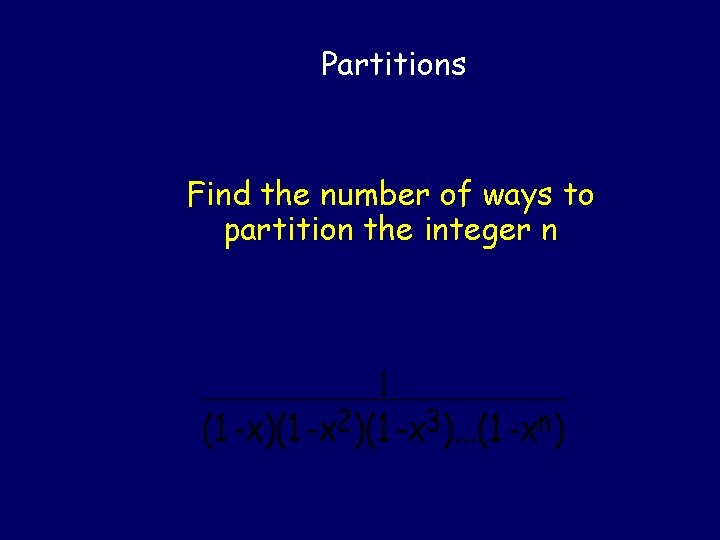
Partitions Find the number of ways to partition the integer n
Partitions Find the number of ways to partition the integer n
Leonardo Fibonacci In 1202, Fibonacci proposed a problem about the growth of rabbit populations.
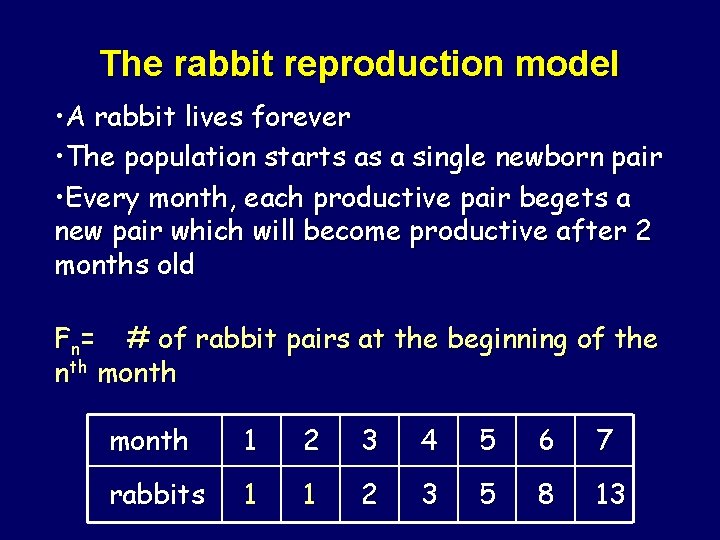
The rabbit reproduction model • A rabbit lives forever • The population starts as a single newborn pair • Every month, each productive pair begets a new pair which will become productive after 2 months old Fn= # of rabbit pairs at the beginning of the nth month 1 2 3 4 5 6 7 rabbits 1 1 2 3 5 8 13
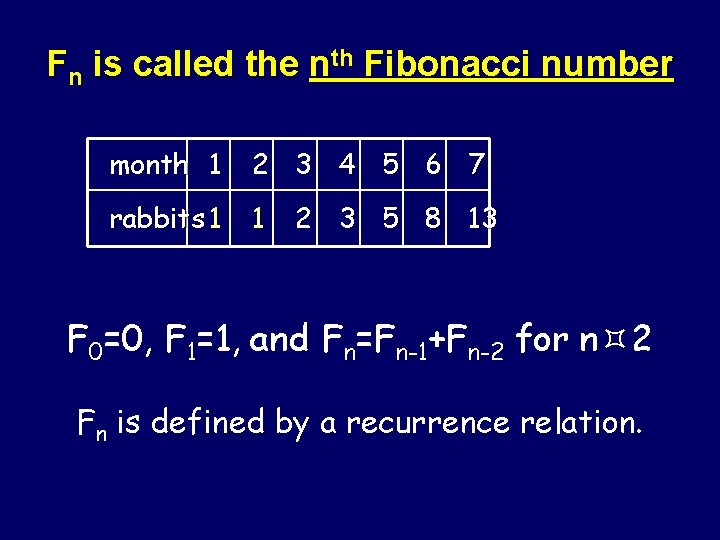
Fn is called the nth Fibonacci number month 1 2 3 4 5 6 7 rabbits 1 1 2 3 5 8 13 F 0=0, F 1=1, and Fn=Fn-1+Fn-2 for n 2 Fn is defined by a recurrence relation.
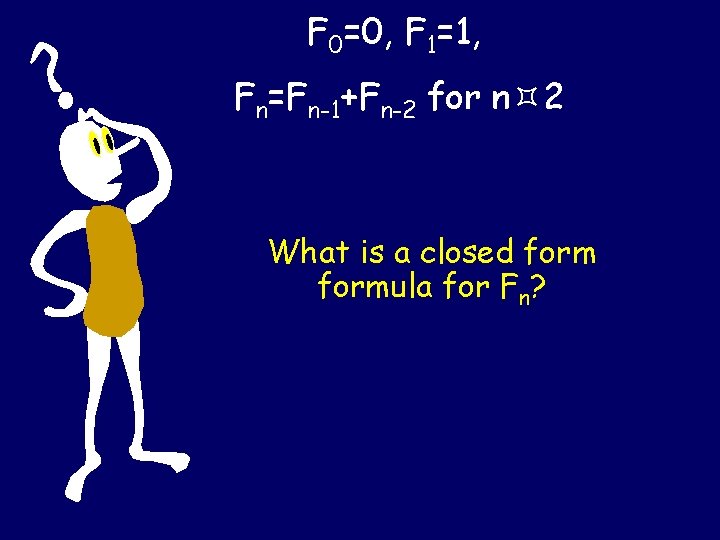
F 0=0, F 1=1, Fn=Fn-1+Fn-2 for n 2 What is a closed formula for Fn?
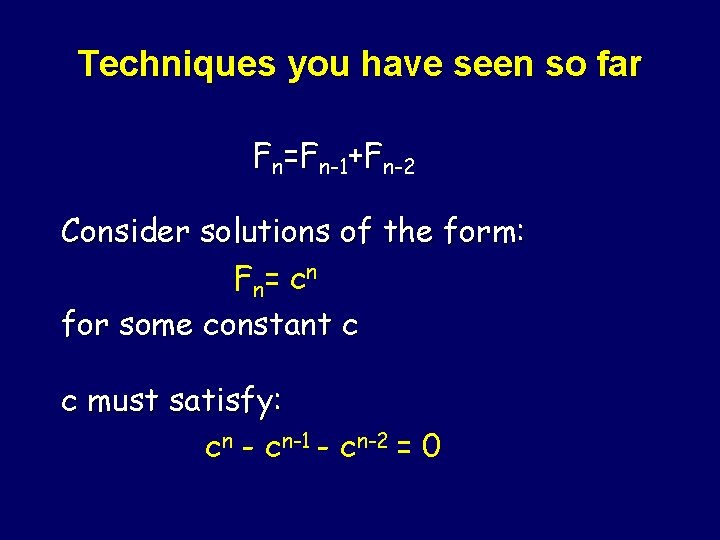
Techniques you have seen so far Fn=Fn-1+Fn-2 Consider solutions of the form: F n= c n for some constant c c must satisfy: cn - cn-1 - cn-2 = 0
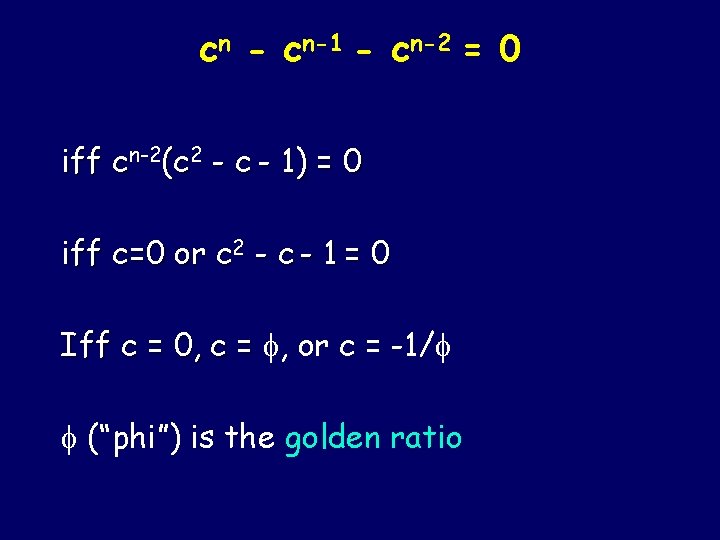
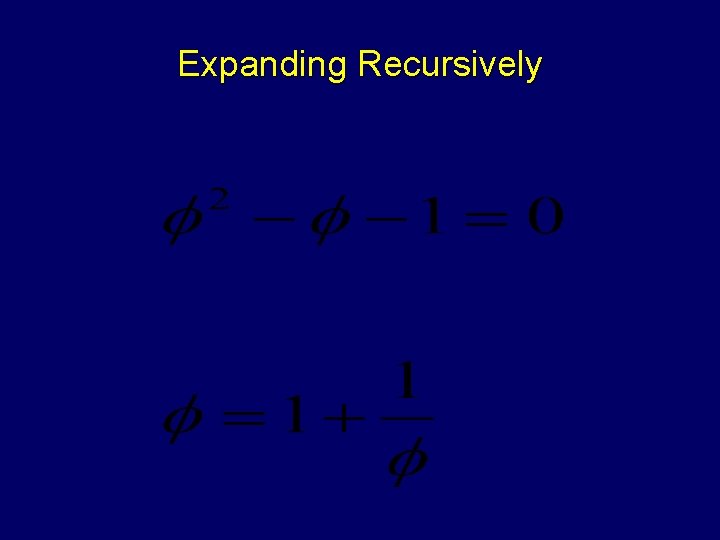
cn - cn-1 - cn-2 = 0 iff cn-2(c 2 - c - 1) = 0 iff c=0 or c 2 - c - 1 = 0 Iff c = 0, c = , or c = -1/ (“phi”) is the golden ratio
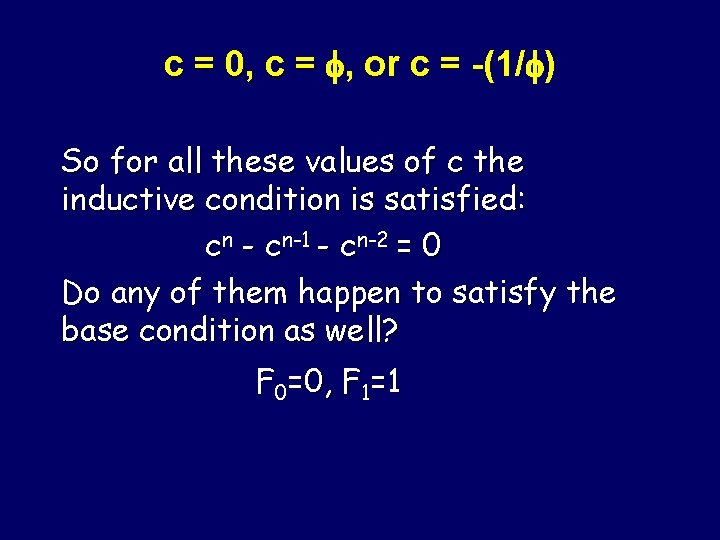
c = 0, c = , or c = -(1/ ) So for all these values of c the inductive condition is satisfied: cn - cn-1 - cn-2 = 0 Do any of them happen to satisfy the base condition as well? F 0=0, F 1=1
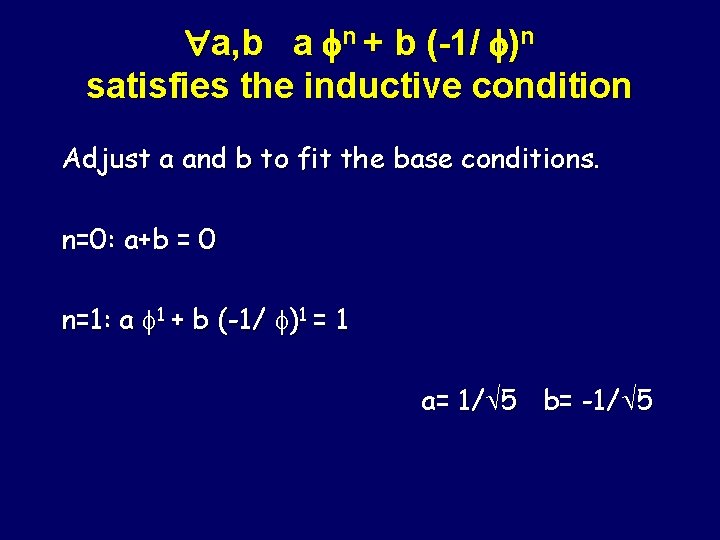
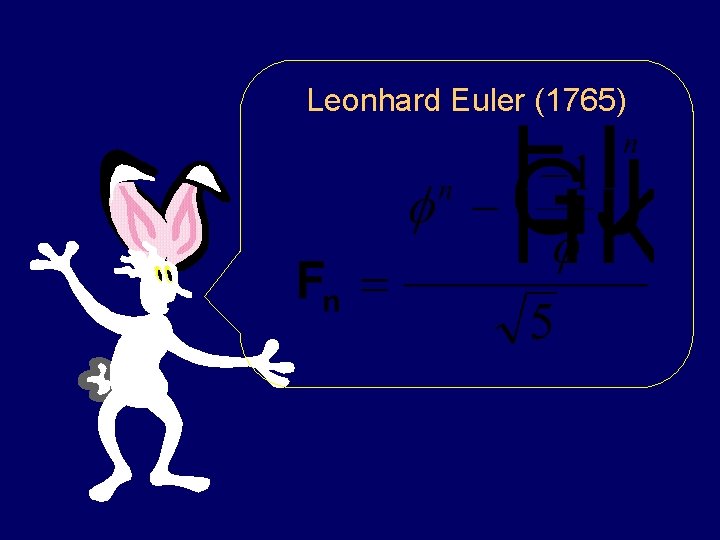
a, b a n + b (-1/ )n satisfies the inductive condition Adjust a and b to fit the base conditions. n=0: a+b = 0 n=1: a 1 + b (-1/ )1 = 1 a= 1/ 5 b= -1/ 5
Leonhard Euler (1765)
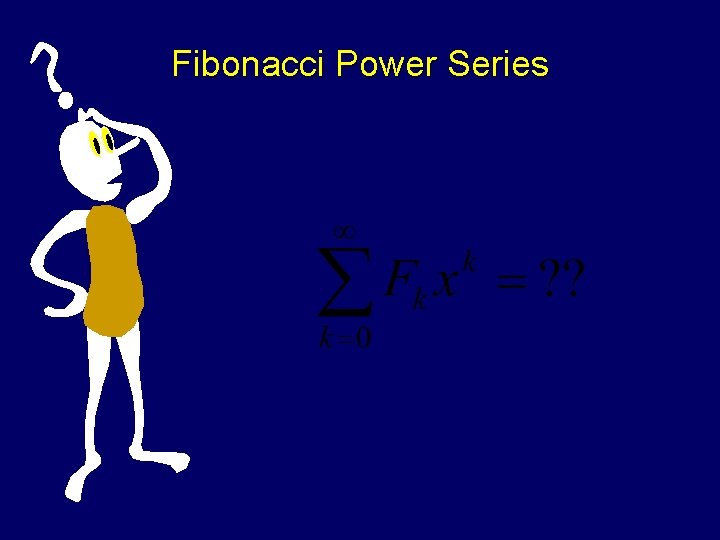
Fibonacci Power Series
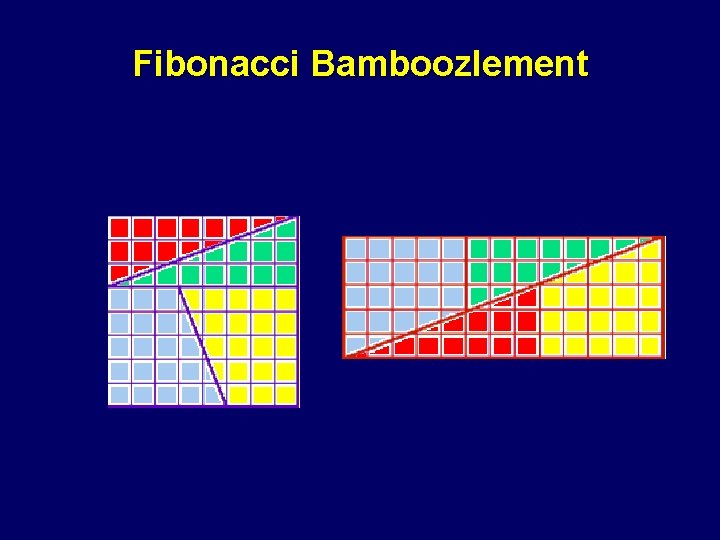
Fibonacci Bamboozlement
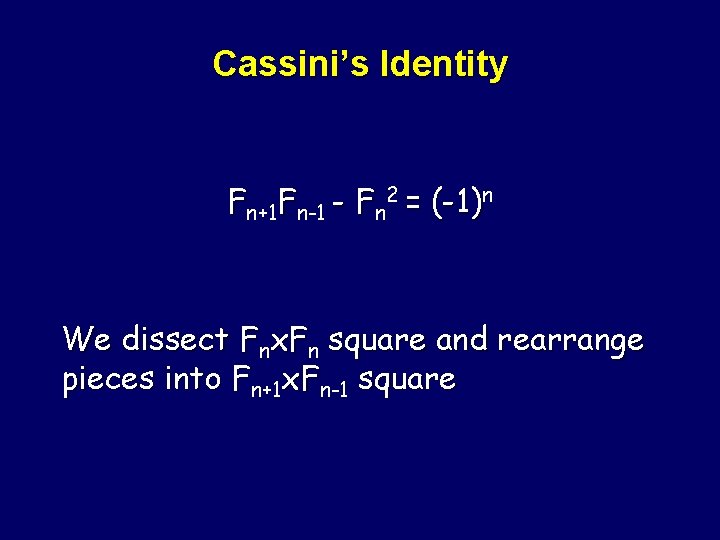
Cassini’s Identity Fn+1 Fn-1 - Fn 2 = (-1)n We dissect Fnx. Fn square and rearrange pieces into Fn+1 x. Fn-1 square
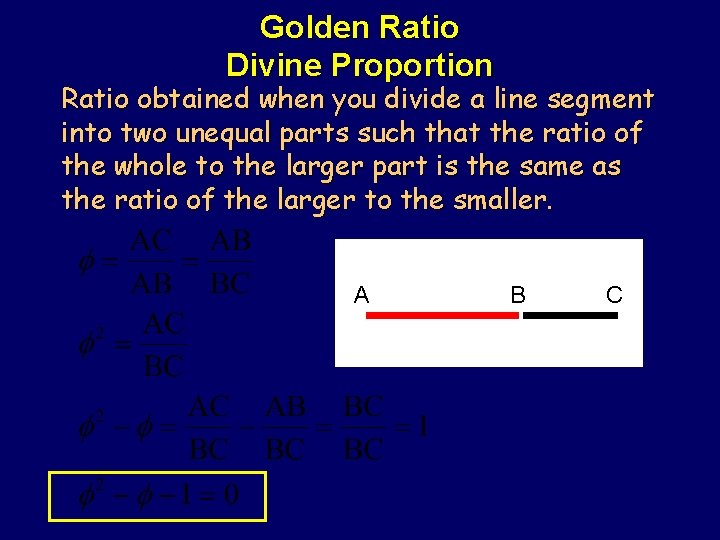
Golden Ratio Divine Proportion Ratio obtained when you divide a line segment into two unequal parts such that the ratio of the whole to the larger part is the same as the ratio of the larger to the smaller. A B C
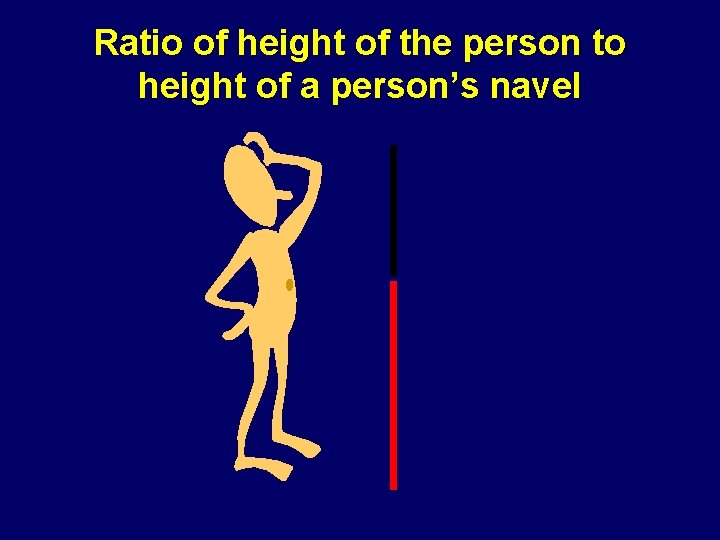
Ratio of height of the person to height of a person’s navel
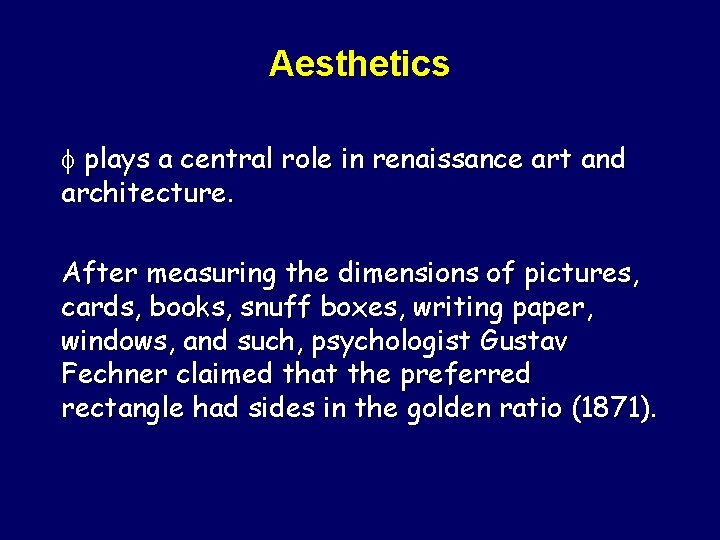
Aesthetics plays a central role in renaissance art and architecture. After measuring the dimensions of pictures, cards, books, snuff boxes, writing paper, windows, and such, psychologist Gustav Fechner claimed that the preferred rectangle had sides in the golden ratio (1871).
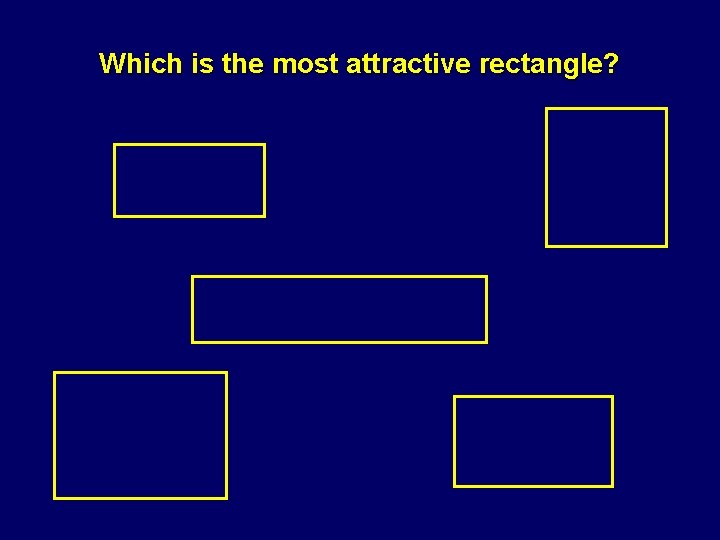
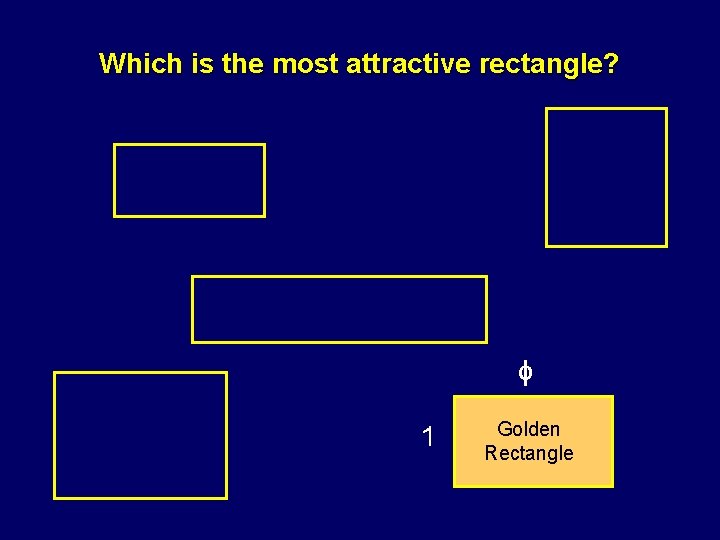
Which is the most attractive rectangle?
Which is the most attractive rectangle? 1 Golden Rectangle
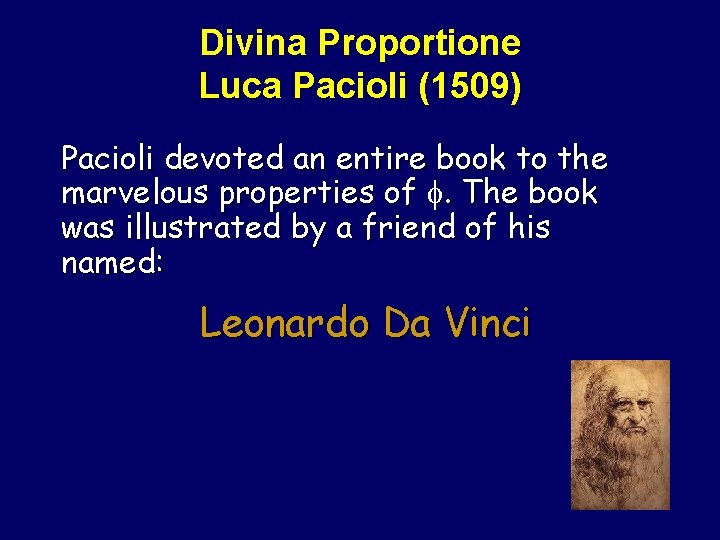
Divina Proportione Luca Pacioli (1509) Pacioli devoted an entire book to the marvelous properties of . The book was illustrated by a friend of his named: Leonardo Da Vinci
Table of contents • The first considerable effect • The second essential effect • The third singular effect • The fourth ineffable effect • The fifth admirable effect • The sixth inexpressible effect • The seventh inestimable effect • The ninth most excellent effect • The twelfth incomparable effect • The thirteenth most distinguished effect
Divina Proportione Luca Pacioli (1509) "Ninth Most Excellent Effect" two diagonals of a regular pentagon divide each other in the Divine Proportion.
Expanding Recursively
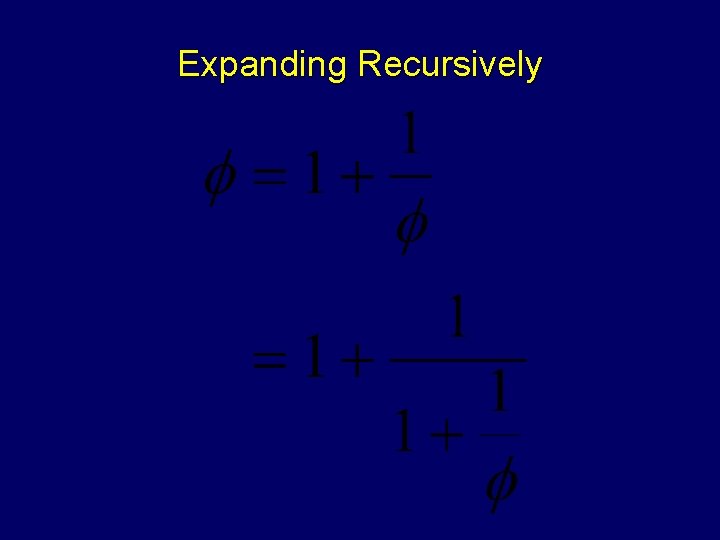
Expanding Recursively
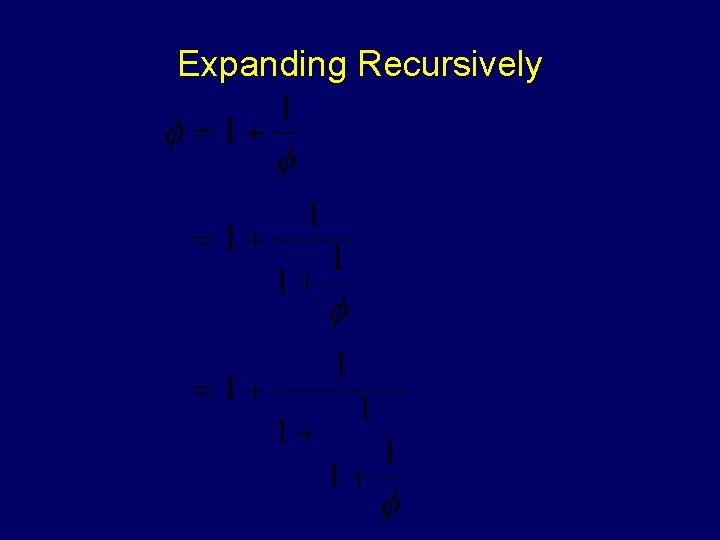
Expanding Recursively
Expanding Recursively
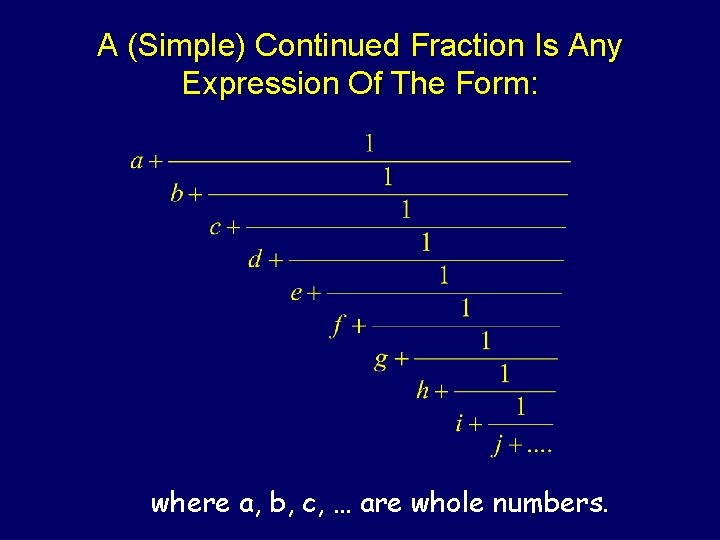
A (Simple) Continued Fraction Is Any Expression Of The Form: where a, b, c, … are whole numbers.
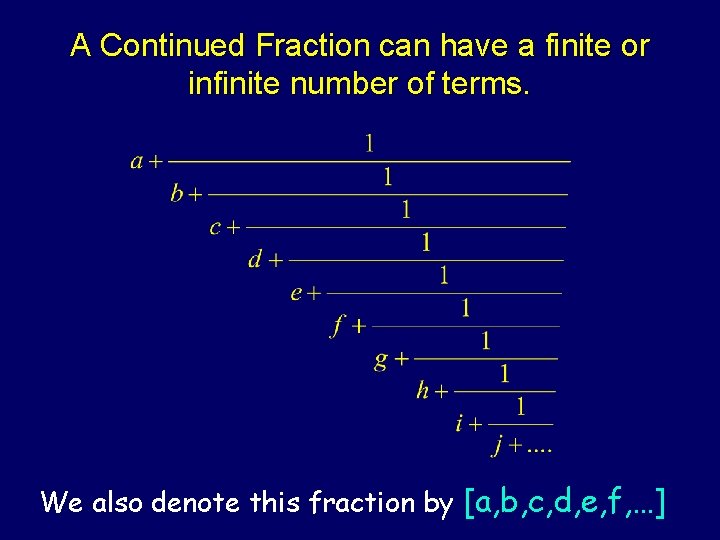
A Continued Fraction can have a finite or infinite number of terms. We also denote this fraction by [a, b, c, d, e, f, …]
Continued Fraction Representation = [1, 1, 1, 0, 0, 0, …]
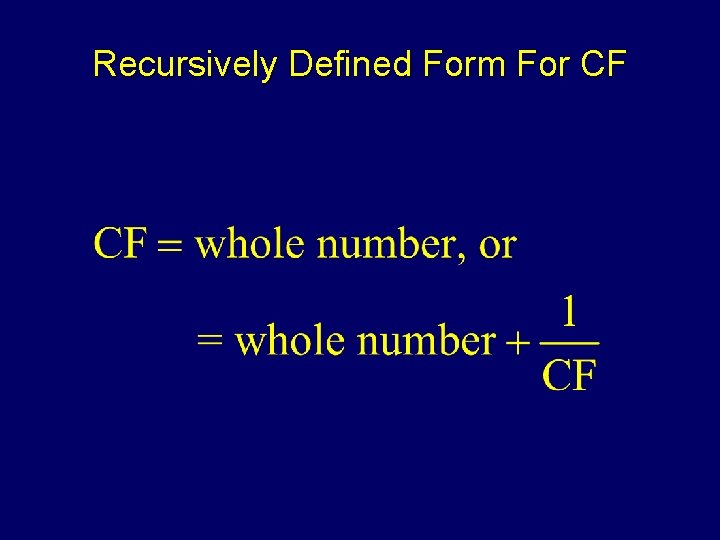
Recursively Defined Form For CF
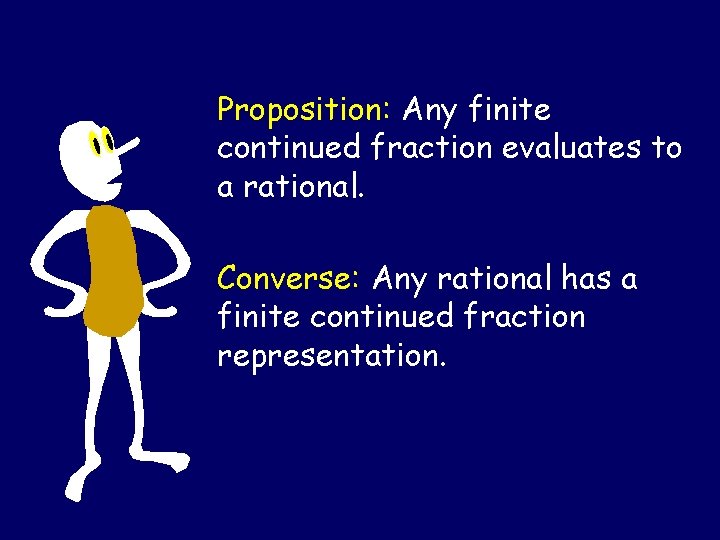
Proposition: Any finite continued fraction evaluates to a rational. Converse: Any rational has a finite continued fraction representation.
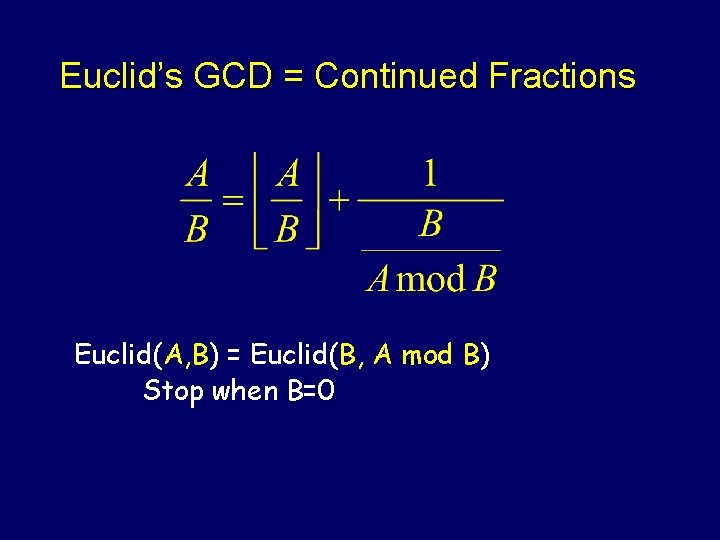
Euclid’s GCD = Continued Fractions Euclid(A, B) = Euclid(B, A mod B) Stop when B=0
A Pattern for Let r 1 = [1, 0, 0, 0, …] = 1 r 2 = [1, 1, 0, 0, 0, …] = 2/1 r 3 = [1, 1, 1, 0, 0, 0…] = 3/2 r 4 = [1, 1, 0, 0, 0…] = 5/3 and so on. Theorem: rn = Fn+1/Fn
Divine Proportion
Heads-on How to convert kilometers into miles?
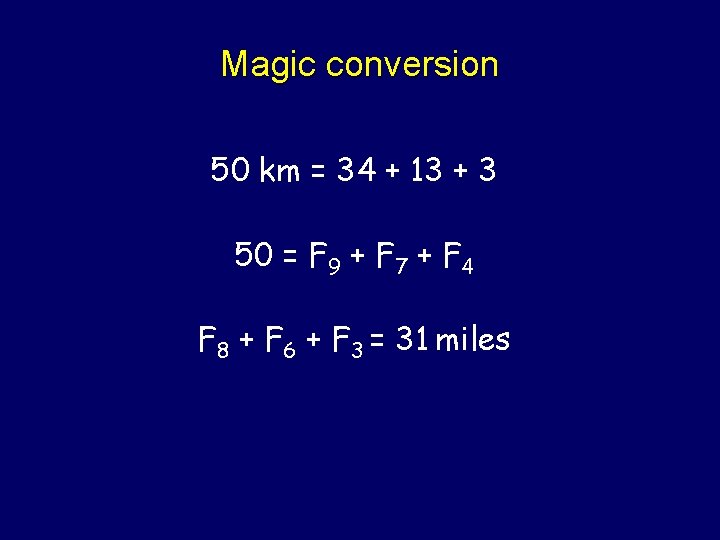
Magic conversion 50 km = 34 + 13 + 3 50 = F 9 + F 7 + F 4 F 8 + F 6 + F 3 = 31 miles
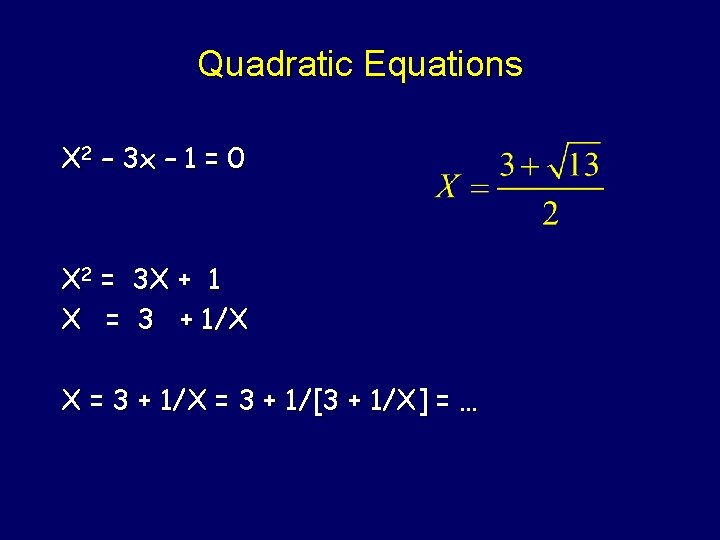
Quadratic Equations X 2 – 3 x – 1 = 0 X 2 = 3 X + 1 X = 3 + 1/X = 3 + 1/[3 + 1/X] = …
A Periodic CF
A period-2 CF
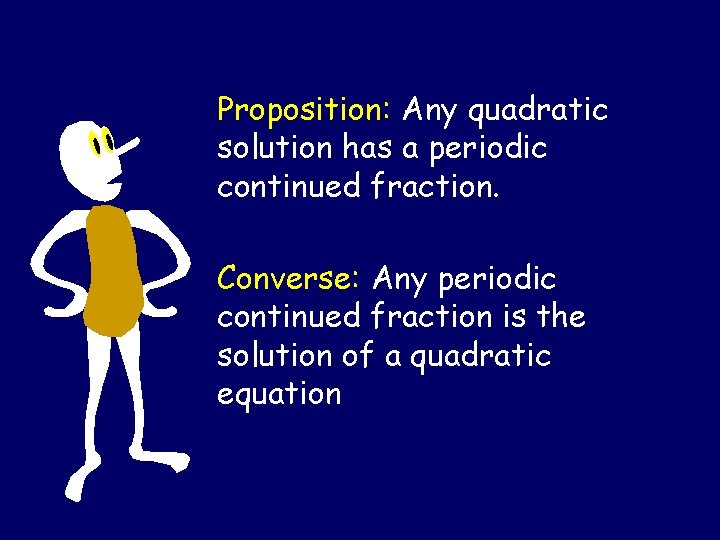
Proposition: Any quadratic solution has a periodic continued fraction. Converse: Any periodic continued fraction is the solution of a quadratic equation
What about those non-periodic continued fractions?
Non-periodic CFs
What is the pattern?
What a cool representation! Finite CF: Rationals Periodic CF: Quadratic roots And some numbers reveal hidden regularity.
More recurrences!! Let us embark now on the Catalan numbers
Counting Binary Trees Count the number of binary trees with n nodes.
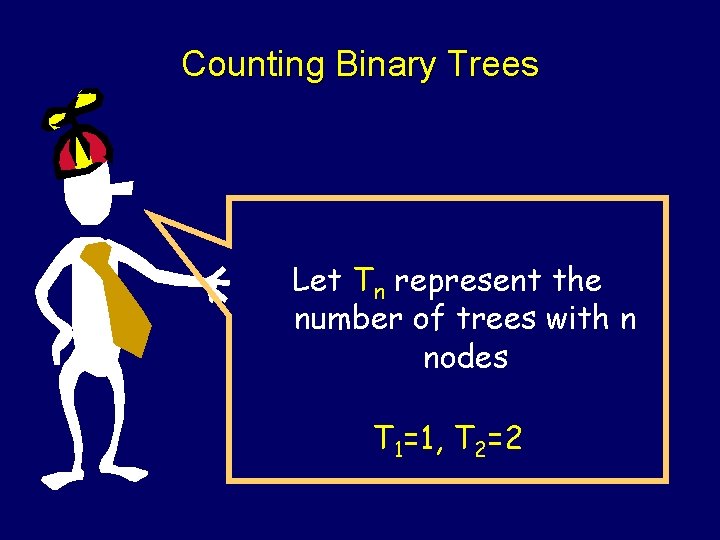
Counting Binary Trees Let Tn represent the number of trees with n nodes T 1=1, T 2=2
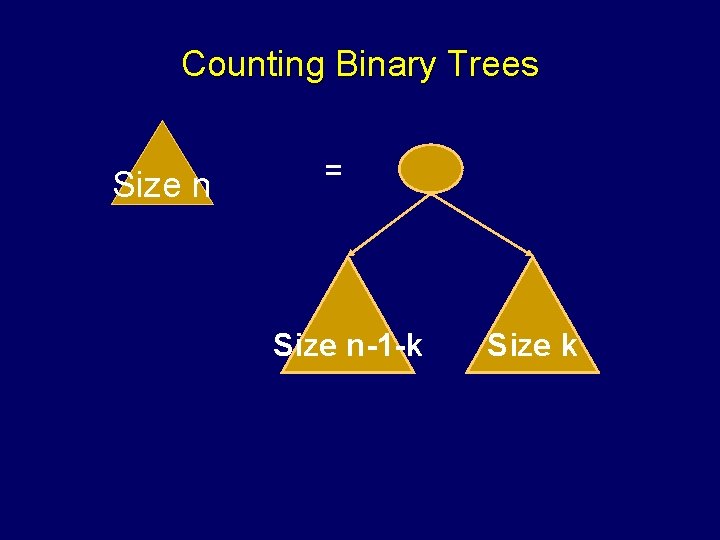
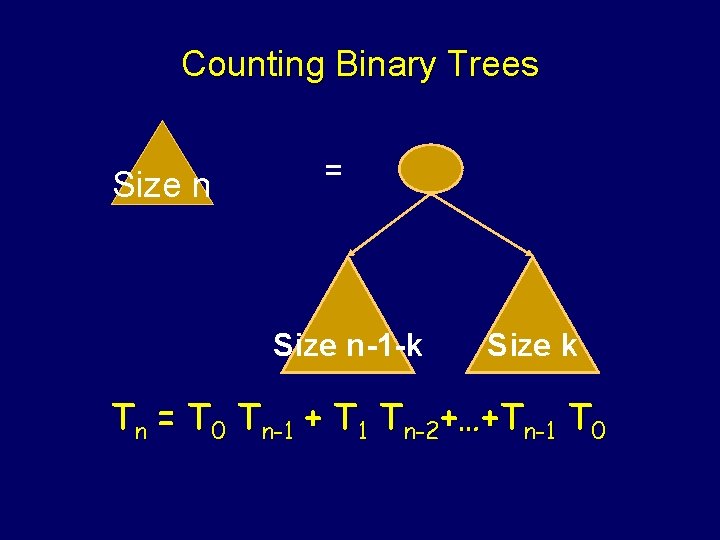
Counting Binary Trees Size n = Size n-1 -k Size k
Counting Binary Trees Size n = Size n-1 -k Size k Tn = T 0 Tn-1 + T 1 Tn-2+…+Tn-1 T 0
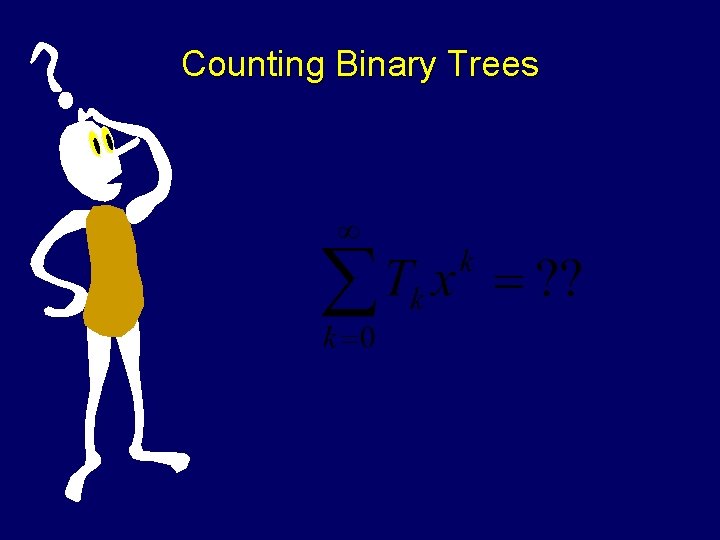
Counting Binary Trees
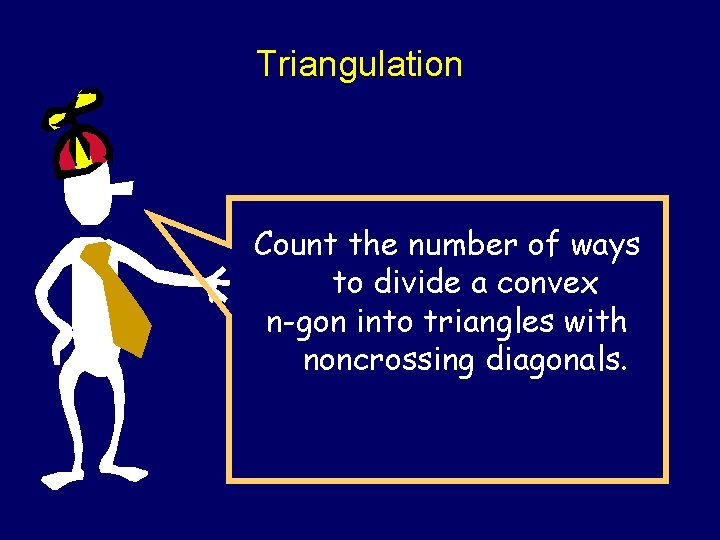
Triangulation Count the number of ways to divide a convex n-gon into triangles with noncrossing diagonals.
• Review GCD algorithm • Recurrences, Phi and CF • The Catalan numbers Study Bee