
Great Theoretical Ideas In Computer Science John Lafferty

- Slides: 37
Great Theoretical Ideas In Computer Science John Lafferty Lecture 20 CS 15 -251 November 2, 2006 Fall 2006 Carnegie Mellon University Graphs
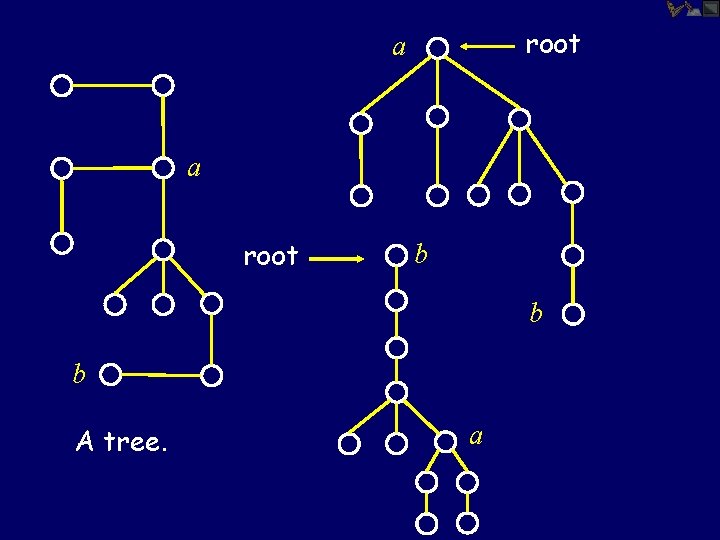
root a a root b b b A tree. a
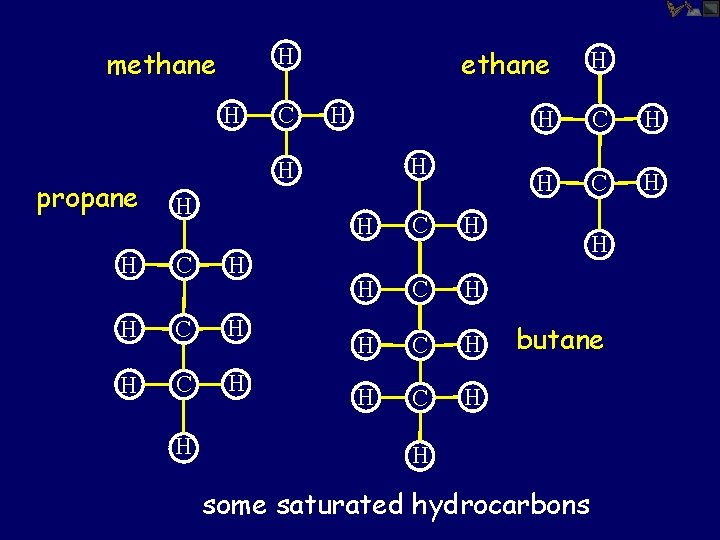
H methane H propane C H H C H H H H H ethane H C H H butane H some saturated hydrocarbons
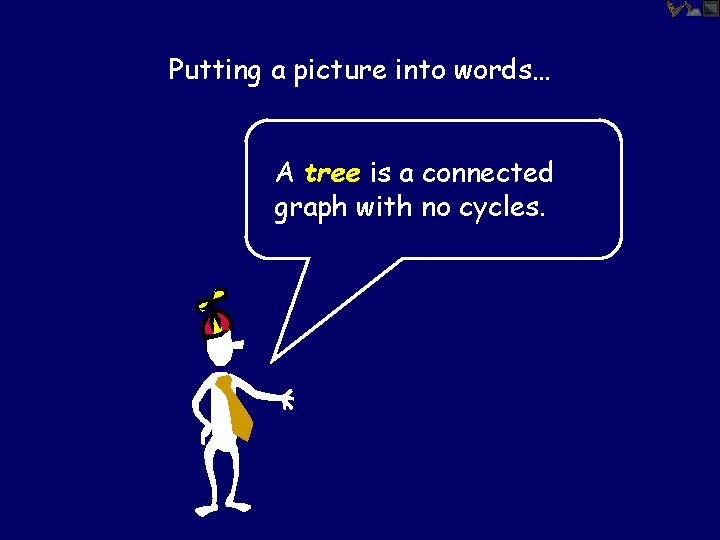
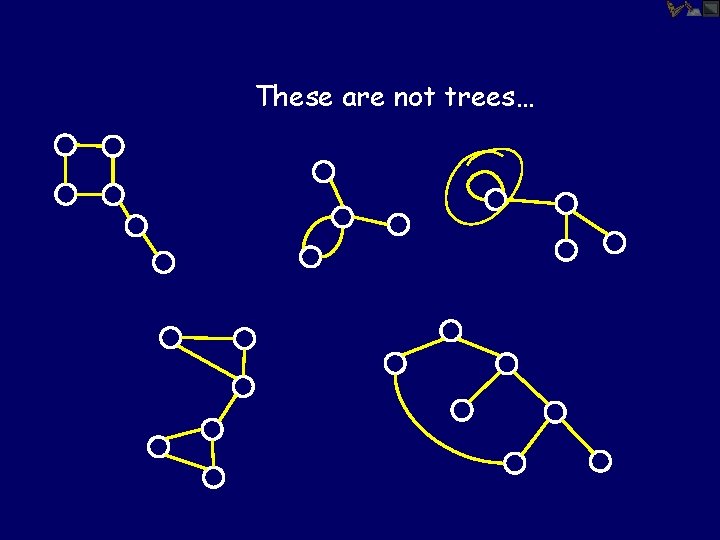
Putting a picture into words… A tree is a connected graph with no cycles.
These are not trees…
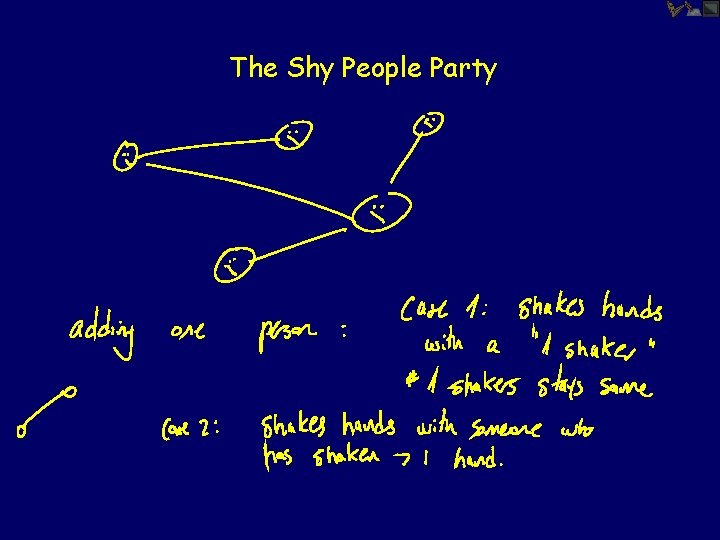
The Shy People Party At the shy people party, people enter oneby-one, and as a person comes in, (s)he shakes hand with only one person already at the party. Prove that at a shy party with n people (n >= 2), at least two people have shaken hands with only one other person.
The Shy People Party
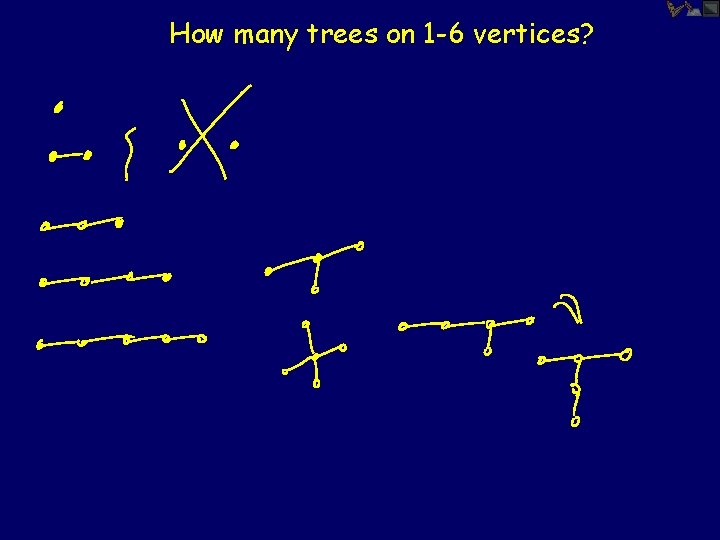
How many trees on 1 -6 vertices?
We’ll pass around a piece of paper. Draw a new 8 -node tree, and put your name next to it. (There are 23 of them…)
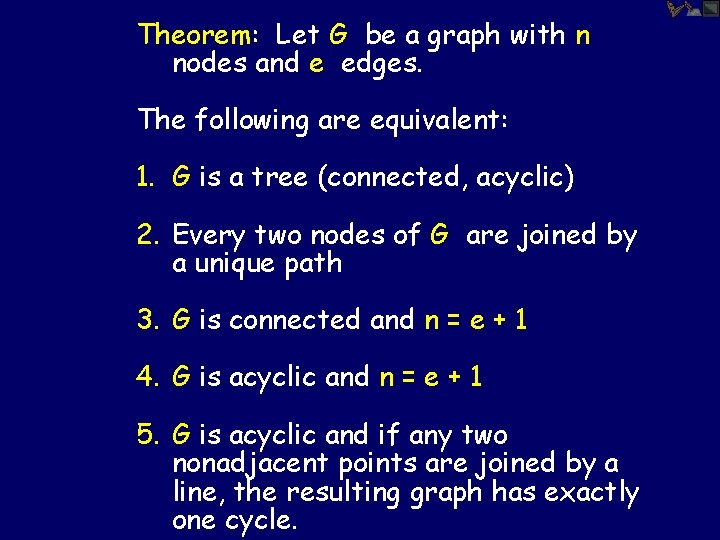
Theorem: Let G be a graph with n nodes and e edges. The following are equivalent: 1. G is a tree (connected, acyclic) 2. Every two nodes of G are joined by a unique path 3. G is connected and n = e + 1 4. G is acyclic and n = e + 1 5. G is acyclic and if any two nonadjacent points are joined by a line, the resulting graph has exactly one cycle.
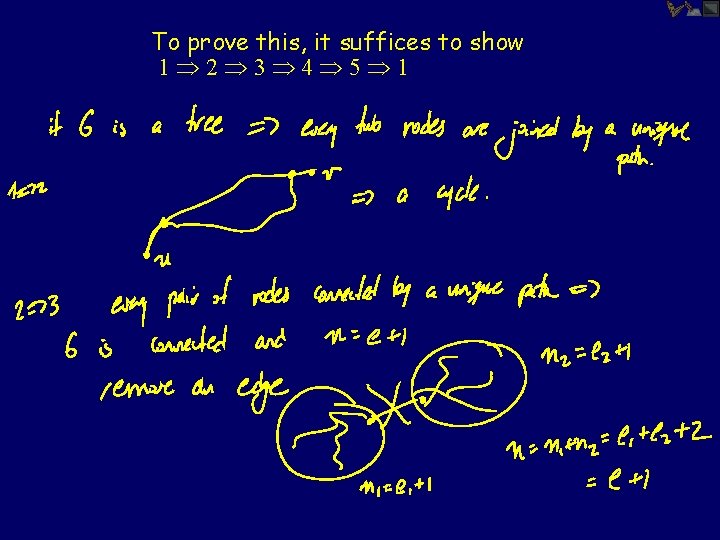
To prove this, it suffices to show 1 2 3 4 5 1
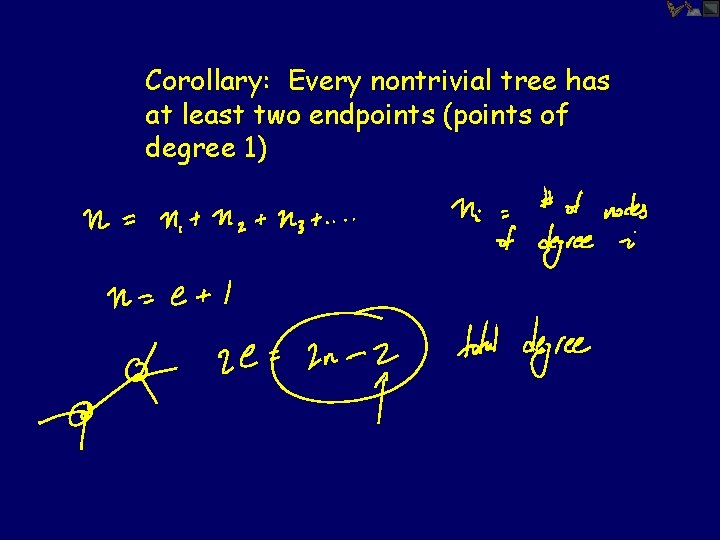
Corollary: Every nontrivial tree has at least two endpoints (points of degree 1)
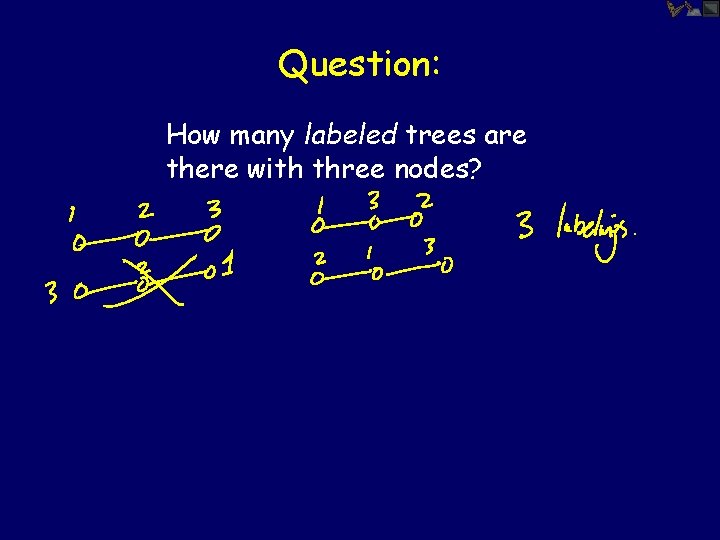
Question: How many labeled trees are there with three nodes?
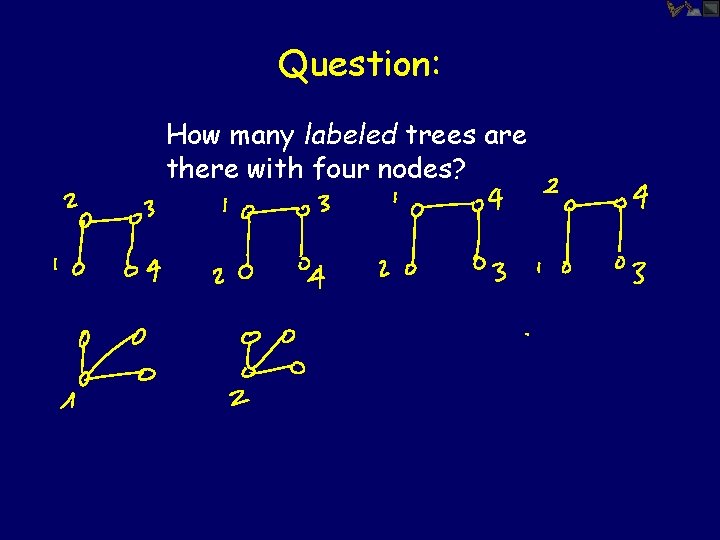
Question: How many labeled trees are there with four nodes?
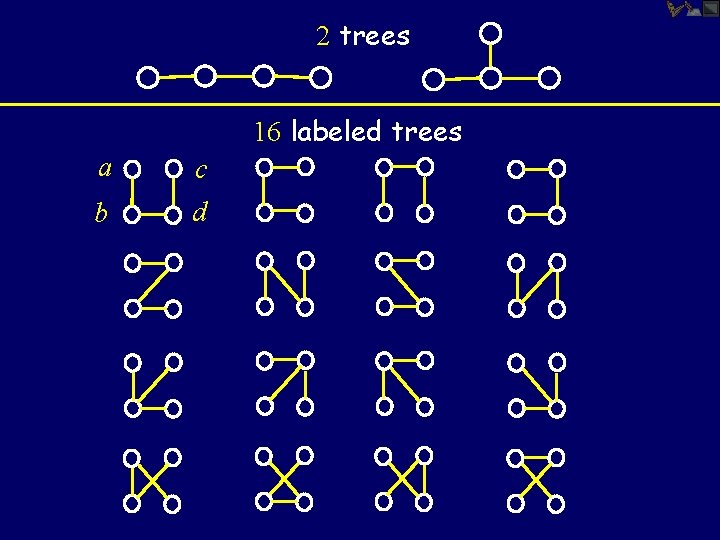
2 trees 16 labeled trees a c b d
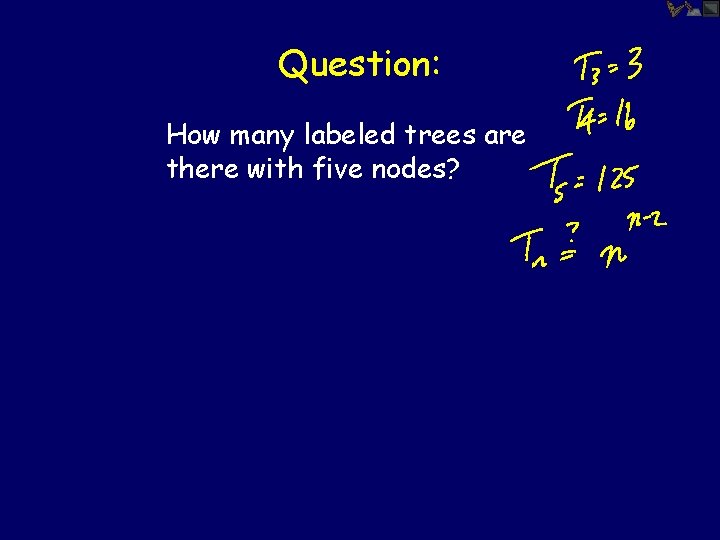
Question: How many labeled trees are there with five nodes?
Question: How many labeled trees on n nodes are there?
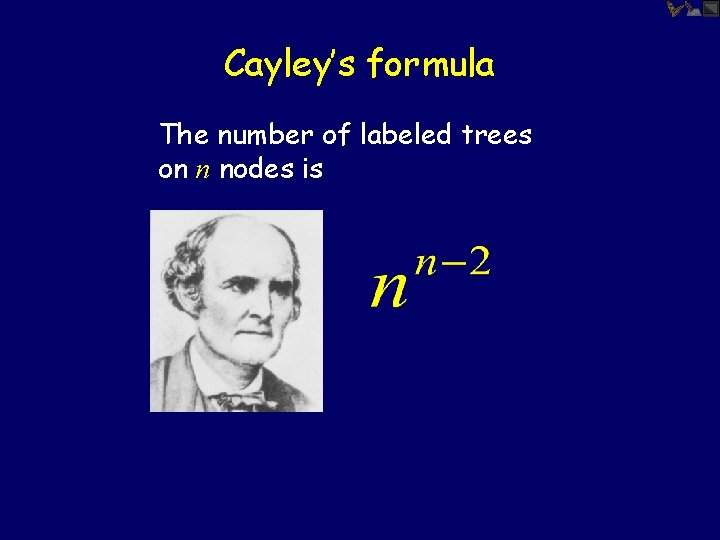
Cayley’s formula The number of labeled trees on n nodes is
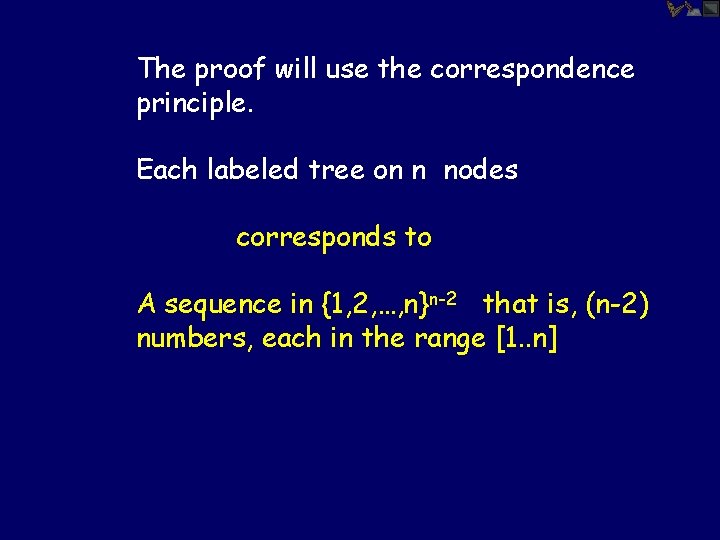
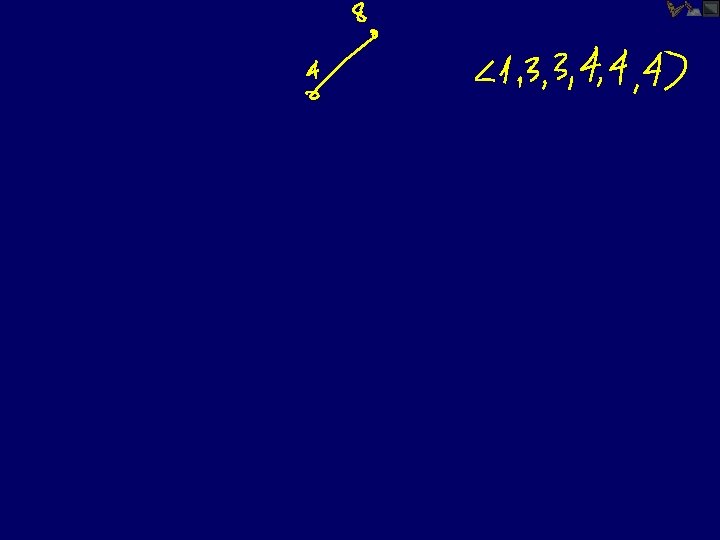
The proof will use the correspondence principle. Each labeled tree on n nodes corresponds to A sequence in {1, 2, …, n}n-2 that is, (n-2) numbers, each in the range [1. . n]
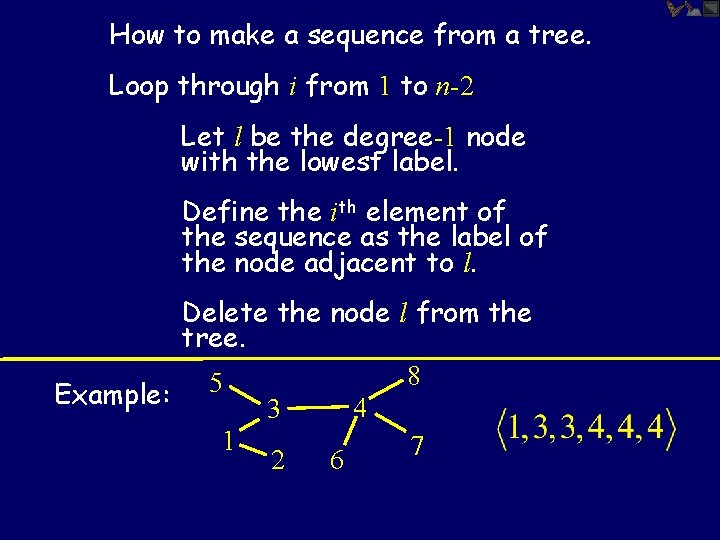
How to make a sequence from a tree. Loop through i from 1 to n-2 Let l be the degree-1 node with the lowest label. Define the ith element of the sequence as the label of the node adjacent to l. Delete the node l from the tree. 8 5 Example: 4 3 1 7 2 6
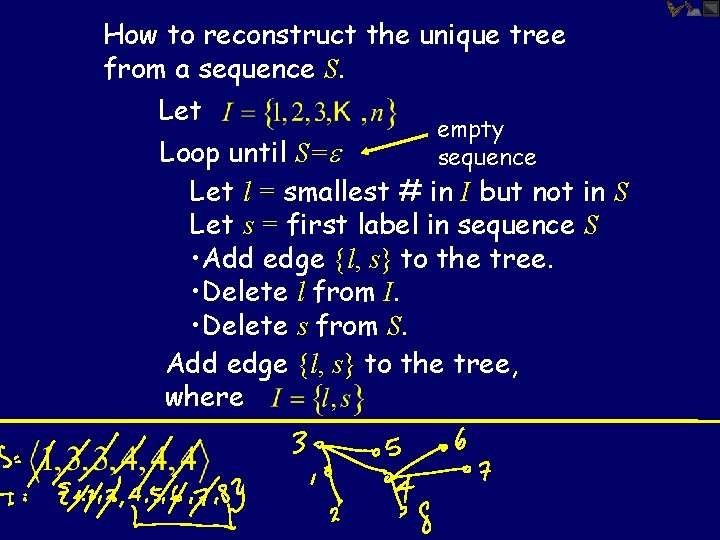
How to reconstruct the unique tree from a sequence S. Let empty Loop until S= sequence Let l = smallest # in I but not in S Let s = first label in sequence S • Add edge {l, s} to the tree. • Delete l from I. • Delete s from S. Add edge {l, s} to the tree, where
Another example
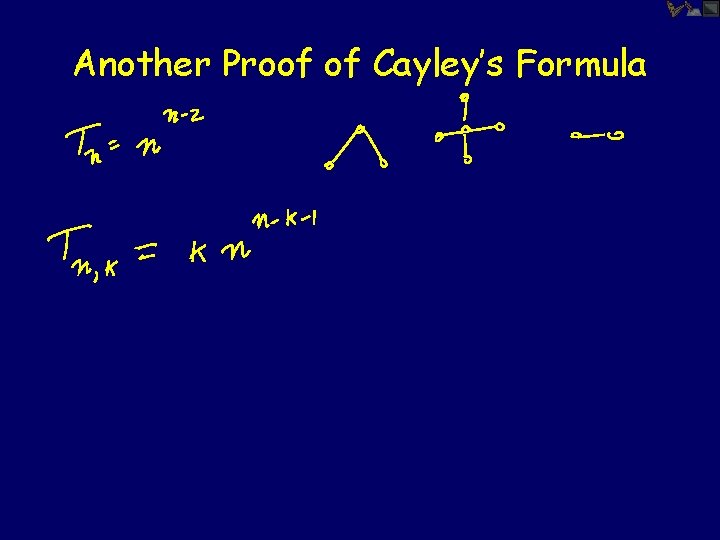
Another Proof of Cayley’s Formula
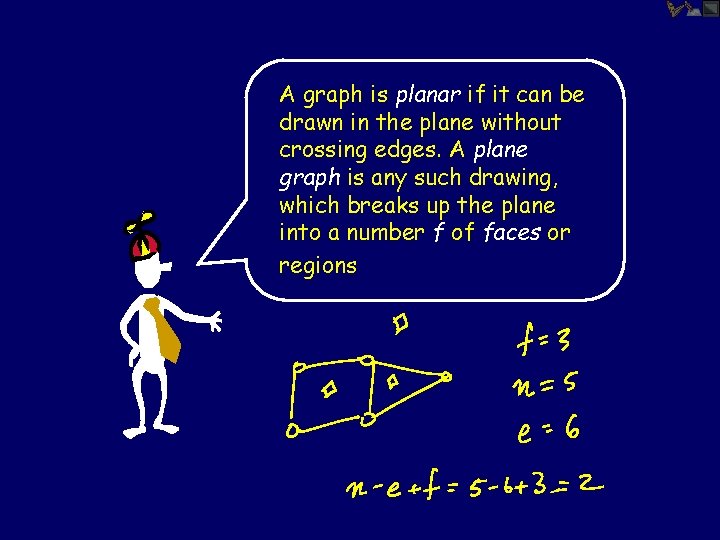
A graph is planar if it can be drawn in the plane without crossing edges. A plane graph is any such drawing, which breaks up the plane into a number f of faces or regions
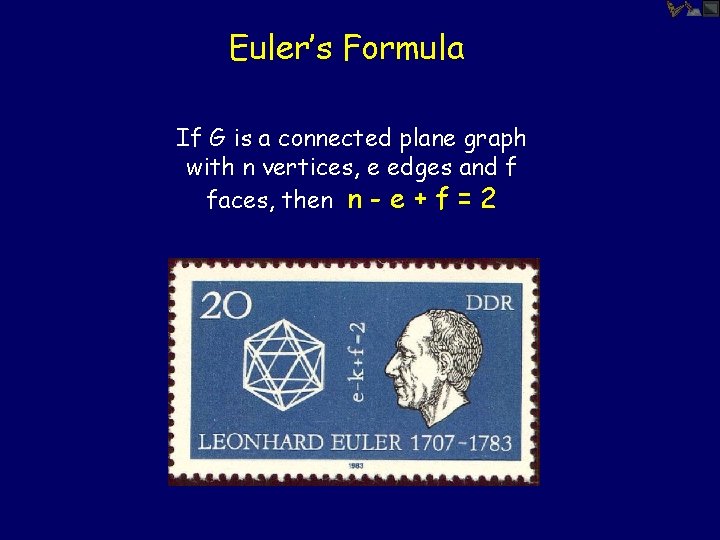
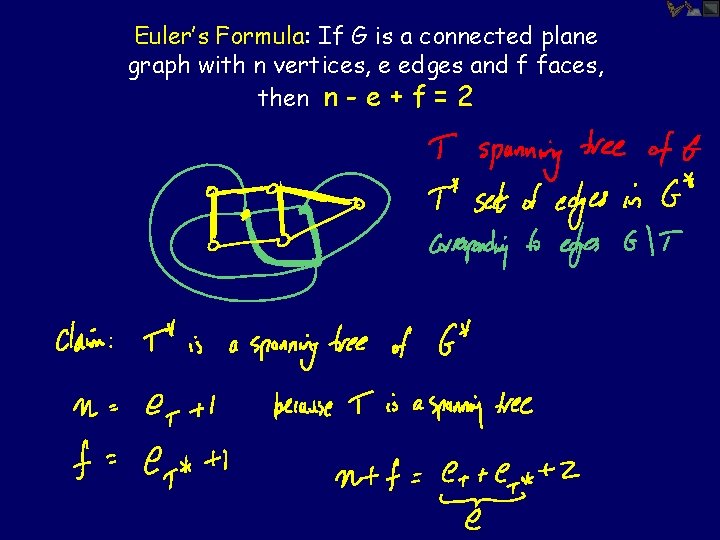
Euler’s Formula If G is a connected plane graph with n vertices, e edges and f faces, then n - e + f = 2
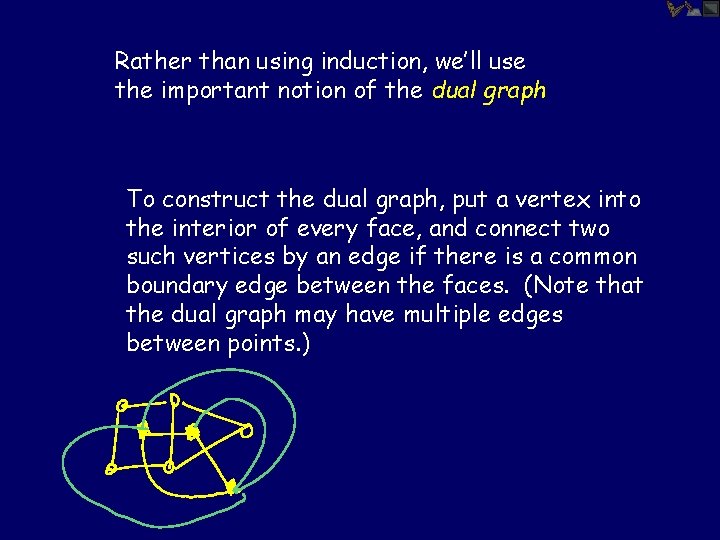
Rather than using induction, we’ll use the important notion of the dual graph To construct the dual graph, put a vertex into the interior of every face, and connect two such vertices by an edge if there is a common boundary edge between the faces. (Note that the dual graph may have multiple edges between points. )
We’ll also use the notion of a spanning tree A spanning tree of a graph is a subgraph that is also a tree, with the same vertex set as the original graph. In other words, it’s a minimal subgraph that connects all of the vertices.
Euler’s Formula: If G is a connected plane graph with n vertices, e edges and f faces, then n - e + f = 2
Euler’s Formula: If G is a connected plane graph with n vertices, e edges and f faces, then n - e + f = 2 The beauty of Euler’s formula is that it yields a numeric property from a purely geometric or topological property.
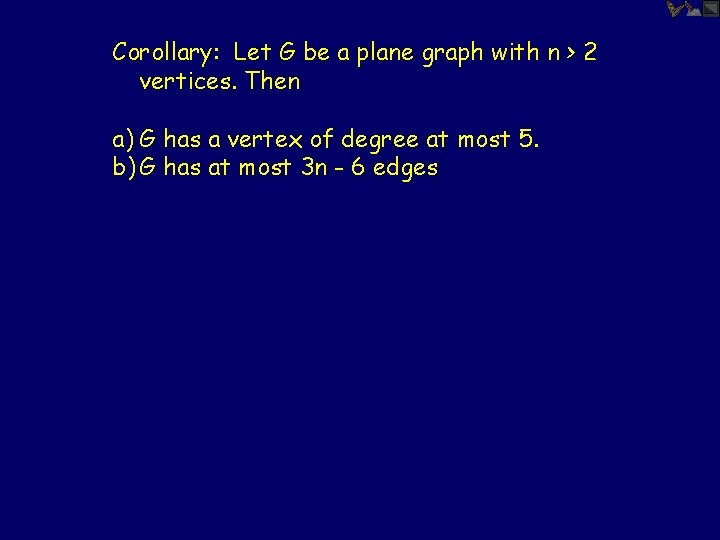
Corollary: Let G be a plane graph with n > 2 vertices. Then a) G has a vertex of degree at most 5. b) G has at most 3 n - 6 edges
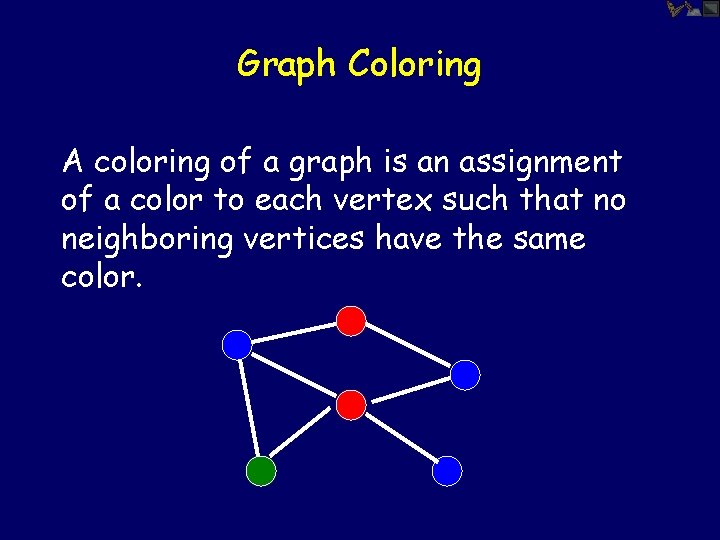
Graph Coloring A coloring of a graph is an assignment of a color to each vertex such that no neighboring vertices have the same color.
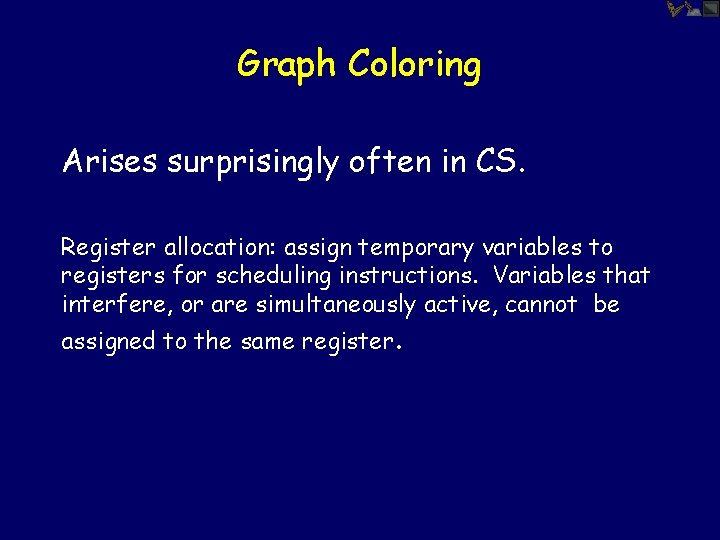
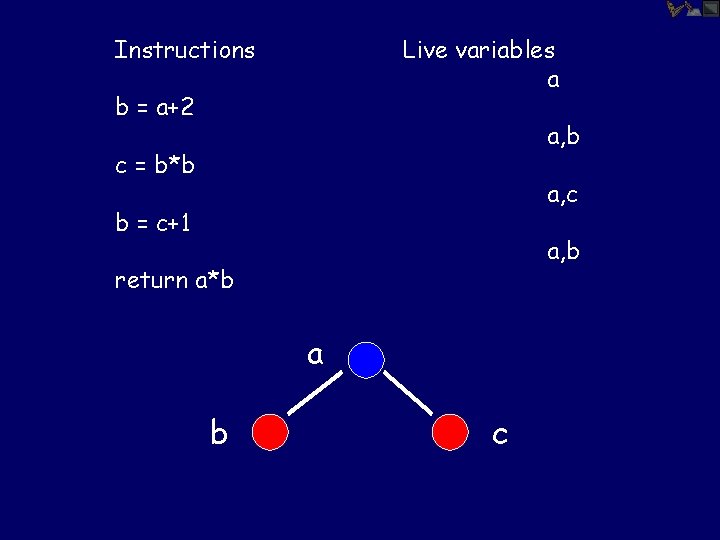
Graph Coloring Arises surprisingly often in CS. Register allocation: assign temporary variables to registers for scheduling instructions. Variables that interfere, or are simultaneously active, cannot be assigned to the same register.
Instructions Live variables a b = a+2 a, b c = b*b a, c b = c+1 a, b return a*b a b c
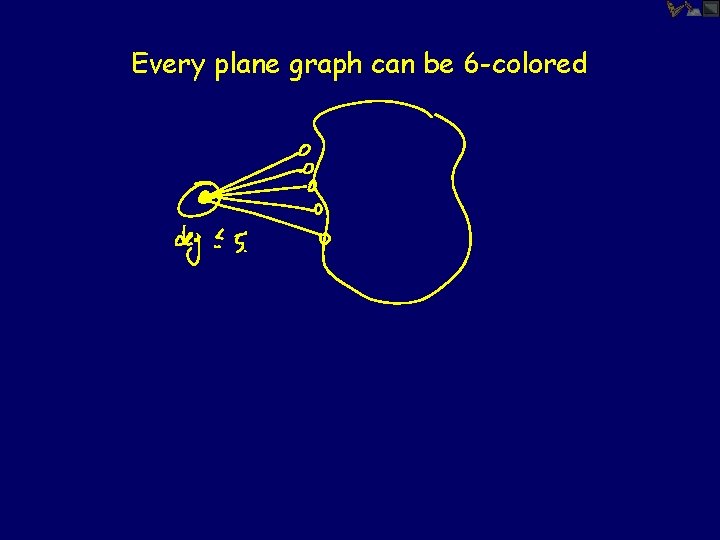
Every plane graph can be 6 -colored
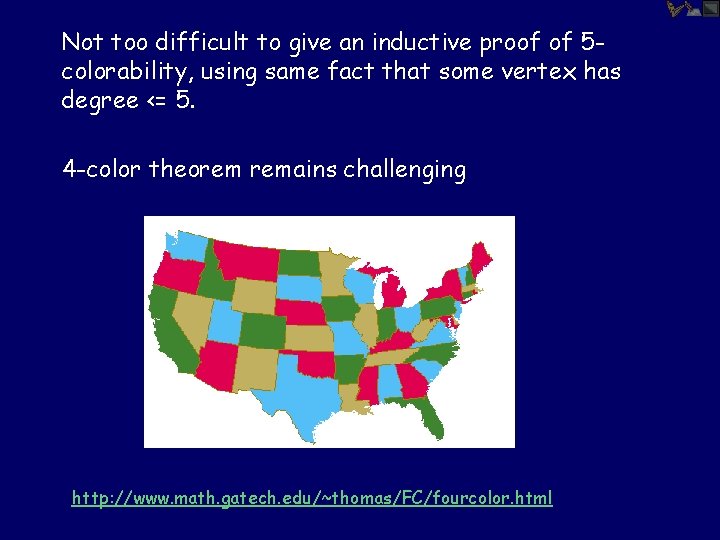
Not too difficult to give an inductive proof of 5 colorability, using same fact that some vertex has degree <= 5. 4 -color theorem remains challenging http: //www. math. gatech. edu/~thomas/FC/fourcolor. html